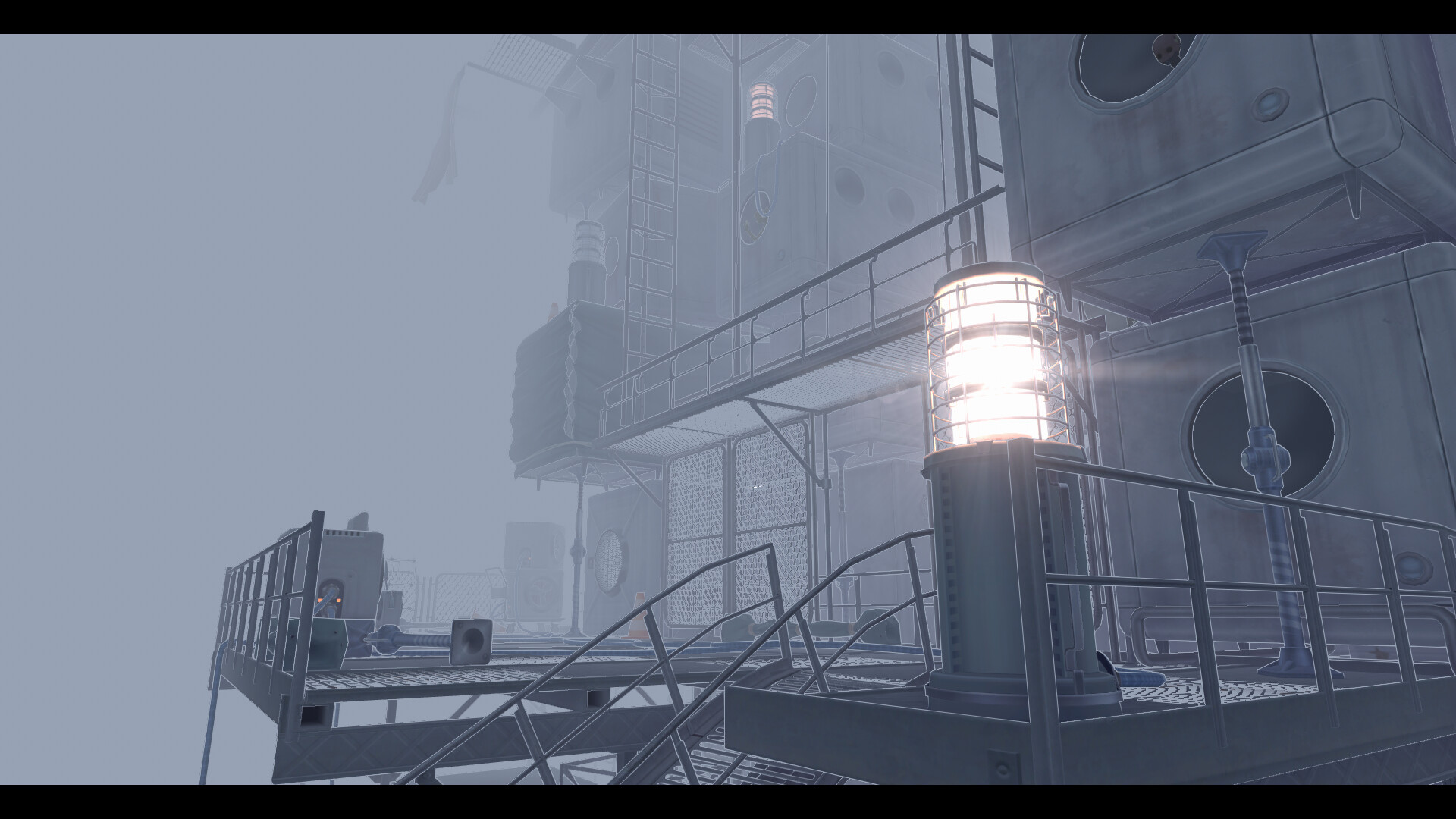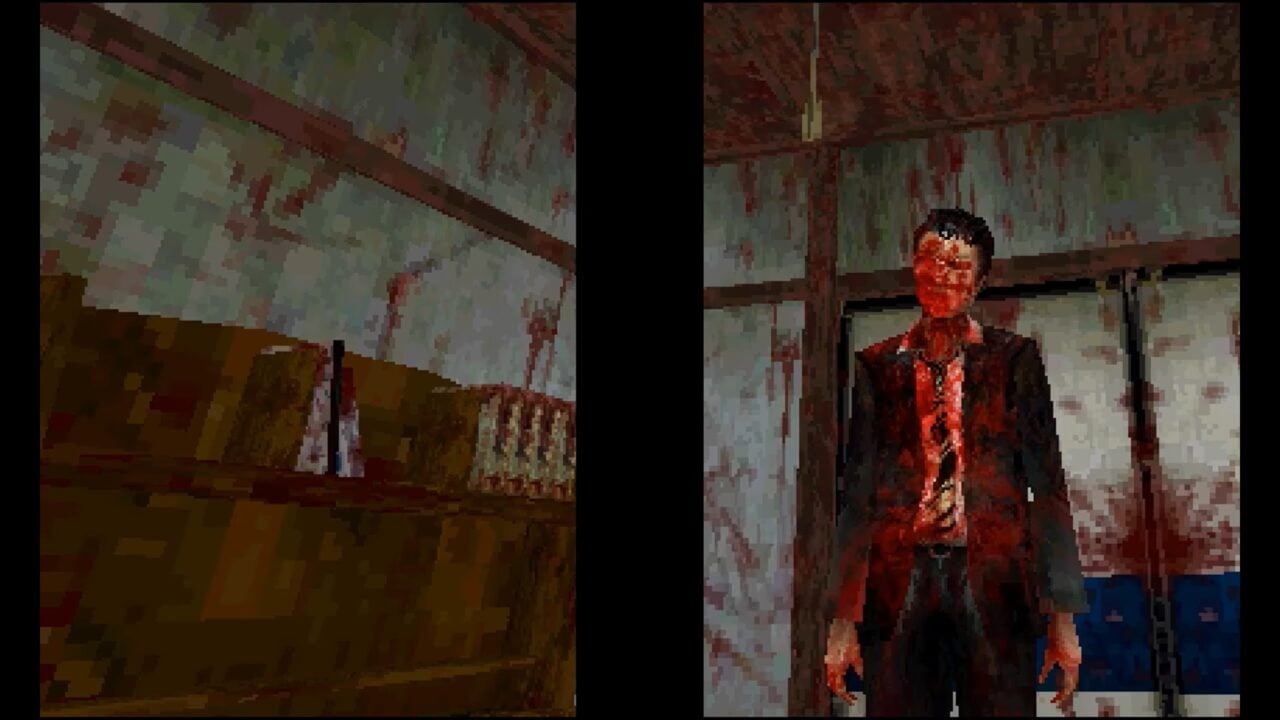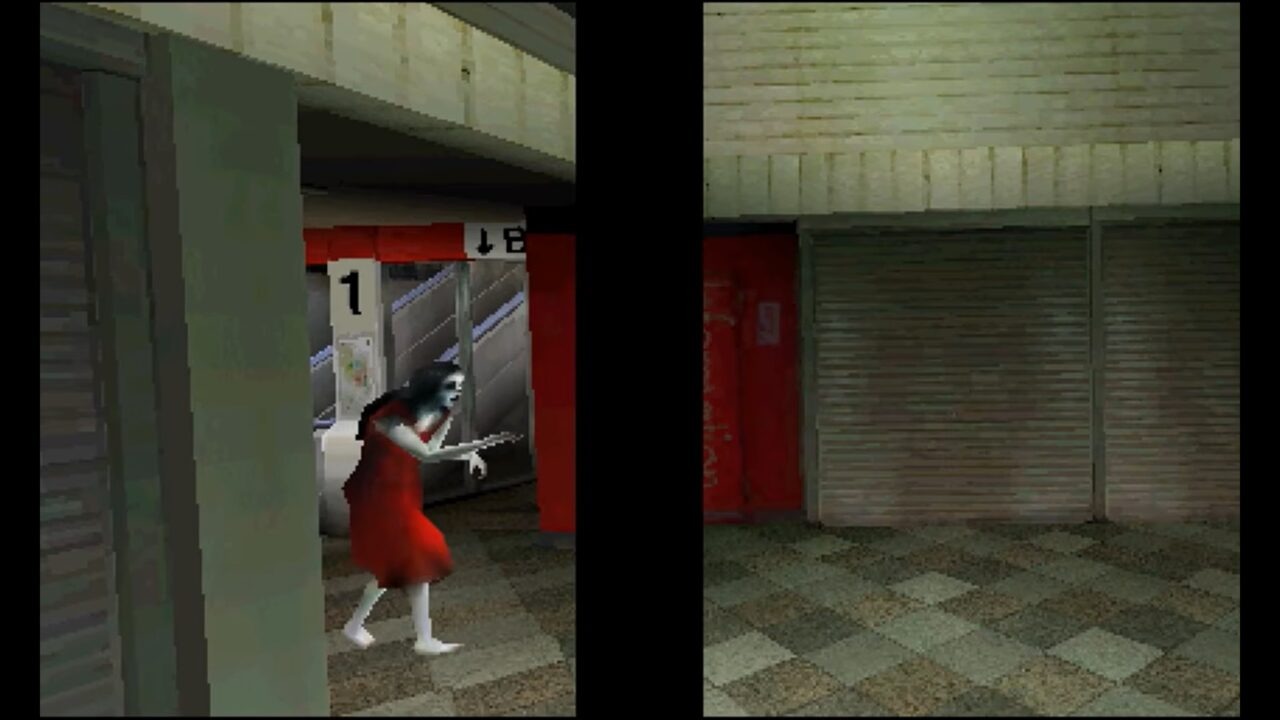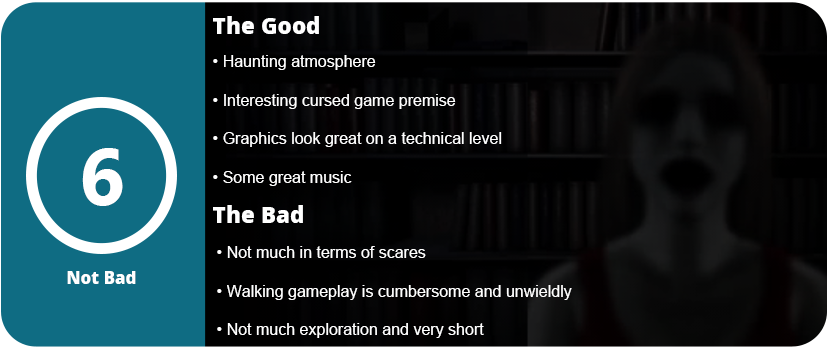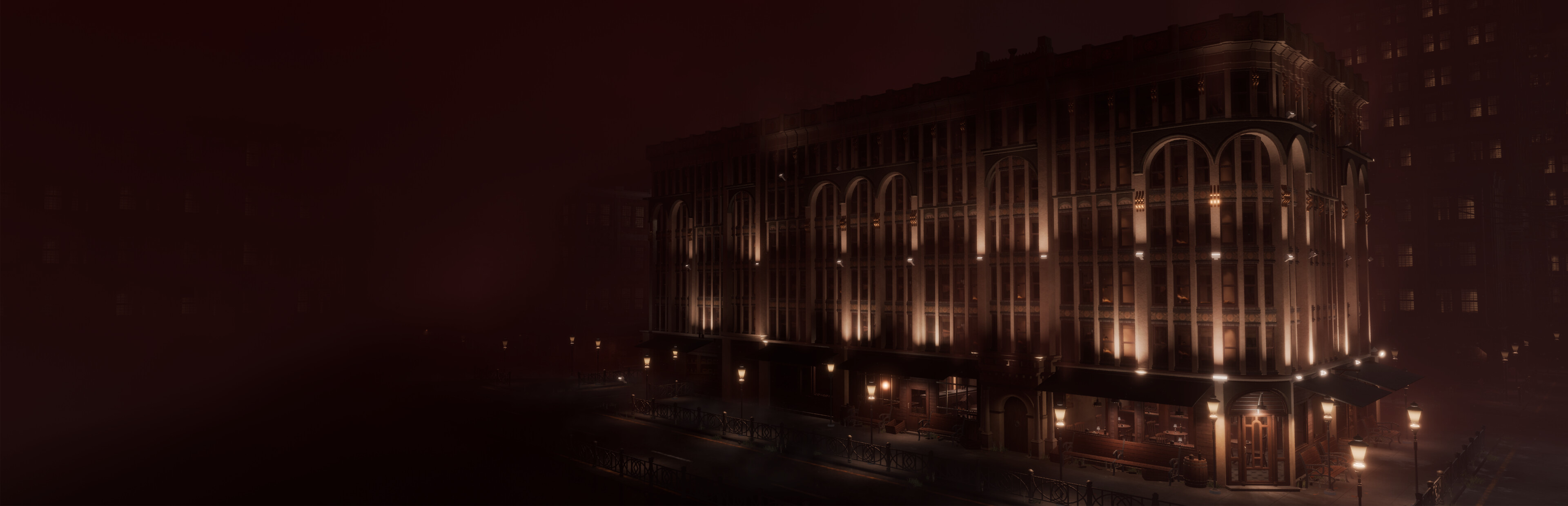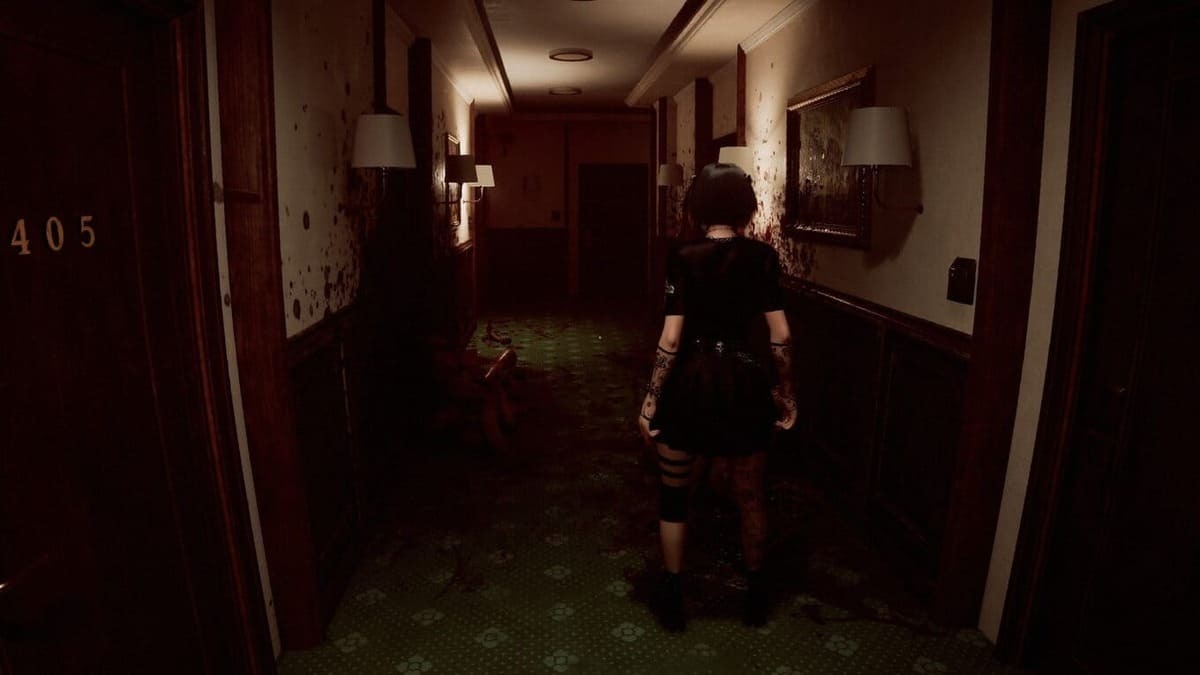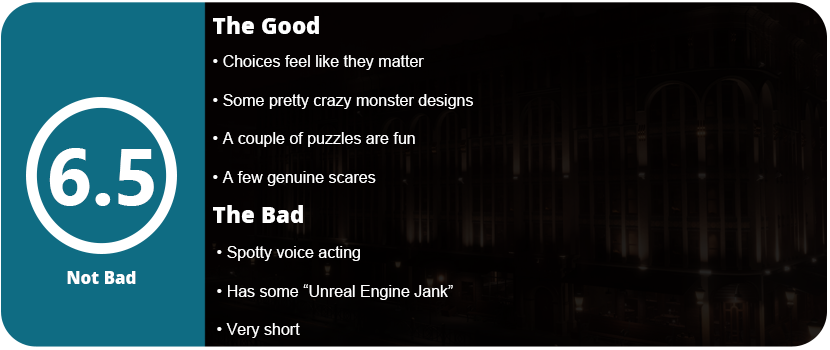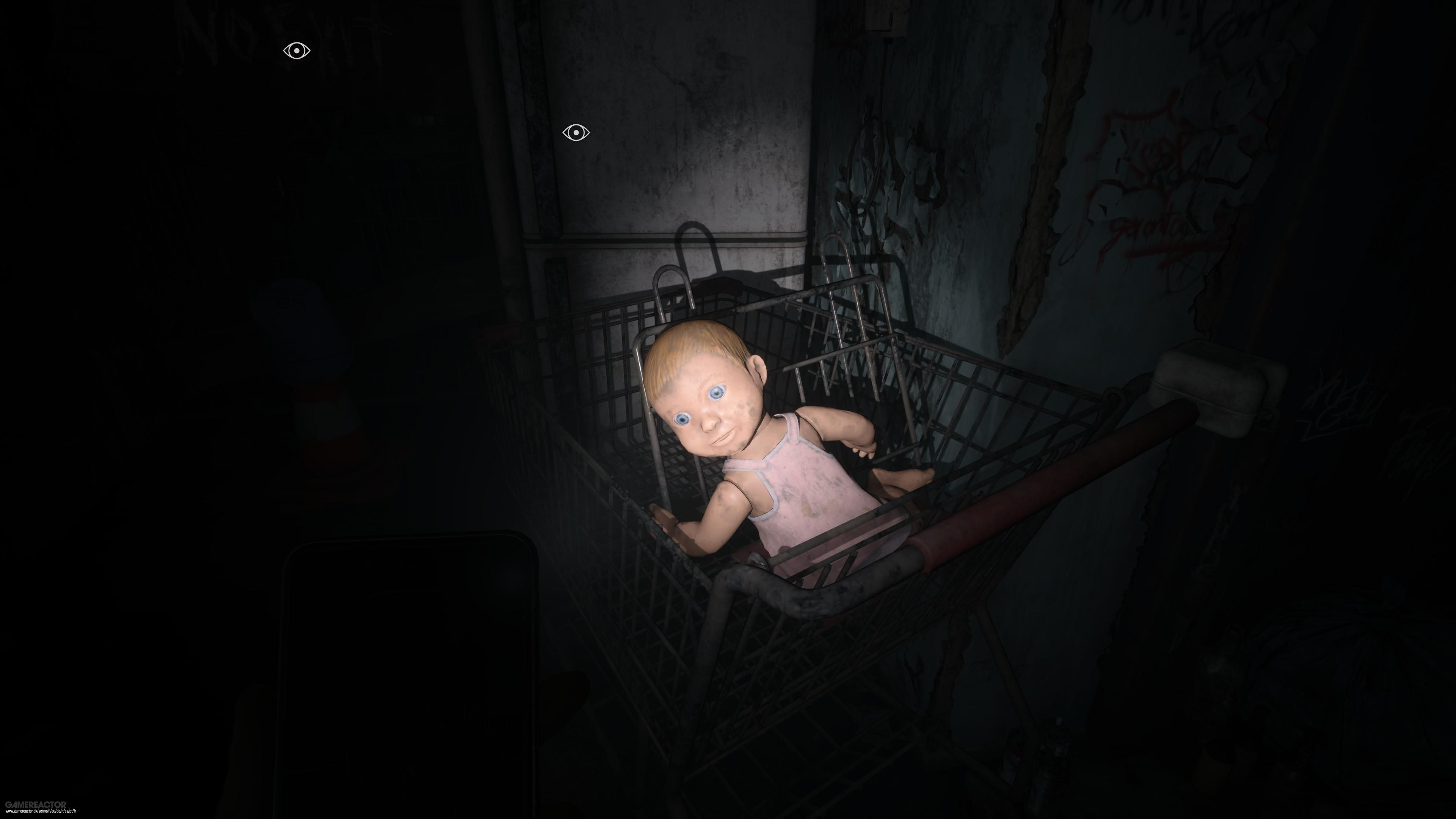
Indie horror games are not always great. In fact, most are pretty bad. There appears to be a trend of focusing on going viral instead of earning positive word-of-mouth through genuine quality. Either relying on tropes such as the “meme monster,” like Poppy Playtime, or having convoluted lore, like with the SCP series. The Inn-Sanity tries to be a self-contained horror title only trying to be good. It’s one of the better “Unreal Jank” horror titles I have played with the, probably by now, overused PS1 graphics aesthetic that mostly misses the point of them. You play as someone who visits an Inn (Sanity Inn…get it? Ha, ha). During the night there seems to be a Cthulhu mythos-style end-of-the-world scenario. You end up meeting a goth girl, who has the only voiced lines in the game, as you both try to survive the hotel and get to the roof while working with a security guard who is always hiding in the security room in the lobby. You only get phone calls from him. There’s also a monster lurking in the hotel, murdering everyone.
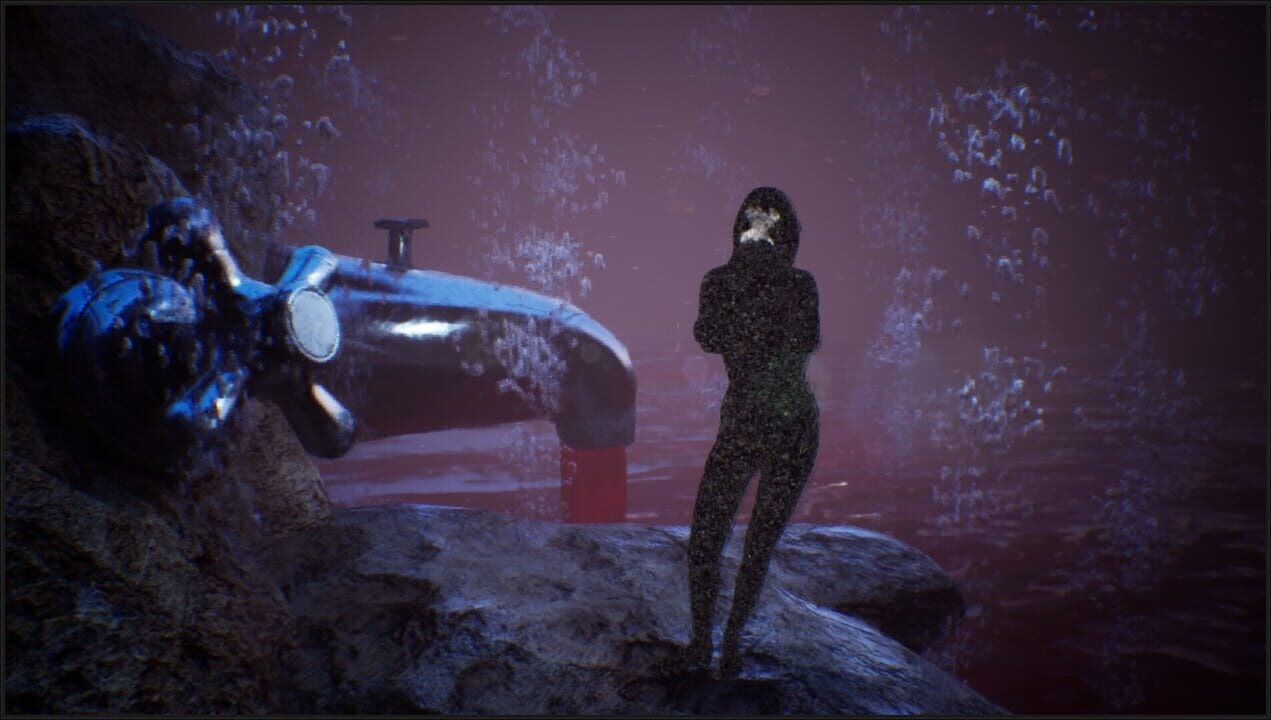
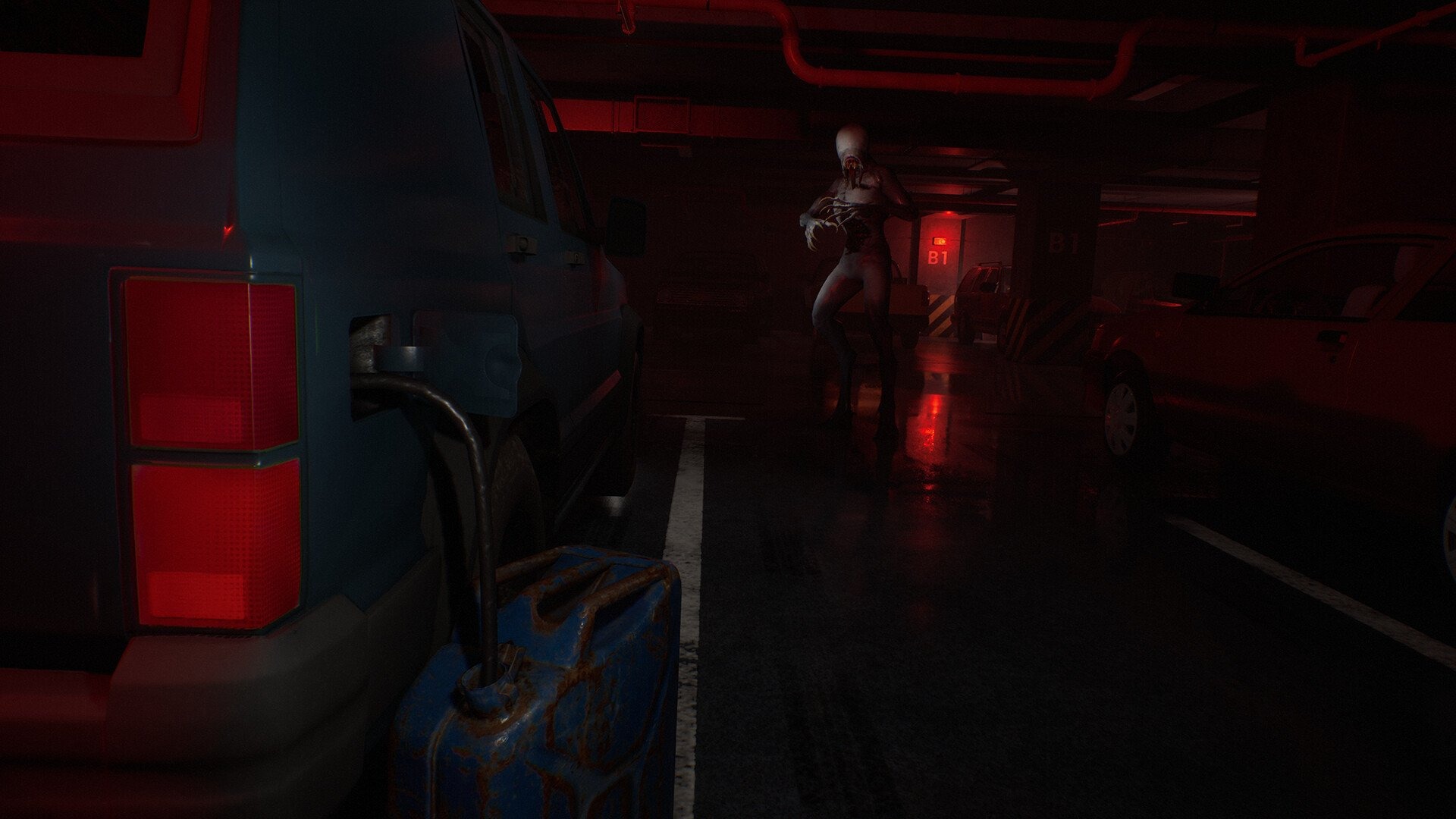
It’s a pretty cool setup, and the pacing of the story is surprisingly good. I played the game all the way through in one sitting because I wanted to see it to the end. The monster is pretty cool and scary-looking, and the scenarios you are put in are easy to deal with but still intense. There’s also a mad murdering priest wandering the hotel, killing anyone who he thinks is infected and not “pure.” The stealth sections involving the monster aren’t hard. The AI is pretty dumb, and one scene had me gathering gas in the parking garage, but the monster wound up always staying at the opposite end where there aren’t any cars. It was a breeze. Every mission will require you to go out into the halls and either up or down stairs to find someone or a supply. One puzzle has you following colored pipes to their proper PSI number to turn on the water to the hotel. It was a fun puzzle and had some intense moments.
There are some intriguing elements thrown in, like being able to call various numbers on the hotel room phone to get some lore in the game. You can turn on the radio every day and hear what’s going on with the outside world. Small things like this that could be expanded upon make for a great way to make a small enclosed area more interesting. We want to know what’s going on outside and how other people are doing too. There’s enough of a world built here to convince you to investigate more, and that’s really hard to pull off in such a short run time. The girl’s voice acting is spotty. It follows the typical “cutesy anime girl” voice trope and I honestly do not like that at all. Some may be okay with it. Some lines are delivered pretty well while others are completely off in tone and intensity. She is supposed to be a beacon of light and the only human thing in this entire world and she just doesn’t feel serious enough for this.
Once you get back to your room, you are advancing the story between the girl and yourself. You keep passing out and waking up in the bathroom, not knowing why. You have strange dreams, and some choices will affect what ending you get with the girl. The story is always moving and changing, and you never get bored or feel stuck anywhere. There are some downsides to this game being very low budget. The animations are pretty bad; everything is a weird mix of high and low poly, so it has an inconsistent look. The game is also rather short, ending at around 3 hours. While I enjoyed my time with the game, I feel that these good puzzles, branching dialogue trees, and choices could be put to more use. The developers are talented and know how to make a great horror game. With a bigger budget I feel they could do something really great. This is easily one of the better super cheap indie horror titles on Steam and will get you genuine scares and entertain you the entire way through.
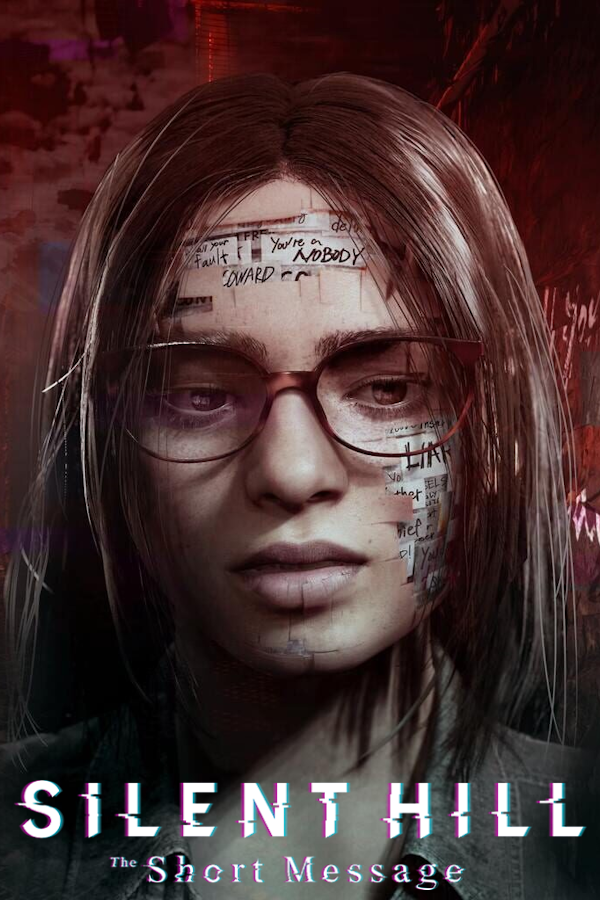
Short stories in the Silent Hill universe aren’t unheard of. Many people are unaware of their existence, except for the most dedicated fans. The comics and graphic novels on Game Boy Advance and PSP are not quite there, but they are interesting side stories. Silent Hill is more than just a town. It’s an experience. This version is set in Germany. You play as a teen named Anita who is inside an abandoned apartment complex exploring her past and trying to find her friend Maya. Silent Hill games usually explore the real world and then the “Otherworld.” In this game, if you can even call it that, there are clear inspirations taken from Silent Hill: Shattered Memories. This is the first SH game to be set in first person and the second to use a smartphone as a main gameplay device.
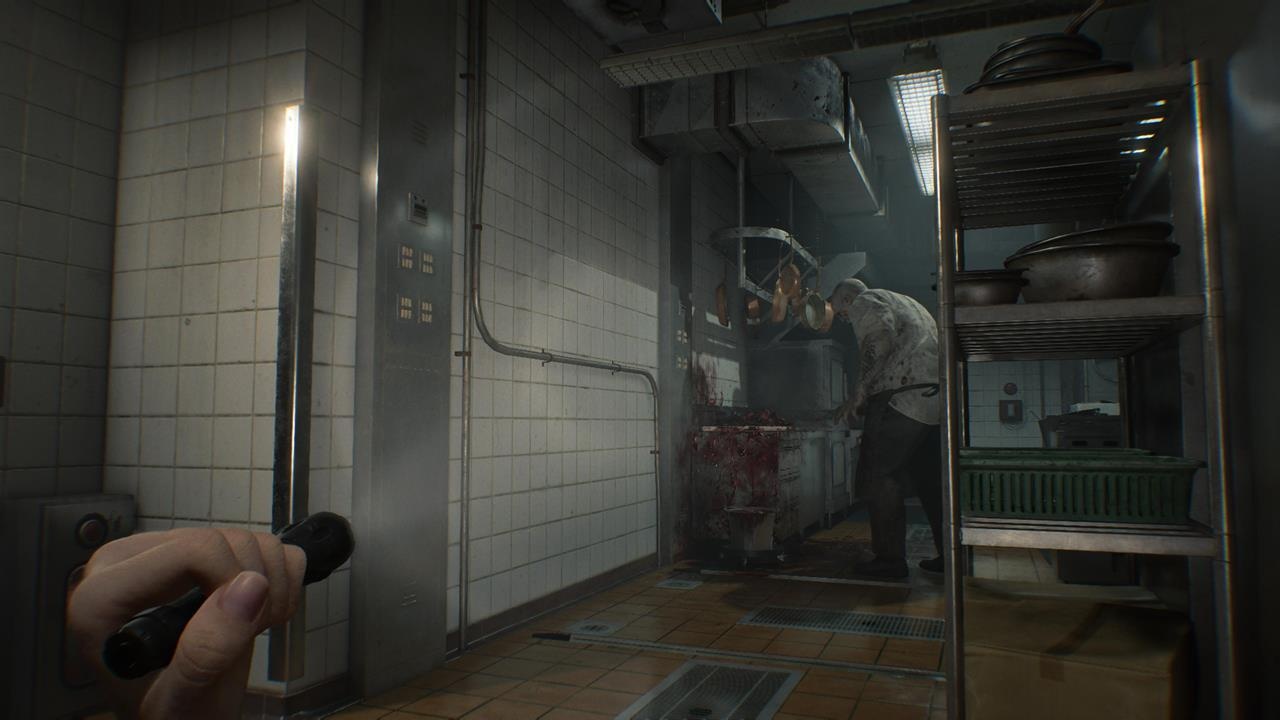
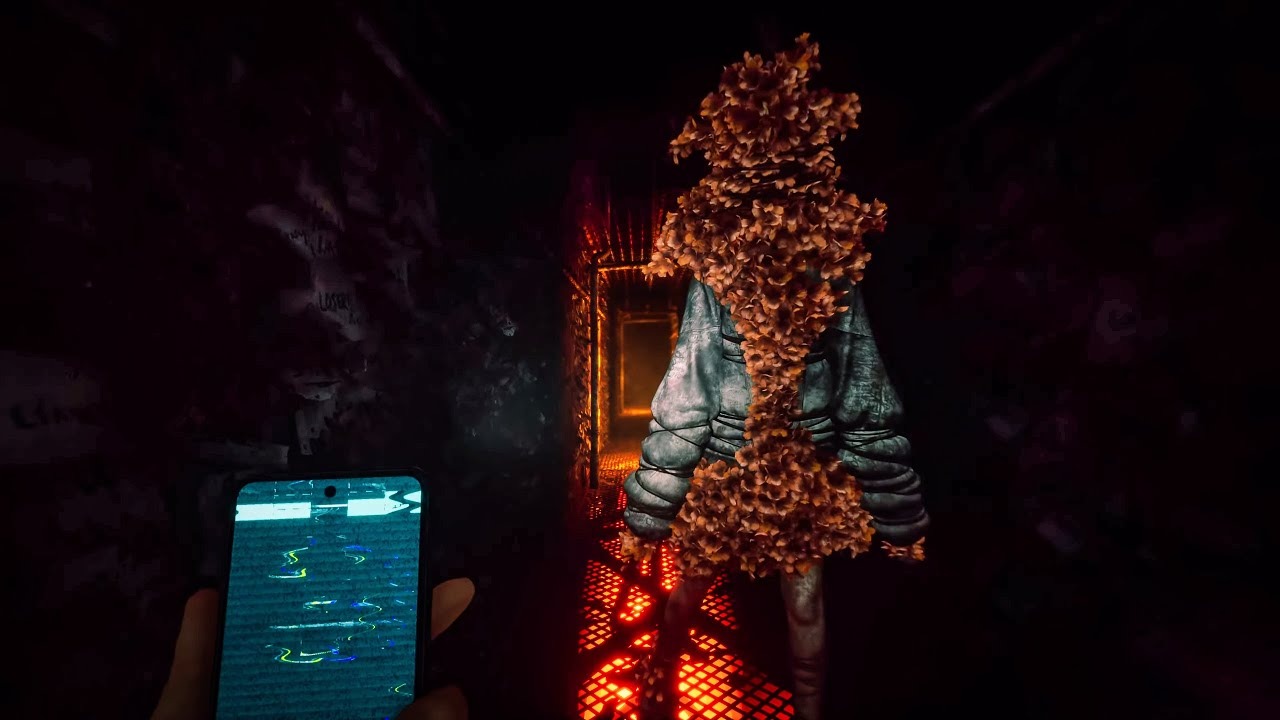
Your phone is used for its flashlight. It’s not as extensive as Shattered Memories with apps and features. Every so often your friends will text you, and you just press X to reply. The game is incredibly linear with only one clear path forward. The apartment complex is dark and dirty and does a good job of creating a horror atmosphere, but this isn’t Silent Hill. The series is never stuck inside of a building through the entire game. In fact, the only “outside” you encounter is going onto the roof and balcony a few times. This is by far the least interactive game in the series outside of the graphic novels. You will walk around examining objects, triggering cut scenes, and then entering the “Otherworld” apartment complex, which involves an annoying chase sequence from a monster. The only way you would know that the game is connected to Silent Hill is the monster track in the background and the orange hellish metal design everywhere during the chase scenes, and a single mention of the game in a note on a table. You need to run through a maze of doors and hallways to escape. They aren’t fun and have no combat.
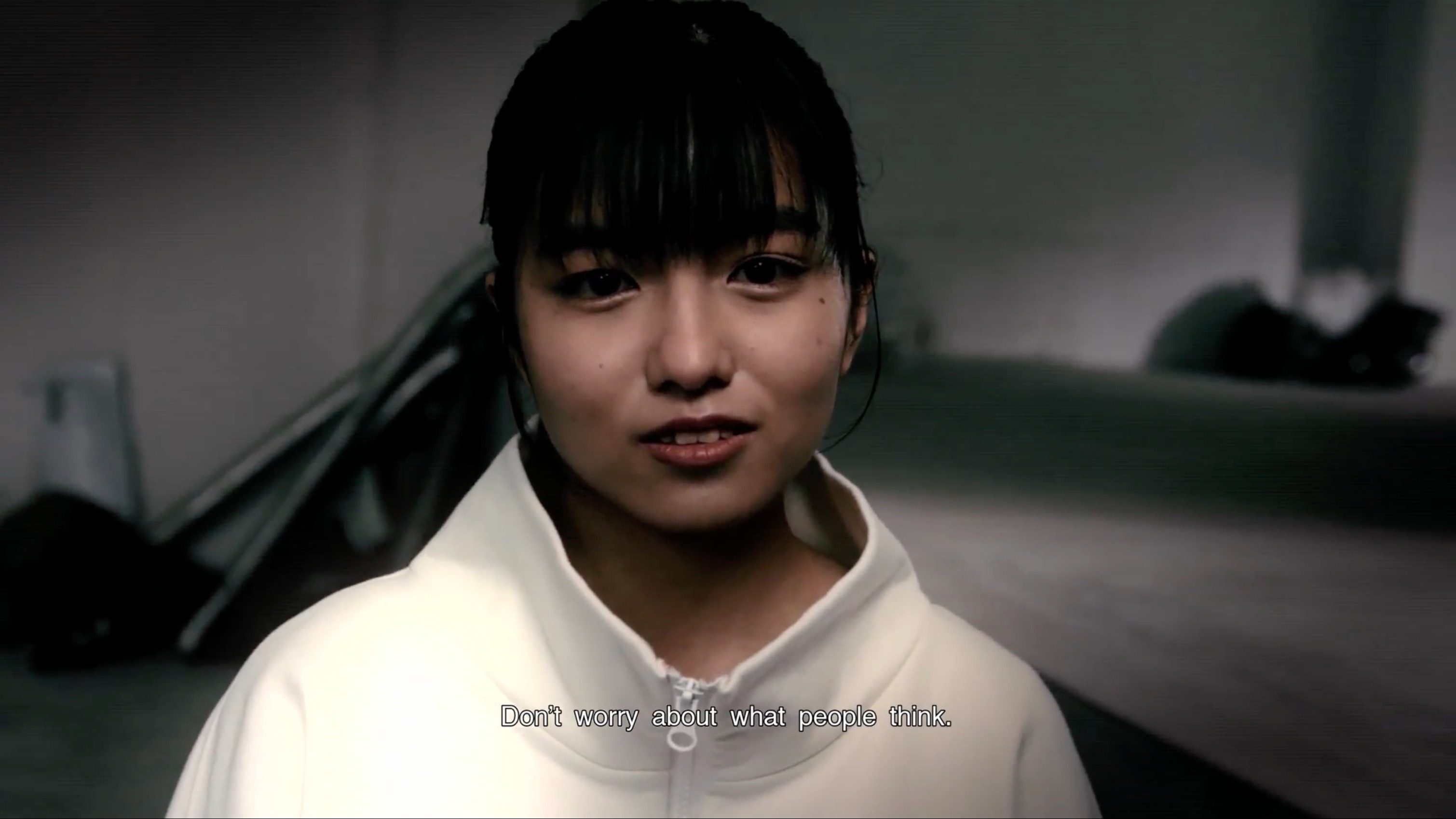
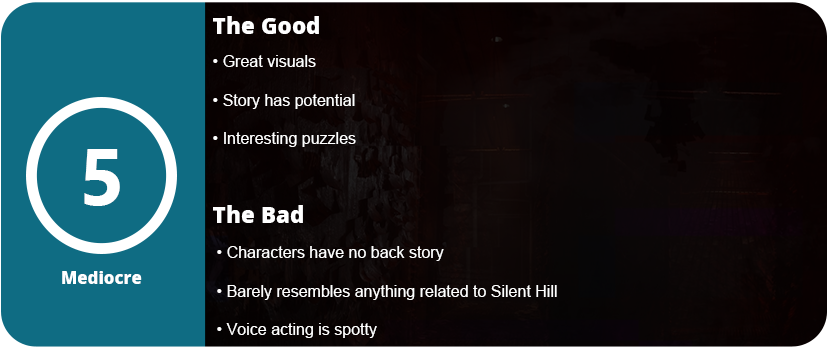
There are a couple of puzzles in the game that are actually pretty good, but it’s the only gameplay in the entire game that’s interactive. The most jarring element here is the inconsistent visual design. Anita’s model is incredibly rough and ugly. She looks worse than the rest of the game, and then there are the live-action cut scenes of a Japanese girl (Maya) talking to you in flashbacks. Sadly, the scenes were obviously shot in Japanese, but there’s only an English dub available. The actual story and message of suicide and bullying are interesting. There’s something here. Anita will walk through rooms full of sticky notes everywhere that have hateful words. We get flashbacks of her cutting her wrists, etc. These darker elements are what make Silent Hill so great. The exploration of the darkest parts of the human psyche, but instead of going with that, The Short Message drops the ball every time it picks it up. Exploring the apartment complex doesn’t bring about any scares. Lights turn off, bulbs pop, there’s weird noises, and that’s about it. The monster chasing you is the only monster in the entire game and you rarely get to see it.
What’s left is a three-hour slog through what feels like a tech demo or proof of concept. Clearly Konami didn’t like it enough to make it into a full game. Hexadrive has some good ideas here, and I wouldn’t mind seeing that they could do with a full Silent Hill game. With the series making a full return, we need more developers on board now that Team Silent has been disbanded. I recommend playing this only if you’re a Silent Hill completionist and hardcore fan, but otherwise there’s not much here for anyone else.
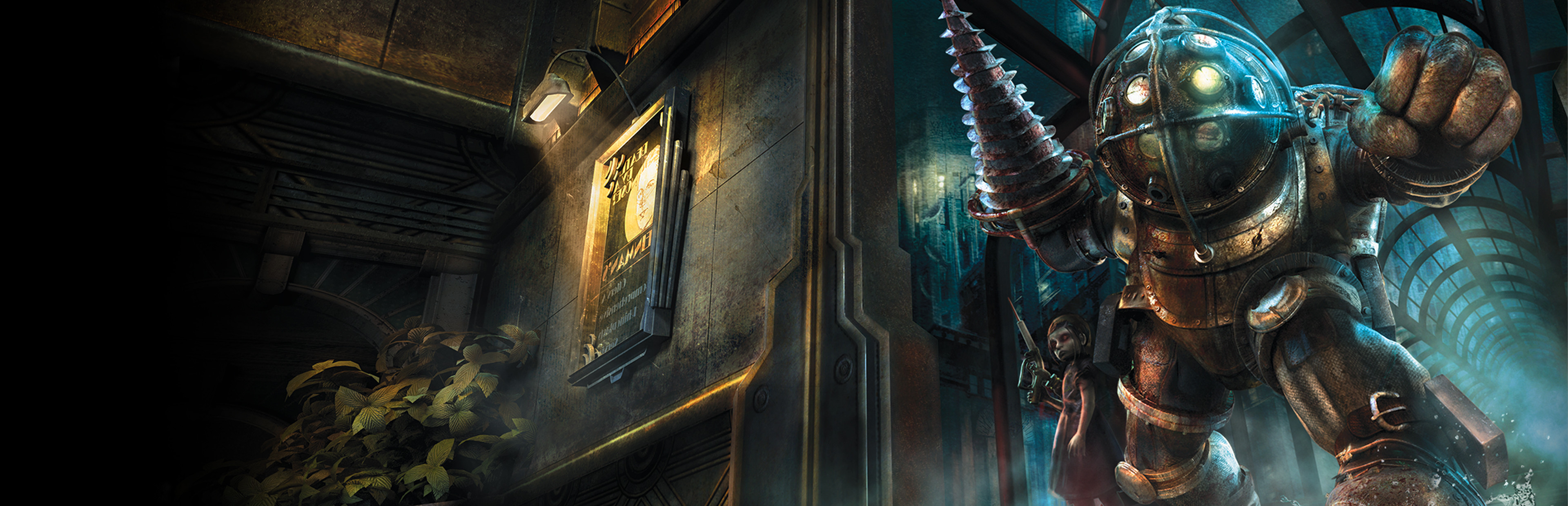
War. War never changes. Oh wait, wrong game. Clears throat Is a man entitled to the sweat on his brow? A famous quote from Andrew Ryan. The creator of Rapture. An underground utopia, or dystopia, that’s a playground for the rich. Using Adam and Eve to alter your genes and add power like fire, ice, shock, and bees. You arrive serendipitously via plane crash over the Atlantic ocean. You work your way through Rapture while being guided by a man named Atlas. There are Little Sisters, children who harvest Adam from dead Splicers, and Big Daddies that protect them. There’s quite a bit going on, and while this is a spiritual successor to System Shock, it was revolutionary for its time. Sadly, many younger gamers, like myself, had never heard of System Shock as it wasn’t a blockbuster seller.
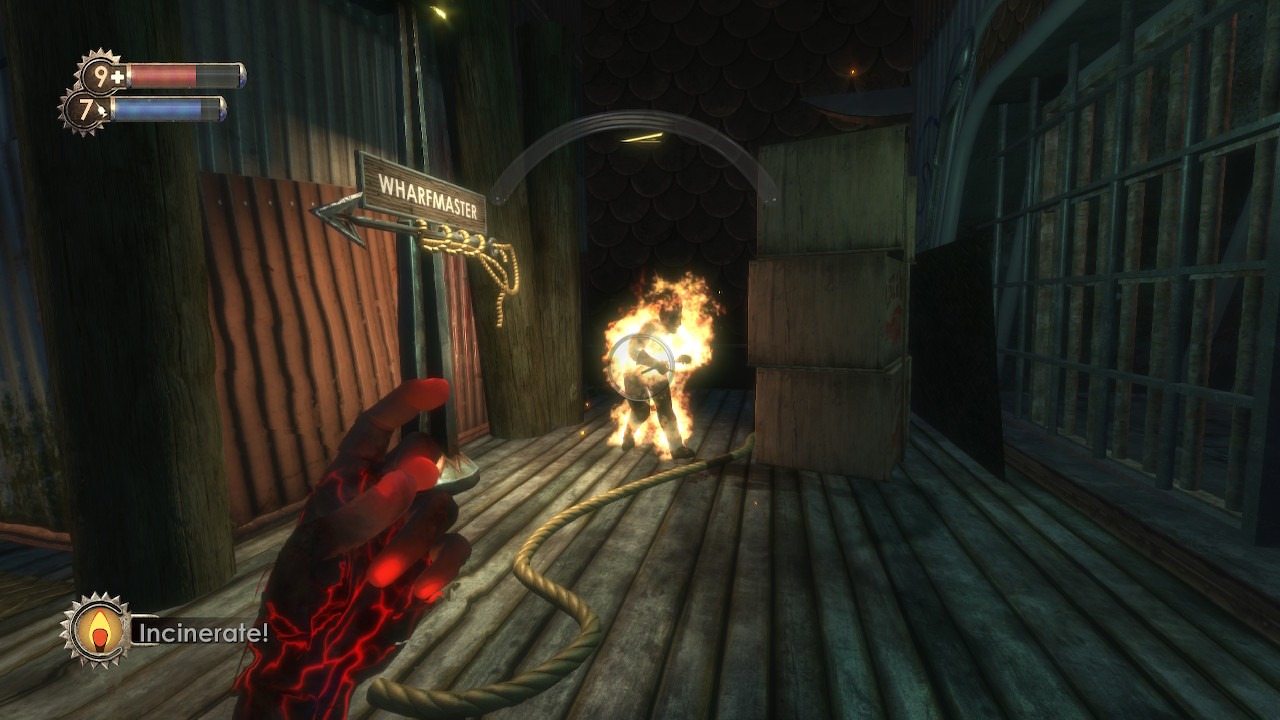
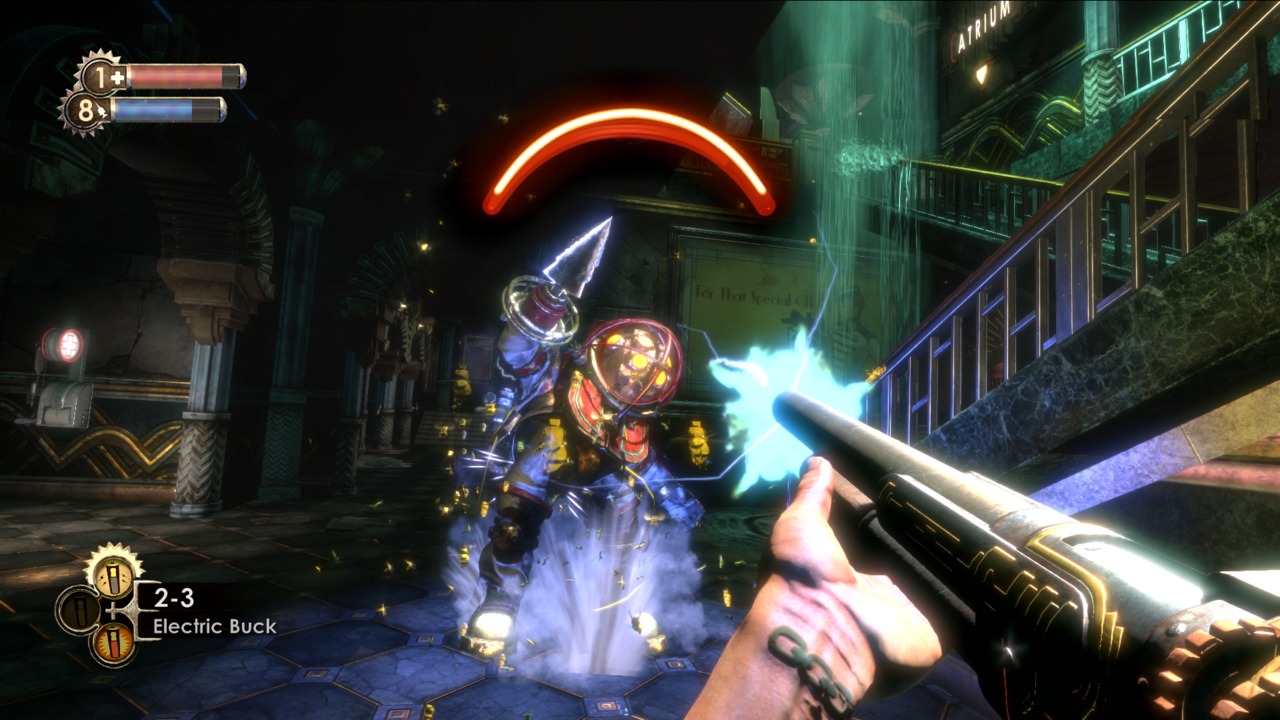
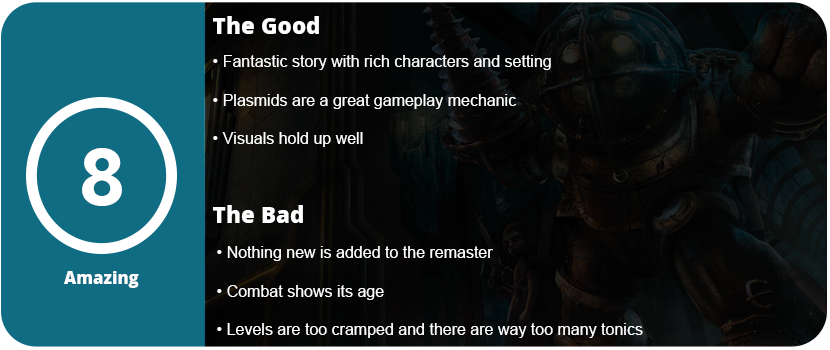
Sadly, the remaster does the bare minimum. Only making the game playable exactly as is, just in a higher resolution and frame rate. 2K Games took the PC version with the updated DirectX 10 lighting and shadows and threw it on consoles. We get developer commentary and some combat trials, but the age of the game is also present. A full remake would have been better. While the story is well known amongst gamers of the HD era, the gameplay hasn’t aged quite as well. There are many quality of life improvements that could have been made. For example, the combat isn’t the best. The reticle is a massive circle, and while guns feel pretty decent, the Plasmids are frustrating to aim. Plasmids like Shock Bolt and Incinerate converge on a pinpoint, and you waste so much Eve trying to hit enemies. There are also an awful lot of passive and combat tonics that feel mostly useless for such a short game.
While the 17 year old me didn’t really notice any of this when I played it on launch day for my Xbox 360 at the time, the game’s near perfection at the time is showing some cracks. The levels are cramped and incredibly linear, making combat hard. Many of the areas are way too dark, making it hard to see enemies and hit them at the speed they move at. It’s not the worst ever, but it’s annoying, and a remake could have remedied this. You get six guns in the game, but not all of them are useful. The Napalm launcher is something I rarely used, and the same goes for the grenade launcher. The areas are too cramped for these destructive weapons, and you end up taking a lot of damage. You will switch between the shotgun, revolver, and Tommy gun the most as your main weapons. The crossbow is the closest to a sniper rifle that you will get. Each weapon has three different ammo types. There are explosive, shock, anti-personnel (good against humans), and armor-piercing (used against Big Daddies). The combat system is fine but pretty flawed. You can upgrade each weapon twice to add things like damage and recoil reduction.
You can change your equipped plasmids and tonics at Gene Banks. You use Adam taken from Little Sisters at Adam machines to buy these. There are just too many. I used the Research one for taking photos of enemies to increase damage dealt to them. Once I get everyone researched, this tonic is useless to me. There are tonics to reduce security timers, making hacking easier, reducing the cost of vendors, etc. You can only get five slots for each track. Then there are up to three levels for each tonic. There’s too much. I felt for the short length maybe half the amount of plasmids and tonics would have been fine. You will find your favorites and pretty much stick with those through the entire game. You can finish the game in about 6 hours or less. Other vendors are for ammo and items for healing and such. There are many different healing items, from snacks to first aid kits and seemingly useless alcohol. Hey, there’s a tonic to reduce the drunkeness effect of those as they restore Eve. It’s an excuse to look around. Every container has something. Eventually you will unlock crafting at the U-Invent station to make ammo and some tonics that can’t be bought or found. Looting can be fun, but it distracts from the main story and gameplay loop.
There are just too many systems at play here for such a short game. These are all good ideas, and they work fine, but do we need five plasmid tracks (you can equip up to 15 passive tonics and five for combat) and a crafting ability? Ammo is scarce and becomes a pain to find on harder difficulties. You will need to loot every enemy and container to scrounge. This is fine, but is this now a survival horror game? The best parts of the game are the scripted events. There are few boss fights outside of the disappointing one at the end. The Big Daddys act as mini bosses themselves. They won’t attack you until you attack first. There are Bouncer and Rosie types, each with different types of attacks. Finding the 122 audiotapes throughout the game gives you backstory and fills in lore since there’s a lack of NPCs to talk to. These are logs of residents from before the city fell apart. Each level is themed after someone who ran that area, such as Cohen, who is all about theater. There’s the casino, the outdoors simulation area of Arcadia, the central core area of Hephaestus, etc. The areas are all distinct and interesting to look at despite being very cramped and their design feeling more like a video game than an actual city. It’s obvious no one could actually live in this place; it just doesn’t make any sense.
Despite not being ported over to a new Unreal Engine, the UE3 assets hold up surprisingly well thanks to the fantastic Art Deco style the game went for and have become iconic. The visuals were state of the art at release, but just increasing the resolution doesn’t do much here. The hacking mini-game gets old fast (assemble pipes) and could have been changed or removed. The enemies and characters are also well designed and iconic, but the game has definitely aged. Some areas are not so graceful, such as the combat, level design, and RPG elements. Enjoy the game for a fun evening that’s a great roller coaster ride and explore. Don’t focus too much on collecting, and just enjoy this as a stylish shooter.
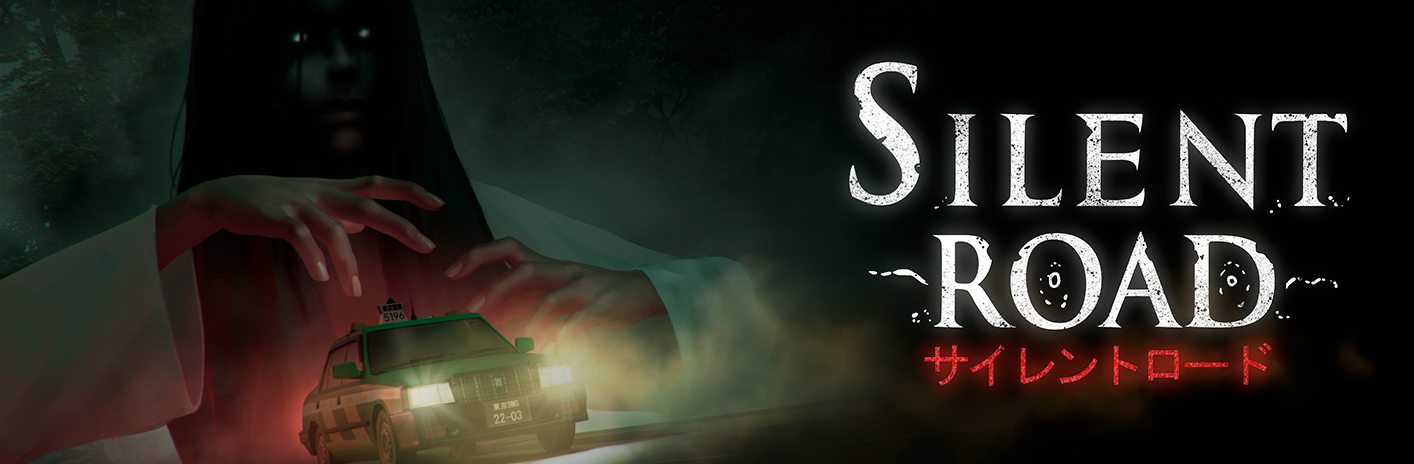
Psychological horror games need to be done right. Psychological horror games don’t solely depend on jump scares and cheesy trends to captivate players. Endflame may not have an extensive catalogue, but it’s a strong one. With their last release, Ikai, they proved they can capture that special niche of Japanese horror, diving into folktales and lore from that region. They have the pedigree for horror. That’s why I think Silent Road is not just familiar in name but speaks for what the game is. A journey on a road that’s silent literally or figuratively? There’s only one way to find out.
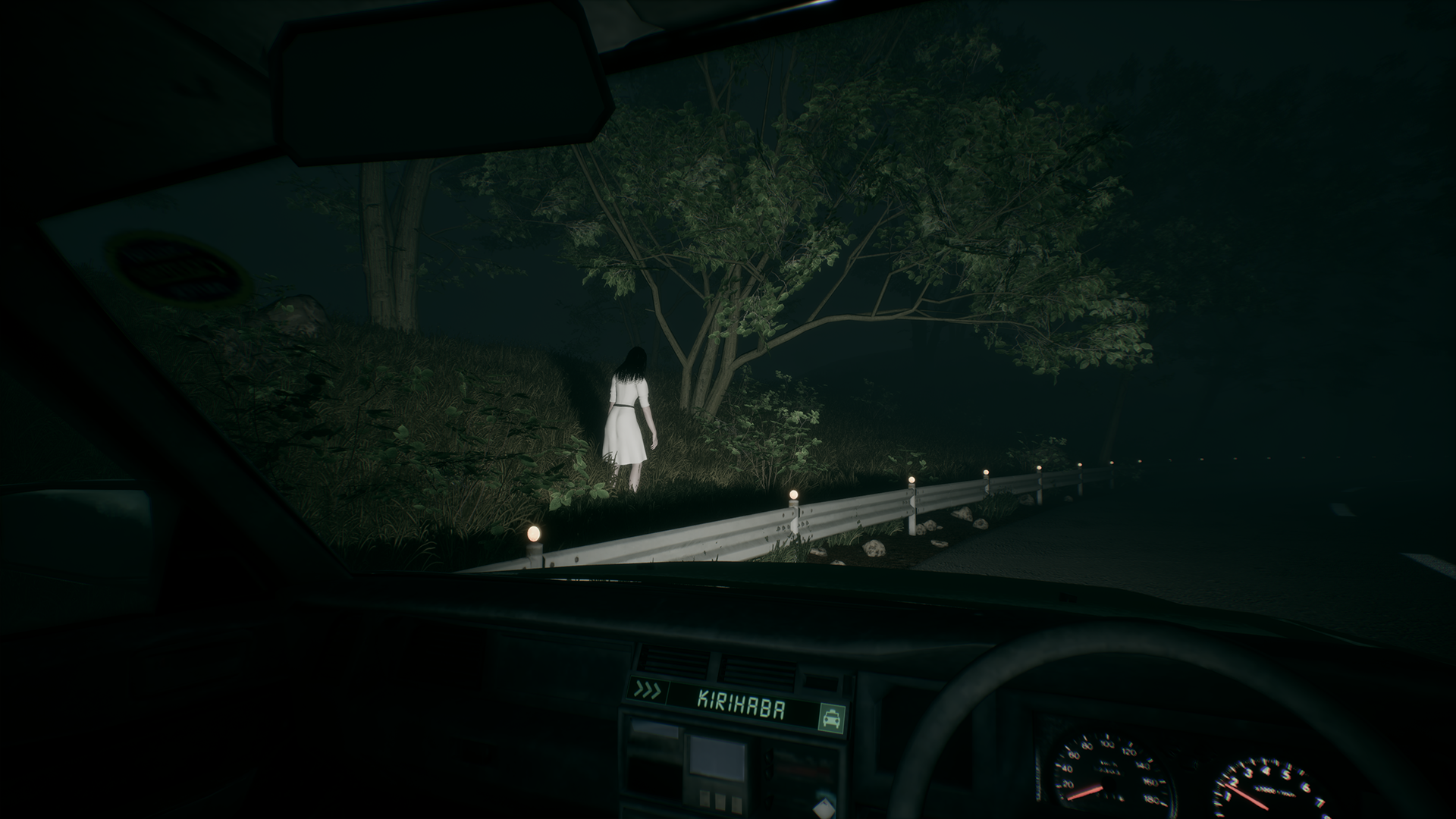
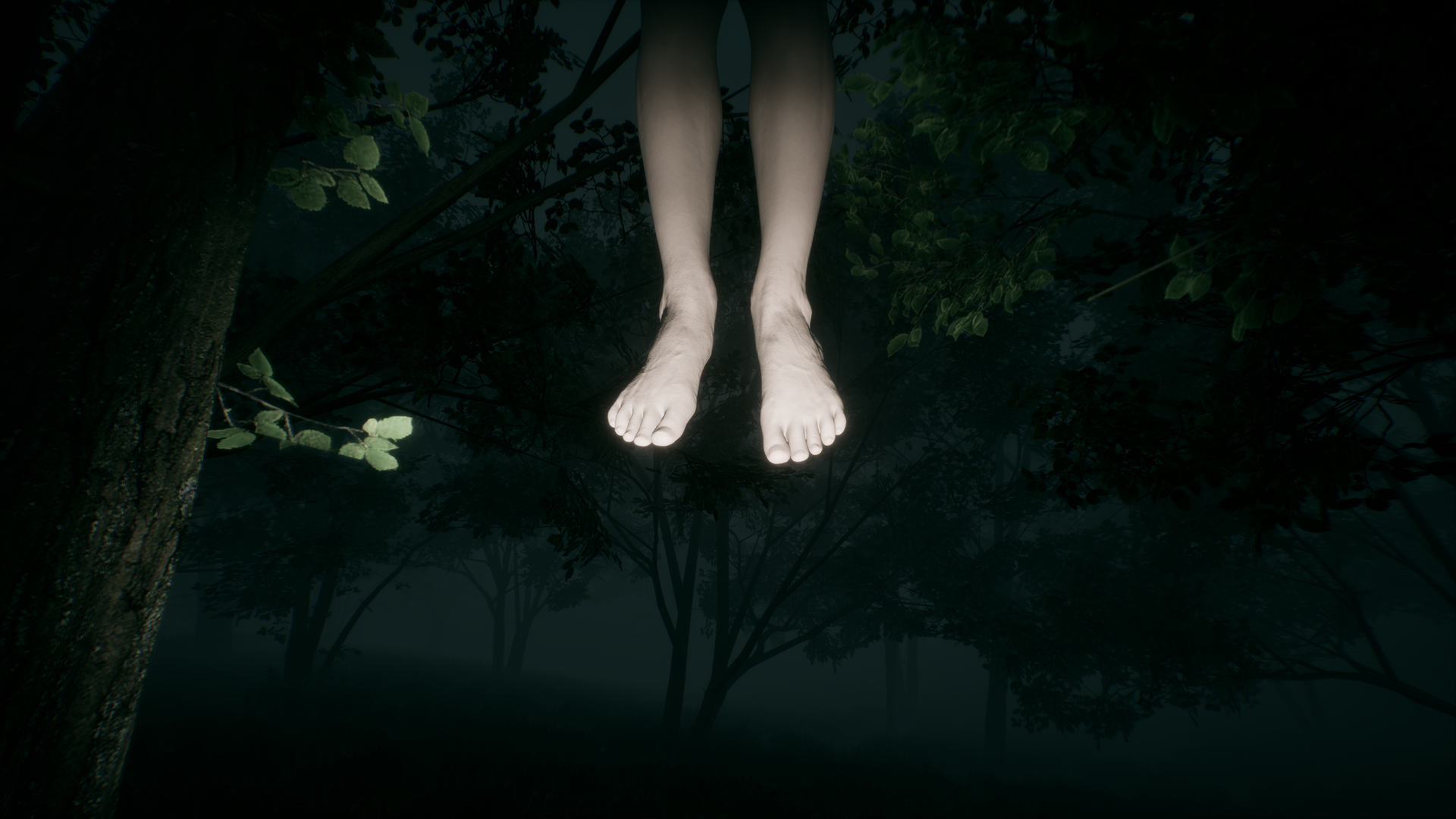
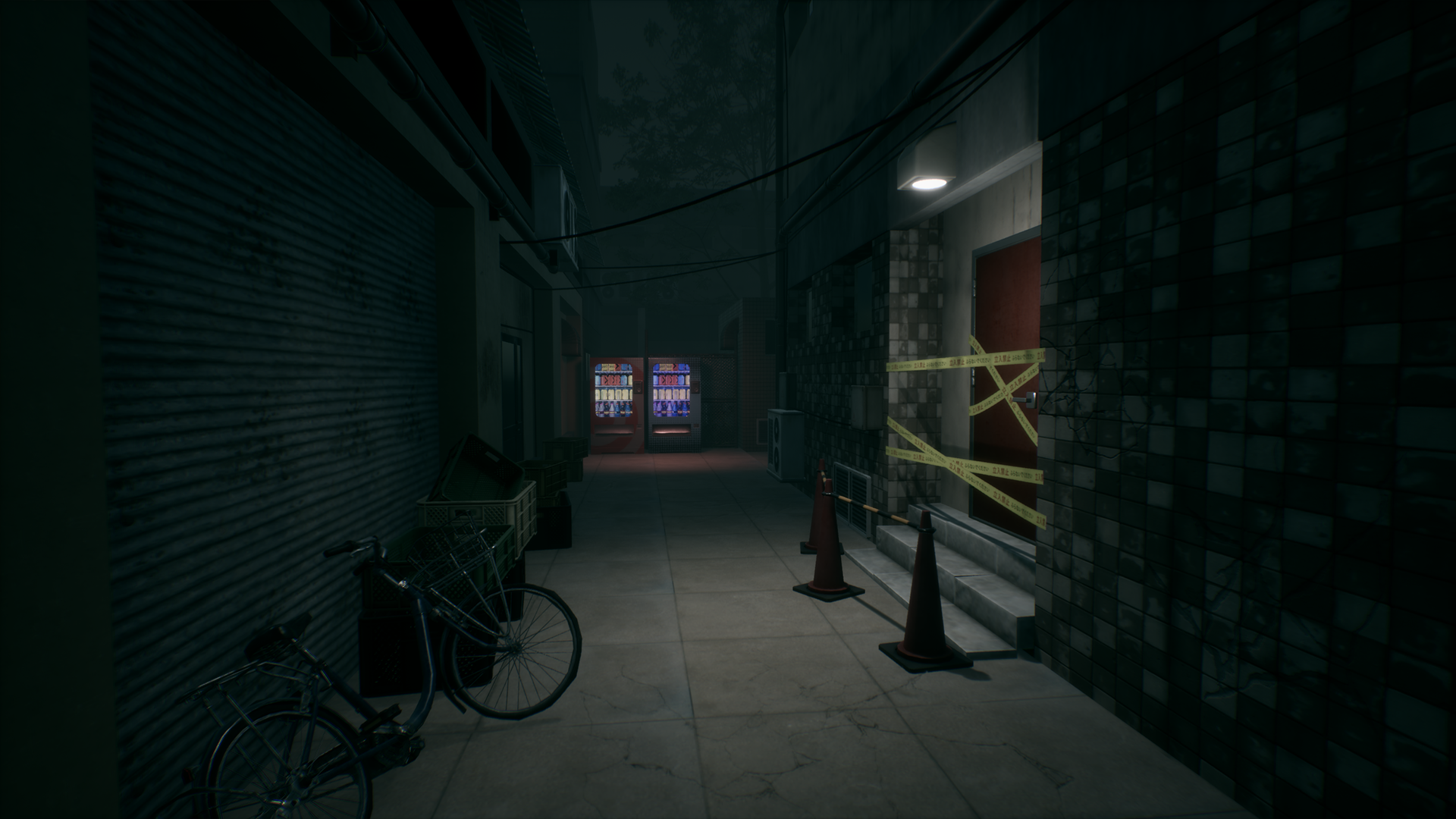
Looking at the trailer and various screenshots, you can see the clear influence of past horror games related to Japanese folklore. Fatal Frame and Silent Hill will immediately come to mind. The intense density of the forests of that region invokes many local and famous folktales, including the Aokigahara Forest, or “Suicide Forest.” Particularly the forests of Silent Hill 2, Fatal Frame II: Crimson Butterfly, Kuon, and even Siren come to mind. If you are a fan or even familiar with those games, then this might be something worth checking out. What kind of scares Endflame has in store for us will need to be seen, but after talking with them, it seems they are up to the task of slowly feeding players intense moments and building up to larger scares that pay off.
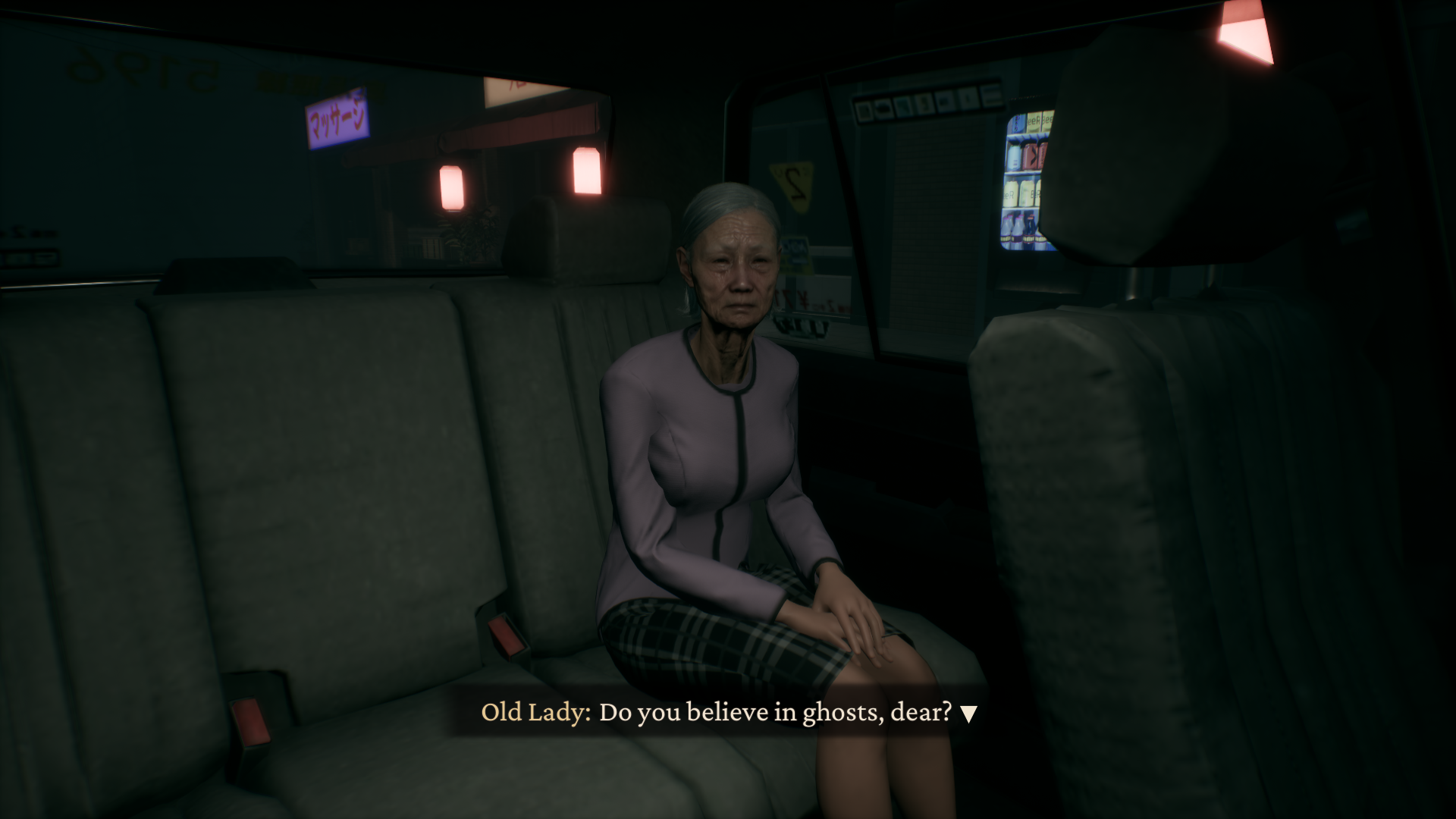
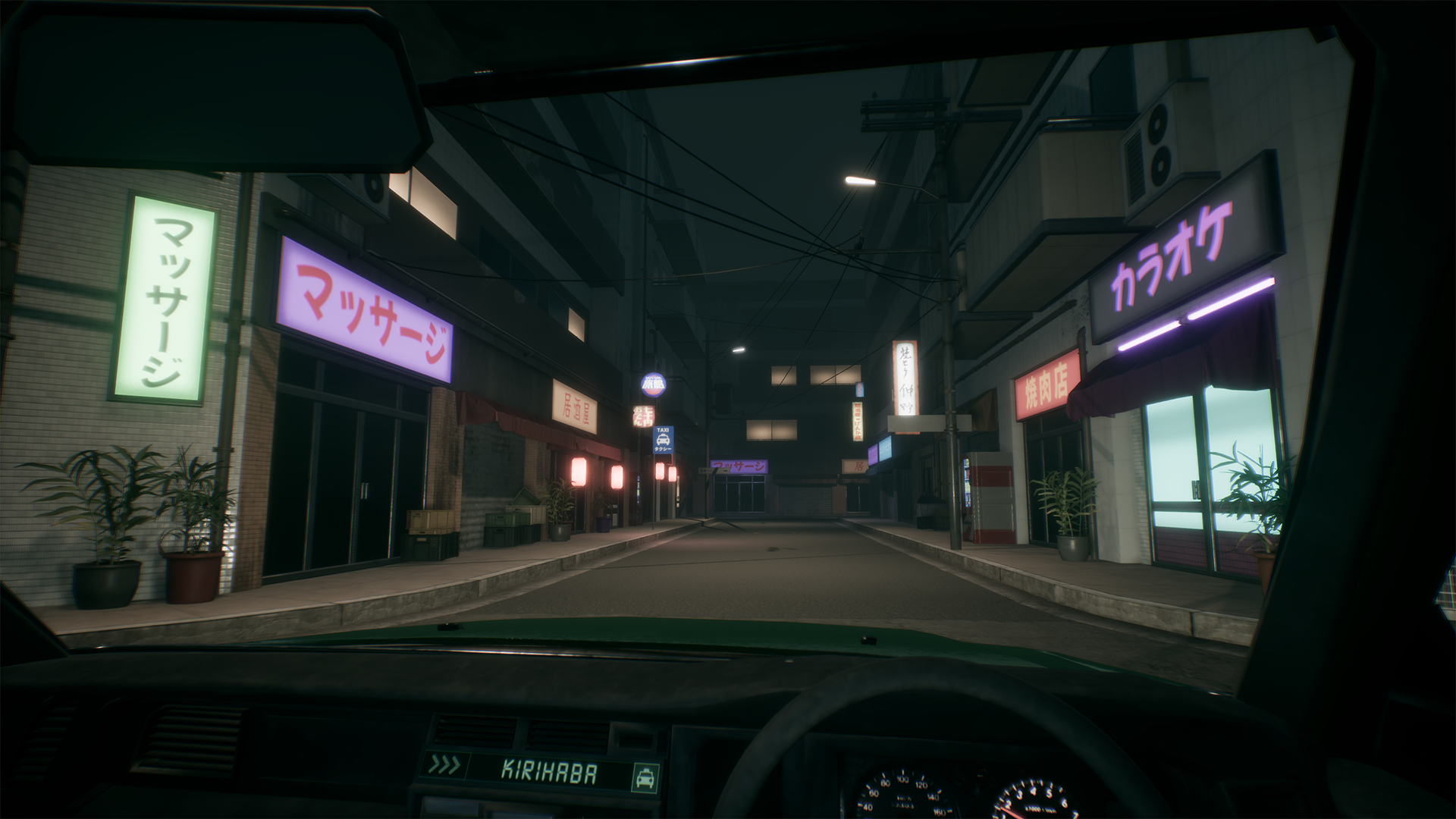
I talked with Endflame to pick their brains and get an idea of what we can expect from Silent Road. How does it compare to other games, and what makes it stand out from the ever-increasing indie horror scene? On top of that, how does it compare to their previous games, and what can we expect that’s different? The taxi mechanic is striking, as this is something that’s not really focused on as a main gameplay idea in horror games. The short stories you get from passengers are what can stick with players long after the credits roll. Check out the trailer below to get an idea of what to expect before diving into the interview.
Has any traditional Japanese folklore influenced Silent Road?
Yes, in fact, the narrative and setting are inspired by the legends surrounding Aokigahara, which is commonly known as Japan’s “suicide forest.” While the region in our game is fictional, it draws heavily from the eerie stories and lingering spirits associated with Aokigahara. We love Japanese horror, and our debut game Ikai explored yokai stories in a feudal setting. This time, we wanted to surprise players with a new angle while keeping the atmosphere they love, with a modern world haunted by the ancient legends of a forest marked by death.
As a fan of Ikai myself (I bought my copy for Switch from Best Buy on day one!), what have you learned from the feedback of that game that helped in Silent Road’s development?
Thanks for being such a loyal fan!
Player feedback from Ikai taught us what resonated most: atmosphere, memorable scenarios, and a strong creepy tone, so we’re bringing back all of that into Silent Road.
On the other hand, players also made us realize that some jump scares became predictable once they got familiar with the mechanics, which reduced the fear factor. Because of that, we’re focusing on adding more varied and unpredictable dynamics to the gameplay, with distinct twists so every ride or quest feels uniquely frightening in its own way.
What would you say sets Silent Road apart from other indie horror games of the same genre?
The Japanese theme and taxi-based gameplay are the key features that set Silent Roadapart. Very few games have explored these ideas separately, and even fewer have combined them. We feel they complement each other perfectly and let us create situations that wouldn’t be possible within the limitations of more conventional settings. You never know what might unfold beyond the windshield… but dangers can also be sitting in the back of your taxi.
Has the recent rise in Analog Horror influenced the game’s development in any way?
To a certain extent, yes. Analog Horror doesn’t rely on hyperrealistic graphics to be scary or appealing, unlike big productions. We can’t compete on that graphical level, but we can create strong experiences built on interesting ideas, atmosphere, and our own aesthetic approach.
You’ve stated that games such as Silent Hill and Fatal Frame were big influences on Silent Road. Are there any retro classics that influence the game as well, such as Sweet Home or Clock Tower, for example?
Yes, there are. Clock Tower, as you mentioned, is one of them, and Forbidden Siren [Forbidden Siren is what Siren is called in PAL regions ed.] is another major reference for us. Even though we’re not aiming for similar gameplay, Forbidden Sirenhas that creepy, quiet atmosphere and classic J-horror look that we love.
Has there been any other inspiration from other Japanese horror sources, like Junji Ito or anime or manga? When I see that Silent Road will feature short stories from drivers, the short story horror anime Yamishibai comes to mind.
We’re actually driving the story toward a single overarching plot, presented through the different perspectives of the passengers. We’re aiming for storytelling with varied points of view and personalities, which is why we added passengers as a core element. Silent Road features characters with distinct mindsets that can shift the player’s perception of events and help them form their own interpretation.
Even though it wasn’t an initial reference, I’d say the structure is closer to Death Parade, where each character has their own story linked to the main plot, guided by a central “conductor” figure who shapes the narrative.
Music and ambience play a huge role in horror titles and can drive a lot of the emotion. What can we expect from Silent Road in that aspect?
As we did with Ikai, we are paying special attention to music, but especially to sound. We learned that a strong soundscape is key to establishing a creepy tone both in the environment and in gameplay scenes.
How dark can we expect Silent Road to go? The darker the better, I say. Will there be gore or anything super graphic? Most horror fans love this stuff if it’s done well and makes sense for the story.
Silent Road is leaning more toward psychological tension, with a strong build-up driven by the stories and unsettling situations that definitely go dark. There will also be some consciously placed jump scares woven into that build-up. We feel this game is better suited to psychological horror with very dark backstories rather than graphic gore. As you said, gore needs to serve the story to work, and here it doesn’t feel necessary.
Can we expect Silent Road to be released on other platforms, such as Switch 2?
We’d love to bring Silent Roadto as many players as possible, just like we did with our previous titles. For now, we are keeping the scope small to guarantee the game’s completion. We’ll evaluate additional platforms and future opportunities as the game takes shape.
Will Silent Road be Steam Deck verified?
We are developing the game to run smoothly on Steam Deck, but verification is handled by Valve. That said, we are actively working to meet all requirements, although the actual verification process remains outside of our control.
DunkeyKong asks if the game will feature a fuel system for the taxi and if we can pet cats? That’s a big thing right now!
The game won’t have a fuel system. The main reason is that it would shift the gameplay toward management mechanics, and we don’t want players to be distracted by fuel interfering with our story plans. As for cats, I’m afraid we won’t have any, but if we did, we wouldn’t hesitate to add a petting feature!
Very interesting indeed! A preview will be incoming in the future, so look forward to that. Thank you to Endflame for taking the time to answer these questions and help connect some emotion to the game and get us excited for what’s to come. There’s no current release date, and the only confirmed platform is PC for now. If their release of Ikai is any indicator, we should hopefully see a console release and, mostly, a physical release eventually.
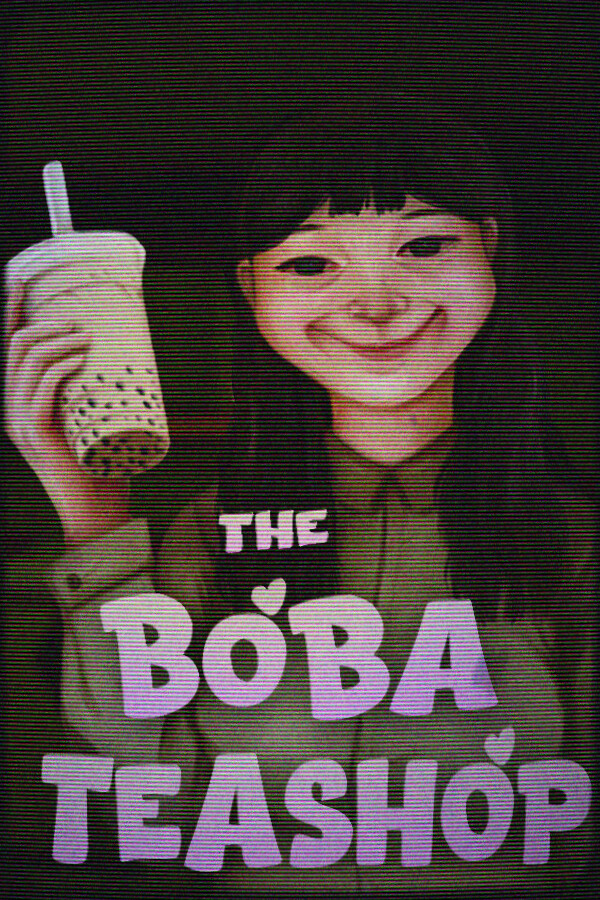
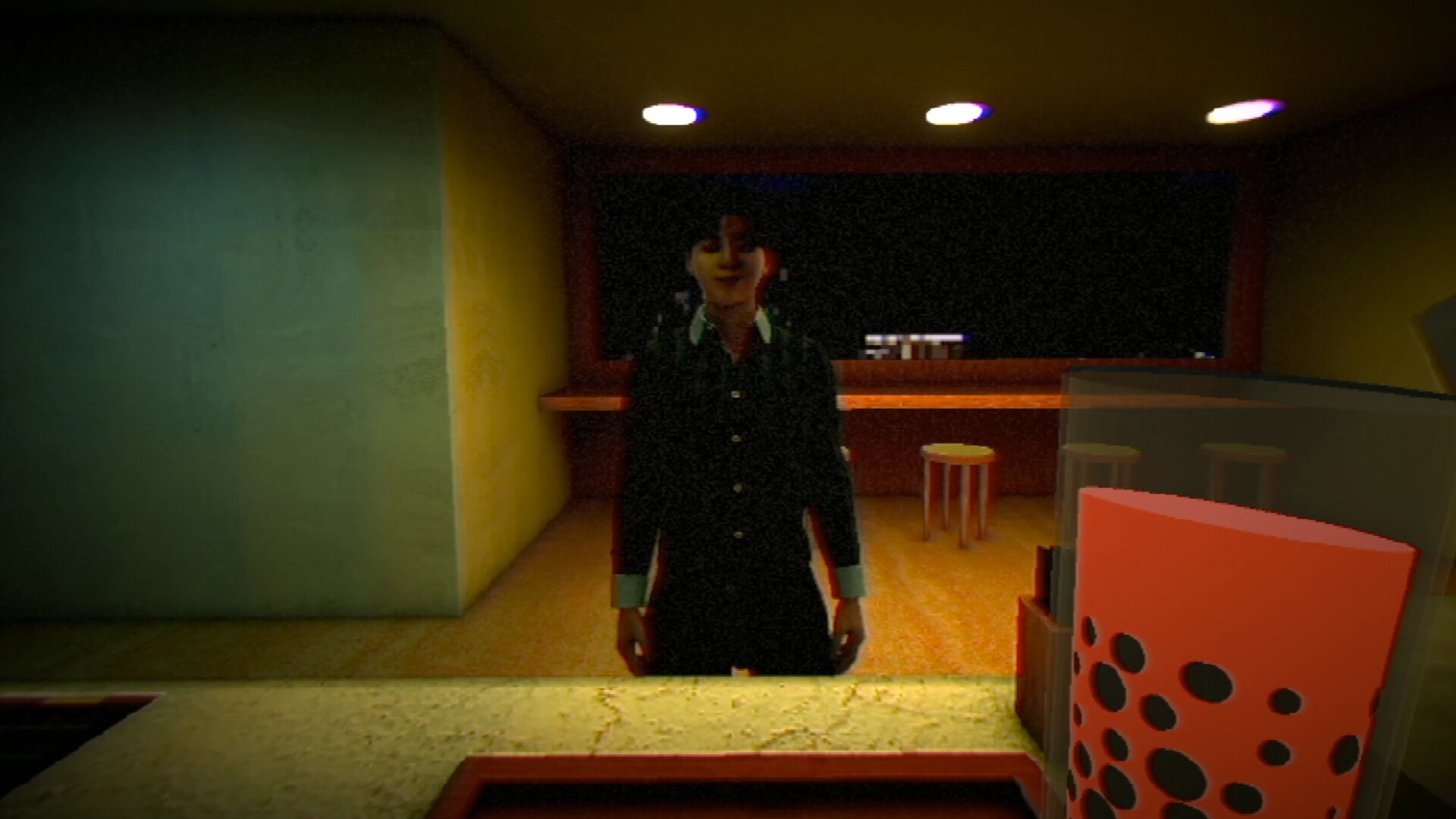
Stress from work is a real issue today. It’s quite common that in Asian cultures this can lead to suicide. Many local legends and myths revolve around overworked women who jump from buildings or hang themselves and then haunt where they work. The Boba Teashop does a great job of building atmosphere and tension in this regard. There is a time management simulator in here that’s actually quite fun, and sadly the game ends so soon. A few other PS1 style horror games of this ilk have done this, such as While We Wait Here. There isn’t much to this game. It’s a very simple game to look at, as you are only inside this single shop. The game is very dark and moody, with it constantly raining outside, and it always seems to be nighttime.
I have to commend the developer for some great scares. These aren’t just cheap jump scares or fake-outs. There’s some serious psychological horror stuff going on. Things will appear in the periphery of your view, and when you turn to look, nothing is there. You can’t make out the object, but you know something was there. There’s a lot of tension building, such as when you are told that an electrician will be working on the system and your lights will flicker. There’s constant fear that something will pop out at you or that one of those lights flickering is something else. The entire workday ends up like this.
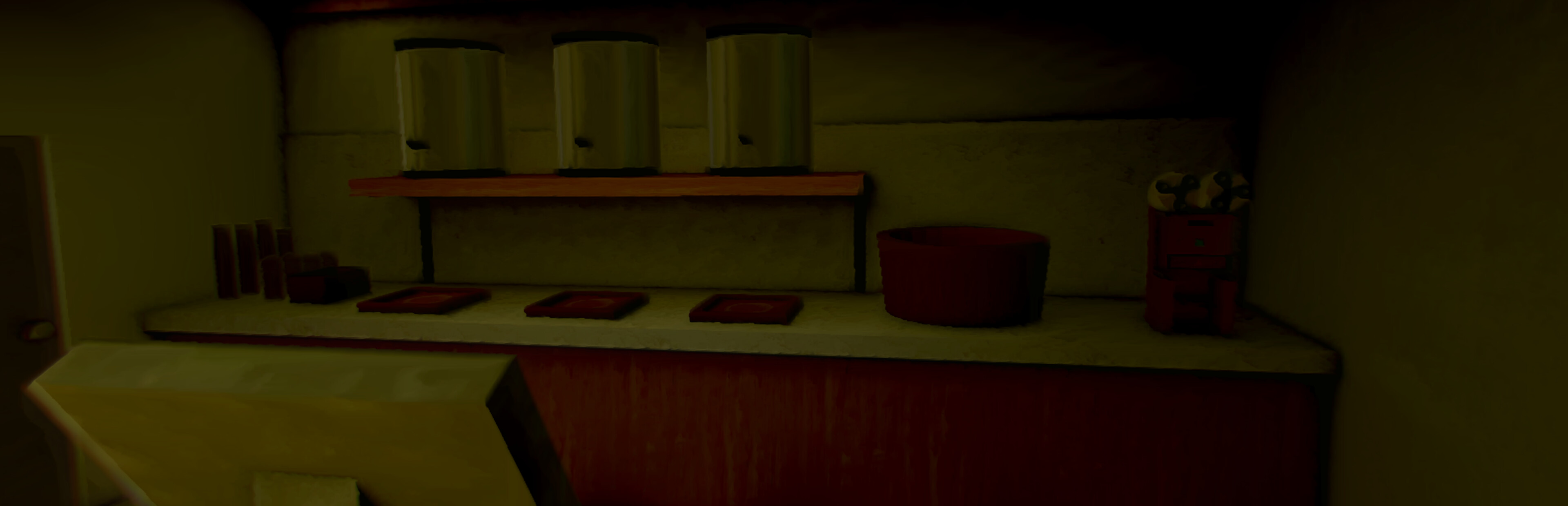
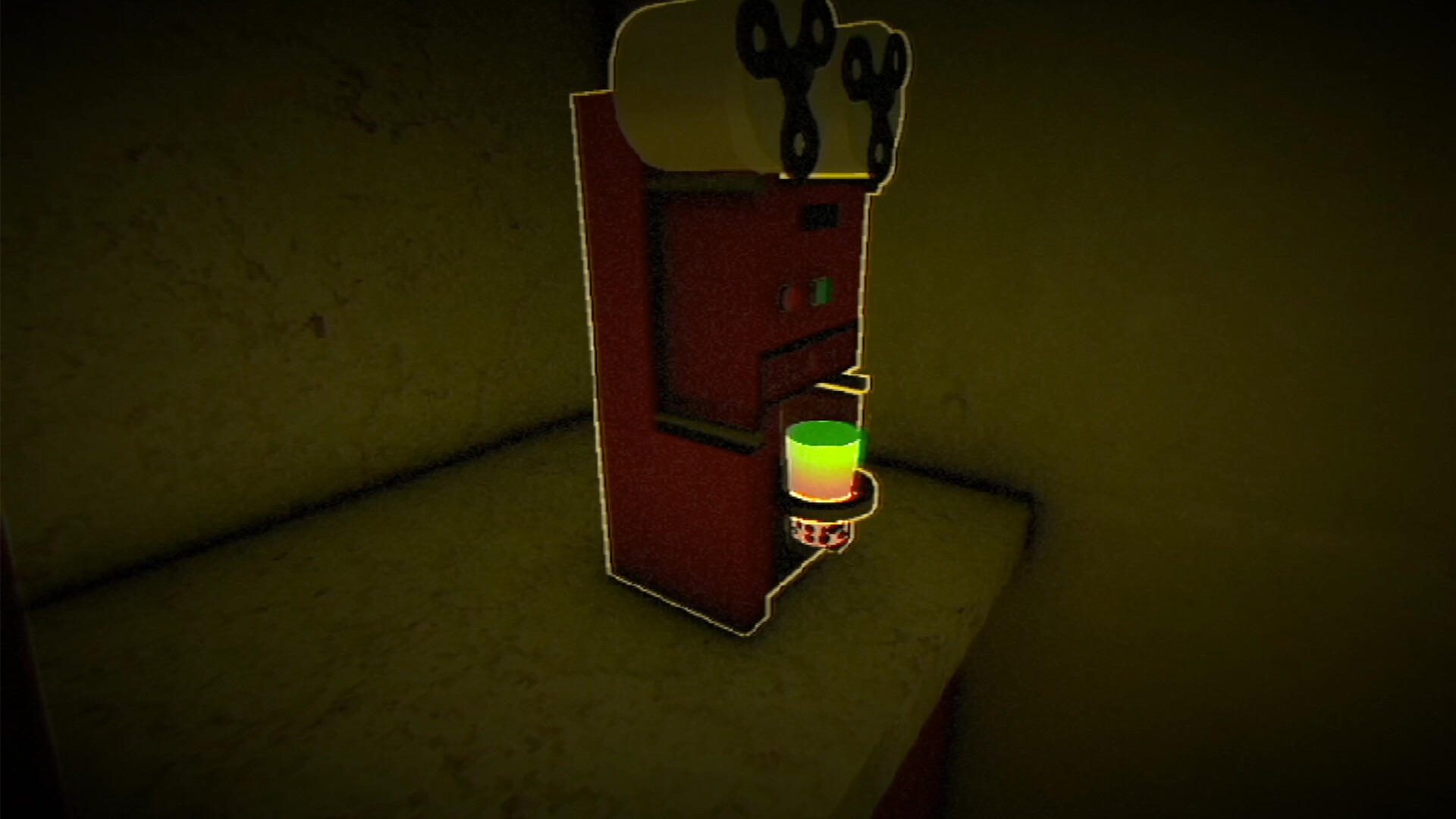
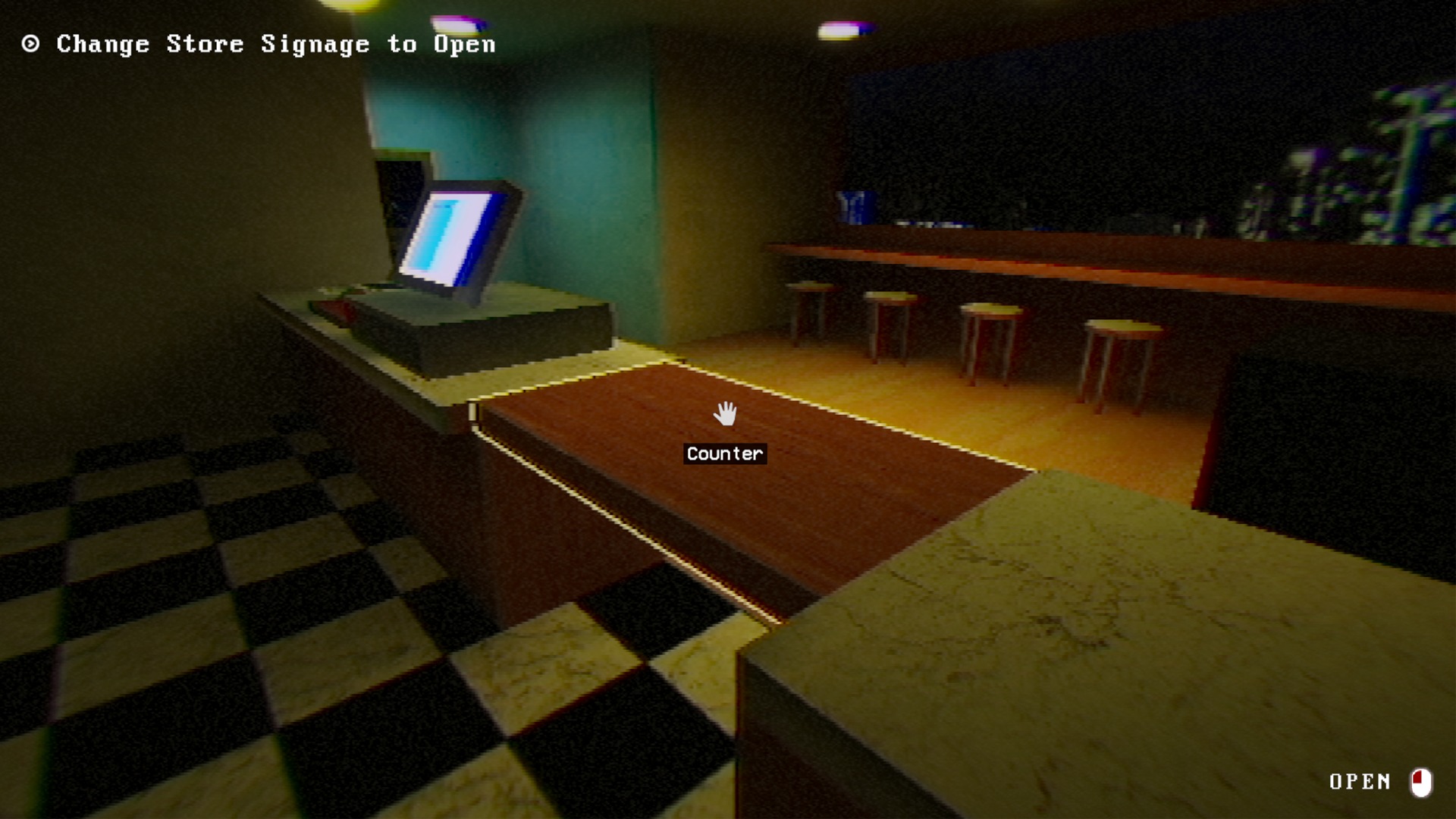
The main gameplay loop is greeting customers and getting orders. You start out simple with just boba tea. You pick up your cup and place it under the correct vat of liquid. Eventually you can use chocolate and coffee. You can then add milk from the fridge as well as various fruit. The last station is your boba, and then you must seal the top before handing it over. In the employee room the recipes are on the whiteboard if you get confused. It’s a very simple but addictive loop of taking orders, and you also get repeat customers. Some are rude, some are nice, and some are strange. Orders are displayed on the register, and when you hand the drinks over, the customers will pay and you collect the money. A couple of other people come in who don’t order drinks, but it all adds more tension. You get more and more stressed as the days go on and start seeing things.
I don’t want to spoil the scares and story, as this is such a short game. The visuals play well with this type of game. The low-poly graphics and lack of lighting keep you glued to your screen. In between the gameplay loop of making drinks, the game never lets up. Something is always happening. The game lasts maybe an hour at most, and this feels like a proof of concept or demo for something that could be bigger. I highly encourage those who are fans of horror and PS1 style graphics to buy this and play it. You’re supporting an indie developer, and the game is really inexpensive. Normally, I don’t care for these super short indie games. They are usually fairly disappointing and don’t offer anything memorable, but things come together just right here to warrant a playthrough.
When dealing with mental health or talking about it, there can be many obstacles to overcome. How do you approach it? Do you take it head-on and use a traditional narrative experience where you watch the protagonist spiral out of control, or do you use the approach Luto took and make it an interpretive indirect narrative in which the player experiences the downfall? Luto does an impressive job showing what it can feel like to experience depression, thoughts of suicide, and mental health issues. Never has a game done a similar job since Hellblade: Senua’s Sacrifice.
What we need to understand is that the developers aren’t approaching in a “sensitive” way but in a way that we can just fully understand. Unless you are experiencing or have experienced any mental health issues or even some sort of trauma that can lead to this, we have no way of knowing. I particularly enjoy how the human mind deals with these things and the artistic interpretation of it. While I have experienced my own sets of trauma through my life, it’s still interesting to see what else is out there. You play as a man who is dealing with the loss and grief of family members. I don’t want to spoil the story, but it’s not the direct tale, but how you experience this interesting grief.
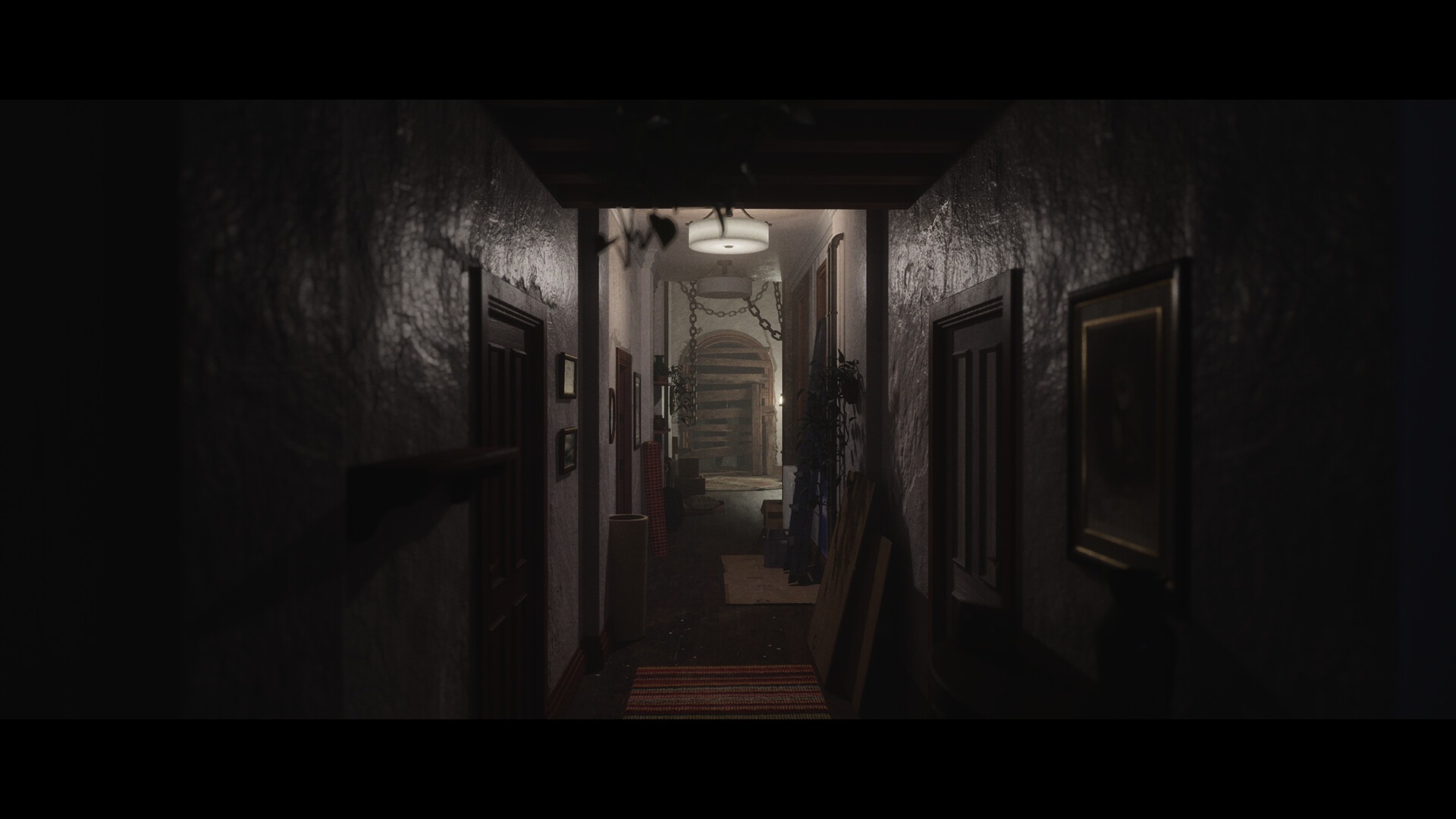
There are some trippy gameplay ideas here that I have yet to see. There is some direct inspiration from the P.T. demo by Hideo Kojima. The nearly sterile lighting and hyperrealistic house that feels lived in yet cold and empty at the same time. The buzzing of lights, ticking of clocks, and just your footsteps are all you hear. The silence can be deafening. There is a cheeky British narrator that talks you through the game, similar to The Stanley Parable or something straight from a Media Molecule game (LittleBigPlanet). However, something seems off with this narrator. As you walk out of your bathroom and complete your day as the narrator intends, you try to break the sequence. This leads to further sequence breaking and then to some meta-narrative ideas without spoiling anything.
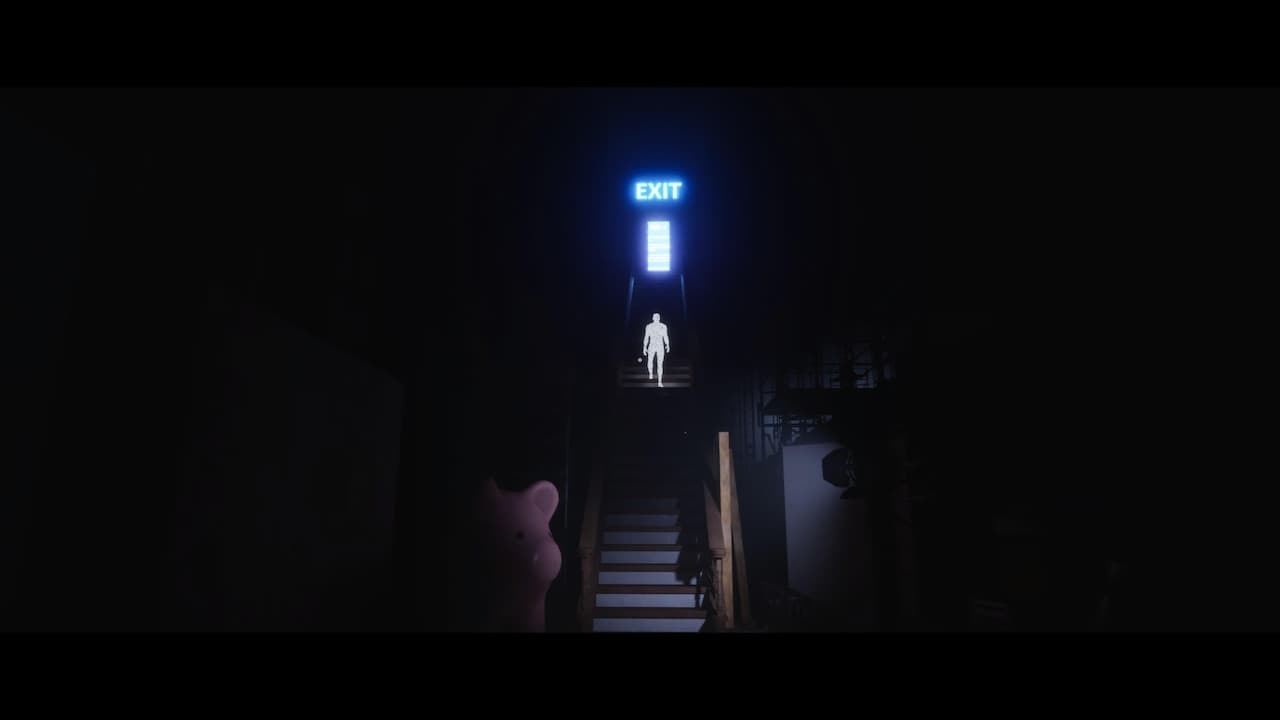
Some puzzles involve solving looping hallways and corridor issues. Identifying numbers and observing objects in specific ways are key to solving puzzles. The first example has you trying to get a hammer hanging from a chandelier because you need this to pry wood off a doorway. You can keep walking downstairs only to end up back at the same staircase. You need to find four numbers to enter as a phone number to break the sequence and drop the hammer. You need to be observant and look for breaks in patterns. It’s very reminiscent of P.T. in that sense. These puzzles can be fun, but if you’re not good at finding them, some can be hard to figure out.
As the game moves on, some of the horror elements will pop up, and, while they are subtle, the excellent lighting effects help with this. The game is very surreal and haunting in the sense that nothing makes sense. It can be disorienting and go against the grain of what makes sense. This can be scary on its own rather than jump scares and creepy monsters. There are none in this game. Some scares are very subtle and only exist if you spot them, or the atmosphere alone can just be downright tense. You will expect something to jump up at you or come out of a doorway, but nothing ever does. That’s a fantastic way to create horror. Luto makes the scares seem like they are there, but it’s all in the player’s head. I don’t want to spoil the short game by explaining anything in detail. With a walkthrough, you can complete the game in 4-5 hours.
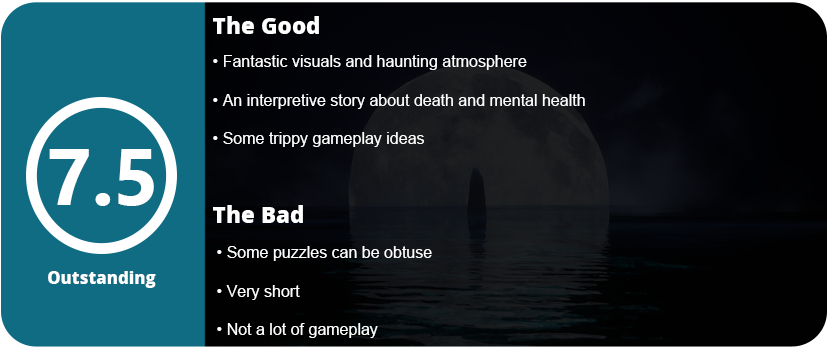
Overall, Luto is a fantastic psychological horror game. I just wish there were more puzzles and gameplay and some of the puzzles weren’t so obtuse. While I like that the story is interpretive, this is becoming a cliche in indie horror titles and can be tough to pull off with such short lengths. Luto does a better job than most, but it’s still not perfect. While I love the lighting and atmosphere, the game does look kind of generic in spots, such as the hyperrealism of the house and day-to-day objects. Things don’t really start looking much different until more of the surreal stuff starts to pop up.
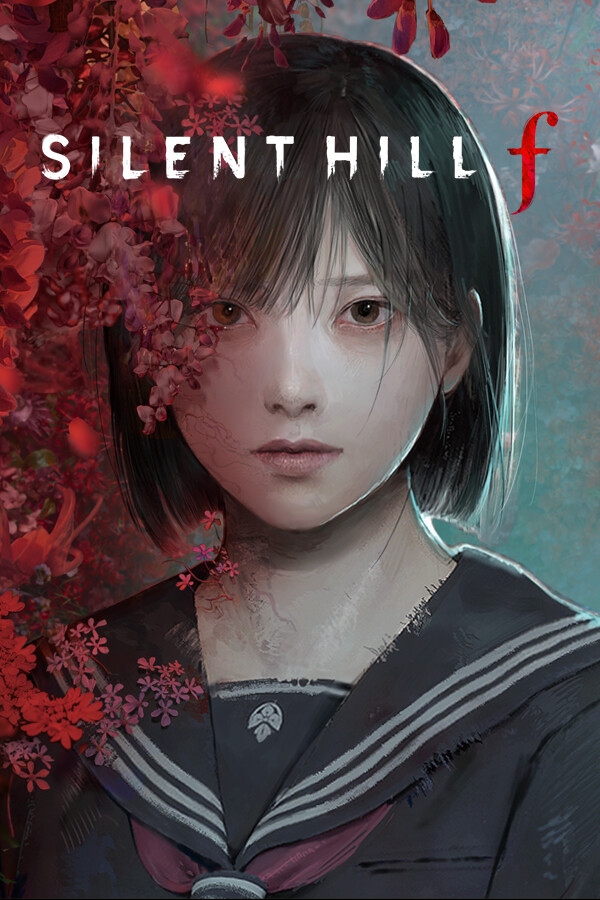
Well, we finally made it to another Silent Hill release. This time it’s excellent. I will start off right away with that. After the utter disappointment of Downpour, the last mainline game in the series, everyone thought the series was dead. After the failure of resurrecting the series with the abysmally boring dungeon crawler Book of Memories for Vita and the terrible HD remaster of SH2 and SH3, it felt that Konami was done with the series. Downpour had some good elements, but it was a terrible game to play. With the huge success of the SH2 remake from Bloober Team, it feels like Konami is going full steam ahead with the series once again. For those who don’t know, the “f” moniker at the end means “forte” to contrast the “Silent” part of the title. While it’s not clear if this is a mainline title or not, as this is the first game not set in the titular town on the East Coast of the US.
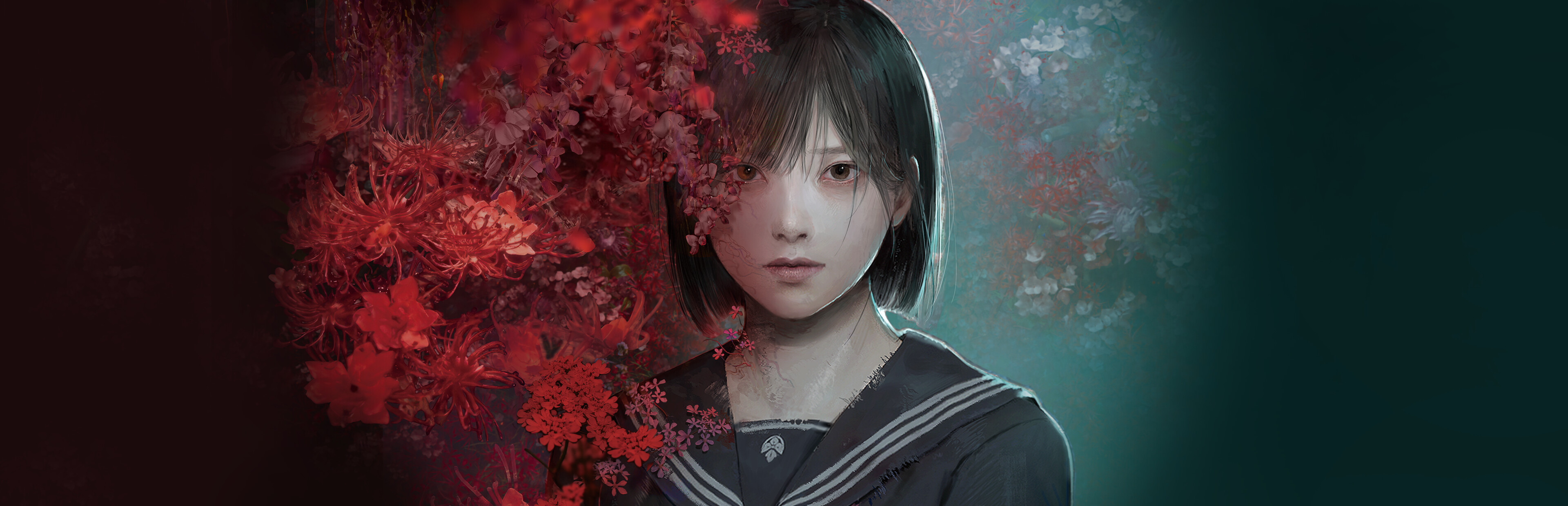
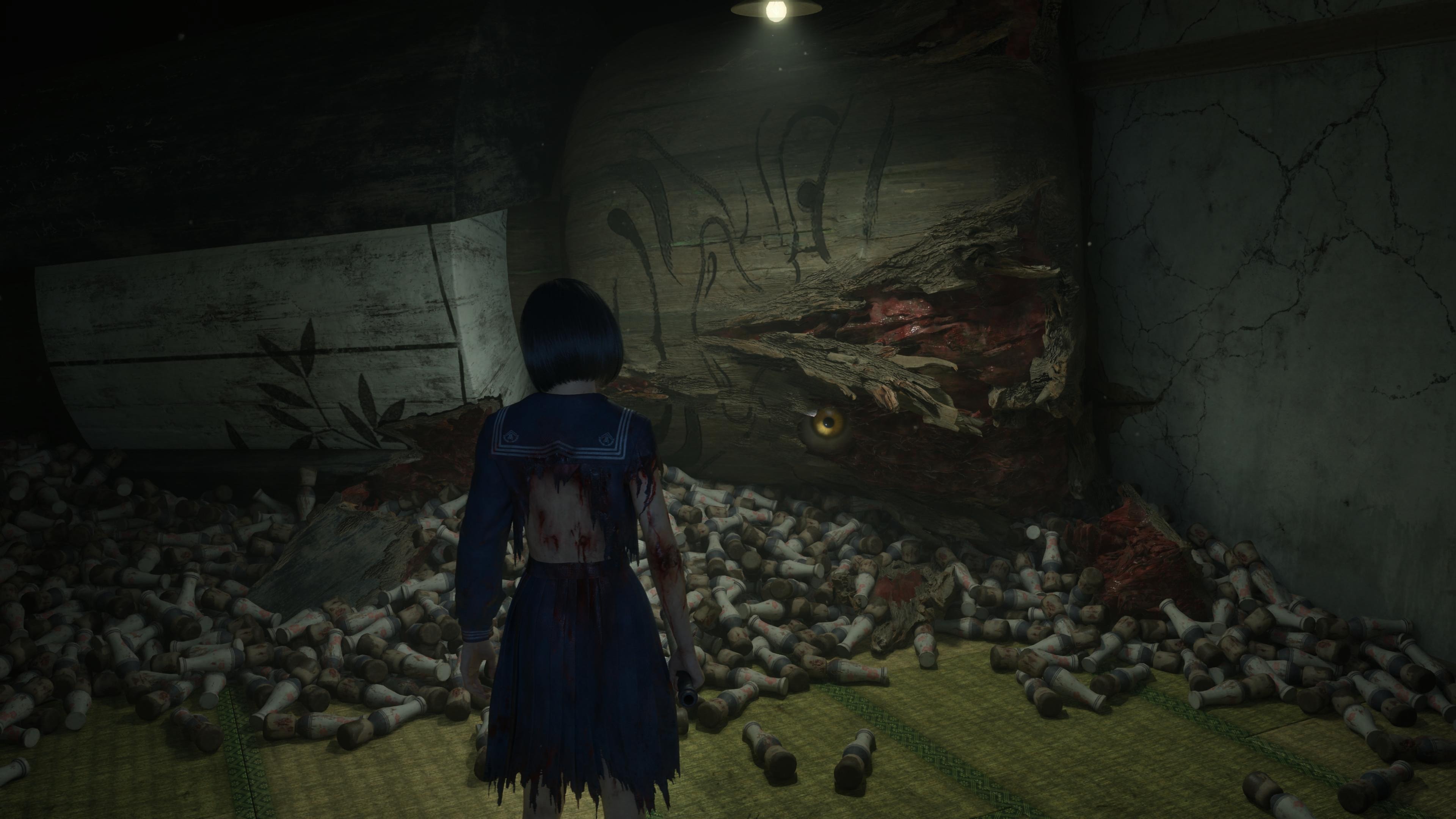
SHF is set in post-World War II Japan. Hinako Shimizu is your leading lady this time around. A shy high school student who has a disturbing and dysfunctional family and ends up getting trapped in what seems to be monsters and red fungus and spider lilies taking over the town. Hinako relies on red capsules to stave off headaches. As you play through the game, Hinako is seemingly teleporting to a Shrine world, when passing out, and the real world, which is the town of Ebisugaoka. This is a small town, similar to Silent Hill itself, that’s full of lower-class citizens who rely on living off the land. The game strays far from the Western horror we have seen in the series and relies more on Eastern horror and Japanese folklore. It’s hard to get used to, but the themes and Silent Hill DNA are all here. The enemies move like mannequins; they look grotesque and horrific, the music by Akira Yamaoka is absolutely fantastic and takes the usual Silent Hill music we are used to and adds an Eastern flair during the fog world (real world). The music here is somehow darker and scarier than it’s ever been. There’s more emphasis on unease and disturbance. The soundtrack is full of out-of-tune instruments, wailing cries and hymns, and screeching string instruments, all mixed with traditional Japanese folk music. It’s a nice twist on the soundtrack while keeping it sounding familiar. Kensuke Inage composed the Shrine world pieces, and they contrast well with Akira’s music. He is mostly known for composing music for Musou and fighting games of various franchises.
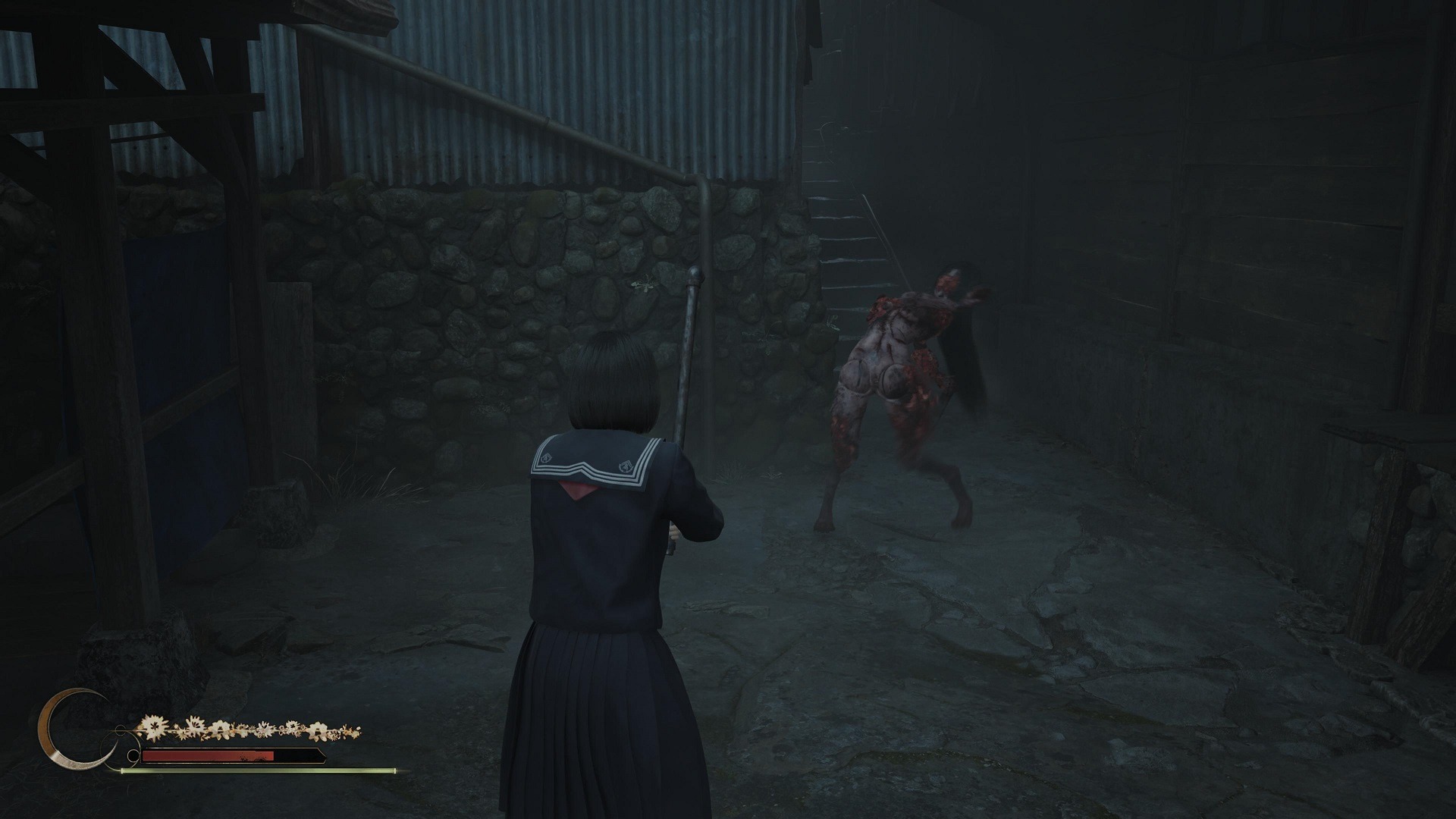
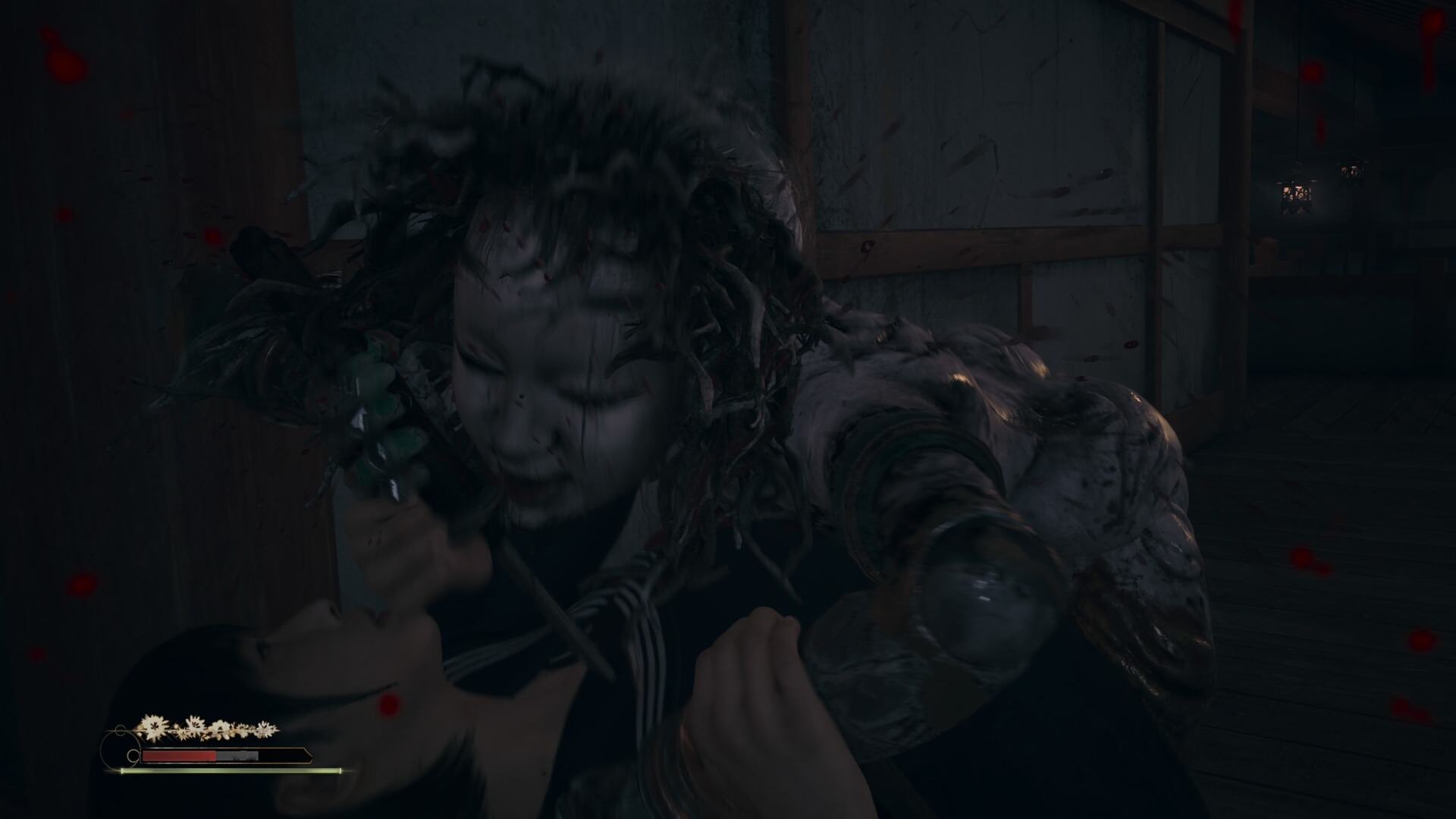
With that said, Hinako controls really well, and she should. She is small and lightweight and can run around with ease. Combat is the best the series has had so far. While it’s simple, it is hard to master. You can dodge in this game, and that’s the hard part. Enemies will flash red, and for a split second you can press the heavy attack button to do a powerful attack and stun them for a perfect dodge. Hinako also has a focus meter that she can charge up, but this uses focus energy. If you get attacked while trying to charge your focus, it will take a portion of the bar away, and you need to use various items to restore this. You also need to manage a stamina meter used for sprinting, dodging, and attacking. If you run out, Hinako will run out of breath and will pause for a few seconds to recover. They took a page from the Silent Hill: Origins book, and weapons now have durability. It works much better here, as you can carry up to 3 weapons and repair them with toolkits. There’s light, medium, and heavy durability. Weapons like kitchen knives are fast, while crowbars and lead pipes are normal speed. Axes are slow and do massive damage. There are no firearms in this game. The combat is raw and visceral, and it feels like Hinako is just doing what she can to survive. She’s not a warrior. You need to manage these systems, heal, and store meters while fighting off enemies, like the series’ staple. Run. Run like hell if you can.
You can upgrade by using money from selling items at save shrines. You can exchange some healing items or find valuables hidden everywhere. You also need an Ema board to upgrade your character. You can upgrade your life, stamina, and focus meter as well as your passive ability size. You can equip up to three Omamori, which are found throughout the game. These add passive abilities like extra health, stamina, easier-to-do perfect dodges, refilling life upon death, allowing you to run a little faster, etc. This is a great way to add some depth to the combat system without it feeling like a full-fledged RPG or something more complicated than it needs to be. If you want an easier time, you are encouraged to explore and find extra keys or go where you might be scared too.
Shrine worlds have specific weapons that don’t have durability. I don’t want to spoil the story, but about halfway through, Hinako gets a very powerful weapon in the Shrine world. However, in the Fog World, she’s very vulnerable, and while enemies are easier to fight, she is weaker. In between fighting, you need to use your map like the traditional way. Blocked doors are scribbled out, open doorways and pathways have arrows, and objectives are circled. It’s a great map system and has worked well throughout the series. You won’t get lost like in older titles, and there are clear objectives. Puzzle difficulty is still here, and they become harder with more vague hints the higher you go. The puzzles are great and require full manipulation of objects and deciphering clues logically. The harder puzzles are in the Shrine world, as well as more combat. In the Fog World, you are trying to avoid combat and get to the next objective as quickly as you can.
The game’s story was written by Ryukishi07, whose pen name is famous for the When They Cry manga series. That series is known for intense drama, pain, and suffering. This clearly is translated into the story of Silent Hill f. While the series continues the tradition of needing some player interpretation, it’s a bit more structured. The series continues to deal with mental health and disturbing moments of human nature. There are some really dark scenes in this game, and as the story crescendos into madness, the player is left to interpret the goings-on more and more, which is fine by me. This is also the longest game in the series. I did a full collectible playthrough, and it took me 22 hours to finish. Even if you blasted through the game, you are still looking at a near 20 hour game. There’s a lot to see here, and the visuals are absolutely stunning. The game does use Unreal Engine 5, so there are some technical hiccups here and there, but on my playthrough they weren’t too noticeable. The game captures the essence of Silent Hill, and we can finally say that AAA survival horror is back.
Surreal horror games are becoming more popular, but outside of the retro PS1 style graphic-type games, there’s not much. Bio/biomechanical horror is something I really love, and my two favorite artists of all time are H.R. Giger and Zdzisław Beksiński. Their worlds and art are unlike any other. The surreal, dreamlike atmosphere invokes feelings of sadness, regret, melancholy, hopelessness, and many feelings of anguish and misery. While Giger has more of a focus on characters, Beksiński focuses on entire worlds. Vast landscapes that seem to go on forever and scenery that feels like it would invoke the darkest fears you could possibly imagine. The striking lines of Beksiński’s art with vertical and horizontal latticing of flesh and frozen faces of agony and torment are stunning and hard to look away from. This type of art has only really been done in more modern games, with those being Scorn and The Medium. Sadly, there’s also some sort of curse with these games having stunning soundscapes, art, and ideas but just not being the greatest in terms of gameplay.
Necrophosis is what Scorn should have. No first-person gunplay; just puzzles and walking around and soaking in this insane world. There’s clear influence from Scorn in Necrophosis, from the main character’s design to the aforementioned art direction. You wander around incredibly detailed landscapes and will just pause and look at every strange mountain face and object before solving the mundane puzzles and object hunting. Mountains are literal faces, countless giant bodies frozen in scenes of torture and dread. Closer up there will be smaller scenes of deathlike people or creatures depicting the moment of death or representing their current state of endless torture. Some creatures are stuck inside of objects, twisted and gnarled into globs of flesh and eyeballs with just a mouth. Some will plead to you to end their suffering. This is usually done by adding them to your inventory (yes, entire bodies) and using them to solve puzzles. You will carry this fleshling around with you with their frozen face staring at you. There might be another creature who needs divination, so you feed them something, and out comes a key to advance a puzzle.
It’s not the puzzles themselves that are fascinating. Quite the opposite. These are very simple in form. There is usually a small area, and you will see different spots to place objects represented by floating gold dust. It’s a matter of interacting with everything, gathering objects, sticking them in the right spot, getting new objects, or manipulating certain items. Manipulation is just as disturbing as talking to the inhabitants of this world. You pull your brain out of your skull and stick it inside of another being (sometimes interlocked with other beings) to do things like using a skull spider to climb up onto a fifty-foot fleshy creature sitting in a flesh chair and just scooting their legs backwards so the throne-like object blocks the view of another creature so you can walk past. That sounds insane when reading, but words can’t do this game world justice. It needs to be experienced to understand what’s going on.
With this being an indie game developed by a few people, there is some mechanical jank here. Walking is rather slow, animations are a little stiff and animatronic-like, controls feel slightly sluggish, and the game is insanely linear to a fault. Clearly the main focus was the art direction, and everything else was an afterthought to make it a game. Thankfully, the devs aren’t doing anything that feels bad, such as combat. Some creatures can hurt you, but it’s as simple as walking around them or solving a puzzle to get past them. There’s no stealth or anything like that either. This is a pure walking simulator, and it helps ease the jank of the gameplay to make it tolerable.
Overall, I can’t stress enough how much this game needs to be experienced. It’s one of the most visually striking games I have played since Scorn. It’s something you will talk to your friends about. This type of horror is the true stuff of nightmares. No jumpscares, no eerie soundtrack. Just straight-up horrifying visuals, and you are surrounded by them. Your entire world is just that. I also have to mention the haunting voices of some of these creatures that are just booming noises of bass and sounds. It’s unnerving and something I have never heard in any game before. I just wish there was more to the gameplay side.
2005 was the tail end of Resident Evil clones. This period was just before the emergence of Resident Evil 4 clones. It seemed to never end. Cold Fear has an intriguing premise and a couple of neat gameplay ideas, but they are never fully explored. What we get here is a survival horror title that focuses mostly on action and has little horror to offer. I like the idea of being stuck on a ship during a storm. You feel claustrophobic, and Cold Fear did a decent job portraying this. I experienced a constant sense of urgency, needing to act quickly before the boat overturned or the zombie infection overtook me.
Of course, it’s never that simple. It’s not just a generic zombie virus. Instead, you play as a U.S. Coast Guard agent (neat idea), Tom Hansen. He’s your typical generic blonde-haired action dude with no personality who tries to be amusing but never is. He answers an S.O.S. and tries to rescue those on board. You find out there’s a species called Exocels that is infesting everyone on board. The scenario leads to zombified crew members that wield knives and can sometimes shoot. There are also regular humans, who are the Russians on board trying to kill you. It’s not a very intriguing plot or very deep. The game is only 4-5 hours long, so there’s no room for any plot development. Diaries scattered throughout the game provide the majority of the Exocel DNA exposition. There is only one other character, Anna, who is a Russian daughter of the person you’re rescuing. It’s not important, to be honest. There is a small escort section at the beginning of the game, but after that, you mostly do not see Anna again, at least not with the character you are rescuing.
With the almost neat story out of the way, the game’s main focus is combat. There are quite a few weapons in the game, such as a pistol, shotgun, grenade launcher, flamethrower, crossbow, submachine gun, and AK-47. The pistol and submachine gun have a flashlight attached to them as well as a laser sight. The AK does as well. There aren’t many really dark areas in the game, but the flashlights do come in handy in some situations. The humans and zombies are pretty boring and straightforward enemies. There’s no dodge button, but if you are grabbed, you execute a QTE to do a critical hit. Zombies will only die when their heads explode, which is a neat gameplay mechanic. You can shoot the zombie’s head off or perform a head stomp on them when they are down. If they burn up or experience electrocution, they also die.
There is a lot of environmental damage that can be done, such as shooting barrels, fire extinguishers, and valves on walls and shooting some electrical boxes to electrocute enemies in water. There were even a couple of scenes in which you extend a bridge, and if you think ahead, you can have the zombies fall off by pulling the bridge back. These were fun mechanics, but they aren’t utilized frequently. The very cramped and small rooms are difficult to maneuver and fight in. The camera switches to an over-the-shoulder perspective reminiscent of Resident Evil 4 when aiming, but it snaps back to a pulled-back third-person view and occasionally switches to fixed camera angles. It’s disorienting, and while not game-breaking, it wasn’t ideal for this much action. The later Exocel enemies are more interesting to fight, such as the Exoshade, which is invisible in shadows; there is one that’s invisible all the time, and you must watch for wet footprints, or it will be visible when passing through steam. The Exomass, resembling a bull, stands as the most formidable opponent in the game. The only way to kill it is by shooting its red club-like arm until it explodes. You need to utilize each weapon for each situation, such as the AK for long distance and everything else for close quarters, with the shotgun being the best weapon. Each of the game’s two sections (the ship and the oil rig/research facility) has two restock rooms and a limited medbay. You can’t restock forever.
Sadly, what drags the whole experience down quite a bit is that there is no map, and the labyrinthine maze-like areas will confuse you. Sure, you have objectives, but they mean nothing if you don’t even get a clue as to where to go. You will wander around aimlessly until either an event occurs or you find a sparkling object nearby. Saves are also predetermined before entering certain doors that either trigger a cutscene or just after. They aren’t spread too far apart and were fairly placed. Unfortunately, once you finish the game, there’s no reason to play again. It’s not intriguing enough to. While the game is serviceable, it suffers from frequent frame rate drops too.
Overall, Cold Fear isn’t scary, but tense. The many gameplay ideas are peppered throughout that show promise but are never fully used. Waves can inflict damage, the boat can rock you when you’re on deck, you can swing objects that can strike you, and you can use environmental hazards to combat enemies. The game either disperses these ideas excessively or utilizes them sparingly. Although the combat is decent, it suffers from a sluggish camera, and the game’s overall layout is too constrained to provide intense action. You need a guide to avoid wandering aimlessly without a map. The visuals are pretty decent too, but nothing spectacular. Everything is gray, metallic, and drab with decent lighting effects but suffers from severe frame rate issues. Cold Fear isn’t a fantastic survival horror, especially when most of the horror is missing. It’s short enough to not be offensive, and don’t expect a deep story or intriguing characters.
Curse is the most deceptive video game cover I’ve ever seen. It looks freaking scary and is a damn excellent cover. It’s also a pretty rare game on Xbox, one of the more expensive ones in the library. With the subject matter being a survival horror game, I had to add it to my collection. I didn’t do much research for the game. When I finally got a copy and booted it up, I stared at my screen. “Oh,” With a blank stare, I flatly exclaimed. It’s one of “those” survival “horror” games. It’s essentially an Alone in the Dark clone. It’s no more scary than a Goosebumps TV show. The beginning cut scene doesn’t invoke much hope, and neither do the production values.
So, you play as a man-woman duo, Darien and Victoria. You only play as Victoria a few times in the game, but you are mostly Darien. The game is set in late 19th-century England. The two protagonists are American, but everyone else seems British minus Abdul. The hijinks here end up becoming 19th-century Night at the Museum. Darien’s childhood friend Victoria invites him to a British museum when an artifact is stolen, the titular Isis statue, by a thief named sigh Le Chat. His avatar is a person in a black ninja-type costume that shoots crossbow bolts. You end up chasing this character through the game. The story is completely uninteresting and fails to develop at all. In the entire game, you are simply chasing down the Eye of Isis to return it to its rightful place and prevent a “curse” from spreading. It’s a yellow mist that turns people into zombies. Yeah, it’s not fascinating at all.
The lack of scary monsters contributes to the overall uninteresting nature of the game. The two monsters are equally frightening. You get zombies from the regular humans you fight, who are British dudes with shotguns and mummies. Totally not scary one bit. The zombies have open chests that shoot out a tentacle at you or spray yellow mist out of their mouths, which can raise a meter on the screen that slowly drains, but this also will drain your health. The enemies are surprisingly easy to dodge thanks to the also unexpectedly good lock-on combat system. I didn’t hate the combat in this game. You can circle strafe around everyone and avoid most damage pretty easily. A yellow reticle will slowly shrink down to a dot, which is your accuracy meter. There are only a couple of weapons in the game. The available weapons in the game include a revolver, shotgun, crossbow, rifle, mortar, and flamethrower. The revolver and rifle share the same bullets, and the flamethrower needs canister fuel refilled at oil stations.
Bosses are the least fun to fight in this game due to the cramped areas you are in. These bosses are big, and you just don’t get enough room to move around. The first big boss isn’t so bad, but you need to wait for vulnerable moments. You should stay constantly locked on, and as soon as the yellow reticle pops up, it indicates that it’s okay to shoot. I didn’t realize this during the first fight with two bears and wasted tons of ammo. Another fight against a giant bull requires you to move a meat hook and pick it up crane-game style with three button presses, but the bull needs to be in the exact spot, and mine glitched by just randomly cutting to the meat hook being attached when the bull wasn’t anywhere near the hook. There are quite a few glitches in this game. It’s incredibly unpolished.
Inventory management can break your game permanently if you’re not careful. You can swap inventory items between the two characters or give them to Abdul, who is your only save station. Abdul will follow you around and appear at key moments, allowing you to save frequently. However, if you give an item like a weapon to a character, they will disappear for a good chunk of the game, and you can end up with no weapons or ammo. I also ran into a glitch where the flamethrower fuel canisters kept multiplying in my inventory, and there’s no drop button. I had to give five to Abdul and not touch the canister that said x99. If I had kept going, I would have locked my game up. I had one issue where I gave all my weapons to Victoria, but she disappeared, and I was swapped back to Darien with no weapons or ammo. I had to reload my save and not do that again. It would be nice if each character had their weapons or could find their own during their parts of the story. Inventory management is seriously broken here.
With that said, the game is incredibly mediocre. This is a must-play with a guide, as the level design is atrocious. The maze-like levels and awful map system don’t help. The map has zero labels outside of slight shading on doors that you can’t open, but these constantly change. It’s a way for the developers to lazily guide you around. Every door will be locked except the one you need to go to. What’s the point of large areas with many rooms if everything is locked and unlocked based on what’s happening? I also encountered issues with ladders that glitched and required the character to be placed in an exact position before they could be activated. Puzzles are obtuse with badly placed camera angles, making it difficult to see symbols and objects. The two available written guides exhibit poor quality, lacking warnings about weapon selection and descriptions of boss fights. For the final boss, one guide advises, “I won’t spoil how to fight the boss, but just beat it like the last one.” That’s not helpful at all.
Overall, Curse is an awful-looking, mediocre game that isn’t scary. Only two enemy types, broken inventory that can lock your game up, terrible and dated visuals, an uninteresting story, and bad camera and level design with uninteresting characters. Even the sound design and music are just bad. Why does walking on sand sound like squeaky rubber? At least the voice acting is good.
Yeah, it's pretty damn awful. Notoriously one of the worst games on the PSP. A 4 was actually being generous.…