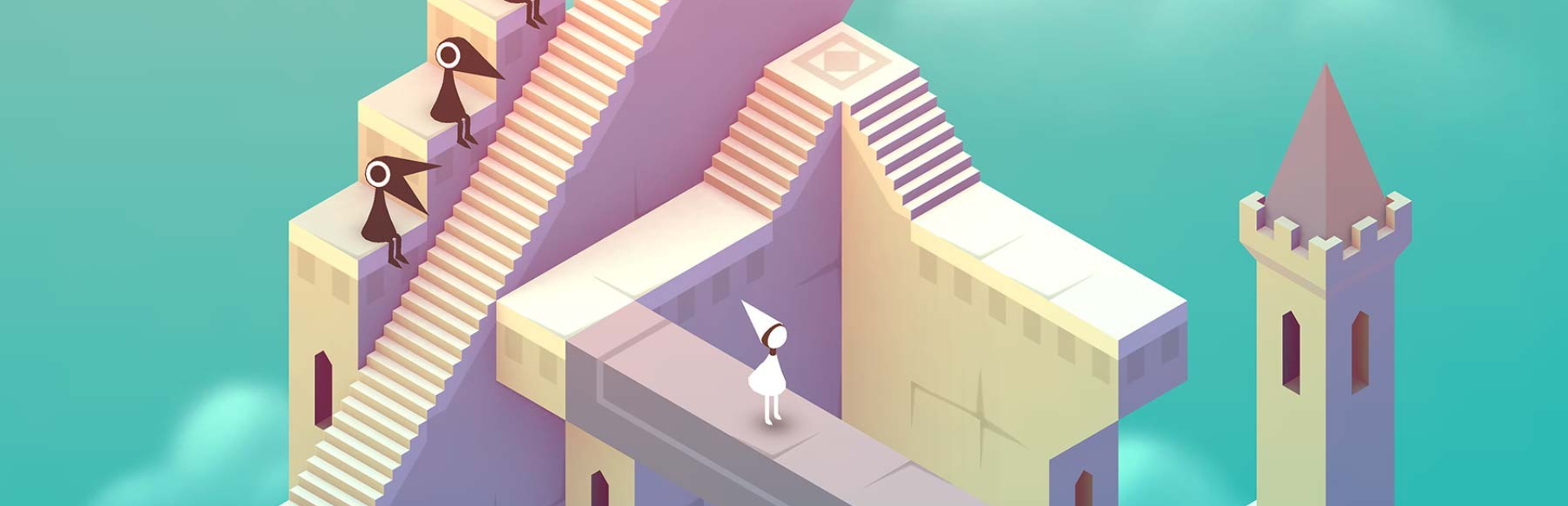
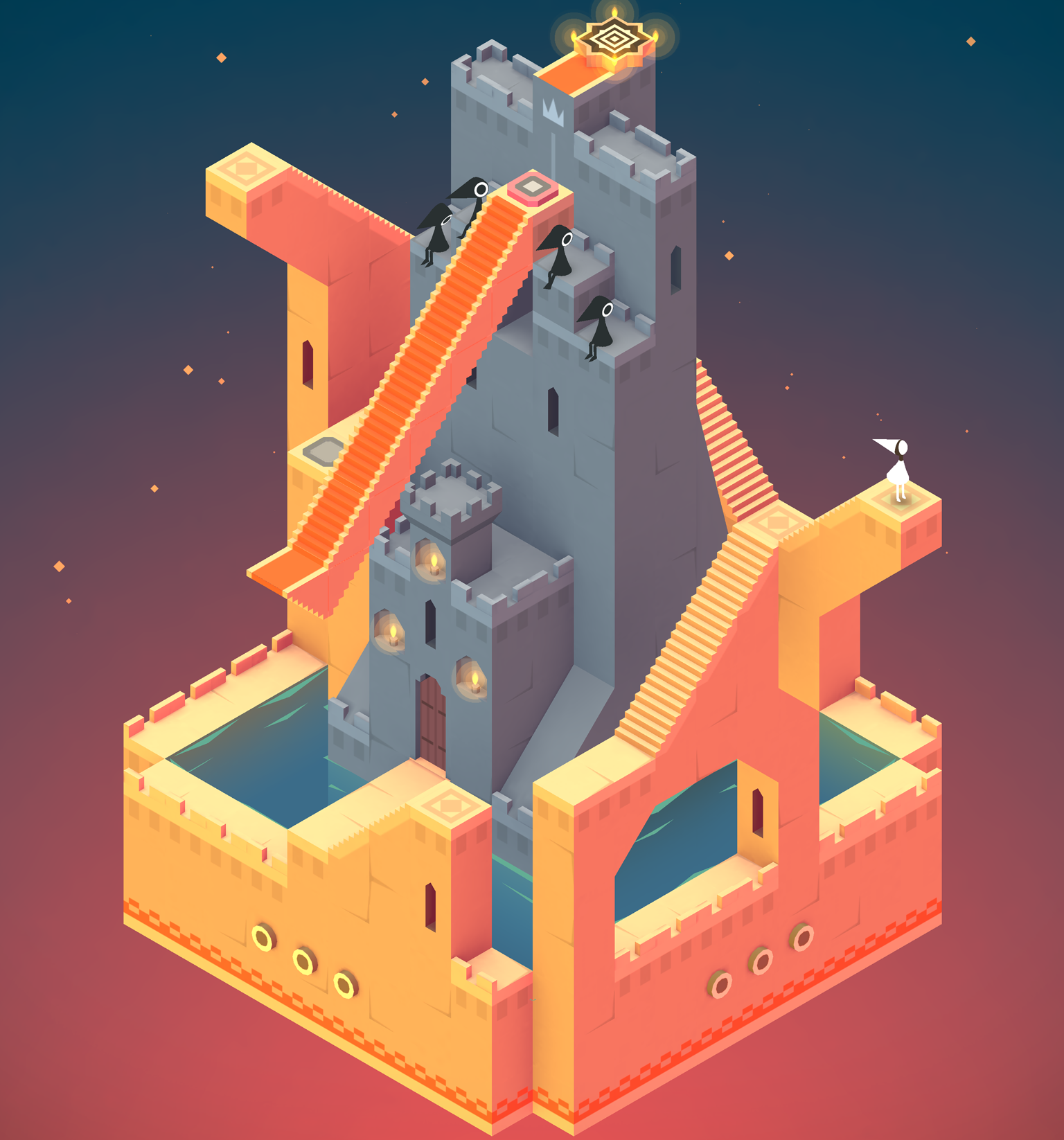
Monument Valley is one of the most memorable mobile games I have ever played. The game helped show that mobile games have a place with many of the great console games. It was smart, beautiful, unique, and a blast to play. It felt like a mix between Echochrome’s (PSP) gameplay and Journey’s (PS3) art style.
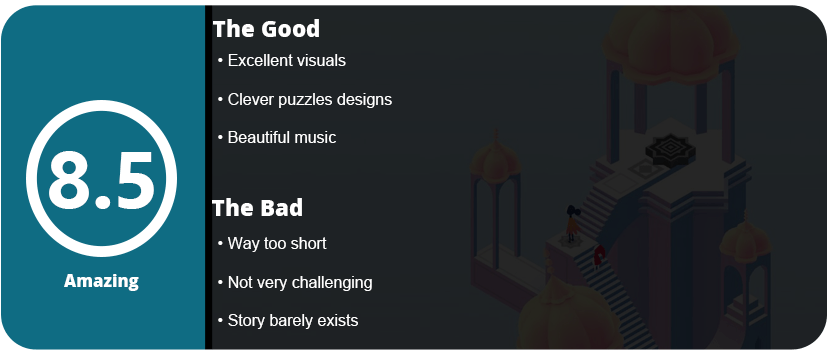
With Monument Valley 2, I got really excited to play this. I expected more and something new at the same time. That’s not entirely what we got. We just got really new. MV2 is an extremely short game and not very challenging. The MC Escher-style puzzles were a breeze to get through, which is a shame, as the first game had a few head-scratchers. Using various switches, you push, pull, spin, and align the various platforms through optical illusions to get the character to the door. At the end of each stage, the player can swipe their finger around to create a star that goes into the heavens; the meaning of this is unknown.
In the first game, we understood it was a journey, but this time around, all I know is that the character is a mother who is seeing her child off for her adventure, and they reunite. That’s it. I like subtle stories, but this one was too subtle. At least a few new elements are thrown in, such as controlling two characters at once, which creates a tad bit more of a challenge.
The game still looks amazing, with gorgeous art direction, music, and heartwarming colors. It’s just a shame it’s in such a short package with no challenge. I still recommend playing this game, but I sure did want many more puzzles than the dozen we got.
Surreal adventure games are the next generation of the adventure genre, and if they are done right, they can be quite memorable and mesmerizing. Journey was one of the first of this kind of new adventure title. With minimal UI, gameplay, controls, and story, you are swept through a linear journey of emotions, visual beauty, and auditory bliss. Some of the people from Journey are back at it again with Abzu, an underwater cinematic adventure.
You play as a character that swims around the ocean, exploring and trying to stop some sort of mechanical infestation from destroying all ocean life. The story plays out similar to Journey, in which you figure out what’s going on contextually as you progress through the game via images and scenes. If you played Journey, then you know what to expect with Abzu. What this game does differently is that it focuses more on an exploration of this beautiful world than pushing the player through a short journey and telling a quick story.
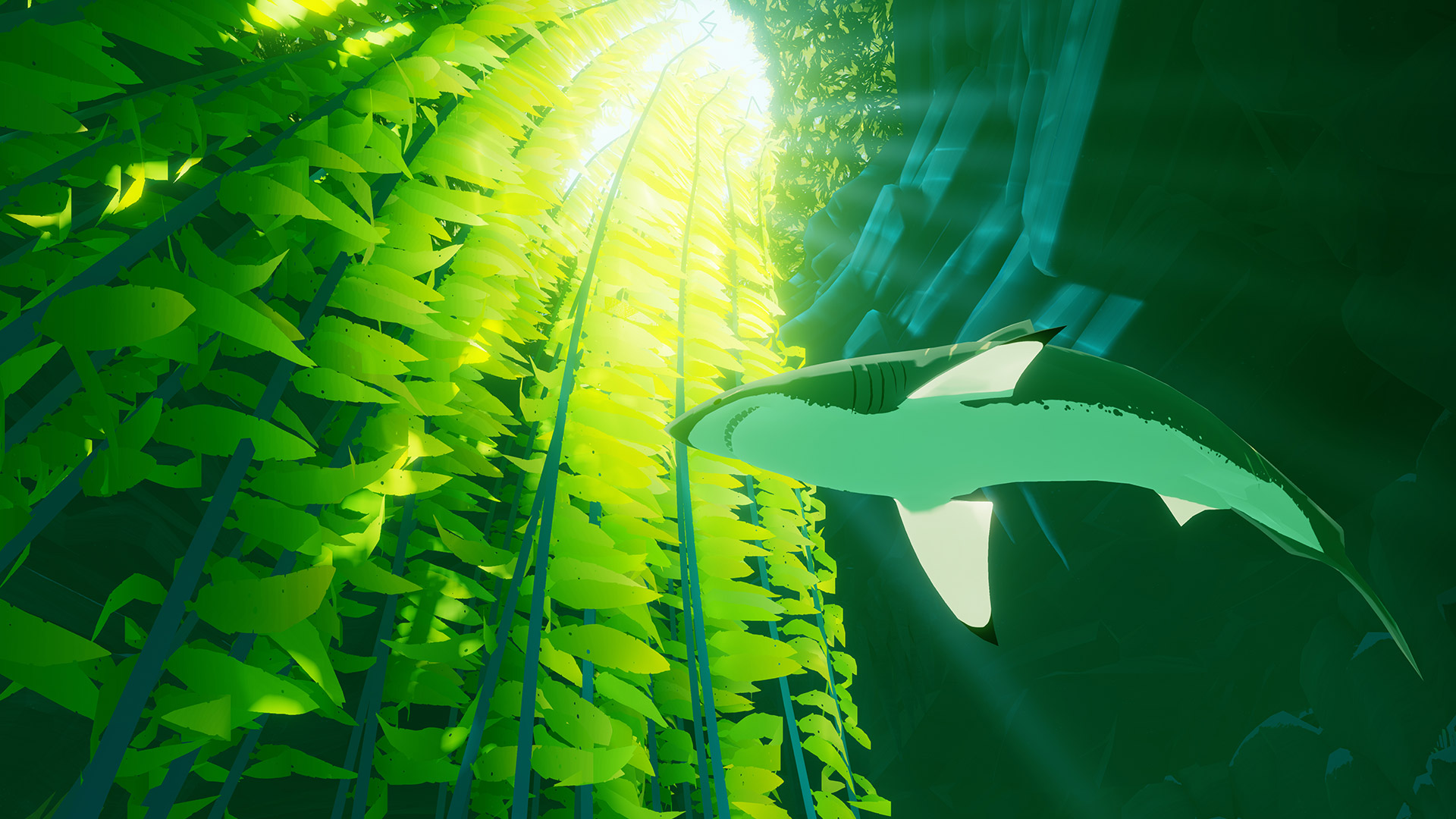
Right off the bat, you will notice how gorgeous this game is. Using Unreal Engine 4, Abzu is bursting at the seams with color and saturated with detail. As you push through each large exploration area (there are about a dozen), your main purpose is to find hidden shells, activate various switches to open doors, and activate little pools that will add various new creatures to the game. While I mainly feel this was filler content to extend the game another hour, it forces you to explore the ocean floor and look around a bit. Seeing all sorts of marine life and plant matter float around you is just amazing. This game really makes you feel like you’re swimming in the ocean and exploring what’s under the sea.
The game’s pacing is similar to Journey, with an explorative area and then a cinematic on-rails section that shows off the visuals that this game nails. Having your character leap out of the water to a stunning vista or romp around with whales in the murky depths is something not seen in any other game. Not a single area is the same, and I never saw the same sea creature twice. It’s the little things that count in games like this, and the amount of detail packed in Abzu is triple that of Journey, and I loved every second of it.
Now, that’s not to say that exploring these cinematic moments is the best thing for this type of game. I thought Journey’s pacing was spot on, but Abzu feels like a bumpy roller coaster with these cinematic scenes spread too far apart. There are only so many switches, chains, and doorways I can go through before I want something else. When you give the player very little to do, you have to rely on the senses and visuals to keep the player entertained. I feel this could have been an underwater journey if the pacing was a little better.
Overall, Abzu is a fantastic adventure game, and any fan of Journey must own it. The visuals are absolutely stunning, and Austin Wintory is back with another beautiful soundtrack—one of the best this year. It’s just a shame that the game suffers from poor pacing and exploration elements that are just there to force the player to look at everything. I feel like I’m getting my face rubbed in beauty rather than being allowed to soak it in as it passes by me.
It’s very rare that a mobile game gets as artsy as an indie console or PC game. Monument Valley is where Journey meets Echochrome straight out of the gate. It has the aesthetics of Journey and the gameplay of Echochrome. Flipping levels to create illusions that create new pathways—that’s what Monument is all about. The game isn’t really all that hard; in fact, it’s a cakewalk, but it’s all about the experience.
There’s an underlying story here, and the ending is a bit touching. You’re a princess (that resembles a white cloak from Journey) who is trying to restore gems at the end of each level. If I say more, I will spoil the experience. New gameplay elements are slowly added in, like crows getting in your way that you must avoid or use to press switches. Walking on different planes is another, while an interactive column (that’s actually a small character) becomes an ally. The game is strange, yet so damn beautiful.
But there is one huge problem. The game is only 10 levels long, and they are extremely short. For $4, you’re getting a fantastic experience, but it’s over way too soon. I would have liked an endless mode or some sort of puzzle mode that didn’t include a story. The puzzles are just so fun to solve, and each level is like opening a present. The more you fiddle with the level, the more beautiful everything gets and the more fun it becomes.
As it is, Monument Valley is a rare gem on mobile devices. It looks and plays beautifully, but the shortness will enrage people who fall in love with it.
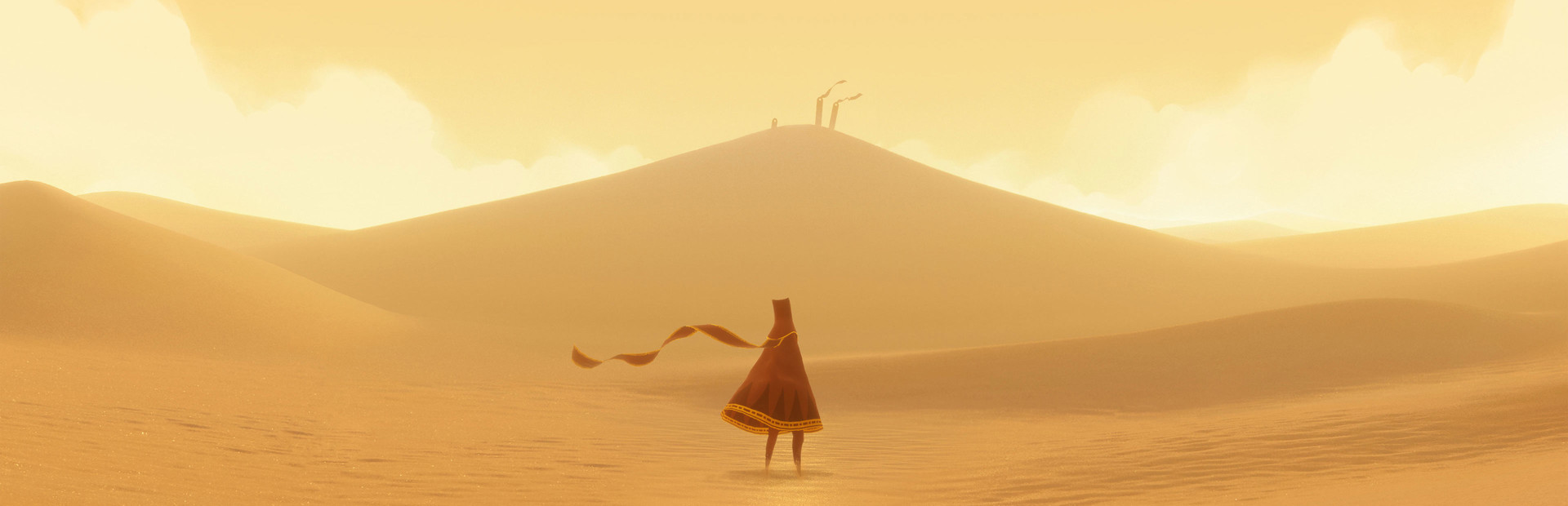
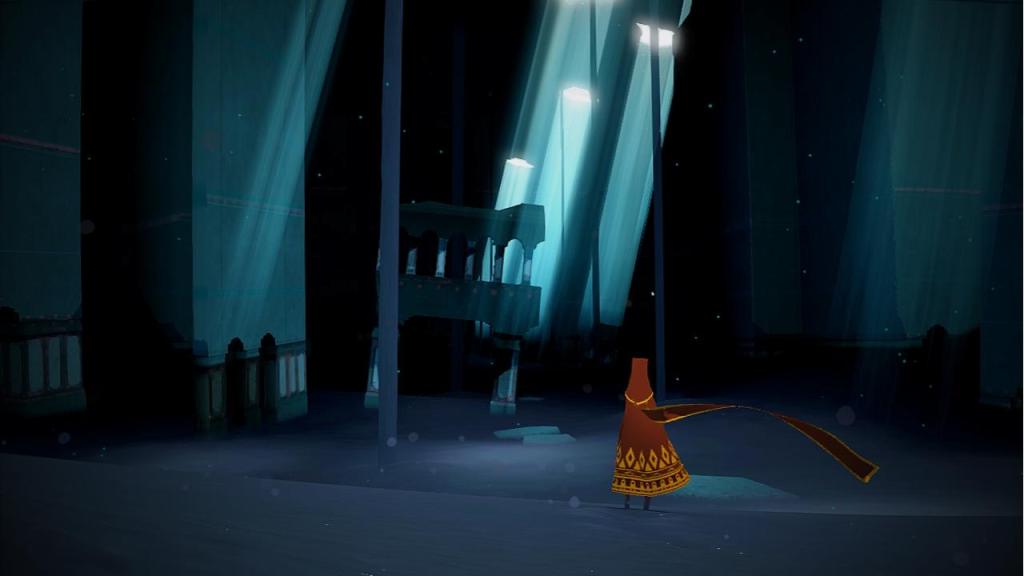
Everyone is so used to games with explosions, gore, death, and spoken dialog that we have lost touch with what games are truly designed for. There have been very few games that tell a story as a book or painting would, with no words and nothing but pictures. The only game that I feel comes close to Journey is Shadow of the Colossus. Games have the advantage of adding music and sound that are missing from books and paintings. Music and sound can trigger emotions in humans that no other type of stimuli can. Journey is one such game that uses only visual cues and sound to deliver a sad tale and a magical experience.
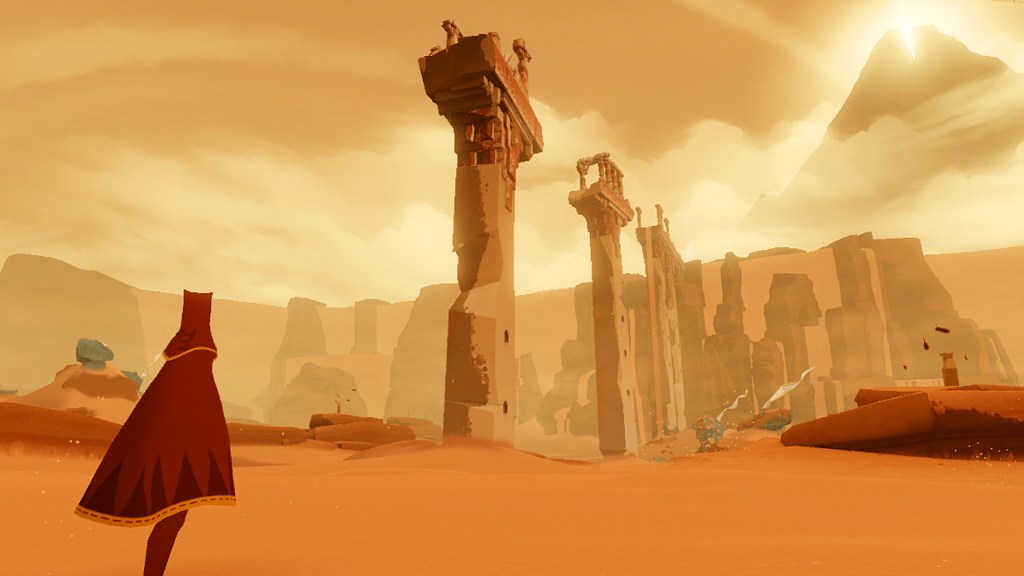
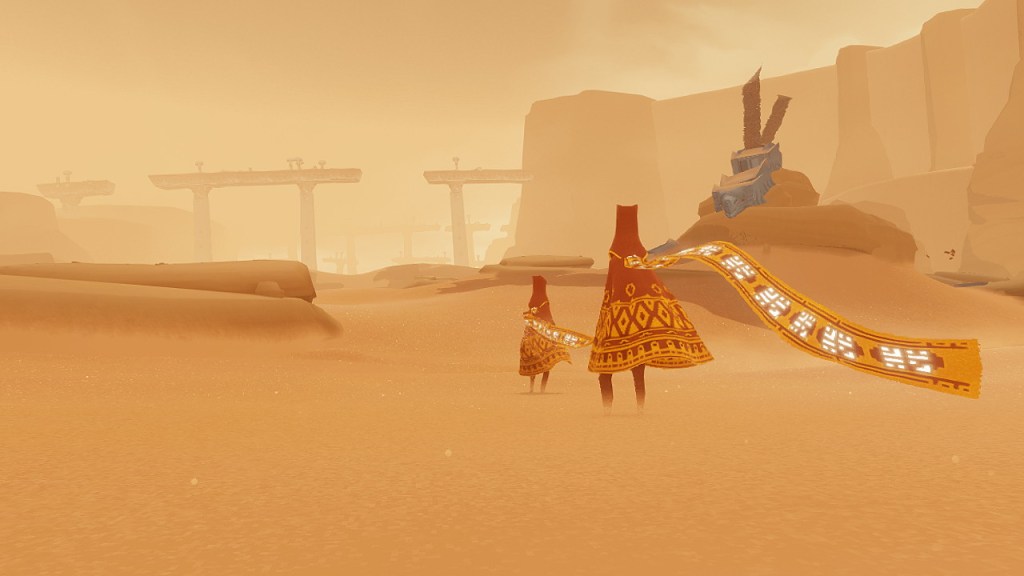
This game is like no other; you don’t mess with options, controls, settings, or anything like that. You just start the game, and bam, you’re there. You just wonder; there is no compass, no mini-map, and no annoying narrator to tell you where to go. Just go and trust your instincts and senses. As you wander around the desert, you will naturally go where you see something of interest. This vast desert looks endless, like the Sahara, and feels that way. You only have one ability, and that is to glide, but the length of your scarf determines how long you can jump and glide. This is your only ability. The Wanderer will hop up on small ledges automatically, but during your first level, you will just go. That’s all there is to this game. Just…go. When you do get to the end of the area, you are told a sad story using hieroglyphs. Like a book, you figure out what is happening and going on in this story.
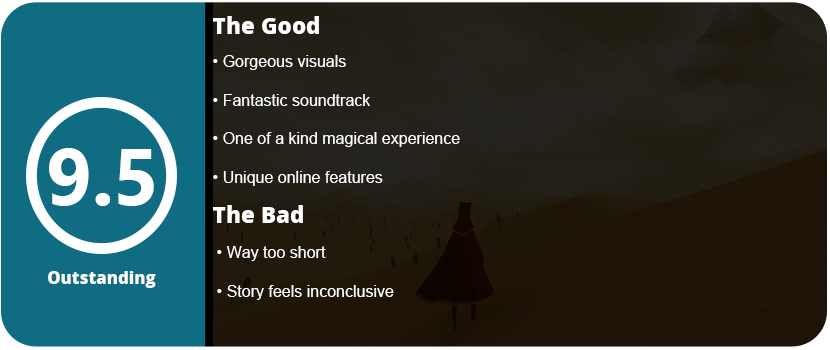
Once you get the hang of everything in the first level, you just keep going. The music in Journey helps deliver the emotions and senses that drive the spiritualism of the game. The music is touching and one of the best-orchestrated game soundtracks I have heard since The Elder Scrolls. The music is magical and just hits home and delivers all the emotion of the game. The best parts of the game are when you are sliding down the sand, having the music kick up to a climax, and letting the visual experience just soak in. Nothing can express this more than watching a magical world come to life in 1080p. This is really one of the most beautiful games I have ever seen.
There are a few gameplay elements, like finding secrets here and there and power-ups, but Journey has been one of the most interesting uses of online play since Demon’s Souls. You will sometimes run into another Wanderer, just like you, but there is no other way to communicate other than the echolocation you use to bring fabric to life in the game. You use this to help each other out, and because of the lack of human interaction, it forces gamers to actually help and experience this touching story with each other. No mics, no text chat; there isn’t even a name above the character; they just appear. If you spot a rare white-cloak player, they will probably help you find all the secrets in the game. My second favorite moment is when you are running away from the giant monster thing that flies in the air and targets you. The dark atmosphere, foreboding sound effects, and care for The Wanderer just add so much tension. I never felt so scared for a character in a game when running from a boss.
The graphics are also technically impressive, pushing the PS3 to its limits. Journey uses a very technically advanced sand displacement technology that no other developer has used. Naughty Dog actually asked that game company for help on how they did the sand displacement for use in Uncharted 3. Naughty Dog needed to use this technology without degrading graphics quality or using up all CPU resources on just the sand. The lighting effects are also amazing and some of the best I have seen on consoles. This game almost looks like a DirectX 11 game on PC with advanced lighting techniques. The game is just gorgeous and has to be played to be understood.
The only issue with Journey is that you can beat it in less than 2 hours. Sure, there is a boss that you run from at the end, and you can die, but the game is just way too short. This, of course, allows you to go back and experience the game again and find the secrets, but I would have loved to see this as a 4+ hour adventure. I have never played a game that drew me into the world as much as Journey, but it wasn’t just the atmosphere. The fact that you are completely disconnected from the world means that you have to use your own imagination to help paint the rest of the picture. I hope that game company has more under its belt for Journey, and if this is it, it will go down in history.
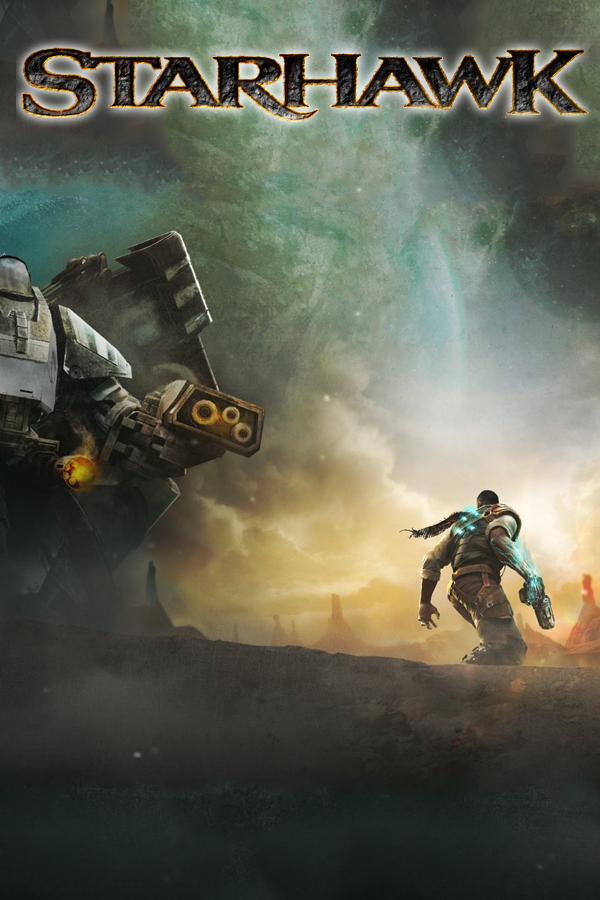
The PS3 had even fewer exclusives this year and was nearly null and void of any big-budget titles aside from Twisted Metal and Starhawk. There were mainly indie games that were exclusive to the console. This was a sad year for the system.
Journey is a no brainer here. The emotional soundtrack, unique gameplay, and subtle yet touching story are all formulae for a masterpiece. The fact that an indie game can top out a AAA title is a huge success already.
The best downloadable game goes to a game that you can only download via a service such as Xbox LIVE Arcade or Steam. Usually, this is download only with no disc-based version available. This category is slowly getting phased out because almost every PC game, and most console and handheld games, are becoming download only. This category usually only applies to downloadable console games, but PC ones get thrown in every so often.
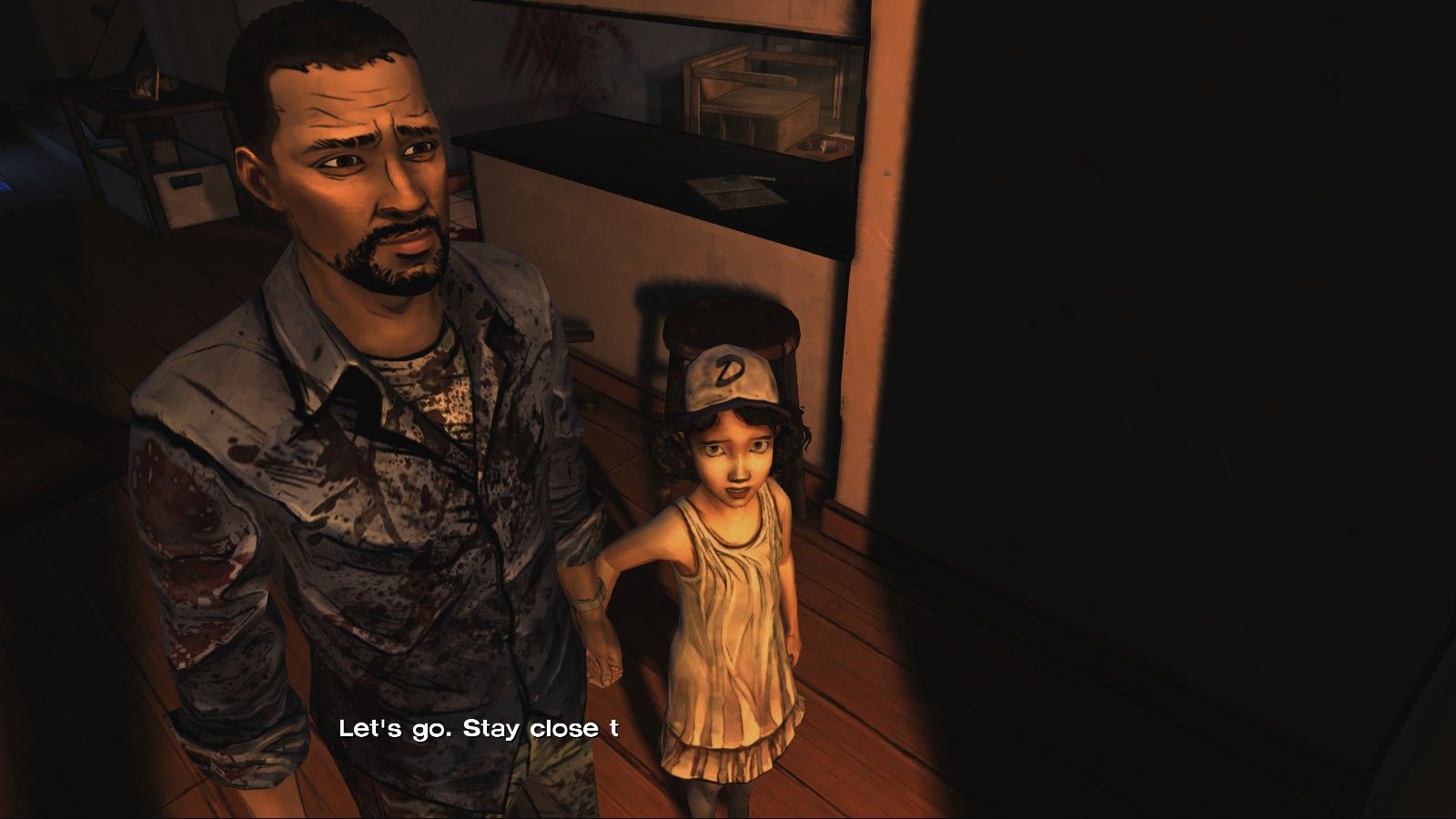
The Walking Dead mainly gets the award because it is not only gripping and thrilling, but I anticipated every single episode throughout the entire year. Telltale really made people watch their calendar because they wanted the next piece of the story to this amazing adventure game. If you can make players chomping at the bit for an entire year for each episode, you were successful. The other games were great, but nothing captures the atmosphere and heart-wrenching tale of TWD.
What determines the best new character? Someone who is memorable not just in looks but personality. Usually, someone who strays away from stereotypes, someone who is ruthless, conniving, sarcastic, beautiful, or just downright cool. This year had some great new characters, but only one comes out at the top.
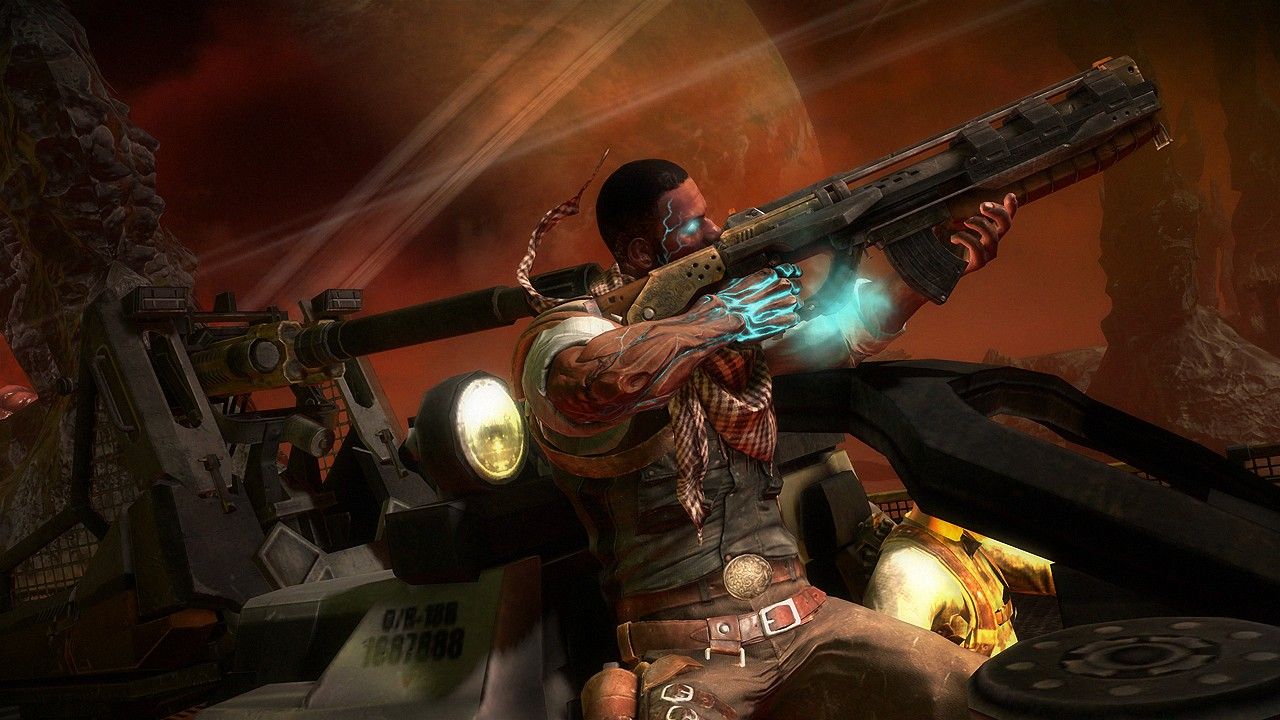
Vaas is a psychopath that is bi-polar and just doesn’t care about anyone or anything. His strange feelings toward Jason are what make you really love this character. His delivery and voice actor are just superb and Vaas is the only memorable character in the Far Cry series. We don’t have enough psychopaths in games, but ones that act human and can treat a fellow human being so poorly with such hate and feral feelings. Vaas is a character to be remembered.
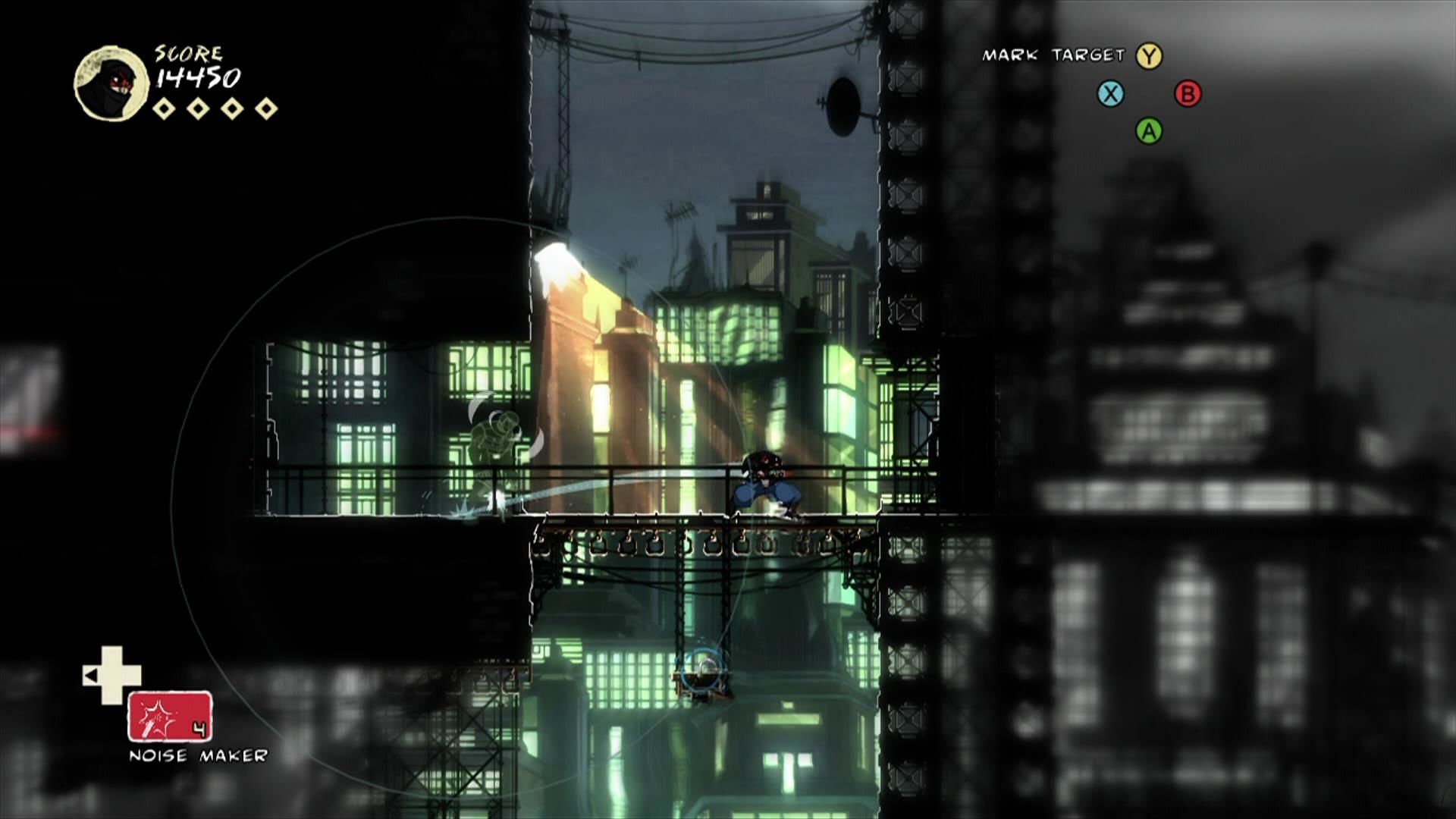
This has probably been the strongest indie game year yet. Many have even beat out AAA high budget titles so that says a lot. There were so many amazing indie games this year it was really hard to pick just 5. These were the best of the bunch.
thatgamecompany has really proven to be an extremely talented indie developer. From their last game Flower to this, I can’t wait to see what’s next. Hotline Miami came in a close second, but the soundtrack, art style, and just overall beauty of the game really won it over.
Graphics are great in games, but some just strive to be artistically beautiful rather than push your hardware to the limits. There were quite a few beautiful games in the indie department this year, but still a smaller amount than last year. These games look like moving paintings or drawings. These are the most beautiful of them all.
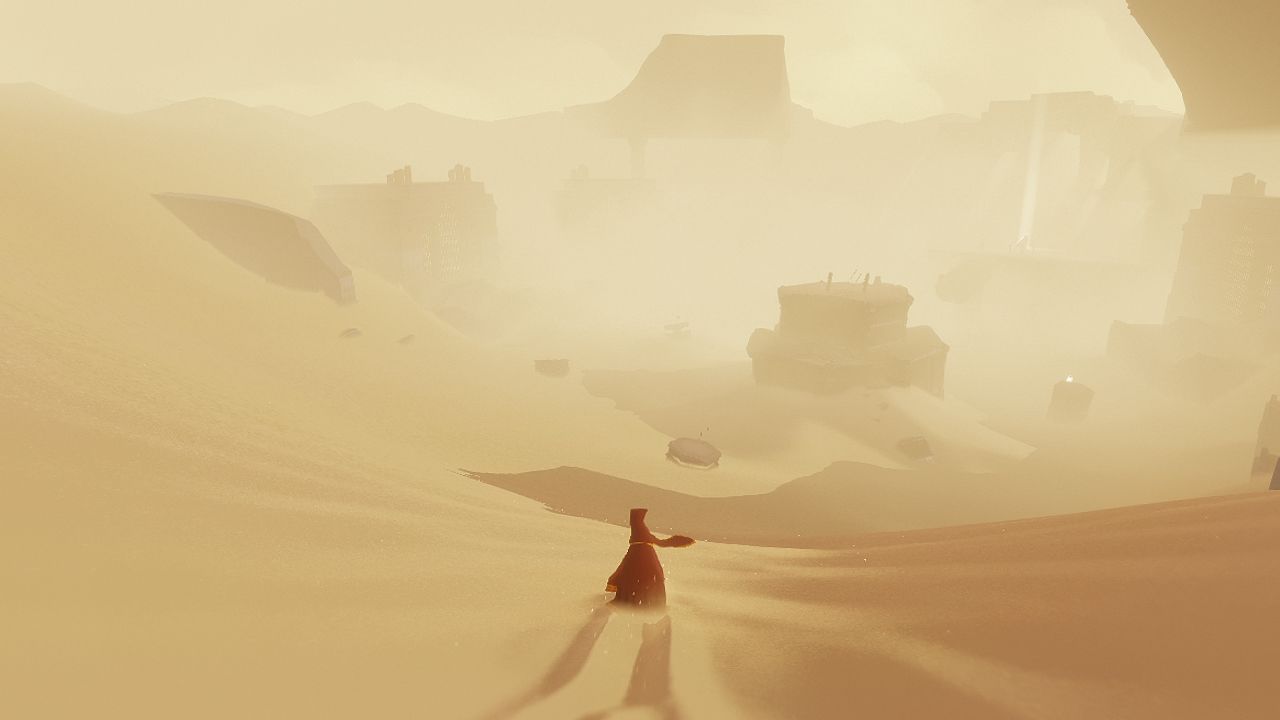
Journey’s art style just breathes artistic flow and imagination. Despite the brown color palette the overall design choices, effects, and visual representation of everything you see are just fantastic. Combined with a beautiful score, Journey is a one of a kind game that AAA titles can’t seem to provide.









































































 thebinarymessiah.com
Yeah, it's pretty damn awful. Notoriously one of the worst games on the PSP. A 4 was actually being generous.…