It’s sad to say that the Vita was a mostly commercial flop as Sony got scared with the first sign of trouble. The Vita still continues to release JRPGs and visual novels today, but first- and third-party support has been long gone. The Slim Vita was released right at the beginning of all this, but there’s still a huge library to play on for anyone who hasn’t picked up a Vita yet. While the launch system was a fantastic piece of hardware, the slim version is as well.
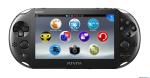
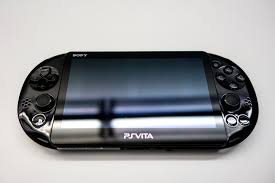
While I won’t get into technical details about the hardware, the Slim Vita is virtually the same system, just slimmer, more ergonomic, lighter, and with much better buttons and placement. The awkward oval start, select, and home buttons are gone with new circle buttons that are firm and less mushy. Everything just has a more satisfying click and less of a mushy feeling to it, which is nice. The downside to being lighter and slimmer is a cheaper feeling, but it still feels good in the hands.
The home button no longer lights up, so those LEDs were moved to the top next to the power button as small bars, which look sleek and minimal. The Vita also uses a standard micro-USB cable, which is nice and ditches the proprietary charger; it’s just too bad they didn’t do that with storage. 1GB of internal memory is included for tiny games and saves, but you can’t use it concurrently with the outrageously expensive memory card.
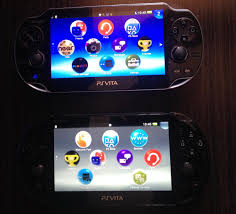
The biggest change of all is the LCD screen, which is no longer OLED. The Vita was touted as having a fantastic-looking screen, and while the LCD is nothing to scoff at, it doesn’t pop like the OLED did, but you wouldn’t notice unless they were side by side. This change always has more battery life as well. Also noted is the exclusion of 3G models, as AT&T killed the Vita plans less than a year after launch.
Overall, the Slim Vita is the best version to get due to all the improvements. Griping about the OLED screen isn’t enough to justify not wanting this version. We won’t get another iteration, so this is the best you can find.
The PSP is a legendary system. There were so many fantastic games on this console that it has been considered the second-best next to the GameBoy Advance. The PSP had a great start and a rough ending, but overall, hundreds of games were released, and a good quarter of them were worthy of being in a collection. Now, I have played and owned the PSP since that wonderful day on March 24, 2005, when I was a teenager and saved up my allowance on pre-order payments for 6 months. However, what ultimately killed the PSP sales-wise was piracy. The PSP was very easy to hack, and many custom firmwares were installed on the system, allowing users to download games. While this is possible on every console in existence, the PSP became a Pirate Station Portable, if you will. Emulators were made for the system, so you can carry around SNES, GBA, Genesis, and even PS1 games on this thing. It’s a very powerful and versatile system, and many things can be done with it.
While I can’t condone piracy, if you own a large collection of classic games, it’s great to have them on the go with you, and this became my main driving point for playing this system to this day. Outside of emulators, the PSP library is like no other. Racing games, action, and RPGs were among the most popular genres on the system. The PSP had one of the greatest handheld launches of all time, with Ridge Racer, Darkstalkers, Lumines, Ape Escape, and many other brands on board. The system was sleek, the most beautiful handheld system ever created, and powerful. I remember booting up Ridge Racer for the first time and being overwhelmed by the graphical fidelity, sound, and large screen. This was also the first handheld with this large of a screen. We had widescreen gaming in our hands with a huge 4.3″ LCD, and that was even bigger than phones back in the day. In 2005, you had BlackBerries with small screens and flip phones. Phone screens didn’t catch up until six years later. The PSP was way ahead of its time.
While many great games took forever to be released, it was a slow trickle, for sure. Huge games were milestones for the system, like God of War, Kingdom Hearts, Final Fantasy, Gran Turismo, Tactics Ogre, and many others. These games defined the system as fantastic, and there were also many other hidden gems thrown in there. There were also many JRPG ports that were only seen in Japan that were now ported to English for the first time, and this trend continues with the Vita. The PSP was perfect for JRPGs that you could keep in your pocket. Now the PSP had many flaws, like the terrible UMD discs that nearly crippled the system. The system also had many failed services like comics, Skype, UMD movies, and the terrible internet browser. The system remains great for watching movies, listening to music, and playing games, but more so natively than through paid services. They just didn’t work on the PSP at all.
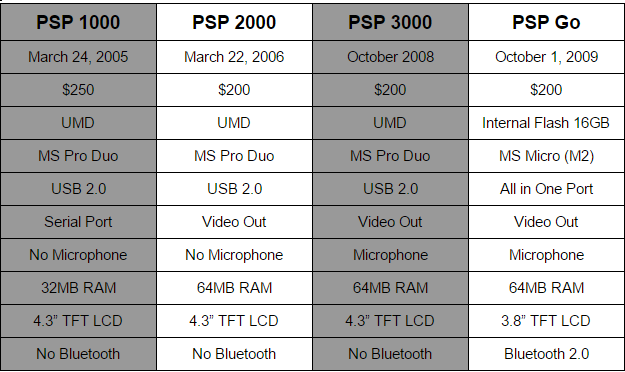
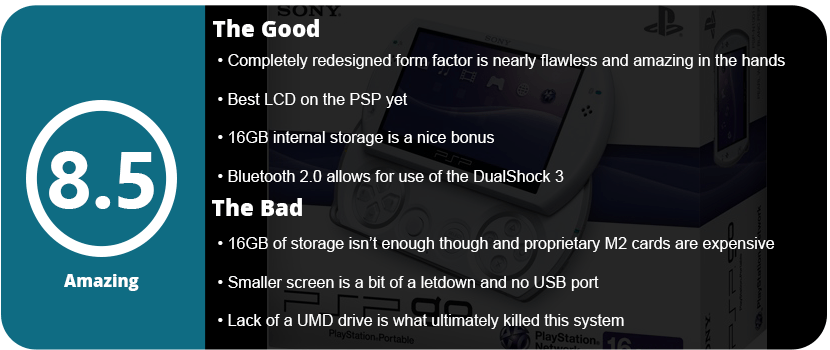
This will be my very last review of the PSP hardware line, as it was the last (outside of the E1000 unit that was in Europe only). The PSP Go is a very difficult system to find these days, as it is the least widely available. The PSP Go was released in 2009 and was discontinued barely two years later. The PSP had two previous models that greatly improved the system, with the 3000 model being the best. Surprisingly, what drove sales was how easy the hardware was to hack and downgrade. The original model was the easiest to hack, as it was mastered by the time the 2000 model came out. The 2000 model had a new motherboard, and several hurdles had to be overcome with various firmware updates. It is the least popular of the three. The 3000 system didn’t take as long as Sony was slowing down on the firmware updates, and the PSP Go was hacked in no time flat.
With that said, the actual system is even sexier than you could imagine. A slide-out PSP? No way! Many mock models were created for the PSP 2, which was said to be announced around the time of the PSP Go release. The system does have drawbacks over the original models, but there are advantages that help iron some of this out. First off, the system fits in your pocket easier. The PSP wasn’t really the best for your pocket, as it was very wide.
The Go eliminates the buttons on the side of the screen by putting the screen on top of the buttons, which is a genius idea. While the chassis is now all plastic, it’s still very sturdy. The system retains the overall shape of the PSP and has rubber feet on the bottom of the system, and the PSP ring logo is now removed. The buttons have been completely rearranged, more dramatically than the PSP 3000’s arrangement. The new PS button introduced on the 3000 is now on the top screen, being the only button there. The Bluetooth and WiFi lamps are at the top of the screen, as are the speakers flanking the screen. It’s very minimal and looks great, and this is my favorite home button so far on the system. On the top of the system are the usual L and R buttons, but they are larger than the previous systems and lay more flat as they don’t make up part of the shape of the system like before. The PSP has a volume rocker for the first time, which is on top of the system, and the screen and note buttons flank that. These are the only bad decisions as to when the screen is up. These buttons are hard to press as you have to blindly feel for them. Your most used buttons are under the screen with the analog nub between the D-pad and face buttons, which is interesting as it was under the D-pad previously. The nub is inset, so your thumb stays inside and feels more like an analog stick, and it sticks up away from the console but doesn’t tilt still. The D-pad is much improved, as it doesn’t rock like previous systems, and the face buttons are the exact same size as the Vita. You can actually see the influence of the Vita in the PSP Go.
With that said, the buttons feel great, and the body is nice. The power slider and wifi switch are very similar to the PSP 3000 on each side of the system, but the worst change of all is a new proprietary memory card called Memory Stick Micro. This was one last stab to combat piracy, but the internal flash actually helped it. The new memory cards are much more expensive than the MS Pro Duo cards that were widely available. So, if you upgraded to a PSP Go, you had to ditch your Pro Duo, which is an awful move on Sony’s part. While the internal storage is a nice 16GB for several games, a larger size would have been nice to eliminate the removable media altogether. 32 or 64GB would have been just fine, and no one would have complained. On the plus side, with this internal storage comes lightning-fast read and write speeds, so load times are greatly reduced in most games. The Go also has Bluetooth 2.0, which no other model has. This was to connect Bluetooth headsets and the DualShock 3. Oh yes, you can play games with the DualShock 3, which is a nice feature; however, there’s no easy way to play as you have to put the Go on a flat surface. USB 2.0 was also removed and now has its own cable, which means your other cables are out the window. If you lose this cable, you’re screwed; however, USB A to B was being phased out as phones were using Mini B cables, which are now standard. Hey, at least it still has a headphone jack and mic.
Most people complain that the Go has a screen that’s almost half an inch smaller than the previous models. After a while, you don’t notice, and the picture is extremely clear due to the better LCD technology inside the Go. The “looking through a screen door” issue is gone here, and the screen is crisp and bright even by today’s standards. Overall, I can consider this the Gameboy Advance Micro of the PSP. Every handheld system usually has a miniature “best of” variation, and this is it.
With that said, the PSP Go is my personal favorite system. I love the larger versions; the PSP 3000 is the best of the three, but something about ultra-compactness and the slide-out screen really sells the entire package. It’s a gorgeous system, and it’s a shame it hasn’t been re-released. The only true way to play this is by buying the UMD versions, downgrading the firmware, and playing the backed-up ISO of your game. You can even downgrade a UMD PSP, and there are plugins that allow you to rip the game from the UMD onto the MS Pro Duo and then transfer it to your Go to completely circumvent piracy. This huge hurdle is probably what killed the Go, and the fact that the PSN store is shutting down on the PSP natively this month is a crying shame. You can still buy and purchase PSP games, but eventually those will go away as well, and this hacking circumvention will be the one and only way to even get games on this system.
It’s also the rarest of the variations, as a new system will run you over $200, which was the original price point, and even just finding one in good shape is a chore on its own. I picked up a beat-up system near me for $80 with the charger, and it was the only one in my entire county. I later tracked down the white model used in perfect condition for just $100, but again, most cheap Go systems are extremely beat up. If you don’t care about that, then $60–80 is your price range, which isn’t bad.
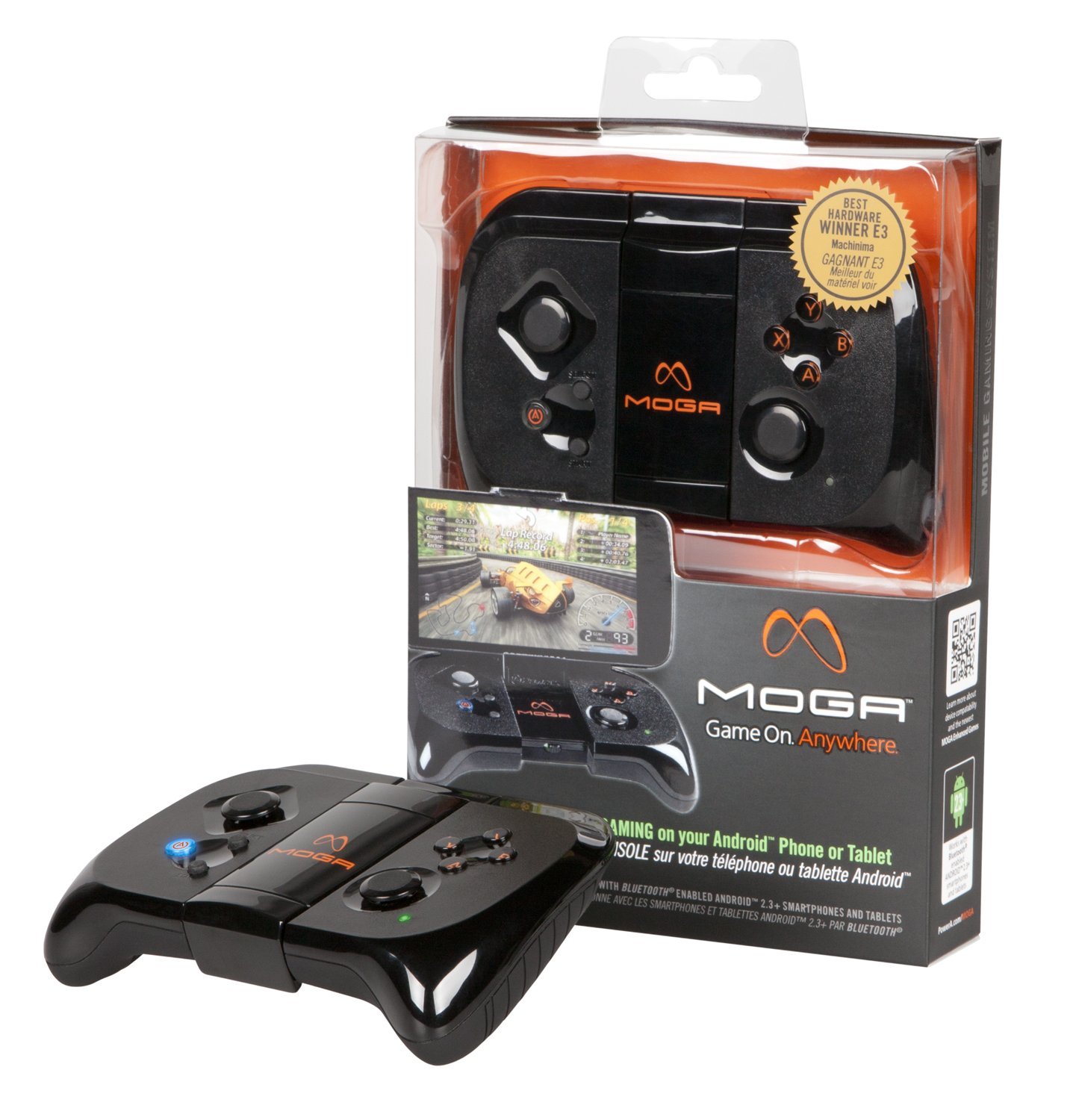
Now that gaming on tablets and phones is becoming more serious and popular, companies are coming out with dedicated controllers for your devices. PowerA was one of the first ones out of the gate with their Moga series of controllers. This is the mobile version that holds your phone while you play. It’s Bluetooth, so there are no cords tethered to your device. The controller is very well designed and sturdy; it doesn’t feel cheap at all.
I love the ergonomics of this controller. The middle of the controller has a flip-up phone holder. It can hold up to 6″ phones, so everything up to the Samsung Note II. The top and bottom of the clip have rubber grips so your phone doesn’t slip out, and it keeps it from getting scratched. Getting the controller to connect is a breeze. The initial setup is done with the Moga Pivot app, which also scans your device for games that can be played with the controller. You can also navigate and launch these apps with the controller. The controller sits well in your hands and is powered by 2 AA batteries, each housed on either side of the controller. PowerA went for minimalism with this controller, and they nailed it.
The only issue with the controller is that it feels too rigid. The buttons aren’t very soft and make a loud clicking sound. The thumbstick nubs are a bit stiff, and there’s no D-pad. I like the L and R triggers, which feel great for shooting games and racing. I wish the controller had analog sticks rather than nubs. It’s really hard to adjust to these in a shooter; I had to turn the sensitivity way down in the game to make it feel somewhat normal. The controller is also lacking bumpers, which could have fit just fine. So there’s a bit of a learning curve with this controller.
At least it comes with two free games: Pac-Man and Sonic CD. It also includes a really nice leather case to hold your controller in. The biggest issue of all is that there aren’t many games that support this thing. There is a free universal driver app to use in emulators, which is probably the main reason why someone would buy this. I was able to play a GBA, SNES, PS1, and Genesis emulator with no issues. Other than this, this is well worth the $40 for anyone looking for a controller without having to buy special cables, root, or buy expensive apps.
Silent Hill has had a rough patch, and I thought Book of Memories would change this. The game seems really great at first, and I like the idea of the series branching off for the first time into a different genre. The dungeon crawling path works well for the series, but it is poorly executed here. The first few levels are fun, but later on, they repeat the same way over and over again. The game doesn’t feel much like Silent Hill at all except visually, and I promise you there isn’t a single scare in the whole game.
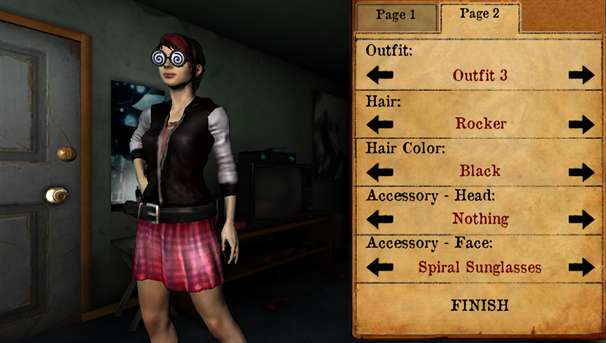
The story is paper-thin, in which a man or woman (you get to create a character with a very weak customizer) gets a strange book for their birthday from the mailman seen in the last terrible game, Downpour. It is full of memories, and you decide to go inside and change them. That is pretty much it. The story is barely delivered through notes and scattered audio clips. Silent Hill is known for good stories that are at least confusing but not boring. This one is boring and uninteresting.
The game has a top-down perspective, and you run around levels, opening rooms and completing challenges to find puzzle pieces. Silent Hill is known for puzzles, but these are pretty lame (more on that later). You are safe in the hallways, and each room is random. That is probably the most fun part of this game. What’s in the next room? Some need keys to open, which are found on red-highlighted objects. When your flashlight is on, these objects you can search through are highlighted, and they contain things like ammo, medkits, weapons, keys, and repair tools.
The whole point of the game is to run around, smacking down everything in sight, but this is where the game mainly fails. The weapons are nods to pretty much everything seen in a past game, like the steel pipe, wood plank, fire axe, revolver, sledgehammer, and a few original weapons. The issue here is that they can break very quickly. This made the game extremely tough because enemies are really hard to take down. Even after leveling myself up a lot, I never did much damage. Using repair tools can come in handy, but they are hard to find, and you can’t hold many of them. You can upgrade your backpack more, but this requires a lot of memory residue, which is also hard to come by. Saving up this currency is even tougher because you will be spending it on medical kits and repair tools 90% of the time. See what I mean? This is all a vicious cycle that never ends.
There are RPG elements that allow you to equip relics that increase stats. Leveling up takes forever and doesn’t seem to do any good. The combat itself is boring and stiff. You just mash an attack button until everything dies. The lock-on button is handy for ranged weapons, but blocking didn’t really do much good for me. I felt the combat system should be more refined and intuitive for a dungeon crawler. Maybe add some spell casting? I can’t tell you how tired I was of the game by Zone 11. I just called it quits. One redeeming quality of the combat is the fun boss fights every three zones. You have to use strategy and discover their weaknesses, but why can’t regular enemies be like this? Most enemies are from previous games, and very few are new. I just felt the developers didn’t know what direction to go in—Silent Hill survival horror or dungeon crawler?
It really shows in all the flaws in the game. The puzzles are the same three that repeat over and over. Event rooms are confusing, with zero clues on what to do. Even the karma bar seems useless because picking up enemies’ blood (depending on whether it is light, blood, or steel) will move your karma bar around. It seems pretty pointless, actually. The only way to really enjoy this game is to co-op with up to four players, because the game is really hard. Not to mention the fact that if you die before saving a spot in each level, you have to do it all over again, which is not fun.
Book of Memories has some nice graphics for the Vita; nothing special though. There are no scares to be had, and the same track loops over and over again. The story is uninteresting, the character creator is weak, the combat difficulty is all over the place, the combat system is boring and stiff, and many other elements wrapped in the game just feel wrong and half-baked. I love the idea of a dungeon crawler in this series, but please pick one side or the other. Also, make it scary next time.
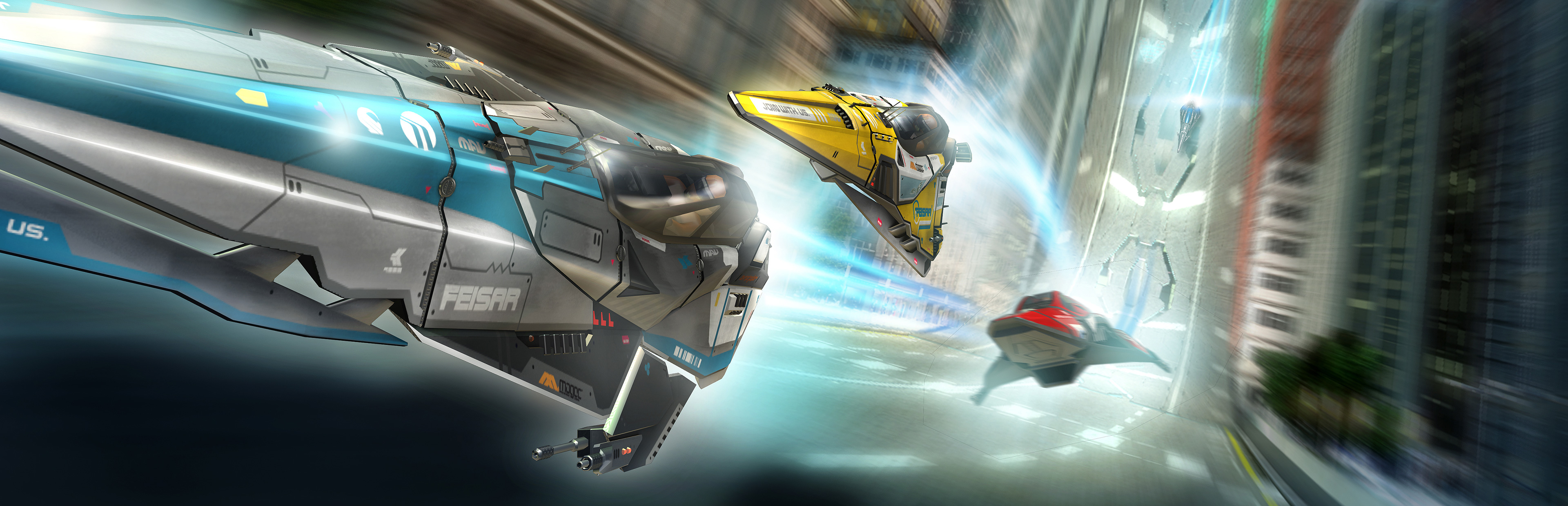
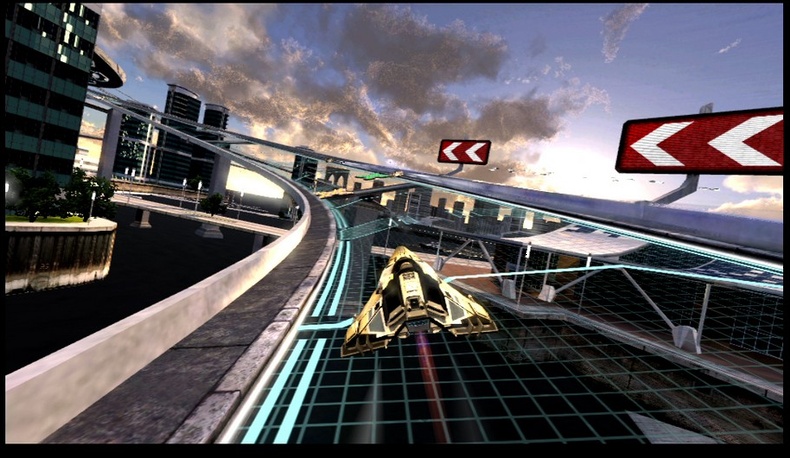
Wipeout is one of the longest-running racing series out there, debuting on the original PlayStation and spanning every PlayStation console ever since. 2048 is the first Wipeout on the Vita, so what would a PlayStation console launch be like without a Wipeout title? 2048 doesn’t really do much to change the series, which it desperately needs, so that is probably the worst part about the game. Overall, this is a very solid Wipeout game.
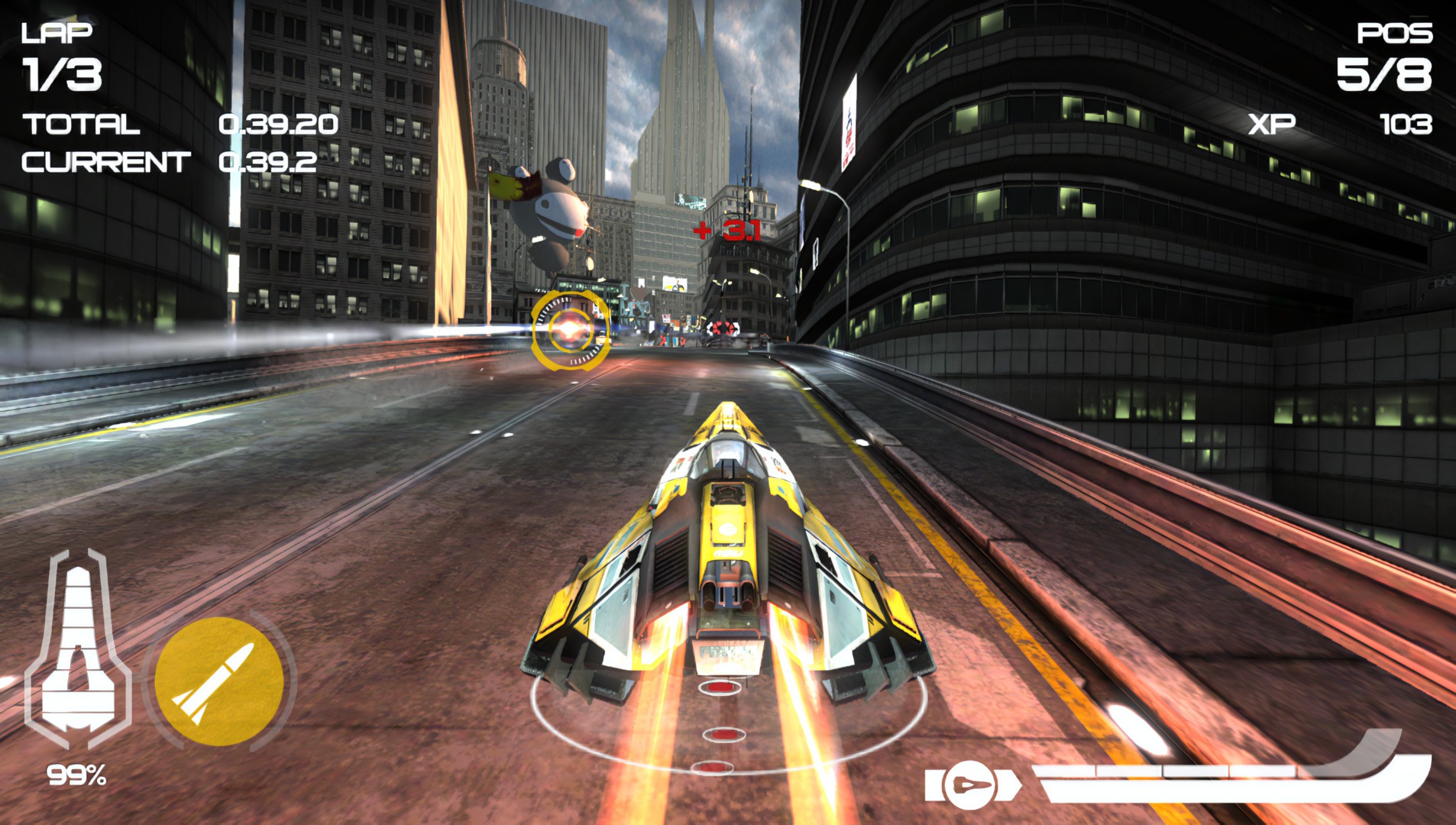
Everyone mainly looks forward to how far a Wipeout game can push a console. The game looks amazing on the Vita, with a great sense of speed. Wipeout is known for a wide variety of event types, and 2048 delivers there too. There’s a time attack, zone events, and a new combat-type event. I don’t know why this wasn’t in any previous Wipeouts, but you just go around destroying as many vehicles as you can and earn points. Zone events return where the car accelerates on its own and you just have to survive. I wish there were more original event types, but what’s here works fine, and there are a lot of them.
The vehicle classes are fun, and the speed ramps up pretty quick in this version. B to A has a huge difference, but some fans may turn their noses up at the thought. I preferred this, but don’t worry, there are plenty of vehicles to unlock and use, so you can fine-tune your play style just the way you want. There are plenty of unique tracks that look great and are designed well. My major complaint is that there aren’t any new weapons. The same earthquake, rocket, missile, mine, etc. are still present and haven’t ever changed.
Multiplayer is where the fun is, but this time there is Wi-Fi, so you can play online. A huge complaint I have is that the load times are just absolutely atrocious. There have been patches since release to shorten them, but they are still pretty long and need to be cut down even more. If you can look past these issues, then 2048 is the best racer on the Vita right now. The game controls very well thanks to the actual analog stick, so PSP fans will notice smoother controls this time around. If you own the PS3 Wipeout, you can do cross-play, which is fun and makes you feel like you’ve got your money’s worth.
Overall, longtime fans may either hate this game or love it, depending on how they feel about the series as it stands today. It really needs some renovation with new weapons, event types, and maybe some customization. 2048 is stunning to look at on the Vita, but it suffers some seriously long load times in turn.
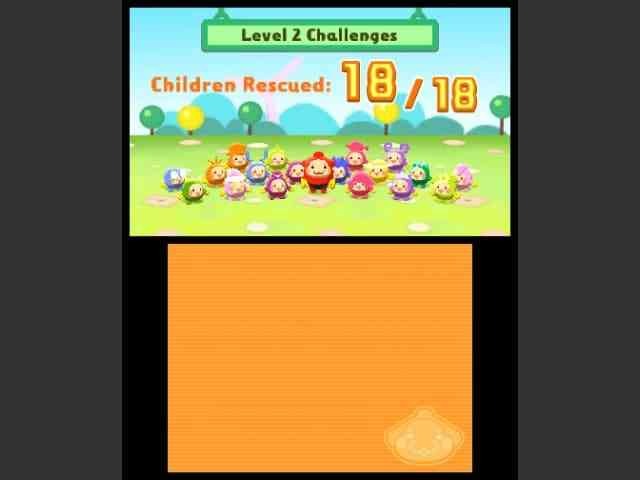
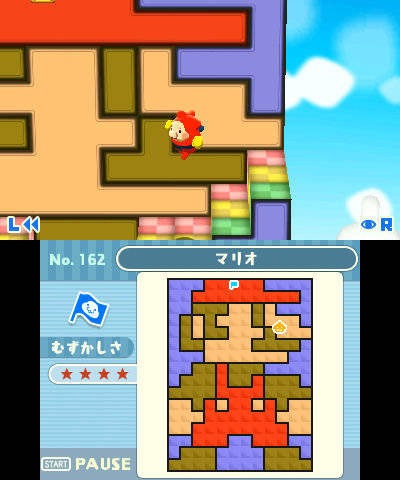
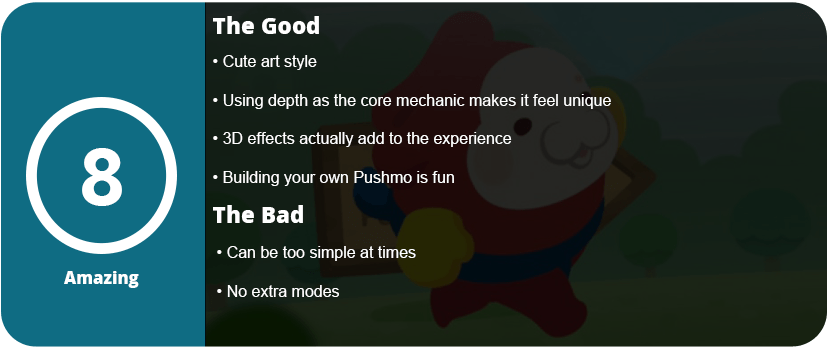
Before you write Pushmo off as a cutesy kids’ puzzle game, think again. The game uses depth as its core, which is what 3DS is all about. You get to move blocks forward by four blocks, but you have to rescue a Pushmo at the top by figuring out how to configure these blocks. Thankfully, you can jump around, so this makes the game a bit easier, but not all games are as easy as they seem. One puzzle can only consist of four blocks, but the way they are shaped makes it difficult to climb, so you have to figure out how to stagger these to get to the top.
This makes the game original and fresh so as to stray away from the Tetris, physics, and memory clones. If you feel really stumped or want to analyze what you did, just rewind with the shoulder buttons or reset the whole thing via a button at the bottom of the blocks. This is the entire game, but when you get bored, go ahead and build your own puzzles, which add a layer of extra fun. There are plenty of puzzles to solve, but the game is quick and easy to just play on the go without worrying about checkpoints and saves.
The art style is cute with bright, colorful graphics, and the 3D effects are there to help immerse you in the depth layering, which makes it feel like part of the puzzle-solving rather than a gimmick or something that gets in the way (like Bit.Trip Saga). With the low price point, you get dozens of hours of fun content, but overall, the game is just really simple and only good in short bursts. This is a game for any age, any player type, and for everyone who owns a 3DS. Right now, this is the eShop’s killer app and probably the best game on there.
Colors: Cosmo Black, Aqua Blue, Flame Red, Pearl Pink, Red
MSRP: $169.99
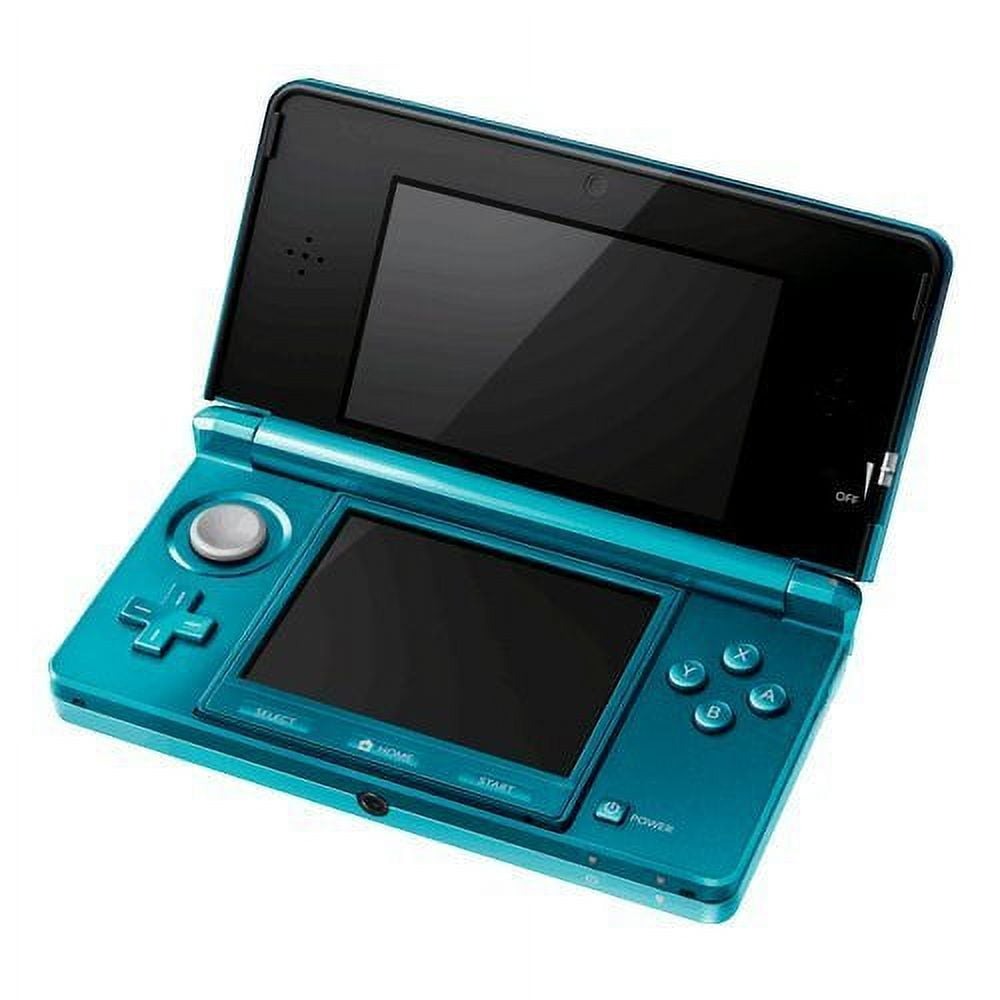
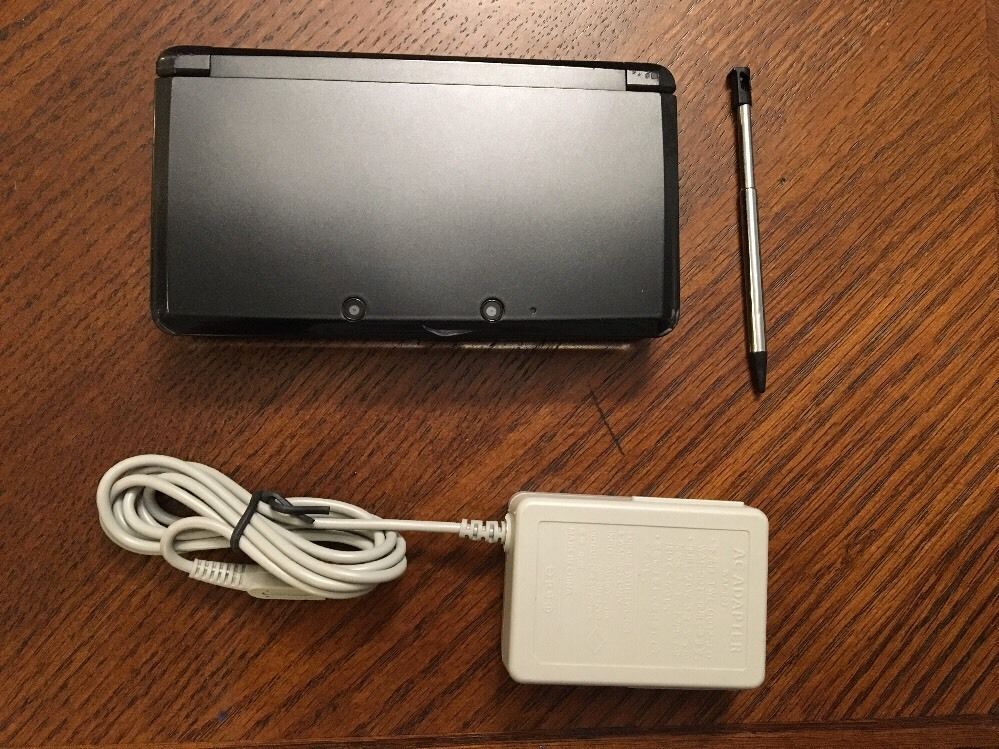
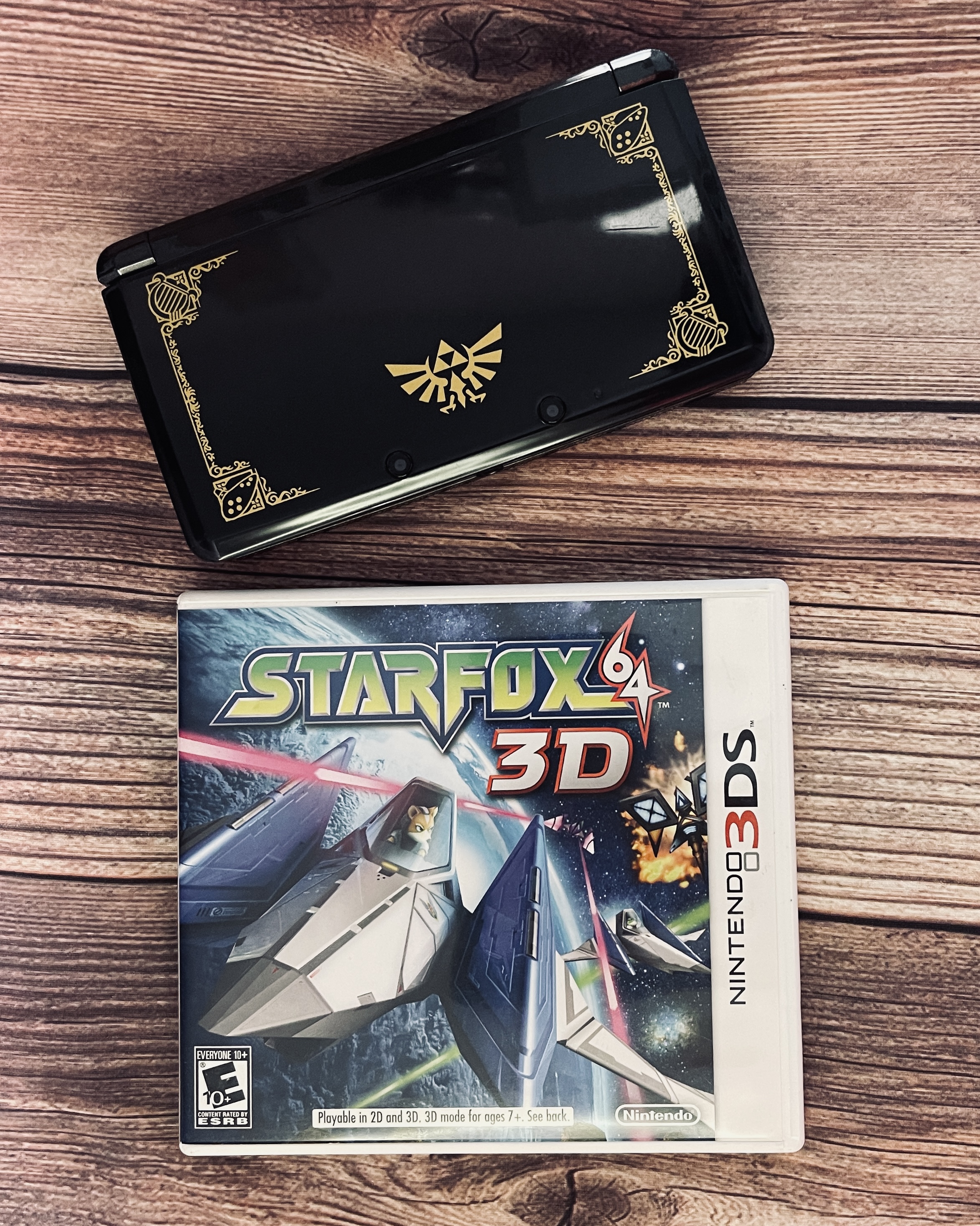
Nintendo is well-known for making hardware that takes huge risks. While they usually fail software-wise, they tend to soar in hardware sales. The 3DS started out pretty poorly, with crappy launch titles and a steep retail price of $250. About 6 months later, Nintendo dropped the price to $170 (the same price as the Wii and DSi XL), and suddenly sales rose, and third-party developers jumped on board. I wonder why… Now that the 3DS is in full swing, I finally got one for Christmas this year and have several games to tinker around with with this bad boy. I actually have to say the hardware is well-built and very impressive, despite my early speculation that the hardware would be a complete failure.
The whole system is just completely new because not only is it capable of 3D, but it also has more powerful hardware, so they like GameCube/PS2 quality. The main menu is designed more like the DSi, but leans more toward what the Wii looks like. You can now use the Mii Plaza, plus a bevy of built-in apps that are pretty neat. When you start the thing up, you will notice some hardware changes, like an analog stick, which completely changes the way DS games are played. The top screen is only capable of 3D, but it’s slightly bigger (3.53″), kind of like the DSi XL (4.2″). The bottom screen is the same size, which I found disappointing, but there was something about technical issues that kept the touchscreen from being 3D.
The system has a 1 GHz processor, which is about 10x what the other DS systems are capable of (133 MHz), and the GPU is also more powerful. To show this power off, the system comes with AR (augmented reality) cards of famous Nintendo characters that you use in the built-in game AR Games. Setting the question mark box down in front of the camera acts as a menu with different games like shooting targets, billiards, being able to pose the characters to take 3D pictures, and other crazy games. This is actually very impressive, and it’s so neat to just see these guys pop out of real life onto the 3DS. My only complaint is that you can’t do anything with the characters other than pose them.
The second game is Face Raiders, which takes your face and puts on flying helmets that you shoot down. This is kind of freaky and fun at the same time, but it helps show off the great AR abilities of the system. Other than this, the menu is in 3D, as is most of the eShop, but I can’t explain how much it just pops and makes playing games that much more fun. It didn’t hurt my eyes at all even with the 3D depth slider all the way up, but you have to view it almost straight on, or the view shifts and the 3D goes away, so the whole idea isn’t flawless. The 3DS is capable of downloading some apps that are pretty fun, but overall, the eShop is lacking in good games. The majority are remade original Game Boy games that no one really misses, but over time they will expand, I hope. The 3DS also features StreetPass, which will exchange information on games you own when you pass people in the car or while walking, which is lots of fun. The system also has a pedometer that awards coins that can be used in certain games to unlock stuff. SpotPass allows you to download and unlock items in games when near a center or outside. This is so much fun and adds some unique qualities to games.
Even when playing games for an hour or more, my eyes didn’t even hurt, and yes, even when I was tired. Some games work better than others, but overall, the 3D effects really add to the experience and make most 3DS games unique from regular DS games. Of course, you can play regular DS games, but the top screen puts black bars on the side to compensate for the larger screen, but I found this was kind of stupid and should be full screen. The battery life is also shorter because of the more powerful hardware, but it has some pretty good power-saving features to extend this. One other advantage is that the 3DS takes SD cards and has internal storage, plus it has a 2.4 GHz wi-fi card for super-fast internet speeds. 3DS games also (finally!) save to the SD card instead of on the cartridge due to the size capacity of the 3DS cards (plus price hikes).
When it’s all said and done, the 3DS is well worth the money, and there are enough great games to consider a purchase. The 3D is revolutionary and actually works with the games, but just make sure you try an in-store demo before buying because the 3D will not work for some people or it may hurt your eyes. For the low price and great features, I would go pick one up right now!
Survival horror is a slowly dying genre, and the king of the genre, Silent Hill, is barely keeping it alive. Shattered Memories is the first American-made Silent Hill, and the whole formula has pretty much changed. Hardcore fans will probably not like this, but the elements that make SH scary are still intact. The game is more about enjoying the experience and less about winning. Puzzles are very simple; there’s no combat, so it’s all about exploration and atmosphere.
You play Harry Mason, who wakes up from a car crash to look for his daughter Cheryl. He runs into different characters (including a MILF’d-up Cibil), and you run around the town of Toluca to find her. In between sequences, you are in therapy sessions, which consist of mini-games and are pretty neat because they change the outcome of the story and the ending. This is a new element for the SH series, and I hope it comes back in some form.
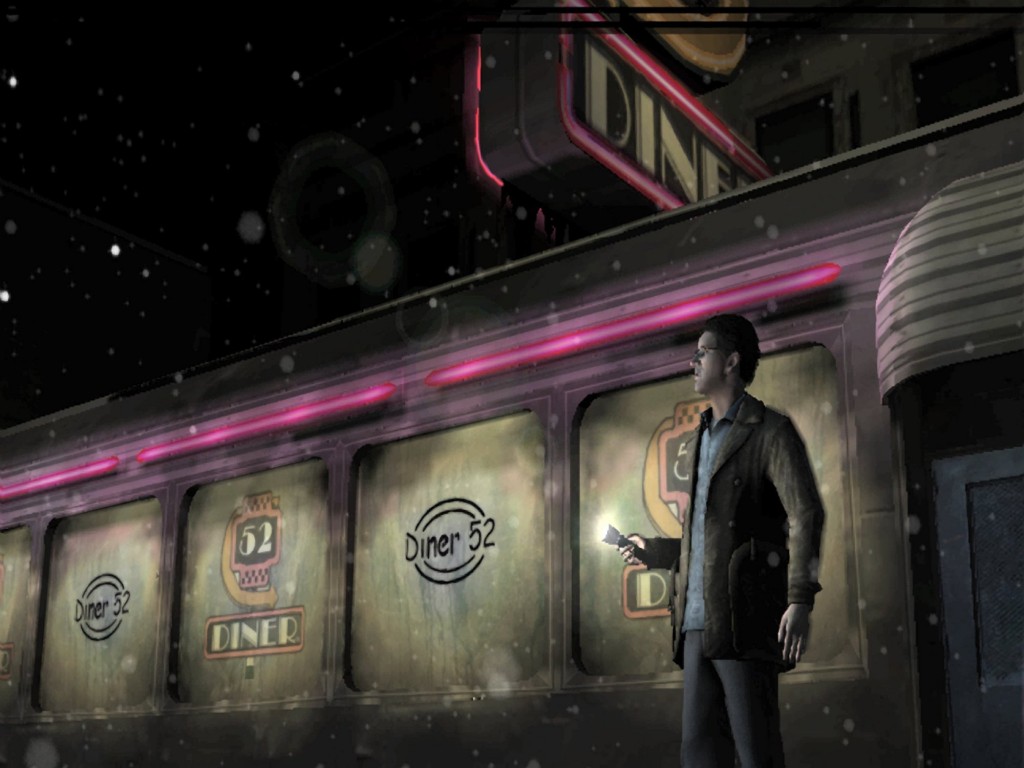
Once you step into the dark, you run around with your flashlight and are basically trying to find mementos and trigger sequences, such as when the screen gets staticky. This means that there is something nearby that will send you some sort of message on your phone. While these are creepy, you can also snap pictures with your phone camera, and this is usually also worked into puzzles.
When you see a white triangle above something, that means you can interact with it. These can be little micro-puzzles because you use a hand to push and pull things. While this was obviously created for the Wii version, it works great here on the PSP. Most puzzles aren’t nearly as mind-bending as past SH games because most of the time the key is in the same room as the locked door, and clues usually don’t need more decrypting. What may get you there is navigating the nightmare sequences.
Now, these are different from the air raid siren bringing rust that consumers SH in past games. Usually, a scene will trigger something, and ice will start covering the room. As you run around, you must find the X that’s on your map, because it’s usually a puzzle you have to solve to continue. While you run around, scary creatures chase you, and you must knock down objects to block their path and let them know you’ve been there before. Some sequences have you running around hallways and bringing you in circles until you go into the right sequence of doors. These sections can be quite hair-raising because of the music and sounds of the creatures, and if they catch you, you have to shake them off via on-screen prompts.
There are some unique parts of the game that make it cinematic, such as riding in cars in the first person, figuring out how to get out of them, and the first-person swimming sequence at the end of the game. Silent Hill has never been quite so cinematic before, and it’s a great addition. Despite all this, the game has a great twist ending and enough uniquity to keep you busy to the end. However, the departure from traditional Silent Hill elements may make some people hate this game. The game looks amazing on the PSP and really feels like it was built from the ground up for the device. This is a top-notch title for the handheld, and we need more of them.
God of War is just one of those games no one gets tired of, and each game brings new and excellent ideas to the table, and this has to do with the fact that each game has a new director. Ghost of Sparta borrows a lot of what God of War III did, tweaks it, and adds things to it as well. I honestly think Sparta is the best example of how to do a portable game well and bring a console experience in without cramping the game’s style. Sparta is probably the most complete console copy on a portable to date, and there is nothing like it out there.
The game is set between the first two and is a side story about Kratos following a haunting vision. The vision of finding his long-lost brother, Deimos, and trying to cleanse yet another horrible memory. Along the way, you battle through Atlantis and other new locales for the game, but the style isn’t anything new. The locales in the game are pretty dark this time around, and they really focus on the whole dark aspect of the game.
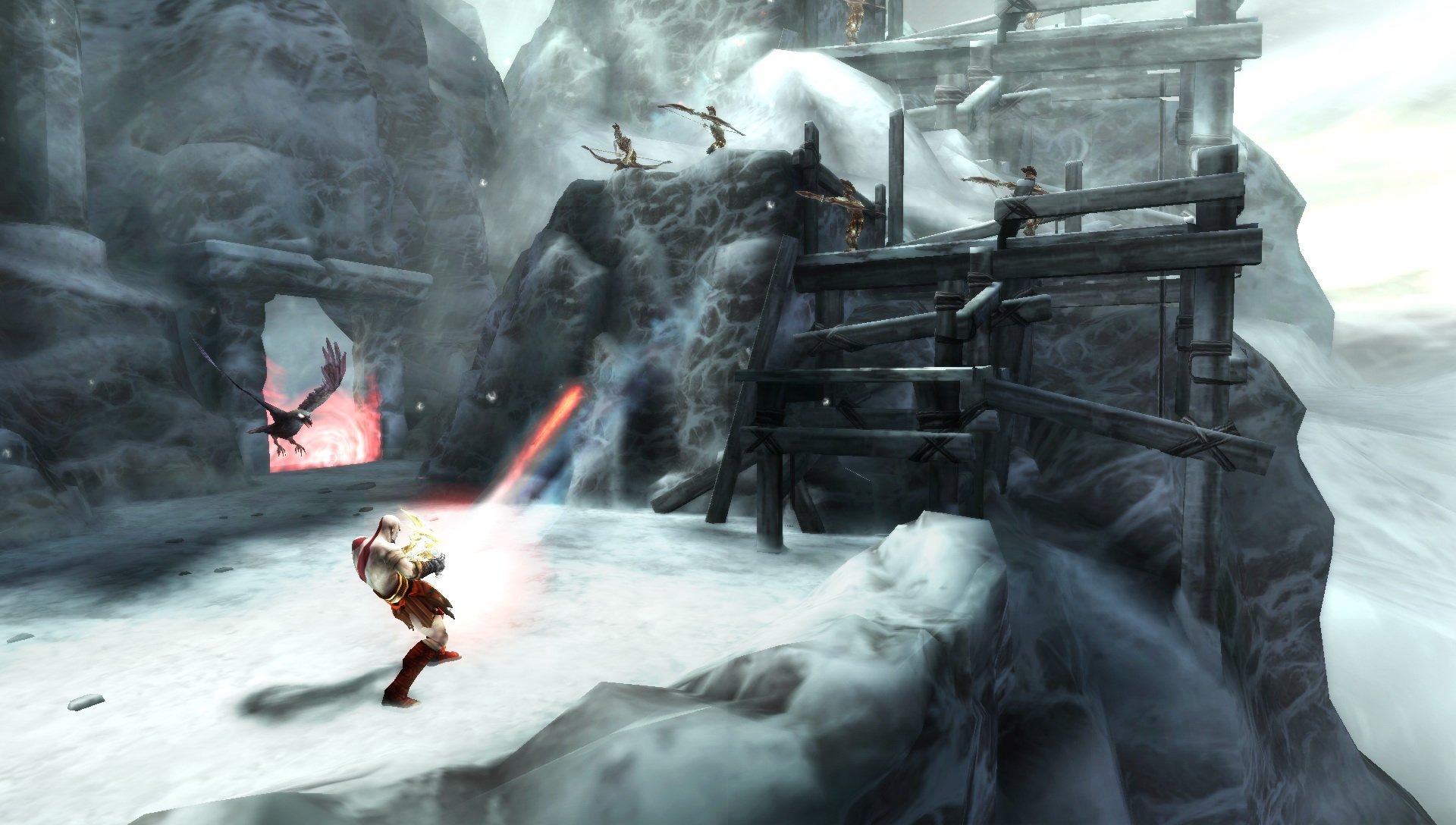
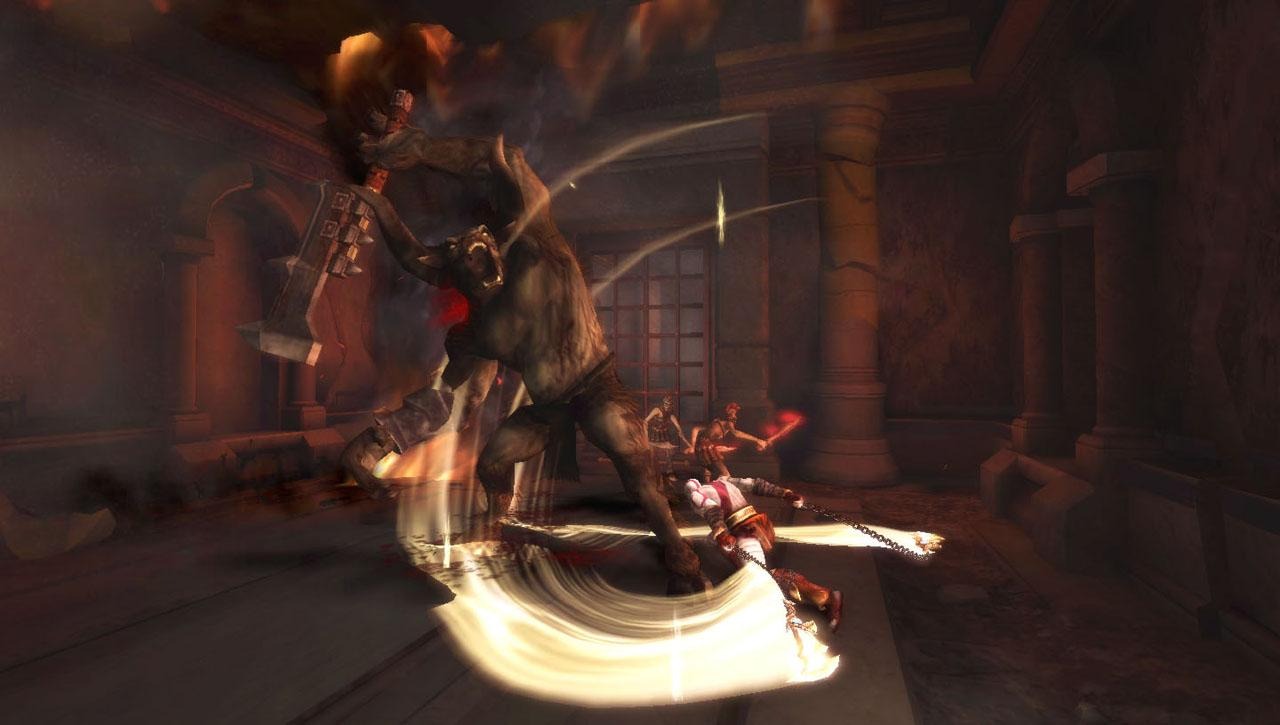
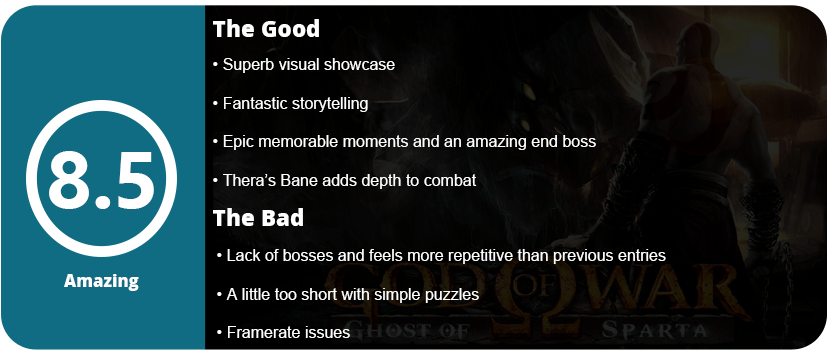
The core of God of War is combat, and the Ghost of Sparta trumps the Chains of Olympus by a mile. Borrowing the recharging meter from III, you get to infuse your blades with Thera’s Bane, and this adds a whole new layer to the combat. Holding down R allows you to set your blades on fire and make them more powerful, but you have to time it and use it wisely. This is also used for breaking down armor on foes that can’t be hit normally, environmental puzzles, etc. Thera’s Bane is really fun to use, and there’s a lot of complexity that goes along with it that adds another layer of depth to the standard combat in the series.
There are new magical items, but they’re not as exciting as one might expect. I never really used them as often as I’d liked to, but they come in handy in the later levels. The game also borrows the Hyperion Charge, which rams enemies to the ground and lets you wail on them. I also never really found much use for it and never used it through the entire game except when introduced, so it feels like there’s some filler in here, but it’s great for people who have a different play style. A whole new weapon is introduced, and this is the Arms of Sparta. These are Kratos’ spear and shield, and it’s good for close-up combat and using the spear for far-off enemies, but it’s not a favorite, is no good, mid- to long-range, and doesn’t have the reach of the Blades. I never really used this except for when it was required during puzzles or exploration.
Sparta has a really good story behind it, and it doesn’t disappoint with its epic interactive story elements, such as one scene where he fights his own past in a brutal way you would expect in a God of War game. The game also opens up with a classic gigantic boss battle with a Scylla, but it’s not as memorable as the console games or even Chains of Olympus. Speaking of bosses, that game lacks hardly any, with only maybe four in this six-hour adventure. The ending boss is probably one of the best in the series, with an awesome co-op battle that has never been down before. The game’s ending is well worth it, and you’ll be pleased with how the whole story rolls out.
In technical terms, this is the best-looking PSP or handheld game ever made hands-down. I don’t think any other developer can make a PSP game look better than one of the best-looking PS2 games ever made. Yes, it looks better than God of War II, and it’s just full of lush detail and is bursting at the seams with effects. If you thought Chains of Olympus looked amazing, this trumps it by a long shot. Water drips off every ledge, the backgrounds are fully animated, and the game has a high poly count and highly detailed textures with even bump mapping! It’s just something to truly behold, and I doubt we’ll see another PSP game look this good. Of course, the game also comes with frame rate issues and never really goes above 30 FPS and sometimes drops down below 15, but that could just be my old PSP hardware.
The game also has its usual treasures, but adds the Temple of Zeus and lets you unlock videos, costumes, art, etc. by spending orbs you earn during the Challenge of the Gods. You can also create your own challenges, and this lets you keep playing this epic game without having to tread through the story again (which I know I will be doing again).
Other than that, though, the game is lacking something. It’s not as well-paced as other games in the series, and the lack of bosses hampers the experience a bit. The game mainly focuses on balanced combat, in which you get a variety of foes and must take each battle in a different way since some foes are weak to something and some aren’t. As well as focusing on exploration, and there really aren’t any puzzles to think of except very simple ones we’ve seen a dozen times in the series. The game is also just too straightforward and feels more repetitive than the other games, and that’s a bit disappointing considering the reputation of the series. However, the game is amazing, and I am not quite sick of seeing what Kratos has in store for us. Is this the last God of War game since III marked the end of the trilogy? Probably not, since this is Sony’s major staple for its consoles. Ghost of Sparta achieves many things and will become an all-time classic.
Hot Tunes does for Korea what Fever did for the US: deliver the popular Korean rhythm game as a “best of,” but adds nothing new to the table that Fever didn’t already provide. The only thing you will notice right off the bat is the new “Lite” 4-button mode.
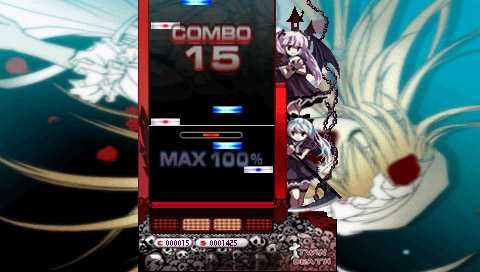
DJ Max is a huge rhythm game hit in Korea that uses a DDR-type gameplay style. There is obviously no dance mat, so you have to use the face buttons, and this works out just fine. There are 4-button, 5, 6, and 8-button modes. While 4 is the easiest, 8 can be damn near impossible. You select a song for each of the four stages, and each stage has harder and harder songs.
The game has some RPG elements, such as leveling up to unlock more gear, images, songs, etc. Notes, gear (the whole box in which the notes fall), and your character can have certain attributes that earn you more exp, gold, etc. There is even a speed modifier for people who want more of a challenge or if the game is going too fast for them. This can be changed during the song or before it.
After you get a certain score on a song, you can play a harder version of that song on the same stage by pressing left or right. During play, you must hit each note when it hits the bottom. Depending on your accuracy, a percentage will appear. If you miss a note, you will break your combo, but if you fill your fever bar and use it, your combo will double for a short amount of time. You don’t just hit single notes, however; there are held notes and even “scratched notes” that require you to spin the analog stick.
Once you finish a song, you are scored on how well you performed and given a grade, some experience, and gold. Gold is used to buy more gear. There are 50 songs, and each one has a wonderfully illustrated music video that streams in the background. If you get bored with the main mode, you can complete challenges that have set goals. Reach this score, don’t break more than this many times, etc. If you really love the music in here, you can even listen to the OST or watch the videos. There are dozens of images to unlock and lots of goodies for fans to keep playing.
The game may sound perfect, but it has flaws. There are already five other DJ Max games (including Clazziqai and Black Square Edition), and this is exactly the same as those. Hot Tunes takes some of the more popular songs from those games, but it is still missing some key gems. Playing with more than four buttons will frustrate most players; there’s no way to transfer the OST to your memory stick, and you can’t transfer songs from the other versions like you can within those. If you already own Fever or have even played the other entries, you’re not missing anything with Hot Tunes, but if you’re brand new to the series, this is a great entry.









































 thebinarymessiah.com
Try multiplayer. A lot of fun !