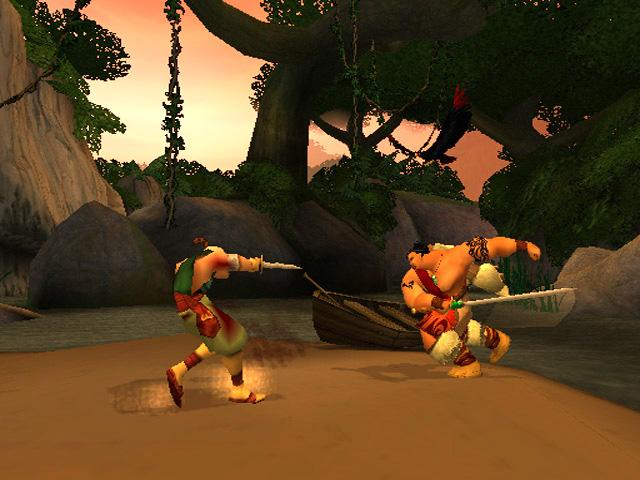
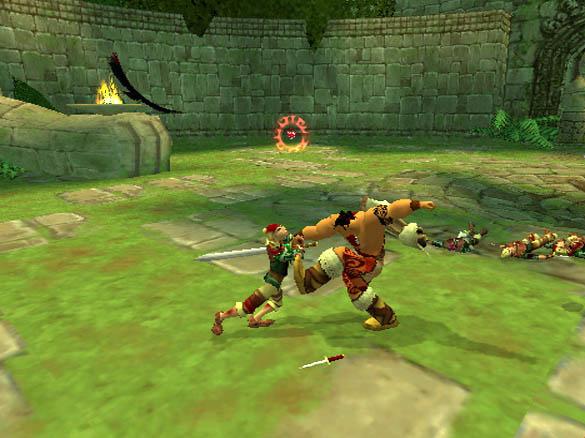
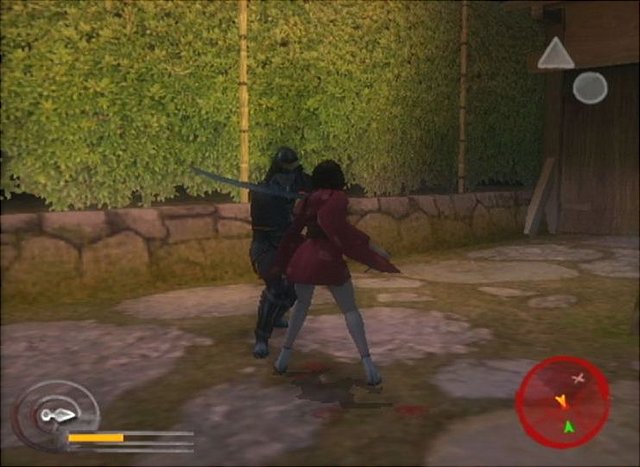
The Mark of Kri is a curse passed down from generation to generation, and each firstborn child bears the mark on their skin. There are six at all times, but some crazy guy wants to kill off the curse or something like that. The story isn’t explained very well and is not very interesting. The Mark of Kri’s strong points are its stealth, but it has sluggish combat and camera issues galore. It may have been pretty good ten years ago, but not today.
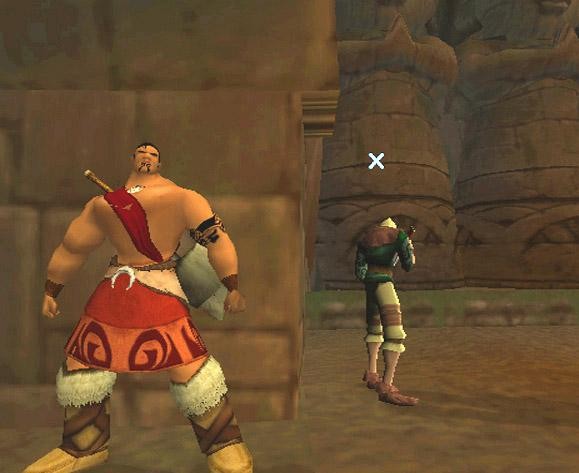
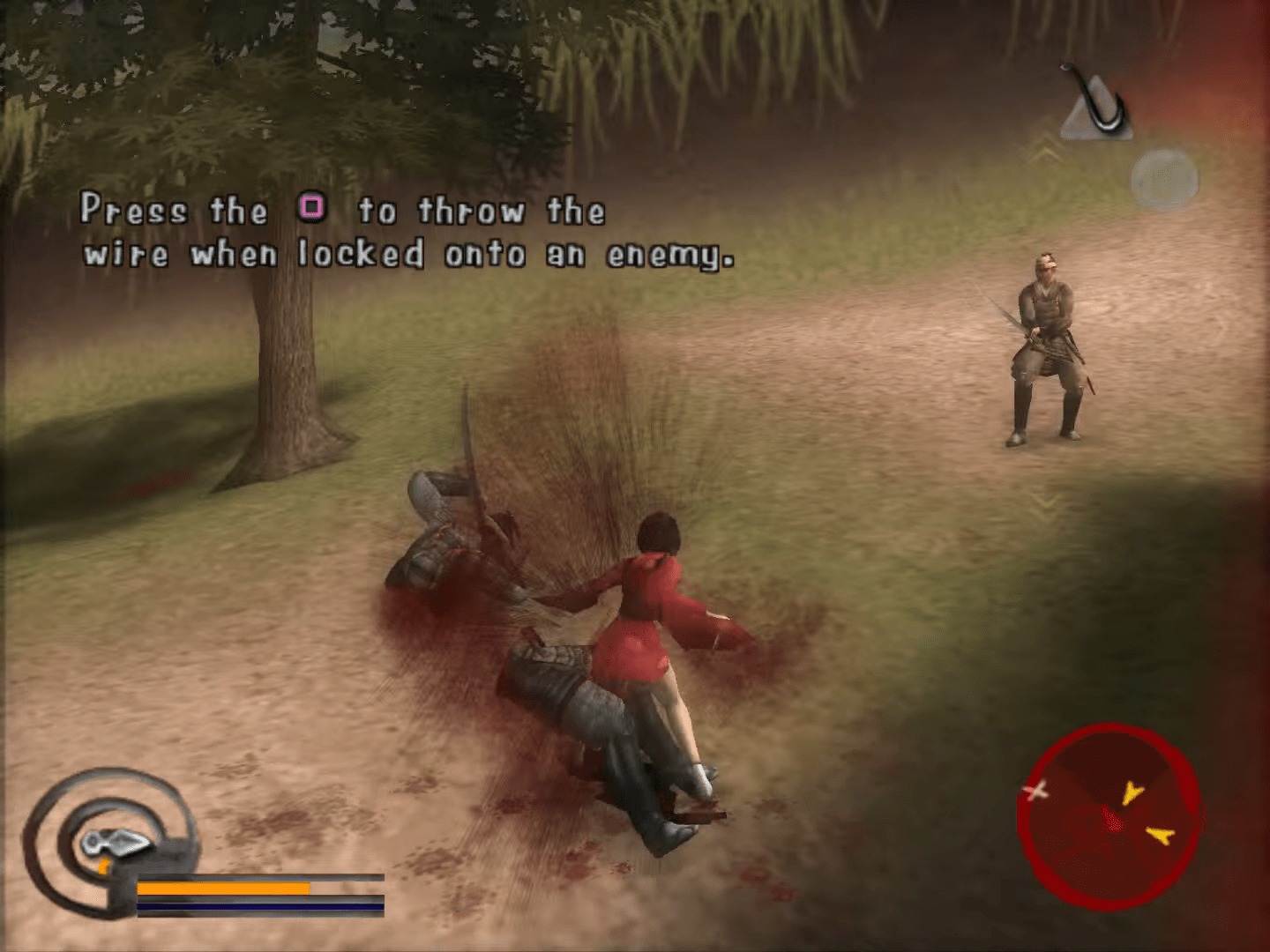
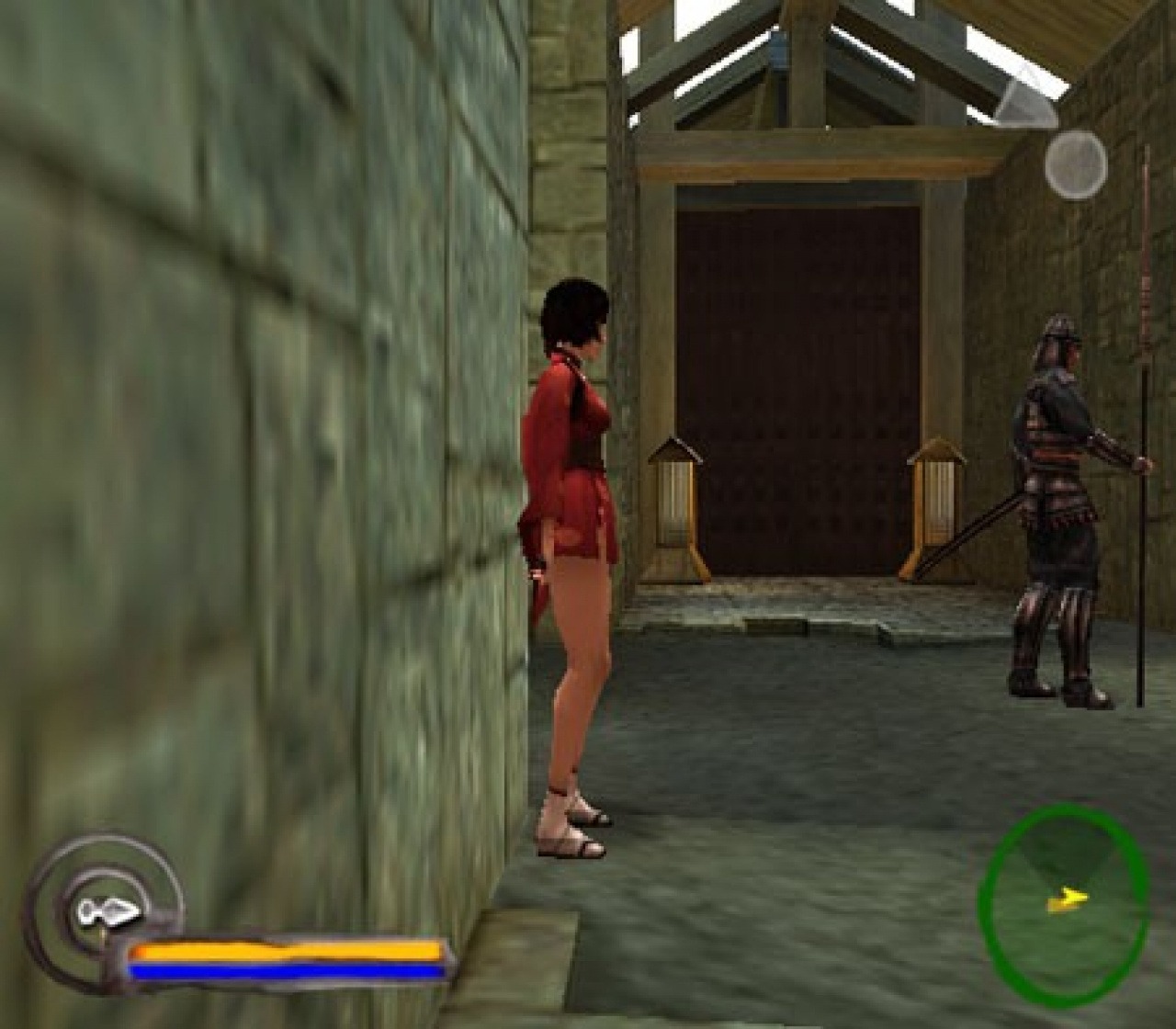
The game is very linear, with usually only one pathway to follow. You have a bird that is your companion that you can send off to certain points to scout ahead for you. This is mandatory; otherwise, you will be fighting off tons of guys all the time and dying. Once you use Kuzu to scout ahead, you can plan an attack. Use stealth by sneaking up, buckling against walls, or dropping down on enemies. You use the right analog stick to sweep a beam around that assigns a face button to an enemy; that’s their attack button. You can stealth kill two enemies by starting the attack on one and then pressing the buttons shown above the second enemy. Sometimes you need to distract guards by shooting bells with your arrow, scaring animals, and other things. This is pretty fun, and finding the right path through enemies can be fun. It is the actual combat that is sluggish and troublesome.
The right analog stick should have been used for camera control in this game because it gets lost all the time. It never focuses on enemies like it should, and it takes forever to sweep around. The combat is okay when there are just a few enemies, but later on, in the game, 15+ enemies will surround you. You get better weapons like the axe that can lock on up to nine enemies, but this whole lock-on business just doesn’t work. I would rather control the camera and have a more fluid combat system that way. The reason why I died so much was that Rau would stop and rub his head, trip constantly, bang his weapon off of stone walls, and get it stuck in wood, and this was frustrating. In the meantime, you are being hit and dying while all the unnecessary animations are playing out. Once you get surrounded or trapped, you’re dead. Backing out is impossible because once you unblock, you get bombarded by attacks.
If that isn’t enough, the save system is annoying. There are no save points, just save scrolls. You have to find these, and they don’t carry over to the next level. The same goes for max health upgrades. You will end up using your save scrolls or squandering them because you want to save a hard part. Another issue was using the bow. Aiming at enemies takes forever because you have to wander around the enemy until you get a lock on, and if the enemy is too high up, you have to fiddle with it until you hit the enemy. Not fun.
The graphics are just average, even for back then. The game is only 6 levels long and can be beaten in about 4–5 hours. The story is underdeveloped due to its short length, and you won’t care about any of the characters. The combat has sluggish controls, and the whole sweeping lock-on system is a terrible idea and doesn’t work right. The camera has a lot of issues, and the list goes on. For just a couple of dollars, this is a decent stealth game, but be wary of all the problems.
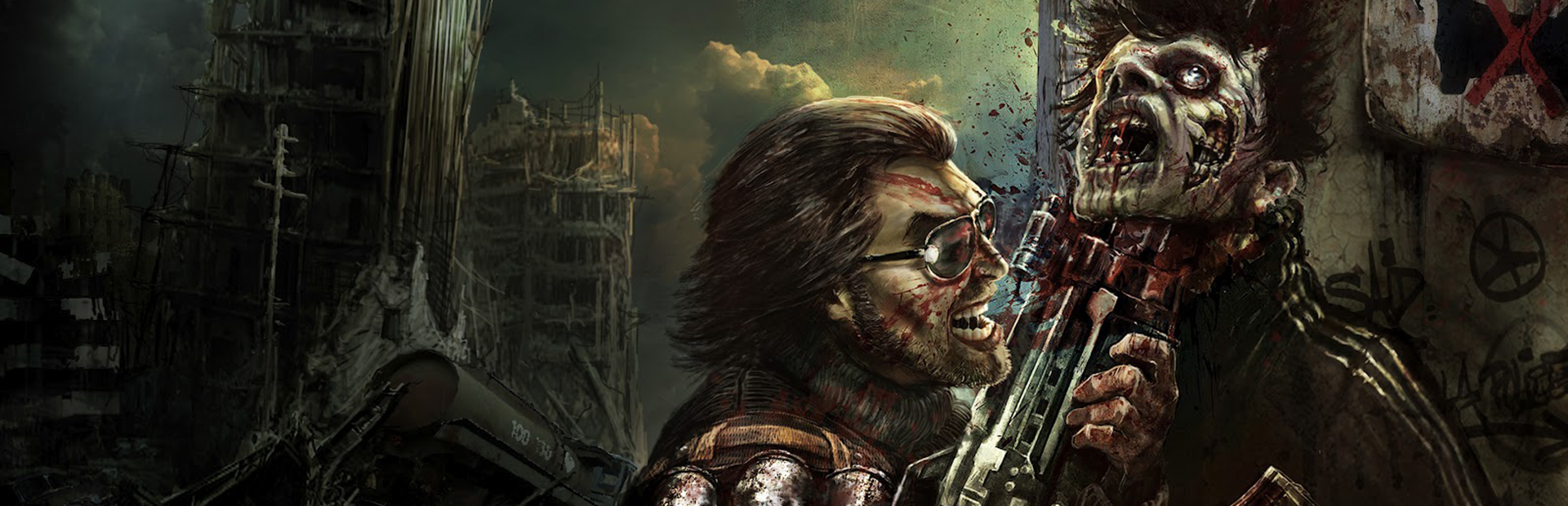
Zombie shooters are very popular these days, but surprisingly, not a lot is bad. Dead Nation is a top-down shooter that has you blasting zombies away as a lone survivor during a zombie apocalypse. The story isn’t anything original, but the action will test your endurance with waves that come in the hundreds.
All your weapons are equipped with a flashlight, and this is the only thing that allows you to see what’s coming up to you. Zombies range in different sizes as well as really large ones that can kill you in a couple of hits and take a lot of bullets. The levels are very linear, with rubble blocking your way, but the whole point is to score high and get as much gold as you can to upgrade your weapons. You can find this in containers, on the backs of cars, and even in large chests. You will need to upgrade your weapons often, or you will never make it through the game. There are a lot of upgrades, and you won’t buy them all in one playthrough.
The levels are broken up into checkpoints, and in these safe areas, you can upgrade your weapons and swap armor that you find. You can upgrade the ammo capacity, clip capacity, damage, reload speed, firing rate, and other things. Each upgrade costs more, but it is necessary to upgrade as much as you can. You have items that you can throw, such as dynamite, grenades, flares, molotovs, and mines. The zombies become attracted to bright lights and loud noises, so these items can give you a lot of breathing room. Even shooting cars that have alarms can wipe out dozens in an instant. The same goes for barrels and other items that explode.
Enemies get tougher as you go on, but there are also “arenas” on some levels that can be really tough. Hitting a switch to wait for an elevator or a large bridge to expand can be very noisy, so you will have hordes on you while you wait. These can be the toughest areas because you need to use your weapons wisely. Use your rifle to pick off zombies when the numbers are low. Use your shotgun when you have zombies filtering through a choke point. The blade launcher will slice through enemies until it hits a wall, which can take out entire hordes. The game is extremely fun, with lots of gore and great graphics that make the whole game tense.
Of course, this game was designed with co-op in mind, which is the most fun and the easiest. Going through solo is really tough, and levels tend to stretch a bit too long. Dying really stinks because you can very easily get set back to the last checkpoint, meaning you have to fight through the same hordes over again to get to where you died. This is probably the worst thing about the game, but once you play enough, you will get good and learn what weapons are best to use.
Overall, Dead Nation is a fun PSN game that will give you a few hours of tense zombie shooting. This game will really test your endurance because it never lets up. Once you think you are safe, hordes of zombies come at you from all directions. Grab a friend and play this during a long night, and you are bound to have a lot of fun.
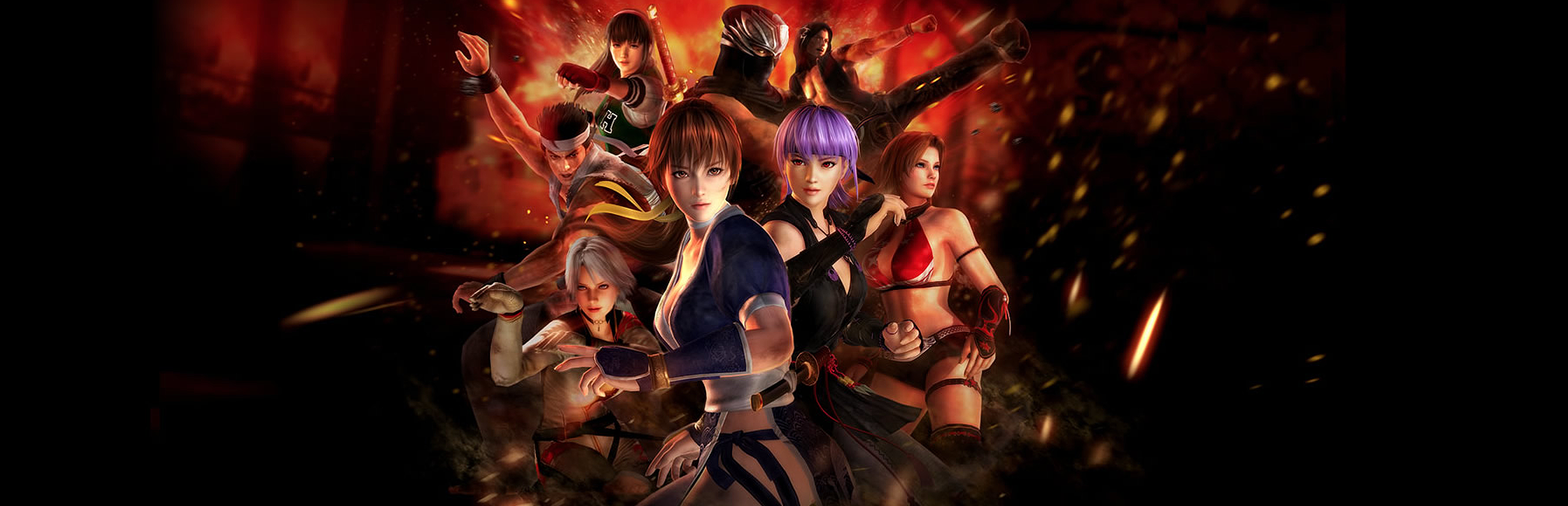
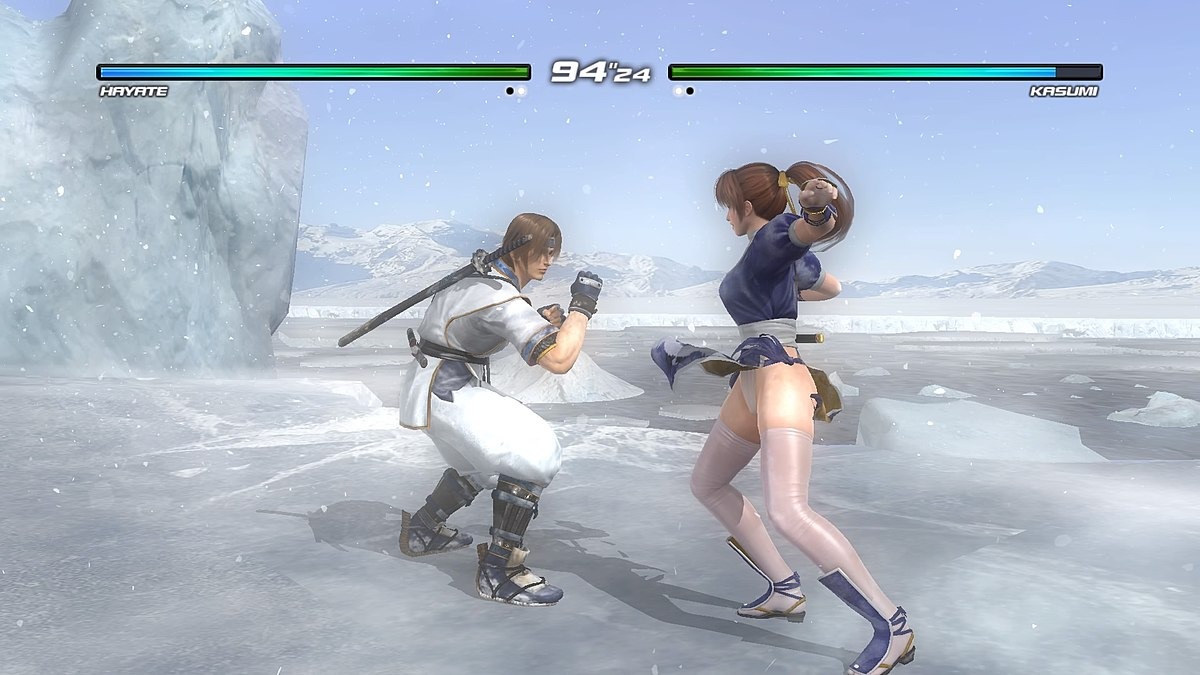
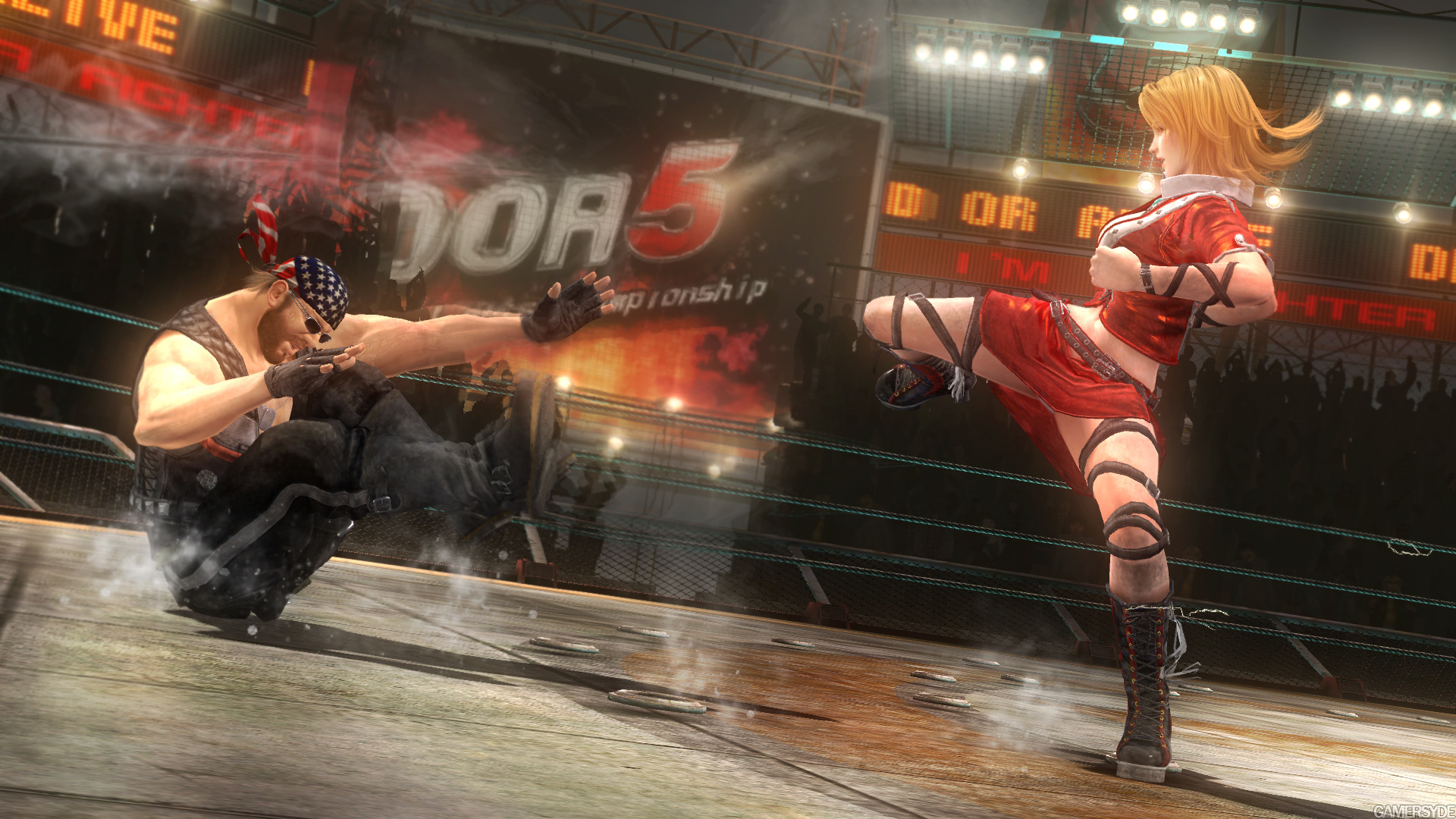
Dead or Alive is one of the longest-running fighting games, dating back to the PS1 era. It is also one of the fighting games that probably adds the least amount of features or changes through each sequel. DoA 5 doesn’t really add much, so fans of DoA 4 will be a little disappointed here. The fighting system is nearly unchanged, and all you will notice from the beginning is a new story and a graphical upgrade. The game looks pretty good, and there’s a long 65-mission story, but is it worth the $60 purchase if you are just happy with DoA Dimensions or DoA 4?
The only new additions to the fighting system are the Cliffhangers and the Critical System. Both are underwhelming and just add to the already complicated fight system. However, it is more enjoyable to button mash than other fight games that rely on things like jump canceling, jump this, cancel that, etc. DoA is based around a triangle fight system that is based on holds and counter-attacks. This means you have to be quick and read your opponent’s moves; most fighting games aren’t like that. This is also a problem because predicting moves is very hard in this game, and having counters and holds for high, low, and mid strikes is just ridiculous and creates a very high learning curve that will turn most new players away.
The critical system allows you to do extra damage when the word pops up on the screen; when it turns red, you can do even more damage, but the timing for this is a serious pain. You spend more time trying to read and predict all this stuff than just button mashing, which is a lot more fun. Some fighting games are more fun when learning the moves and the fighting system (Mortal Kombat, Marvel vs. Capcom), but Dead or Alive isn’t. You have to focus less on the fight and more on the animations and things that pop up on the screen. I spent hours trying to learn all this, but in the end, I just resorted back to button mashing, which I felt more confident in.
Cliffhangers are cinematic events in which you power blow (a super-powerful charged attack) into a certain danger zone and a quick-time event comes up. This was fun, but it is hard to figure out the special Danger Zone in most stages and leads right back to that issue where you are distracted from the actual fight. DoA 5 just adds too many distractions, but for people who don’t mind (probably hardcore fans), then you may like these new ideas. Despite all of this, the fighting system is very fun and fluid and is all martial arts, with no fancy fireballs or magic attacks.
The story mode is back and is pretty well developed, but it is confusing for newcomers. You had to have played past story modes because they pick up after each other. Kasumi is just trying to stop Alpha 152 again, and the Mugen Tenshin clan (Ayane, Ryu Hayabusa, and Hayate) are after her. In the meantime, Zack is trying to recruit people for Dead or Alive 5, and most people will find the story mostly uninteresting. It is better than most fighting game stories, though. The graphics look great and pretty much push the consoles to their limits. There is a new dirt and sweat feature added to characters, but you can only guess why. Dead or Alive is 70% female fighters with large breasts that jiggle with every move in very little clothing. This isn’t a bad thing because most of the characters are well known and very well developed, with unique personalities. One of the features in every Dead or Alive release, for me, are the new costumes I can unlock in the game because they are so well done and make the women look even more beautiful.
The story mode also has bonus missions, but after halfway through, they start becoming impossibly difficult. Dead or Alive isn’t really a combo type of game, but pulling off 7 and 10-hit combos can be a serious chore. Online modes are fun as always, but most players will get discouraged by the good long-time fighters. This just proves that you must master the triangle system because once you get locked into a combo, you’re stuck. Health bars deplete quickly in this game, so fights can last only a minute or two.
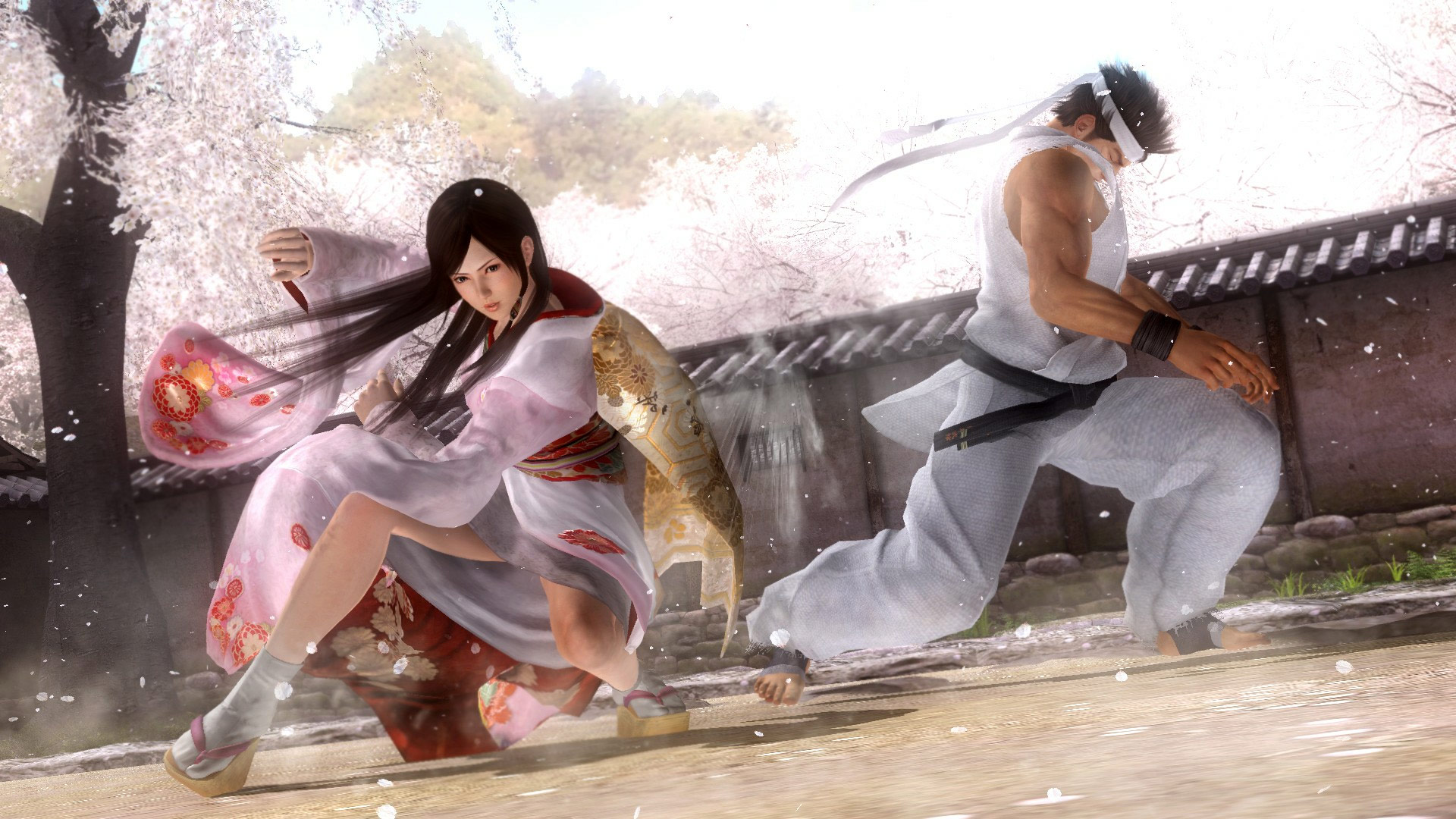
Overall, DoA 5 doesn’t bring much to the table to call this a true sequel—graphical upgrades, a new story, and just a couple of new additions to the fighting system—but they hamper it down. There are also no new characters, just a few cameos from Virtua Fighter. Plus, the stages are actually pretty boring. Construction site, a street, and a Japanese house. Yawn. DoA 5 is solid and fun, but wait for a price drop.
Silent Hill has had a rough patch, and I thought Book of Memories would change this. The game seems really great at first, and I like the idea of the series branching off for the first time into a different genre. The dungeon crawling path works well for the series, but it is poorly executed here. The first few levels are fun, but later on, they repeat the same way over and over again. The game doesn’t feel much like Silent Hill at all except visually, and I promise you there isn’t a single scare in the whole game.
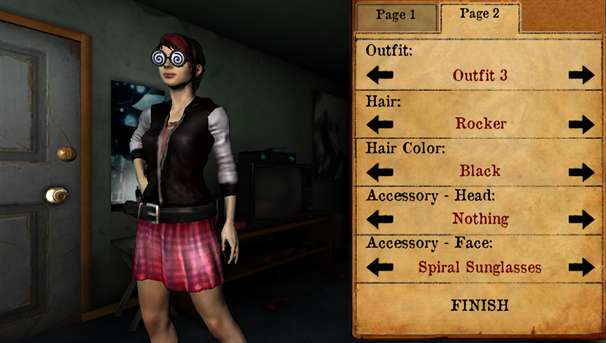
The story is paper-thin, in which a man or woman (you get to create a character with a very weak customizer) gets a strange book for their birthday from the mailman seen in the last terrible game, Downpour. It is full of memories, and you decide to go inside and change them. That is pretty much it. The story is barely delivered through notes and scattered audio clips. Silent Hill is known for good stories that are at least confusing but not boring. This one is boring and uninteresting.
The game has a top-down perspective, and you run around levels, opening rooms and completing challenges to find puzzle pieces. Silent Hill is known for puzzles, but these are pretty lame (more on that later). You are safe in the hallways, and each room is random. That is probably the most fun part of this game. What’s in the next room? Some need keys to open, which are found on red-highlighted objects. When your flashlight is on, these objects you can search through are highlighted, and they contain things like ammo, medkits, weapons, keys, and repair tools.
The whole point of the game is to run around, smacking down everything in sight, but this is where the game mainly fails. The weapons are nods to pretty much everything seen in a past game, like the steel pipe, wood plank, fire axe, revolver, sledgehammer, and a few original weapons. The issue here is that they can break very quickly. This made the game extremely tough because enemies are really hard to take down. Even after leveling myself up a lot, I never did much damage. Using repair tools can come in handy, but they are hard to find, and you can’t hold many of them. You can upgrade your backpack more, but this requires a lot of memory residue, which is also hard to come by. Saving up this currency is even tougher because you will be spending it on medical kits and repair tools 90% of the time. See what I mean? This is all a vicious cycle that never ends.
There are RPG elements that allow you to equip relics that increase stats. Leveling up takes forever and doesn’t seem to do any good. The combat itself is boring and stiff. You just mash an attack button until everything dies. The lock-on button is handy for ranged weapons, but blocking didn’t really do much good for me. I felt the combat system should be more refined and intuitive for a dungeon crawler. Maybe add some spell casting? I can’t tell you how tired I was of the game by Zone 11. I just called it quits. One redeeming quality of the combat is the fun boss fights every three zones. You have to use strategy and discover their weaknesses, but why can’t regular enemies be like this? Most enemies are from previous games, and very few are new. I just felt the developers didn’t know what direction to go in—Silent Hill survival horror or dungeon crawler?
It really shows in all the flaws in the game. The puzzles are the same three that repeat over and over. Event rooms are confusing, with zero clues on what to do. Even the karma bar seems useless because picking up enemies’ blood (depending on whether it is light, blood, or steel) will move your karma bar around. It seems pretty pointless, actually. The only way to really enjoy this game is to co-op with up to four players, because the game is really hard. Not to mention the fact that if you die before saving a spot in each level, you have to do it all over again, which is not fun.
Book of Memories has some nice graphics for the Vita; nothing special though. There are no scares to be had, and the same track loops over and over again. The story is uninteresting, the character creator is weak, the combat difficulty is all over the place, the combat system is boring and stiff, and many other elements wrapped in the game just feel wrong and half-baked. I love the idea of a dungeon crawler in this series, but please pick one side or the other. Also, make it scary next time.
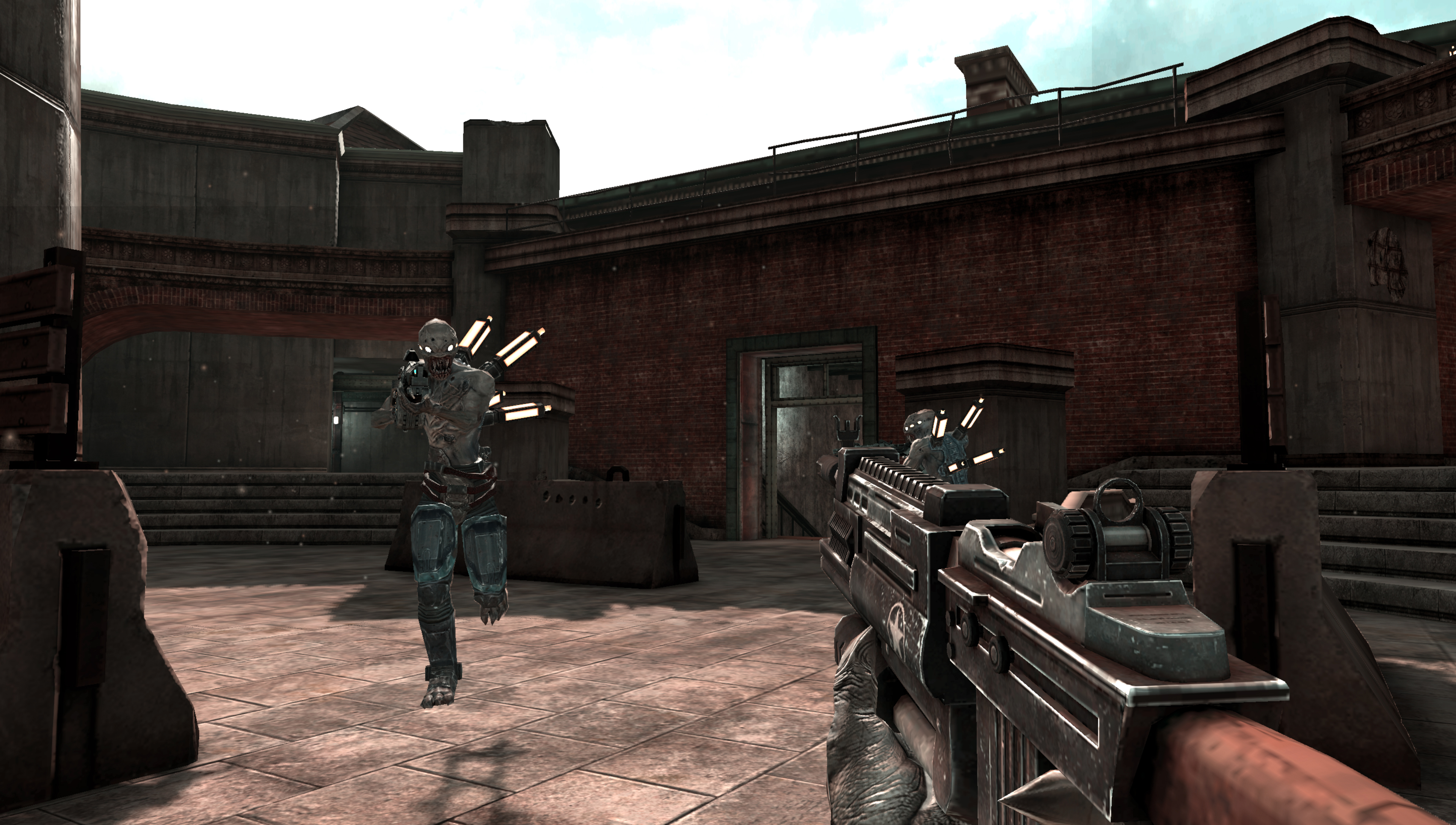
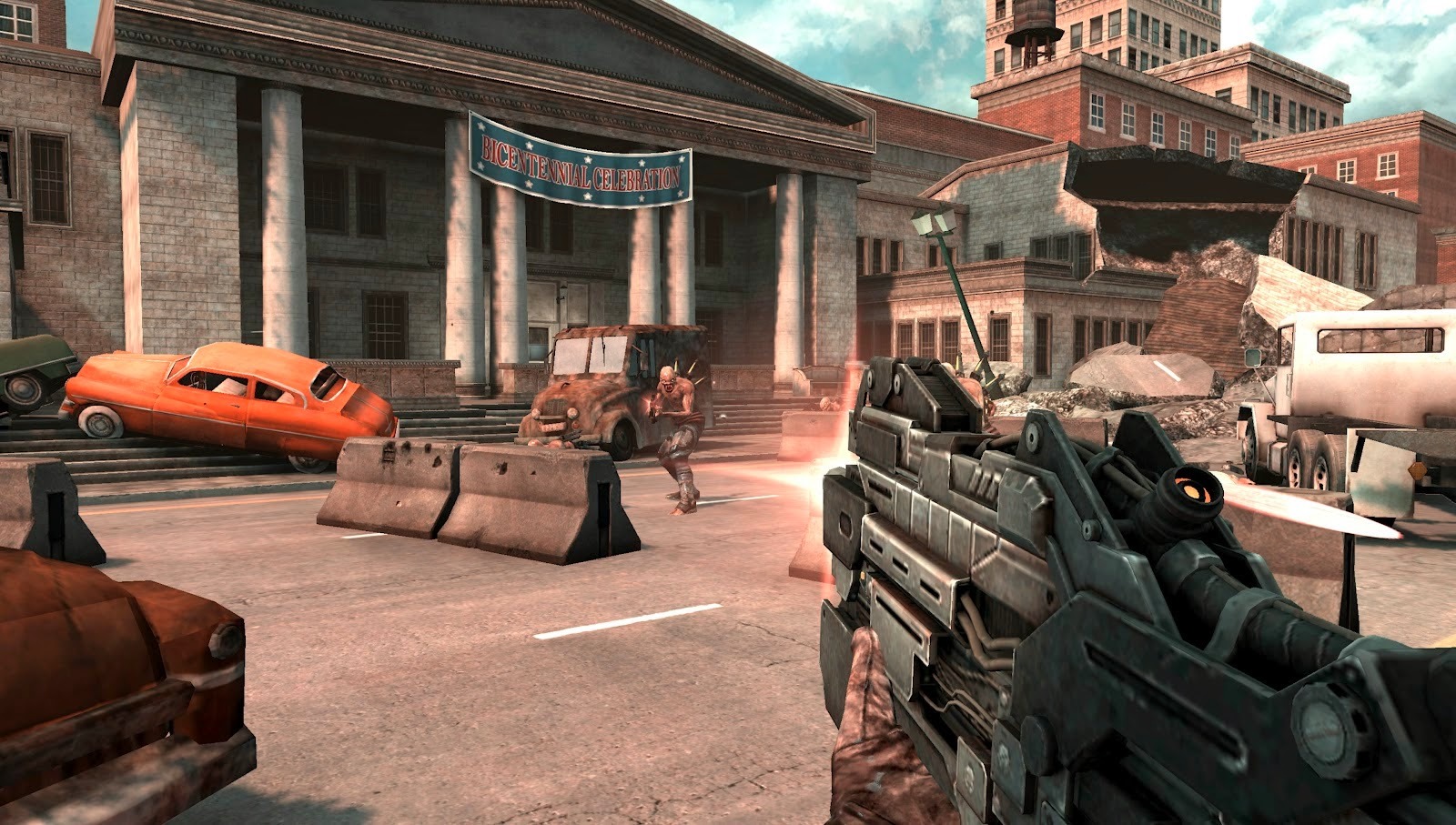
Resistance is a series that should have stopped with the third game. The series is really starting to run itself into the ground because it ultimately fails to fix issues with previous games or add enough content to deem it an individual sequel. Burning Skies is a bare-bones Resistance sequel that doesn’t really add anything new or interesting to the series. The multiplayer is average, and as it stands, Burning Skies is only good as a weekend rental.
You play Tom Riley, who is a firefighter who gets caught in the middle of the Chimera War. His wife and daughter are taken away by them, and he will do anything to find them. Don’t think this is some heartfelt story like Resistance 3, because it isn’t. There isn’t really that much story here because the campaign is extremely short. You can probably beat this in two long sittings, or about 4-5 hours. The characters are uninteresting, and the voice acting isn’t nearly as good as in the console games. The way it sits now, I forgot about this game the second I finished it.
It doesn’t help that there just isn’t anything memorable in this game. It copies everything from the past games and doesn’t do anything new. The only thing new is probably the touch-screen controls for secondary weapons; that’s it. Touching the screen and sliding the circle where you want projectiles to go is pretty intuitive. The Mule lets you slide back on the crossbow for bolts, and tagging enemies with the Bullseye is as simple as pressing the enemy on-screen for a second. I also liked the fire axe melee button on the side, which came in handy. Even dragging grenade icons to where you want to throw them was a nice touch. One thing I also liked was that there was no health bar, so you don’t have to rely on getting health packs; however, you die just as quickly. A few shots, and you’re down! This game carries over the relentless difficulty from past games, which I didn’t like.
You can upgrade your weapons again, but not like in Resistance 3 through use. Picking up Grey Tech allows you to unlock 2 of 6 upgrades for each weapon at all times. Each weapon has three red and blue upgrades, but only one of each color for each weapon can be active. This system was alright, but finding the Grey Tech was a serious pain and isn’t as intuitive as upgrading through use. You can also collect hidden files in the game, but I also don’t care for this very much.
There really aren’t any bosses in the game except the terrible one at the end. Shooting red, glowing objects and being able to be instantly killed in one hit is just unfair. The game, in general, is just seriously lacking any of the huge epic moments from the PS3 games and even the PSP game, Retribution. The graphics are great and some of the best on the console so far, but they could have done more with them. The visual style is pretty mundane and feels recycled from the first two games. The Chimera is all the same, with only 3 or 4 different types that we have already seen. Burning Skies could have been a whole new game on its own, like Retribution for PSP, but instead, it just copied from past games and added a Vita shell around it. This is a great weekend rental, but nothing really more.
I try to be forgiving with games, but there are some that just can’t be overlooked. Red Ninja is a perfect example that has mechanics that are broken beyond reason or repair. The story is the first thing you will notice that isn’t very interesting. You are trying to stop a rival clan from getting a machine gun blueprint from yours to use to destroy their enemies. The beginning cut scene shows your clan using a machine gun to cut down hordes of samurais. Just one machine gun. After this, your leader tells the man in charge of making it to destroy it because it dishonors the rules of engagement. Sure that’s noble, but all this for one stupid machine gun!
You will notice the game is severely flawed in the tutorial. The camera is completely useless, the controls are awkward, the platforming is uncontrollable, and the enemies are stupid as well as generic. The only interesting thing in the whole game is the tetsugen weapon and Kurenai’s panties. The camera is inverted no matter what you do. In the options, you can turn it off, but it becomes inverted vertically instead of horizontally. I constantly had to consciously remember to turn the camera the opposite way I wanted it to go. This is so frustrating during already busted boss fights or when surveying enemy patrols. On top of all this the combat works a little but needs a lot of work. You can use the tetsugen as a melee weapon or throw it from a distance and slice enemies in half. One awesome feature was being able to run around enemies in a circle while one is tethered and trip them down or cut them in half. Good luck keeping all the enemies focused because of that broken camera.
Secondly is the platforming, this is probably more frustrating than anything because you need to do this to avoid enemy detection. You can shimmy ledges, ropes, wall run, and dash around, but the combination of the camera and the weird controls make it frustrating. Wall running consists of you having to be in a dash while running at a wall. You have to continue running while moving the analog stick in the direction you want Kurenai to run. This is ridiculous and unintuitive. A lot of times I had her bouncing off walls because the camera just couldn’t keep up. Enemies will detect you even when you are on rooftops which is weird. Swimming is no better because enemies can always see you and you can only hide underwater while being still. Completely useless. You can use projectiles by picking them up, but aiming them is just too time to consume. There should be some sort of auto-aim for these.
If that isn’t enough for you to stay away I don’t know what will. I got two levels in and just couldn’t take anymore. The camera constantly going berserk and doing its own thing, the stupid AI, weird control scheme, bad platforming, and just overall an unpolished mess. The combat is somewhat saveable, but the camera and controls make this frustrating as well. The game looks pretty good, but in the end, you won’t even care. Not even the sexy seduction kills are enough to save this game. I hope one day this series is revived but needs to be built from the ground up. Just stay away from this pile of garbage.
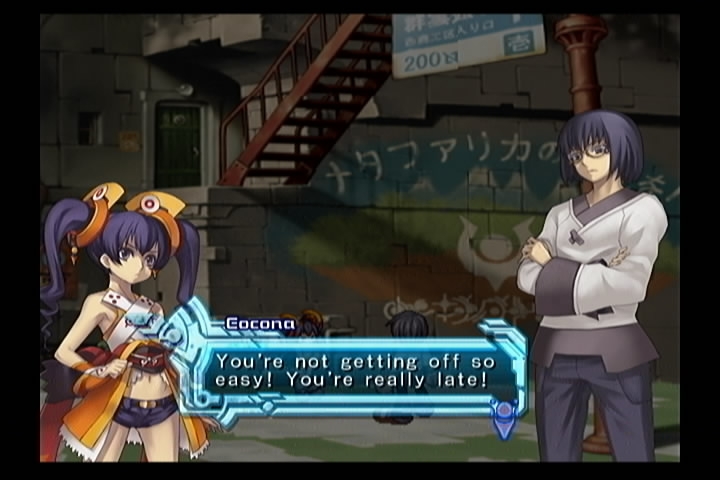
I first have to say that this is a review coming from someone who particularly doesn’t care for or can stand JRPGs. I forced myself to play this, and I am very glad I did. Ar Tonelico II strays from the typical JRPG battle system and story with a little sexually confused boy trying to save some generic fantasy world with generic fantasy characters. You play as an entire team of people whose balance of Ar Tonelico (the world they live in) rests on two Song Maidens. The game is full of political schemes, betrayals, and deception. These two maidens must also get to know each other more before they can sing Metafalica and bring about the paradise of Metafalss. The characters are very well designed, and because of how the story is developed, you get to love these characters more than you probably would in any JRPG.
The main design behind the characters and story is getting to know their deep, dark secrets. This is done by diving into Reyvateil’s minds at a dive shop. There are different levels of their cosmosphere that you must explore, and these are played through dialog. You need dive points to trigger certain events, but this is where you really get to know the characters. After completing each level, you will unlock new song magic, which is essential for battle. Without song magic, you will not get anywhere in the game. You can also unlock new costumes for the three Reyvateils that will increase their stats. The diving gets really deep into the characters’s minds and is actually quite interesting. These are some very deep and well-developed characters with some serious issues that make you even question your own. There is also the Infelsphere, where two of the three Reyvateils need to learn to understand each other and get out their deepest, darkest secrets and thoughts about each other (the two depending on how you play the story).
The main protagonist, Croix, is caught in a love triangle between these two Song Maidens and the third Reyvateil. There’s sexual tension between them, which can be awkward in the game, but by the end, there are some pretty good scenes that will tug at your heartstrings. Overall, the story is well-developed, deep, intelligent, and very self-aware. When you rest at saves, you can talk to the Reyvateils and bring your relationship closer, which will unlock different levels of their cosmosphere that you can dive into. Of course, the game can’t just wing it on the story, so let’s get to combat.
The game uses mini-games during battle. There are two phases: attack and defense. When you attack, you have to use the D-pad along with each of the two characters’ assigned attack buttons. This will help your Reyvateils sing better, depending on what directional attack you’re using. There’s a meter that will show their desires for the direction they want. You’re banking on your Reyvateils song magic to do the most damage. You are just whittling down their health and protecting them while they charge. There are different phases of each song tree that do different attacks. Thankfully, there are also healing songs that you can use as many times as you want, but when you switch to another song in the same attack phase, the points will carry over, so you don’t have to charge again. I found myself charging a song tree as far as I could go, unleashing the attack, and then using a healing song. This also reduces the number of potions and healing items you need to use, which removes the headache that most JRPGs have. This makes combat exciting because you aren’t just mashing X until the enemy dies. Those attack buttons have meters on them, and you have to press the button when the green line goes by; otherwise, you won’t defend your Reyvateil, and they will take damage. They are fragile and can’t take much, so you must be on your guard and press that attack button quickly. If you get a perfect rating, you won’t do any damage! But this is hard and requires precise timing. Depending on which two Reyvateils got along and went through the Infelsphere, they can synch during combat and bring out devastatingly powerful dual song magic. This can only be done towards the end of the game, but it also requires doing the same attacks with your Vanguards so the girls synch.
Other than that, the combat is pretty straightforward. Each Vanguard’s attacks will increase in level during fights, so you can do more deadly attacks. The main issue I have with JRPGs is random battles. These usually keep me from completing them, but Ar Tonelico II skirts this by making random battles limited. There is a meter that goes down as you do each battle. Each dungeon only has about 10 (until the last dungeon, which is infinite), but it also turns from blue to flashing red, which will indicate you are about to get into a fight. This lets you explore dungeons freely without getting frustrated. Once that meter runs down, there are no more battles until you leave the dungeon. Even the map system is very useful when most JRPGs don’t even have one.
Of course, there are some side things you can do, like synthesizing items with shop owners. As you advance through the story, you will get new recipe cards from them, but unlike most games, this isn’t just menu-driven. When you synthesize, it brings the characters together more, and dialog plays through. Sometimes the item may not even be what was on the recipe! After a while, you can go back and try again to improve on it. Lastly, you will run into I.P.D. victims in dungeons, which are high-level Reyvateils that you have to battle. If you can beat them, you can do dive therapy on them, which will give you girl power that can raise your stats quite a bit. You can even dualstall during saves and level up your Reyvateils by doing onsen baths! You find dualithnode crystals and put them in this bath, and the girls will absorb them. It is not recommended to do solo baths because the effects aren’t that strong.
The game isn’t perfect, though. The very last dungeon (Sol Morta) is a long, frustrating nightmare with endless random battles and too much backtracking. The visuals are disapprovingly 2D and not very good-looking. During the dialog, characters pop up with different facial expressions, but there are some anime cutscenes, but not nearly enough. There’s even a lack of spoken dialog, but at least the game includes the Japanese tracks. The English voices are hilariously bad and make you want to tear your ears off. There are also a few game-breaking glitches as well as typos. The last 20% of the game is just really tough, and the game stops giving you a sense of direction. This last 20% really disappointed me and was kind of drawn out and long-winded. If it weren’t for these issues, I would give this game a higher score. One plus for me is the amazingly beautiful music in this game. The Hymnos are beautiful, and I loved them so much that I downloaded the songs and listened to them often.
Overall, Ar Tonelico II breaks the JRPG mold with unique gameplay elements, from combat to leveling up Reyvateils via baths and synthesizing. The music is beautiful, and the story is deep with political intrigue and reveals the deepest, darkest secrets a person can hold. However, there are some issues that hold this otherwise wonderful game back. If you hate JRPGs, I recommend giving this one a shot.
Before Guitar Hero and Rock Band, Harmonix created this fun rhythm game using pop, hip-hop, industrial rock, and other genres. You tap away on your controller with a “pick your own path” type of gameplay. The game is fun and very challenging, and it comes with some great tools.
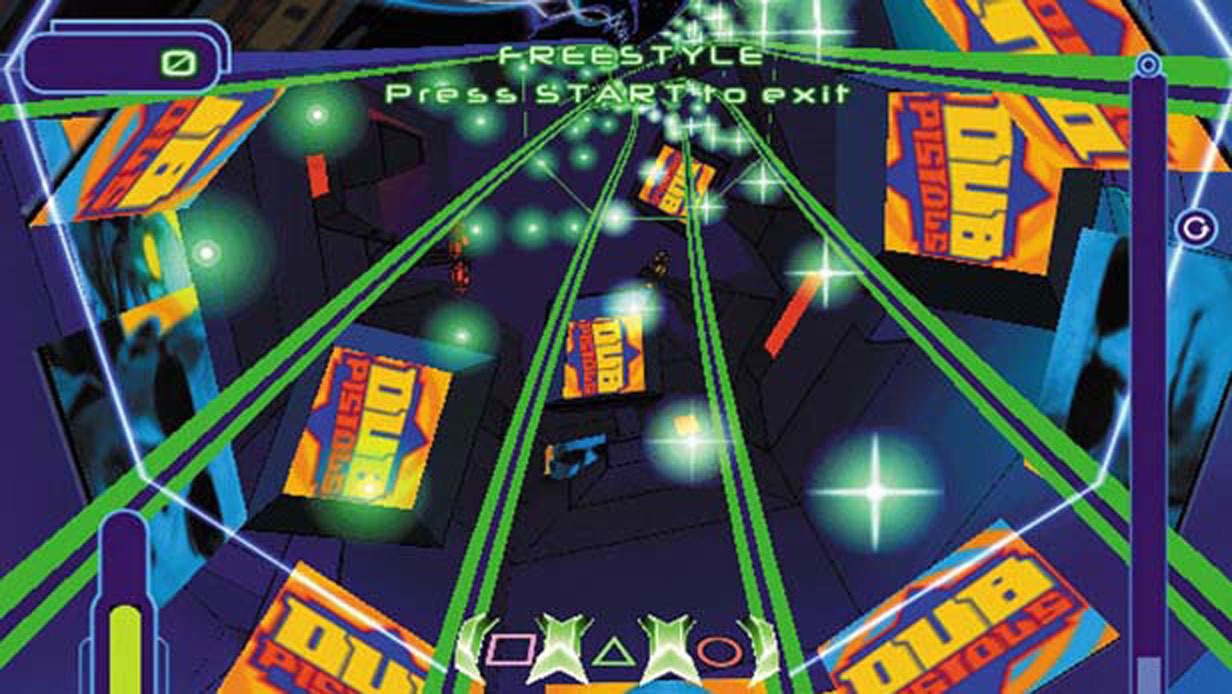
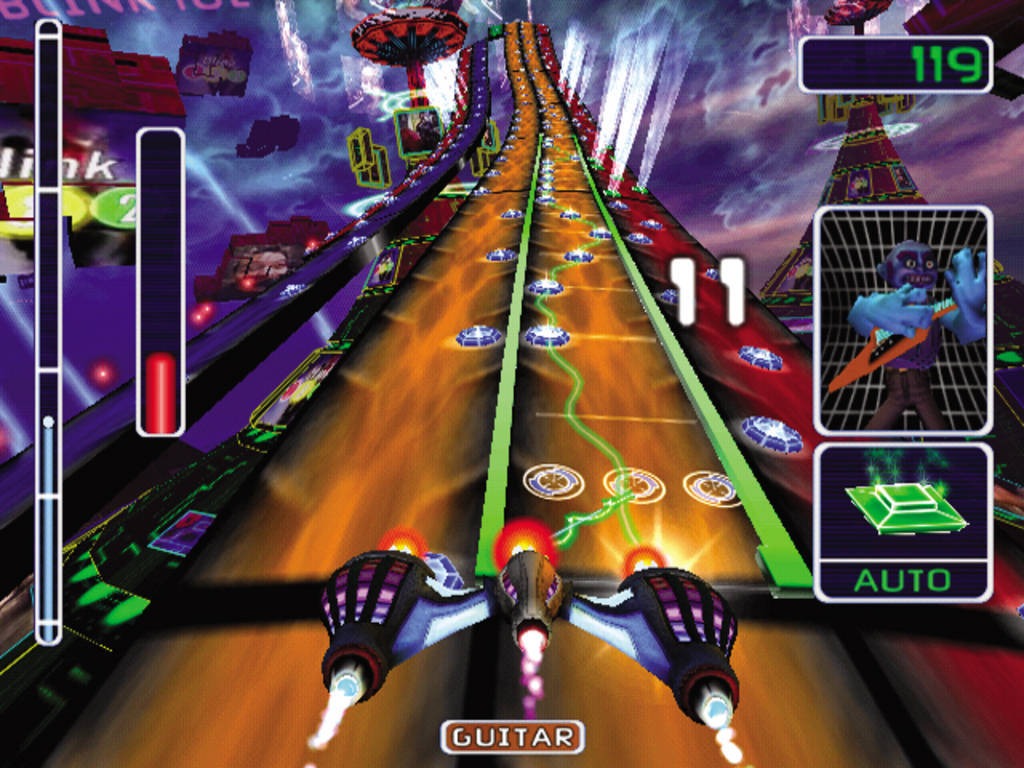
You use the square, circle, and triangle buttons to tap away on a track. Use the D-pad to rotate the tube and pick any track you want to play. You will know when you have to play when you see a green line connecting dots. This gives you a break between sections so you can rest your thumb for a second. Tracks range from vocals to synth, bass, drums, guitar, and other instruments. When you successfully complete a section, that instrument will continue playing. Score perfectly in that section of the song, and the instruments won’t turn off when you enter the next gate. I found this a little annoying, but it encourages you to play perfectly; the song doesn’t stop. You are scored, as usual, and a meter is shown on how well or poorly you are doing. Fail too much, and you will fail the song.
That’s the entire game, in a nutshell. It seems simple, and it is, but the game is challenging later on when you have to do longer sections and faster button presses. There’s some pretty good music here by Powerman 5000, No Doubt, Fear Factory, and other popular musicians. The visuals are trippy and can give you a headache after a while. They are psychedelic and full of bright colors and fractal shapes. One thing I found useless was the free scratch mode, which lets you press one of the three buttons while moving the left stick back and forth to scratch. This isn’t there for anything but for fun, I guess.
Once you beat the main game on each difficulty, you can go into remix mode, which plays a song while you add your own notes to the song. This can be pretty fun for people who want to change up the game themselves. However, I did find that there should have been more songs, but I guess remix mode is supposed to remedy that. There are a good dozen hours of gameplay here, and you will keep coming back to master the game.
For just a couple of dollars, Frequency is one of the most fun games I have had in a rhythm game since Rock Band 2. I found myself coming back and trying to master the songs. The music may not be to everyone’s taste, but if you open your mind, you will find a gem of a game here.
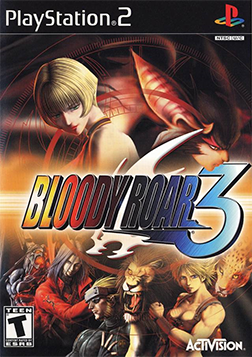
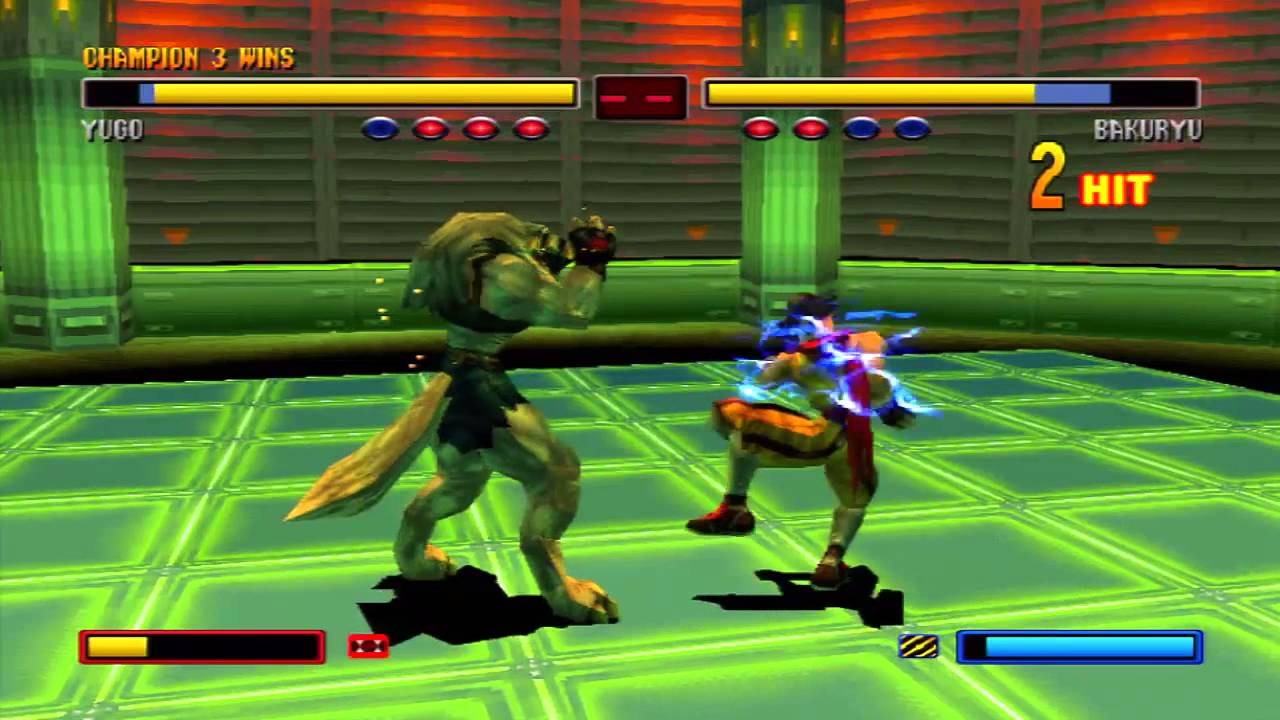
The PS2 wasn’t without its fighting games, and most were solid. The Bloody Roar series started on the PS1 but has seen rocky acclaim ever since its first entry. Competing with games such as Street Fighter, Tekken, and Virtua Fighter at the time, people didn’t see the need for another Japanese fighter. Bloody Roar features some interesting characters that can turn into beast form, which unlocks a new set of moves and some devastating attacks. Bloody Roar 3 has great visuals and solid controls but lacks the large roster and modes that fighters are known for.
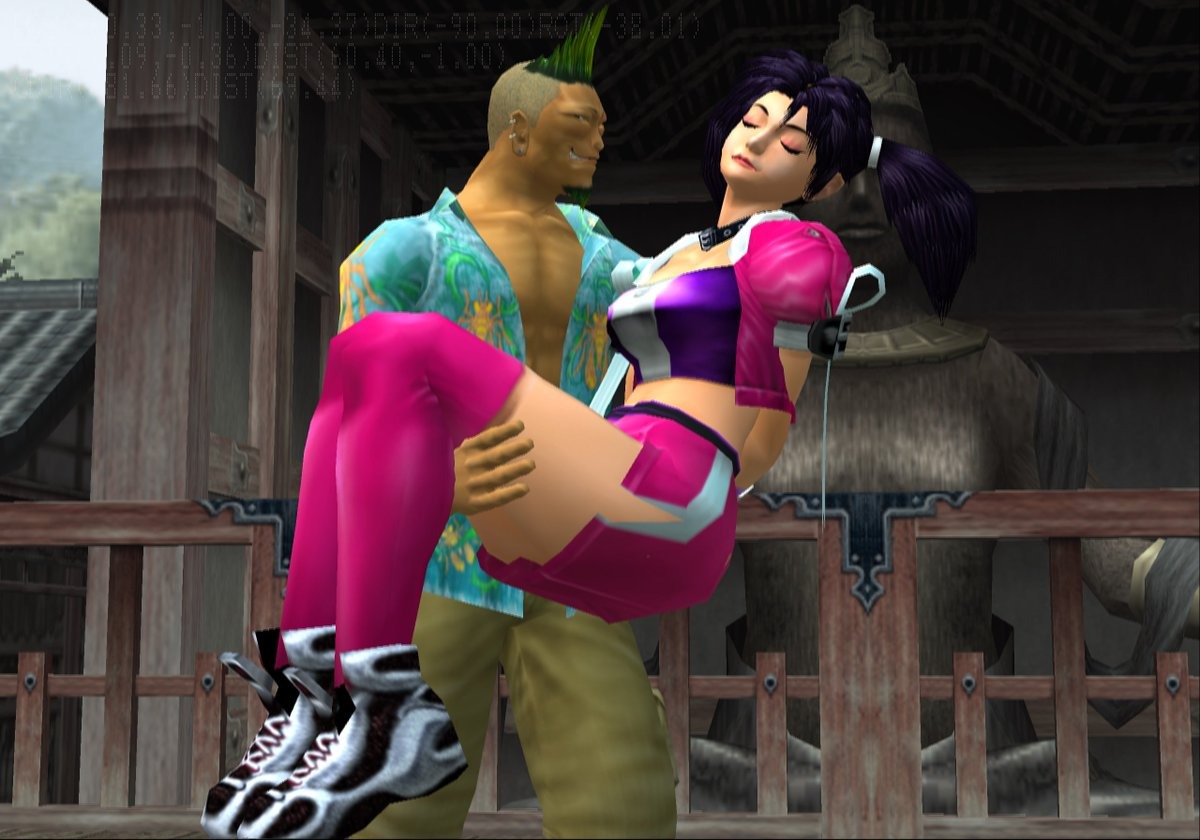
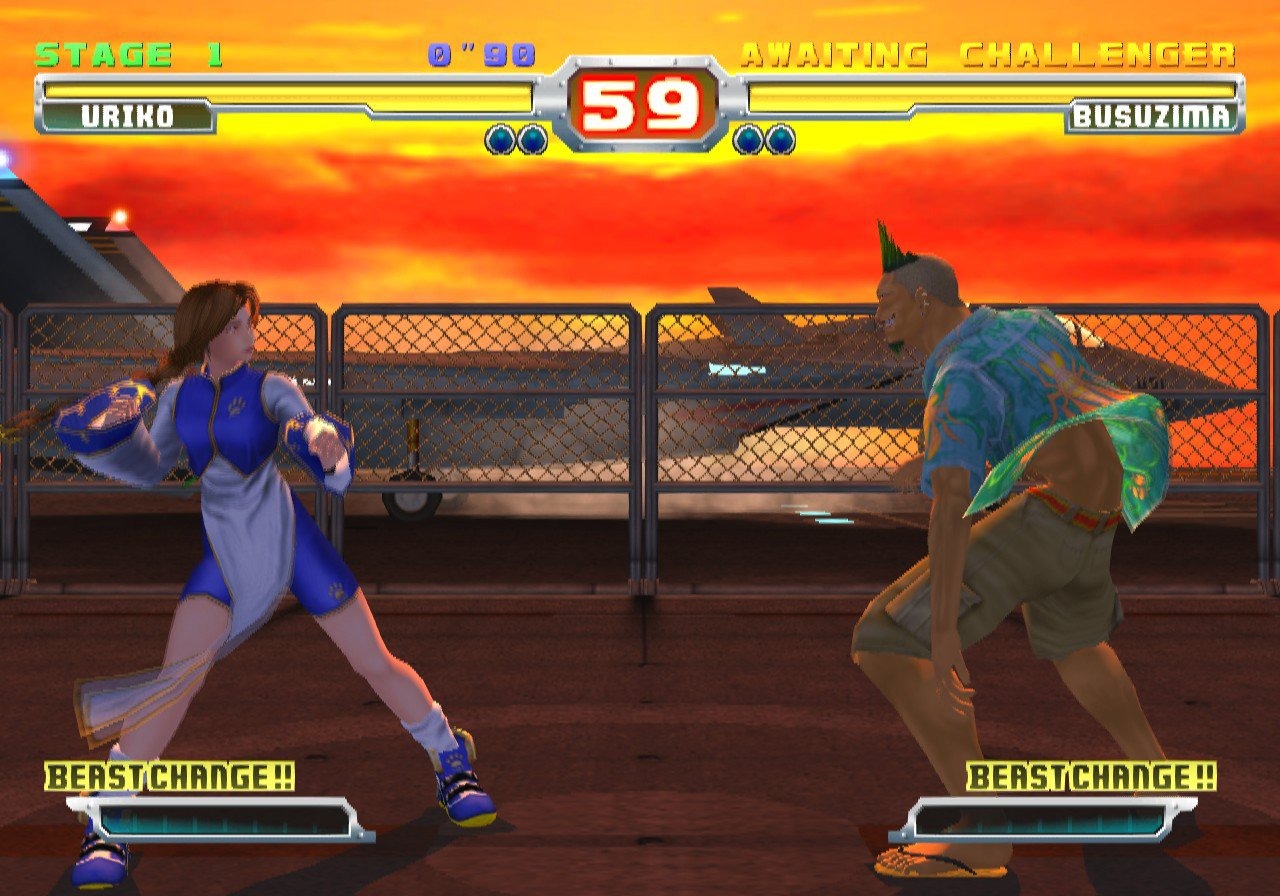
First off, the game only has 12 fighters. That’s tiny, even compared to other fighters with small rosters. The characters, however, are unique, but there is a serious lack of female fighters (only 4). The stages are busy and well designed, plus the game looks great even for today. The fighting system is simple compared to most Japanese fighters, but I preferred this. There is just a punch, kick, and beast form, as well as a dodge and block button. The game has no move list, so this is for button mashers, which is just fine here. The controls are smooth and responsive, and there are a lot of visual flairs. The characters’ beast forms look really cool, and it is fun to see them all.
Another main disappointment is the lack of modes. Just arcade, survival, and versus, really. There’s not even a main story mode, but the arcade mode does go through all the characters’s stories. I found the story to be pretty boring and unexciting, like most fighting game stories. Most Japanese fighting fans will mainly dislike the lack of depth in the fighting system, but I really didn’t mind it.
Overall, Bloody Roar 3 is a solid fight game, but it just feels like bare bones. The fighting system lacks depth, the character roster is small, and there are only 3 modes. The game looks great and the controls respond well, so this is a love it or hate it type of game.
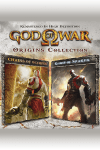
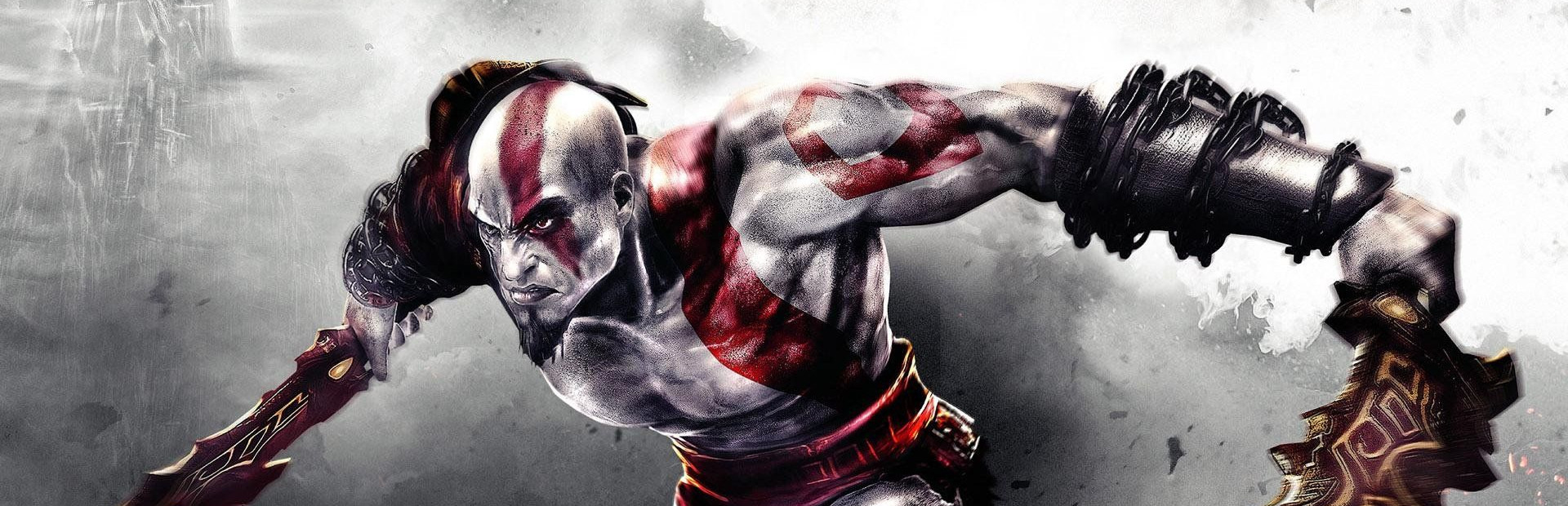
God of War is one of the best action-adventure games ever made. It pioneered everything we see in the genre today, and there are dozens of copycats. God of War helped pave the way for cinematic gameplay and pretty much made quick-time events an everyday thing in games. God of War also has one of the best combat systems ever created, as well as memorable mythology and one of the most recognized characters to date. Origins Collection puts two of the PSP’s best titles on one Blu-ray disc. These are remastered in 1080p HD and look great. While each has its own issues, this is well worth a purchase for any God of War fan.
This was the first-ever portable God of War game, and it blew everyone’s expectations out of the water. Not only for the game itself but also for the PSP. No one knew the system could pull off this great technical feat. You can read my review on Olympus for the PSP itself and a more in-depth look, but after playing it again on the PS3, I noticed that, compared to Ghost of Sparta, it doesn’t stack up. Even after playing God of War III, I notice a lot of things that annoy me in Olympus.
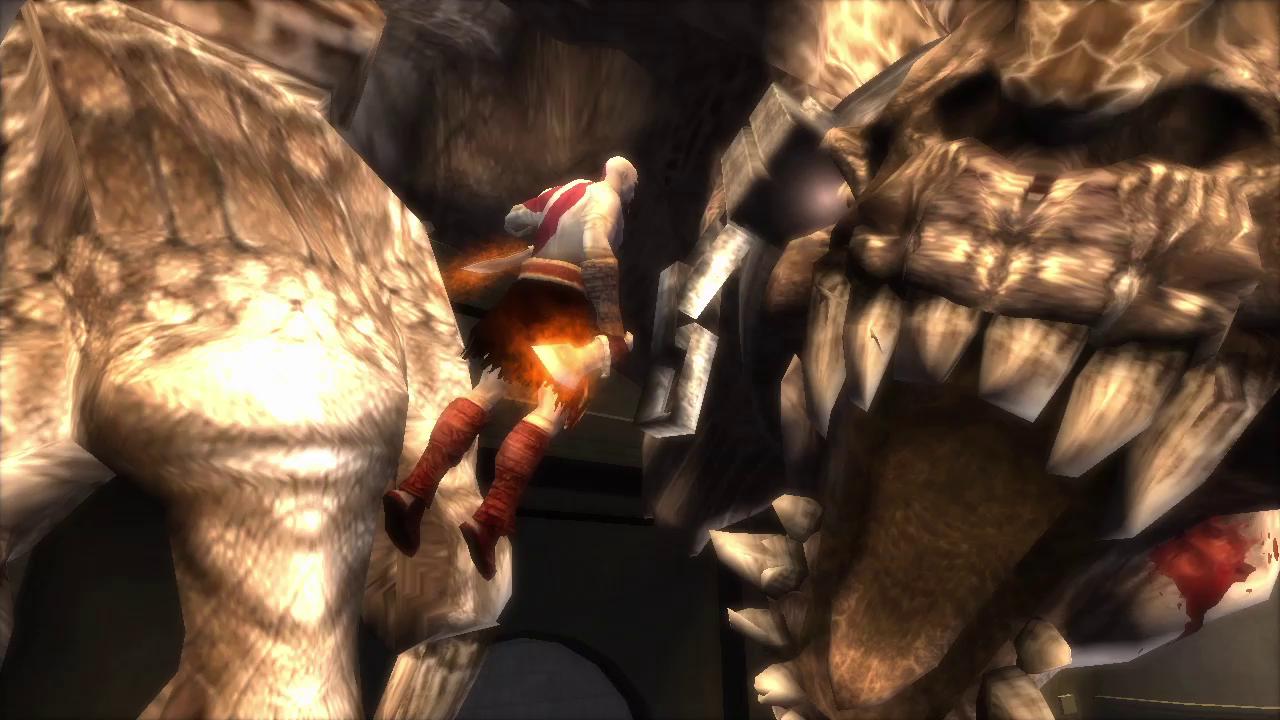
Firstly, the game lacks the huge epic set pieces of the console games, as well as a lack of bosses. Sure, there are a few memorable moments in Olympus, but there are only three boss fights, and they aren’t that amazing. The first boss feels pretty boring compared to other first bosses in the series, and the locales are pretty generic for a God of War game. Olympus stuck to the basics of God of War and kind of played it safe. There are some interesting magic items, like being able to reflect projectiles and Efreet. The combat system is almost exactly like the first game, which isn’t a bad thing, but longtime fans will be disappointed about this.
Secondly, the game is super short. You can beat it in about 4 hours, which is two long sit-downs. The story isn’t as detailed or in-depth as other games in the series. Kratos is just trying to find his daughter Calliope while still seeking revenge on the gods. Overall, Chains of Olympus is a warm-up for the more epic Ghost of Sparta.
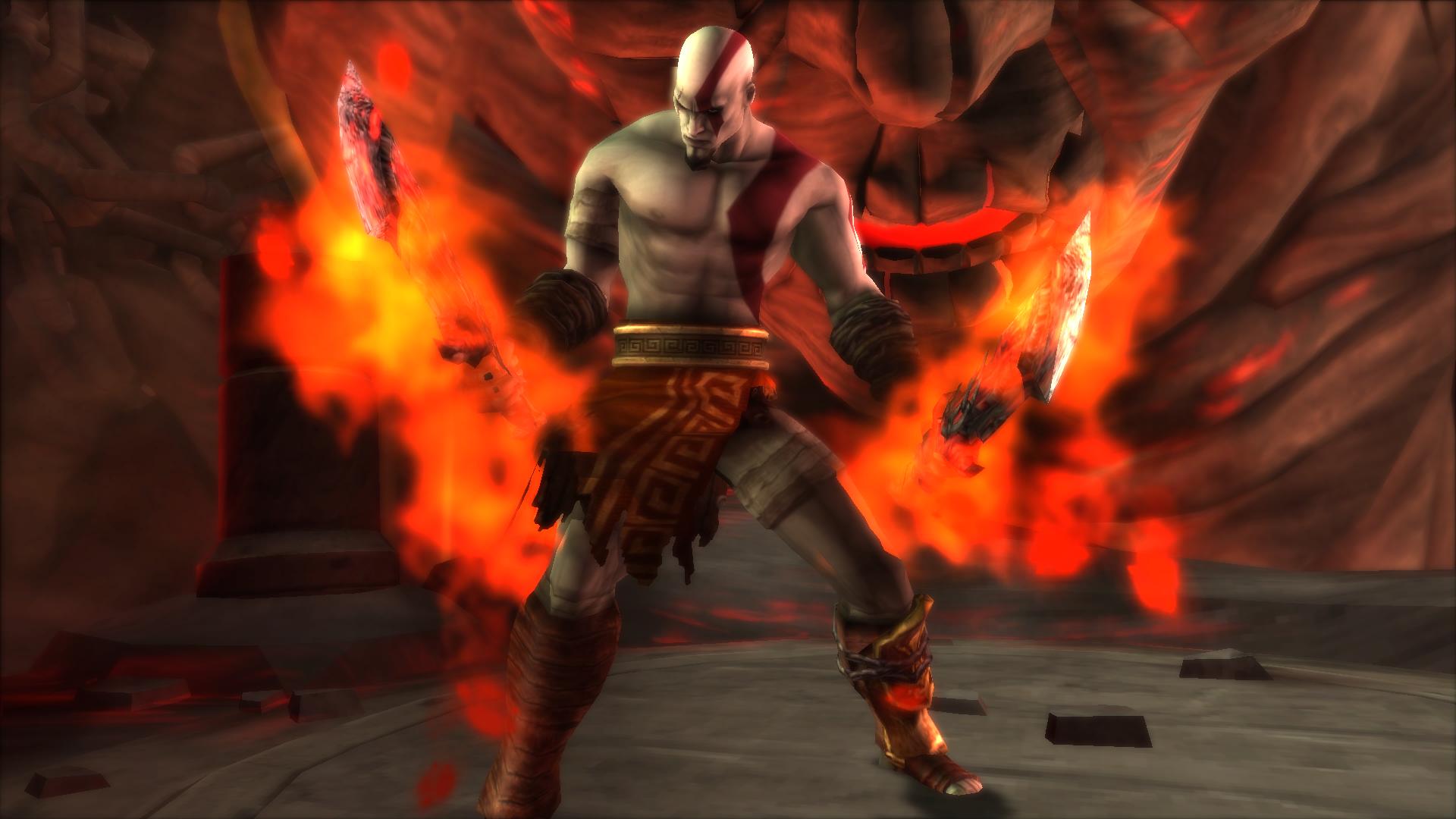
This is more like it. More bosses, more memorable moments, and completely different locales. There’s even a whole new gameplay element here, which is Thera’s Bane. Like in God of War III, you have a red meter that sets your blades on fire for extra damage and makes you invincible to some attacks. Right from the start, the game feels like a better, heavier God of War game than Olympus. Olympus started off kind of weak, but Sparta throws you right into the water (literally) with a pretty epic boss fight against a Scylla. The game has more puzzles, and the boss fights are pretty epic. The final boss against the God of Death, Thanatos, is pretty epic because you fight with a certain someone.
The story is even more memorable because you are searching for your brother Deimos while still seeking revenge on the gods. There are some memorable moments here that top even some of the console games in the series, like giving King Midas a beatdown. The new magic items, however, aren’t as interesting as I had hoped this time around. Boreas’ Wind freezes enemies, but I rarely use it. The Eye of Atlantis felt kind of weak and didn’t do as much damage as hoped, even when fully leveled up.
Overall, Ghost of Sparta is much better, with memorable moments involving more enemies, longer gameplay (about 6 hours), and more bosses. The fight system is tweaked to feel different from Olympus. The game even looks better because Sony finally unlocked the full 333 MHz of the PSP processor, so Ready at Dawn was able to push the system to its full limits. Ghost of Sparta is a memorable God of War game and will probably become a fan favorite.
Overall, the entire collection is excellent and well put together. I was disappointed in not seeing any extra features exclusive to this collection, but each game has a Challenge of the Gods that will keep fans busy for a while. With full trophy support for each game, you are bound to have a couple dozen hours of fun here.






































 thebinarymessiah.com
Try multiplayer. A lot of fun !