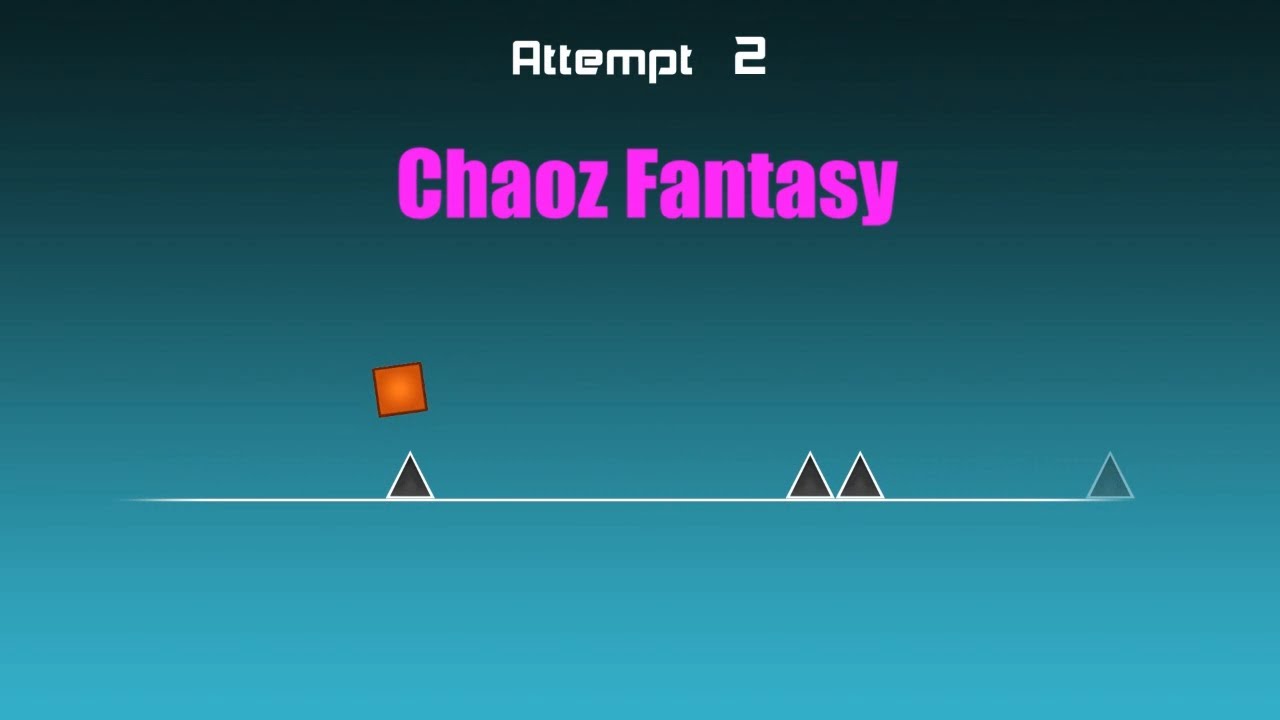
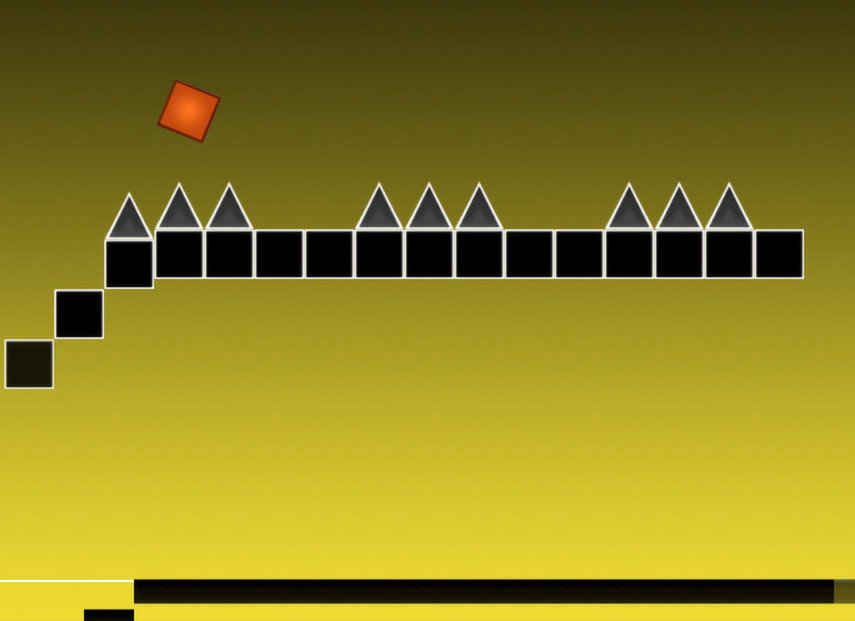
Remember those super-hard games from the 8/16-bit era? Well, it’s come back to haunt with this little game that is so simple in design yet so hard in execution. You guide an orange block over spikes and pits to the end of the level. All you do is tap to jump and hold to do quick jumps. It sounds simple, but the levels are brutally hard because they require precise skill and focus. There is a practice mode that lets you drop the flag with a touch of a button, and when you die, you respawn there instead of at the beginning of the level.
Of course, you can delete these flags if you spawn one in the wrong area, but man, this game is almost impossible! The game has a nice soundtrack that flows with your jumping, but most people will hate this game due to its high difficulty level. All I have to say is that hardcore platformer fans will die for this game and love it. All I wish is that there was an easy mode or something, but there’s a lot of great game here for a buck.
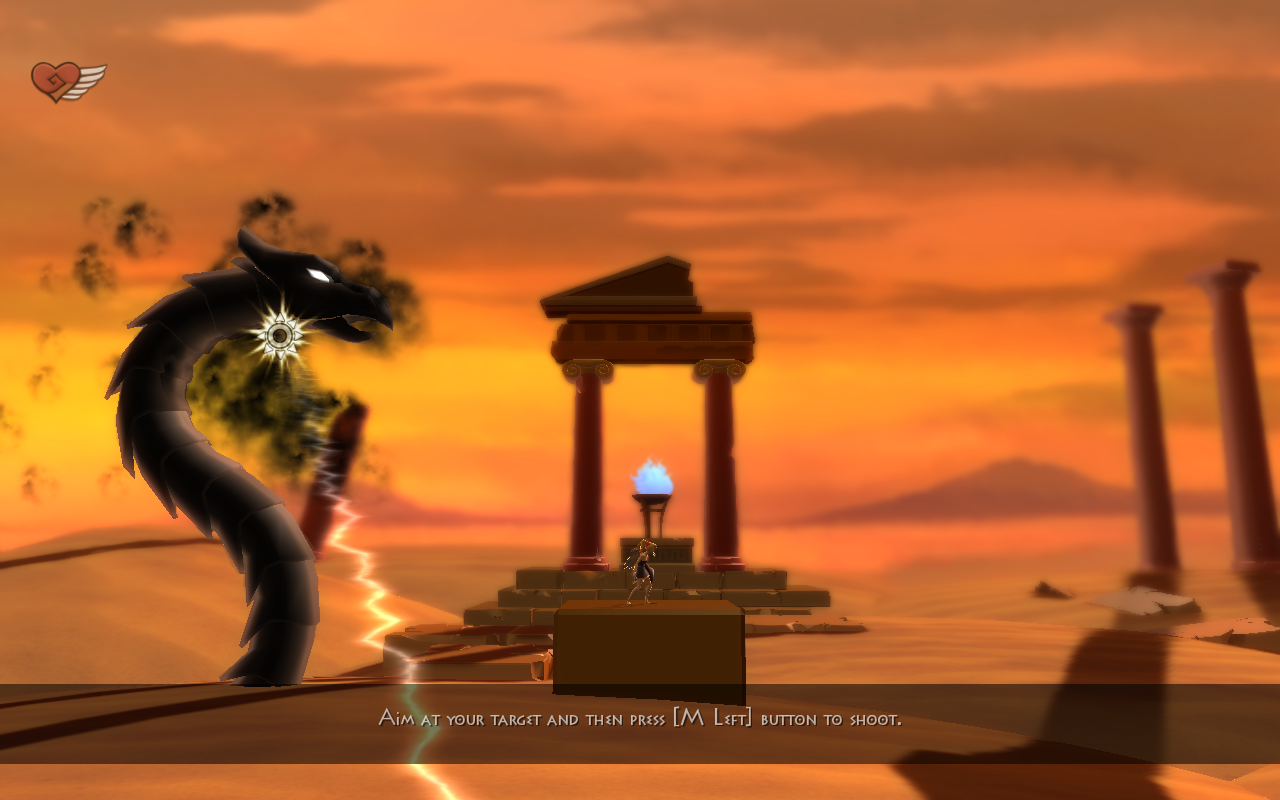
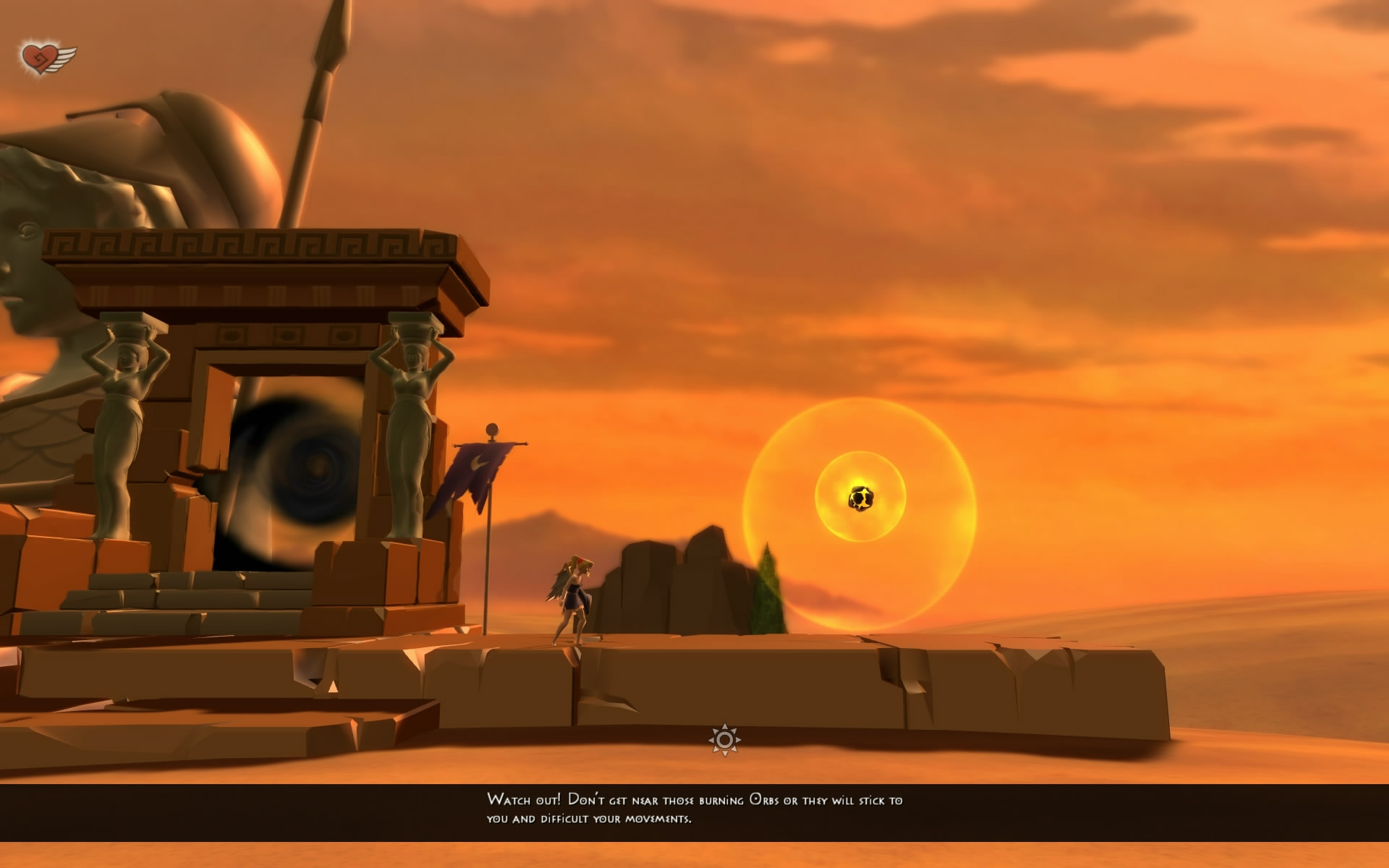
You are Nyx, who is a winged goddess that falls in love with Icarus, but the sun-god Helios releases rage upon the gods and burns the earth into a fiery apocalypse, but you insist on defying the gods to save Icarus. While the story isn’t very deep, there is one there, and you do want to see what happens to Icarus at the end. Not very often will you run into “cut scenes” that have just some text across the screen and gibberish being spoken. This is an indie game after all, so you are probably coming for the unique gameplay.
While originally designed for the Wii, it works well on a mouse and keyboard. You control Nyx’s power with your mouse and hers with the keyboard. You can jump up to five times and also glide for about 8 seconds, and these are keys to gameplay. Jumping around is the main part of the game, and you must time everything carefully. The game is not a breeze, and even the platforming is tricky thanks to the game’s ability to make you multitask. With the mouse, you can move certain blocks around, shoot lightning, move fireballs, and pull around pillars. There is a lot to the gameplay, so you have to really play it to understand how deep it is. You have to be able to move Nyx around while also manipulating the environment with the mouse, or you will never get anywhere.
While the unique combo works well, it does get very difficult at points. The first couple of levels are novel and neat, but then the game quickly feels repetitive and tiresome until you start learning new powers later on in the game. While the gameplay is unique and deep, it’s really the same thing over and over again. Jump around 50 platforms and move this block or pillar around. Each level looks the same, and the art style has a Greek mythology theme to it, but the textures are flat, and no visual upgrades were given for the PC version. I also felt the physics was a little floaty because everything moved like there was little gravity.
The checkpoints are a little unfair because they are put in weird spots. Instead of sticking them right before a really hard section, you have to go through an easy section to get back to where you died. There are also only a couple of boss fights, and they are fairly easy due to the better accuracy of a mouse over the Wiimote. Overall, NyxQuest is a fun little indie game that really challenges your multitasking skills.
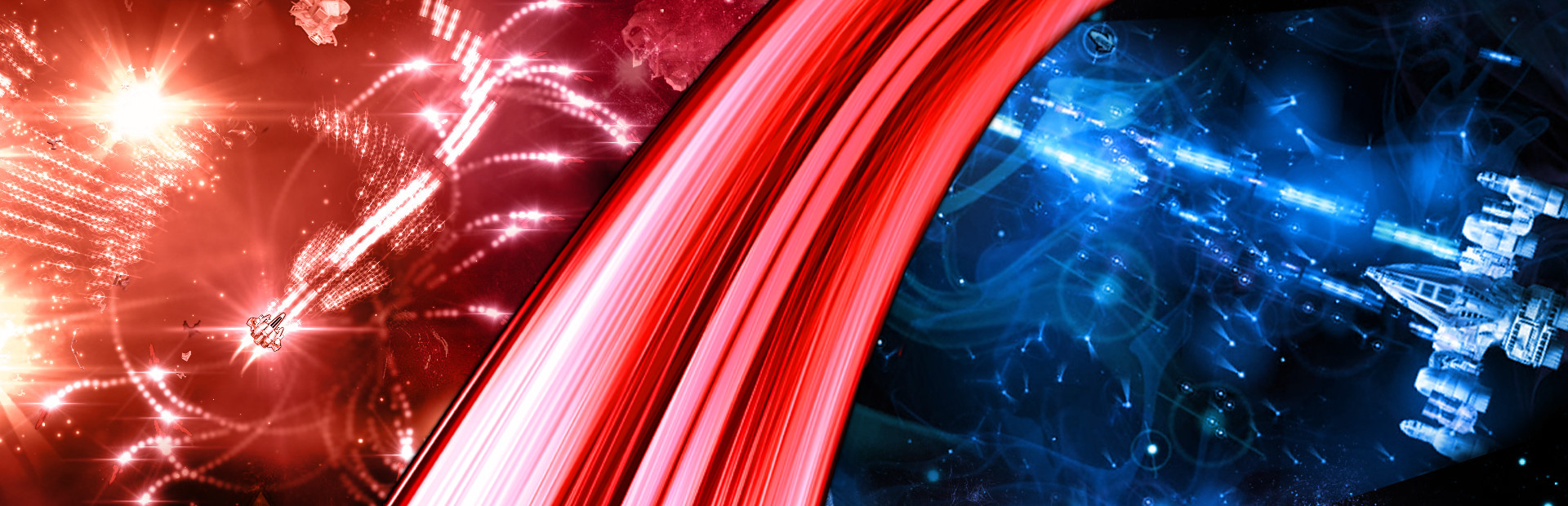
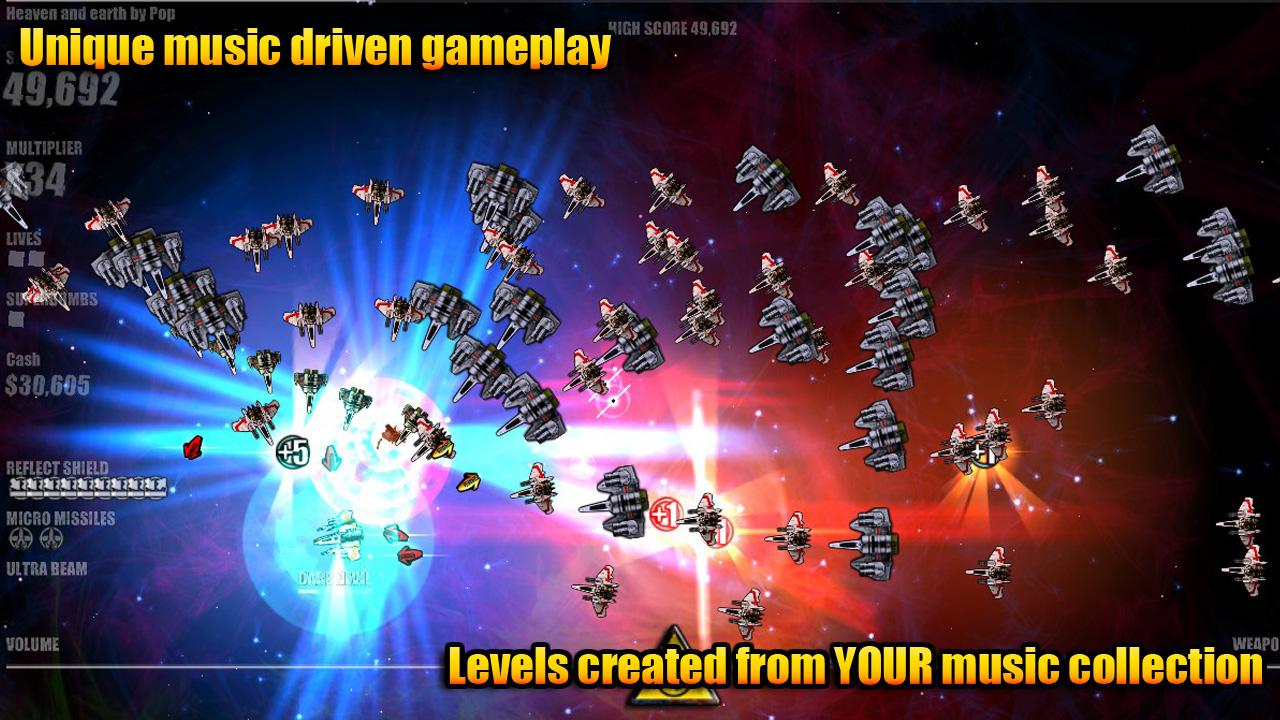
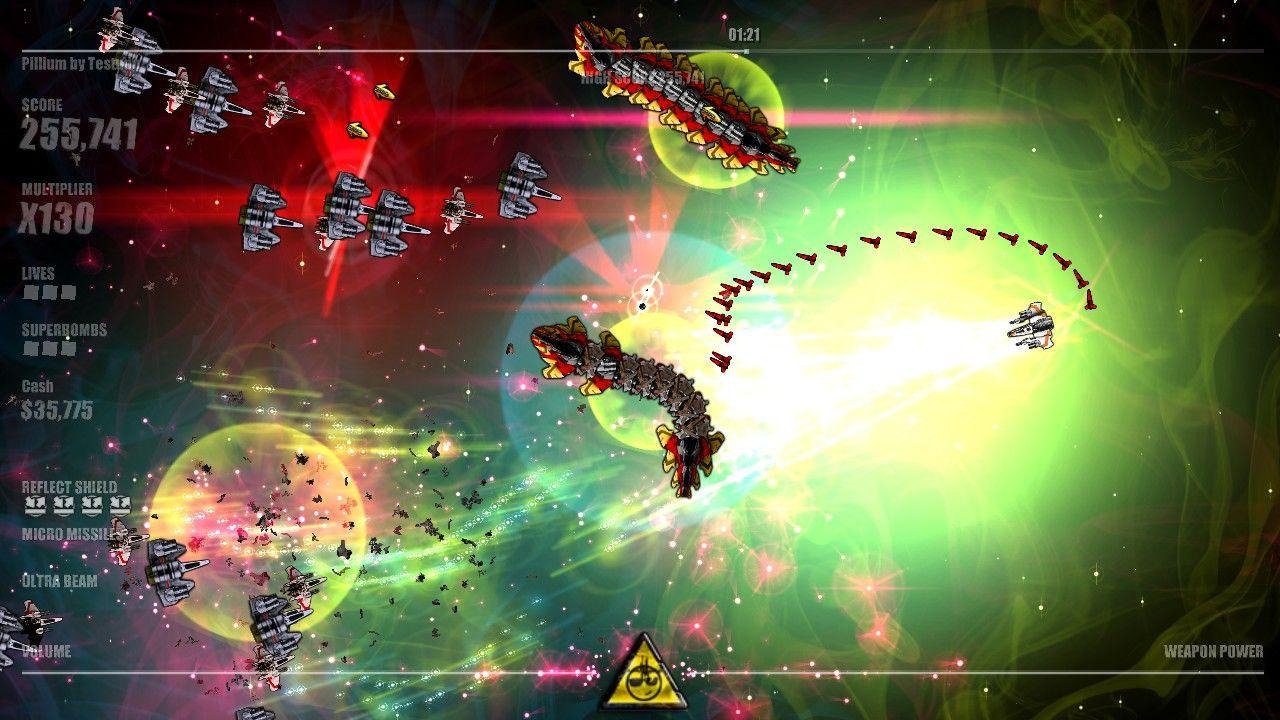
Being able to play a game using your own music isn’t new, but being a good one is hard. Beat Hazard lets you select your own music and then uses the tempo to create difficulty spikes and the flow of enemies. The beat of the song is seen in the bullets you shoot as well as the crazy explosions on one screen that can give you a seizure. When you select your music, you get to decide the difficulty. Pick a heavy and fast metal song, and you’ll be lucky if you get through the whole thing. Pick a normal soft rock song, and the difficulty is very gradual.
When you actually start shooting, there are several power-ups that range from increasing the volume, shot power, money, and bombs. If you die, you can collect the stuff you’ve dropped, but if you keep collecting the stuff, you get more and more powerful. You can use the money to buy perks that range from power-ups when you start to extra lives and other various perks. There’s a good amount, and it’s worth playing just to unlock them all. However, the game doesn’t have much depth, so this is a 30-minute-at-a-time game, or you will get bored. The visuals are decent, but the special effects that flash around remind me of Geometry Wars on crack.
So this is once again a game that makes you the decider of how fun an experience you get. The engine underneath does a good job using the songs to be a fun space shooter, but I would like to have seen more power-ups or maybe something more 3D. If you don’t like 2D space shooters, you won’t like this, even if you get to use your own music. The game can get really hard quickly and can be a bit confusing at first until you get the hang of it. There are quite a few modes, such as multiplayer, boss rush, and endless mode, so there is some variety there. For the low price, you can’t really go wrong, so pick it up and enjoy the craziness!
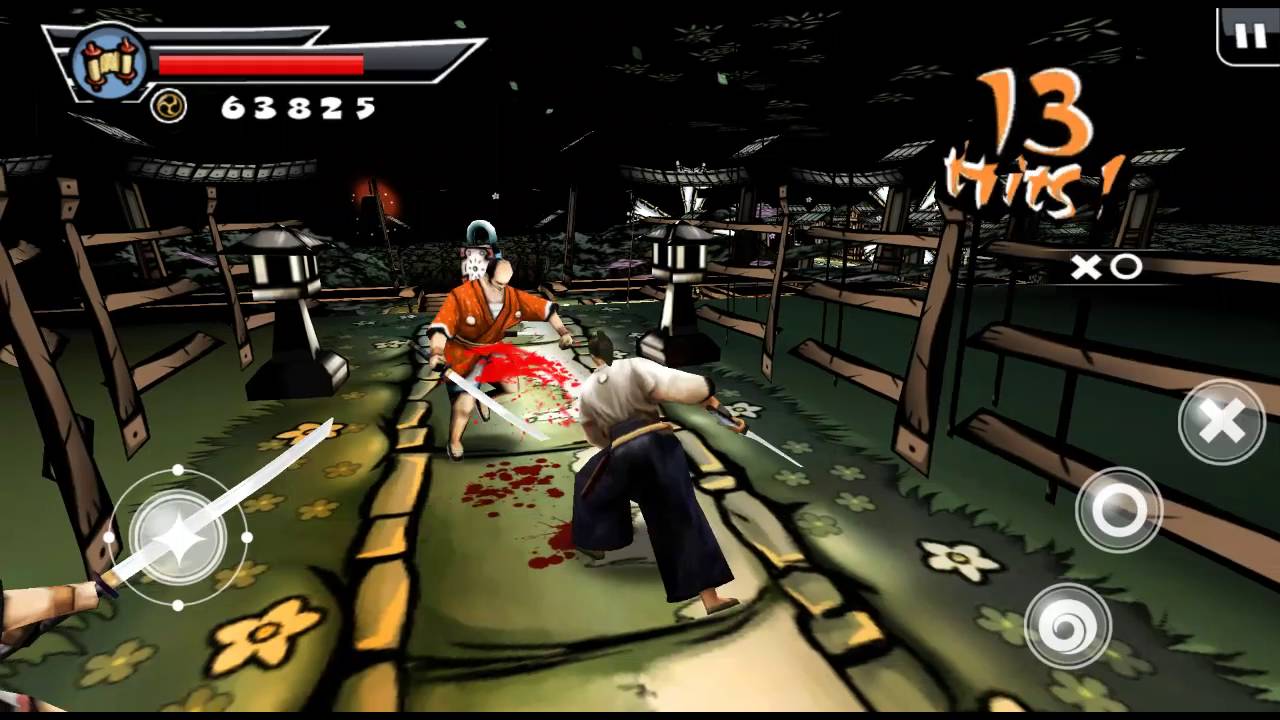
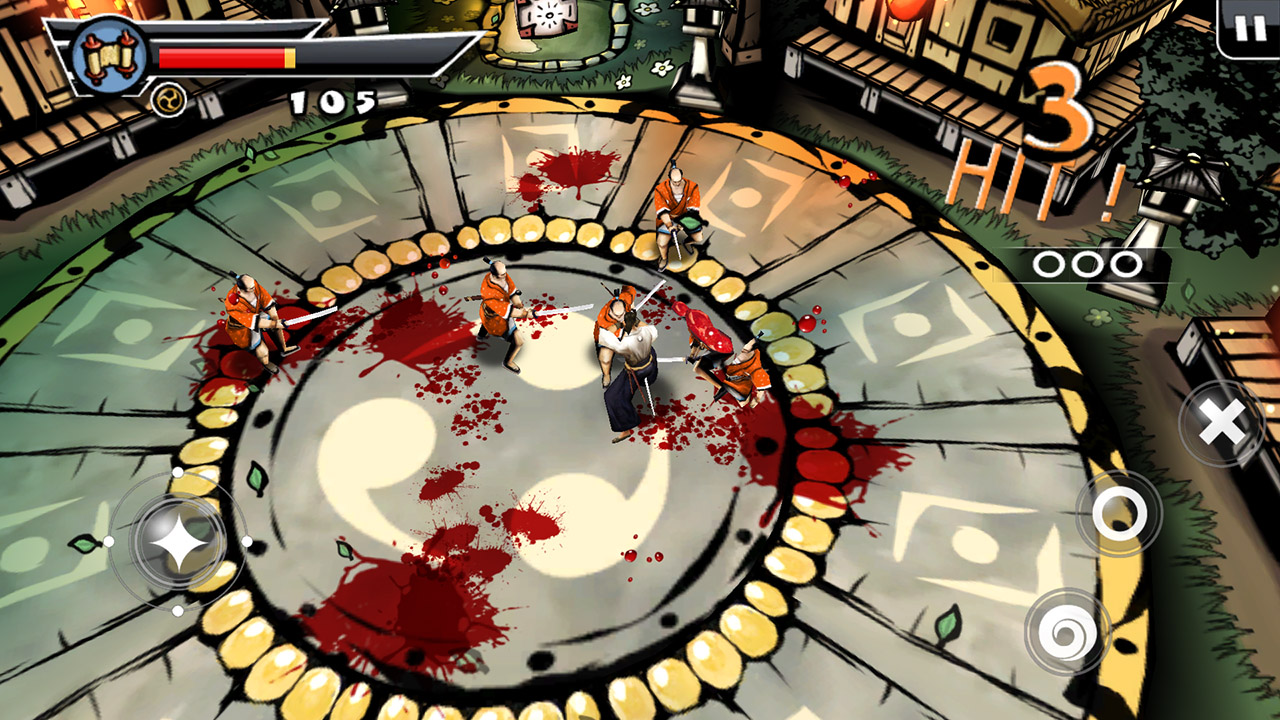
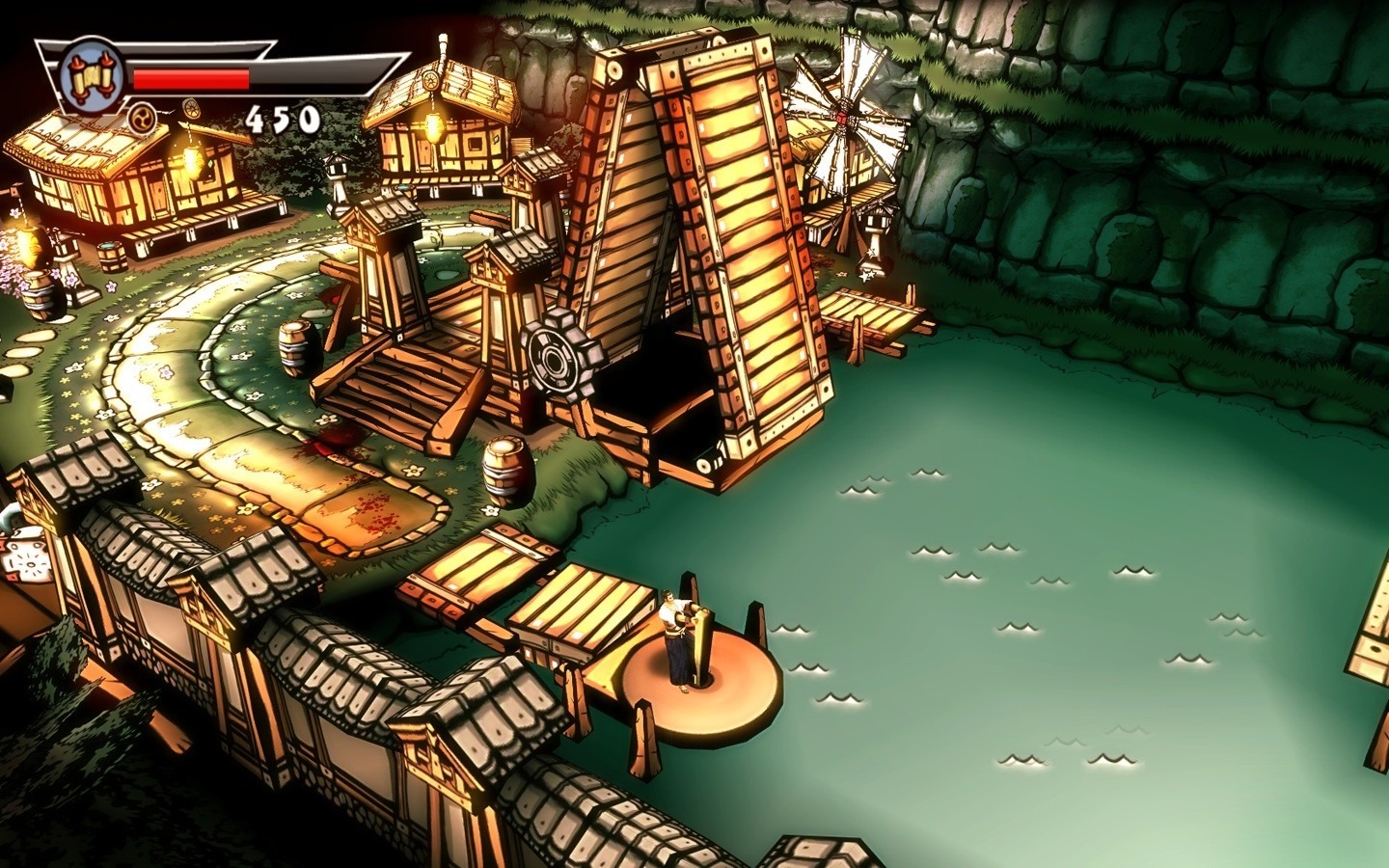
Samurai II is a great-looking game but also sports brutal combat. It has a very generic revenge story, so don’t expect anything interesting there. Now, this combat isn’t very deep, but the strategy is key thanks to the select enemy variety, and each one has its own unique moves. As you move through the chapters, you will encounter more powerful enemies and bigger and bigger waves. Each section of every level will block you in an area, and you must defeat waves of enemies. Each wave may have different enemy types like archers (defeat these first), yellow dual sword guys (save for last and dodge a lot), as well as some blue samurais, red ones, and big heavy guys.
The game could have just thrown random things at you and made you hate the game, but thanks to each enemy sticking to a specific move, you can use strategy to defeat each wave and stick with that strategy through the whole game. Once you get to chapter four, you will encounter every enemy type, so from here on out, it’s just about staying alive. You can upgrade up to 8 combos, but there is no magic or power of any kind, and I didn’t like this. You have heavy and light attacks on the chain, so combat is very shallow. The only thing going for this game is the visuals and strategy in combat.
The game looks like Okami with excellent watercolor visuals, yet the overall design is pretty bland and generic. Every so often, you will get sections that give you obstacles to dodge, but the game is really simple but great in 5-minute chunks for on-the-go gaming. The only thing resembling a powerful attack is that at random, the game will slow down and you will do an instant kill, but with this being random, you can’t use it when you’re in a pinch. There are also no health pickups, so you have to stay alive through each wave. Overall, Samurai II is very simple, but it carries great visuals and has a great on-the-go pace.
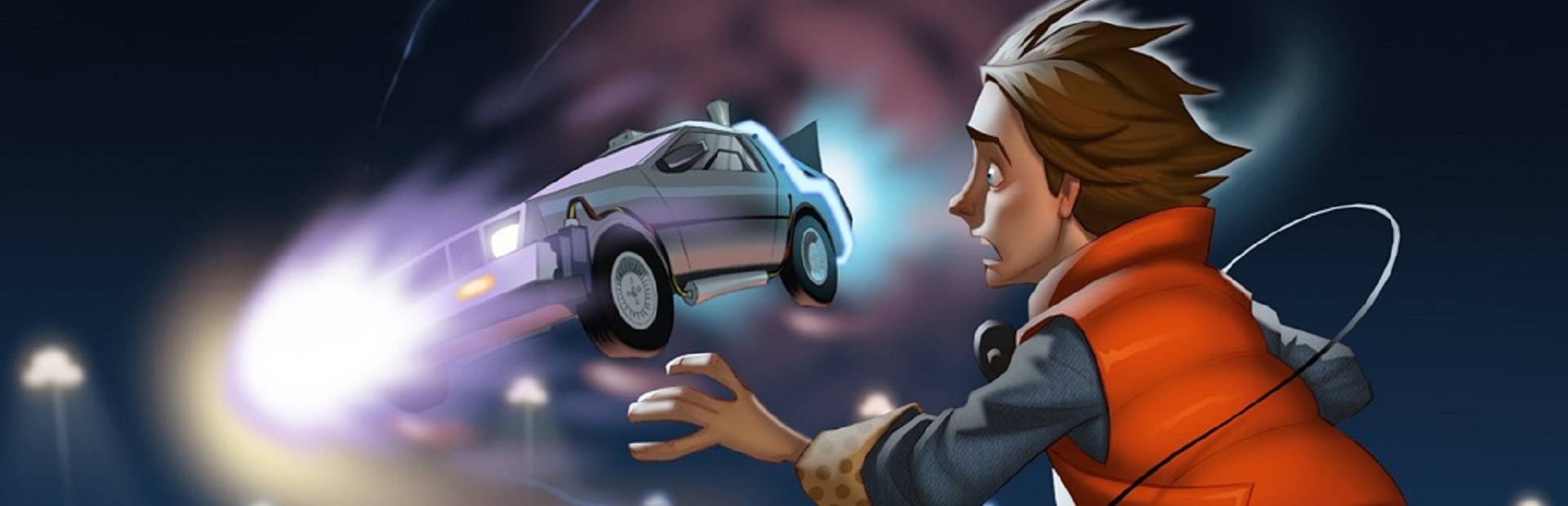
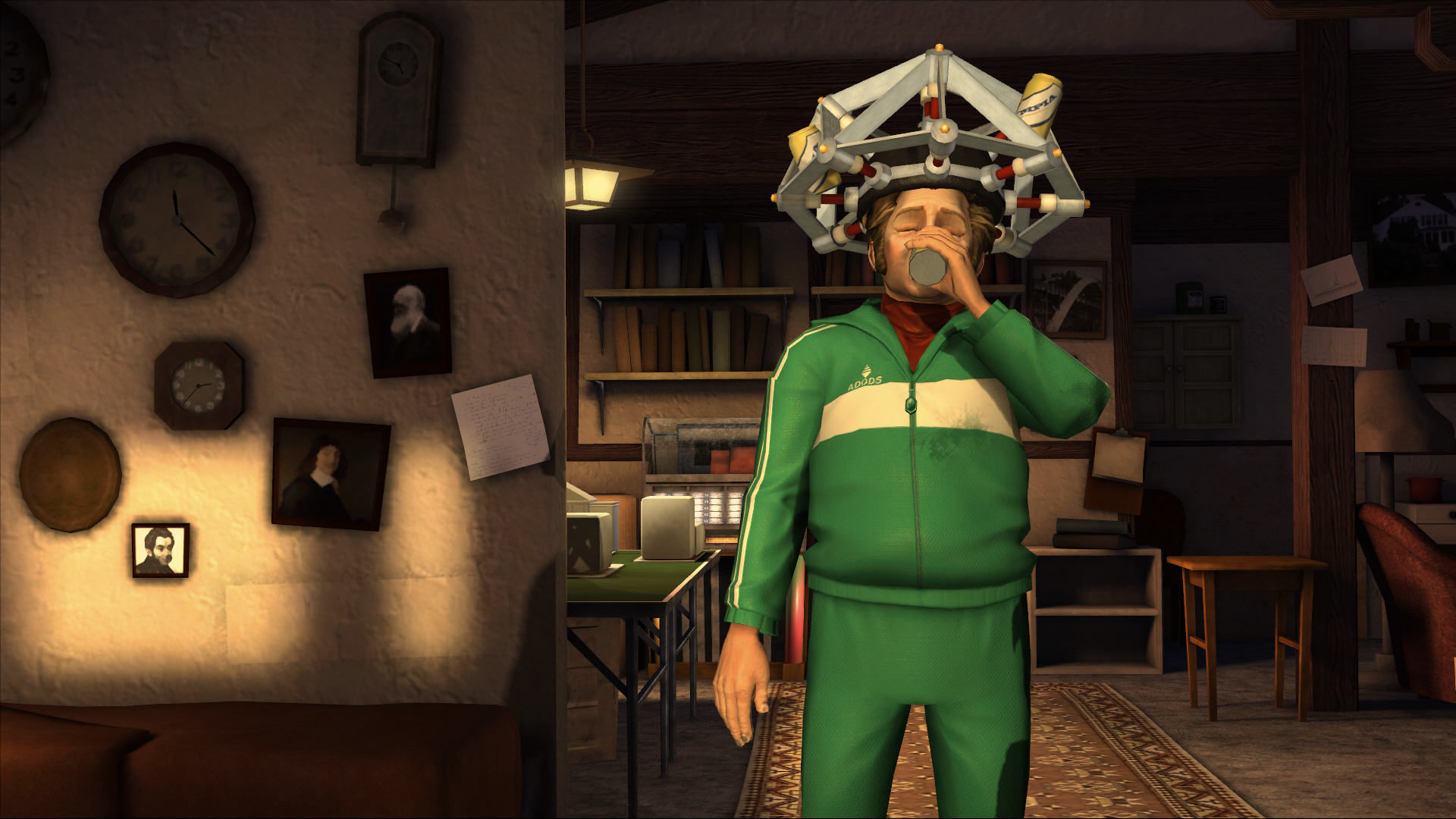
Back to the Future hasn’t really done well when it comes to games. There were a couple of bad games in the 8 and 16-bit eras, but Telltale Games finally picked up the license and injected its excellent adventure formula into the beloved series. You play Marty McFly, who has to go back in time and save Doc Brown from his own deadly fate. He gets a message from Doc to save him, and Marty must find out how to do it with the help of young Emmet Brown.
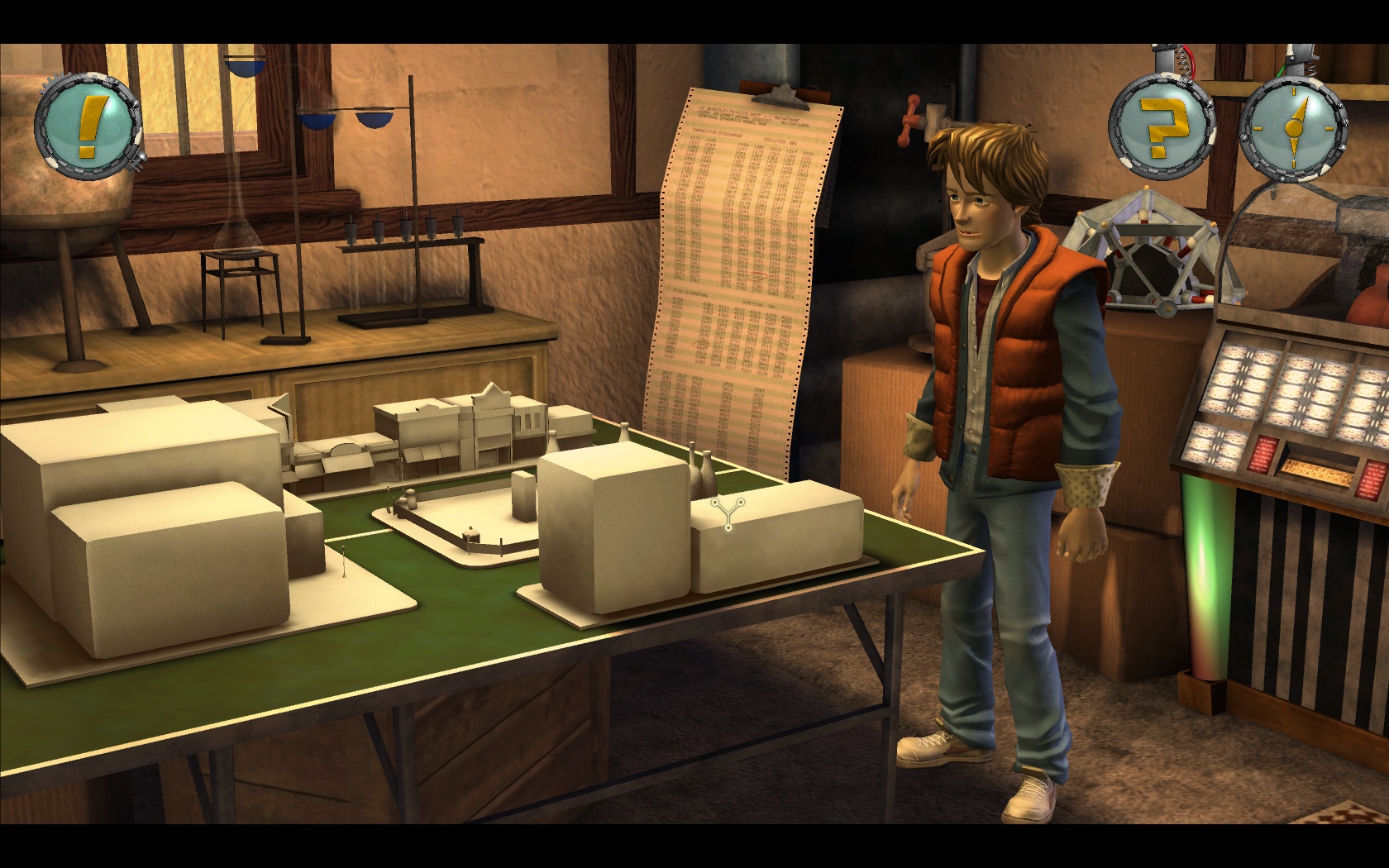
The story is original but uses the BthF license very nicely. The voice actors sound almost spot on, and everything from the DeLorean to Doc’s dog Einstein and even Marty’s relatives is voiced well and resembles their live-action selves. It’s great to explore the BthF universe with the same clever writing and storytelling. There is a simple adventure game interface where you click around on objects and listen to Marty explain them, but the puzzles are more involved than just slider puzzles or matching symbols. The puzzles are broader and story-driven, and that’s what Telltale is famous for in their Sam & Max games.
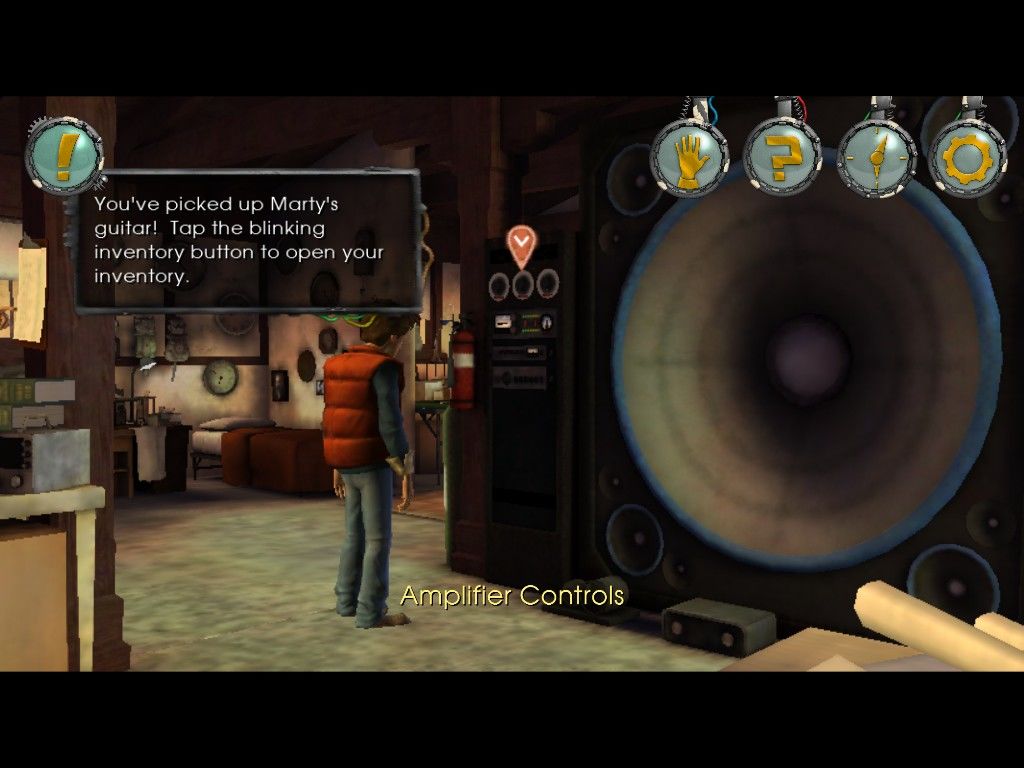
You can have items in your inventory, but you don’t just wander around and use them for every pixel in the game. It’s usually pretty obvious to use your recorder to record young Doc’s mumblings so old Doc can solve them. You aren’t overburdened with a ton of items that you have to constantly use a million times on everything, so it’s straightforward and simple, but you do have to think a bit. One great feature to resolve pixel hunting is a button that will show every icon you can interact with. This saves time and frustration, so you’re not wandering around and missing that one item that’s almost off-screen.
While the interface and interaction are smooth and simple, the game is very short, and it’s still lacking some gameplay depth. I would like more cerebral puzzles, but Telltale is more about the story than anything else. The game doesn’t get super exciting until the last 30 minutes of the last two sequences. You can beat the game in one to two sittings (about 3 hours), so for $25, the game is highly overpriced and not worth the money unless you’re a die-hard BthF fan. I would wait for the full season to come out and not spend a ton of money on each episode. Also, the graphics are pretty horrible considering the nice art style. Telltale really needs to upgrade their 8-year-old engine to something more modern.
“Endless” games are really popular on phones, but they are only fun for 10–20 minutes and then tend to get boring. They are time killers to their core and aren’t really meant to be taken seriously. Super Mega Worm is probably one of the best out there in the sense that it keeps dishing out new stuff for people who keep on trucking. Unlocking new powers, and each level has a different goal to beat.
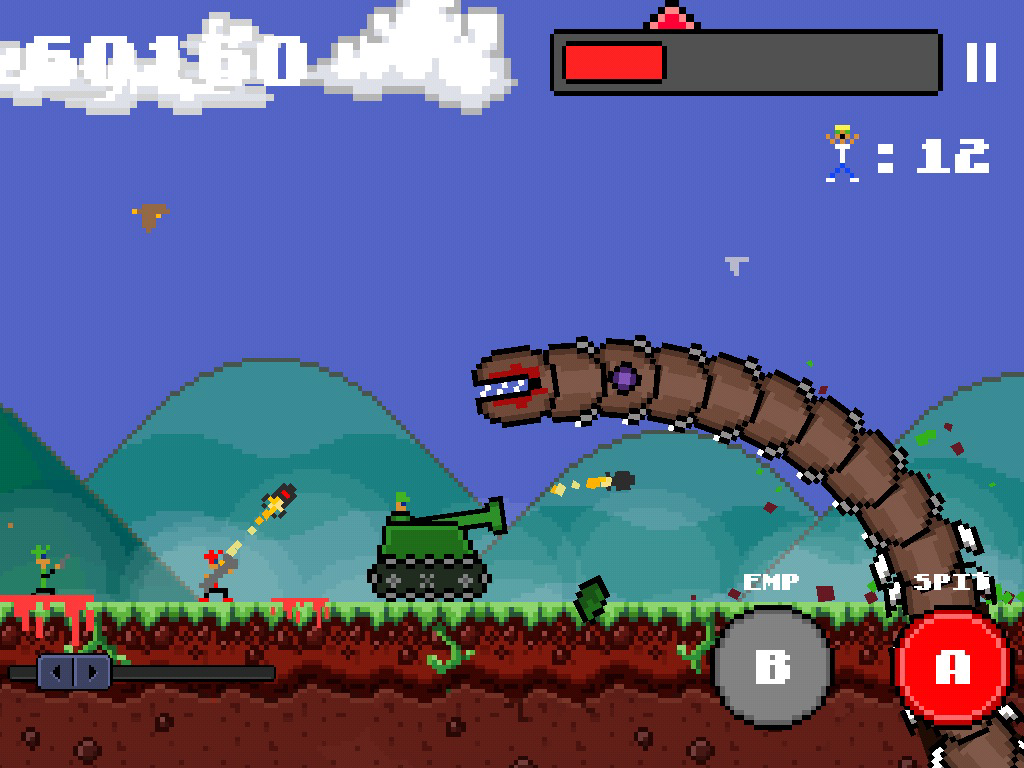
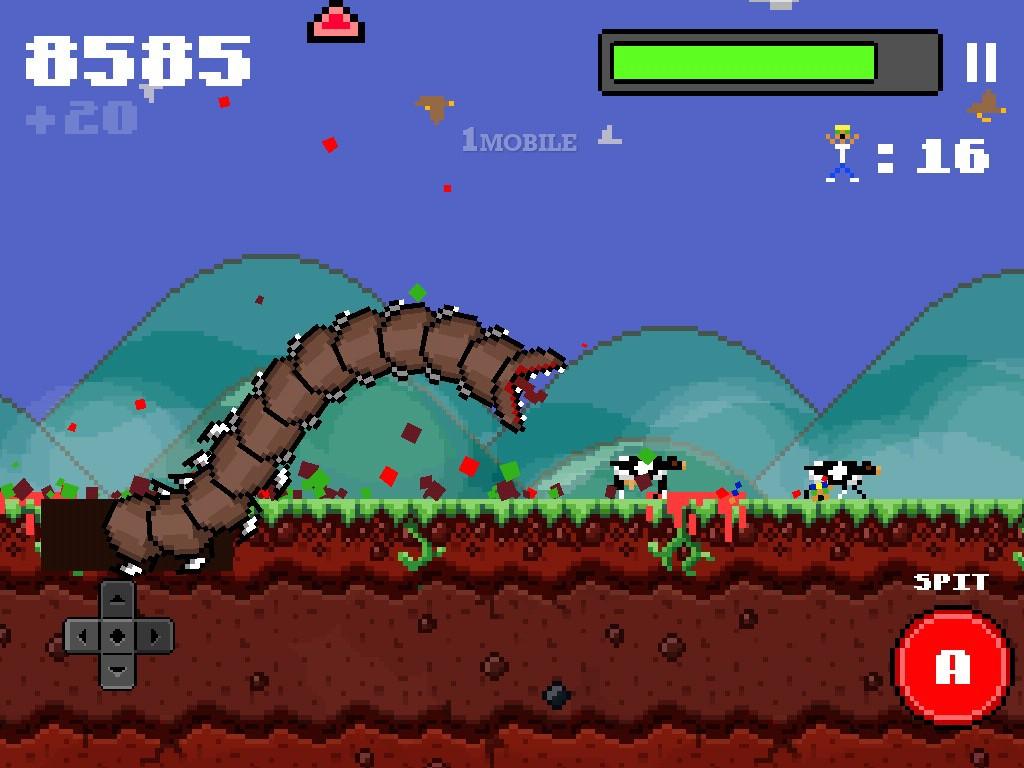
The game has classic 16-bit graphics with some gory humor thrown in for good measure. You start out by hatching from an egg underground, and you leap in and out of the ground, eating everything above it. You have to maintain eating objects, or your health bar will run down. You will eventually earn more pieces of your body to make you longer and faster (and reach people higher up in the sky). You have a boost button to give you some extra air, but it’s in the later stages that things get super fun and chaotic.
After a while, you’ll earn an EMP burst, which slows down time and kills all vehicles on the screen. You can bounce off ground vehicles to create combos by eating groups of people before burrowing underground again. The enemies get tougher to kill, but you don’t have a health bar. Instead, you have to rely on skill to eat enemies up high once they start running out on the ground. Some goals require you to survive a certain amount of time, and other times you have to eat a certain number of people.
SMW has some humor injected into the formula thanks to funny speech boxes, screams, and all the body parts flying around in a gory mess. To keep the frustration down, you keep your power-ups if you die, but it’s slow to get back up to speed. Super Mega Worm is an excellent and addictive endless game that is well worth its price point. Just don’t go into this expecting gobs of deep gameplay, story, or characters.
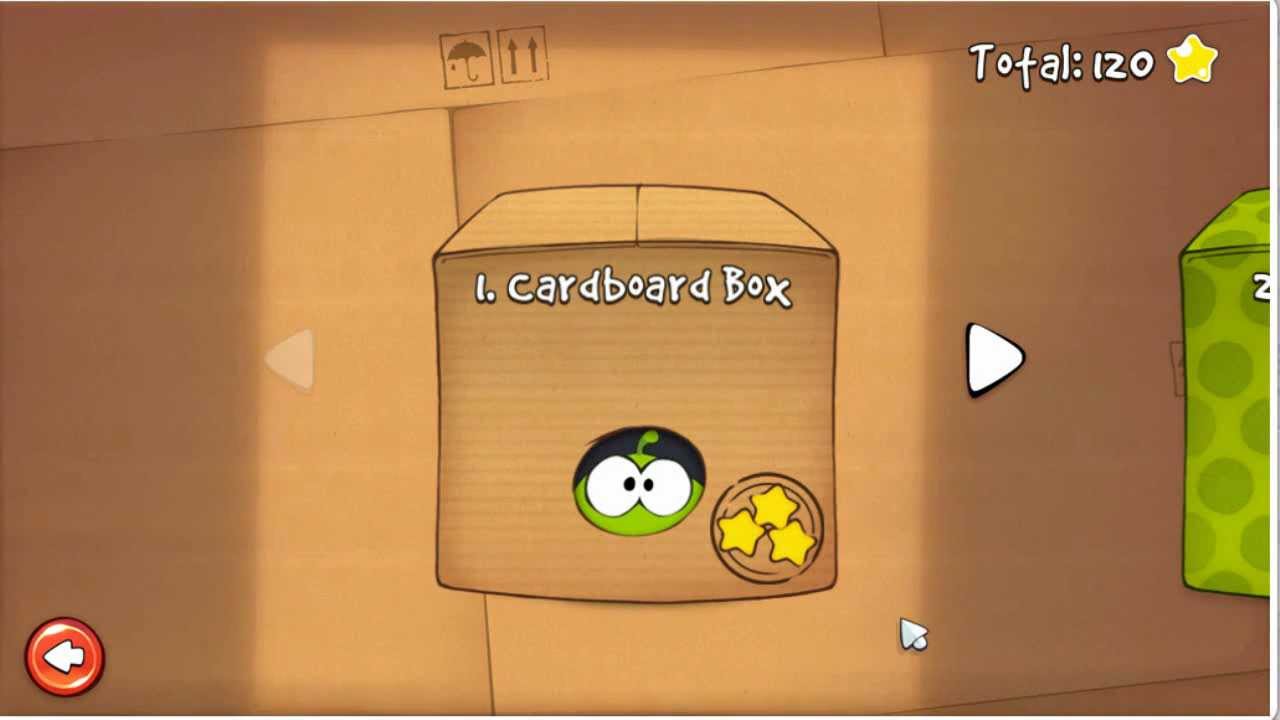
Physics games on portable devices are a dime a dozen, but the ones that truly shine have unique gameplay ideas, cute characters, or interesting ways to manipulate objects. Another thing that is mandatory for a great physics-based game is fun objects to manipulate. Cut the Rope is a very unique game in the sense that it’s based on skill rather than luck. You have to time things just right, and you actually feel like you’re manipulating the physics.
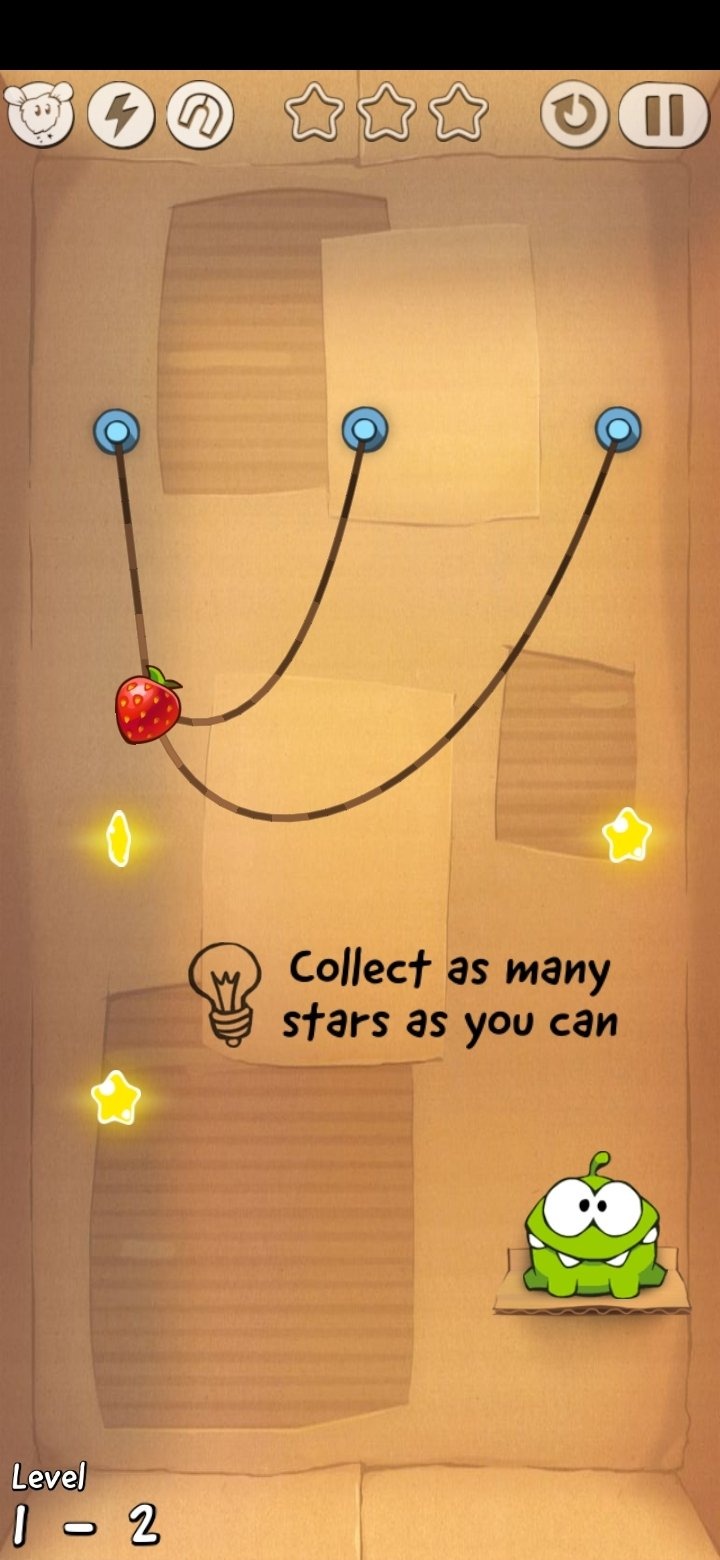
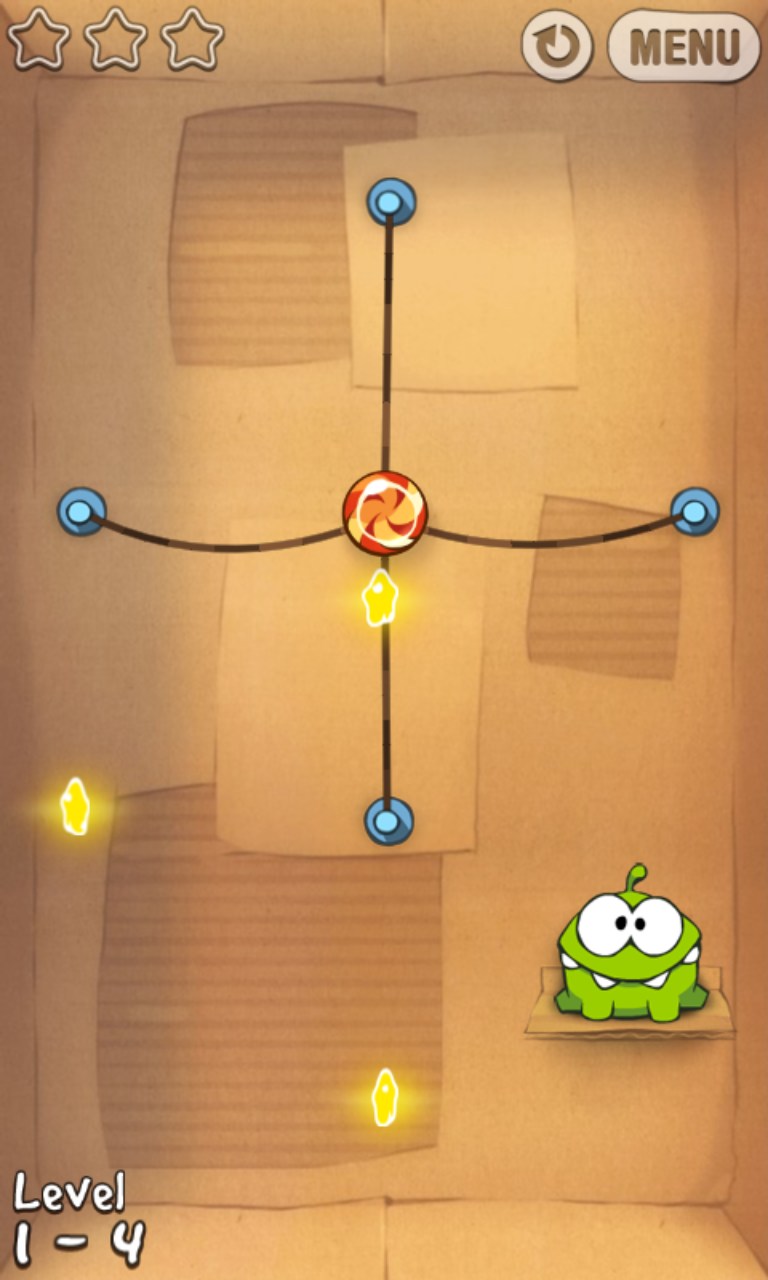
The main goal is to get a piece of candy to drop into the mouth of a little creature. To do this, you have to maneuver the candy by cutting ropes, blowing air, popping bubbles, etc. Elasticity in the ropes also comes into play, as does avoiding spiky bars and other obstacles. Some blue dots have a circumference around them, and if you get it in this area, it will attach a rope to the candy. Swiping your finger to cut ropes (sometimes having to use both fingers) is a lot of fun, as is tapping blowers to push them through the air (when they’re in a bubble).
Sometimes there may also be a spider crawling down your rope, so you have to cut it before it gets to it, so speed also comes into play. The reason why this game requires skill over luck is that it’s all about timing. Popping a bubble just in time to make it fall past an obstacle as it swings requires precise timing, so this game isn’t exactly for babies. It’s just so fun to make these candies fly, swing, and float through the air, and it’s so satisfying when you complete a complex level knowing it was all thanks to your skill and not dumb luck (Peggle?).
Cut the Rope has sharp, charming visuals that look great on the iPhone 4, and there are so many levels to play that you won’t get bored. Not only does the game have varied game elements, but it’s also very responsive and feels great to play. Cut the Rope is great for hardcore gamers (if you want to collect the three stars in each level) or casual gamers, and I think “casual” games need to have this kind of balance.
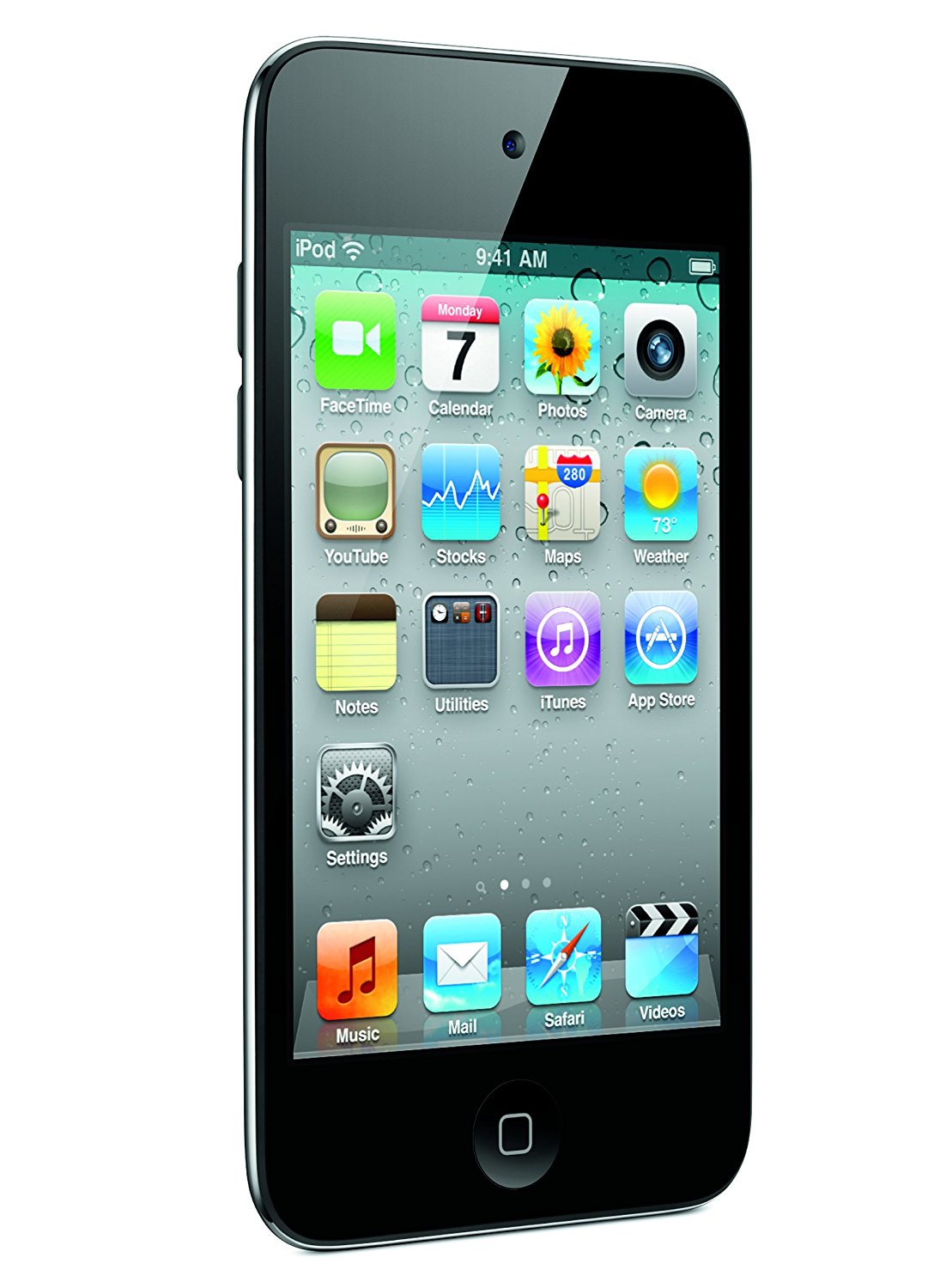
Didn’t the 3G Touch just come out last year? It did, but this new iPod reflects the next-generation hardware of the iPhone 4. With the Retina Display (more on that later) and a new 1GHz processor, it trumps the 3G in every way. The addition of two cameras and a mic brings the iPod to a whole new level for Apple.
The new model is actually a bit smaller than the 3G, but just slightly lighter despite having more parts inside. There is one camera at the front and one at the back. The touch screen also feels smoother and sleeker and seems a bit more responsive. Also, thanks to iOS 4, you can now multi-task, so pulling up a walkthrough for your game in Safari won’t require you to completely shut down your game, so this alleviates having to save constantly. You can also just hit the home button, pull up your music, watch a video, or even jump into FaceTime, then go back into another app. Multi-tasking has come quite a bit late for Apple, but at least they’re catching on.
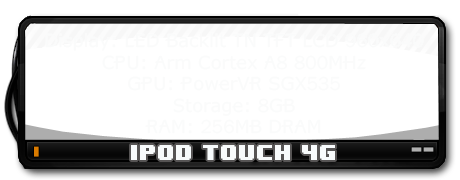
Under the hood, the device has the same GPU as the 3G, but the processor is a whopping 1 GHz, which is unseen on a phone, let alone an MP3 player. If you just listen to music, you won’t care, but this is what allows you to multitask and swap between apps without much slowdown. It makes surfing Safari faster, and game loads are quicker. It also shares the same amount of RAM, which is a huge 256 MB. The resolution has also been doubled to 960×480, which is still lower than most high-end phone models, but for an MP3 player, this is amazing. It allows for 720p video, so HD video watching has finally come to your iPod. The Retina Display is actually how the screen displays its graphics to you. Apple’s research showed that 300 PPI is the maximum amount the retina in the eye can see from about 12 inches away, and bumping the resolution up any higher wouldn’t make a difference to your retina.
The camera is pretty decent, but you have to have a lot of light or you will get grainy pictures. The video looks great, though, so this is perfect for people who don’t have high-quality phones or cameras. Despite these features, the iPod can also play next-generation iPhone games that have higher texture resolutions, better lighting, and just overall look really close to current-generation consoles.
There aren’t too many complaints about the device except for the power button. It used to be nestled right on top of the edge of the device on the left side, so it was just an index finger away. Now it’s on the right side and nestled on the curve, so it’s a pain to get to, and you have to kind of contort your hand to get to it. Was it because the camera is on the other side? Probably, but this was a poor design choice. Overall, the 4G is an amazing device and adds a ton of new options, making it well worth a new purchase.
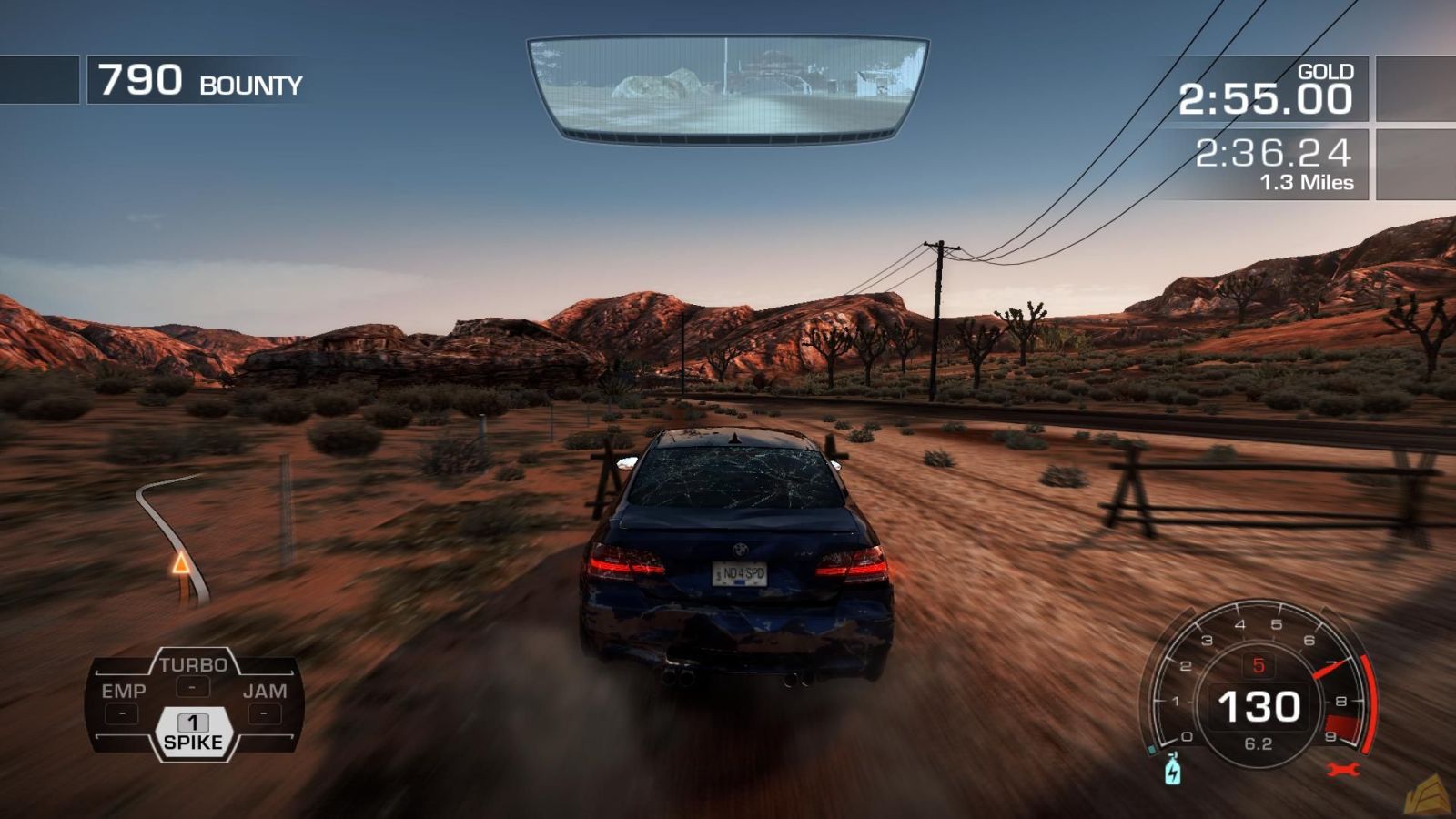
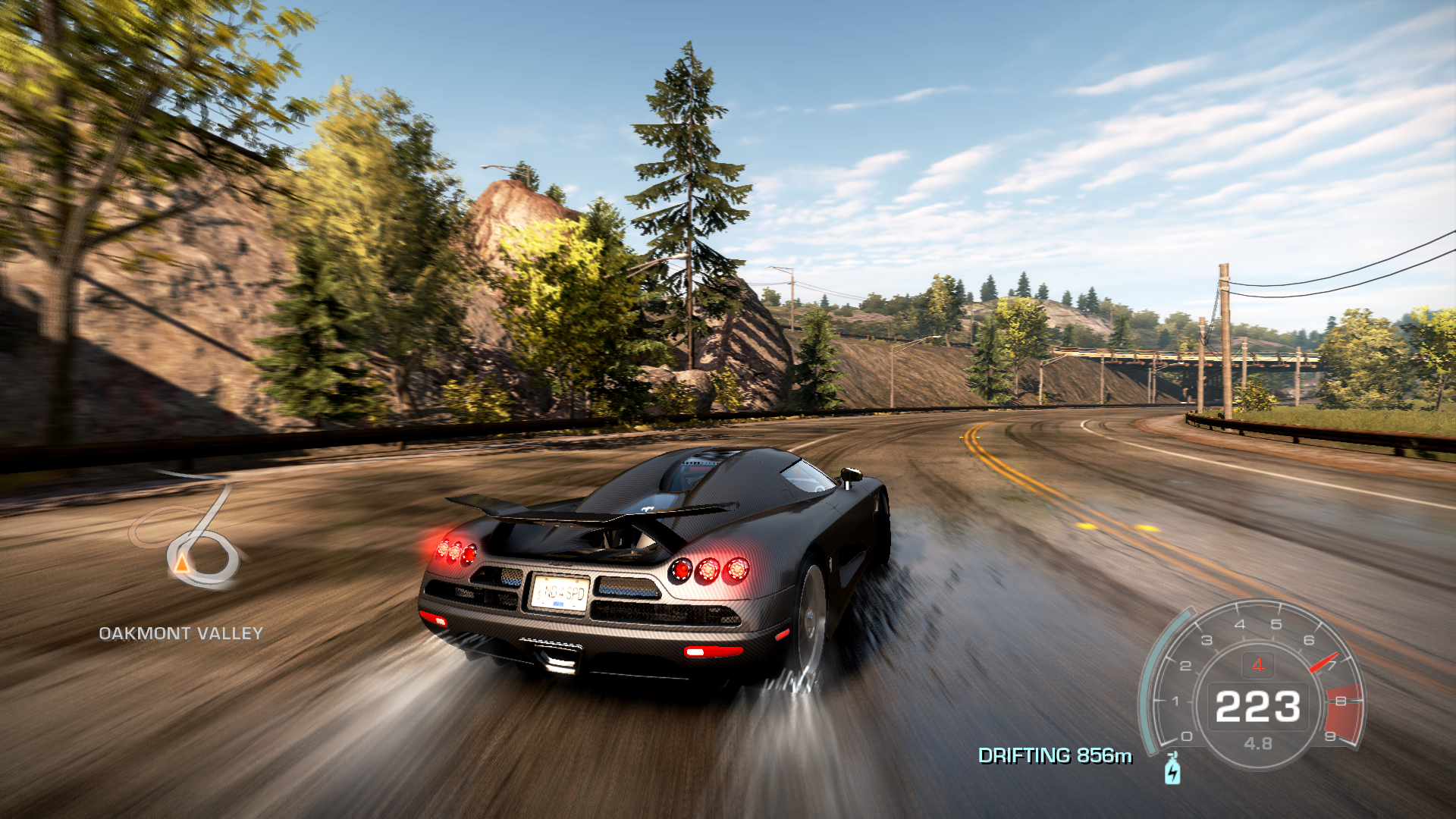
The Need for Speed series has been seriously confused and hurtful since Most Wanted. While Shift was a simulator, the other ones in between have been either subpar or bad. Hot Pursuit revives the classic entry with the Burnout team behind the wheels, and this feels more like Burnout than Need for Speed, however. Using the Paradise engine, Criterion did a good job making the game both look pretty and giving us a Burnout feel with real-world cars. These are slick cars, ranging from Mustangs to Maseratis.
As the name would suggest, it’s about cops versus racers, and each opponent gets a set of four weapons. Cops get an EMP, helicopter, spike strip, and road block. Each is pretty self-explanatory, but this feels like a glorified version of Burnout’s Road Rage mode. Racers get the same, but instead of a helicopter and roadblock, they get a jammer and turbo, which is an extra boost for NOS. Now you can earn turbo by doing crazy stuff as well.
The world map is also classic Burnout style, with each icon labeled for a racer or cop, and there are previews, time trials, and special events for each side. There is also Autolog, which is a social networking type of setup. Your friend’s best scores will be posted, and you can post screenshots and videos of your races. If a friend beats your score, you can jump right into that race and try to beat it. While the single-player is fun, it’s the online stuff that makes the game shine with all the weapons. The single-player feels predictable and stale compared to multiplayer because it feels like this game was made with multiplayer in mind. You earn a bounty and have to hit certain goals in single-player, but it’s nothing we haven’t seen in racing games already.
Once you race, everything feels fine, but the steering tends to suffer drastically depending on the road conditions and the car. Despite awesome damage modeling, the cars all feel pretty much the same, and the sense of speed is so fast that you don’t notice speed differences. This also concludes the repetition because once you unlock all weapons, it’s just the same events over and over again, and some people may never even finish the single-player due to this. The game can also look pretty good at times, but in other ways, it doesn’t.
The chaos comes from the fact that in multiplayer, you never know what anyone is going to do. You can see a roadblock ahead and get your shot lined up to dodge it, but just then someone deploys a spike strip right in your face and you hit both, losing a crap ton of health. You can take off again and try to shake off a helicopter, but then get hit by an EMP. It’s the same with racers, but this can also feel a bit unbalanced since racers’ biggest weapon is the jammer, so cops can’t use their weapons for a few seconds. It all depends on the players’ skills and how they race.
Despite the repetition and lack of weapons, the game works, but also notice all the Burnout references. There’s hardly any need for speed in this game, despite the real-world cards and the Hot Pursuit title. This is just a weird mix-up of game identities, but it’s probably better to have a burnout feeling than an old, crappy NFS game rehashed. Criterion already had the engine built for something like this, so I expect to see a sequel in the near future. I do recommend this to Burnout fans more than NFS, however, but old-school Hot Pursuit fans will dig this completely.
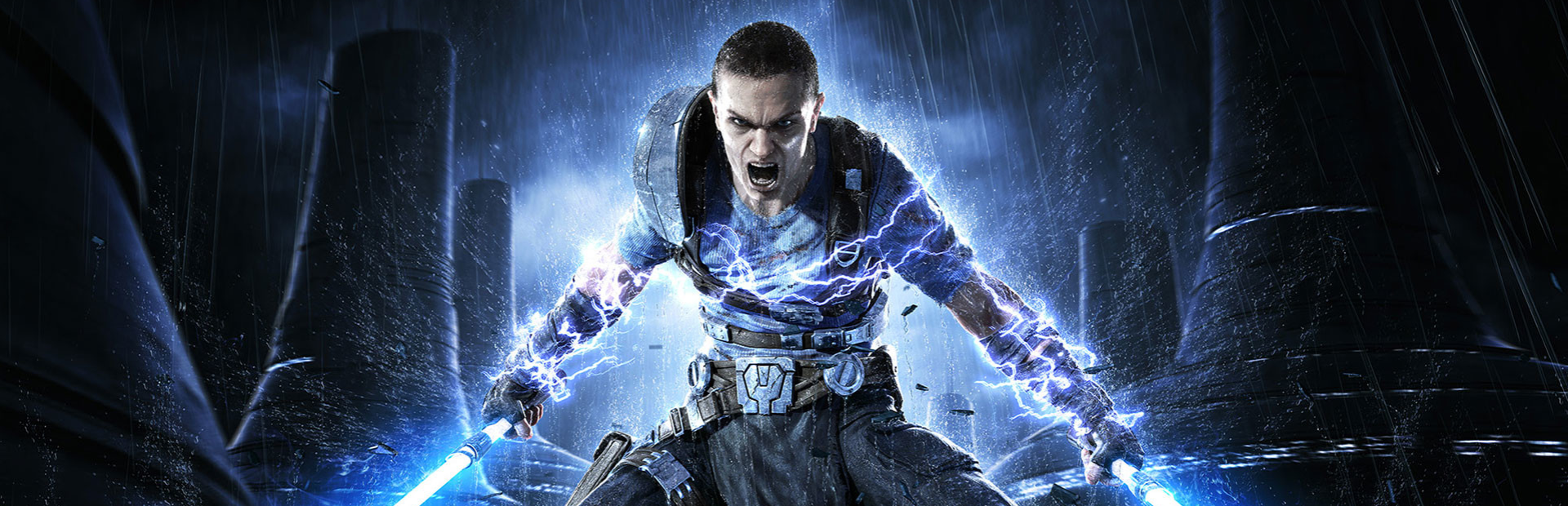
A lot of games wind up getting overhyped and overall pissing off the entire gaming community, especially if it’s a game with a huge and strong backbone of fans. Star Wars has always been this way, whether it’s books, movies, games, or cartoons; there has been a huge following with the Star Wars universe, and this is one such game to be buried under the overhype train. LucasArts promised a huge sequel that would make the first game seem like a pile of doo, but it’s only slightly better. Sure, the mechanics are tighter, and the fat has been cut away, but we’re just left with the bones because they somehow fed the meat to the dog.
The developers even had to come up with some absurd way to resurrect Starkiller by having Vader clone him. He’s possessed with memories of his former self and wants to find Juno Eclipse, his lover from the first game. The story is really bare and is really one-dimensional, and only in the last cutscene does it get interesting at all, and this is so lame and cliche that it makes you want to smash your computer in frustration. We’re at the end of 2010, and LucasArts can’t hire writers who can write better than this! You could probably write the entire plot on a napkin. Oh, wait.
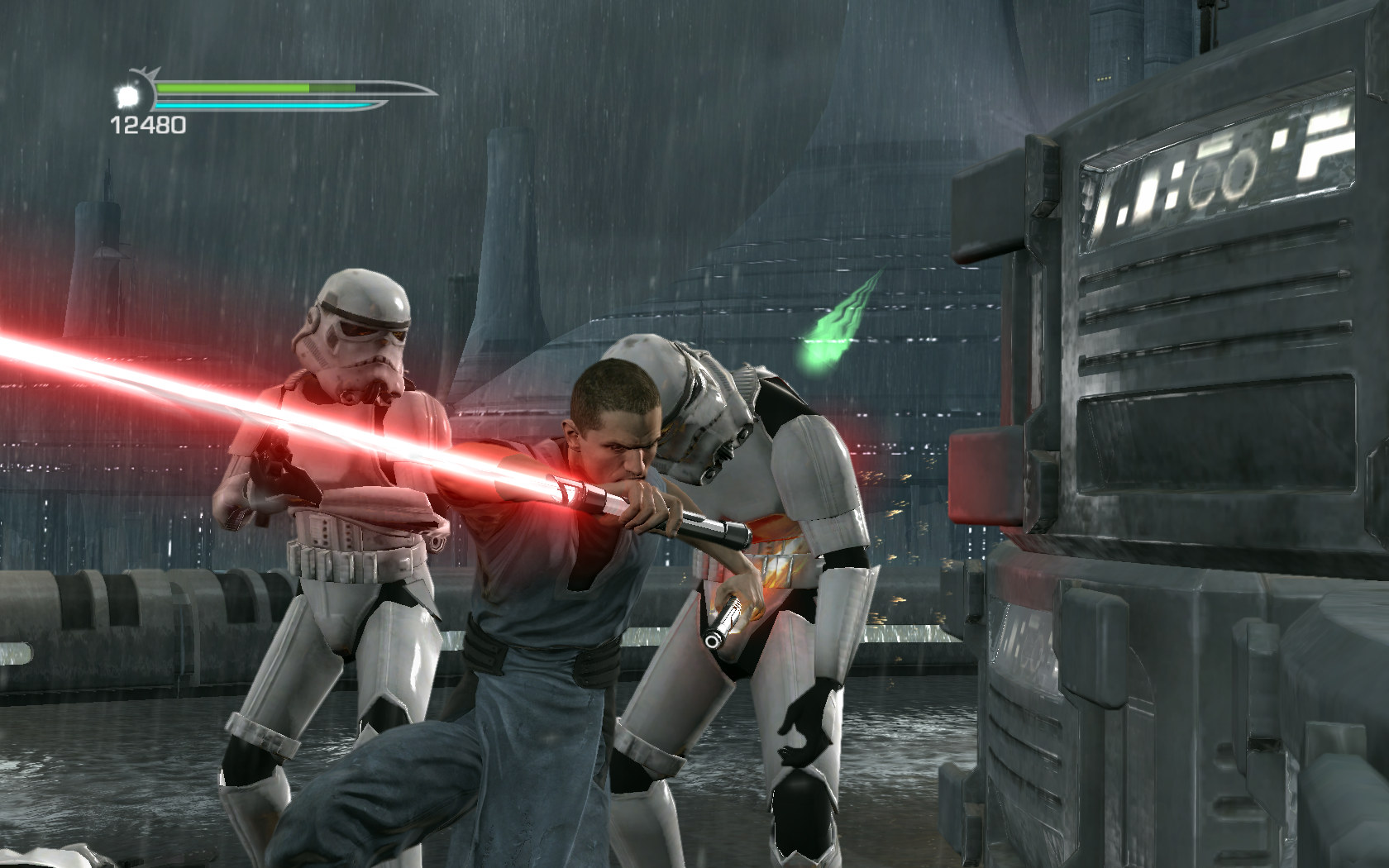
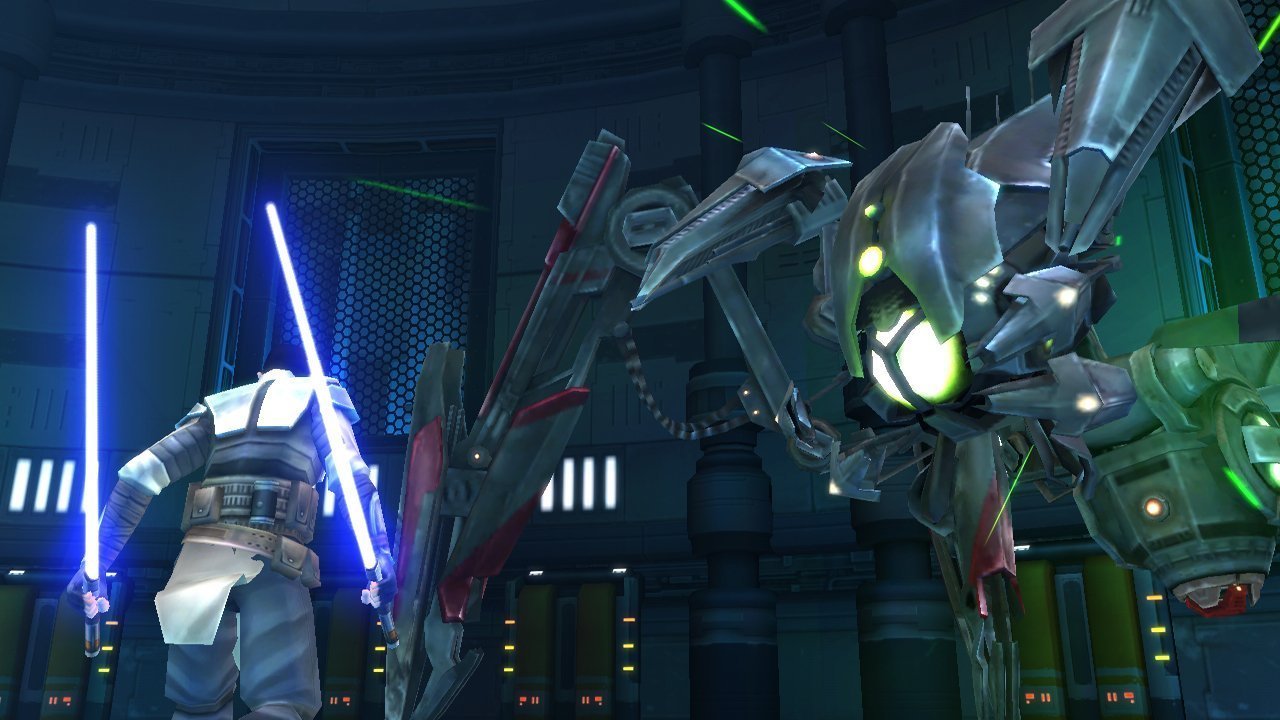
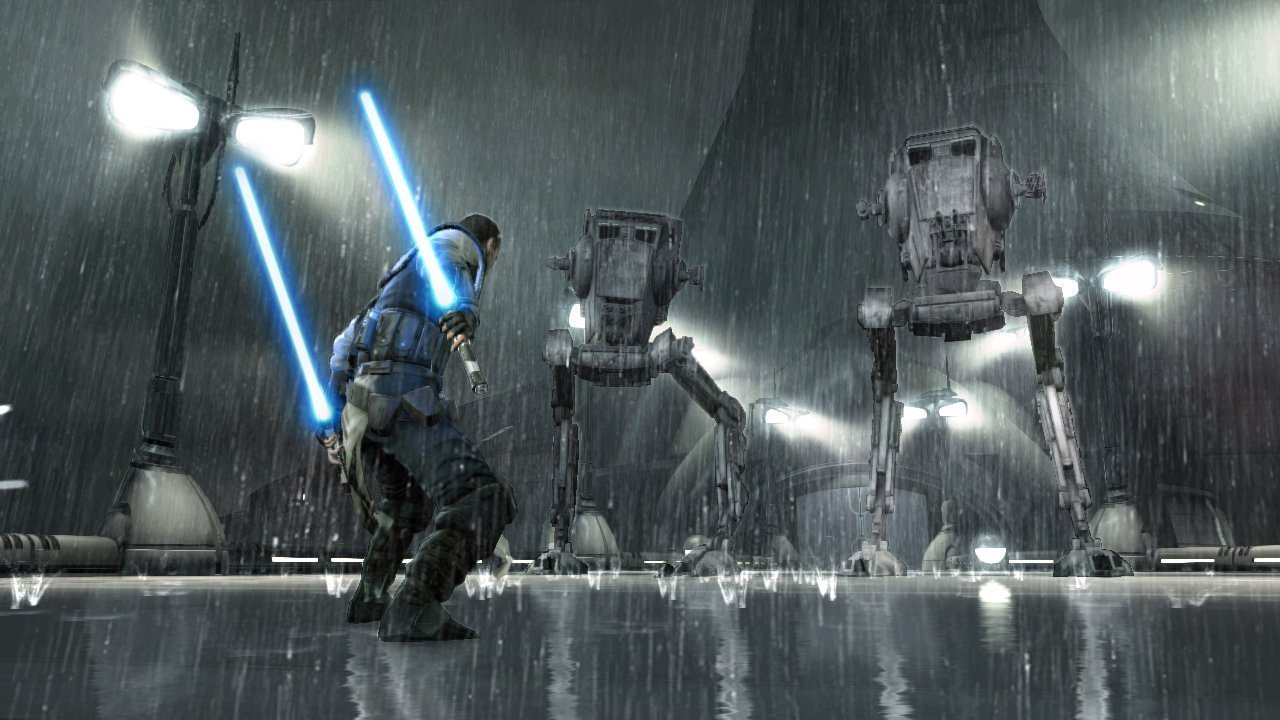
Other than that, the combat is fast but still flawed. While Starkiller is dual-wielding here, he still feels stiff to control and a bit chaotic. You have all your powers from the original game, so you’re not trying to find them again. You can use lighting, pushing, mind tricks, tossing crap around, and charges and upgrades of these Force powers, but you’ll mainly stick with Force lightning. I never used the mind trick and only used push when the game called for it. The enemy variety is even less than the original, with your usual Storm Trooper grunts and some bigger guys that are taken down with QTEs, but these are repeated dozens upon dozens of times and get very boring.
Other than that, the actual fighting is okay if only Starkiller could move more than two inches when swinging his sabers around. Mashing X will only kill people next to Starkiller, so you have to stop and move next to the enemy, then start mashing away. That’s why you end up using lightning so much since storm troopers are easy to kill. The combat animations can’t be interrupted, and when he gets stunned during a fall, you’re still vulnerable—and even vulnerable during some QTEs! What’s up with that? Even allowing you to change your saber crystals for stat effects doesn’t really do anything, and you’ll forget it’s there once you discover it.
The game doesn’t have many epic moments, and the only good one is the second level facing off against a giant creature, and it’s completely God of War-style and hugely epic. The only other memorable moments are the few free-fall sections, and that’s all. The game lacks any moments that are memorable, and this is a huge kick in the teeth for a game with such potential. The game is just really repetitive, highly unbalanced, and just isn’t what it could be. The game looks pretty good in some spots, but it could look a lot better. Unleashed II just feels like it’s half done, and even the short length helps this along. There are challenges and extras, but after spending 5–6 hours with this game, you’ll just uninstall it and forget it, just like the last game. If there is ever a Force Unleashed III, please take your time and make it what it should be!






















































 thebinarymessiah.com
Super, thank you