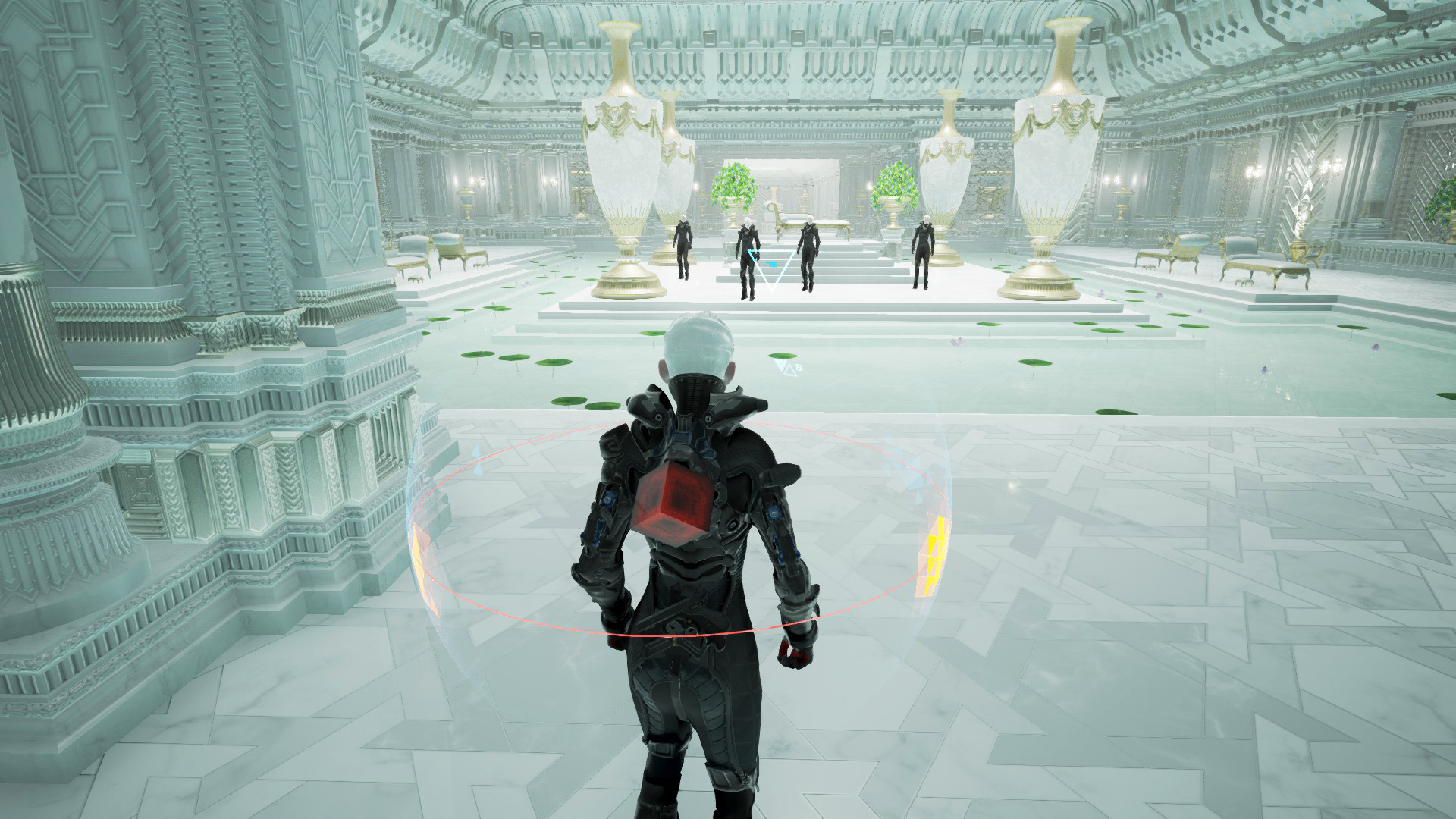
Echo is a futuristic stealth game in which you play as a woman named En who is trying to resurrect a man named Foster. Her species is known as the Resourceful, which was created by her grandfather. She enters this facility to find a cube that Foster is supposed to be inside. The story doesn’t explain a whole lot outside of voiced dialog here and there.
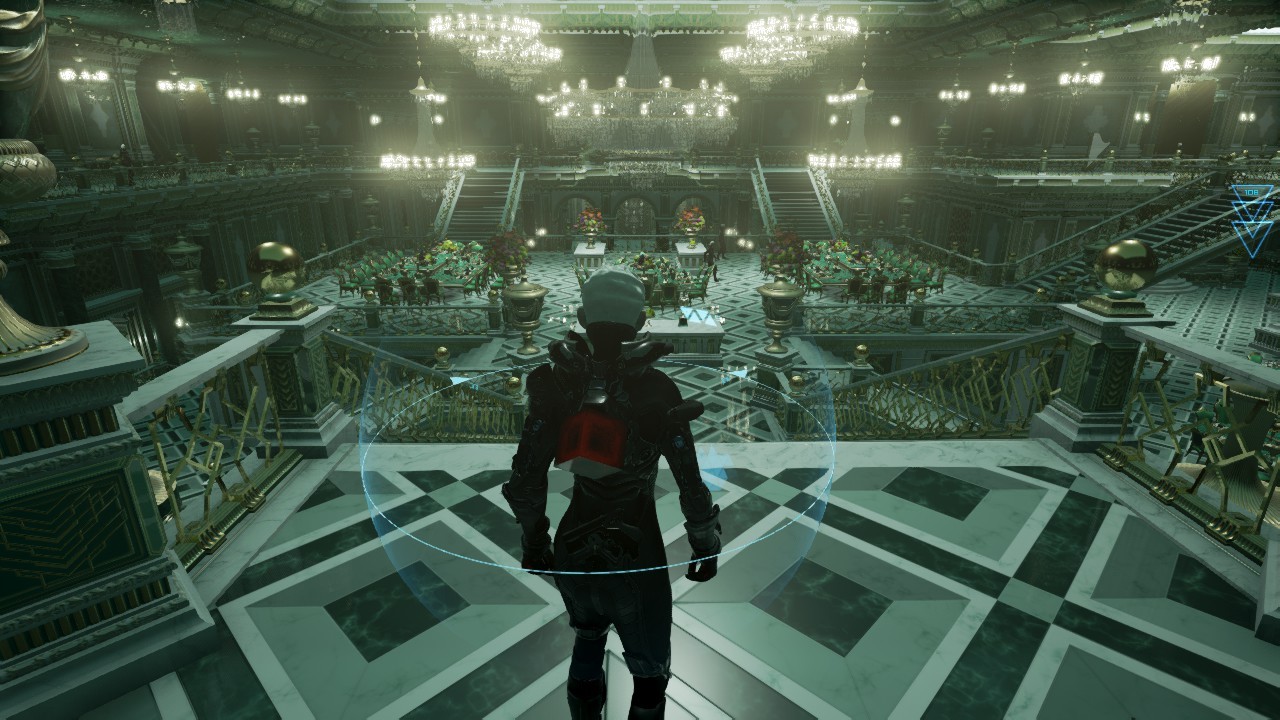
The game has a great opening sequence where you land on a strange planet full of square cubes and must descend into the facility. The first hour of the game introduces all of the game mechanics, with the biggest being that the enemies are clones of you and learn from you. These clones reset during power cycles every so often. The music changes, and the game goes dark, but this is when the system can’t learn your moves. If you shoot, jump, duck, hide, or smash clones in the face with crystal balls, they will be able to do the same moves during the next power cycle. It’s important to reserve using your gun or even using elevators until the lights go off.
There are other abilities you have, such as a power bar and being able to shove clones. Every action requires an action point, such as shooting and leaping over ledges. You also have a very limited sprint meter. You can slowly regenerate one action point, but there are little towers with white balls that can give you one point spread around a room. It’s both strategy and stealth to only use these points when necessary, as some rooms can have dozens of clones you need to sneak around. This is when all the problems start setting in.
Sneaking around is fine and all, but there are so many clones that it’s nearly impossible not to get seen in any single room. The only objectives you get are to make it to the next room or find keys in large open rooms to activate an elevator. This gets extremely frustrating when you restart an area over a dozen times only to never find a good path around the clones. So many times I was spotted and tried to run, only to run out of action points and energy. You get one freebie by fighting your way out of a clone’s grasp, and your proximity meter will glow red, meaning you can’t take another hit. Rooms can be so large that you can’t get to the other end even after lining up your shot with several clones, sprinting, using your free grab, and shoving clones down.
The next issue is that the game feels like it drags on forever. I love the art style and atmosphere, with strange Victorian-style furnishings in a nearly sterile environment full of silver and gold decor. The problem is that it repeats forever, never changes, and the constant repetition of going from room to room wears thin fast. If there were a variety of things to do here, it would be more enjoyable.
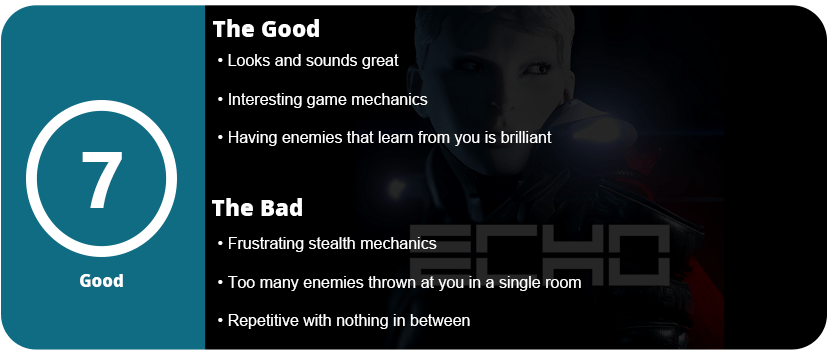
Overall, Echo has great voice acting, good graphics, a creepy atmosphere, and very interesting game mechanics, but they are poorly executed in a repetitive, frustrating stealth gameplay loop that outstays its welcome.
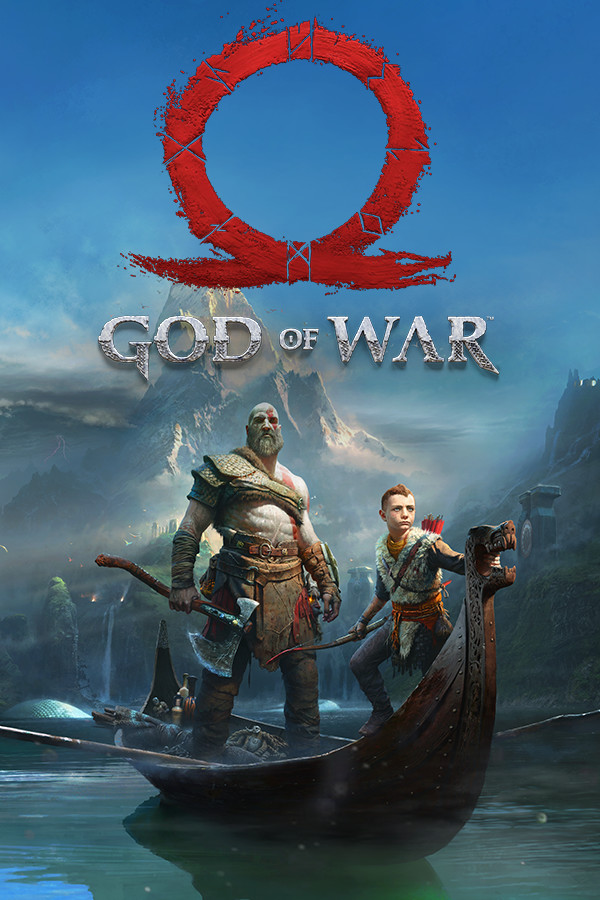
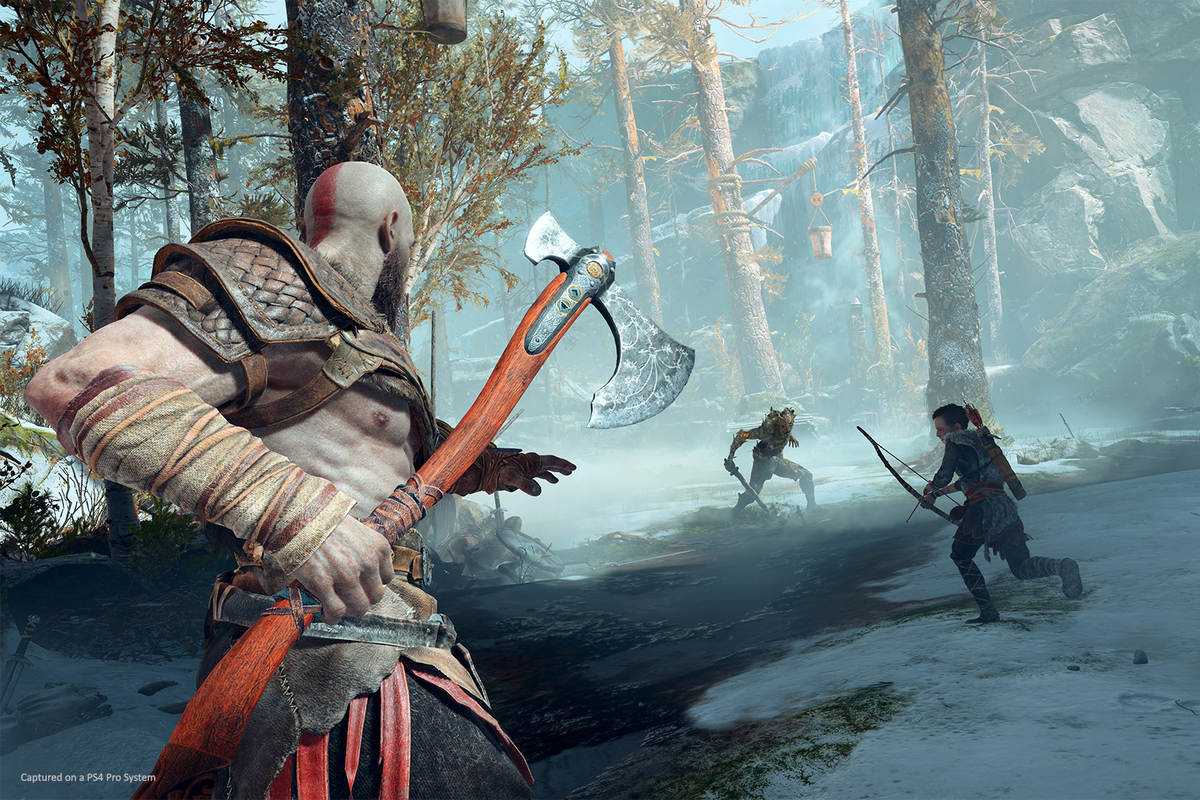
When you think PlayStation, you usually think God of War or Kratos. God of War was a game-changer back in 2005 with cinematic fluid combat, memorable characters, and intricate level design, as well as the birth of quick-time events. 13 years later, the entire game is reinvented, not just to change the way we play as Kratos but to reinvent the action-adventure genre itself.
I really want to go into detail about the story, but it would contain so many spoilers that I have to refrain. For starters, you do play as Kratos, but as an aged man, a father, now living in an entirely new world set in Norse mythology. Yes, the Greek myth of God of War is now done, and we get a whole new set of gods and enemies and a beautiful new world. Kratos is living humbly as a woodsman with his family until his wife dies, and he and his son, Atreus, must venture to the highest mountain of Midgard to spread her ashes. It feels like the most humble story and a stark contrast from past games, with Kratos’ rage and anger tearing down gods and endless Olympians.
I can’t stress enough just how well developed his character and personality are. Being revoiced by Christopher Judge, who is best known as Teal’c (Tee-ULK) from the Stargate SG-1 TV series, he has a more calming, aged, and tired look to him. He is extremely wise, quiet, reserved, and has learned all these years to control himself; however, he still struggles. Santa Monica Studios did an astounding job of developing his character and Atreus’. I was fully immersed throughout the entire game and loved hearing Judge’s voice on screen, soaking in every cutscene and spoken line of dialog. It’s one of the most well-written characters and scripts in gaming history and goes from a simple story to blowing up into the expected epic mess that Kratos usually gets into. The story does end on a cliffhanger, and there are a lot of unanswered questions, but fans will know that means more is coming, and more is better.
The next thing you think of when you hear God of War is the amazing and well-made combat. It is one of the top five best action-adventure combat systems ever created and has just improved over time. Santa Monica Studio not only reinvented God of War’s combat but also action-adventure combat itself. Instead of using a cut camera like in previous games, we are now behind Kratos from an over-the-shoulder perspective with similar combat mechanics to past games. Some would say this seems impossible, but they pulled it off. Light and heavy attacks are now mapped to the R1 and R2 buttons, with your Leviathan Axe being used to solve puzzles as well. This is another amazing twist to the weapons in God of War; they aren’t just for chopping off heads. The Leviathan Axe is an amazing tool that is powerful, used as a ranged weapon, and for various other reasons. The main attraction of the axe is that it can be thrown and returned to the player anywhere in the world. The Triangle button is permanently mapped to just returning the axe, which is an interesting game mechanic never seen before.
I can’t go into further detail about weapons as it’s actually a huge story spoiler, but the combat feels very familiar to past games while also feeling fresh and new. I can’t think of the combat being done any other way. On top of chopping off heads, the magic system was reinvented with new enchantments and rune stones that you can collect around the world. These can be socketed to armor and weapons and add various moves to certain button combinations for each weapon. These are keys to surviving in battle, and without them, you just wouldn’t be able to finish the game. I always changed them up and upgraded them, as there’s a huge variety of magic moves in this game.
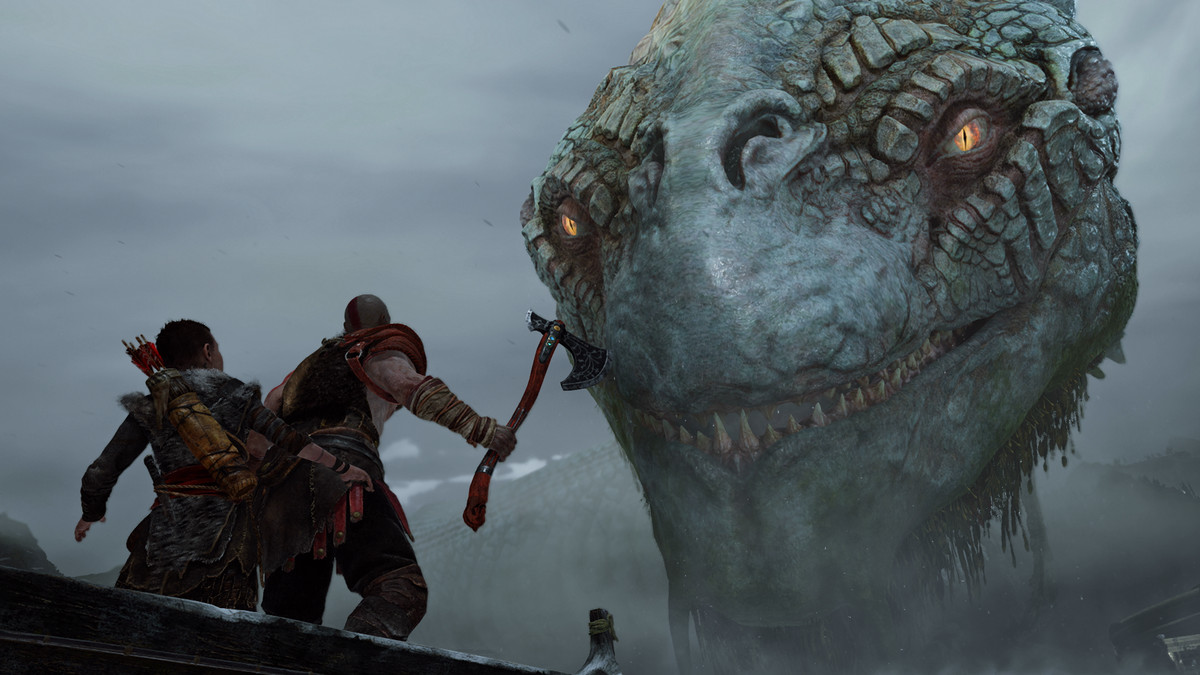
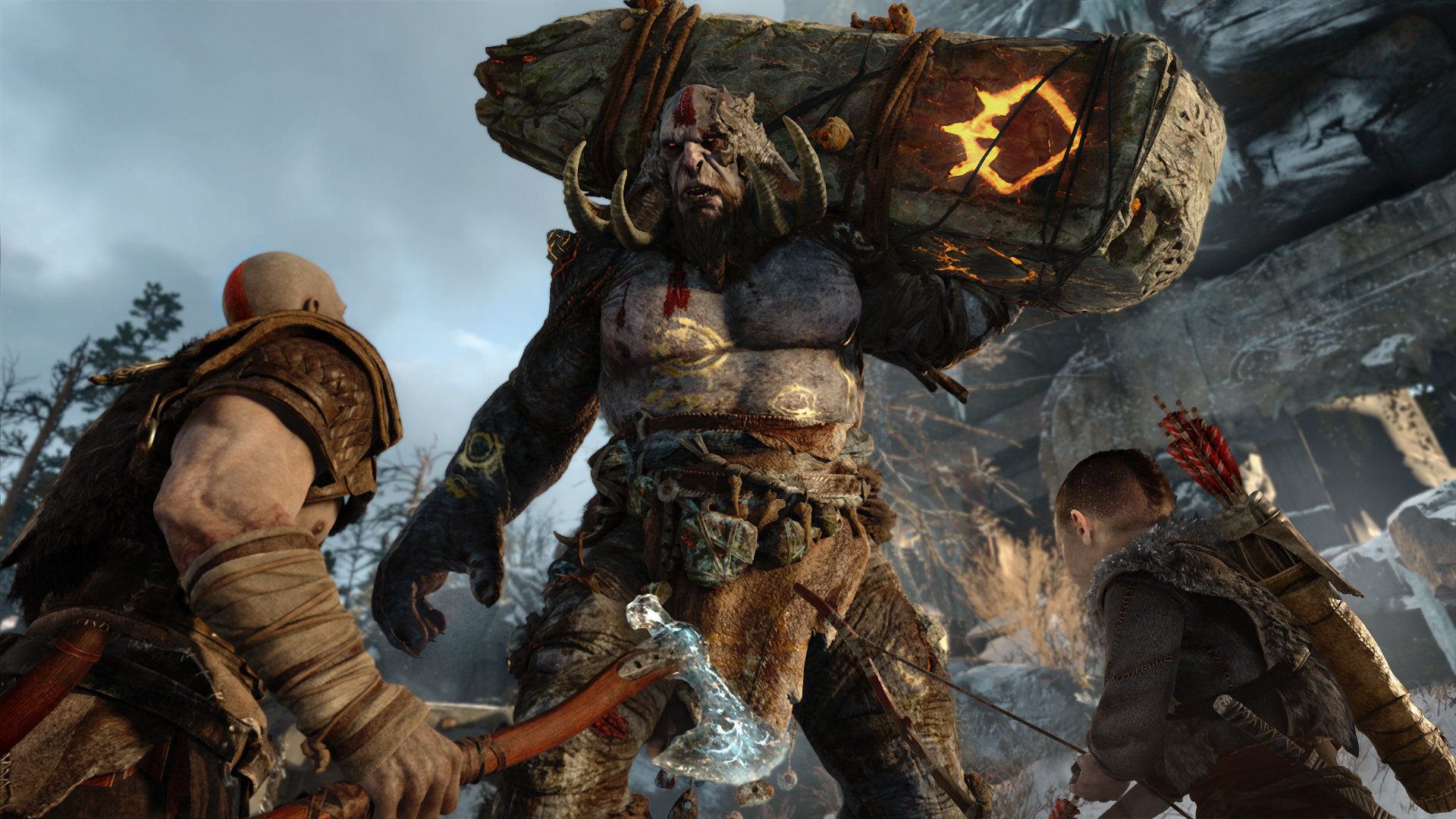
Epic cinematic kills are also back, but less quick-time event-heavy. While I did miss them, I understand why they were excluded. It does get repetitive, and you constantly relied on seeing that circle button pop up to gain health, magic, or experience orbs, but the animations went from awe-inspiring to shrug-inducing very quickly. The game does harken back to the first God of War in the sense that the game isn’t heavy on epic giant bosses. There are a few, and they are scripted, beautifully animated, and jaw-droppingly epic to see. You still feel like you are taking down these giant creatures, but in a different way. There are larger, smaller enemies like trolls and elemental golems that can be defeated similarly to past games, but it’s changed just enough to feel new and different. The combat is still cinematic, epic, and enjoyable, with awesome slow-down and gore everywhere.
Atreus himself is also a great combat tool, as he’s a companion that actually works and never gets in the way. He’s mapped to the square button, and you can use him no matter what Kratos is doing, and that includes death kills, being knocked down, etc. He shoots various types of arrows that can stun enemies and bring their stun meter up. Unlike past games, you can’t just deal so much damage, and then the kill button appears exactly the same for every enemy. You need to use various attacks to bring that meter up, and it’s difficult on tougher bosses. It keeps you from relying on quick-time events, like in past games. The well-invented and amazing enemies also help, as each one stands out and is unique, and you will learn what moves work with what enemy.
If the combat wasn’t enough to hook you, then the world will. The third major part of God of War is exploration and puzzle-solving, which make up over half of the gameplay. They took the secret chests of past games and blew them up tenfold with various types of chests, from simple small treasure chests full of Hacksilver (currency) to actual puzzle boxes where you have to hit various bells with runes to match the box. These can get tricky and require using all of your skills to solve them. God of War is also an open world. Yes, an open world. Midgard contains several realms you can explore, two of which are only for trials and challenges, but Midgard itself is a giant lake with various islands full of puzzle goodness and amazing challenges that will keep you hooked for dozens of hours. There are so many tasks in God of War that it really feels like an awesome open-world RPG, thanks to a leveling system and a brand new upgrade and crafting system.
The last part of God of War goes from using red orbs to upgrade things to finding various items in the game like any RPG and using them to craft and upgrade armor, weapons, enchantments, and even Atreus bow and his armor. There are certain armor sets that require various items from certain realms, and this can be a challenge, but it’s possible I actually finished the story before reaching the max level and acquiring the best armor. That’s all reserved for the bigger challenges seen elsewhere in Midgard.
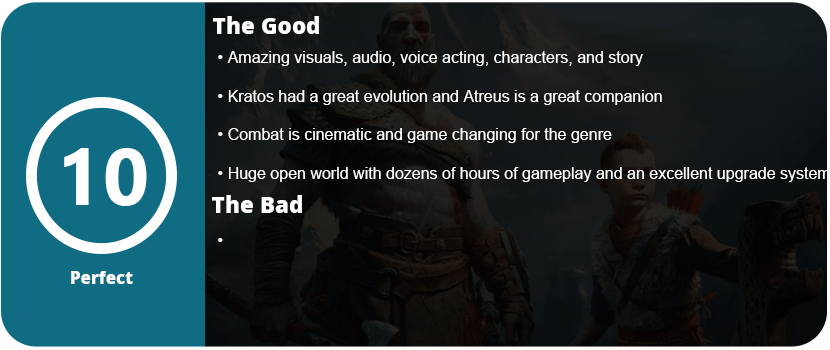
Overall, God of War is the single best game to be released this entire console generation cycle. This is what we needed more of from every console maker. It took Sony too long as it was, but here we have it. The game is literally perfect, and I can’t think of any flaws in God of War that are detrimental to the overall game. I could say the game is too hard in spots, but that’s because I ventured too far too early and needed to come back later. I could say there are a lot of hidden items and they are hard to find, but I need to explore more and look more carefully. I could say that the story is too short and the lower amount of epic bosses is what made God of Warand hurts the game, but it just doesn’t. God of War is the best game I have played in the past 10 years, and many other developers need to take note.
Note: The game plays best on the PS4 Pro. It looks really awful on the standard PS4, but the Pro is running in 4K checkerboard, and the textures and added effects are well worth a purchase just for this game.
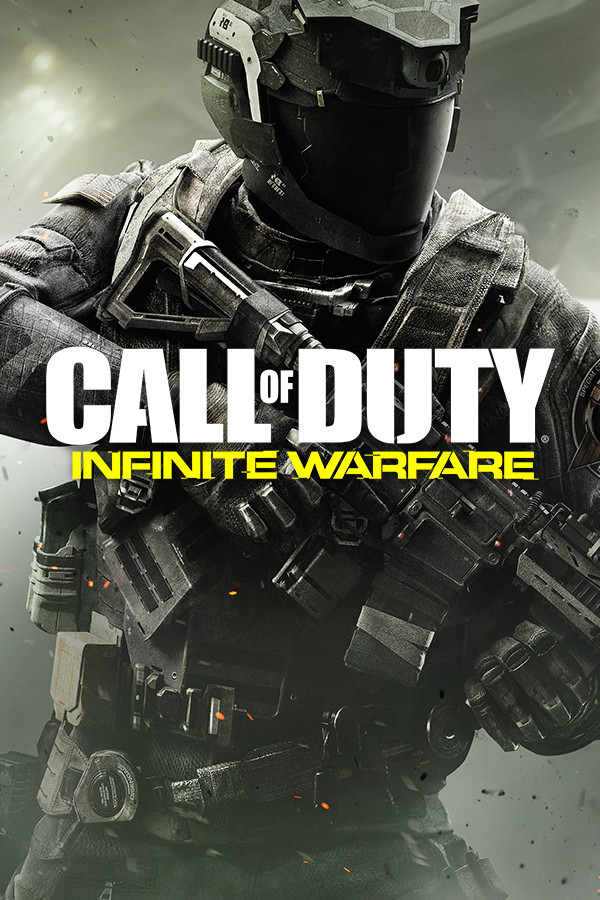
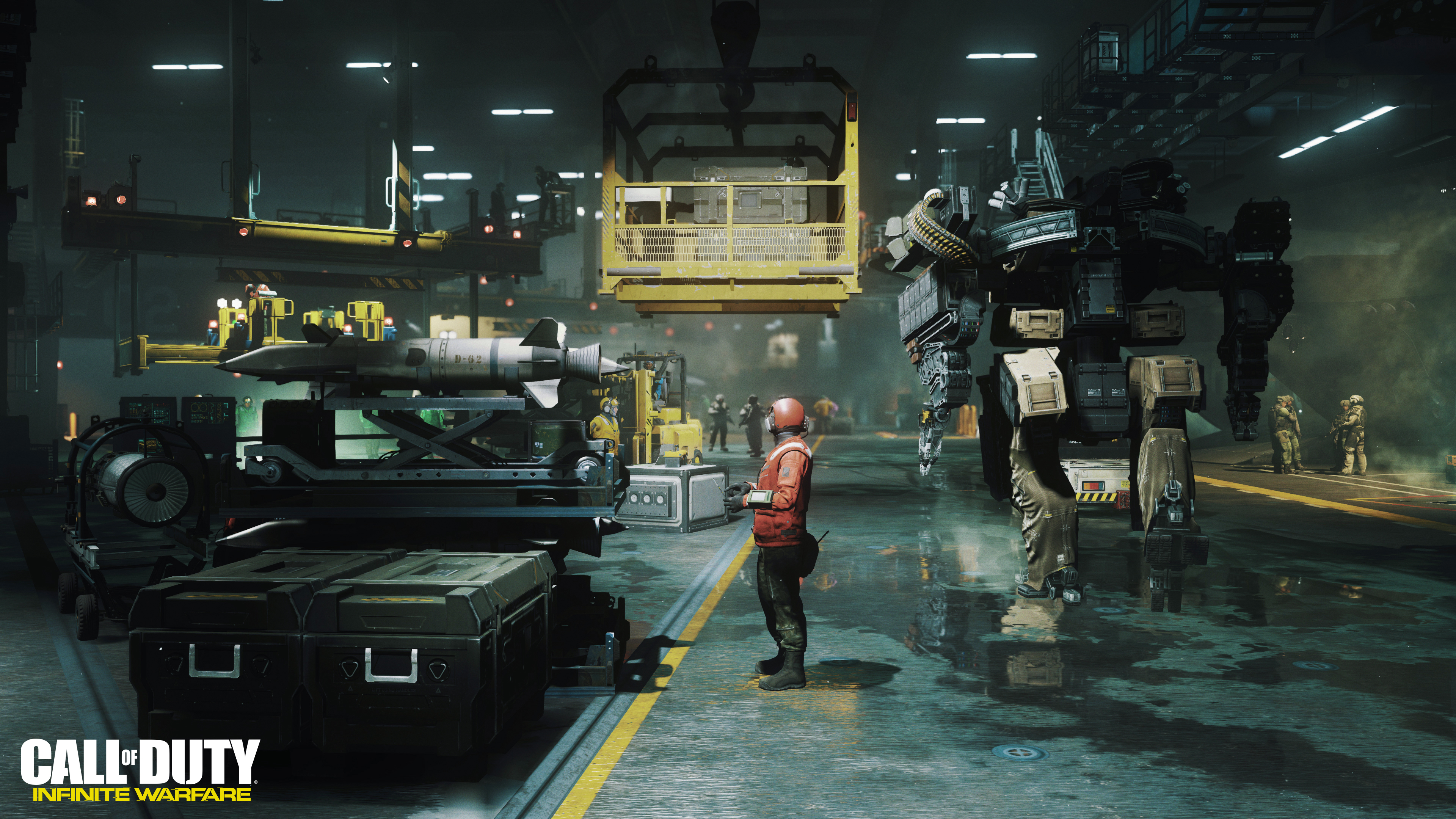
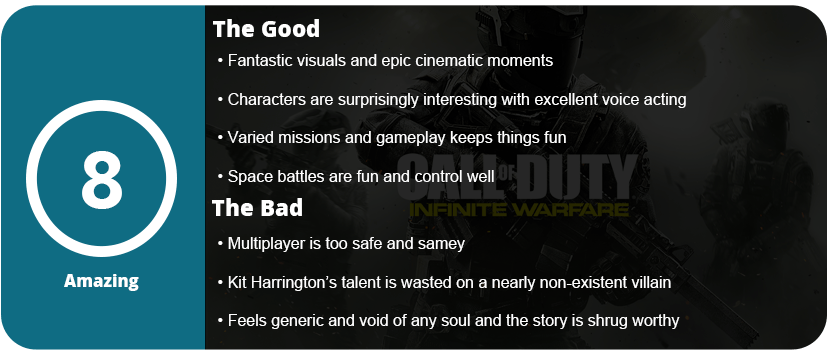
Every time I play a Call of Duty game, I expect less and less each time. The game is designed from the ground up for the lowest common denominator and people who have never played games before. Infinite Warfare is no exception, being the third game from Infinity Ward this console cycle. I have to give Infinite Warfare some credit, as it did surprise me more than the series has since Modern Warfare 2, and that’s saying a lot. The game has excellent acting and surprisingly interesting characters that you kind of care for, which scared me coming from such a mindless series.
You play Lieutenant Reyes, who is part of the USDA and is trying to protect Earth from the SDF, who are a bunch of rebels living on Mars and want to wipe out all of Earth. It’s a typical war plot with basic objectives, but the chatter in between is quite entertaining and kept me hooked. I actually sat through the entire game in two long playthroughs, which I have never done for Call of Duty. They usually get boring after the second mission or so. I do have to mention that the use of Kit Harrington (Jon Snow in Game of Thrones) is wasted on a villain that is rarely seen in the game and whose character never evolves or has the potential to grow. Why did they use him for a half dozen lines of dialog? I know Call of Duty is famous for using celebrities in its games (Ghosts being the worst use), but this seemed rather pointless with almost no face time.
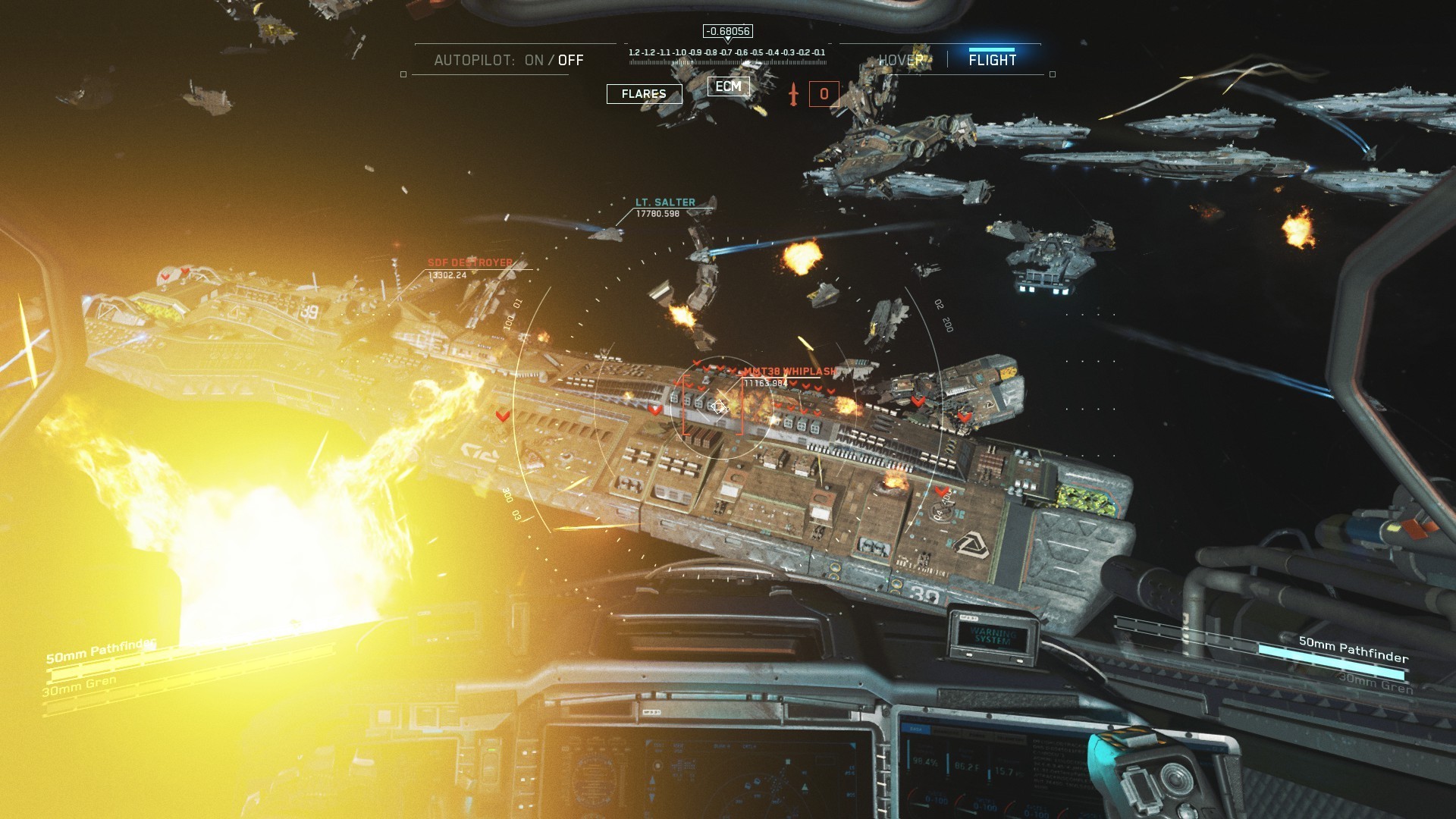
Reyes’s partner, Lieutenant Salter, creates a strong duo that helps drive the game forward. I was actually able to figure out what was going on at all times, and the story never got convoluted or overly complicated. The game also changes pace quite often, which keeps it from getting boring despite these changes being the same and just shuffled. Outside of boots-on-the-ground combat, there is some zero-G combat and space combat in a jet. The space combat is great, and the Jackal has buttery smooth controls and feels very cinematic and challenging. The only objectives here are to destroy other fighters and larger ships while keeping missiles off of you and staying out of danger. Locking onto other jets puts you in auto-pilot mode, where the game will automatically follow the jet and you just have to shoot it down.
Zero-G combat is used the least, but it is still quite fun. You can tether to objects for cover, grapple enemies, and initiate pretty awesome melee kills. The environments are rather beautiful, with a lot of detail and massive objects in the background. This is not an ugly game by any means. Once you get indoors, though, the game is boring and stale, with metallic corridors, generic monitors, and the same crap we’ve seen over and over again. There are a few small moments outside of all this, such as when you can call in certain weapons or airstrikes to turn the tide. It feels good to use them, and they always come in handy right at the last moment.
One thing that really surprised me was the use of side missions that you could optionally go on. According to the Trophy listing, most people never played these as they are rare achievements, but it helps divert people away from the main story if they just want to finish real quick and move on. These missions include a few stealth operations as well as flying the Jackal and rescuing hostages. This was a nice mixed bag of gameplay that was fun to play through. The main reason to go through these is to take down top officers from the SDF that are part of the “card system,” which is a series of “hits.” It’s pretty meaningless and just one more reason to unlock an achievement.
Once you finish the campaign (about 6 hours), there is the multiplayer suite, and honestly, the campaign is stronger this time around. The multiplayer is very safe and doesn’t do a single thing different from what we’ve seen before with the same type of maps and modes that we’re used to. Is it worth grinding through the Prestige levels? Probably not, but there is zombie mode, which is even starting to show its teeth these days.
Sadly, Infinite Warfare just doesn’t have any personality, despite all the pluses it brings to the series. At its core, it’s still a generic space shooter that has strayed so far away from what made Modern Warfare great that it’s laughable. With the fake made-up guns (which are actually interesting), robots, and spaceships, this could have been any other name, and it would have still been a good game. The Call of Duty branding seems to hurt the game more than help it these days.
With that said, Infinite Warfare doesn’t’ deserve the flack it has gotten from fans, is surprisingly smart and entertaining, and at least tries to do some new stuff that we haven’t seen before. The multiplayer is passable, but at a bargain bin price, you are in for an entertaining day of shooting robots and saving the planet.
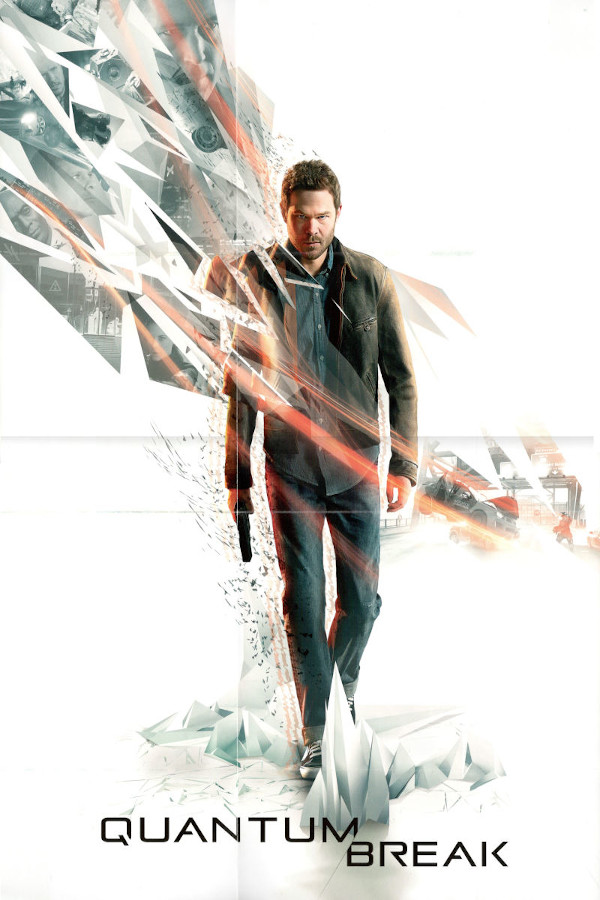
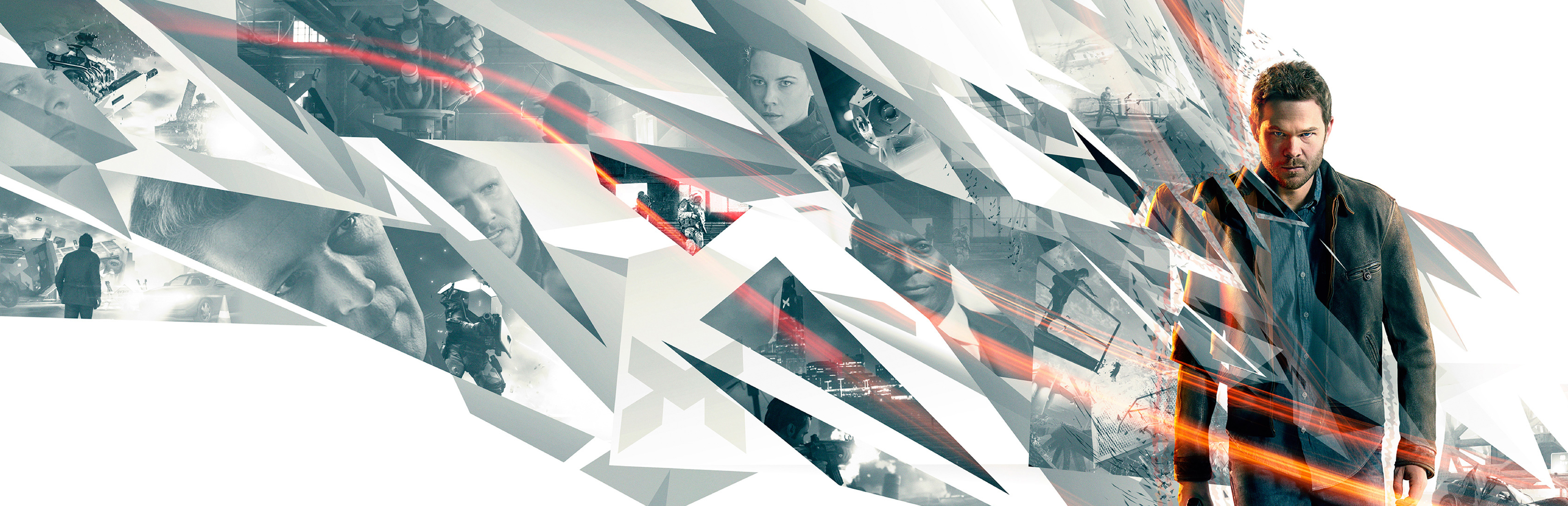
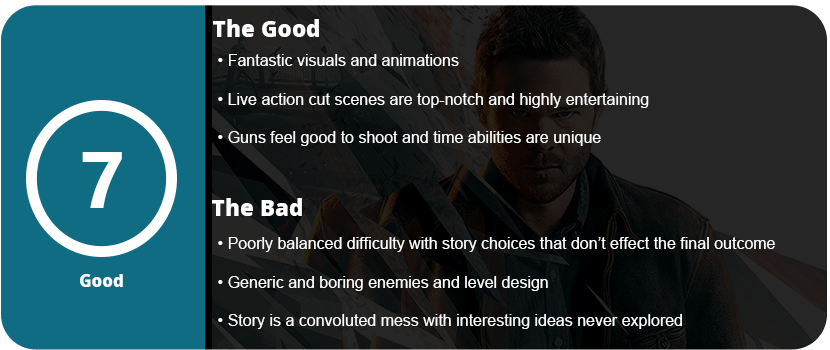
Remedy Entertainment is one of my favorite developers. You may know them from little games like Max Payne and Alan Wake. These were both fantastic third-person shooters with great characters and an interesting story. It’s been a while since we have seen anything from them, and Quantum Break was quite ambitious with big-name actors, live-action cutscenes, and just an overall large budget.
The game starts off with you playing Jack Joyce, who is the brother of William Joyce and gets stuck in a fight against Monarch Solutions to save the universe. It sounds pretty cliche, but the time-bending gameplay and story have some merits. Paul Serene, the antagonist of the game, steals a time-travel device from William Joyce and uses it for profit. The game does this whole start at the end, then work your way back to the beginning sort of story, filling in gaps along the way. I really wanted to like the story here, as the acting is top-notch and the live-action cut scenes are fantastic, but it’s so convoluted and there are so many things that aren’t explored.
One such thing is the end of time. It’s frequently mentioned that the end of time is caused by a fracture in the time machine, but we never see it. Seeing the end of time would have been fascinating, if only for a little while. On top of this, the five different choices you make in the story don’t affect the outcome of the story, which makes it feel pointless. After each chapter, there is a junction in which you play as Paul and have to make a choice. Then you get a 15-minute live-action cutscene, which is the best part of the entire game.
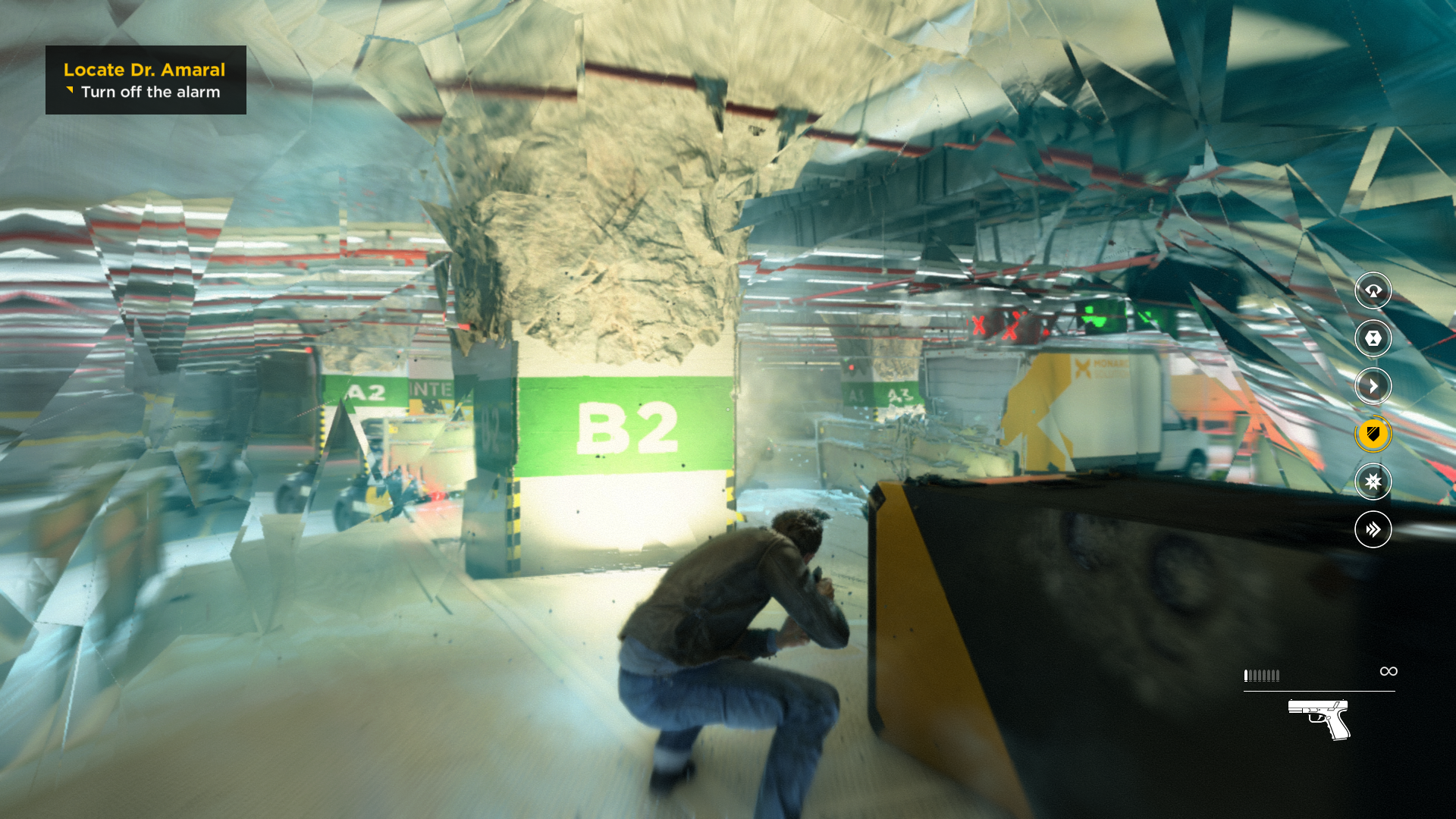
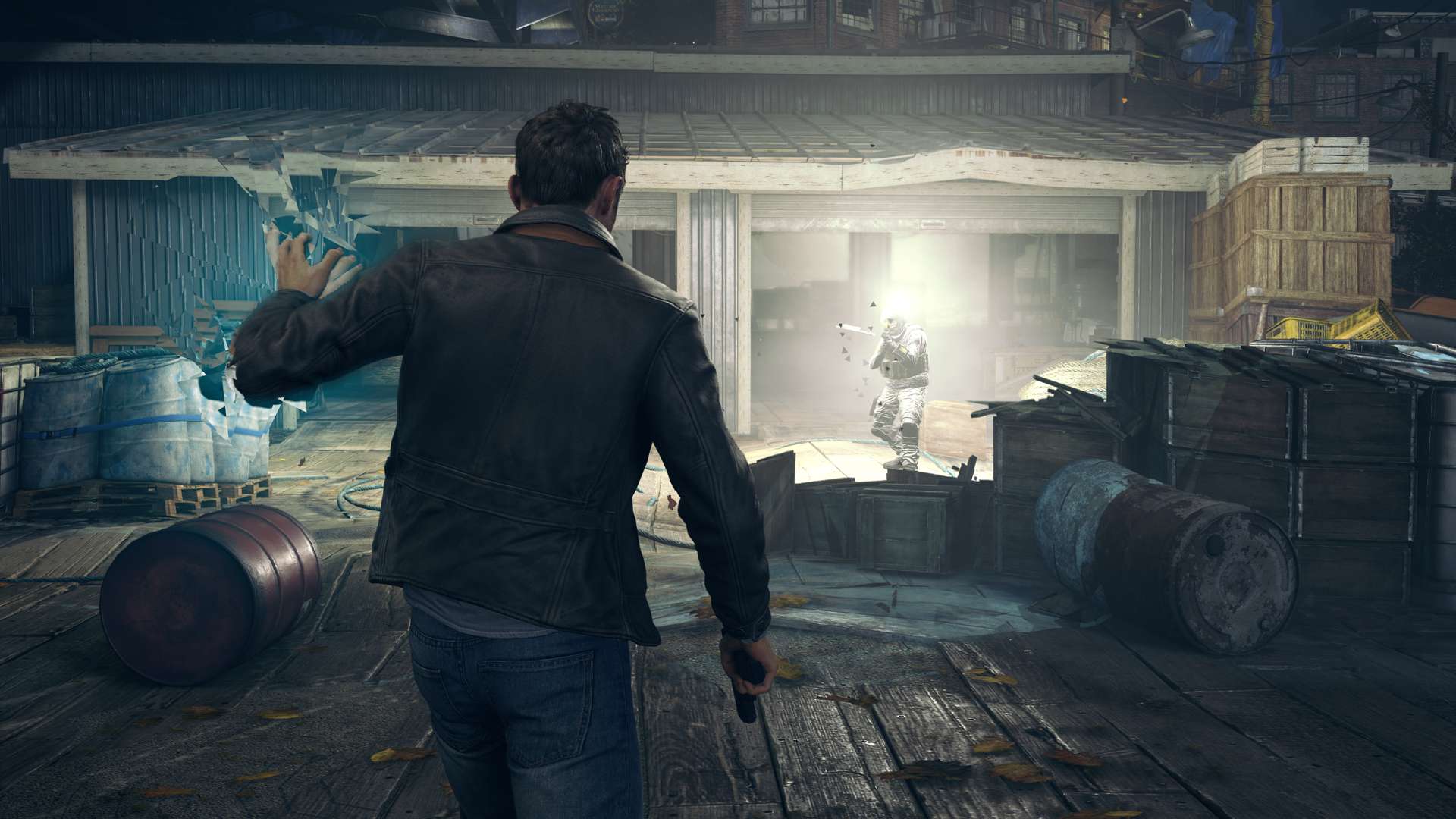
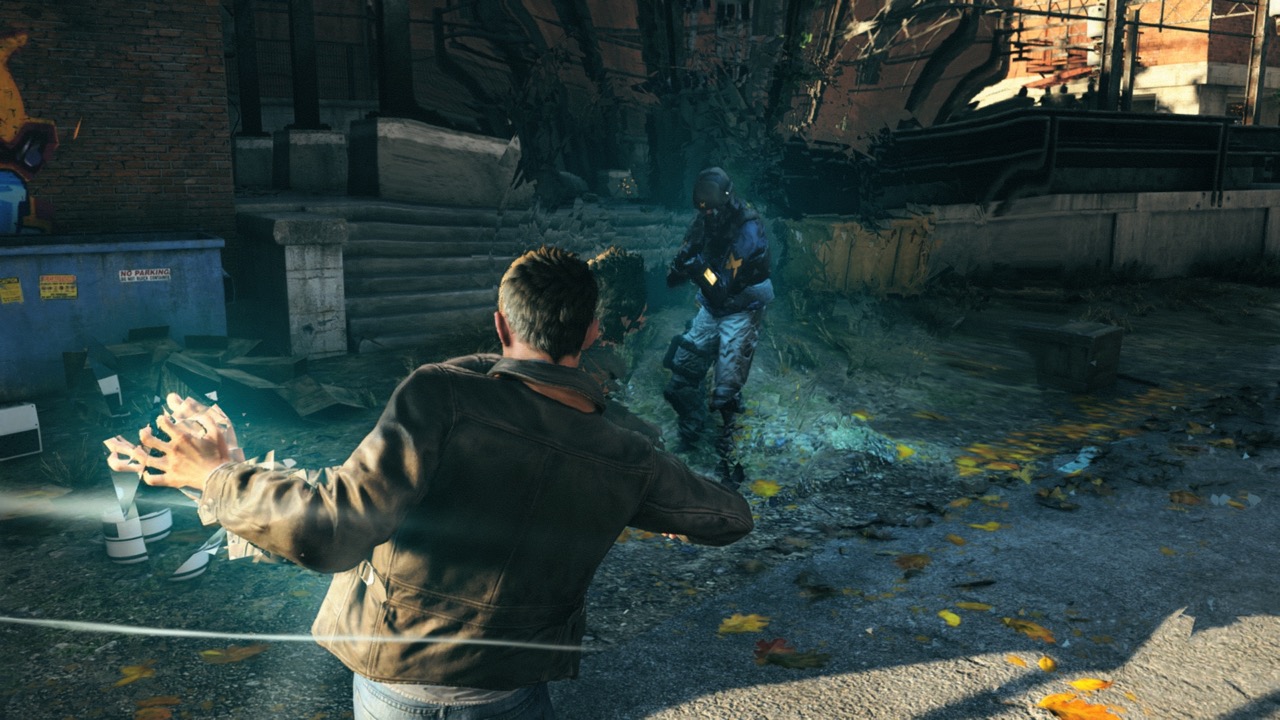
The gameplay itself has time-stopping and bending abilities with Jack Time. Rushing enemies to fly by them, using time blasts for AOE effects, shields, and various other abilities. You will use them all throughout the game, but it feels forced. The guns feel fun to shoot, but they’re all so generic and boring. The same four enemies repeat, and to make you use your powers, they throw in enemies that are immune to your powers and ones that you need to use your powers to get past their armor. They don’t show up often, but when they do, it slows down the gameplay and makes it drag.
I did use different weapons for different situations, but I had no choice, as the game can be so difficult at times that you need to use these weapons or powers by default and not by choice. You can upgrade your powers to make them more useful, but they require hidden upgrade points, which are really hard to find (I only found 5 through my whole playthrough), so it defeats the purpose of having an upgrade system if the points to use it are hidden. The action and storytelling are also poorly paced, with entire chapters of just pressing buttons, walking around, and climbing things. Then you would get an hour of non-stop shooting. Then the final boss took me 3 hours to beat, as it’s so incredibly difficult and requires you to use all your powers beyond what the game will allow. You can only turn so fast, move so quickly, and shoot so much with time bombs going off behind you and enemies zipping around and shooting you. It’s overwhelming and clearly breaks the system in place.
I really wanted to love this game, but it’s entertaining at best and very forgettable. The game looks fantastic with amazing character models and animations, but the PC version suffers severe performance issues as it’s poorly optimized. The art style, however, is rather dull, with nothing but sterile gray hallways, generic buildings, and nothing that really stands out. Outside of the Nissan and Microsoft product placements and the yellow accenting throughout the entire game.
Remedy really could have done more here, but most people will find it either too boring or too hard to care about. It’s an entertaining weekend playthrough, but nothing more.
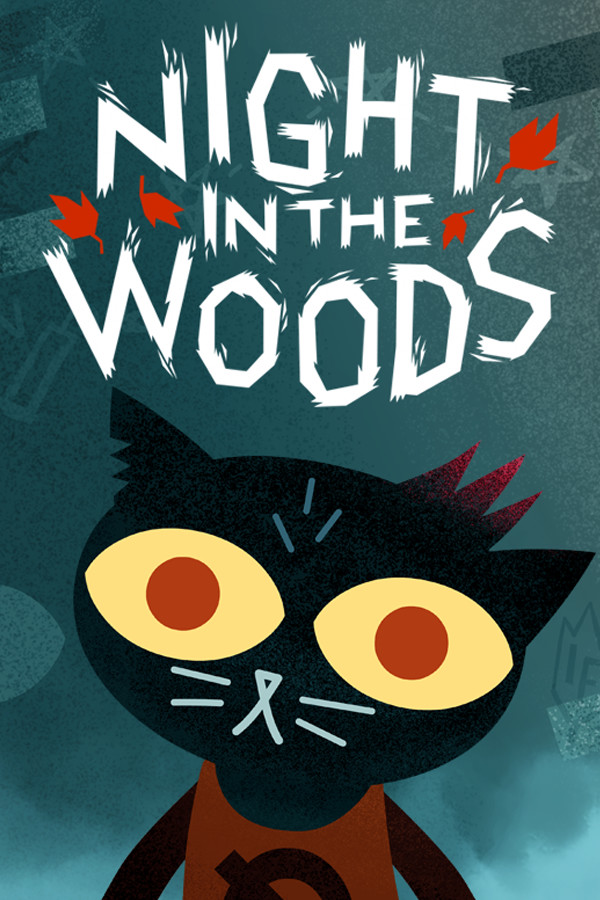
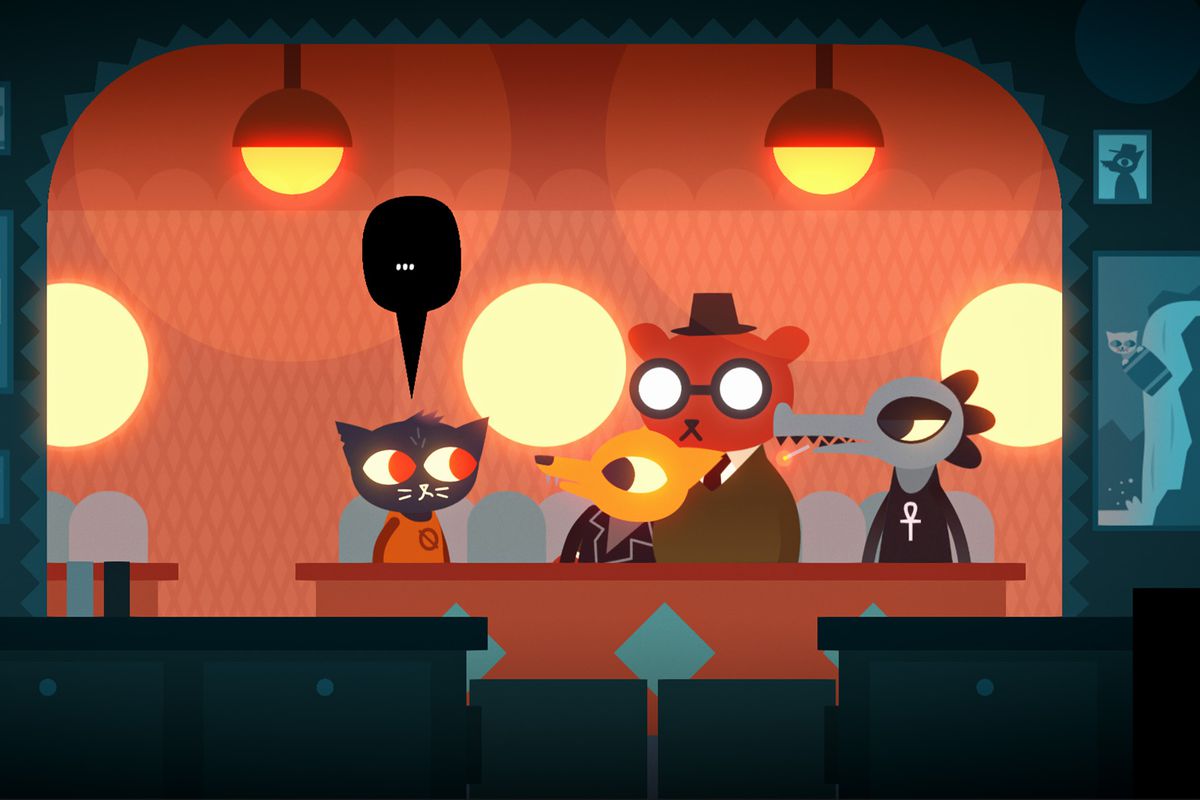
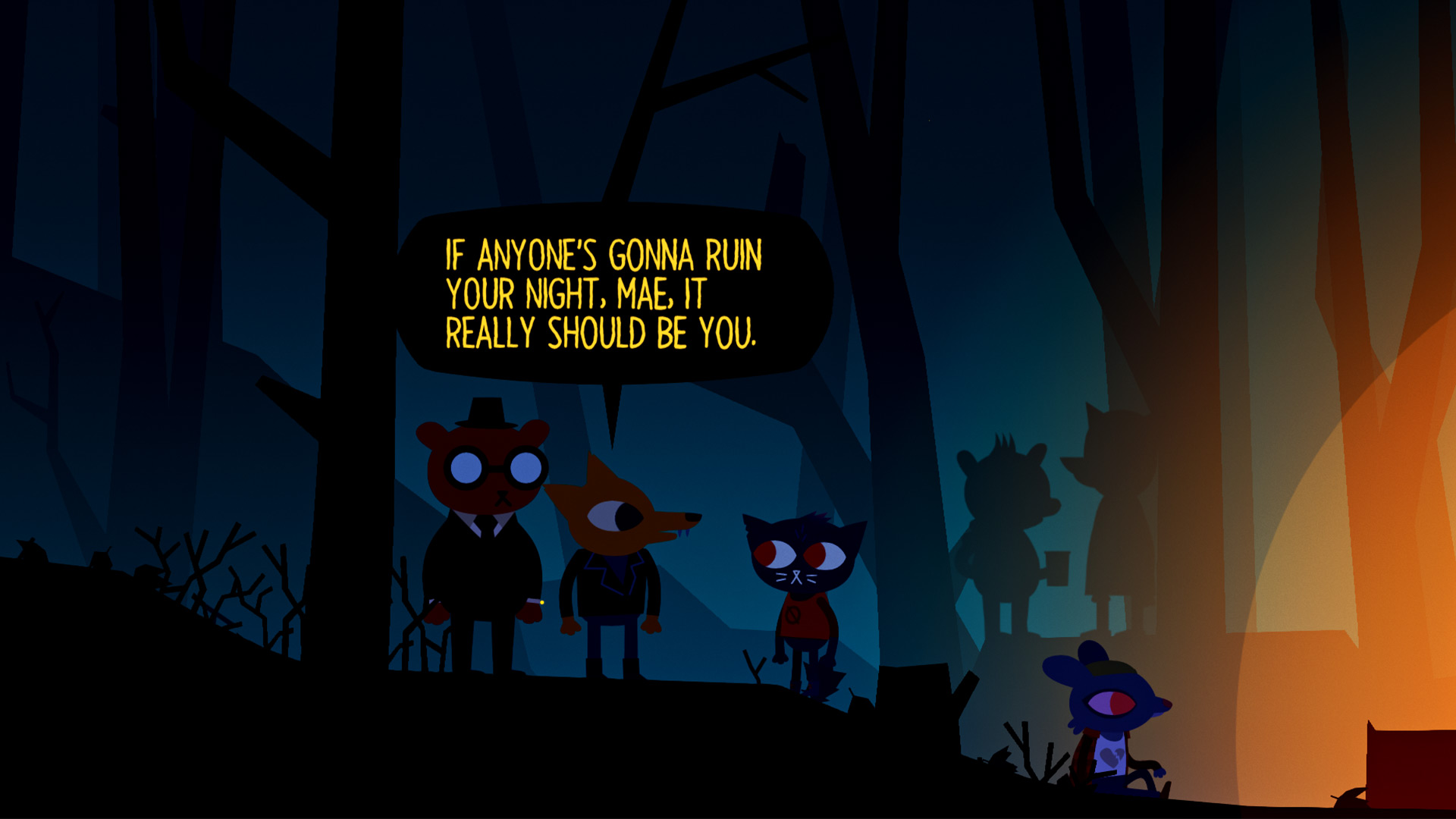
I love adventure games as they tell incredible stories with such detail that most other games can’t put out. They put action and gameplay on the back burner to bring the story upfront and into your face. They are typically slow-paced and keep you hooked with interesting characters, settings, and atmosphere. Night in the Woods is about a cat named Mae who drops out of college and comes back to her hole-in-the-wall town to hang with friends and discover a mystery plaguing her town.
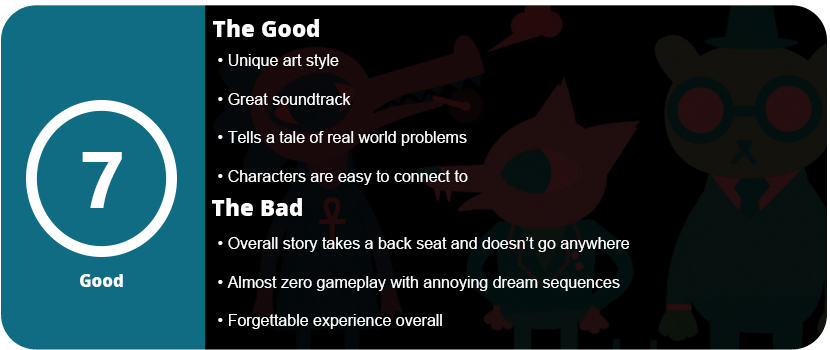
The game starts out fine with several scenes of character introductions and plot setting. Mae meets up with her four friends, and each day goes by with several activities such as talking to people, attending band practice (complete with a rhythm mini-game), and checking your laptop. This is fine and all, but this dragged on for way too long. Several days went by, and almost nothing happened outside of character development. The game talks about the real-life struggle of today’s younger generation (Millenials) and the day-to-day lives of lower-middle-class Americans. The game is set in a cartoony paper cut-out style but set in real-world problems that are very unique and interesting. I really connected with the characters, and their problems were genuine and real, but I wasn’t sure if I was playing a game sometimes.
Each night you go to sleep (after several days go by), you are presented with the only real gameplay here, which is annoying platforming on confusing “maps” to find four band members to complete the dream sequence. You go through five of these maps, and they are boring, a chore to navigate, and feel like forced gameplay. Outside of these sequences, there’s nothing but text and story. I really think this should have been a visual novel or just an animated cartoon rather than a game.
The actual relevancy of the title only comes into play during the last half-hour of the game, and it’s forgettable and almost feels forced compared to the day-to-day struggles of the characters, which are more interesting. I like how the game is written and the characters it portrays, but if you’re going to make this a game, actually give me a game to play. I started getting bored towards the end and just wanted the entire game to end.
That’s not to say I didn’t enjoy this game, but the praise it is given is a little ridiculous. It doesn’t do anything special in its own genre, and as a game itself, it’s barely that. I can only recommend this game to hardcore adventure game or visual novel fans who are okay going through hours of text and dialog with almost zero gameplay. It’s a great time killer and a fun way to burn away a lazy weekend afternoon, but nothing more than that, and there is no memorable story to care about from this.
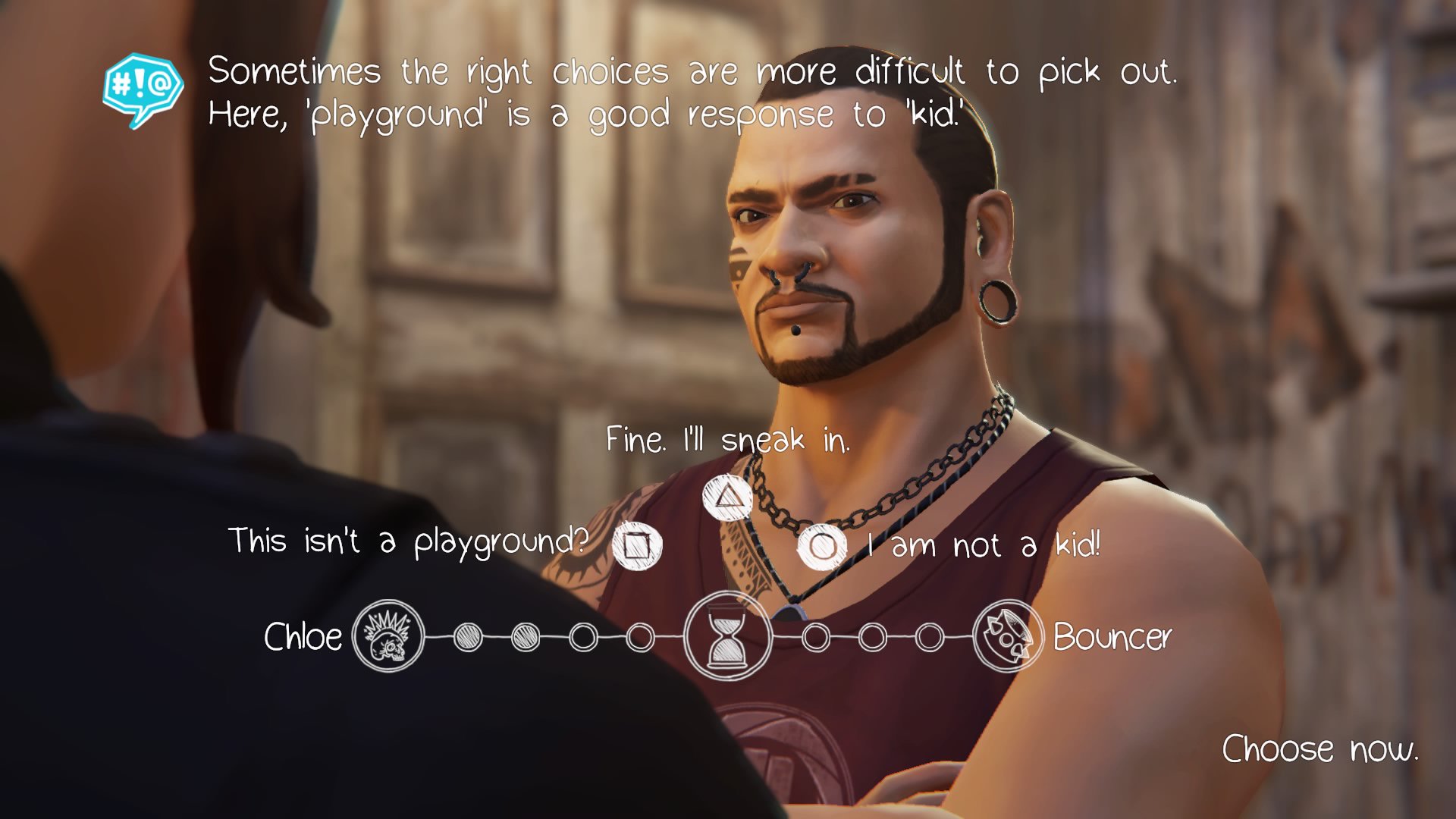
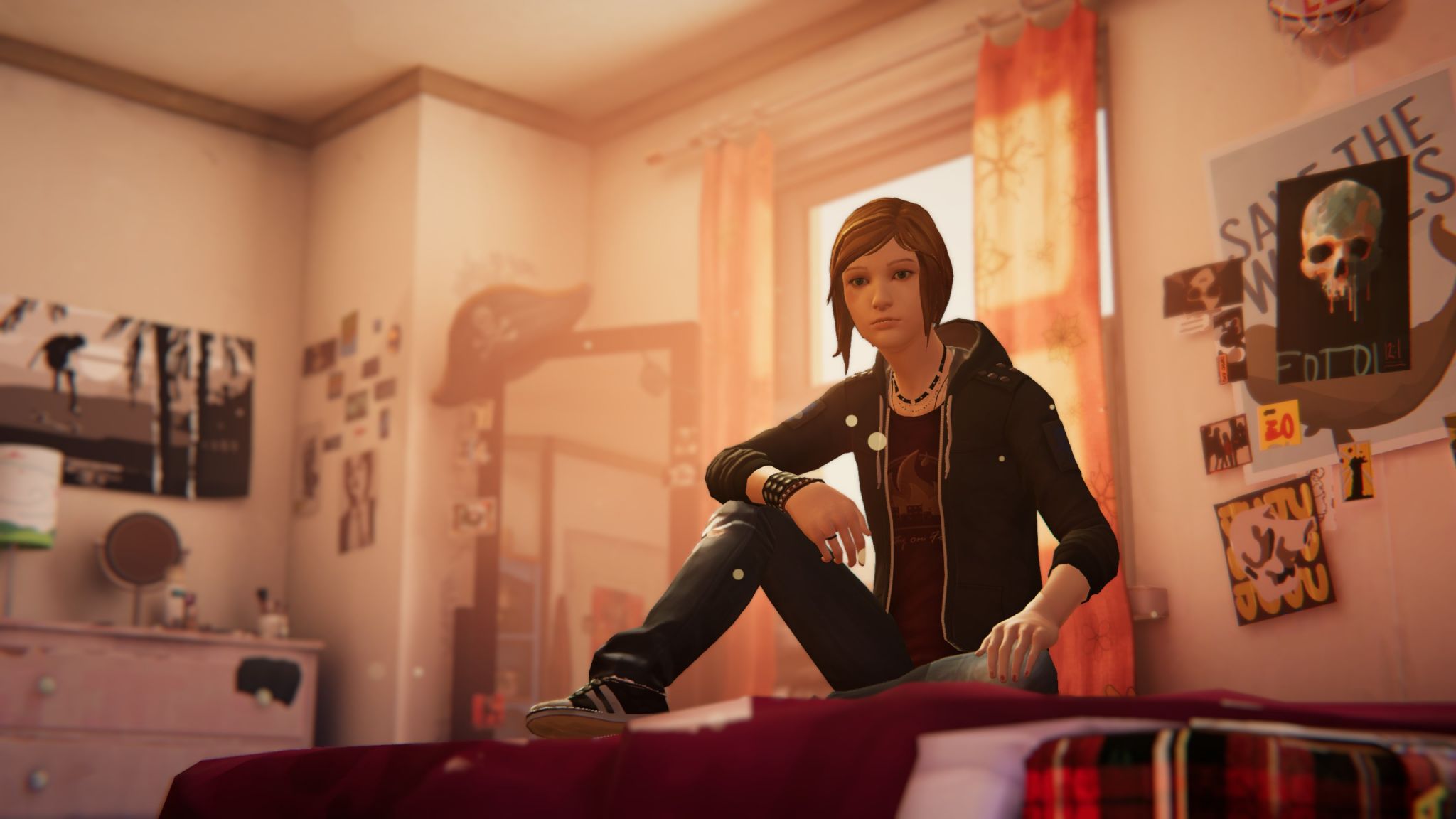
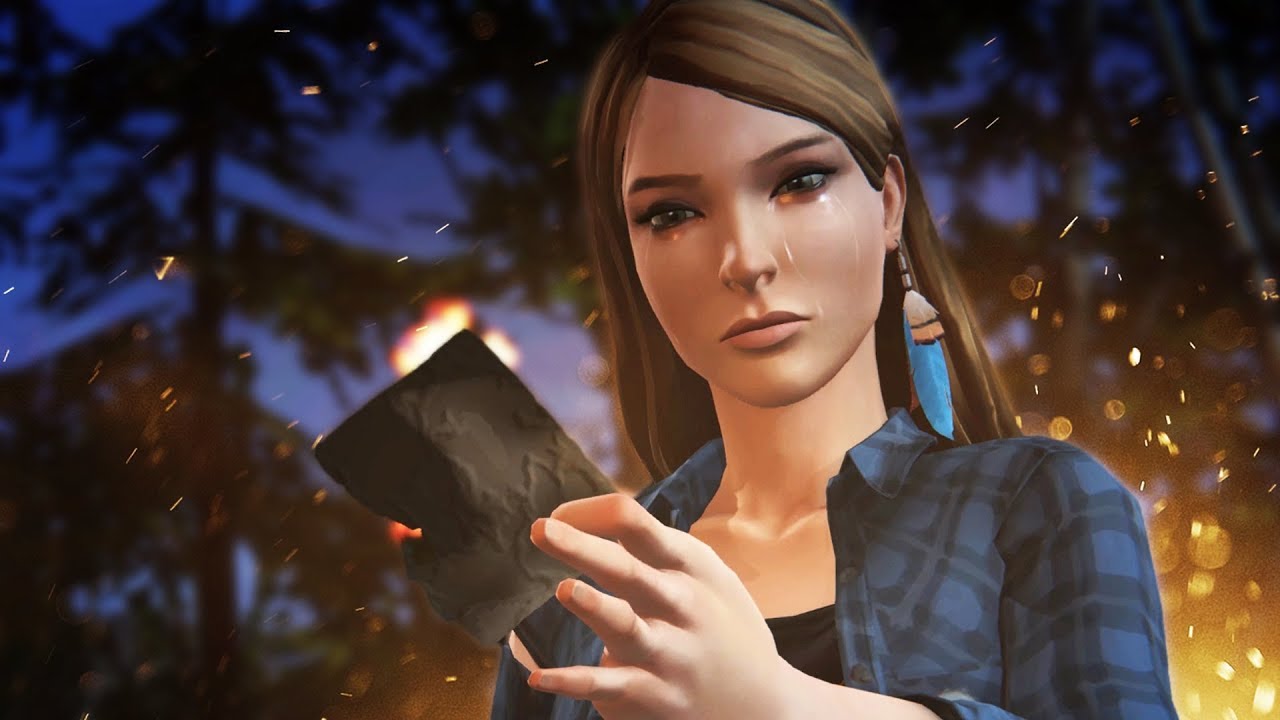
Life is Strange is one of my favorite games of all time and one of my top adventure games. The atmosphere, music, characters, writing, and story all made me feel nostalgic to be a rebellious teenager again, and it seriously sparked my imagination long after I finished playing it. Before the Storm pulls us back to Arcadia Bay as Chloe Price and helps us see who Chloe really was before the events of the first game.
We also get to see who Rachel Amber really was to Chloe, as this was a huge mystery in the first game that wasn’t fully explored. Rachel helped shape who Chloe was in the first game, and she had a huge impact on her life, albeit a short-lived one. We also get to see the formation of the people around Chloe in the first game, such as her parents and some schoolmates. Before the Storm still captures that teenage nostalgia of being free and not having to worry about the stresses of adult life such as bills, cars, a job, and food. All we had to worry about was our feelings and friendships, which are probably the most cherished parts of our lives.
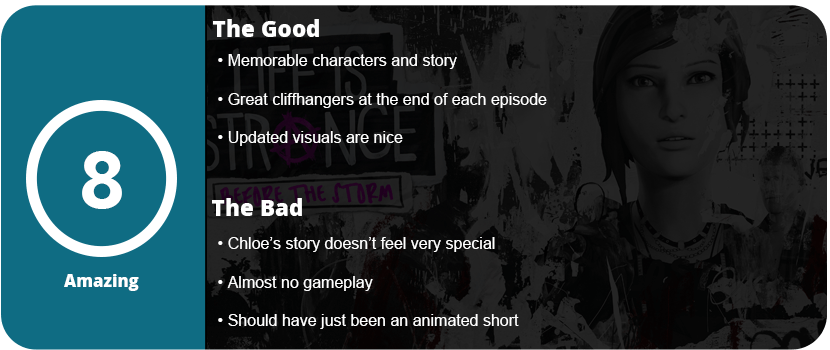
What the game fails to capture, however, is the great pace and actual gameplay of the first game. Before the Storm is very slow to start and to pick up and was almost boring for the first hour, and without the gameplay quirks of the first game, all you have is an adventure game with very few decisions to make. Most of BtS is just watching events unfold and clicking on objects. So gameplay takes a backseat, and the story kind of did too. The characters are still as strong as ever, but there’s just not much to build here, as Chloe’s life before the first game was fairly generic and not much different from most teens’ troubles.
Each episode did tend to leave a cliffhanger somehow, and I wanted to know what was going to happen next, but there was a lot of filler content, and most of the actual events that involve the first game are far and few between. If you never played the first game, this would actually be quite a boring and generic adventure game with no meaning. I could have easily settled on this game being just a one-hour animated movie to fill us in on Chloe’s earlier years.
At least the visuals were slightly upgraded with some better lighting, but overall, it’s a seriously dated game that all adventure games have seemingly been doing. I can only recommend this game to anyone who finished the first game, but don’t expect a tear-jerking and emotional roller coaster like it provided. You’ll sit through a few heartfelt moments and some laughs, and that’s about it.
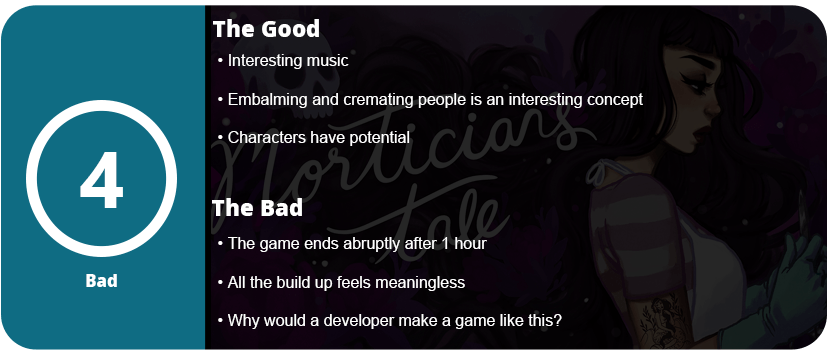
I understand everyone wants to praise indie games. I get it; I really do. It’s a middle finger to the corporate world, and developers can explore interesting new ideas without the weight of a watchful eye. A Mortician’s Tale kind of explores this exact idea, but with a funeral home.
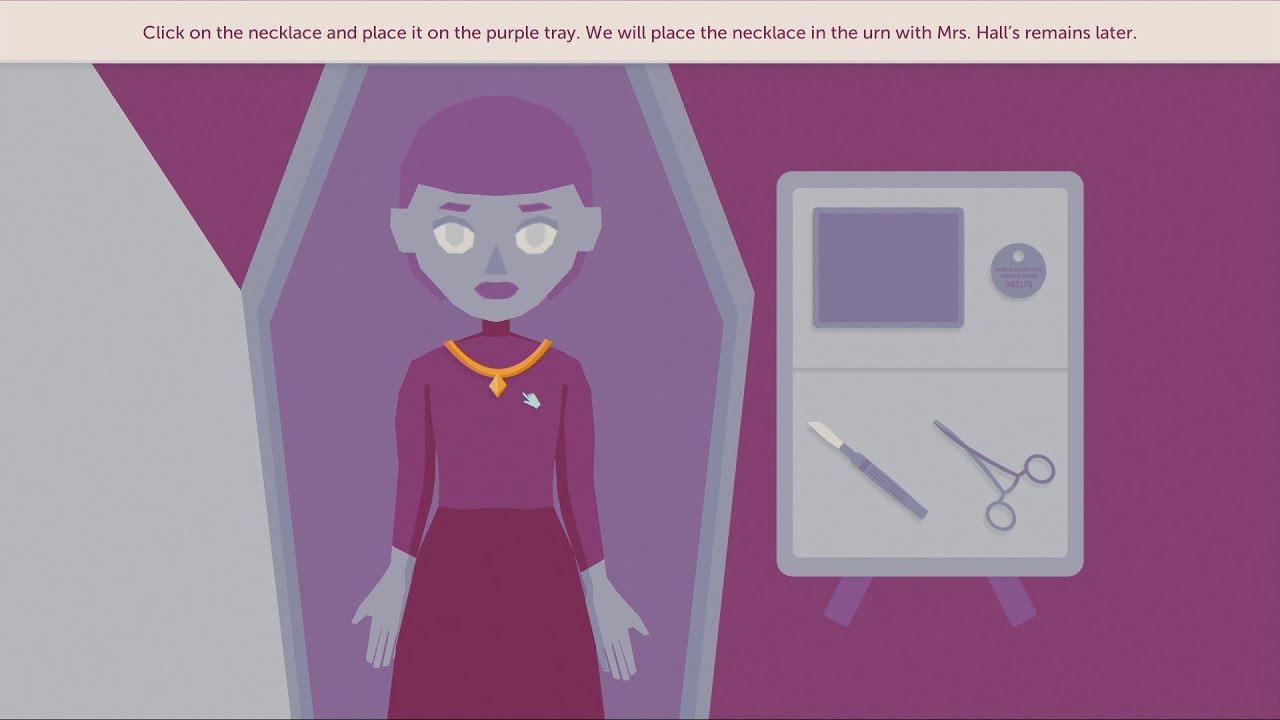
The game starts out well and gives me an idea of how the game will progress. A mortician named Rose gets a new job right out of medical school at a family-owned funeral home. You slowly perform different ways to prepare bodies, from embalming to cremating. It’s a cool concept, and things started getting weird when the game walked me through every single body’s preparation. I thought I was in for a long game, as I thought it would take a while to see everything the game had, thus the extended tutorial times.
The story is told through emails on your computer between employees and Rose’s school friend. The sad, morbid music painted an atmosphere I was starting to get into, and the emails told me that something was going to happen. Of course, the tides turned when a corporation bought the funeral home, and I was thinking this was when things would start picking up, but they didn’t. Then the game ended. Yeah, just like that.
I really admire indie games and the unique little adventures and stories they tell. Some are the most memorable I have, such as Soma, Observer, and even Journey, but this isn’t how you do it. Don’t drag the player through tutorials; build an entire game system; create characters and an atmosphere; and end the game when most would start picking up. I hate this so much, and I refuse to give these developers any credit for what they did. They literally skipped to the end of the story, and everything leading up to it had no meaning. I also understand short games; I’ve played games this short and felt very satisfied with their ending. This tale is not worth a second of your time.
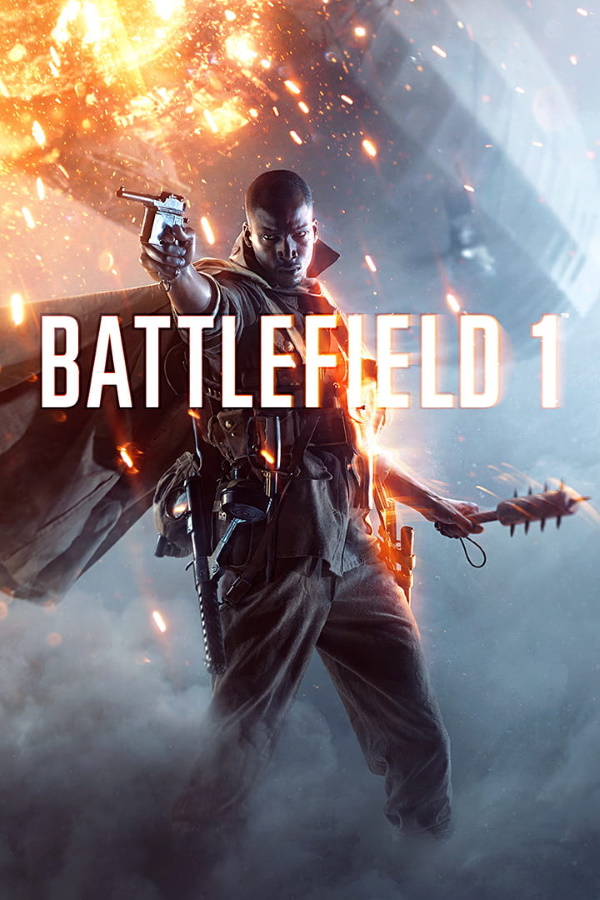
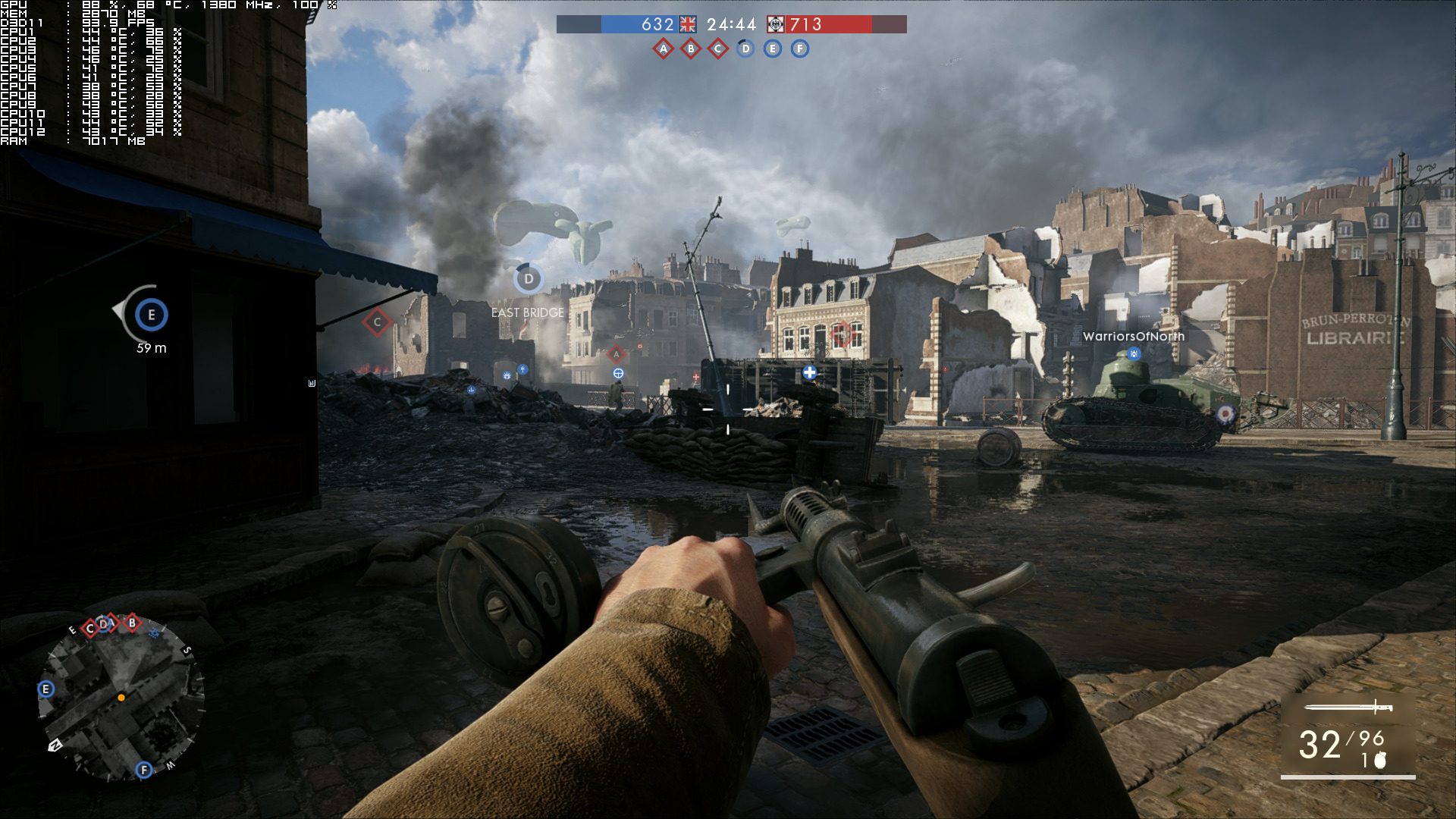
First-person military shooters have received more controversy than any other genre in gaming history. Going from WWII games every few months to modern military shooters and then to futuristic, gamers just can never be happy. DICE decided to change things up for the first time in a decade and release a historical military shooter that other franchises are now coat-tailing.
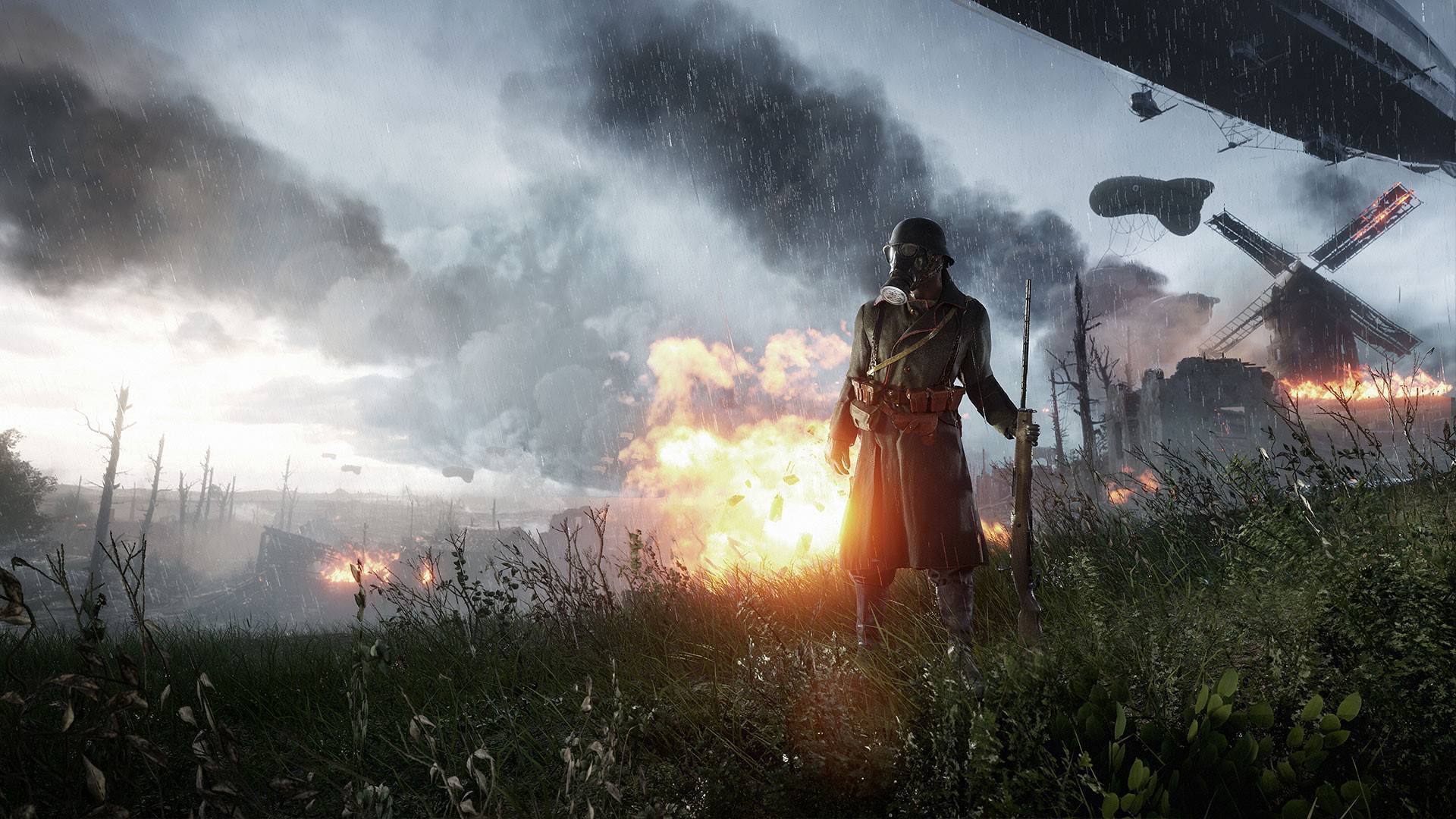
BF1 is also the first AAA World War I shooter to date, and it was a nice change of pace. There is a lot of history behind WWI that never gets talked about, and DICE could have easily just made another WWII shooter. The weapons, historical figures, battles, and politics behind WWI were brutal and fascinating at the same time. WWI was a kind of limbo between modern technology and the warfare of old; it was an interesting time for sure.
BF1 doesn’t follow the traditional sense of telling a tale of a fictional squad and one hero trying to get through the theaters of war. We get to see different mini-stories with quite interesting characters throughout the entire war. These mini-stories are anywhere from 5 to 3 levels long, and they allow us to get a taste of everything rather than bore us to death with a 6-hour campaign of the same thing over and over again. There are five mini-campaigns, to be specific, and they all play differently. One has you running a tank down French frontlines, while another has you gunning enemies down in a jungle, and then you’re in Italy as a heavily armored soldier mowing down opposing soldiers on a mountaintop. Then you get to follow Lawrence of Arabia and a small part of his story in Constantinople. It keeps things interesting, and I felt like I was able to experience all the weapons and various ways to play the game. BF1 actually incorporates a lot of stealth, which is unheard of in this type of game, and it’s completely optional.
Once you’re done with the campaign, BF1 truly shines in multiplayer. Battlefield 3 was already my favorite multiplayer game of the series, and BF1 picks up the baton and carries it with pride. The multiplayer mode has a personality all on its own. Thanks to the many modes, there’s so much fun to be had in multiplayer, and to prove this, it’s one of the few shooters I still play online months after release. You have a few typical modes like Deathmatch and Team Deathmatch, but it’s the Campaign mode that really pushes BF1 to the top of the list. The campaigns are loosely based on the maps of the single-player mode, and these are vast maps that have several objectives that each team needs to complete. Depending on skills, the Allied team will push through and complete them, sweeping across the entire map of 100 players. The Axis players need to keep them back using planes, tanks, motorcycles, and any weapon they can pick up. The tug-of-war aspect is so addictive and allows for a lot of strategies and the feeling of being a small part of a big war.
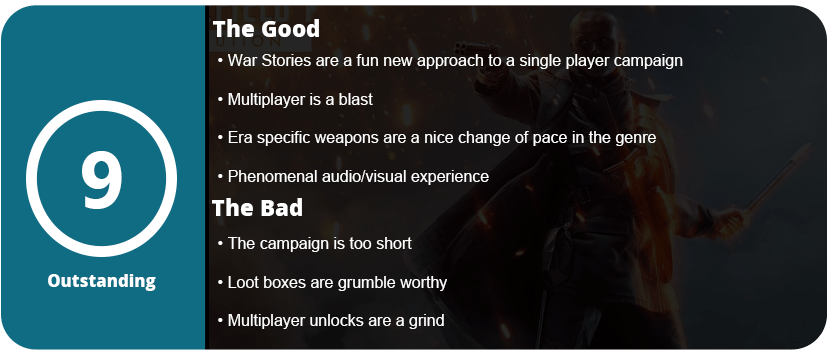
Multiplayer is just so amazing, and with all the expansions, there’s nearly endless fun. However, the weapons themselves make up half the multiplayer. The WWI-era weapons are predecessors to WWII and feel almost ancient, but not really. From the giant scopes on weapons to various melee weapons and rough-shooting machine guns, BF1 nails weapons down perfectly. These feel so good to shoot and are so satisfying to just try out and mix up. The various classes you can pick incorporate a good balance of weapons and abilities. From medics being able to revive teammates and using single-shot rifles to heavy-mowing down enemies with highly inaccurate machine guns, it’s just a blast to experience. The only letdown is grinding to unlock new skins, and weapons take forever. You earn rare cash for unlocking items, and I highly suggest only spending these on weapons. There are loot boxes you can earn to unlock stuff for free, but it’s a grind, for sure.
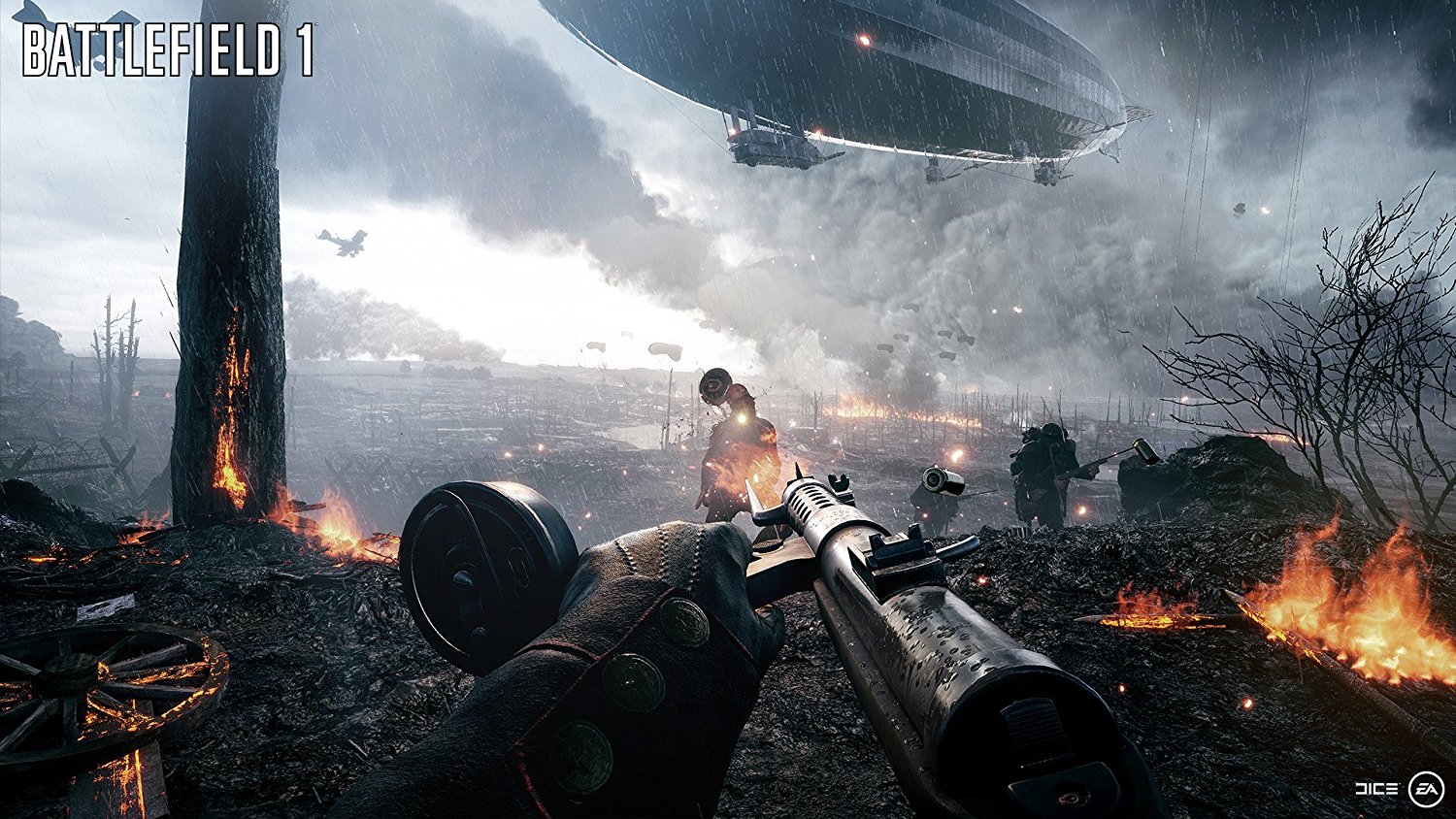
Lastly, the visuals are absolutely stunning. Some of the best ever seen in a shooter, and the game actually takes on its own art style rather than looking like a bleak, dry historical shooter. There are lens flares, darkly contrasted visuals, and the various lighting effects are stunning. The audio experience is just as powerful as Battlefield has always excelled in that department time and time again.
Overall, Battlefield 1 is a fantastic historical shooter and one of the best to come out in over a decade. The campaign is refreshing and fun, and the multiplayer will keep you busy for months after beating the campaign. I just wish the campaign was longer, as I wanted more unique stories to play through, and that feeling is always a good sign. Hopefully, Battlefield 2 (?) will expand upon all of this and maybe even jump-start wars.
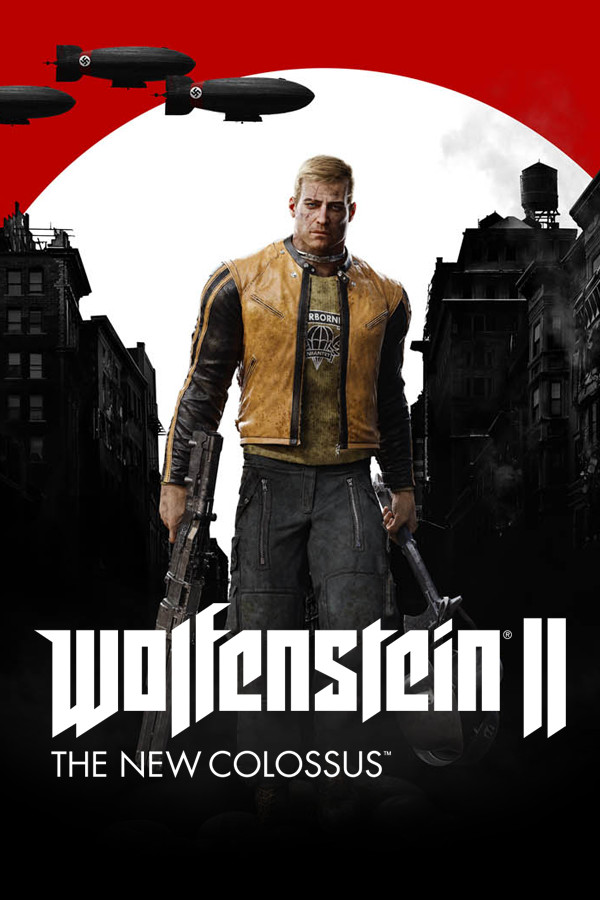
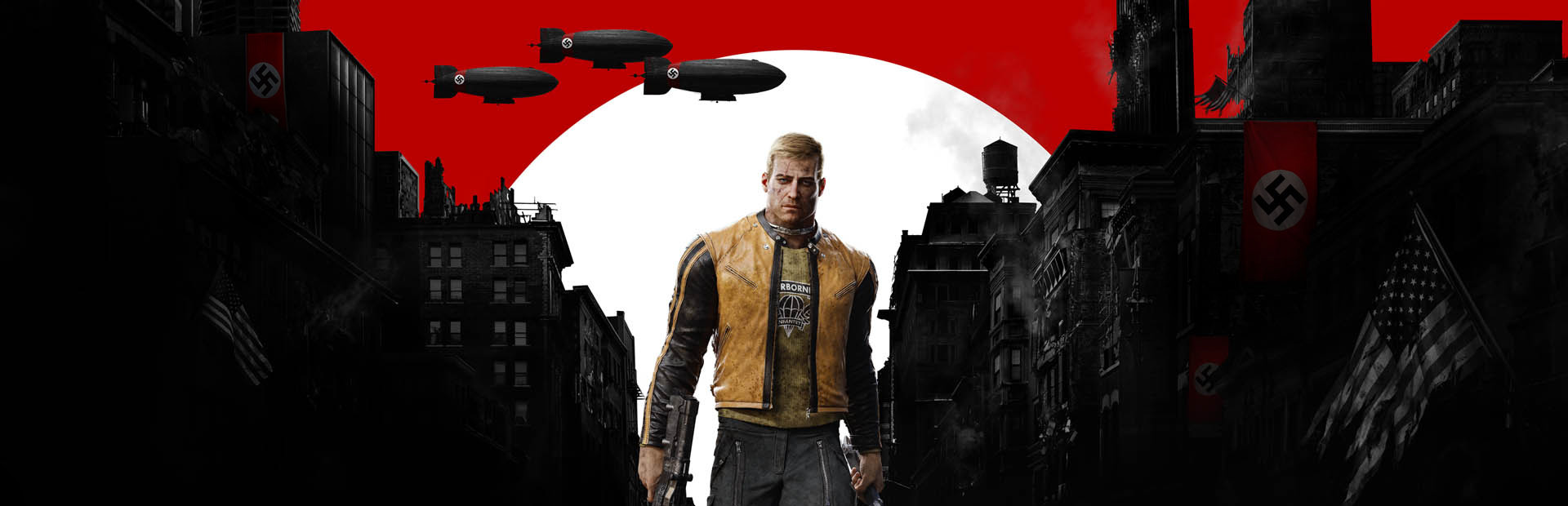
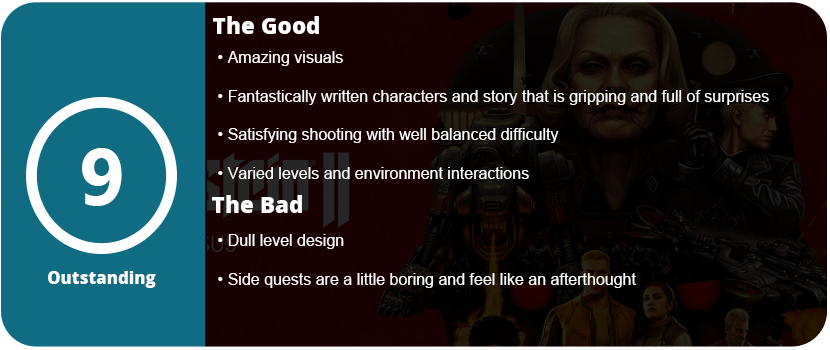
Good campaigns are kind of rare in FPS games these days, but 2016 brought back a ton of great FPS campaigns, and it was glorious. Wolfenstein II is another game that focuses more on its story and characters than its multiplayer, which is always a welcome change.
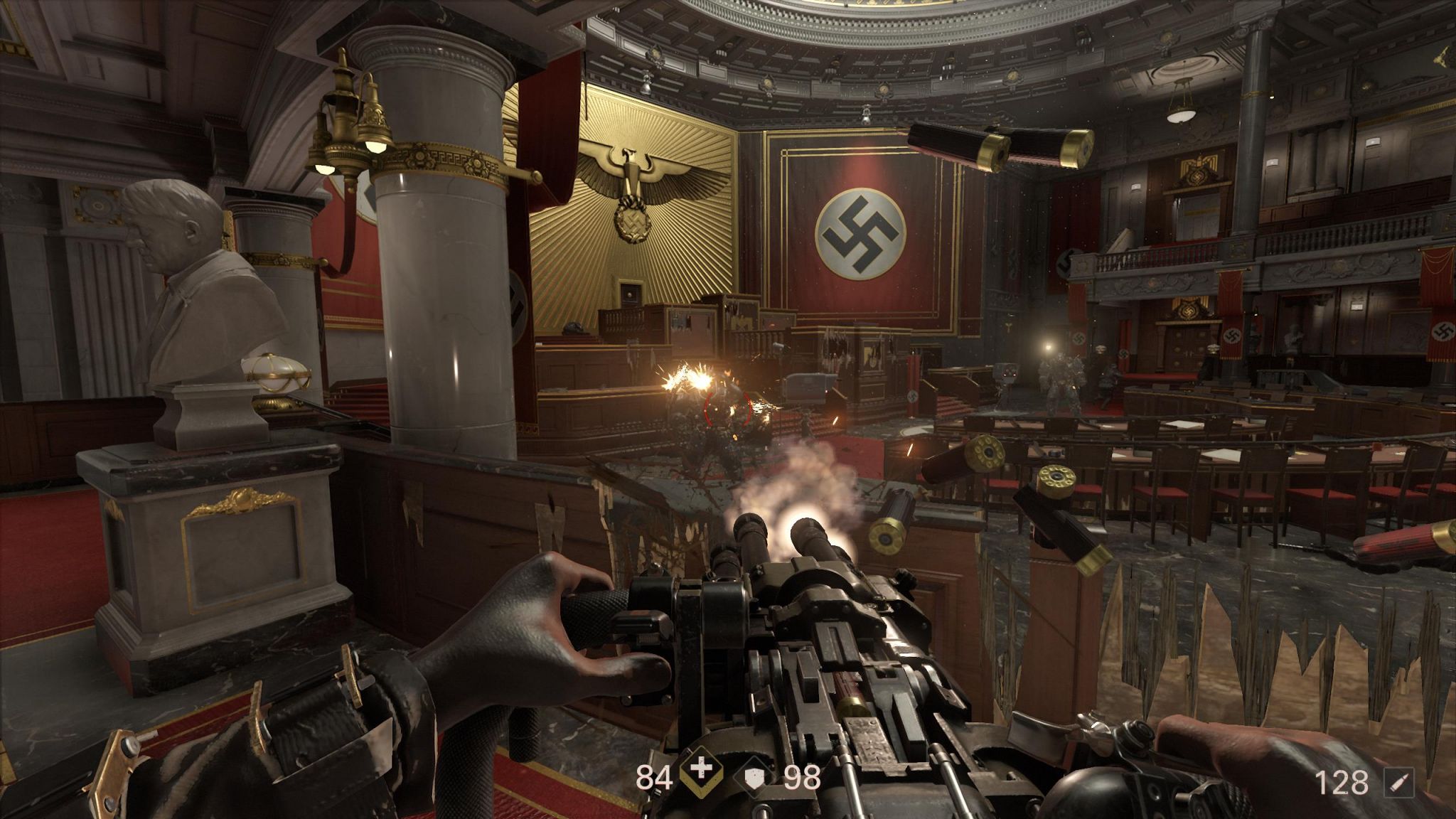
You play BJ Blazcowicz as the story picks up right after The New Order. It’s 1961 in America, in which Hitler and his Nazi regime have dug their roots deeper into the world. BJ and his cohorts from the last game are trying to start a revolution and gather the last remaining scraps they can muster. It might sound like another typical FPS, but this game has heart, soul, and character. Every character is memorable, loveable, and downright awesome to experience. The entire cast just works so well together, including the villains. The Nazi villains are ruthless, deadly, and just despicable, and it takes good writing to feel that way about a character.
The story kept me going through the whole game, as there were plot twists and sudden shock moments that had my blood boiling. One moment, I thought everything was over, only to have the story take a turn for the worse or better. It’s so well written and something you will talk about for a while. Outside of the story, the awesome shooting action is back and slightly improved and streamlined. One important thing to mention is that the boss fights are gone, but this is kind of a blessing as they were mediocre in the last game.
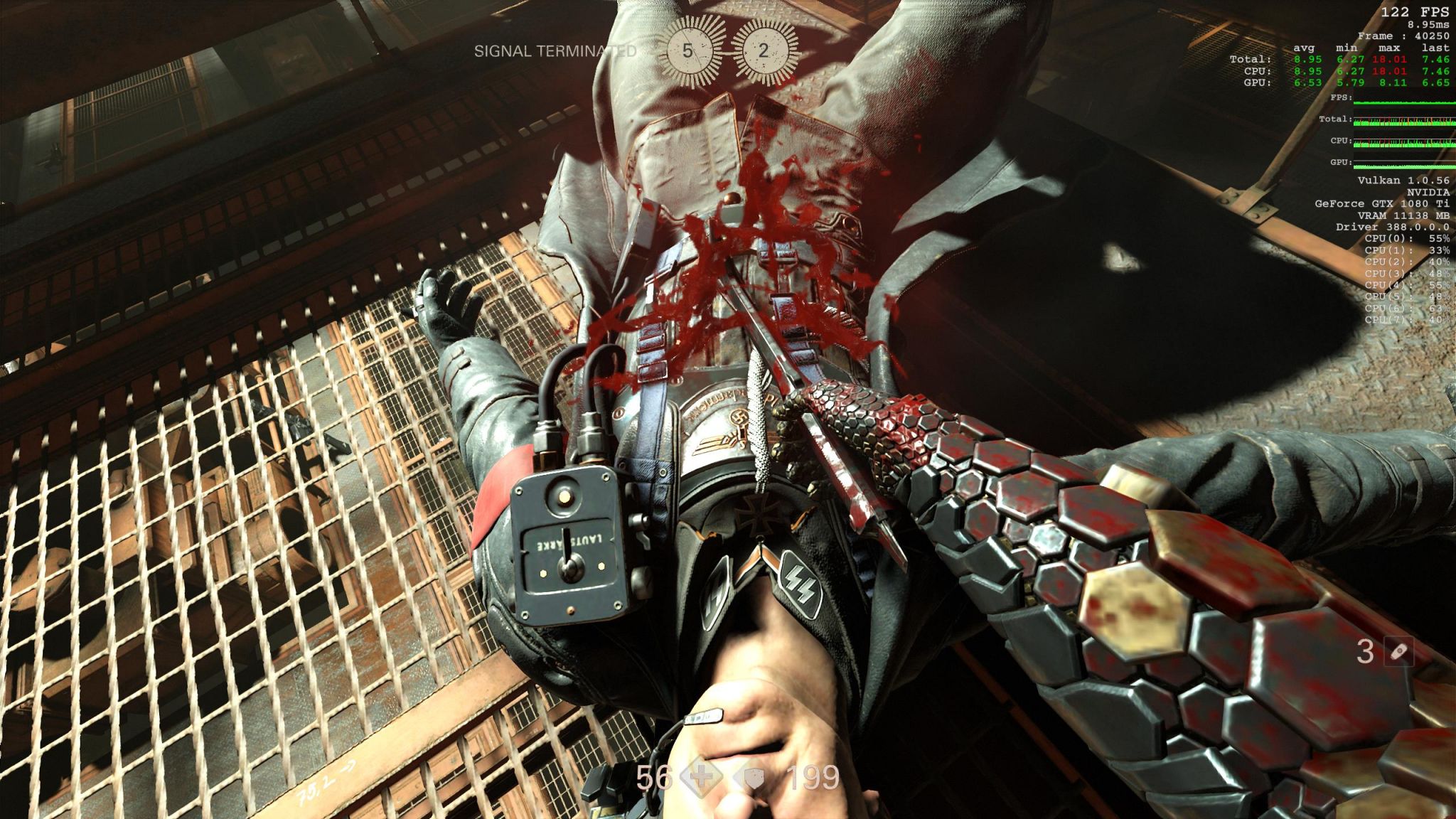
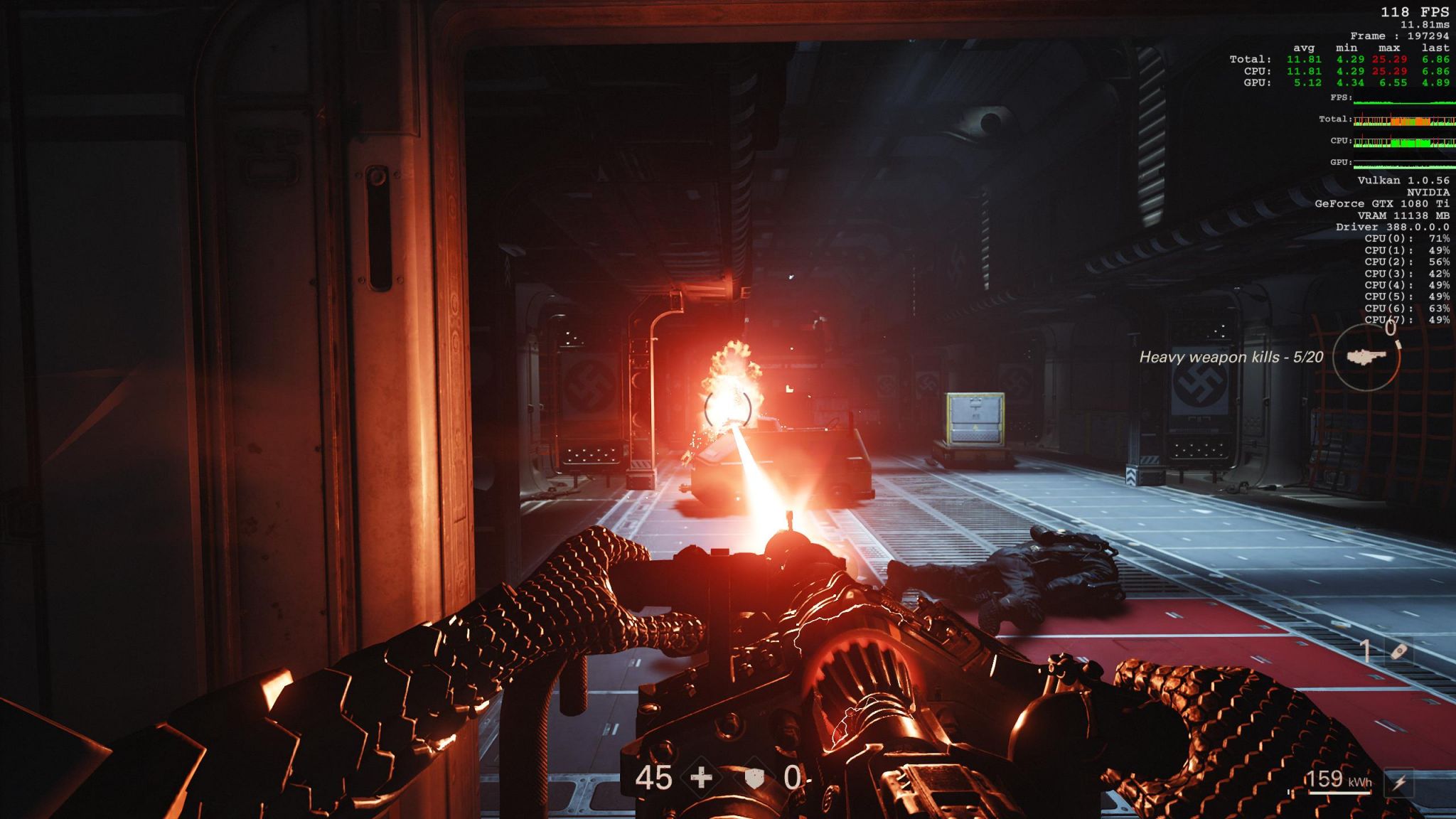
There’s a weapon upgrade system, collectibles, and new contraptions (that you acquire halfway through the story) to change things up. Each weapon gets three different upgrades, and they are all extremely useful. From less recoil to suppressors, some even alter the ammo and dynamics of the weapon as a whole. The arsenal is broad and strong, from energy weapons to grenade launchers, three-round auto-shotguns, and assault rifles. Every type of weapon is covered, and they all feel great and unique. You will constantly switch up weapons for different enemies. Enemies are well thought out this time around and are evenly balanced with health. I felt like the difficulty didn’t jump around so much like the last game; the entire game was challenging, with a hard section towards the end of each level.
The gameplay also changes with each level as you enter different environments. On some levels, you’re underwater a lot; on others, you’re wearing environment suits; and on some, you’re weaponless. The entire campaign is mixed up and feels so smooth and well organized that I just couldn’t get enough. Each enemy takedown feels satisfying, and I wanted to go out guns blazing, but stealth is easier to do in this game, so taking down commanders without sounding alarms was so awesome. Using takedown moves, ax throws, and silenced pistol shots was the way to go when you were heavily outnumbered. These areas in the last game were a chore to navigate, and the enemy placement made it nearly impossible to get through a whole section without being detected.
My biggest complaint would be the level design. While the ideas were great, I got lost often and didn’t know where to go. Hallways all looked the same, and there weren’t many landmarks to figure out where to go. The environments are beautifully created, but the layout is a bit dull. There’s at least plenty to do with the optional objectives on the hub base, Das Hammer, and some endgame content to work through.
The visuals are stunning, especially on PC, with all settings cranked up to the max. Great lighting, textures, and highly detailed models made this game come to life. I honestly can’t recommend Wolfenstein II enough; it’s one of the greatest FPS games made in the last decade.
Titanfall was a highly anticipated title for the Xbox One but disappointed everyone with an online-only component and no campaign. Titanfall 2 completely changed things around with a solid campaign, better gameplay, and improved multiplayer.
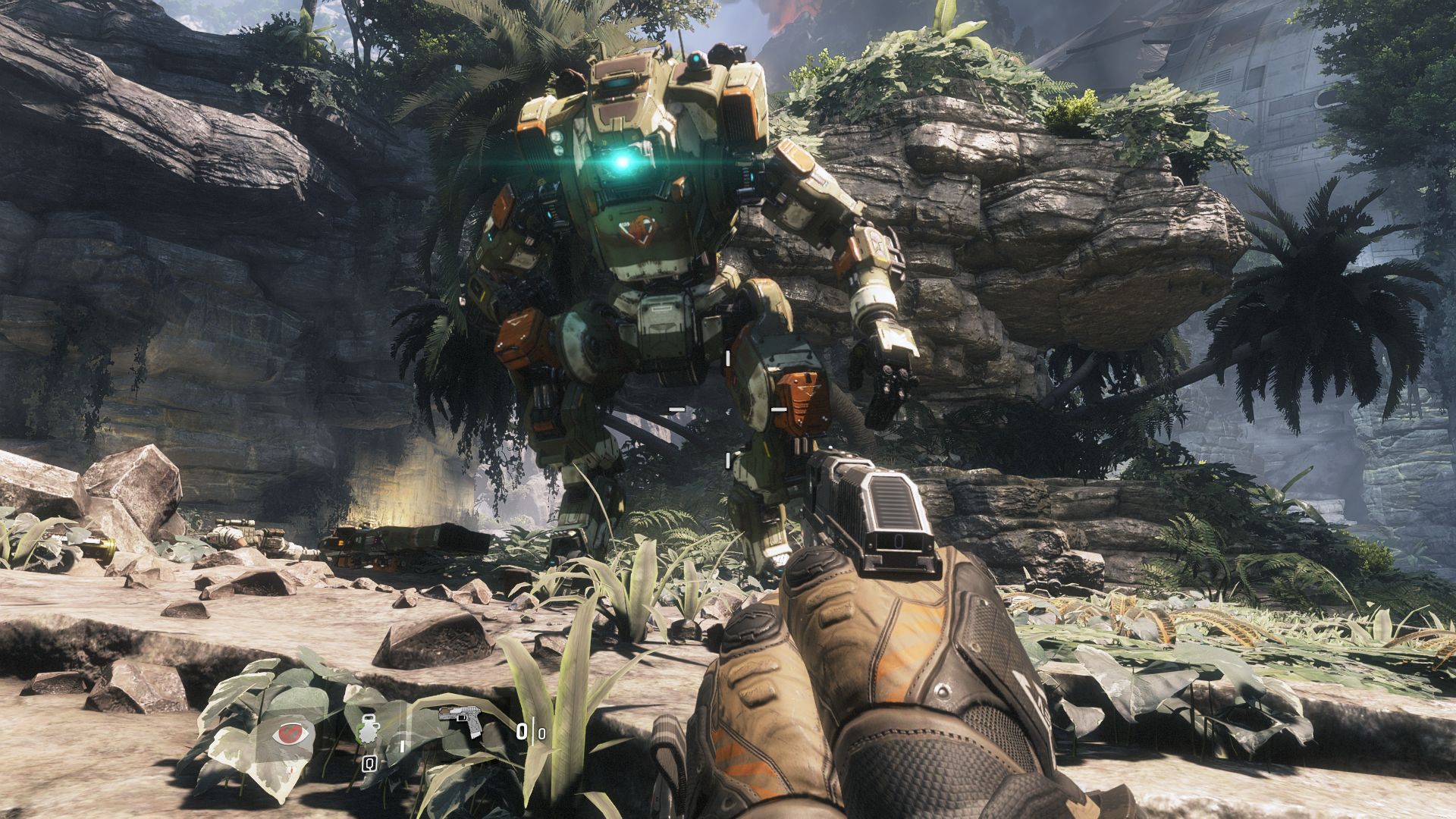
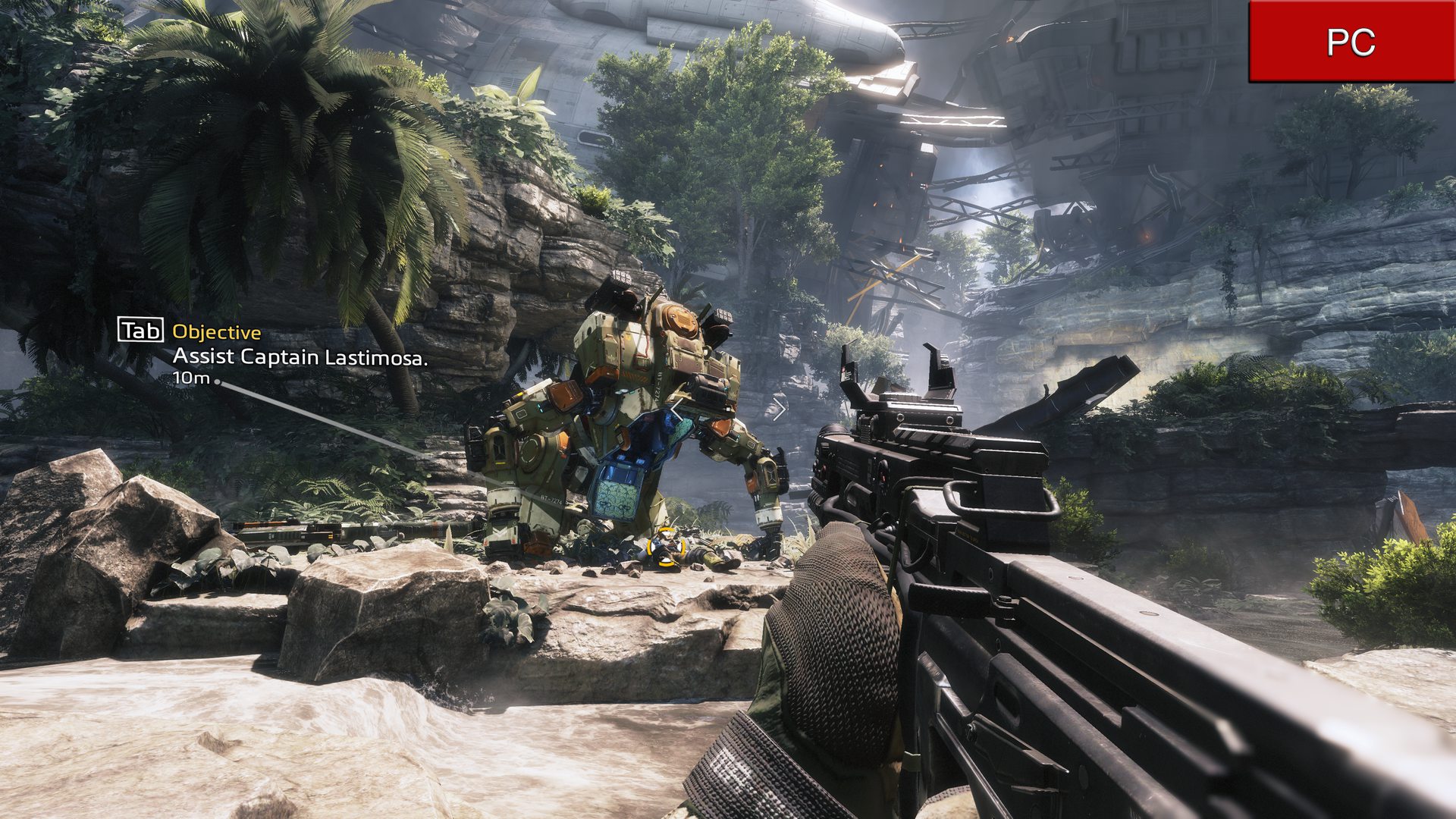
You play as Pilot Jack Cooper, who was part of a squad tasked with finding a super weapon called the Ark that a warring faction planned to use on a human-colonized planet called Typhon. You gain control of a Titan (you normally shouldn’t, as you’re just a rifleman) called BT, and you storm off to save the day. It sounds like a typical Call of Duty-style story, but it’s a bit more than that and actually has some heart and soul.
BT and Jack are a great pair as they banter back and forth with each other. Jack is sarcastic, and BT has a sterile robotic sense of humor. It kind of reminds me of Data from Star Trek: The Next Generation. The best part of the campaign is the level of design. Each level is completely different and incorporates the pilot’s abilities, such as jetpacking and wall running. One level is comprised entirely of a fabrication factory, and with walls and pieces still moving around, it gives Jack the ability to wall run and maneuver his way around the facility, unlike most other shooters. My favorite level was when Jack got ahold of a time-altering device and had to reconnoiter a facility for information on the Ark. At the press of a button, I could jump back in time to create new ways to get through the level, but this included enemies in that time period as well. It was an awesome wall running and switching back in time to latch onto a wall that was present then. Very cool stuff.
The shooting in Titanfall 2 is satisfying, with awesome weapons and various grenade types. The shooting was punchy, with heads popping and limbs flying off. The action was intense, and going from ground to the Titan kept things fresh, and the entire campaign felt solid and entertaining. The boss fights were fun, as each one was weaker against certain Titan loadouts, which required strategy, usually not seen in shooters today.
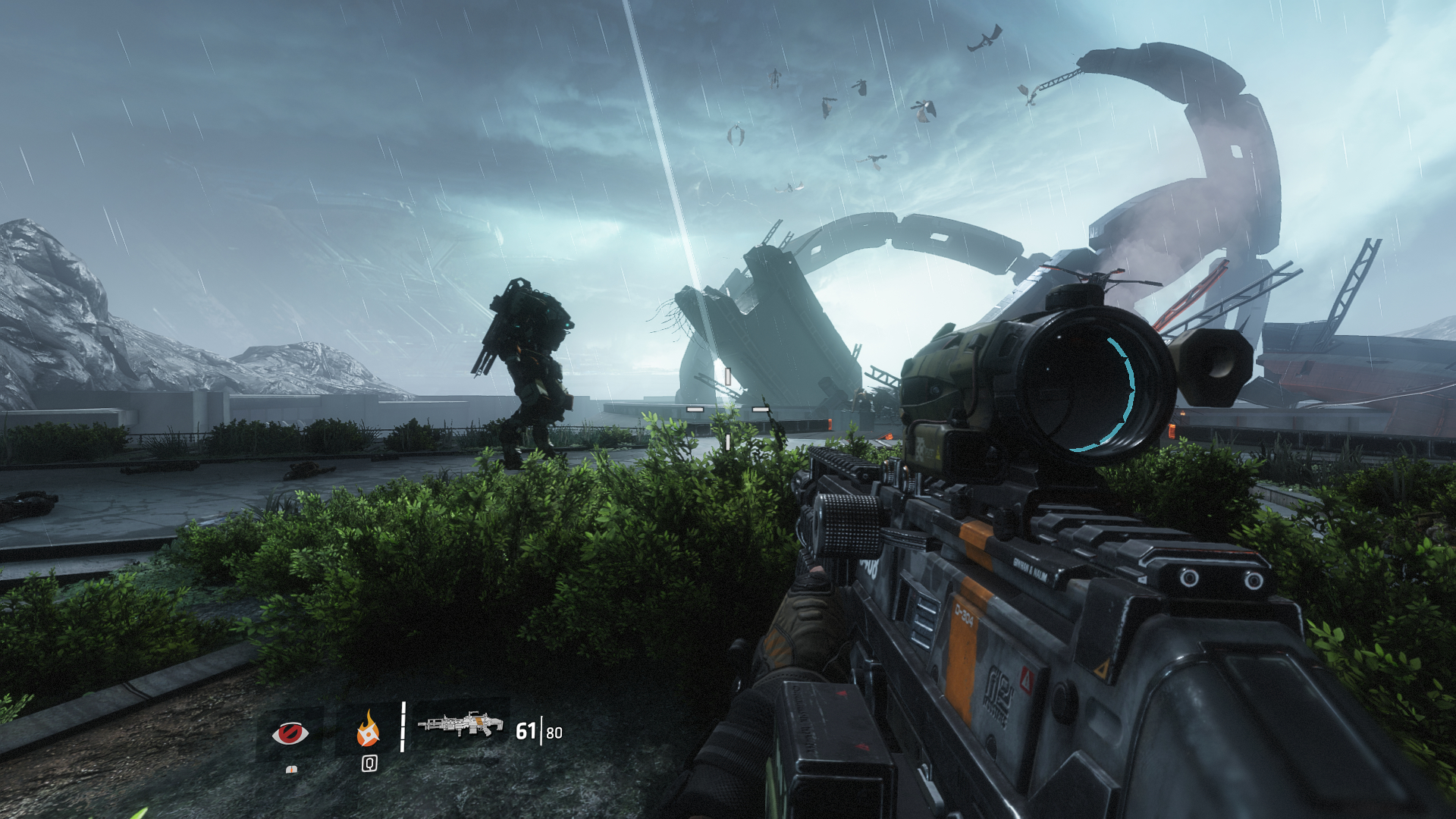
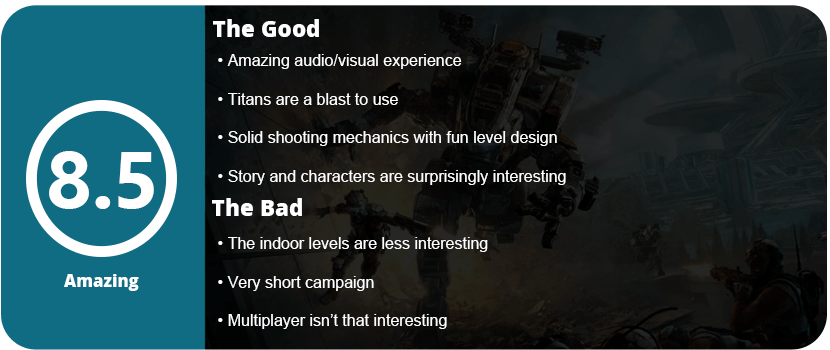
The visuals are stunning, with fantastic lighting effects and highly detailed textures. A lot of time was put into this game and some love as well. I only thought some of the indoor environments were dull with too much sterile steel and blank walls, but the outdoor environments were awesome. The sound design was packed with explosions, crunches, and various action-oriented effects that made me feel like I was in a war.
Multiplayer is where you will end up after the 6-hour campaign. It’s fun, for sure, but it just didn’t keep me interested for more than a couple of weeks. Fighting other Titans is fun, as it works just like the campaign but doesn’t seem to register as well against other players. There’s nothing unique that stands out over other shooters outside of the Titans, and the player base is fairly small. I won’t get into too much detail, but your typical modes are here, such as capture the flag, team deathmatch, pilot-only mode, titan-only mode, and deathmatch. It’s fun for a while, but like I said, it just doesn’t seem as satisfying as the campaign does (which is quite replayable, by the way).
At the end of the day, Titanfall 2 is a solid and well-made FPS that isn’t getting the attention it deserves. With amazing sound and visuals, a surprisingly interesting story and characters, and edge-of-your-seat gameplay, this is hard to pass up. I would like to see a Titanfall 3 with a longer campaign and more build-up of the unique level design.




































 thebinarymessiah.com
Clearly you have been blocking everything you or haven't played the game at all. Maybe pay attention to the story…