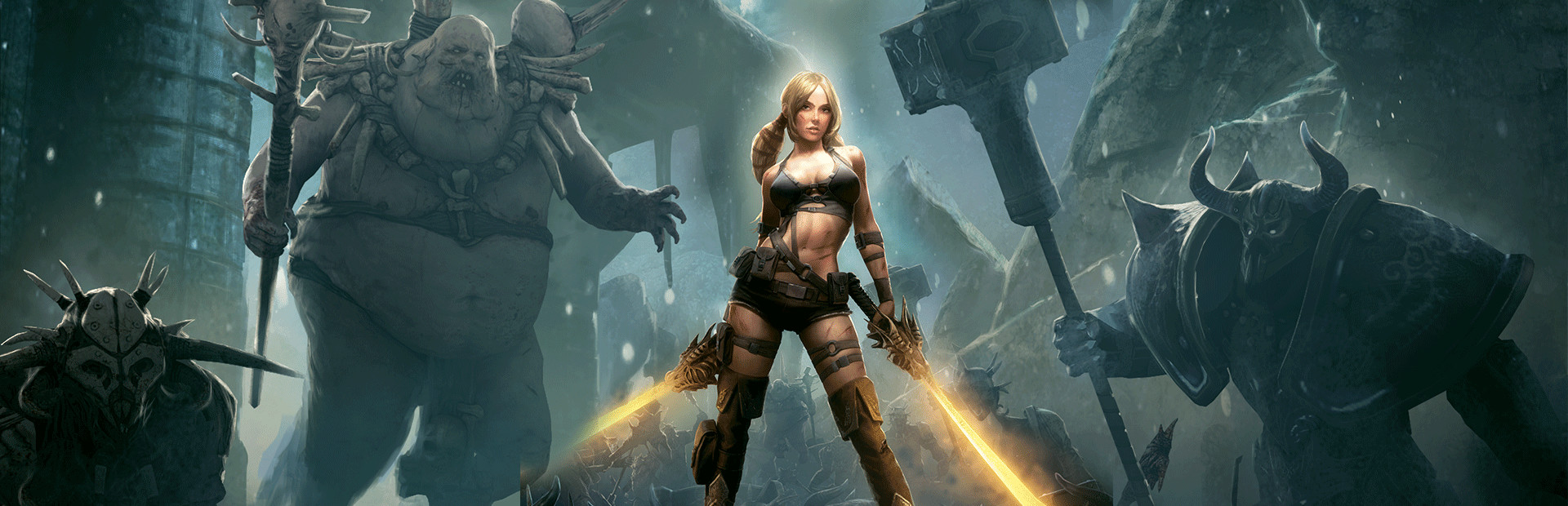
X Blades was a pretty bad game when it came out, with combat that wasn’t fun, a lame story, bad graphics, and just all-around bad. The sequel is much better but still isn’t great. Ayumi is back, trying to find some sort of dragon sphere in Dragon Land, but she has to get through the Sky Guards, who are trying to stop her from awakening The Keeper, who is guarding this sphere. The plot is very “meh” and doesn’t have any redeeming value. The combat is decent with some fun shooting mechanics, but everything here is broken to some degree.
Take combat, for starters. There are only light and heavy attacks, and the same combos are used throughout the whole game. You can’t unlock new moves or combos, just spells. These spells consist of fire, ice, and power. As you beat up on enemies, your spell gauge will increase to one and two skulls. One unleashes a weak attack, while two are powerful. If you fill your bar up all the way, you get a health pack. This would be fine if unleashing this magic wasn’t done in a terrible fashion. Holding down the spell button to charge it and then pressing the appropriate spell button slows down combat. Why can’t I just equip the spell and unleash it with one button? It doesn’t help that enemies can interrupt the spell charge, leading to cheap deaths. Speaking of deaths, you can die very easily in this game, causing you to constantly use health packs.
Platforming is just as bad because Ayumi doesn’t jump very far, making you rely on her dash move. If you don’t judge the distance right, she will just drop like a rock after her dash. That’s why you dash jump around floating corrals, but fighting on small platforms is a nightmare because the knockback seems to be glitched because she will fly across the level sometimes if hit by large enemies. You can shoot with guns you find throughout the game, and this is at least decent. Shooting enemies feels good with the different weapons and can actually help you when you’re low on health and need to back off.
The third part of Blades of Time is puzzle-solving. This is in the form of rewinding time and using switches that you stand on. Anyone who has played Ratchet & Clank: A Crack in Time will know what I’m talking about. This seems to be dull and confusing at first, but you can also use it during combat. Some larger enemies need two Ayumis to take them down via quick-time events, which are poorly implemented here. I really felt this time the rewind feature could have been used in better ways than opening doors and beating only a couple different enemies. You can use your compass to find hidden items that give you various stat effects, but these are really easy to find because the compass points you right to them.
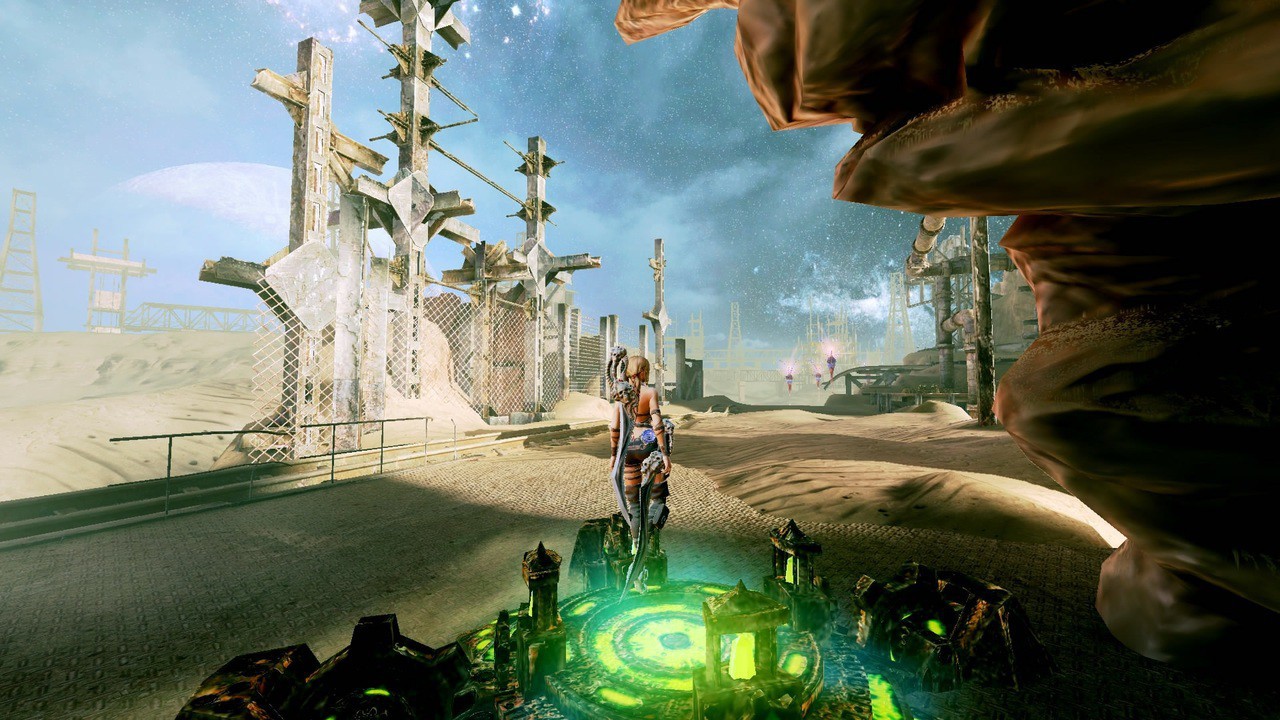
The graphics are average at best. The textures have a pretty low resolution, but the art style is nice with varied environments and different suits that Ayumi wears. Overall, everything is just flawed in some way due to poor mechanics. The combat is repetitive and dull with the same attacks; the puzzle-solving is boring and confusing; and the few platforming sections are hard due to bad jumping mechanics. The story is bland with boring characters, and even Ayumi isn’t all that interesting (she tries to be a new-age Lara Croft). The game is playable, but after you play it, you will quickly forget about it.
The Lost and Damned is the first of two expansions for GTA 4, but we should feel lucky just to have more. The expansion is short, doesn’t really do anything new, but is satisfying enough to recommend a purchase. The new characters are great; there’s still that witty GTA dialog, but the game is seriously lacking in new mission types and treads too much on the original game’s content.
You play as The Lost Motorcycle Club’s Johnny Klebitz, who is trying to help re-establish his motorcycle gang and beat out his rivals, The Angels of Death. All the new characters are great to listen to, but there’s just not enough of it. The missions were the typical blow this up, kill these guys, run from cops, deliver these drugs, etc. Nothing new or interesting outside of the GTA norm, which isn’t what I wanted to see. The only “new” mission types are motorcycle races and gang wars, which are as uninteresting as they sound. The missions here are really hard, mainly because of GTA’s overall problems. These range from dying with just a few hits, too many guys thrown at you, crappy vehicle control, and some various glitches that were never fixed.
The expansion tries to tie into some cameos from past missions, so actually, some are retreads that you have already played, just from a different point of view. The only missions that felt different were when you rode on the back of a bike and shot down various foes. There are only two missions like this, but I really have to say there is just too much shooting in this expansion. Almost every mission requires you to take down hordes of thugs. This becomes very frustrating when you are dying dozens of times for permission.
You have maybe less than 10 hours of gameplay here if you just stick to the story missions. Each character has about 3 or 4 for you to do, some only one. The main reason to play this expansion is for the new characters, the protagonist, and the excellent dialog, which will make you laugh. The game is crude, mature, and downright dirty in some instances, but this just pushes the envelope like we come to expect from a GTA game. If you really loved the original and want some more GTA action, this is a decent expansion, but don’t expect the game to try anything different or new.
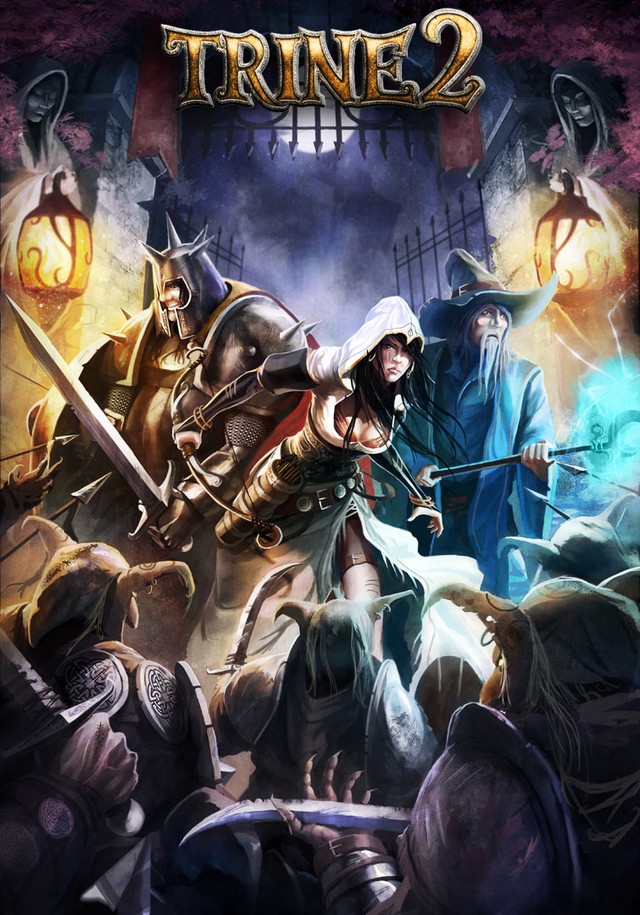
Trine was a great co-op physics puzzle game, but those puzzles insisted that you manipulate the elements of the game and exploit your abilities to solve them. There’s no canned solution. You get a puzzle, and you can solve it a few different ways, but it takes a lot of experimenting to solve them. Trine 2 continues this, but at least makes the puzzles a little more understandable.
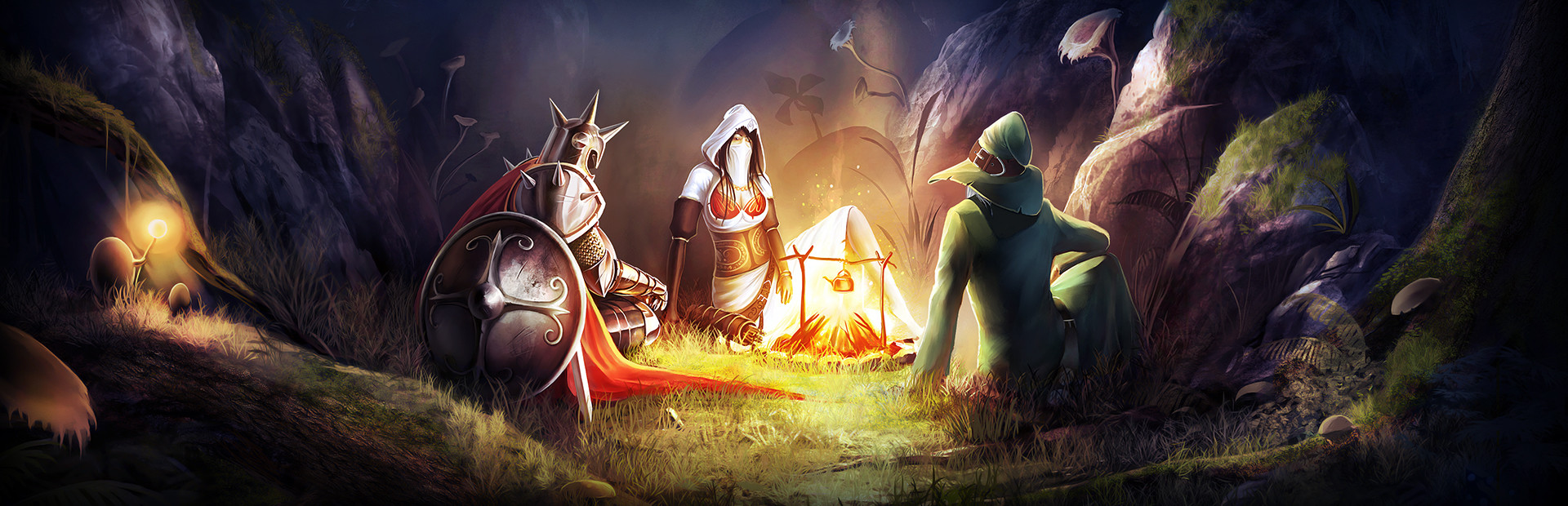
Zoya, Amadeus, and Pontius return as the wizard, thief, and knight to solve these tough puzzles. If you already played Trine, the game is almost the same, but with new levels and puzzles and slightly refined controls. For people who haven’t, you can go ahead and start here because Trine has a very bare-bones story and is completely forgettable. Zoya has a bow and arrow; Amadeus can conjure up planks and boxes; and Pontius is the fighter. As you solve puzzles, you need to find glass bottles and orbs that will help you level up. Most take some thinking to figure out how to get to them, but you honestly don’t need to level up completely because if you hit a puzzle that needs a certain ability, just remove those points from others to do it.
Puzzles consist of tough platforming and being able to use the heroes’ abilities to solve them. It’s too difficult to explain how the puzzles work, but let’s just say the game is easier in co-op. Manipulating the various levers, pulleys, and platforms requires thinking outside the box. If you have a slippery slope that you can’t jump up, what do you do? There’s a ledge overlooking it, so you use Amadeus to create a plank at the top, then put a box on top of that so it doesn’t slide down. Conjure another plank, and as it slides, you jump on it, then the other plank to the next section. Puzzles like this are everywhere, but some are just completely difficult due to the mechanics needed to do them, or you can’t figure them out at all.
Combat is usually the only break from this, and it’s just a mouse mashfest. Pontius can use his sword, shield, or hammer. Zoya can use her bow to get high-up enemies, but if you die, you need to start back at the last checkpoint to revive your heroes and heal. Every so often, you find chests that contain poems and paintings, but there’s really no need to get these. You spend so much time trying to just advance in the levels that you’ll pass on trying to find out how to get to orbs and chests.
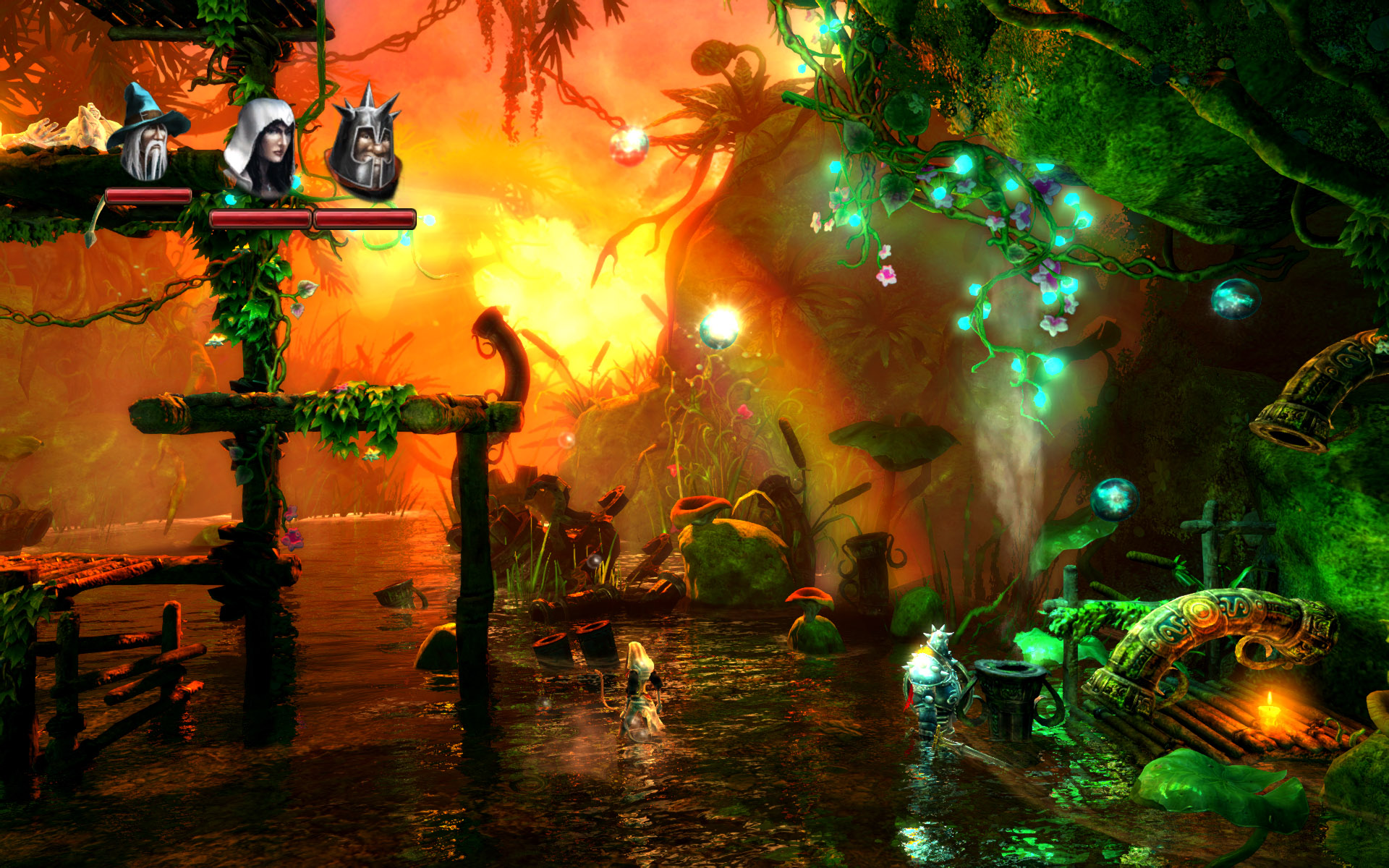
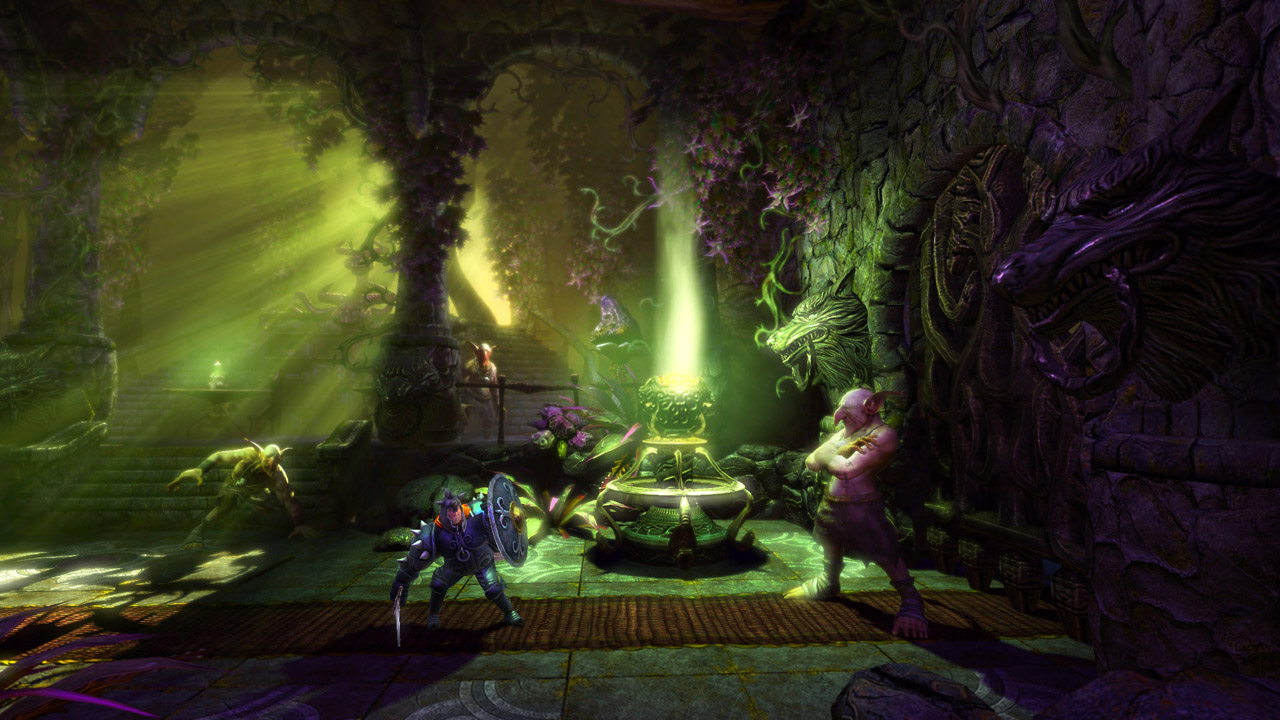
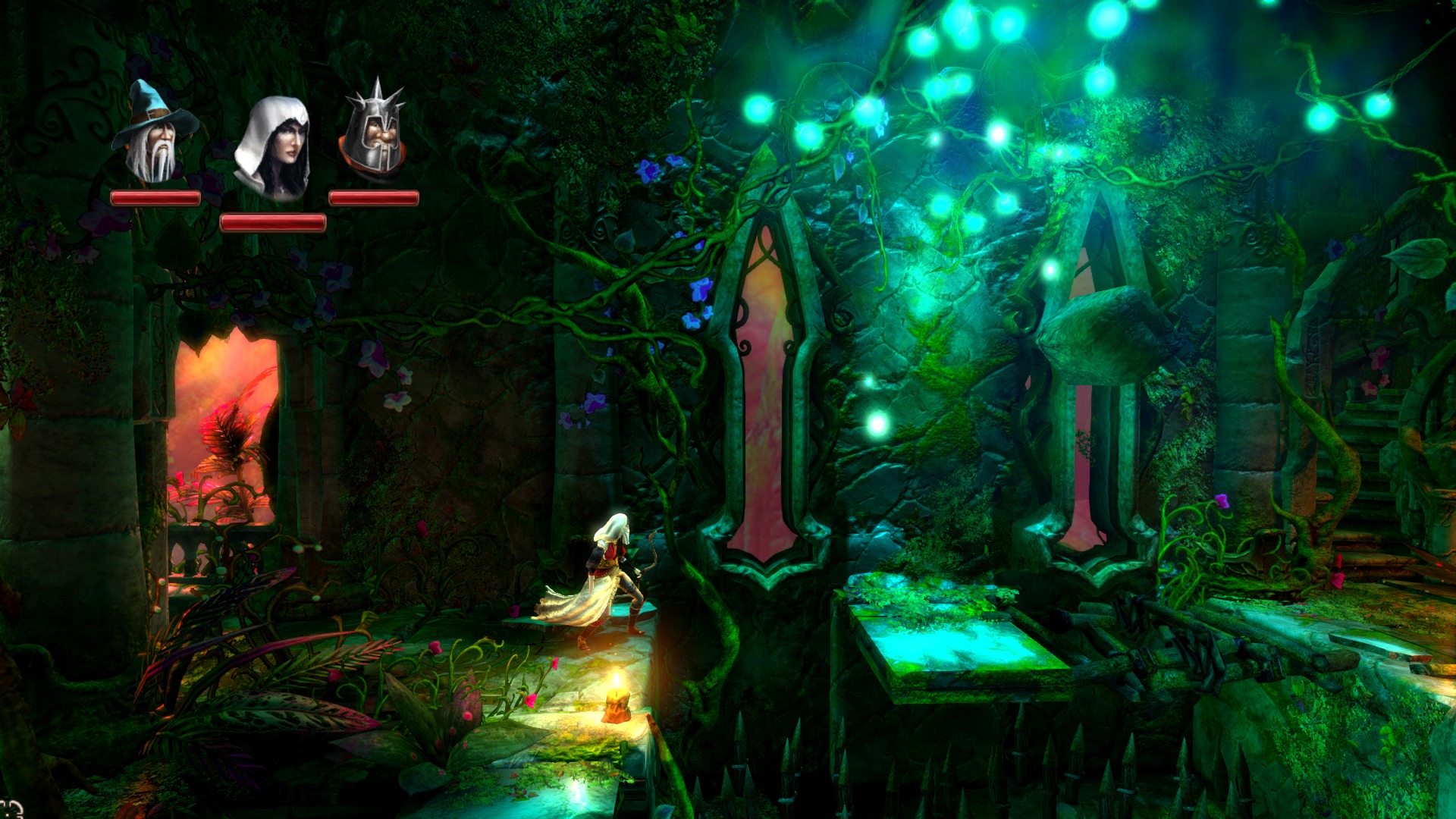
The visuals are stunning, with gorgeous lighting effects and an enchanting art style. This is probably my favorite part of the game because each level is completely different. My biggest gripe is that the game feels too much like the last game, with just some minor combat improvements, and the puzzles can be figured out a little easier. The story is complete crap. The trine makes you follow it so you can save some rival princesses, and that’s about as far as it goes. You beat the end boss and find out what has happened to the good princess.
Overall, Trine 2 is great in co-op but really tough in single-player. The story stinks, and the puzzles are extremely hard to solve due to the fact that you have to manipulate the hero’s abilities and exploit the physics system. This isn’t fun to me, but some people may like the think-outside-the-box-style puzzles. If you were a fan of the last game, come back. If you weren’t a fan, you wouldn’t like this much either. New players can jump right in here and enjoy the stunning visuals and tough puzzles.
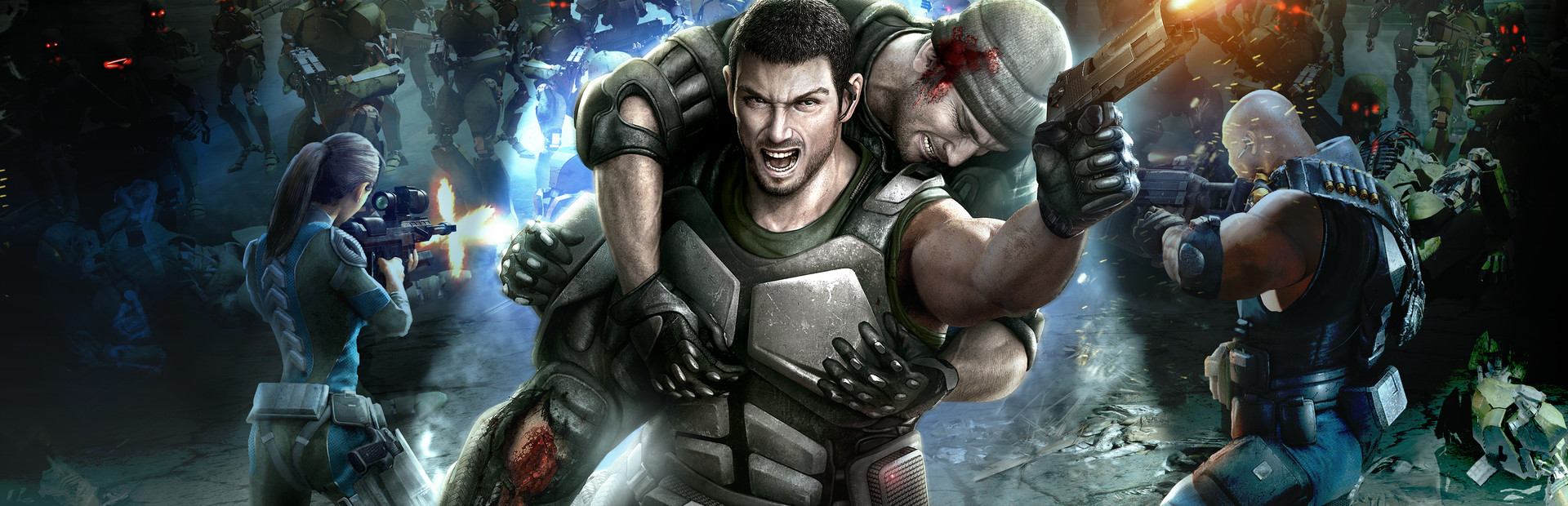
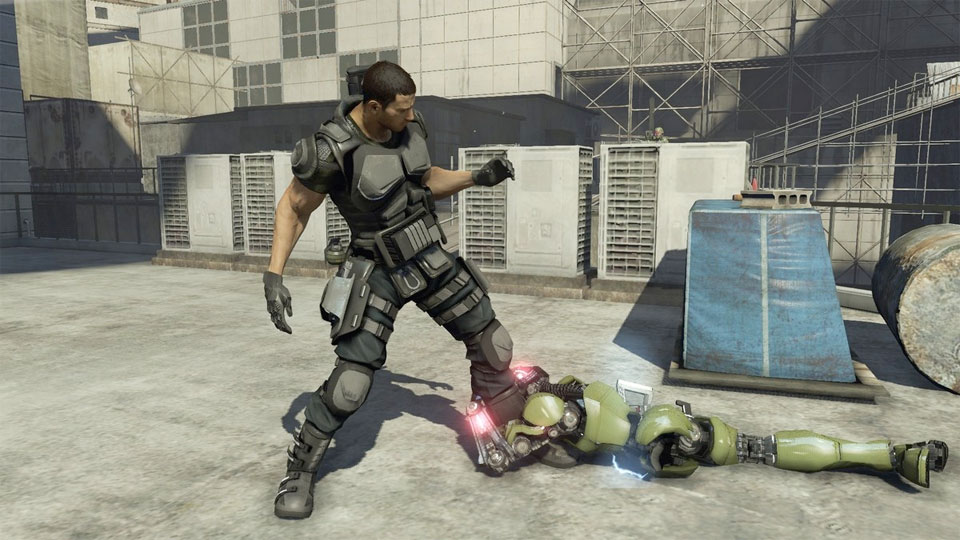
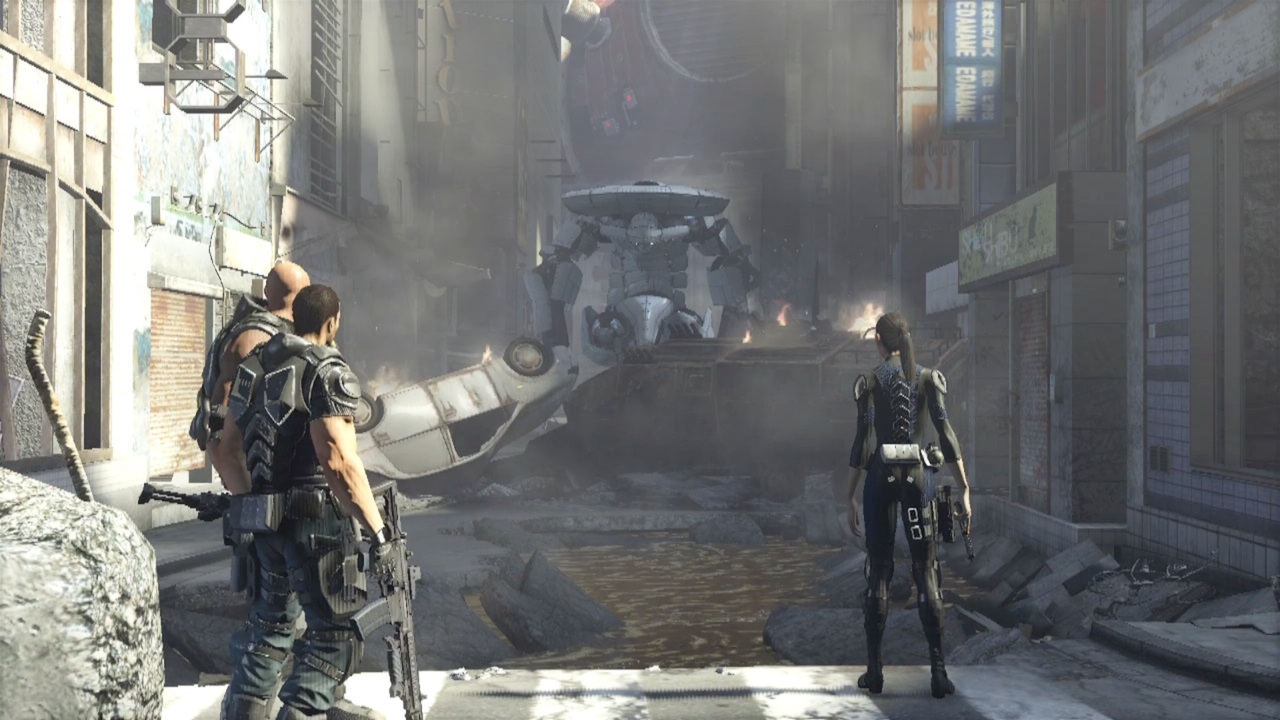
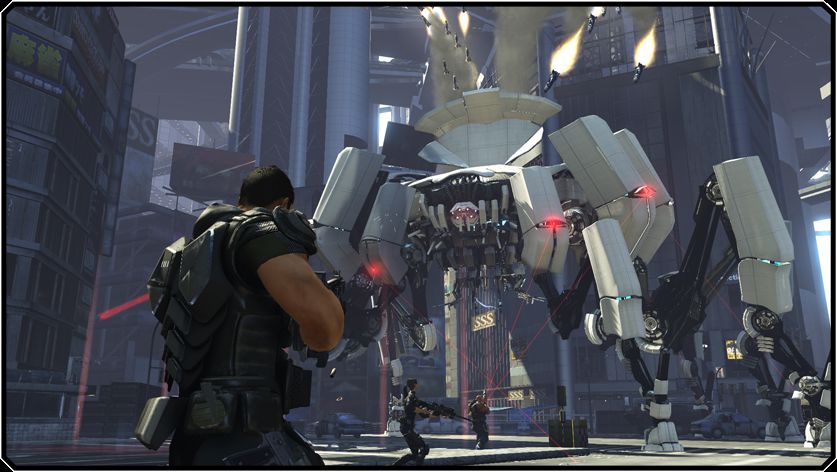
Binary Domain is a Japanese-made third-person shooter from Sega all about advanced robots. The story is actually the best part of the game, as are the characters and voice acting. Most Japanese shooters tend to suck, for some reason, or have a lot of major flaws. Binary Domain tries to remedy all this by making it feel more like a Western shooter, but still doesn’t pull all the punches.
The story is about a Japanese robotics genius named Amada who creates robots that are programmed to think they are humans and don’t know they are robots. They look, smell, talk, and even act human, but this is a violation of Clause 21 of the New Geneva Convention. Why Amada is doing this, I can’t say without spoiling anything, but let’s just say there are a lot of nice plot twists and turns towards the end. You are a Rust Crew member who wants to bring Amada in alive, but it’s not as easy as you think. The characters are well-developed, and each has their own unique personality that you will grow to like. Dan is known as the “Survivor,” and that’s who you play as, and I actually really liked his sense of humor.
The shooting is solid enough. You get an assault rifle that you can upgrade throughout the game, but you also get to pick up secondary weapons like sniper rifles, shotguns, rocket launchers, SMGs, and probably every other gun you have shot hundreds of times before. They don’t feel any different here, and that is one of Binary Domain’s main flaws. There really aren’t any cool and unique weapons. The assault rifle has a shock burst feature that stuns enemies, but this isn’t anything really special. The cover system works similar to Gears of War, but not quite as well. When you run down hallways, Dan will stick to a wall if you get too close, which is bad during timed events. You can go to shopping kiosks to upgrade your weapon as well as buy ammo, other weapons, and health kits. There is also the option to buy skill upgrades, but I found these completely useless.
These skills are dots that fill a small grid—like 10% extra health, armor, etc. I just stuck with the ones I got at the beginning of the game and never wound up changing them. That usually isn’t a good sign, and that’s because the game is pretty easy. I rarely died, and this was usually only during boss fights, of which there are plenty. These boss fights are varied and actually really fun because you have to figure out where the enemies weak spots and just blast away, but you also have to dodge their attacks. Most of the regular enemies don’t go down very easily either. You can shoot them up all you want, but you have to take off their heads to keep them from crawling around. If you take off their head before taking their legs out, other enemies will attack it.
The game actually features a voice command system that works with your mic, but I found this to be useless. It failed to recognize two different mics, and there really isn’t any point. Using the buttons is just as easy, but during some conversations, your squadmates will talk to you, and you need to respond. If you shoot them during battle or give the wrong response, they won’t listen to you as much in battle. This was completely useless because the AI is crap anyway. In a few scenarios, you have to rely on them to heal you or work with you, but they usually take forever or seem to ignore you. Just turn the voice system off and stick with button inputs.
The graphics look really good, but the game has the typical Japanese sci-fi look that I am personally tired of. The menus feel like they’re from circa 1996, but sadly, the game doesn’t even have a unique art style. The graphics really feel sterile and boring, but at least they look good technically. Overall, you should just come for the decent shooting, but mainly for the characters and story because I couldn’t stop playing just to see what happens next. Every other idea in the game feels tacked on but ultimately fails in regards to execution. The multiplayer is decent at best, but you won’t be coming back for it after too long.
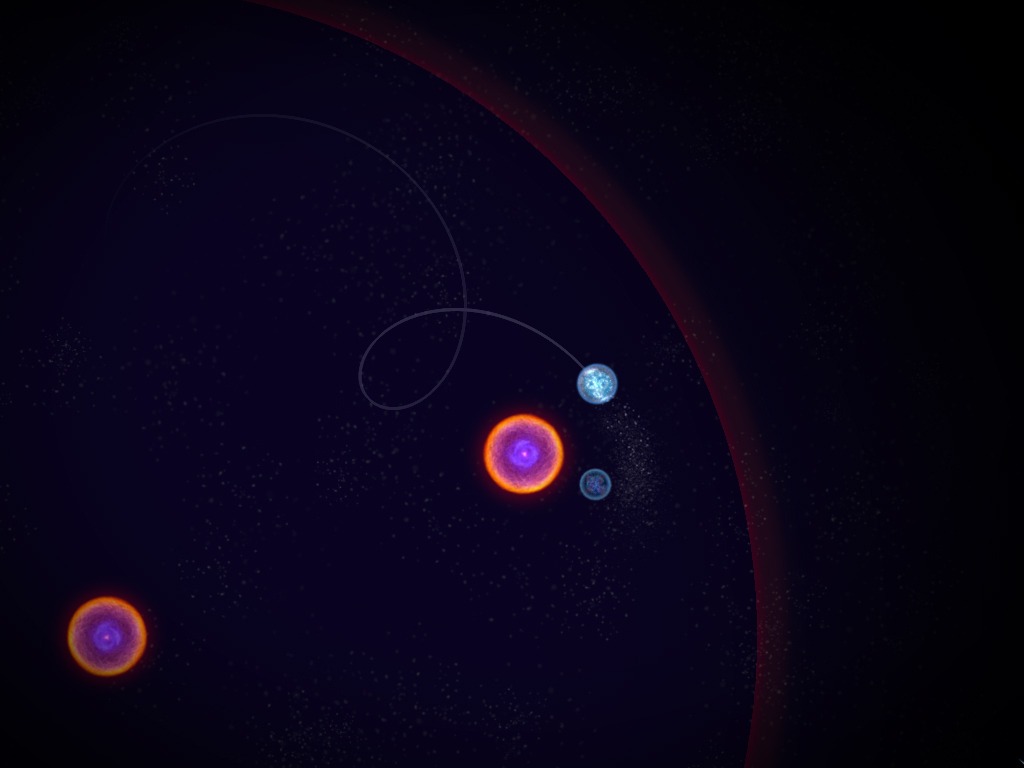
Osmos HD is an upgrade of the physics game where you are an omega trying to become the biggest. The game is very hard, but somehow satisfying when you beat a puzzle. The game requires a lot of concentration and finicky maneuvering, but the game is still enjoyable.
Pushing around the blog requires you to tap around the microbe with the touchscreen. This is like a jet booster, so the faster you tap, the faster it will float around. Around you are red microbes that you must avoid until you are bigger. Eat smaller ones until you consume the biggest one or complete the goal. Sometimes you will be orbiting a giant microbe and must complete the goal before you get sucked up.
The hardest part of the game is tapping just right and keeping good speed. You can slow down time or speed it up by swiping the screen left or right. This allows you to bump bigger microbes out of the way without being consumed. The visuals are pretty decent, and the game has a nice atmospheric soundtrack, but due to the high difficulty, this game is far from relaxing.
Overall, Osmos HD is worth the money, and you can play in the story mode or arcade. I wish there were more modes here, but at least the levels vary, so you won’t get bored. Casual gamers may get turned off by the sheer difficulty of some levels and the amount of concentration and precise movements required to move on. Give the demo a swirl before you buy.
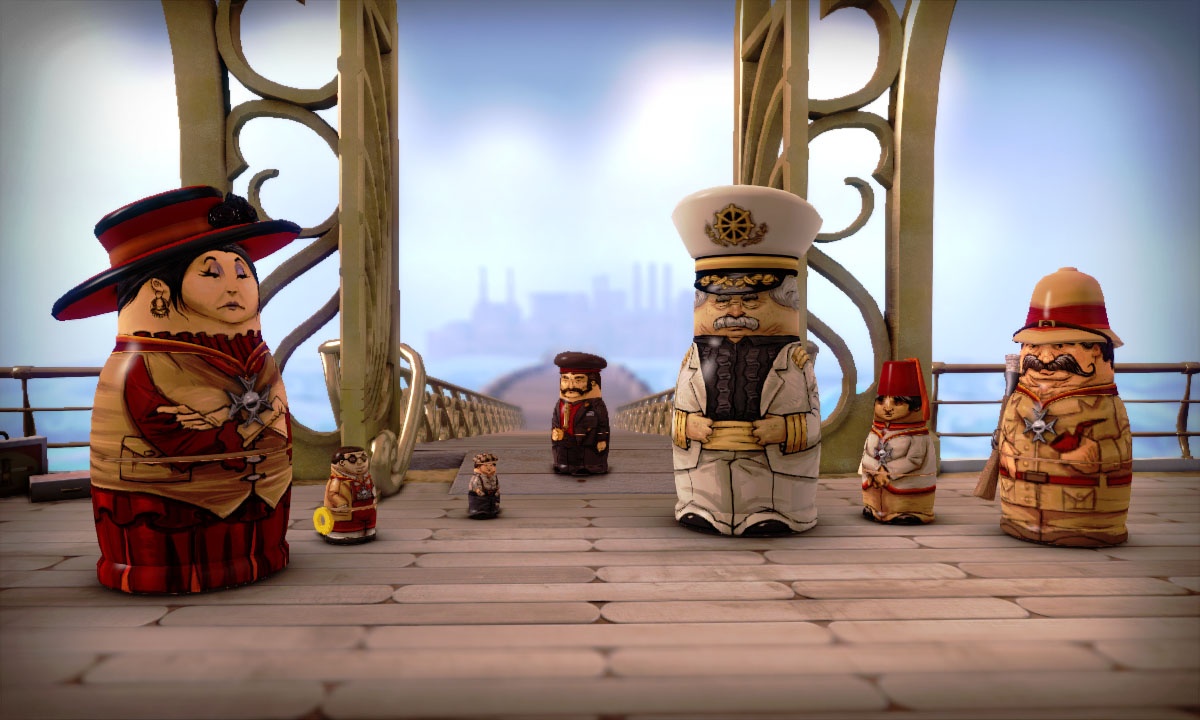
Double Fine Productions is known for very original and unique games (Psychonauts, Brutal Legend, Costume Quest) but has a hard time creating them, it seems. Stacking is a small Matryoshka doll named Charlie Blackmore who goes on a quest to stop child labor and stop the evil Baron from enslaving children for his selfish needs. In the process, he is saving his family members who are trapped. The game is very charming visually and appeals to all audiences.
The main gameplay in Stacking consists of you stacking inside dolls that are bigger than you and solving puzzles. There are areas that have someone blocking something, or something needs to be triggered, and you have to find the right doll to do this. You get three clues to help you along, which is a lifesaver because otherwise, it would be very difficult to know what to do. There are so many dolls that stacking each one would take forever. One puzzle involved finding a way to a cell that was holding a doll. The man is a doctor, so you have to find ways to make him feel ill. Stack into a doll blowing air, and then a fire chief. Spray him with water, then unstack and blow air on him to make him sick. This is just one of the multiple solutions. Each area has several ways to solve puzzles, and finding them all will unlock stuff in your hub, but it’s nothing useful.
You can also complete hi-jink challenges, which are where you use dolls’ abilities a certain number of times. You can also complete challenges, which are like side missions where you are helping dolls out. I found these pretty boring and think they are really for people who just want to mess around. There is really no reward for completing the game 100%, but if you love the stacking gameplay, go for it. If you get lost in the game, there is a guideline, thankfully, because, like I mentioned above, you will get lost. There isn’t a map either, so identifying dolls takes forever and gets boring. This is a big problem with challenges because there is no way to know who you are stacking or who you should stack. This is only half the problem, because then you need to know what to do with their ability.
The story is charming, and so are the visuals. Cutscenes are played out like old silent films, and the game has a satisfying ending (remember, Double Fine doesn’t do sequels). The controls work just fine, and the mechanics are simple, but the execution has problems, from what I explained. The game itself can be beaten in just a few hours if you only find one solution for each area and skip everything else. Only completists will want to bother doing this. For the low price, you get a very unique game, but if you can’t look past these problems, then you won’t enjoy it.
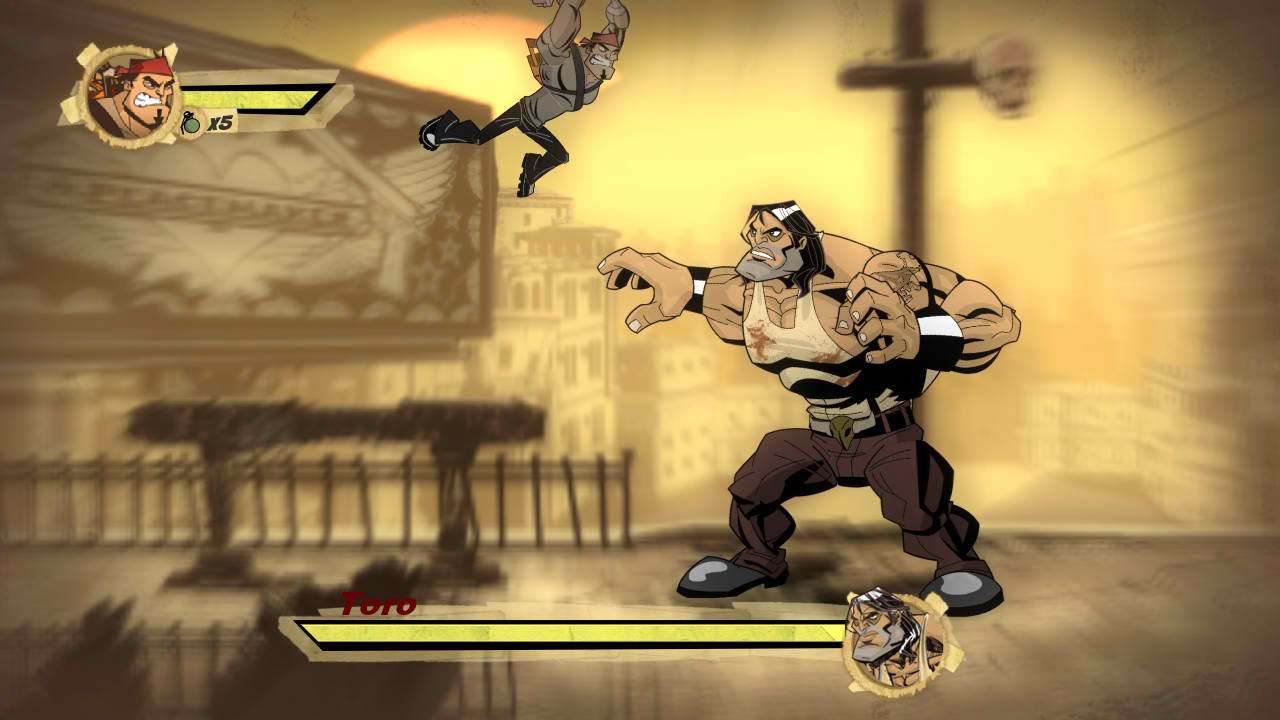
Shank is an artistically stunning game about a man named Shank (voiced by the same man who voiced Kratos in God of War) who is trying to get revenge on the death of his girlfriend. It doesn’t quite go according to plan, but he heads for the people responsible anyway. The game has gory melee combat with a tad bit of platforming. The game can be beaten in less than 4 hours, but by the end, you will have wished it had ended long before that.
The combat consists of light attacks (your shank), heavy attacks (weapons that are picked up like the chainsaw, katana, chains, and machetes), as well as three different guns for distance combat. You can toss grenades to clear crowds, but that’s pretty much all there is to the combat. There really aren’t any combos to learn or gain, which is a shame because by the end of the first couple of levels, you will get bored with the combat. There are problems, despite the hacking being fast-paced. Sometimes the controls will feel a bit sluggish when trying to counter people behind you, and when you get knocked back, you can get bounced around by multiple enemies with no way to get back up until it stops. This really frustrated me throughout the game. I always felt like I wasn’t 100% in control of Shank. Even some of the weapons had problems, like the shotgun only firing a couple of rounds, but then he puts the gun away, and during this animation, you are vulnerable. The problem is that you’re not even done shooting it, so he has to take it back out. Things like this crop up while you are playing, and by the end, you just have had enough. There is some minor platforming, but it’s not very challenging and feels like just some lame filler content.
One major issue was that the health pickup button was the light attack button. Who’s bright idea was this? During boss fights, this poses a real problem when you are trying to conserve health and then you accidentally use a light attack near the pickup and drink it. Other than this, other problems consist of repetitive boss fights, but the few that are different are the only things that break up the monotony. The visuals change between levels, but other than that, you just get bored. I wish there was a level-up system or some way to earn combos. Hacking and slashing enemies in a gory fashion is fun for so long until you want more. Hell, even some more varied level design would have been nice, but no such thing exists here.
Overall, Shank provides a mediocre story that barely keeps your interest. The game has a beautiful art style but is lacking in design change, and the combat is very shallow and monotonous. This game had a lot of potential, but if what is here is enough for a quick playthrough, then you will forget about it. Even playing again in different costumes isn’t enough to drudge through this repetitive side-scroller.
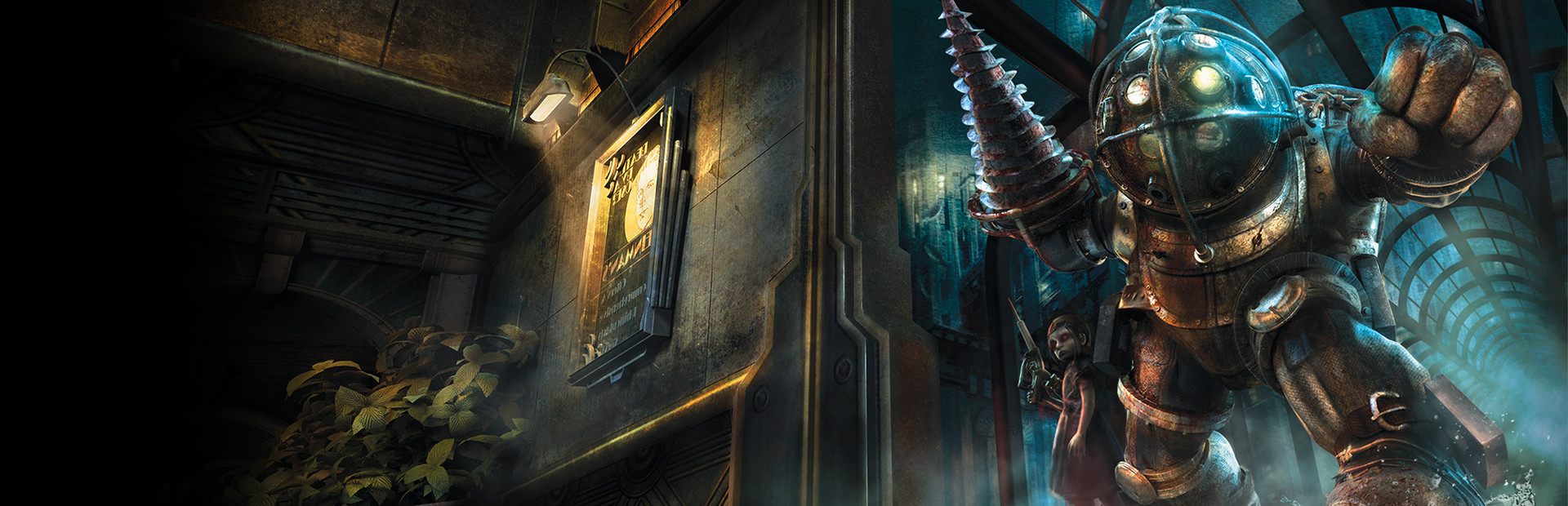
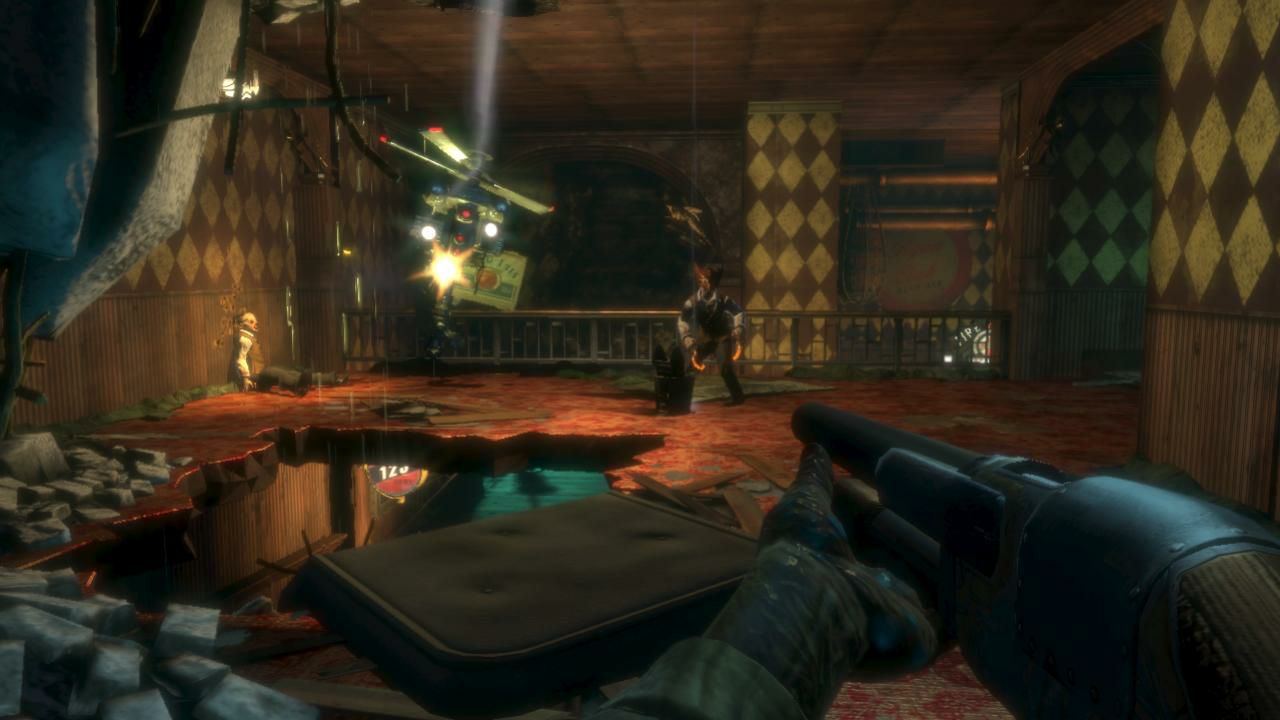
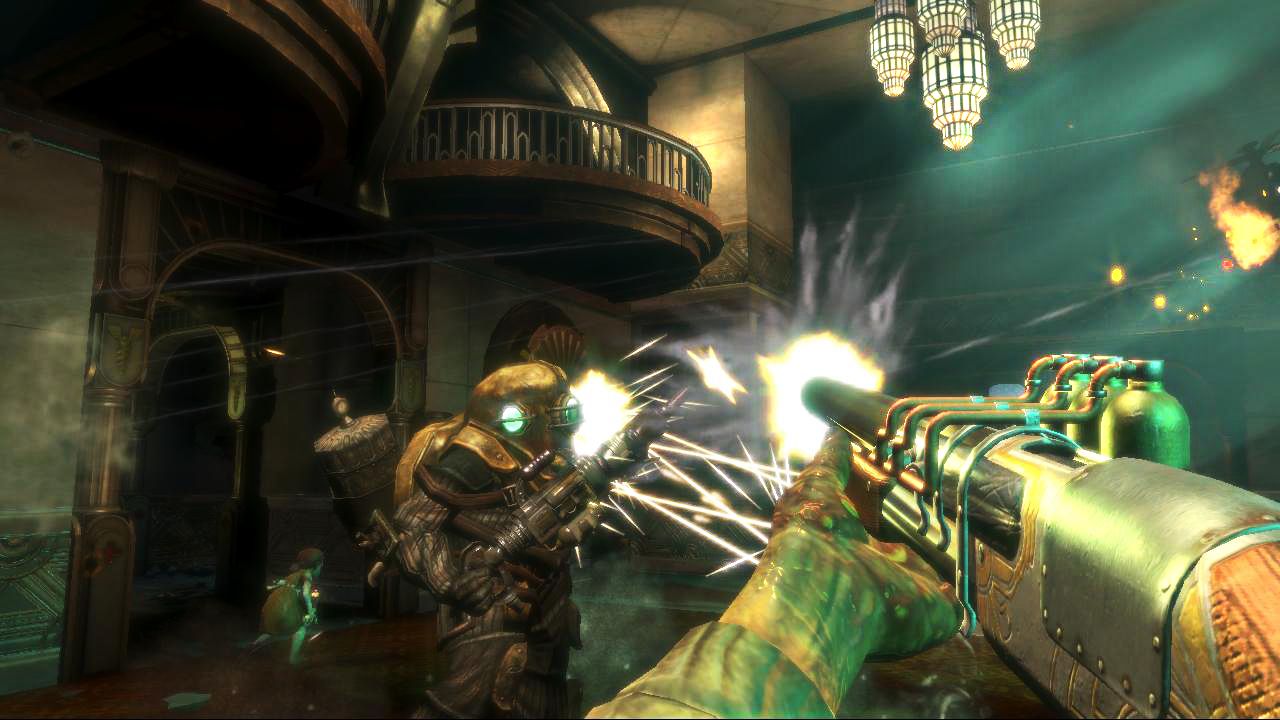
BioShock is awesome! Buy it! That is probably all you need for a review, but that’s not really a review. Anyway, if you don’t know the plot of BioShock, then you’ve been living under a rock for the past few months. You play a nobody named Jack who crashes into a plane and discovers Rapture. A failed underwater city whose founder, Andrew Ryan, turns crazy, and all the people of Rapture have gone nuts. They go nuts due to the plasmids they use to gain power. Also, the ADAM that can make you turn into anything you want is very valuable and is the key to rapture. The Little Sisters gather the ADAM, and the Big Daddies protect them. The story is full of plot twists and secrets. It’s probably one of the most original stories in any game period. The gameplay is like that of an average shooter, if you want it to be, or it can be a genetically enhanced one. That’s the beauty of BioShock. It can be anything you want; it can be boring, fun, stupid, or lame; it’s all up to you.
The game’s narrative is one-of-a-kind and what most games copy these days. The story is told through radio transmissions with no cutscenes. That is extremely hard to do while keeping the player interested. Atlas guides you around, telling you how to get to Andrew Ryan, but the world around you also tells the story of Rapture through audio diaries, things written on walls, and what the psychotic enemies blurt out. This is a rare form of storytelling in games, which is why BioShock is such a classic.
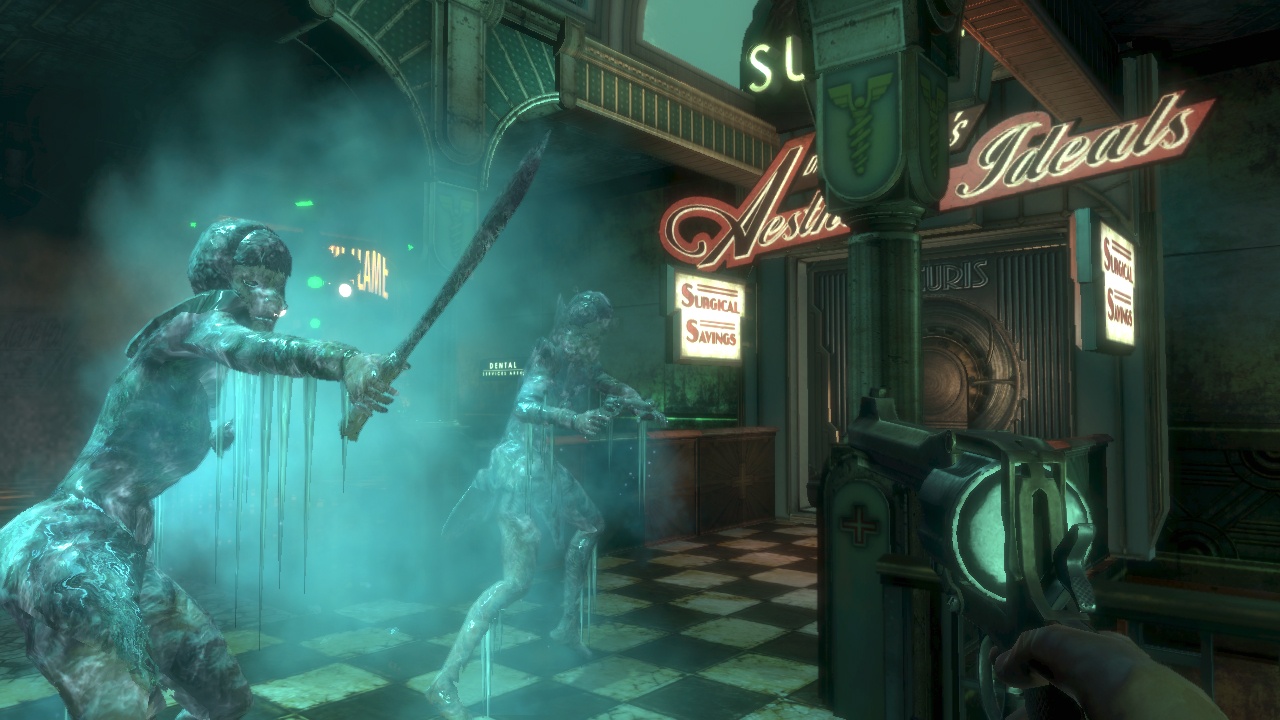
The graphics stand up pretty well today with DirectX 10 enhancements, but they are so subtle you won’t even notice. There are supposed to be better water effects and physics, but I didn’t notice a difference except that your steps cause ripples in the water now. There are lots of graphical problems on the PC that were never addressed, but they don’t hinder the game much. The game is very surreal, and it just sucks you in. The big thing here is the gene splicing and all the plasmids. There are so many of them, and you can do whatever you want with them. You can shoot fire from your hands or freeze your enemy with an ice blast. There are others as well that let you gain more health or hack turrets and safes better and faster. There is just so much detail here, it’s nuts. You can use a camera and research your enemies to learn their weaknesses and gain new plasmids and tonics. The only disappointment was the lack of any multiplayer whatsoever. All you can do is play this game to experience the true beauty of it all. BioShock is one of the best games in years, and I assure you that you will have more fun with BioShock than with Halo 3 or Metroid.
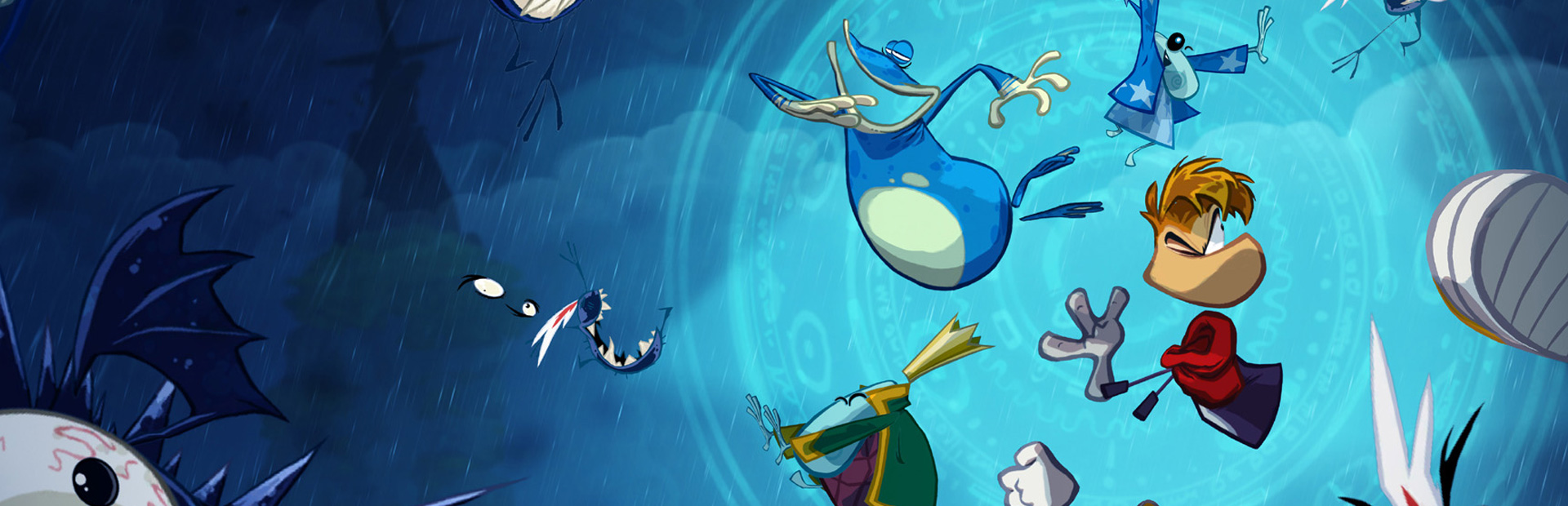
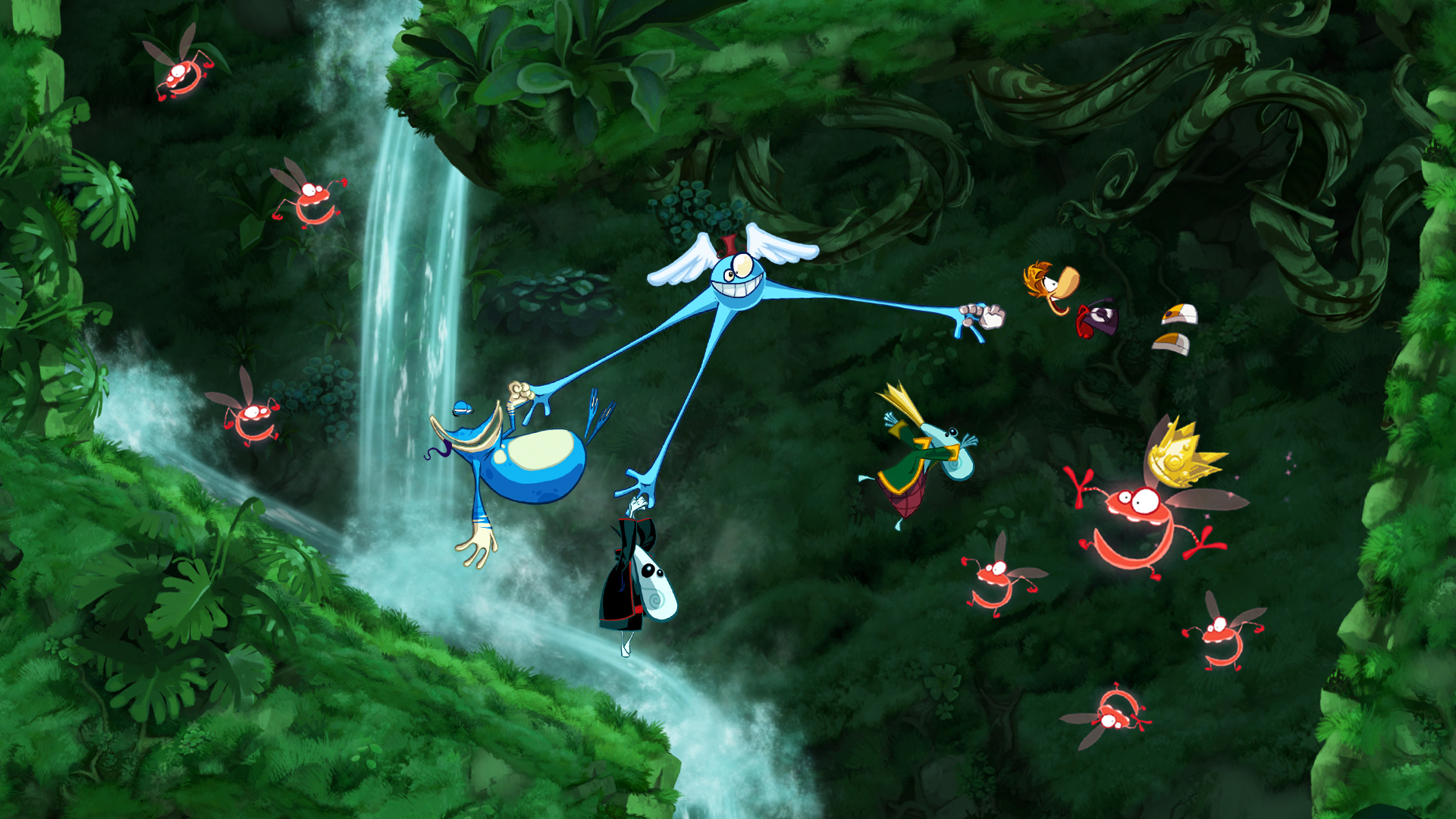
Rayman has been a struggling series since the PS1 games came out. There have been spin-offs, ports, and terrible sequels since then, but Origins redeems the series. There isn’t really a story here except that you’re saving lums and princesses of different lands to earn powers. There aren’t any cut scenes or voiceovers because this goes back to its old-school roots, and yes, the game is hard.
The controls are silky smooth, and so are the animations. It helps that the controls are responsive, as well as that you can jump around the levels that require focus and skill to navigate. Obstacles lay in your paths, such as treacherous waters, enemies, and fire. Each new area has unique enemies, hazards, and an overall layout that is very nice to look at. Enemies can be jumped on or punched, and after that, they inflate. You can use the Vita screen to touch them so they pop to get the light inside, which actually makes this version more forgiving than the consoles. When you jump around to find lums, you will see them in hidden objects, and some will be trapped in bubbles. You can touch them to pop them up to add to your collection, which is much easier. While you’re bounding about the cleverly laid-out levels, you can find hidden areas with cages full of lums that you can find by hearing their cries for help.
The game is just so cleverly designed, with levels that are tricky but not so tough that you can’t forgive the game. You may restart a few times, but it actually requires skill instead of luck or exploiting the game’s faulty controls (if they were). Sliding around on the ice, dashing towards an enemy and punching them, grabbing onto a ledge, and then jumping up on top of an enemy can be tricky, but it can be done with a little practice and a quick reaction. The levels slowly get harder, but the whole point is to collect the lums and get medals at the end of each level. Save enough, and you can unlock special treasure missions where you have to chase one down through a series of tricky obstacles.
Origins is just so clever and charming that you can’t really hate it. There are plenty of characters to unlock, as well as extras. This game is perfect for people who love exploring levels and finding secrets. There are plenty of levels and things to find to keep you busy for many hours. I do wish there were some more features for the Vita besides just using the touchscreen. However, what is here works, and nothing got downgraded from the consoles. I can only really recommend this game to hardcore platformer fans because of the difficulty.
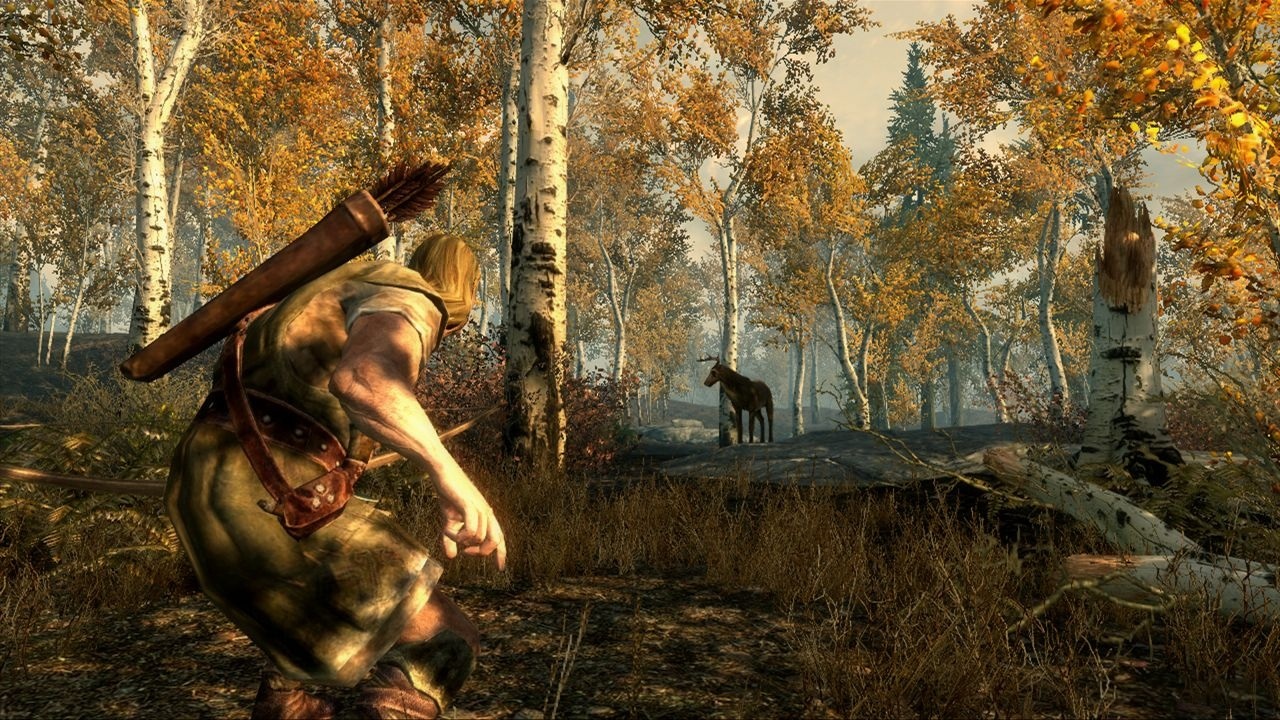
Here it finally is! I had so many great memories with Oblivion back in 2007. I could go on and on about that game, but the fifth game in the series is before us and has taken the world by storm. From creating internet memes to lots of weird videos on YouTube, Skyrim is a behemoth that even non-gamers couldn’t ignore. Skyrim takes place in Well, Skyrim, which is north of Cyrodiil. Cyrodiil was where Oblivion was set, but Skyrim is also set 200 years after those events. Of course, they are talked about in Skyrim, but time isn’t the only change in the game.
You are the Dragonborn, or Dovahkiin, who has the power of the Thu’um, which means you can shout like a dragon. This is actually a major gameplay element in the game, as well as fighting dragons. The map may seem smaller than Cyrodiil, but there is a lot more content in the game. I spent 108 hours on Skyrim, and that was 90% completion of side quests, areas discovered, and finishing the main story. I finished at level 45 and had almost 100,000 gold. In Oblivion, I was able to finish the game at about 95% in 50 hours. That lets you know how much more content there is, so you will be busy for months.
Let’s talk about combat first. The game still has third-person melee combat like the past two games, but it has been revised. The combat feels smoother, and it’s not so much like you’re playing whack-a-mole. There are more elements involved behind the engine, but the thing you will see the most is the perk system that is borrowed from the Fallout series. When you level up, you look to the sky and have a bevy of different areas to gain perks in: magick areas, combat, defense, and even blacksmithing (more on that later). Concentrate on one area and try to get as many perks as you can. This gets rid of the system from Oblivion where you can only level up to something if you use it, like jumping around like a bunny to increase endurance, etc. If you use light armor, you will gain levels (up to 100 in every category) in that area. Use two-handed weapons or destruction spells, and you will gain levels quickly. The perks allow you to gain and build on that area instead of solely relying on users to gain levels.
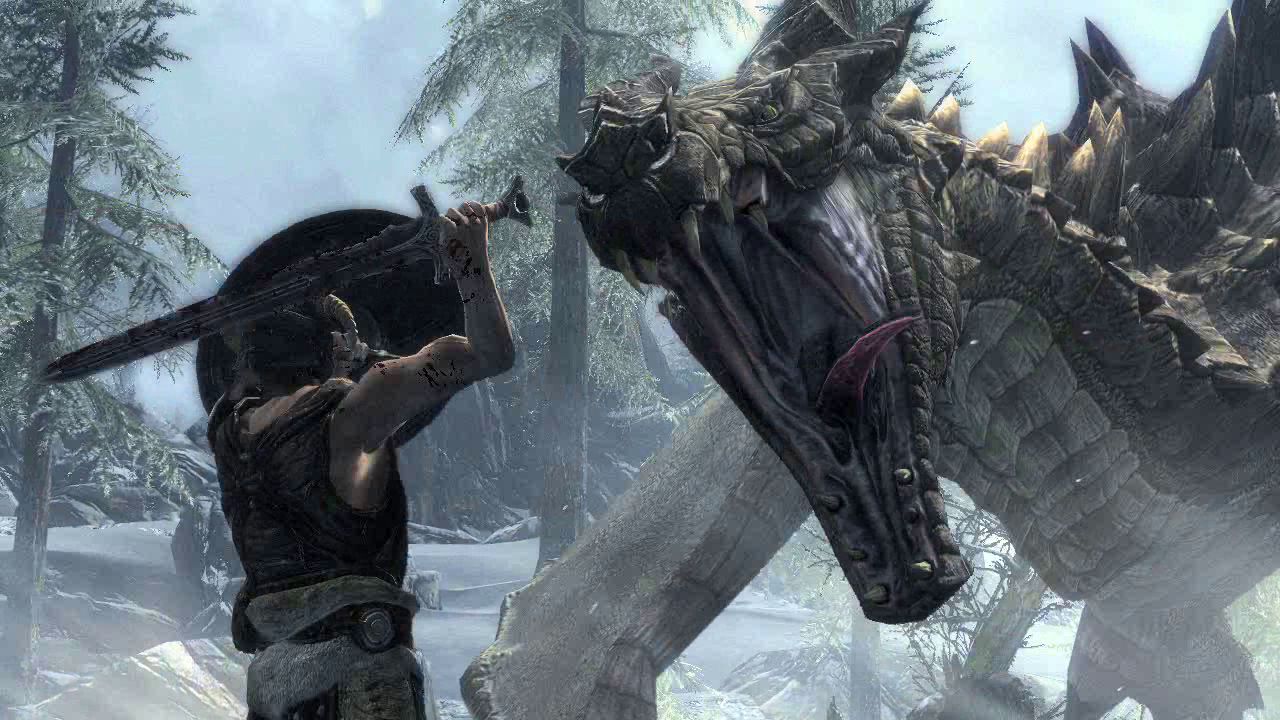
Of course, there are new enemies in the game, like Draugrs and dragons. Dragons should be avoided early on until at least level 10 because you will die in one hit. Once you kill these beasts, you gain their soul and can use it to unlock dragon shouts. Shouts consist of powers like unrelenting force, slow time, and fire breath. Each shout has three levels, but you need to find those words by exploring dungeons throughout the world. Dragons are just awesome creatures to fight because they are the biggest enemy ever put into a TES game. Of course, you need to watch out for wildlife like bears, crabs, leopards, etc. The world of Skyrim is dangerous and cold, so beware. Sneaking is still a huge problem because it seems no matter how good your sneaking skill is, you still get caught, especially when pickpocketing.
Factions are a huge part of TES, and Skyrim doesn’t leave you out. The thieves, dark brotherhood, mages, and fighter guild are all here, but bigger and better. The stories are more fleshed out and are a lot longer, plus your rewards are better. The Dark Brotherhood and Thieves Guild stories were my favorites, and they show you just how deep into the lore and story you can get. Everything else from past TES games you remember is here, like choices during dialog, but thankfully the whole persuasion mini-game is gone from Oblivion. There are a lot more main characters, and the voice acting is more varied, but everyone has Nordic accents because Skyrim has a Viking/Nordic setting, which is a huge departure from Oblivion’s strictly medieval tone.
Looting is a huge part of TES, and Skyrim doesn’t disappoint here. There is so much to loot that even after 100 hours, you will still scour every nook and cranny for stuff to sell at shops. Lockpicking has been improved and is much quicker this time around. Menus have also been improved with a nice four-way system leading to items, magic, maps, and skills. This gets rid of Oblivion’s awful Excel sheet-type menus. Of course, my complaint here is that you can’t compare items anymore, which is a major pain. You have to remember statistics, which is a bigger pain when shopping.
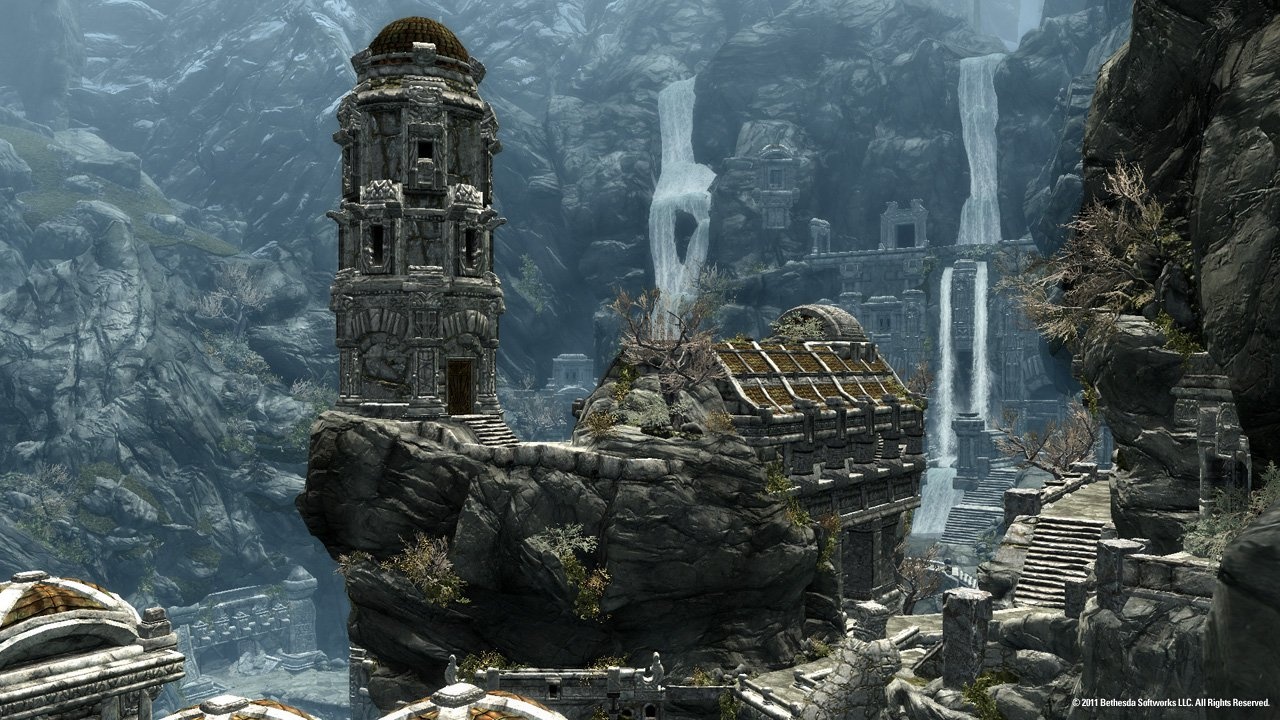
Skyrim has a forging system where you can get ingots for various medals as well as leather. Use these to forge weapons and armor in different categories, like Daedric, Leather, Studded, Iron, Glass, Ebony, etc. You can upgrade these on benches for armor and grindstones for weapons. This makes the whole armor and weapon system feel more custom-made to your liking than just what is out there. The armor and weapons are over double what is in Oblivion. Those are all the major changes in Skyrim, but there is so much detail here that you have to play the game to truly see what I am talking about. You can even read every single book in the game. There is so much detail here. Fans of the series will love the deepened and richer lore of the races and parts of the TES series. There are tons of them here. You even get to explore ancient Dwemer (Dwarven) ruins.
Horseback riding is back, and even the third-person view has been greatly improved, as have the animations. There are so many major changes, as well as minor changes, that I can’t even remember them all. However, there is a huge issue with this game, and that is bugs. There were so many bugs upon release that stopped quests from continuing: quest items being lost, stuck in areas, graphics bugs, dragons flying backward, and everything else you can imagine. Even after a few patches, there are still some bugs, and probably a few that will never be fixed. This is unacceptable, even for a large game like this. Thankfully, there is a huge mod community that fixed a lot of this first, but the stock game has problems that console gamers can’t fix.
The models are still ugly, and the woman still looks like a man. PC gamers get high-resolution textures, which make the game look amazing, but the consoles are stuck with low-res graphics that look kind of dated. The lighting in Skyrim is great, but with so many issues cosmetically, you really should get the PC version. Mods out there transform women into beautiful heroines straight out of comic books, with amazing new armor, new lighting, graphical effects, etc. The stock game is really lacking technically, and that disappointed me quite a bit. If you can look past all this, Skyrim is one of my favorite RPGs of all time and sits right up there with Oblivion.
Collector’s Edition: Hardcore fans may want to drop the extra $90 for the monster collector’s edition. You get a giant statue of Alduin that is an in-game model, a giant coffee table-style art book, a making-of DVD, and a steel bookcase. The statue is worth the extra money itself, and it looks amazing. Of course, this is for hardcore fans only, but good luck finding one.

















































 thebinarymessiah.com
Try multiplayer. A lot of fun !