Supermassive Games once again excels in its strengths and doesn’t learn from its weaknesses or mistakes. Man of Medan was a great start to a horror series, and Little Hopecould have learned a lot from the fumblings of the past game but didn’t learn a single thing. You play as a crew of five this time who end up in a bus crash on their way to a school field trip to the Northeast town of Little Hope. A ghost town.
The game starts out very strong. You are in the 70s stuck in the middle of a dysfunctional family. The prologue quickly introduces what the series is good at. Death. You then end up in a bus crash and are stuck in a rural town in the Northeast in the middle of nowhere. I was excited about this one. It has a great Silent Hill feel to it. Endless fog, creatures creeping around in the distance, and a ghost mystery. Sadly, the game quickly devolves into walking around what seems like random houses, forest paths, and buildings. The same issues plague this game such as the lives of the characters dwindling down to succeeding in QTE events. The traits between characters that are strengthened or weakened through dialogue choices will determine how hard these QTEs will be. You can also explore and find secrets and a few hidden weapons to make these scenes easier as well.
The game feels less cohesive than Man of Medan. The story itself doesn’t feel as exciting or interesting as the previous game either. The story just never seems to go anywhere and doesn’t make any sense until the very end which is really annoying. I kept hoping that there would be a twist or something, but the story just drags out as it has nothing to really tell. The characters themselves are more compelling than in the previous game and I felt a little more attached to them, but they are still walking stereotypes and cliches. The facial animations are slightly improved, but the voice acting can still be spotty.
There is still no gameplay here. Outside of the walking scenes and looking for secrets and QTEs this is just an interactive four-hour movie. We still get cuts to The Curator who can give you occasional hints and I’m sad that his backstory isn’t told and we still no nothing about this character. That seems to just be a running theme with this series. We just get characters thrown into some B-grade horror mystery for four hours with nothing else to show for it. There’s nothing memorable about this series or insanely interesting. The monster designs are still well down. Supermassive still does a great job slowly revealing these monsters as there are only a few of them. However, it’s not enough to make up for the lack of everything else.
The game is visually impressive. It looks fantastic on PS5 and PC, but is also poorly optimized on PC with insane slowdown and requires way too high of a setup for what it is. The textures, models, and lighting are top-notch, but the janky animations just bring it down some. The game still suffers from mannequin-like facial animations sometimes. Overall, it’s a very impressive game visually.
In the end, Little Hopedoes little to advance the series and instead sets it back a bit further. With a less than compelling story, stereotypical characters with no depth, wonky facial animations, and spotty voice acting, plus the lack of gameplay makes this a four-hour B-grade horror movie that’s interactive. You won’t miss much by skipping this one as there is no overarching story over the entire Dark Pictures Anthology.
Until Dawn was a visually impressive game. It was also very atmospheric and had some memorable scenes. Supermassive Games has a talent for world-building and giving you the fine details. The downside is that Until Dawndidn’t have any memorable characters. They were B-grade actors with stereotypical college student personalities and they never stood out. The same is present for Man of Medan. This is an ongoing horror series full of short stories with the overarching narrative being kept together by The Narrator. He gives you hints and a couple of tips to help keep everyone alive in the game.
Man of Medan is also visually impressive. Great textures, detailed character models, impressive lighting effects, and great camera work. The game suffers from Supermassive’s previous weaknesses. Forgettable stereotypical characters that you see in B-grade horror movies. The acting is spotty and all over the place and includes facial animations. Sometimes it looks great and other times they look like stiff mannequins. You play as four college-age people who take a boat trip to go scuba diving to find an unmarked airplane that was downed during World War II. Things take a turn for the worse when they get kidnapped and brought onto a World War II ship to look for Manchurian Gold. They meet supernatural beings and must escape. Your job is to keep them alive.
While the overall tale is interesting and I really wanted to know what happened to this ship and the things going on, the game is so short that the characters get zero back stories and it’s just jump scare after chase scene after QTE event. You keep the characters alive by mainly being successful with QTE events. These are when the characters’ lives are in danger. If you played any cinematic adventure game in the last 20 years you know what to expect. There are various ways you can make the game easier or more difficult by walking around and searching for objects. This is the only gameplay here. Walking around small hallways and looking at objects. If you see a sparkle it means you can interact with it. Picking up objects and turning them overlooks cool and the objects are insanely detailed, but it doesn’t add anything to the experience. You can easily just go straight to the end of every scene.
That’s another problem with this game and these types of games as a whole. There’s almost no gameplay. Most gameplay is just an excuse to keep the player engaged. Thankfully Man of Medan never gets dull and is always moving at a good pace. When creepy stuff happens it’s done very well. I was wigged out by some of the creatures on screen. Supermassive’s camera work is superb here. I felt like I was playing a movie which is more than I can say for most games. The only excitement in the game is the quick decisions needed before timers run out. You can get premonitions from finding pictures hidden around that show 3-second clips of what might happen in the future. Sometimes these helped and sometimes I realized what was happening too late. I managed to only lose one character and it was at the very end of the game. I have to say that the whole bearing and trait system makes no sense to me. During conversations, you can pick one of two answers and this will unlock traits or increase others. It’s never explained well. Finding certain objects and adding to bearings, but I have no idea what this does. Again, there’s no explanation.
Overall, Man of Medan is an interesting first outing into this new series and I look forward to seeing more. While I don’t doubt Supermassive can supply an entertaining ride, the characters need to be more interesting, the facial animations need more work, and the bearing and trait system needs more explanation. The 4-5 hour runtime is over before you know it
Horizon: Zero Dawn is a game I have struggled to finish for five years now. It’s not that it’s a bad game or a boring one; it just has a lot of promise in the beginning third of the game, and you quickly learn it has shown everything it has to offer by then. I got frustrated with the game more often than I wanted to. I found the game to be bloated with too many activities and very little reward for them. However, it’s the game’s less-than-stellar combat that has made me continue to turn the game off many times over the last five years.
I even repurchased the game on PC and thought the higher fidelity would get me to finish the game. I even tried it on the Steam Deck, but it wasn’t until I bought my PS5 and wanted to dive into Forbidden West that I finally completed the game. I did complete most of the side quests and explore the world for various collectibles, but in the end, the in-game economy is so small and restricted that there’s no reward worth the effort. You can buy the strongest weapons and armor about 1/3 of the time through the game, and you can’t find more powerful weapons or acquire them. The same goes for armor. There are merchants spread throughout the game, but they mostly offer stuff you can craft, so it’s imperative that you buy and save for the most powerful stuff early on.
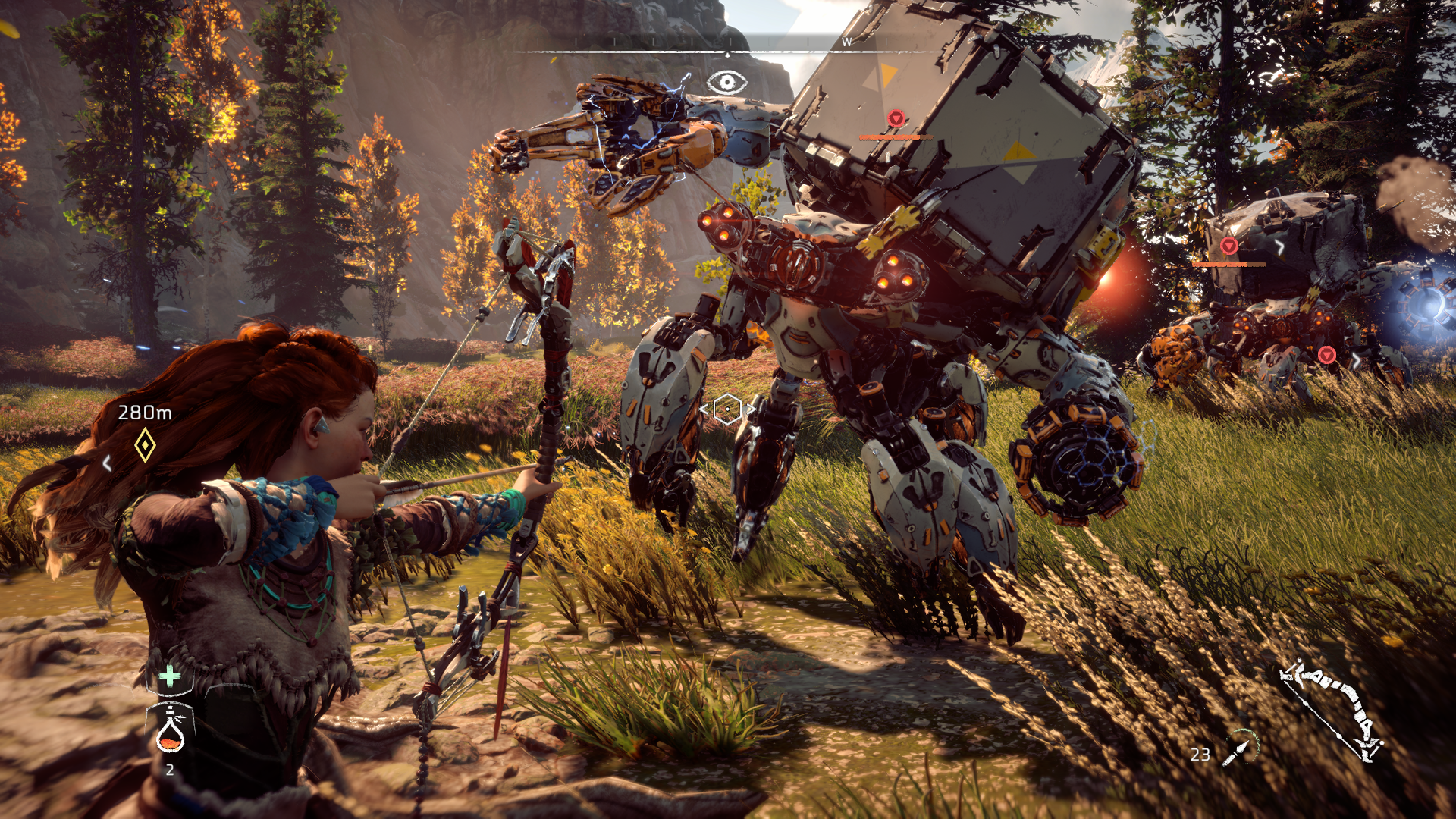
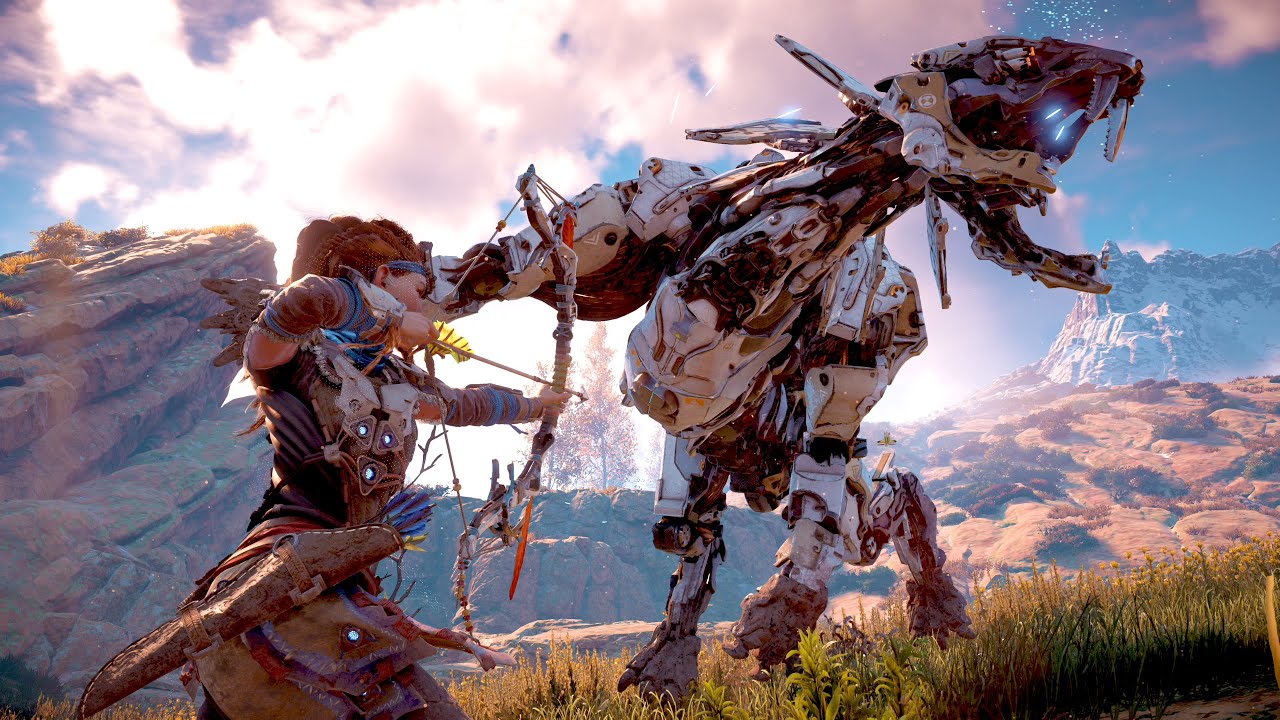
I saw all of this because the combat, while interesting, is frustrating and fairly uninteresting. The entire game’s premise focuses on these machines that made humanity go extinct. While I don’t want to discuss too much of the story as it will spoil it (the story is really good), I will say that the entire idea of weak points breaks the combat. You can use your Focus, which is a device Aloy has on her ear that can scan the world, and this will show breakable weak points on machines. Each weak point might have different elemental weaknesses. It’s essential to break these down to attack the machine and kill it faster. Otherwise, you will only chip your health away. While this sounds fine on paper, the execution is poorly done. A lot of the game wants to focus on stealth by sneaking around tall grass and using your tripcaster to shoot out trip lines for machines to walk across. Early on, this is fine, as single wires can take down enemies. Later on, the bigger ones won’t fall for this, and the entire tripcaster weapon becomes useless. The ropcaster is used to tie down machines, but it is useless against humans. There is a sling that throws out bombs, and then a heavy bow and a bow for elemental arrows. That is it. The only difference in price for each weapon is how many augmentation slots you get, so much power, and the different elemental ammo types it can use.
The flaw stems from combat being too chaotic to accurately break down weak points. When multiple machines are coming at you, the instinct is to just throw everything you have at them. Forget melee attacks, as these only work against smaller machines that are maybe twice your size. Attacking massive Deathbringers up close will result in instant death. The bigger the machine, the more you have to roll, dodge around, shoot elemental arrows, and really have the ammo for that weakness. The second big flaw comes into play with the crafting system. You have to either buy or craft everything, and it’s imperative that you have plenty of material on hand or you are left hanging. You can’t ever hold more than what you can craft, and crafting bigger ammo pouches doesn’t help much. You always feel like nothing is enough. Health upgrades with each level up aren’t enough; the skill tree takes way too long to get to more useless skills, and it always feels like it’s not enough. You can’t upgrade your base power, as weapons rely on augmentations to make them more powerful. It just never feels like what you do is good enough and can’t get better, no matter how much you level up. I was always dying easily, guzzling health potions, and relying on cheap exploits to get through tougher battles.
It’s sad that the combat is so flawed, as the rest of the game is fine. The open world is beautiful, and I had fun climbing mountains Tomb Raider-style and wanted to explore more, but there’s no reward for any of this. In combat, you can control smaller machines, and you learn to control new ones by finding cauldrons throughout the game. Think tombs in Tomb Raider. These require taking down bosses to learn a new ability, but I never needed to ride an animal once. It felt pointless, and the reward wasn’t justified. Why would I go through all this trouble for a new skill I will never use? Side quests in this game are fine for the most part. The other big flaw in the game is the lifeless and boring characters. Sylens and Aloy are the only characters I had any interest in outside of discovering the mystery of what caused the human apocalypse. Most of the side characters feel like mannequins, and the voice acting is spotty for them.
Some other gripes are with the healing system. You have to run around picking up every little flower you see to keep filling your medicine pouch. This is a health system separate from potions. However, if you want to keep potions stocked, you need to hunt animals, which is really tedious and gets old fast. The same five animals are spread throughout the game, and you need different meat types to make potions. Some pouch upgrades require animal skins, which require hunting multiple times before they drop one. It’s a very tedious system, and there’s no relief. After the 100,000 flowers I picked up, I wanted to scream. The medicine pouch is annoying because combat is flawed. If I didn’t have to guzzle health items so often and actually felt like I was getting stronger, it wouldn’t be an issue. Each system feeds off of itself, and it brings the whole game down quite a bit.
The visuals are actually quite impressive. While the base PS4 model is pretty rough, the game looks great on PS4 Pro and even better on PC and PS5. The character models look a bit plastic-like, but overall, the entire game just looks good and colorful. I didn’t run into any slowdowns or glitches at all. It runs really solid; however, the game isn’t well optimized on PC. It requires more powerful hardware than is really needed.
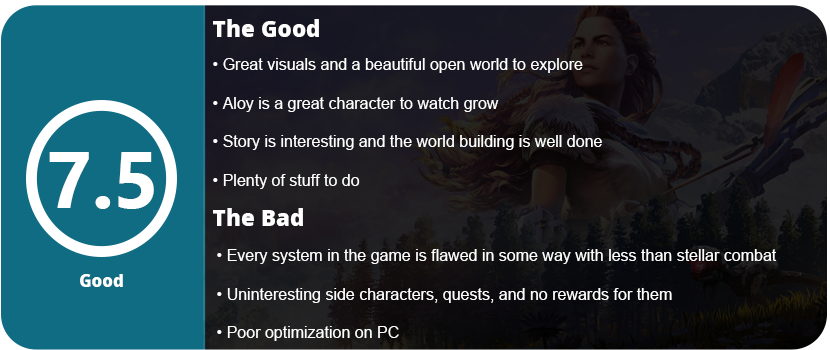
Overall, Horizon: Zero Dawn has a fantastic story, and world-building is done well, but the game has many systems that feed off of each other, and each one is severely flawed. Combat is hectic and requires breaking machine parts to take them down, and that type of precise combat isn’t fun here. Stealth is flawed as it requires trial and error, and you don’t get powerful enough weapons to ever feel like you can get any job done right. The weapons are mostly uninteresting, and the skill tree is a grind. Side quests and NPCs are a bore, and there are no worthwhile rewards for getting collectibles and doing said side quests. It sounds like I hated this game, but I didn’t. The story and world are interesting enough to keep playing, and Aloy is a great character herself. I just felt like the first third of the game builds everything up too much, and you’re let down when you realize that’s all.
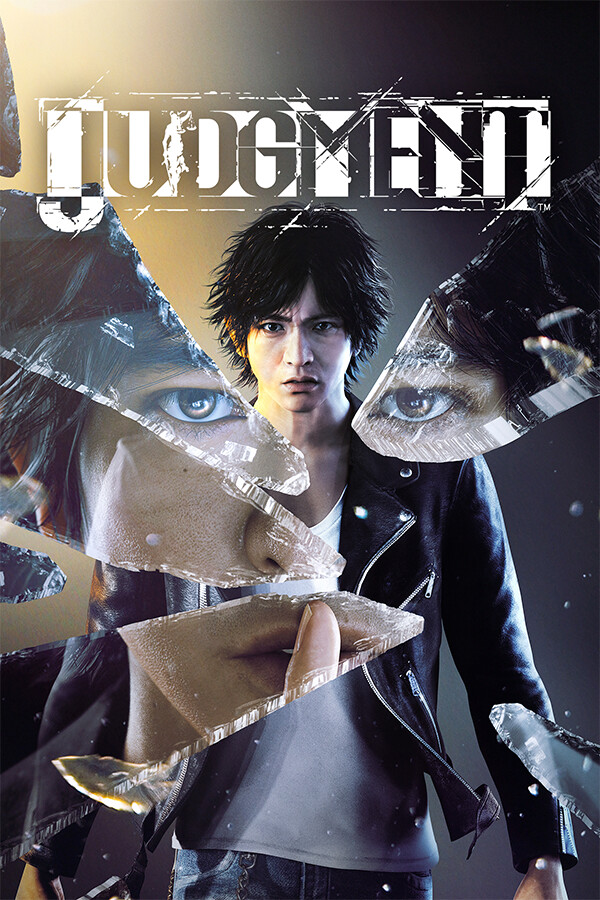
The Yakuza series had massive success with its spinoff, Like a Dragon. While it had flaws, it was entertaining and had great characters and a detailed story. The entire Yakuza franchise excels in the storytelling and character development departments. Judgment is no different. You play as the lawyer turned detective Tavo Kagami, trying to rid himself of his demons and upturn a bunch of corrupt politicians. An Alzheimer’s cure and a murder mystery are at the center of this. The story is well constructed and kept me on the edge of my seat at every turn. The entire story has chapters ending on cliffhangers like addictive binge-worthy TV shows. I always wanted to know what was going to come next. At many points, it felt like Yagami and co. were backed into a corner, and I didn’t see any way out, only for the story to twist and turn in crazy ways.
I don’t want to say too much about the story, as any small detail can spoil it. Just know that this is the strongest point of the game and what makes it worth sticking through the 30-plus-hour game. The second reason is the characters. There are many, and they are well-acted and have great backstories. They are slowly introduced throughout the game, and by the end, I either loved them or hated them. Tavo himself is a well-rounded character who’s stubborn and unwilling to back down from anything. I really liked the personalities of each character. They were unique and interesting, and they all stood out in their own way. For such a large cast, this is usually hard to pull off or not done well enough.
Judgment_20190619220949
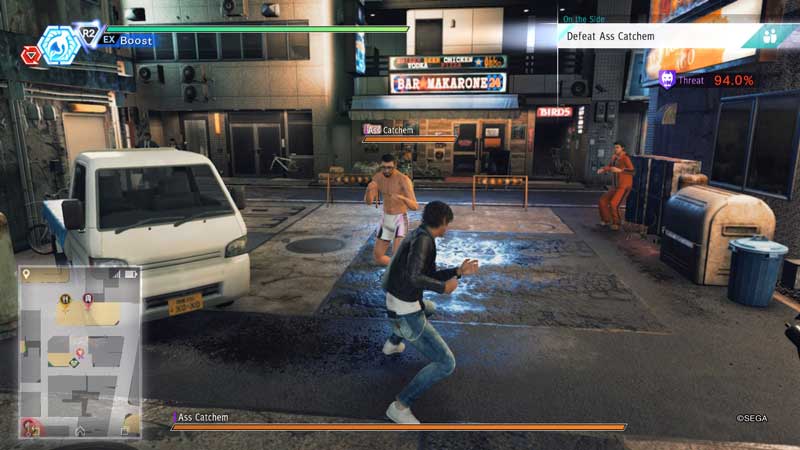
As for the gameplay, this is where Judgment falters, and the entire Yakuza series lacks here in every entry in some way. You get to run around in this open map called Kamarucho. I don’t want to say open world because it’s just a small city that can be run across in about 2–3 minutes. It’s a city full of crime and underground misdeeds. What’s the point of the open city? I don’t really know. Mostly for side quests, but I always found these to be underwhelming and repetitive in the Yakuza series. There are a few types. First off, there are actual side cases that net you more SP and cash. That’s about it. They are mostly uninteresting and don’t advance the story or characters at all. There are friend events spread throughout that net you skills that can be unlocked, SP, and cash. These are the two main types of side quests you can partake in, and I did finish most side cases just for the SP and cash. You really need cash to buy healing items and stay stocked up.
There are taxis spread throughout to help with fast travel. With such a small area, you would think it’s pointless, but it’s great to avoid fights on the streets. These are randomly occurring, and you can usually run from them. I felt it hindered progress, and after the third chapter, it didn’t net enough SP to be worth bothering with. Eventually, you will be wanted by street gangs, and your threat level will increase unless you stop a boss-type enemy. This never goes away and will always go back to 100%, so I just ignored them. There are also side activities that are mostly used for dating. That’s another side quest that I didn’t find interesting. You can meet girls through friend events or side cases and later date them by presenting presents. Side mini-games like batting, darts, and gambling can be fun to an extent, but when are mini-games like this ever fun to go back to? It’s just filler content, and for achievement hunters, really. It doesn’t advance the story or add to it in any way; I just felt like all of these side activities and missions were chores to complete.
Let’s get into combat. It’s flawed, for sure. While it looks cool and is easy to understand, it suffers from unresponsive controls and animations that don’t interrupt when you input a command. I always felt like my button presses were delayed. There are two fighting stances. Tiger for one-to-one fights and Crane for multiple enemies. You can pick up objects and hit people with them, and there’s a special EX finishing move that you can perform, which is key to winning tougher fights. You also have an EX boost, which unlocks more powerful combos and increases your defense. Again, a key thing to use to win fights I just felt like no matter what I did, I couldn’t master the system. There is a block and dodge button, but it seems that the enemies are magnetized to you because no matter how much I dodge or run away, they always follow me and connect their attacks. It makes boss fights especially infuriating. While I had plenty of items I could use at my disposal to help, I wish I could rely more on my skills, but the fighting system just doesn’t allow it.
There are other small annoyances, such as mortal wounds. These lockout parts of your health bar, and the only thing in the game that can fix this are med-kits, which are rare and cost a lot of money. There’s only one person that can heal you, and they’re sold underground in a sewer. Of course, you have to go through the animation of opening the sewer, sliding down a ladder, running down the sewer, and then the same thing going back up. Just cut all of this out! I also found the game way too long. It’s padded with a ton of fights throughout the main story, and I wish a lot of this was cut out. There are easily 10 hours of fights just in the main story. Nothing breaks this up, however. There are repetitive detective events like searching for objects in first-person, chase scenes, and tailing people. My god, do these get old quickly? Tailing missions are never fun in games, and these are dragged out for sometimes over five minutes. You can hide behind objects, and that’s about it. Just don’t fill out the suspicion meter. All of these mini-games are just incredibly repetitive and could have been cut out.
The game at least looks decent. It’s a PS4 port, so some parts look rough. There are some textures that look like PS3-era stuff, but at least the facial animations and character models are really good. There’s lots of detail everywhere, but don’t expect this to push your hardware to its limits. It mostly looks very realistic and sterile, with not much in the way of artistic flair. It looks like a modern-day Japanese city.
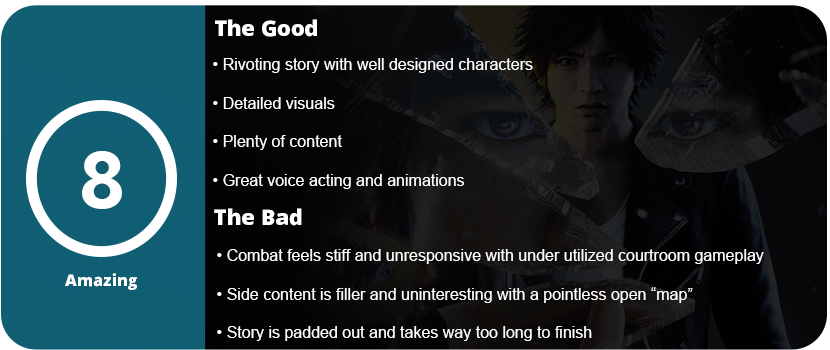
Overall, Judgment excels in storytelling and character development but falters in gameplay. The fighting is stiff and unresponsive, the mini-games are repetitive and pad out the hours, and I felt the detective work in the courtroom was a missed opportunity. The open city is an excuse to throw side cases and missions at you that are meaningless and just pad gameplay. Random city fights are annoying and get in the way of progress, and the visuals aren’t much of an upgrade. What’
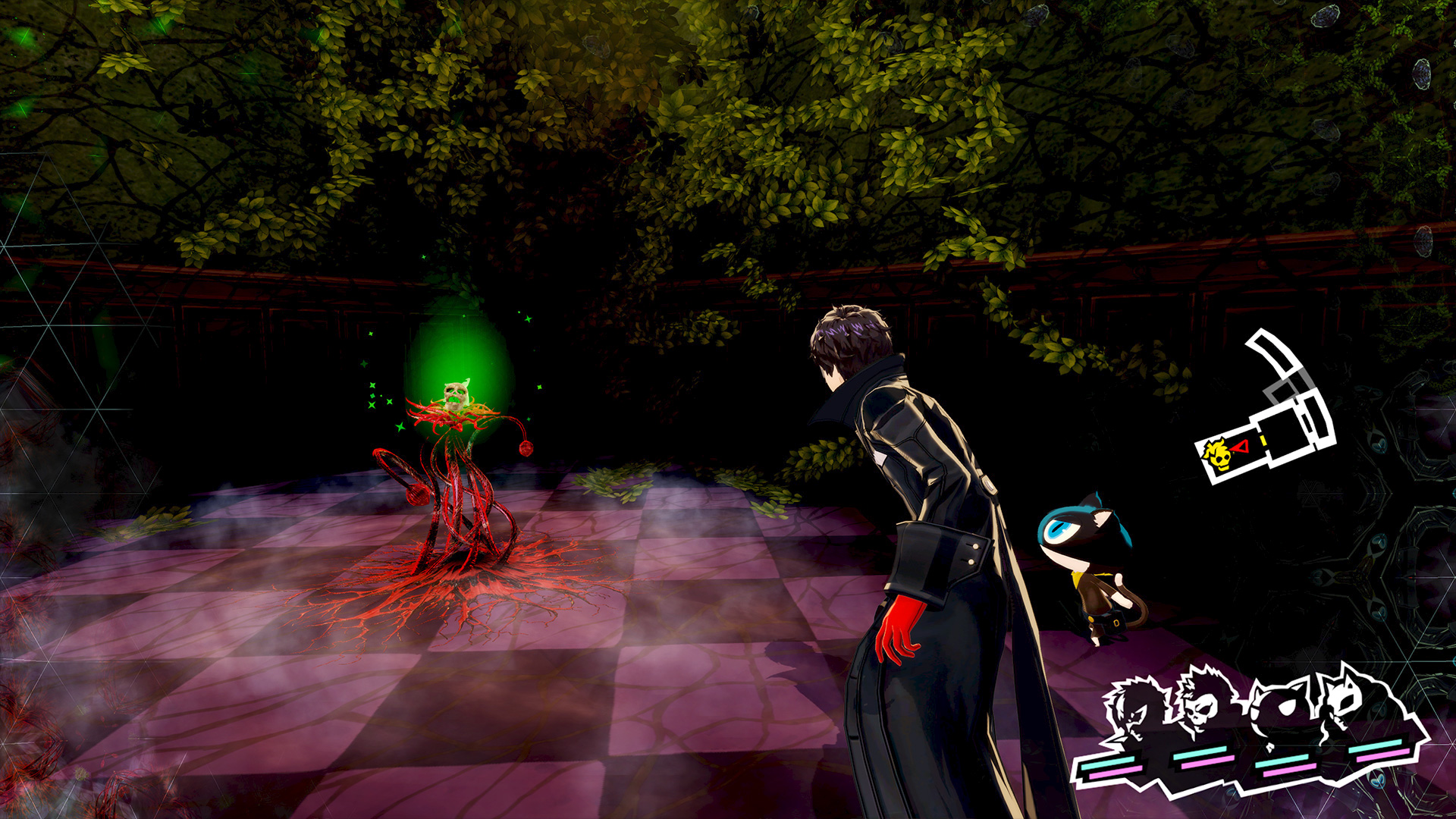
I really like the Persona and Shin Megami Tensei series, but they are insanely long and challenging. These are hardcore JRPGs, not meant for casual players. Most won’t have the stamina needed to sit through 150+-hour games, and the PlayStation Trophy data shows that. Less than half of all Persona 5 players finished the game. Thankfully, for people like me, Atlus put me in an extra-easy mode called Safety that let me finish my first-ever Persona game. I tried the third and fourth games several times and just couldn’t do it. While I eventually did well in battles, the games were too long. The story in Persona 5 is fantastic, and there are plenty of great things about this game, but a few key issues may drive most players away, even more casual JRPG fans.
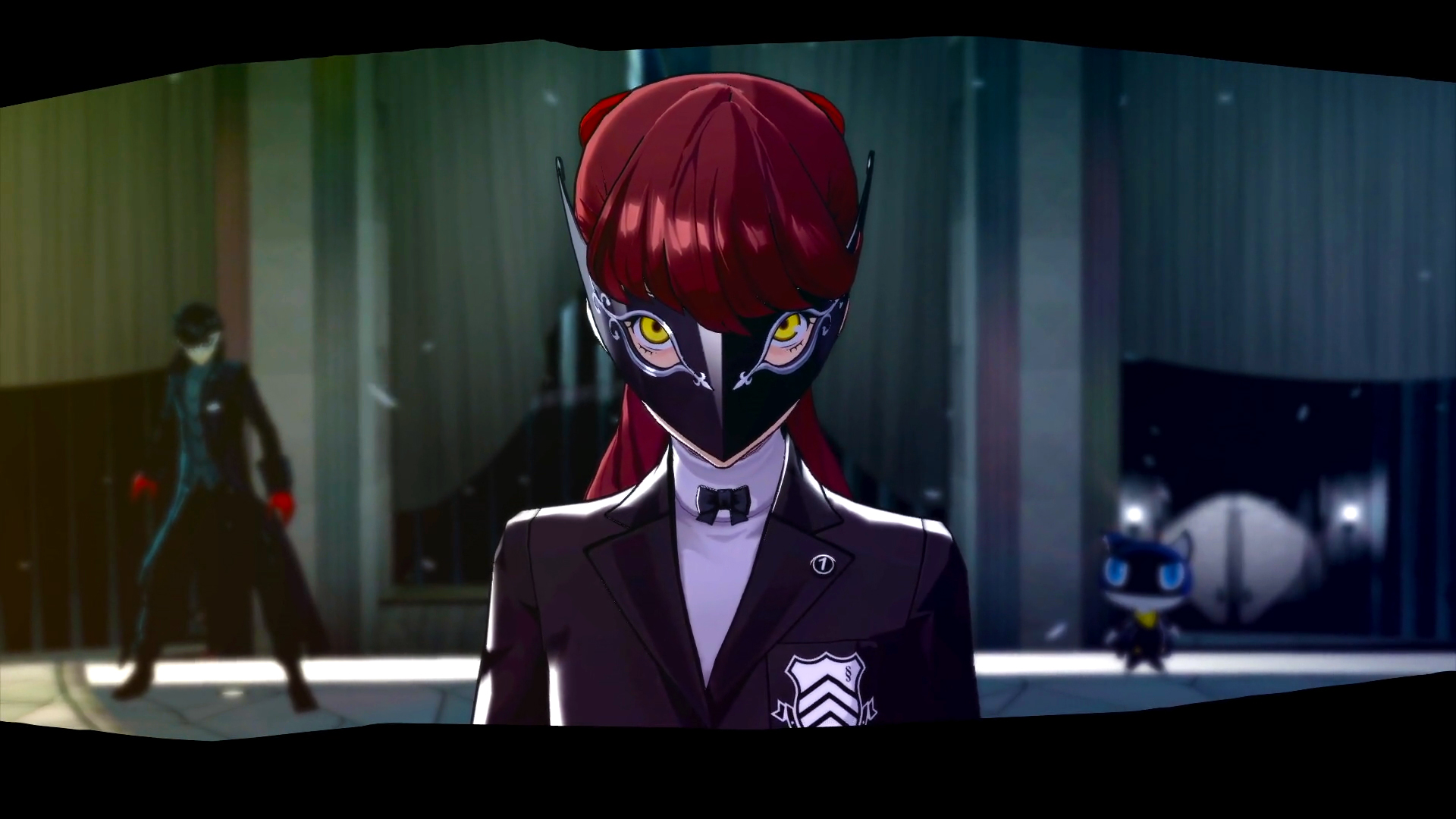
The story is insanely deep and detailed. There are plenty of mysteries, twists, and turns that kept me trucking on because I wanted to see what happened next. The characters are compelling, well-written, and very likable; however, you still need to like anime to enjoy the characters in this game. There are some typical anime tropes that leak in, but I think people who play JRPGs are already aware of this. Your character is Joker, a teenage boy wrongfully convicted of assaulting a high-profile individual for just trying to save a woman from harassment on the street. You end up living with someone who volunteered to take in a convict and watch over you so you can get rehabilitated. This game plays just like previous persona games, with a time limit, days going by, social rankings, and acquiring personas.
The game will introduce things to you throughout the entire game, and I mean throughout. 40 hours in, I was still getting tutorial messages. The game is an incredibly slow burn. I didn’t get to do any battling until the fifth or sixth hour. This was all story and world-building, introducing the idea of personas, your purpose, and your back story, and showing you how to go about the day-to-day. The game is mostly dialog, to be honest. Out of the 80 hours it took me to finish the game, maybe 25 of those were spent actually exploring the dungeons and fighting. There is a lot of character-building and slice-of-life stuff in here. You also have a time limit to finish every palace, which is the main dungeon in the game.
When you’re not battling, you are living your everyday life. You need to go to school, and the day is broken up into sections such as early morning, which is reserved for dialog you hear on the train going to school, talking to friends at the train station, etc. Morning and afternoon are reserved for things happening at school during the week or random quizzes that you can answer to increase your social stats. These stats are knowledge, proficiency, charm, kindness, and guts. These are needed to finish confidant arcs and max out that persona category, so you can get stat boosts when using that type of persona. These stats can be increased by doing certain activities like watching movies, playing games, doing chores, and other everyday activities. It’s important to use your downtime to increase these stats, as the game is balanced by not just level grinding but having these extra stats for each persona type.
After school time is reserved for doing things around the city, such as said activities, and getting together to enter Momentos, which is a secondary dungeon with a few dozen levels that you need to descend to complete requests from people. In the end, it’s required to descend fully for the final dungeon, but before that, it’s optional. I recommend doing these late-game activities so you can just barrel through the levels at the end. The evening is reserved for nighttime activities and jobs, even to earn more money. After the activity is done, you advance to the next day and do this all over. Some days are interrupted by story elements, scripted scenes, and other events. It’s important to hang out with confidants when you get texts from them to advance their persona ranking. These are where the side stories for each character are held. They can be long-cut scenes too. Usually, you get 30 odd days between each major palace to fill the time. This time period can take hours to finish.
When you do actually battle, your persona is based on finding the weaknesses of your enemies. This can be both good and bad. If you find the weakness, you get one more turn. This can be elemental or physical. The downside is that the entire game can be over if you don’t find these quickly. It’s trial and error as to finding the weakness, and some just don’t have one. You waste precious turns trying to figure this out, and it can make some boss fights grueling. You can save within these palaces and return to the real world to buy items and increase your persona rankings more, but if you don’t find the treasure and beat the boss by the deadline, it’s game over. I’ve always hated this about the series, and it makes the game more difficult and frustrating than it needs to be. You can capture personas by talking to them when they’re weak in battle. If successful, they will join your ranks. It’s important to keep a good variety of personas leveled up and acquire new ones with better skills. You can fuse and itemize them in the Velvet Room, as well as sacrifice weaker ones to strengthen others.
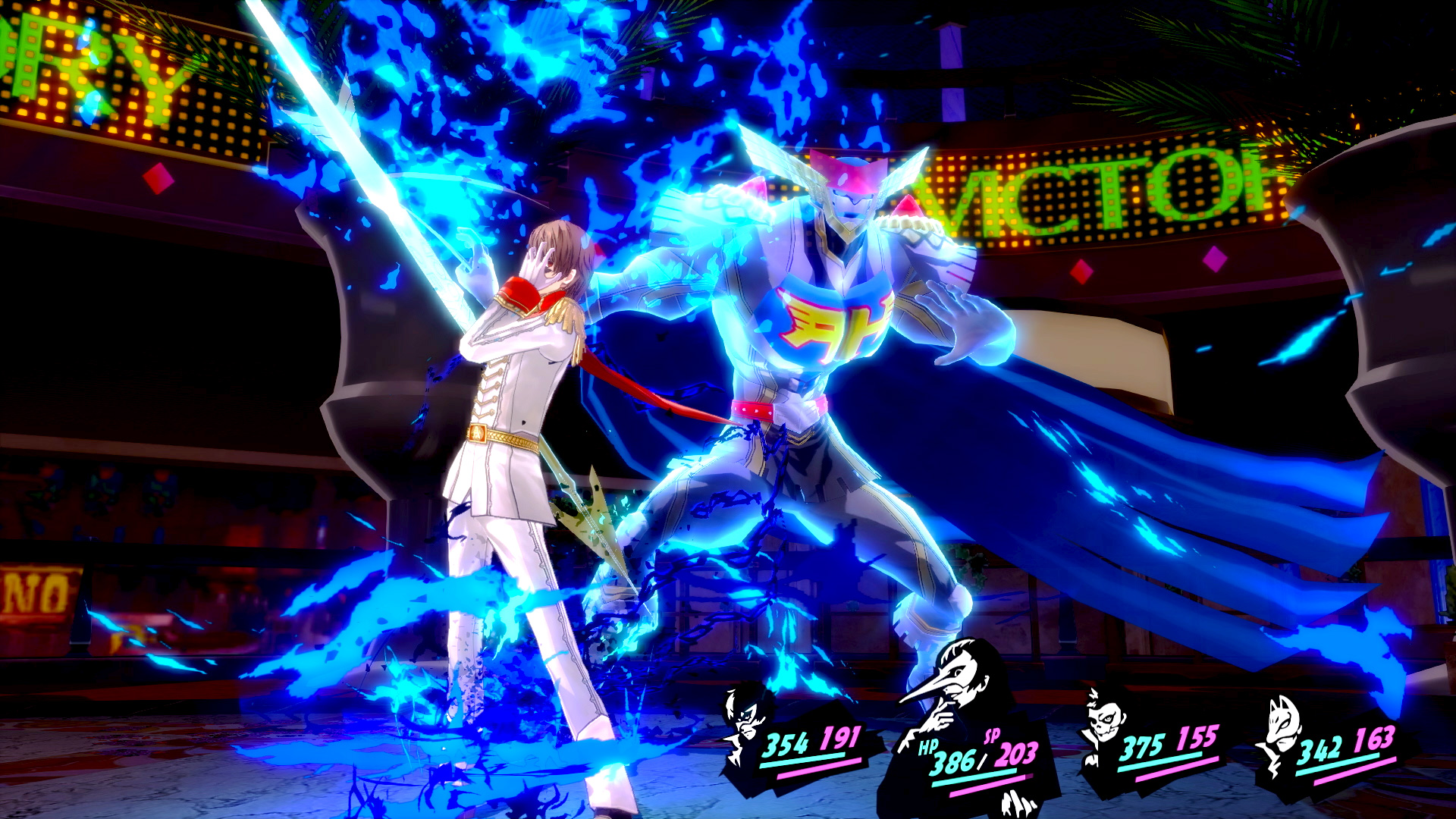
While you can use multiple personas, your party members are stuck with one. Every few levels, they will gain new abilities for their personas, and you have a limited number of slots, so it’s important to keep them balanced. Inside these palaces, you can acquire items, treasures to sell, and powerful equipment that you can buy in the airsoft shop. These palaces are huge, with multiple levels, and can take hours to complete. I played the game on safety difficulty so I could beat each palace in a single sitting, but if you need to level grind and fuse personas, you could take the entire time limit. Each palace has a different theme, and they look cool, but the weak puzzles and labyrinthine halls of some of them are really annoying. Enemies walk around in real-time, and because you are a thief, you can get behind cover and dash around them stealthily or take them head-on. Some palaces are a really confusing mess, and I found some just went on for too long.
Those are your two main parts of the game. Battling in Momentos or palaces and living your everyday life to increase social stats and play mini-games I personally don’t like the trial and error of exploiting weaknesses to win each fight. The graphics are decent, while stylistically they look great with lots of flash and color, but technically it looks like a typical JRPG and borderline last generation and not too much of a step up from the PS3 version. While it seems there is a lot to do in the game, there actually isn’t. You’re so focused on visiting confidants and maxing out social stats in the real world that it feels like a chore after a while. You have to realize there are nearly 250 in-game days you have to get through on top of the palaces and moments. The game just feels like it never ends. 80 hours to finish safety difficulties, and it can take 150–200 hours for higher difficulties. I had to dedicate every free minute I had over the last three weeks to finishing this game and not playing any other games in between. I wish there was a warning at the beginning of the game letting players know how long the game can take on average, or even put it somewhere on an official source of information for the game. I have played and bought many JRPGs, not realizing just how long it takes to beat them.
Overall, I don’t want to talk too much about the story because I can easily spoil something. The Phantom Thieves and trying to change the hearts of criminals is a great story. It can be very dark at times when talking about child exploitation, abuse, murder, money laundering, and many other crimes. It’s a dark game, and I felt it had a very memorable story, but it takes way too long to tell it. Many will balk at the trial and error of weakness exploitation to win battles, insane amounts of grinding, and the constant need to micro-manage your personas to get a well-balanced, always leveled-up arsenal, which might seem like too much. That doesn’t include dozens upon dozens of hours of reading dialog and watching cut scenes. I recommend this only to the hardest-core JRPG fans. This game is not to be taken lightly. While I complain about some of these things, fans of this genre embrace it, and that’s okay, but for only around 40% of players to have finished the game says something about the length.
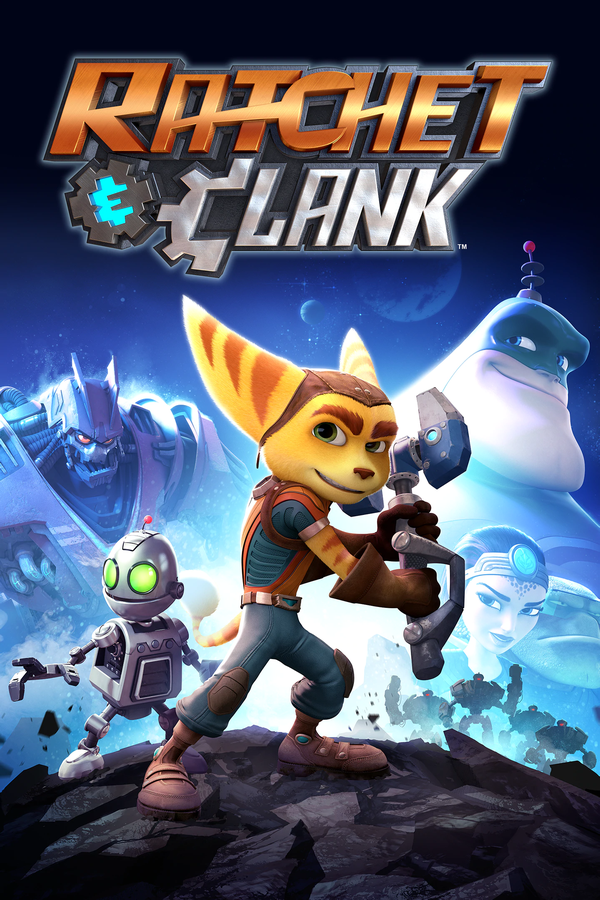
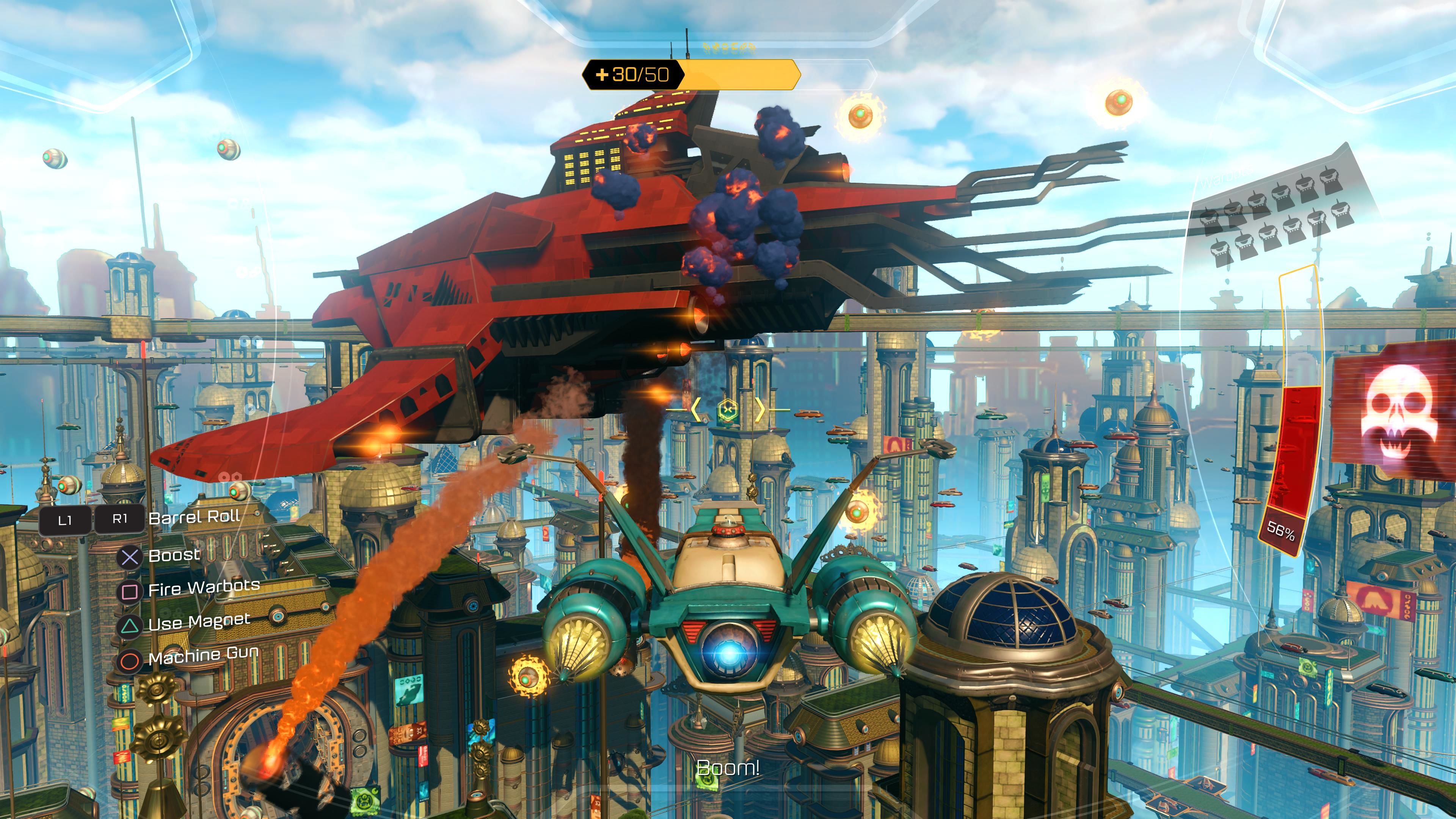
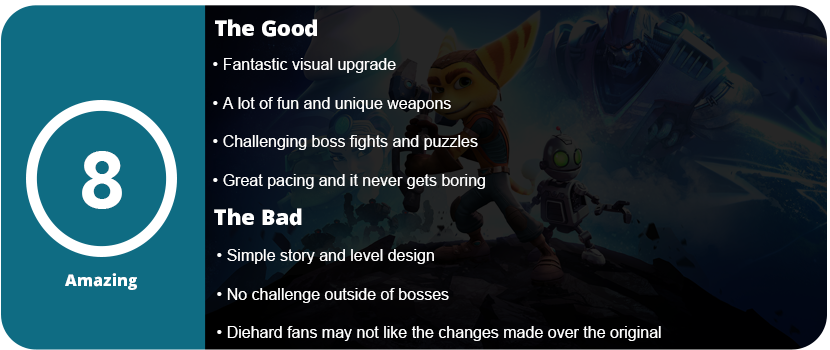
Ratchet & Clank was a series I never got into growing up. My youngest sister was a diehard R&C fan and played every game as they came out, but they seemed “kiddie” for me at the time. While I knew they were good, they seemed too easy and straightforward. Fast forward nearly twenty years later, and I wish I had played them. R&C is a complete “from the ground up” remake of the first game with fancy next-generation visuals and polish. If you didn’t know anything about the series, you would think this was a brand new series. I say brand new, as this isn’t just a 1:1 remake but a complete redo of the first game. Characters were added and taken away; Quark’s story is redone, and so is the entire story. A couple of enemies are missing, and even a couple of levels. However, what’s left looks amazing and is still a blast to play.
You play Ratchet and Clank. Ratchet is a Lombax obsessed with glory, and Clank is a defective robot that escapes Dr. Nefarious’ factory. Together, you gather weapons and explore planets to help the Galactic Rangers and Quark take down Chairman Drek and Dr. Nefarious’ planet-killing device. The story is simple and not very memorable, but the characters are, and they were iconic staples back in the day. Quark is a dimwitted superhero, and all the other characters have sharp and witty writing. You will definitely chuckle a few times throughout. The characters and enemies are well designed, with fun animations and lots of variety on each planet. Most of the game is mostly just completing objectives in linear levels and then moving on to the next one. There are a few planets with optional objectives, such as a trading card-collecting game, collecting 90 brains, and exploring certain parts of levels. These will award the player with new gadgets, weapons, and, of course, trophies.
Shooting in the game is fun and one of the series’ unique mainstays. The weapons are what make R&C so unique and stand out among other shooters outside of the tame presentation. The Groovitron is a weapon that shoots disco balls and makes enemies dance, so you can get some breathing room. The Pixelater (my favorite weapon) turns the enemies into 8-bit sprites for a short time and acts as a shotgun. Mr. Zurkon is a shield and satellite weapon; the Glove of Doom releases a bunch of angry robots; and the Photon Drum is a bomb that pulses and causes damage. While the weapons are cool, I did find them unbalanced. I felt there were too many of them, and a lot just never saw any use, such as the Sheepinator and various others. I wanted more weapons that shot projectiles that weren’t just missiles, maybe more rapid fire, and more close-quarter weapons. While these weapons are cool and unique, I just didn’t find many uses for many of them.
You can buy new weapons from the Gadgetron vendors and upgrade weapons with Raritanium. Upgrading is a must for getting max damage, more ammo, and extra bonuses. I recommend you upgrade all the weapons you mainly use first, as one play-through will let you upgrade maybe 2-3 weapons to 100%. Outside of weapons, there are a few passive gadgets that let you progress through levels, such as the Trespasser, which involves solving puzzles that can get rather tricky. There are a few hoverboard race sections, and of course, you need to acquire bolts in the game by smashing boxes, defeating enemies, and completing objectives. I do want to mention one aspect of R&C that’s fun and unique: seeing hundreds of bolts on screen fly around as enemies explode and boxes blow up, and going around and collecting all of these. It’s something in the game I’ve always thought was fun.
Despite the simple design of the game, it never gets boring. Each planet is beautifully crafted and has a huge graphical upgrade over the first game. There’s just so much more detail two console generations later that couldn’t be done before. Each level is completely different, and all have great pacing. You will never get bored or tired of playing at all. If you really want to keep going, you can collect all 28 gold bolts and all the trading cards in the game. Don’t worry; towards the end of the game, you can get a Map-O-Matic that displays all collectibles on every level. It can add a good five more hours of fun if you want.
Overall, Ratchet & Clank is a fine remake of the first game, and only diehard fans will notice the changes to the story, characters, and missing levels. The game is unique, helped define the PS2, and has that PlayStation DNA that stands up today. It’s a fantastic series, and I hope future games get remade in the same fashion. The game is a bit on the easy side and only offers a challenge during the boss fights, but it’s a fun dozen hours that you can’t get on any other system.
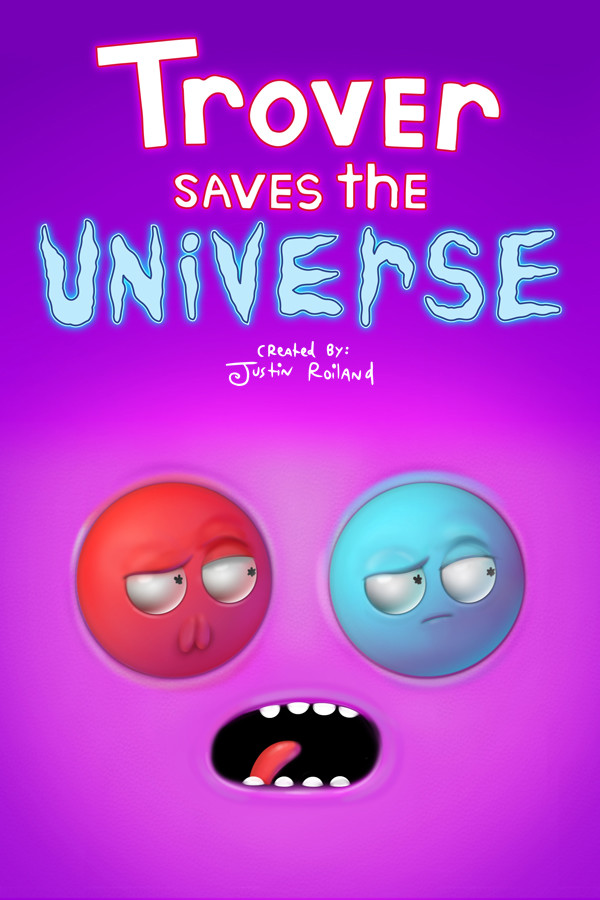
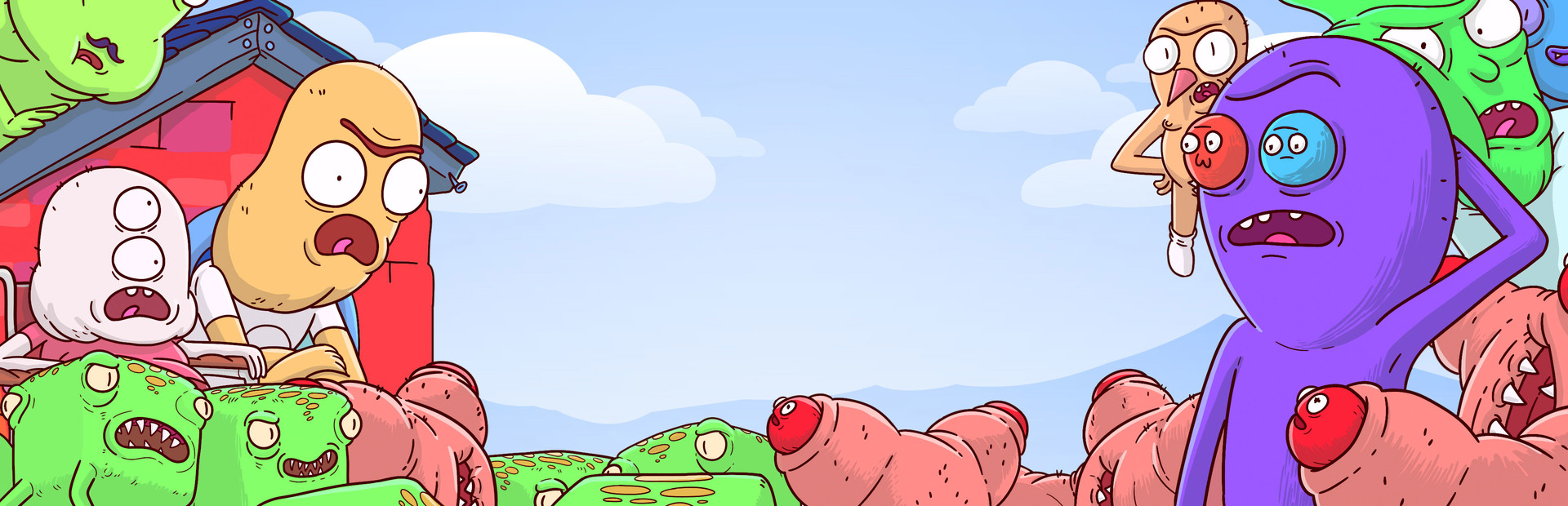
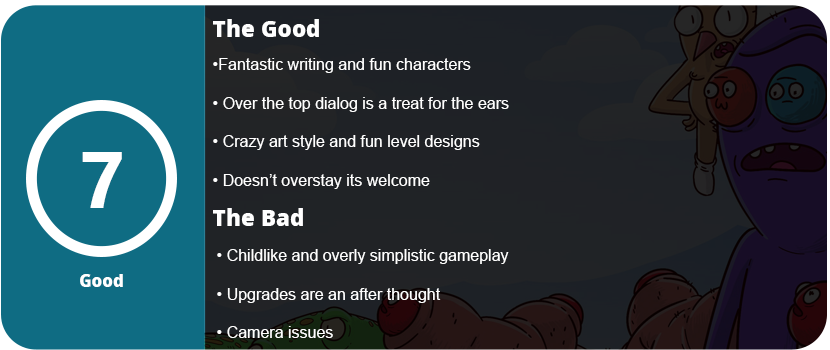
Rick & Morty became an animation phenomeon due to its quirky humor, crazy art style, and memorable characters. A lot of people don’t like the show, which is fine, and a lot of people love it. I just want to preface this review by saying if you don’t like Rick & Morty you won’t like this game. It’s basically an interactive Rick & Morty episode with the same voice actors, but with original characters. It’s the same humor, but more vulgar and mature due to not needing to tone things down for cable TV.
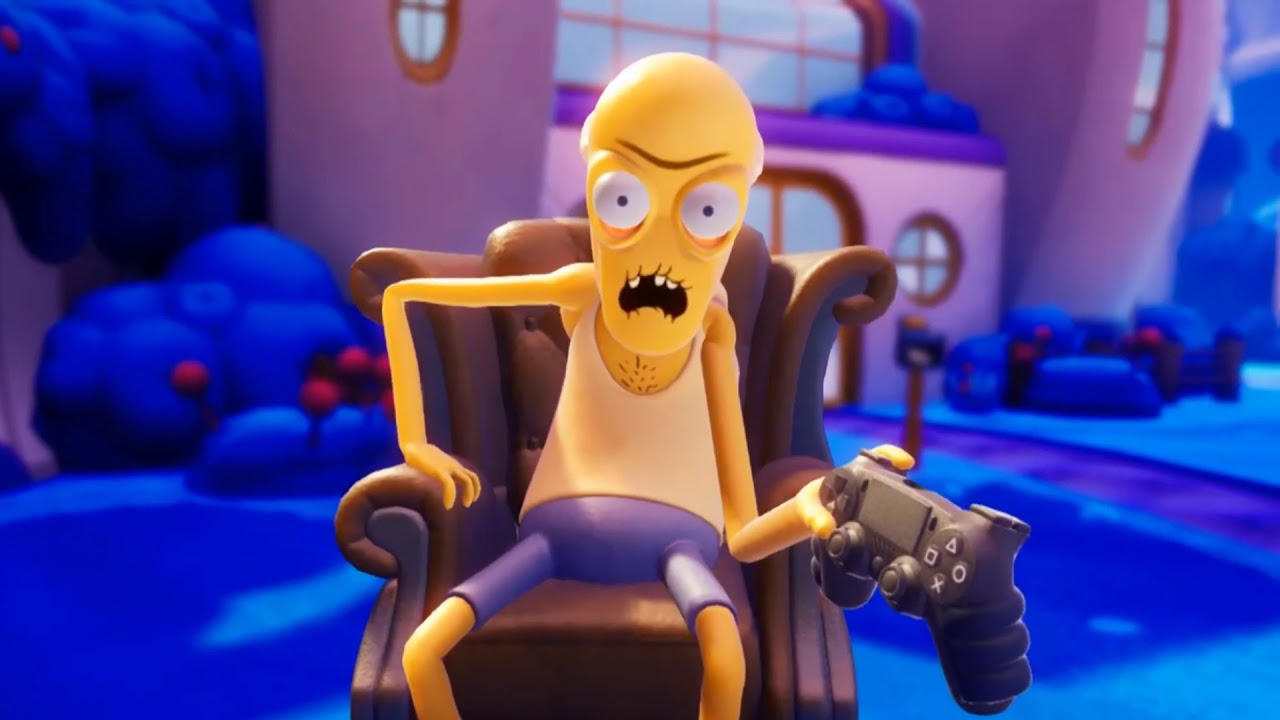
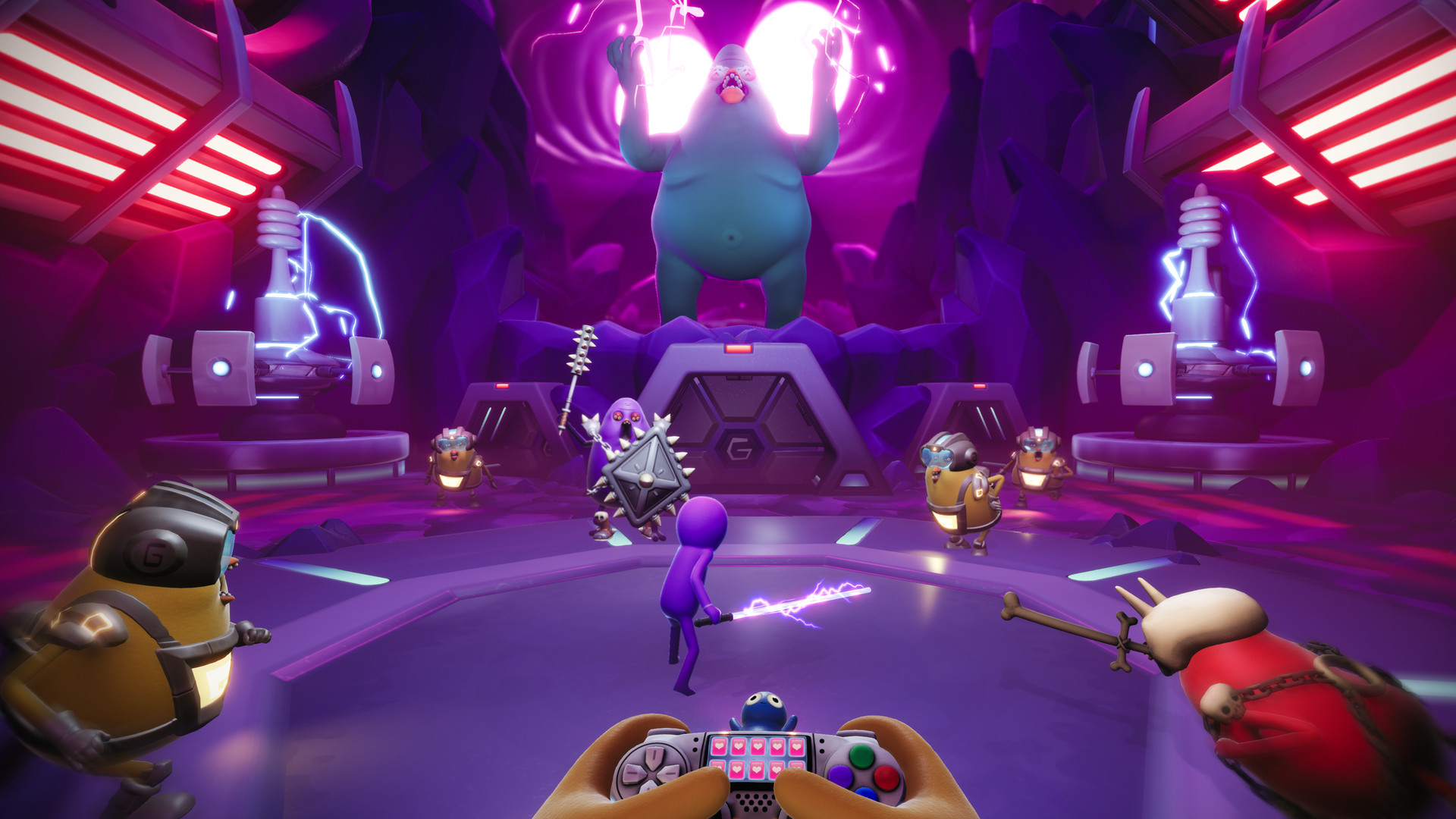
You play as a Chairorpian. A floating person in a chair holding what looks like a PS4 controller. The center part shows Trover’s health and the button presses reflect yours in real life. This is mostly for playing in VR, but it’s still funny without. Your two dogs get stolen by an evil god thing and Trover is sent to you so you can control him to save the universe. The story is insane and crazy and while it makes sense it’s as simple as an animated TV episode. It’s nothing groundbreaking. The most entertaining part about the game is the dialog. Characters break the third and fourth wall constantly and call out typical video game tropes which is hilarious. You can stand near a character and they will drone on for several minutes longer with a new dialog. If you don’t do a certain action Trover will call you out on it knowing you’re supposed to do it. The writing never misses a beat and is spot on.
When it comes to gameplay this is where Trover kind of falters. It’s incredibly simple and basic and pretty boring. Trover has a lightsaber-looking sword and he has a simple basic and heavy attack, but the heavy attack has to be acquired later on. You also have a dodge roll button which also has to be acquired. It’s an obvious stretch for gameplay time and feels necessary. Enemies are “kiddie video game” territory in terms of ease. There’s zero challenge here. Some enemies need armor knocked off which you can do by throwing objects into them, but it’s still not a challenge. There aren’t any puzzles here either. The ones that could pass as one are super easy and require no thinking. There is some platforming, but this is marred by the weird camera angles due to your perspective. There are nodes that allow you to move around and you can hover higher up to get a bird’s eye view, but it still makes some platforming more difficult than it needs to be.
There are green babies you can collect to upgrade Trover’s health, but I didn’t bother much with this outside what was out in the open. The game is so easy the upgrades feel like an afterthought. I mostly enjoyed just exploring the weird worlds and listening to all the dialog. The game gets incredibly graphic, but I personally love this kind of stuff. Too many games are afraid to dive into this territory. It’s just gross, sexual, vulgar, and super weird which I can’t get enough of. The writing of the show is elevated a bit due to not needing to censor anything. Visually, the game is fairly tame outside of some cartoony gore, but the dialog goes off the rails.
The game can be finished in about 5 hours, maybe 6-8 if you collect all of the green babies. It doesn’t stay its welcome and has a satisfying ending. However, there’s zero replay value unless you want to go back in VR. The gameplay is so basic and dull that I wouldn’t even do that, to be honest. If it weren’t for the awesome writing and characters and striking visuals this would be a pretty basic and generic game at its core. The pacing is at least great and you get pushed along the story and always see something new. A single evening would suffice and it would be well worth your time.
Overall, Trover Saves the Universe is full of Rick & Morty humor cranked to 11, but offers simple childlike gameplay. If you hate the show you will hate this even more, but fans of the show must play this. The over-the-top writing that you never see or hear in video games is a breath of the fresh air and it’s never boring. Once you finish the game there’s no reason to come back, but the time spent is worth the price of entry.
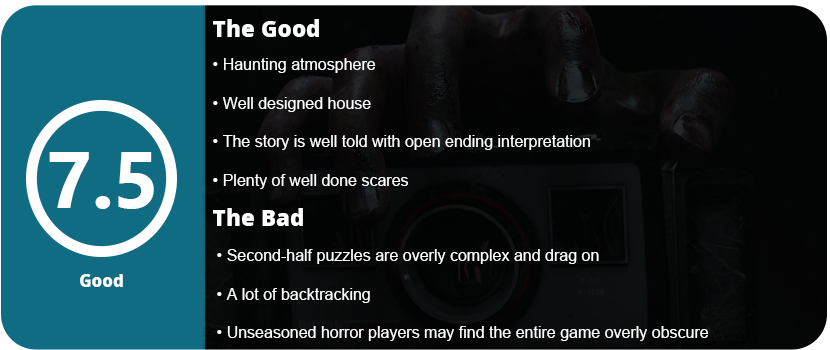
Ever since P.T. was shown and canceled it set a new standard for survival horror games. Silent Hillhas always been the gold standard to live up to and many games have since. MADiSON is one of the first games I’ve played in the style ofP.T. to actually be good and pull off the scares and atmospheres. While not inherently as frightening as P.T. or other horror games it definitely gets across a dark and haunting atmosphere with plenty of scares.
The game starts out really solid but also has foreshadowing of the game’s main weakness. You start out in a dark room with just a TV on and your dad pounding on a door. You need to use the TV as a flashlight by spinning it around and finding a handle to a cupboard on the wall to get a hammer. You get to crawl your way into the rest of the house which acts as the main area you will be solving puzzles. Madison is all about puzzle solving as that’s all you do. The first half of the game can be solved fairly easily. It’s the same affair of examining everything you can and finding that one thing you can pick up and can use on something you remembered it would go to. A lot of finding and matching at the beginning. In between, there is the main gameplay mechanics which involved a Polaroid camera. A Camera Obscura isn’t unusual in horror games. The entire Fatal Frameseries is based around one, but here it’s used to advance the story. There are Polaroids laying around objects you can photograph. When you do you can shake the photo to expose it. While most photos don’t need this some need to be exposed to show a number for a combination lock.
I have to give the developers credit for the great layout of the house. This is a huge issue with a lot of horror games. Many require tons of backtracking through the same area and they grow as you unlock new areas. The house in Madison is well laid out with lots of landmarks to memorize where certain things are. I knew the main starting point with the “ritual area” was past the dining room. The basement was in the main hallway etc. The house is laid out like all horror games should be laid out. Make it memorable with easy landmarks because you trek through the house probably hundreds of times. Most of the rooms hold puzzle areas or transport you to new areas to solve puzzles. You also have an 8-item inventory limit and need to trek to your safe often to store and pick up items. Outside of occasional scripted events, not much happens in the house outside of sounds. There is one scene in a water-filled basement that was probably the scariest in the whole game. The developers really used audio to spook the crap out of you and draw out many fears people would have. Creepy static on radios with unclear voices is haunting.
When you’re wandering around the house nothing happens in between puzzles. Just a lot of squeaking doors, wind blowing, slamming doors, etc. There’s Luca’s breathing that gets annoying as his deep sighs repeat often, but the house itself is just haunting. The sterile lighting, the ultra-realistic look to the house, and the head bobbing. If you played the P.T. demo you know what I’m talking about. This is the new-age horror style that needs to get perfected and Madison definitely sets a new bar. Here’s where things take a bit of a dive. Halfway through when you get to the infamous candle puzzle area in the church many players may turn the game off. You must find four different candles in two different time periods and match those colors that are associated with religious imagery. You also have to navigate through four different mazes and if that candle’s image isn’t there you have to backtrack, go back to the other time period, navigate the same maze again, then repeat this three more times. The one thing the game doesn’t tell you is that if you listen to the confessional too early a ghost stalks you and can kill you if you don’t place the candle down before he shows up. Thankfully he only exists in one time period. I was able to place the first three candles before doing the last one, but many players won’t know this.
Then there’s the clock face puzzle. You must match clock faces that are shown on five different walls but the correct faces are spread out around the house. It’s a lot of memorization and backtracking. And then there’s the Blue Knees ghost puzzle that was incredibly frustrating at the very end. None of this spoils the story, but the last half of the game will really try players’ patience. The game got so much right up until this point and it felt like filler to stretch a 2-hour game into 5. Horror game developers please listen. You don’t need insanely mind-bending puzzles to be a good game. I know this is a trope, but please stop it. No one liked them 25 years ago and no one likes them now. We play horror games for the atmosphere, scares, and intense scenes, not puzzles.
In the end, the story itself is open to self-interpretation. It’s not obvious or clear when the credits roll about what happens to Madison or Luca, but what is obvious are the possible reasons why the ending occurred the way it did. Props to the developers for making an open-ending without being cryptic or making no sense. The visuals are excellent and the production values are up there, but those later half puzzles really bring the game down quite a bit. If you can push past them you’re in for a treat with this being one of the best horror games in recent years.
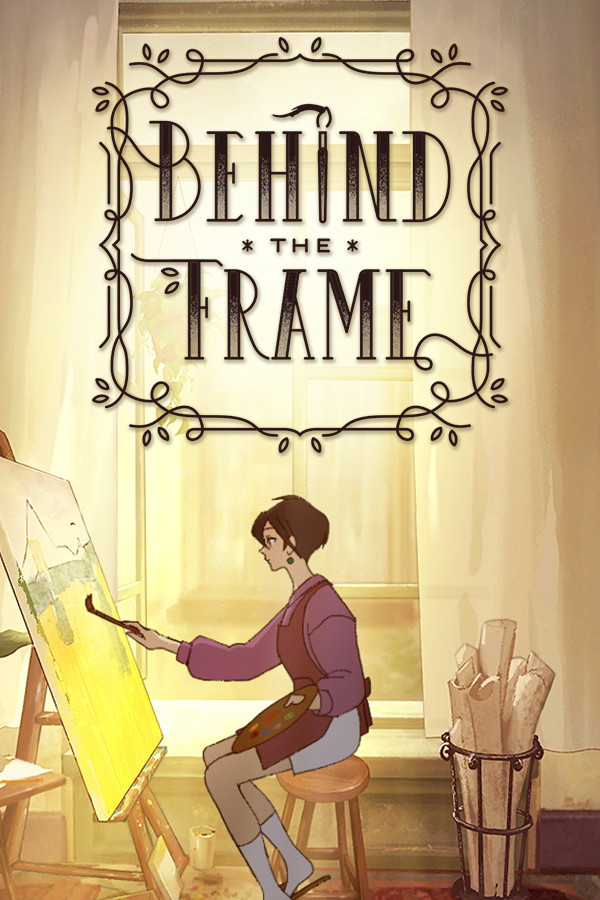
We as humans tend to dwell on death and what lies beyond. It’s only natural as we simply don’t know. Behind the Frameexplores this concept with an emotional tug-of-war of a story, but you really need to pay attention, and a lot of the story is more between the lines and not what’s really being shown in front of you. There’s a lot of assumption that you know what’s happening when the main character looks shockingly off in the distance based on the previous scene. It’s done fairly well too.
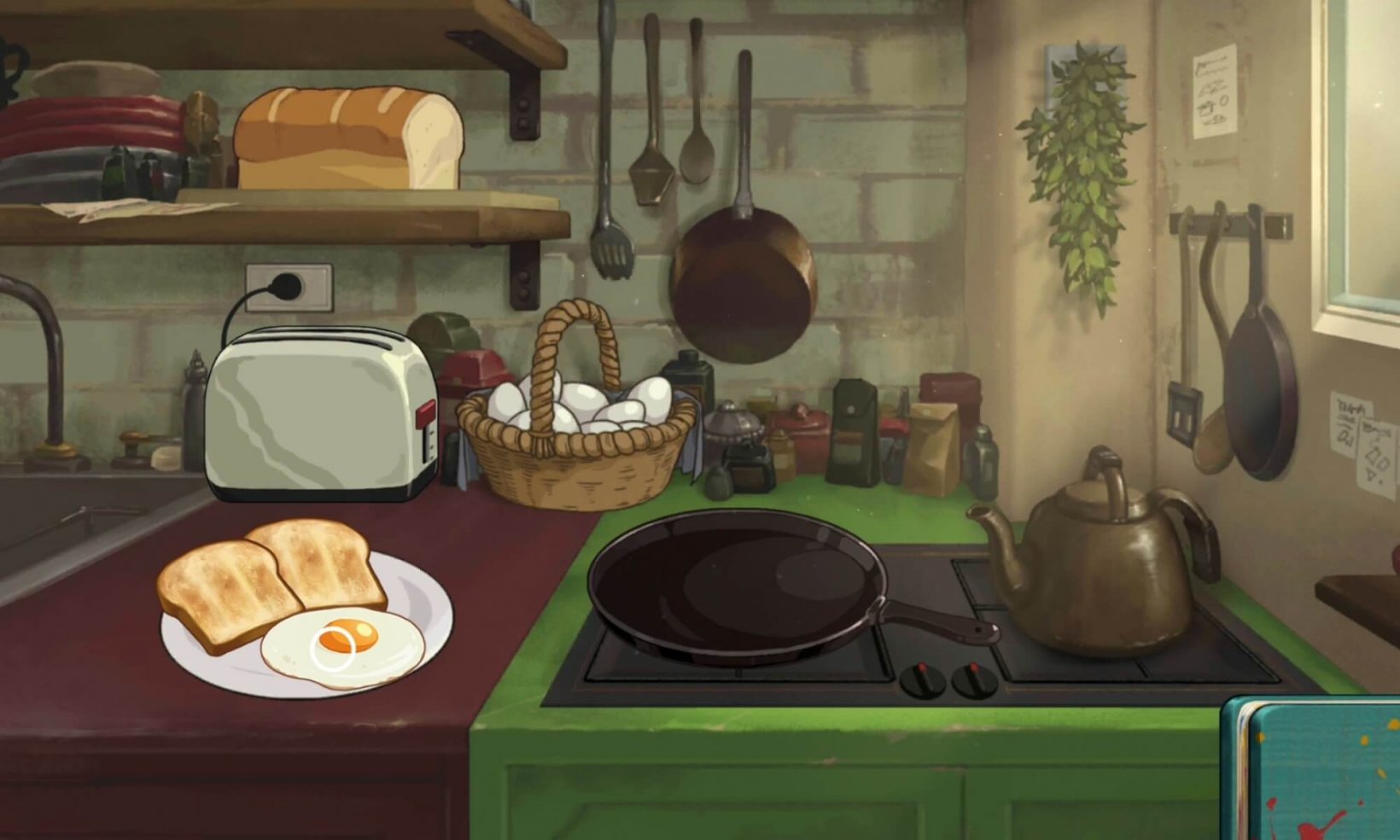
Most of Behind the Frame is puzzle solving. It takes a dark twist halfway through and it surprised me. Your goal is to acquire all five missing colors on your paint palette to finish your painting. To do this each color is locked away behind a chapter puzzle. These got rather complex towards the end, but nothing you can’t figure out without exploring and finding that key item that gives you that “AHA!” moment. Some puzzles are as simple as matching colors on a painting to memorization. Nothing is overly complex and it does eventually come together. The painting itself is a matter of scribbling enough in the empty space and it will auto-fill. Nothing extraordinary there. There are some other small tasks like making food which is as simple and dragging items around.
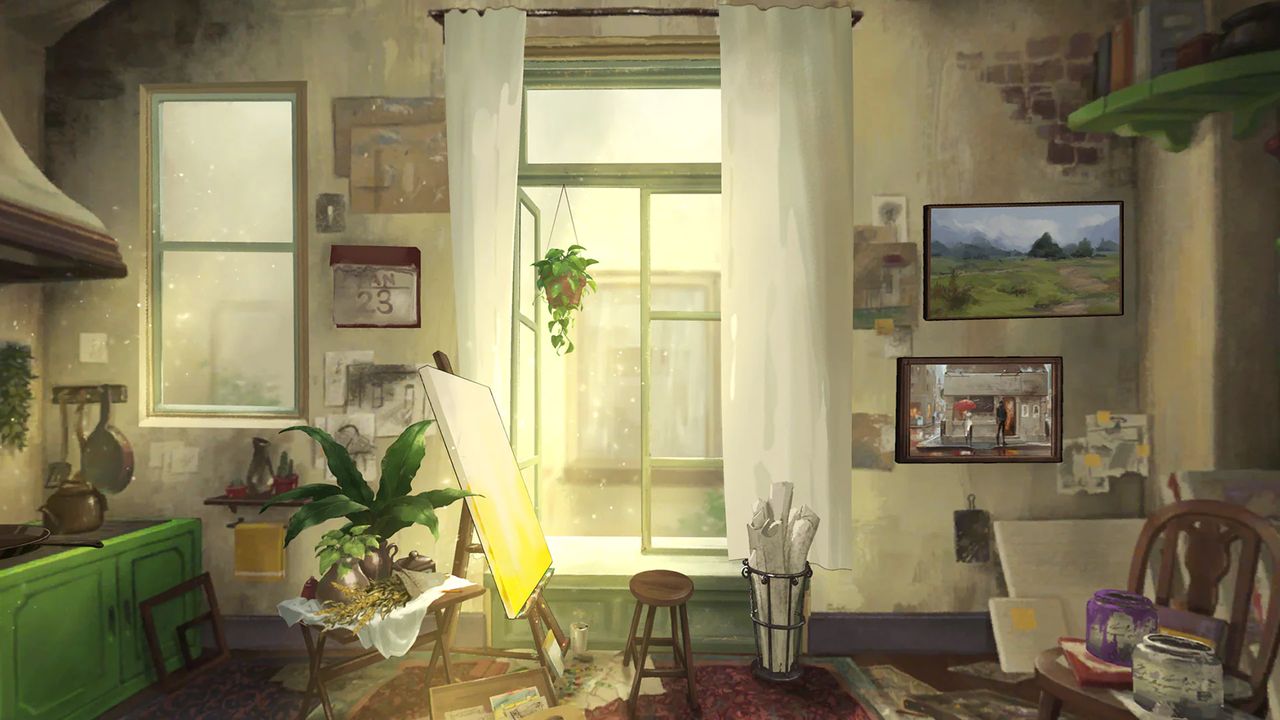
There isn’t a lot of context on the main character’s life itself through any reading of notes or anything. It’s pretty much learning about her past and her connection with her neighbor. The game has gorgeous anime-Ghibli-inspired art with a few small cut scenes thrown in. I never got tired of looking at the game, but it is confined to mostly her apartment. Every so often you “dive” into a painting, but it’s usually just for story context. There were a few panoramic scenes that were breathtaking. I actually felt like I stepped into a painting myself a few times.
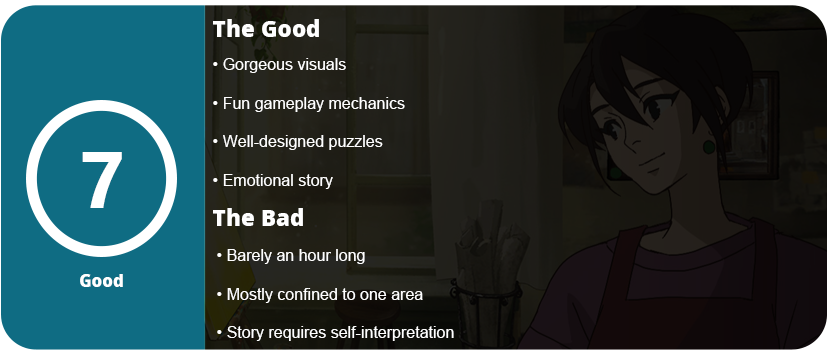
In the end, the game is over in about 90 minutes or less depending on how long it takes you to solve the more complex puzzles in the final chapters. Without having to solve these this game is over in an hour. The story does unfold quite a bit towards the end and without voice acting it gets a lot of emotions across and I have to give the developers credit for that. Most of these short indie games don’t have any meaning behind them. They have some clever gameplay ideas or neat visuals and nothing beyond that. Behind the Frame actually tugged at my heart strings a bit and got me thinking at the end which is more than I can say for 60-hour-long AAA titles. If you want a puzzle-filled emotional evening with great visuals and fun gameplay mechanics then look no further.
I love cyberpunk settings. There’s so much darkness and imagination that can go into the setting. It’s also a setting we could possibly be heading into ourselves with the way technology is advancing and how much we rely on it. Stray is all about exactly this issue. You play as an unnamed orange cat who ends up in the middle of trying to help a race of robots see the “Outside” again. You befriend a robot named B12 who helps you communicate with these robots and he also learns about his identity along the way.
Stray has some really good pacing. It’s a very short game that can be completed in a single sitting, but it has exploration, puzzles, scripted action events, stealth, and collectibles. That’s a lot to back into 5 hours and it’s done very well. Let’s start out with the obvious. This is the best representation of a cat in any video game. The animations are insanely realistic, you get a meow button that’s pretty much useless, but it’s there, and you can do cat things like knock stuff over, sleep, scratch on carpets and walls, and get paper bags stuck on your head that reverse the controls. While it may seem superfluous on the surface it helps add to the love of cats that the developers have even though none of these things really involve advancing the game further.
Jumping around in the game is dealt with context buttons. The jump button will appear on top of the platforms you can climb onto. Outside of this, there are no other actions except accessing B12’s menu to look at items and the flashlight. On occasion, you will have chase sequences in which you are running from a swarm of insect-like creatures, but most of Stray involves finding ways into rooms, platforming, and minor puzzles such as rolling barrels underneath things to jump up to. There are three major cities you end up in. The first one involves vertical platforming that lets you find lost music pages, B12 memories, and various item gathering to progress past certain points. The second city is a brief visit, but the last one is pretty large and looks beautiful. You can also talk to the various robots in the city to help you find out where to go or give you hints.
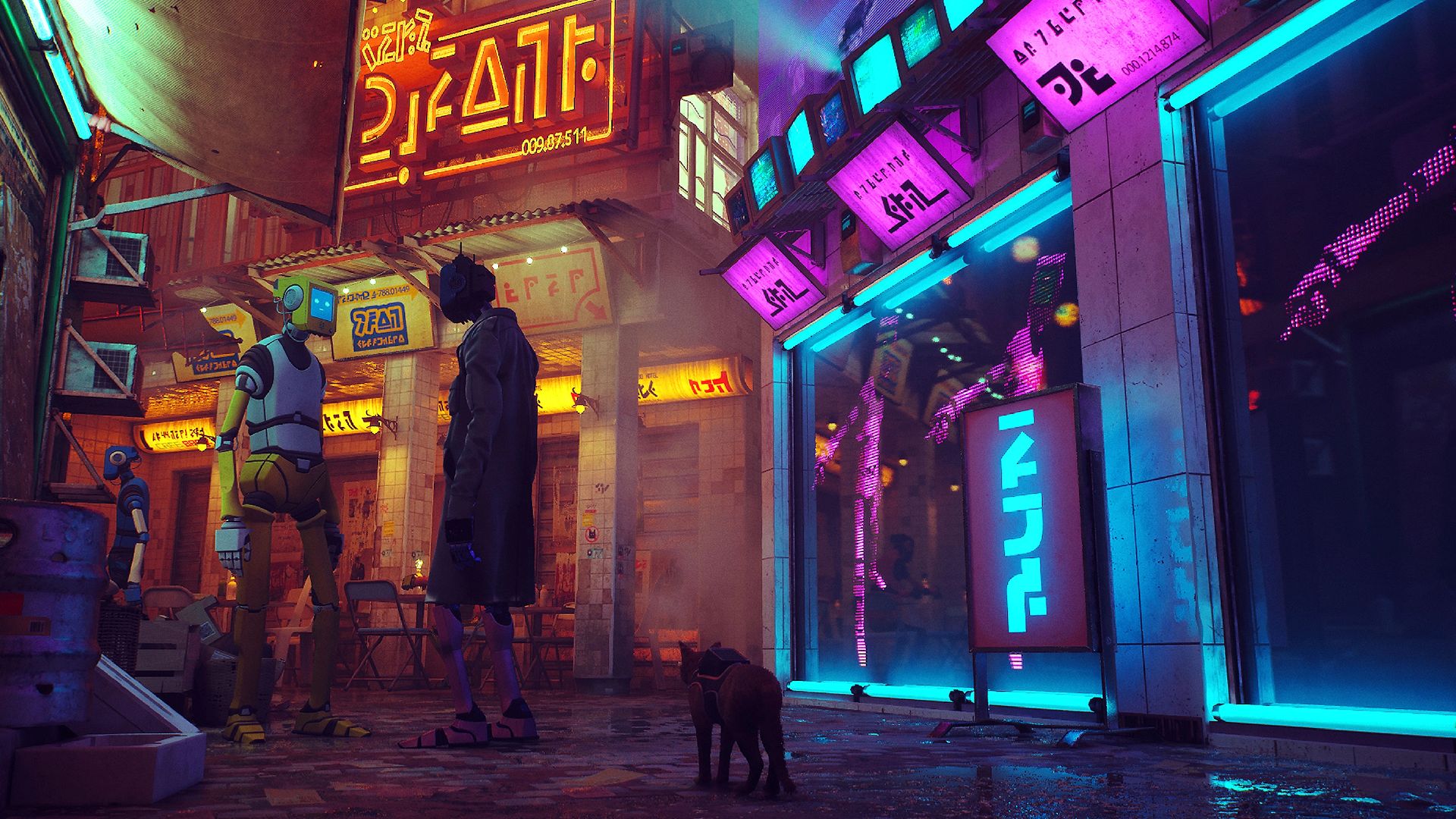
My favorite parts of Stray were the areas in between cities. I liked climbing around, jumping, and running from the insects. The city areas slowed the game down too much for me especially trying to gather the items needed to progress out of the city. The game looks gorgeous with lots of neon lights, and it’s surprisingly dark and gritty for a cat starring a cute cat. The story is pretty touching and tugs at your heartstrings towards the end. Despite the short length, the developers did a great job connecting you with these characters. However, there does seem to be a missed opportunity here. This is a game that would benefit from being open-world. A vast cyberpunk city with side quests and tons of areas to explore. While quite ambitious for such a small team, it would be great, and I think a lot of people are mistaking this game for something like Cyberpunk 2077 in its scope.
Overall, the game is a lot of fun and quite enjoyable despite the limitations of exploration. The game is sadly, poorly optimized on PC with lots of stuttering, terrible temporal anti-aliasing, and shader caching issues. I played the entire game on Steam Deck and it suffered from stuttering when going into new areas. When it’s all said and done, Stray is a very unique game and the love of the domestic feline companion oozes through the screen and pulls on your heart.










































 thebinarymessiah.com
good