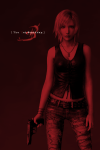
This has been a long time coming. I have been trying to get through this game since it was released, but I just gave up. The game is not only difficult, but it’s so repetitive and strange. It has an odd vibe to it, but at least it controls well for the PSP and looks fantastic. The voice acting is spot on, but the story is so strange and broken up that I just couldn’t follow it.
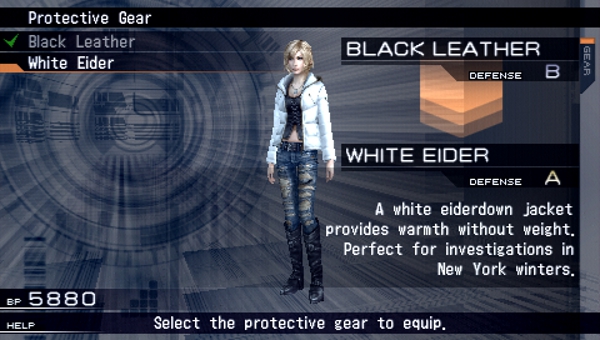
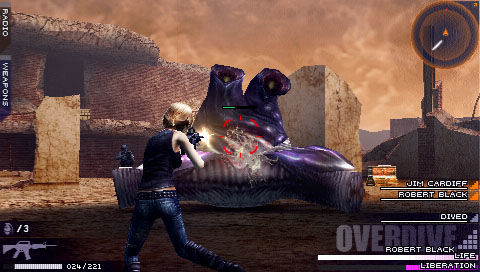
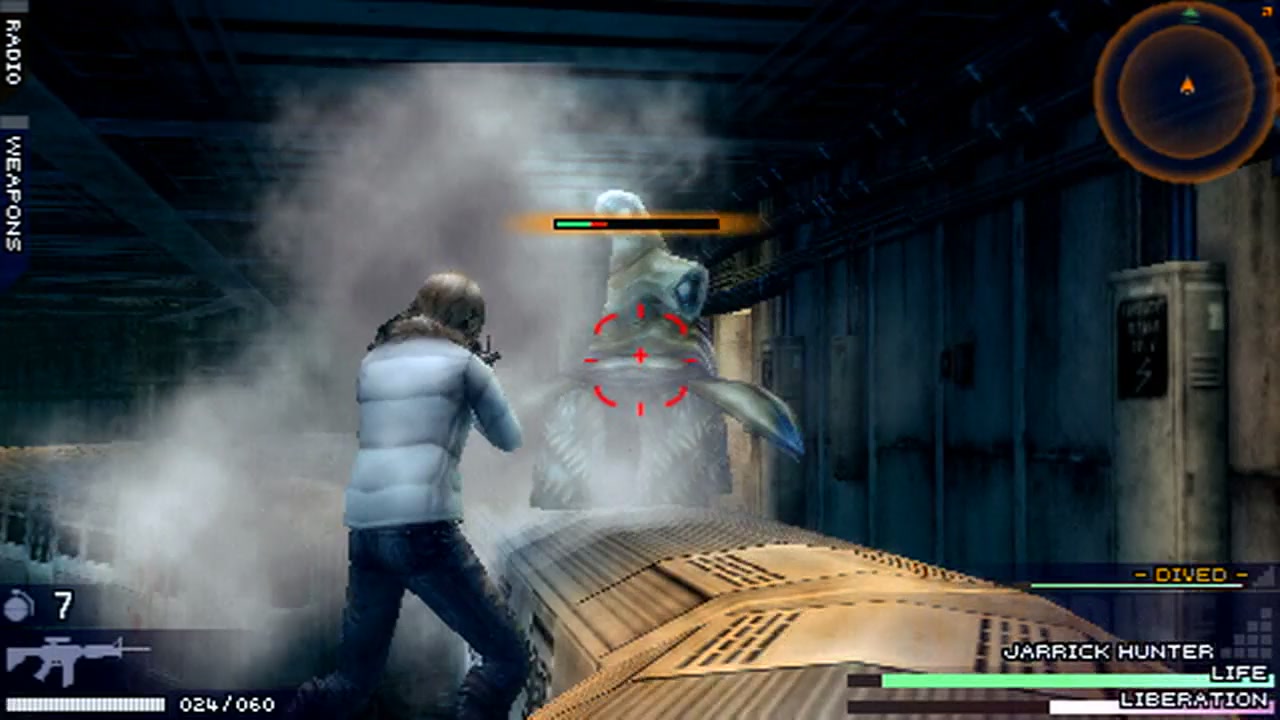
That’s not to say the game’s horrible. All I know is that you play as Aya Brea from Parasite Eve (this is the spiritual successor), and you get jacked into a system where you can warp into people’s bodies and control them. Think of them as lives. Once one guy is dead, you have to transfer to another body, or you will die. As you bring down the health of these parasites that have taken over New York City, a yellow triangle will flash over them that lets you transfer into them and do massive damage. This is essential to winning most boss fights. You just run around blasting everything with traditional military weapons, but at least you can upgrade them. Adding more power, accuracy, and various other things requires points that you acquire through completing levels. There are a plethora of weapons in the game, from handguns to rocket launchers. It’s nothing special, and I wish there were more unique weapons. The combat is fun at first but gets tiringly repetitive as you get further in.
Every level nearly plays the same. You blast through parasites, transfer through bodies, and then fight a boss. Sometimes you have to destroy nodes to advance, but it stops being fun less than halfway through. The bosses are extraordinarily tough, and you will die dozens of times. If you shoot stuff long enough, you get Overdrive, which allows you to do massive damage, but there’s a weird pause between every few shots, and it wastes precious time. Some bosses I died on dozens of times and nearly gave up on—they have multiple life bars, and if you don’t beat them a certain way, you never will.
The action never lets up, but the pacing is so poorly balanced. You get a good run through a level, then suddenly you have to run from some unbeatable monster. The platforming is atrocious, and even climbing ladders can be hard. I died multiple times because of how linear the levels are, and I just couldn’t maneuver properly. The game could have been one of the last great PSP games if it had just had more polish. The graphics are fantastic, with some great lighting effects and good-looking textures. There are just too many issues for this to be considered one of the PSPs’ best.
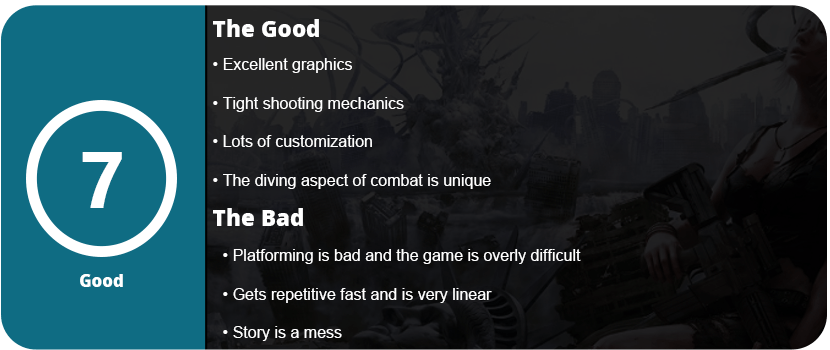
Overall, The 3rd Birthday has a lot of amazing aspects and ideas, but they fall flat because they weren’t fleshed out all the way. The platforming stinks, the game is just too damn hard, and it’s overly linear. The story is an unfocused mess, but at least the game looks amazing and the controls are great. The shooting feels good as well, and there are a lot of customizable features. It just needs more polish, but what’s here is worth a rental or cheap bargain bin price.
Metro 2033 was one of the most atmospheric shooters in the past decade. It had an excellent story, great characters, and solid shooting action. It just wasn’t paced very well, and the stealth sections nearly ruined the game. That has all been fixed in Last Light; this is one of the best shooter and horror games to come out in a long time.
You play, once again, as Artyom. Set in the post-apocalyptic Russian underground metro system, the creatures, radiation, and violent storms have driven everyone underground. Life isn’t so simple. After Artyom launched the missiles on the Dark One’s nest, the war against the communists is getting more heated. The only way to stop this war is to find the last surviving Dark One and use it against President Moskvin to stop the war from destroying the last humans on Earth.
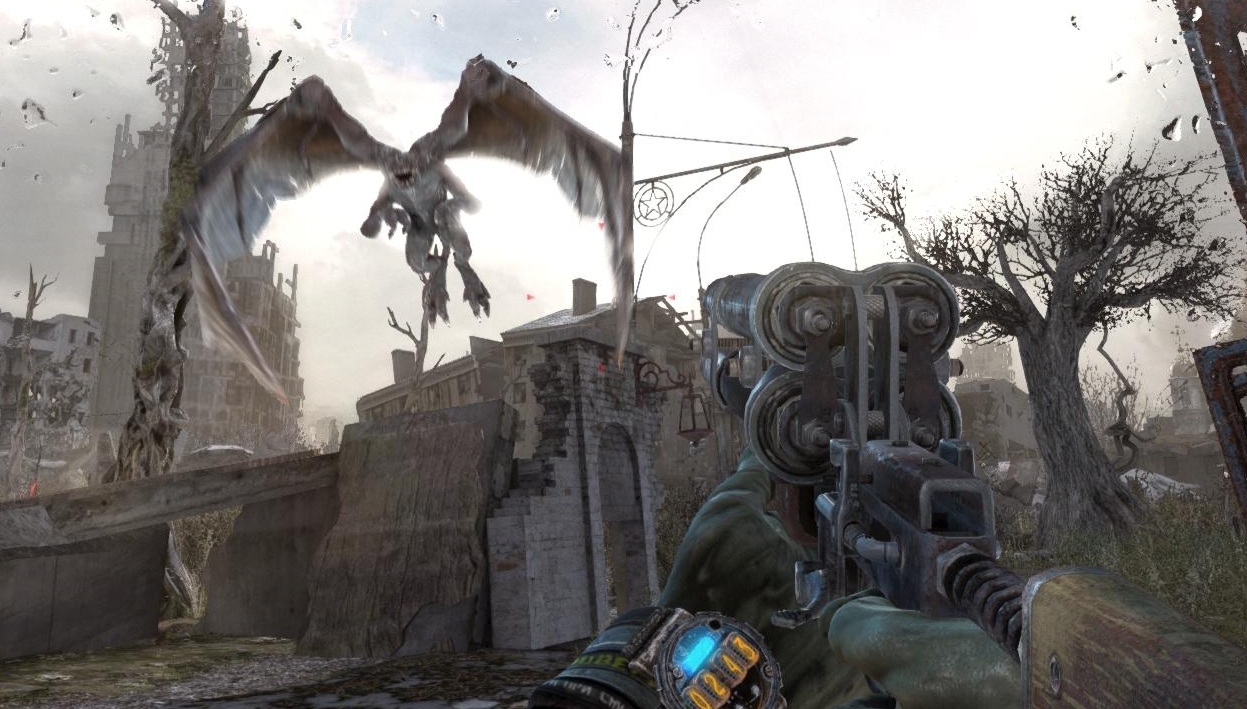
The game is more about Artyom’s journey than the overarching story. The game is broken up into underground sections, stealth, top-side sections, boss fights, on-rails stuff, and then safe cities. The atmosphere in this game is just phenomenal. Never in a shooter—in a long time anyway—have I felt actually afraid. When you’re underground in these dark, decrepit tunnels and you’re hearing strange sounds all around, you get really scared. These sections last for minutes rather than seconds, like most shooters. They let you marinate in this dark, frightening atmosphere. Sometimes your flashlight won’t work, and you just have to use your lighter to see. The monsters are terrifying because they look so close to what they once were—just mutated. This plays out through the entire game, and it’s very tense.
You can carry three weapons with you at all times. They are all great weapons to shoot because some of them are kind of slapped together with parts. The Bastard is an interesting side-loading machine gun; it gets jammed often, and you have to be careful. Ammo is scarce, and you must make sure you save your military-grade bullets to buy ammo and better weapons along with attachments. Once you get to a city, it’s like a breath of fresh air. After being in such a scary situation, you are so relieved to see civilization. There are some throwable objects at your disposal, like bombs, incendiary flares, knives for stealth, and then you have med syringes. You get night vision goggles later on, and you have to use your charger to keep your flashlight and goggles powered on. When you’re on the surface, you must wear a mask, and you need to find filters to continue breathing. Artyom can also wipe his mask when things get blurred out. This is a fantastic mechanic—a wipe mask button—and it just adds to the feeling of survival. If you get hit too much, your mask breaks and you can’t breathe.
While I stuck with mostly the same guns throughout the game, you always feel slightly underpowered. The monsters are vicious and dangerous, and you can’t take them all on at once. Sometimes stealth is the best option, and it’s so much better. AI doesn’t detect you a mile away, and you can stealth kill easily with your throwing knives or from behind. The levels are laid out much better, and you get a sense of accomplishment when you get through a level for the first time. The pacing is fantastic, and I just couldn’t put the controller down; it was that good.
The graphics are some of the best out there. On consoles, it actually ruins the atmosphere because a lot of stuff is taken out due to the underpowered hardware. On PC, the game jumps to life with mind-blowing lighting effects, super-high-resolution textures, and various other things that actually severely downgrade the experience on consoles. Last Light is one of those games where graphics are a huge part of the experience. The lighting, textures, depth of field, all that stuff makes the game just come to life. You have to play it to experience it. I honestly have to say that you won’t get the same experience on consoles as you will on PCs. If you buy the PC version, you also get the Metro 2033 eBook for free.
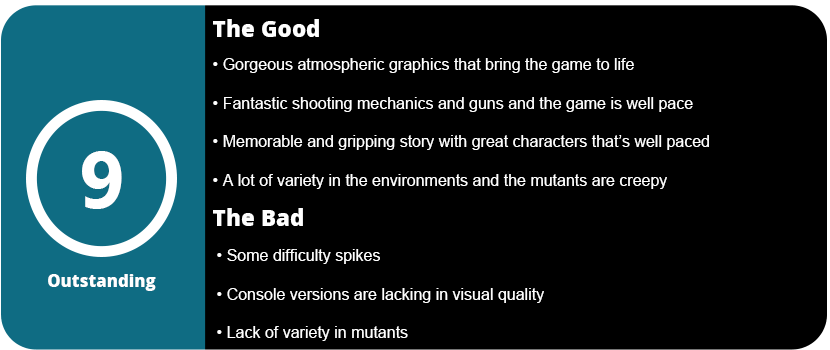
Overall, Last Light is one of the most intense and frightening shooters made in the past decade; nothing comes close. The sheer terror you feel when Artyom is breathing heavily in his mask, blood and mud are dripping down your mask, and your watch says you only have 90 seconds of filter life left. Mutants are after you, and if you panic and run to find filters, then you have to turn and face them. With the destroyed world around you, you are constantly reminded that this was once a habitable place. You walk through buses and planes with skeletons in the seats and apartment buildings with ghosts that haunt them. Anyone who wants to feel survival horror, don’t play Resident Evil or Silent Hill; Last Light is your one-way ticket.
Here we go again: another Call of Duty. When will it ever end? Before you start the hate-mongering, just know this: Call of Duty still has some of the best online multiplayer you can get. At least Black Ops tried to change the series a bit with new modes and experimented with what Modern Warfare established; it also had a much more interesting storyline and decent characters. Black Ops II is the same way, but it’s too late to really matter.
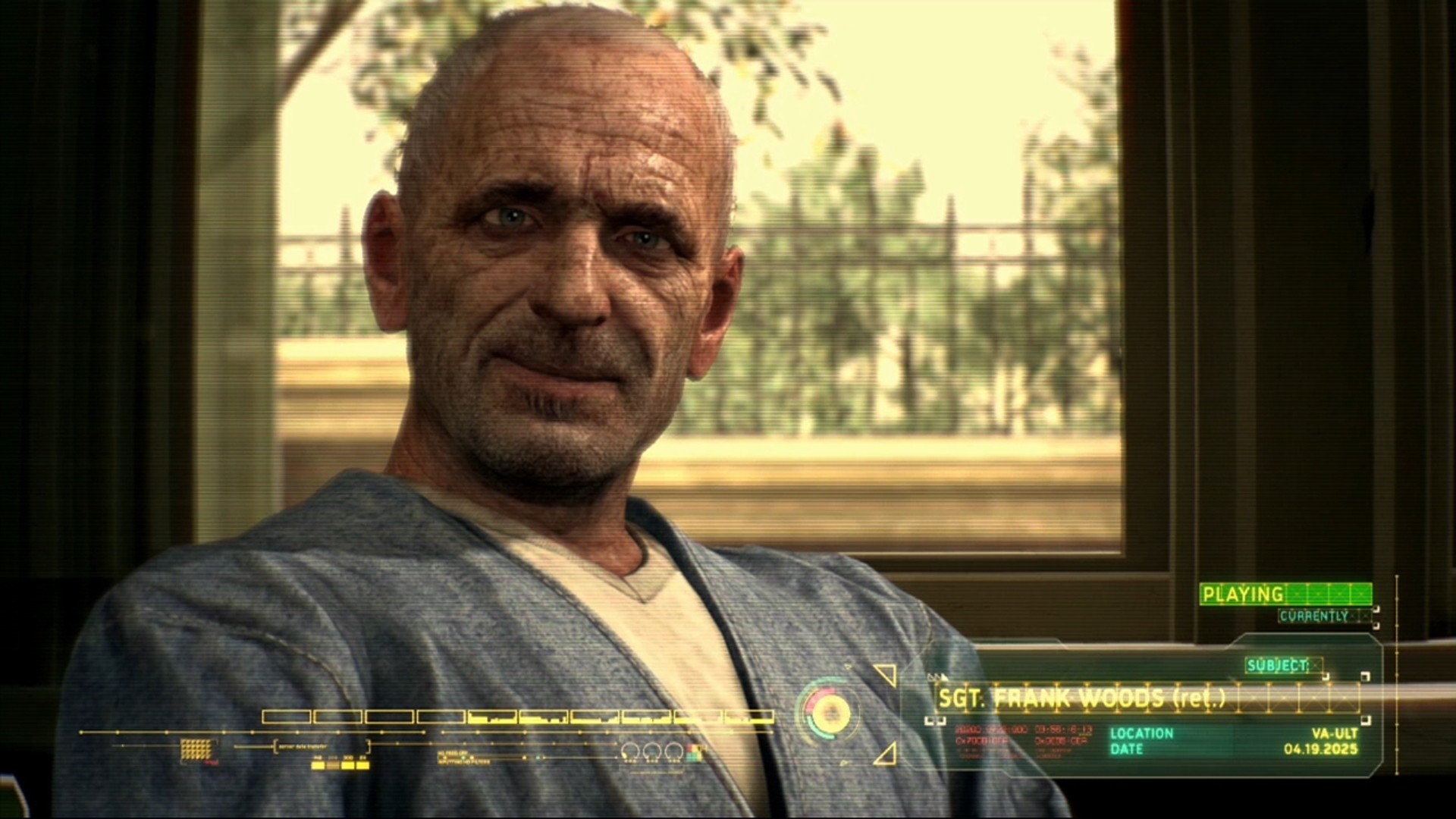
The game picks up where the first left off; if you haven’t played it, good luck figuring it out. Alex Mason is searching for a man named Raul Menendez. This is one sick puppy. This guy is a terrorist and more evil than you can imagine. The story jumps around from Mason’s son, Alex, to David Mason back in the Cold War. If you notice something, this game is more futuristic. It’s set in 2025, so there is some cool tech that’s just out of reach for today. Things like cloaking devices, VTOLs, and various other guns. The game just jumps between the first Cold War and the second. During the first one, you are trying to figure out what made Menendez crack. You later jump to the second one with Mason and Harper, using the information you got from a guy who was in the cold war with Mason. It’s a bit confusing and seems pretty boring at first. Later on, the story really picks up and gets really interesting; I actually liked it. It’s not fantastic, and it’s no Assassin’s Creed, but it’s pretty good for an FPS.
The campaign is still a shooting gallery, but it doesn’t seem that way thanks to the great level of design and a lot of cinematic one-off moments. Moments like jumping on turrets and driving various vehicles and aircraft, among others. It’s all fun, and not a single level feels the same, but the underlying core is still there: shoot everything that moves. The AI is still pretty dumb, but I like how you can customize your loadout before a mission. There are many unique and fun guns, unlike the Modern Warfare series. Later on, you will be able to play through special side missions called Strike Force Missions, which are pretty much just a capture-and-hold mode or siege. Those side missions all feel the same and are pretty repetitive. It’s not as fun as online because of the dumb AI; you have to do everything yourself.
After you finish the entertaining story, it’s multiplayer time! The old Black Ops modes return, like One in the Chamber and Last Man Standing. Of course, all the others from the entire series are here. Honestly, the biggest change is that killstreaks have been replaced with scorestreaks, which I prefer. It was so hard to get more than 3-4 kills in a row for most players. Now you get streaks based on your score, which lets you use the cooler, more powerful ones more often. However, I found the maps to be pretty mediocre. I learned to like a few, but they are lacking a bit in some way.
Zombies returns and is as fun as ever; there are more modes and an 8-player co-op; it also has a full-on online component, unlike the previous game. There’s quite a bit of content here, and you will be coming back for hours to come. I just don’t understand why Treyarch couldn’t break the mold a bit more. I like the multiple endings and how choices in the story can change the ending. But there are things here like Jimmy Kimmel’s likeness at one end and Avenged Sevenfold at the end of one. I mean, really? Are 14-year-olds really going to buy this because Avenged Sevenfold is in it? I really hate how developers do this and can’t just use their own ideas. It’s a cop-out or sell-out, whatever you want to call it. I also don’t understand why the campaign can’t be a bit more intelligent gameplay-wise, like Battlefield 3. I blame the young gamer’s instant gratification issue on that, but who knows?
What’s here is a solid game and hopefully the last of the Black Ops series. The Wii U version looks a bit better than consoles, and you can play the whole game on the gamepad, which is nice; there are no shoehorned gimmicks for it. I did notice that the gamepad’s analog sticks are a bit sensitive, and I had some trouble adjusting.
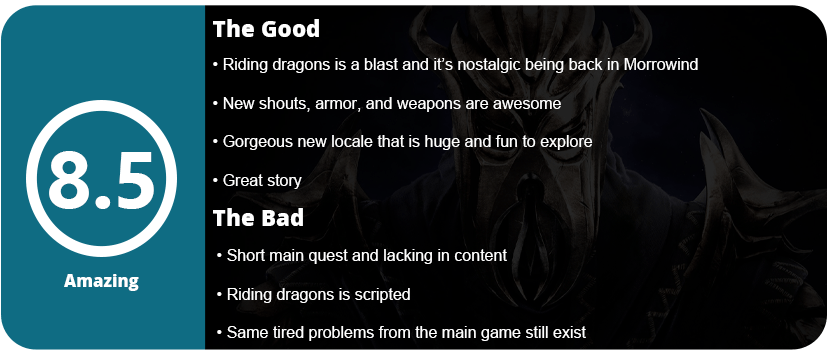
The splashing of waves, the grass between your toes, the ash in your eyes, and Dunmer at your feet. Ah, it’s nice to be back in Morrowind! I was surprised when I found out Dragonborn took place on Solstheim, which is a volcanic island just off the coast of Morrowind. You arrive there due to a strange, occult thing happening. People are building relics in their sleep—basically, sleepwalking and building. You ask around about a guy named Miraak, and people say he sounds familiar, but they can’t quite remember. As you ask around in the main city, Raven Rock, you will be greeted by Devin Mallory’s brother and various other people who are very interesting to talk to.
I first have to mention that Dragonborn has some of the best art in any Elder Scrolls game. When you start getting the Black Books and travel to Apocrypha (Hermaes Mora’s territory), you will be stunned. It’s very Lovecraftian with the Lurker and Seeker enemies. There are strange tunnels that move, walls made of sticks, floors covered in paper with arcane writing, and strange magic and objects. I loved these areas and enjoyed them immensely. However, the main quest line is super short; there are more side quests here, which is good, I guess. The final fight with Miraak (not a spoiler, it’s obvious) is very challenging, and you get to ride freaking dragons! This is probably the most powerful thing added to an Elder Scrolls game. I love the new shouts, such as Bend Will. This will make enemies fight alongside you. The new Bonemold and Chitin armor looks awesome, as do some new weapons. There’s quite a bit here, a nice chunk of the game, and a great final goodbye to Skyrim.
Many of the quests are more puzzle-related and quite challenging. It was nice to be really challenged by exploration in Dragonborn. One final quest has you finding cubes in an old Dwemer ruin. You have to place them in a certain order and run around finding them to open up new parts. The enemies are challenging, and I found it all quite fun. There’s plenty of Morrowind lore here for longtime fans and newcomers who don’t know much about it.
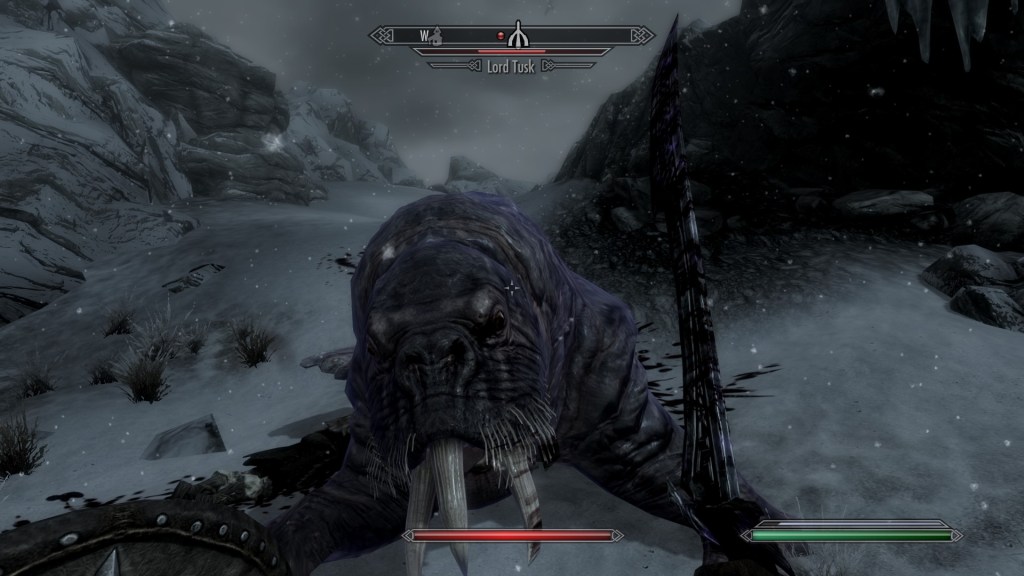
I warn you, though, that you need to be at least level 20 to start this. I came in at level 7 and got my butt handed to me by the Ash Spawn, the first enemies you will encounter. I died in just one hit, so be careful. I also hated how there was no place to train for smithing, and there was only one major town. At least you can fast travel to and from Skyrim via the map and not by boat every time. I was also upset that you didn’t get to ride dragons until the final quest, and it’s very brief. Also, be warned: Miraak will steal all your dragon souls if you kill dragons in Solstheim. He’s a real bastard.
Overall, Dragonborn is a solid and final DLC for Skyrim. It is much better than Dawnguard in the sense that the story is more interesting, but there aren’t two sides to play. Being able to ride dragons is a major addition to the game; the enemies are interesting and challenging; the art looks fantastic; and the lore is great.
Marvel vs. Capcom is considered the official fighting game among Marvel fans. What about DC comics? There really hasn’t been a full-on fighting game except for the lukewarm Mortal Kombat vs. DC Universe. It felt a bit stiff; Mortal Kombat fans felt the violence was too watered down, and it just lacked some polish. The MK team has come back, minus Mortal Kombat, and created a very solid, full-on DC fighting game.
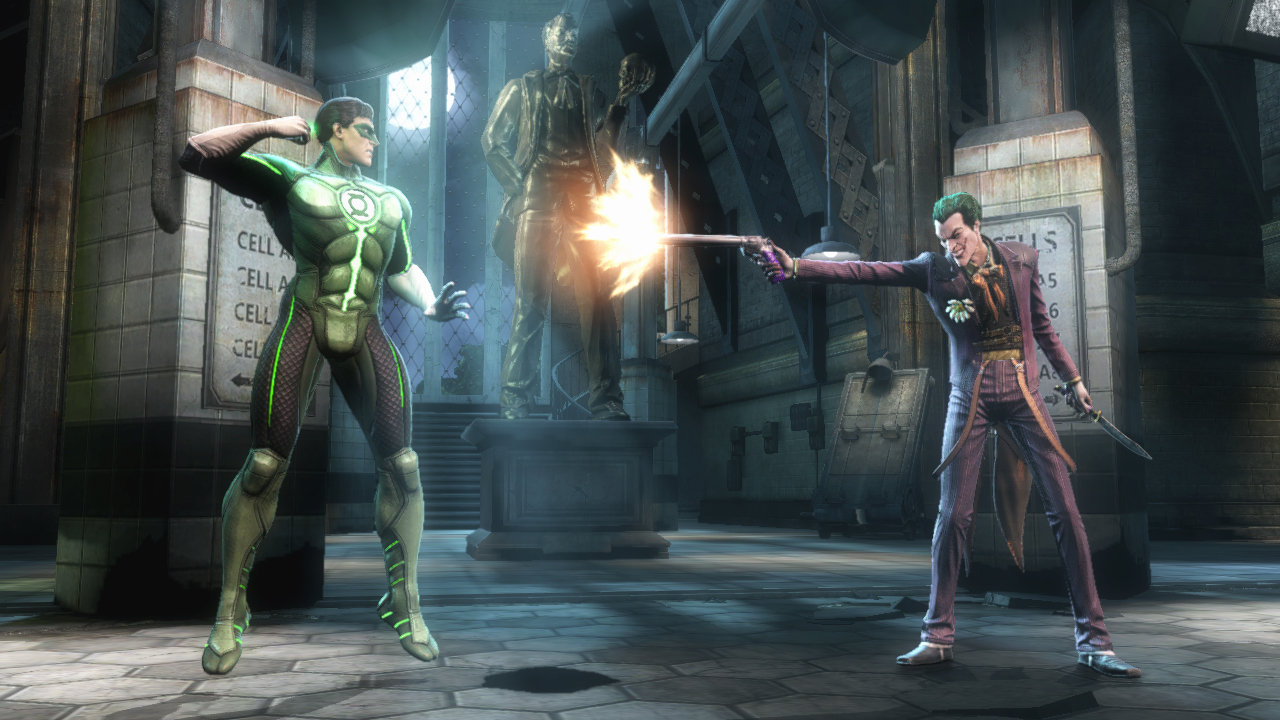
If you have played 2011’s Mortal Kombat reboot, you will be very familiar with this game. The 2D fighting plane remains with interactive environments, special moves, and various other things. The game plays a lot like Mortal Kombat, with several special moves and small combos at your disposal. You must combine all these to create larger combos; it’s tough and really takes some practice. Some characters are harder to play than others, but they are all fun to play in their own way. The interactive environments are very neat, and I hope more fighting games pick up on them. You can press R near different objects, and some are on offense while others are on defense. In Batman’s Bat Cave, you can press a giant red button to ignite the batmobile’s thrusters and burn your opponent. Some items can be picked up and thrown. Some levels have items at the very edges to help you escape and keep you from getting cornered.
The fighting engine is solid and responsive. Each character looks great and has an awesome arsenal of moves that are faithful to their comic origins. Each character has a special power-up they have that is executed with A. No longer are there four attack buttons, but three. Wonder Woman can use her power-up to switch between her sword and whip. Batman can shoot three batarangs, while some characters have defensive and passive power-ups. These have to recharge, of course, so they can’t be spammed. They are helpful and can give you a slight edge over your opponent. The power meter returns, like in Mortal Kombat, but is used for different things. Instead of the gory X-ray moves, you can unleash super-special attacks that look awesome. Some are a little less awesome than others, but they all take advantage of the power that each character wields. You can also use the Clash system, which allows you to wager part of your special meter once per battle for extra health. These are all tactical additions that can give you an edge and turn the tide of the battle, which a lot of fighting games don’t have.
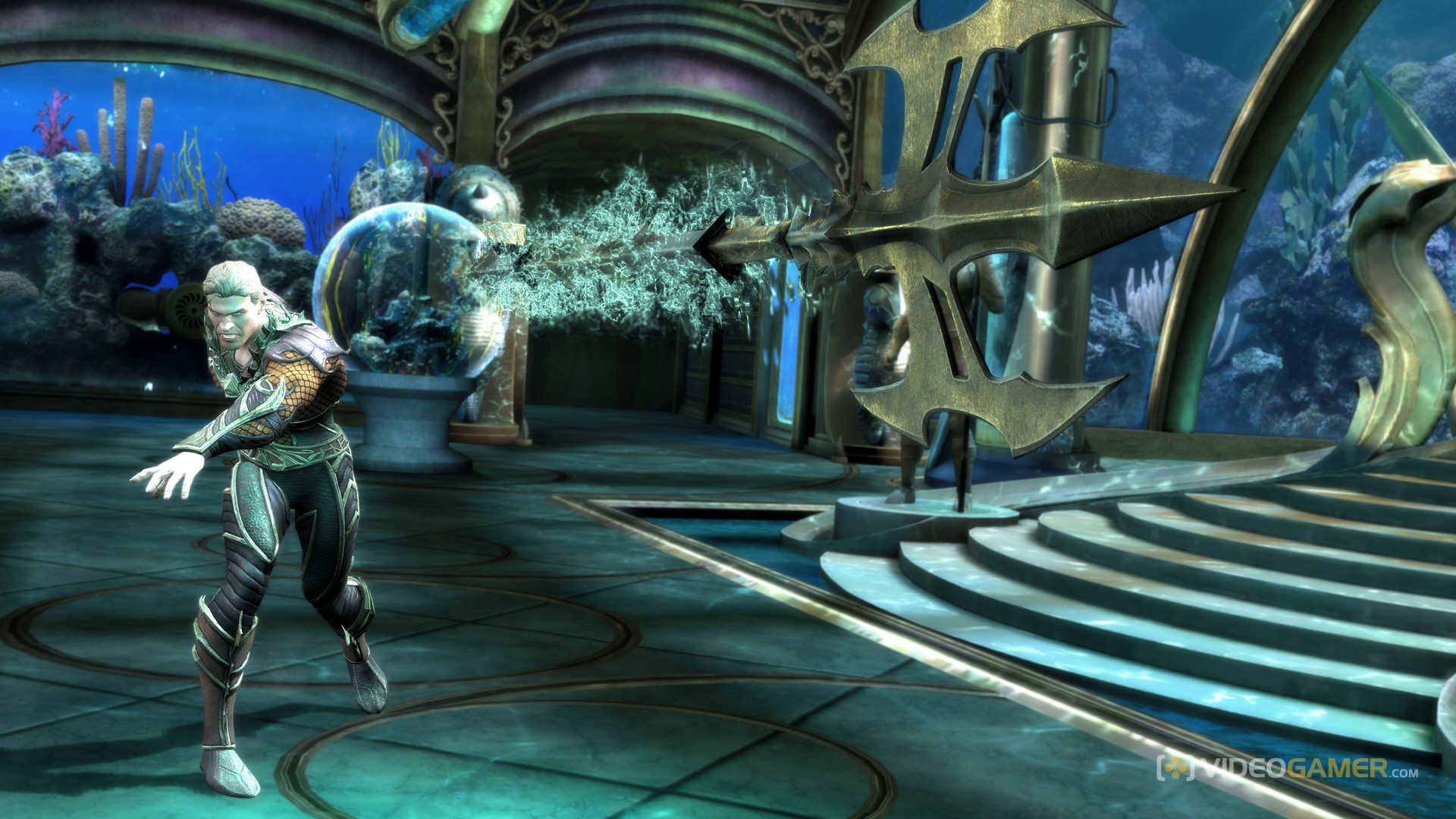
The fighting system takes a little while to get used to because it’s unlike anything else out there. It breaks the mold of traditional fighting games, which the genre desperately needs. Injustice has some of the best over-the-top action seen in a fighting game, thanks to the source material. Blood and gore are exchanged for comic book action, which you can’t get anywhere else. I also like how NetherRealm made Aquaman cool again. He looks awesome, and he’s one of my favorite fighters. He feels a lot like Jade from Mortal Kombat, where he whips his trident around a lot and is quick and jabby. I just wish they didn’t use so many obscure comic characters like Sinestro, Grundy, Black Adam, Raven, and various others. I also wish the roster was a bit bigger. At least it makes up for it in content elsewhere.
The first thing you will dive into is the story. Unlike Mortal Kombat, you won’t fight like every character in the game. I was also highly disappointed in the story because it’s just a pointless mess. Superman is tricked by the Joker to kill Lois Lane, and this causes some sort of rift, and everyone crosses dimensions. Superman, on the other hand, wants to take over the world and suppress everyone, so everyone is fighting their doppelgangers, which is kind of uninteresting. The plot is just a bunch of DC characters beating each other up, and it doesn’t really come to a head. I was glad that the story was as short as it was and was just over. It seems the story was kind of slapped together and wasn’t given much thought; DC fans will be highly disappointed in it.
After you finish that, you can go online or partake in the 240 S.T.A.R. Lab missions that are similar to the Challenge Tower in Mortal Kombat. Go to the Archives to unlock alternate costumes (not enough!), battle mutators, and concept art. This is similar to the Krypt in Mortal Kombat but doesn’t quite offer enough.
Overall, Injustice is a very solid fighter that tries to break the mold but offers a weak story mode, and the game just feels like it’s missing something. Is it because it feels so close to Mortal Kombat that everyone is expecting fatalities or something similar? Is it that the roster isn’t big enough? Too many lesser-known characters? I can’t really say, but I can’t quite place my finger on it either. What’s here is great, not to mention that the Wii U gamepad can be used to play the game off the TV or used as a display for special moves. The game does look good, with the Wii U getting higher resolution textures and some nicer lighting effects than the PS3 and 360 versions. The Wii U version is definitely the best of the three. With that said, there are dozens of hours of content here, and you will be playing for months.
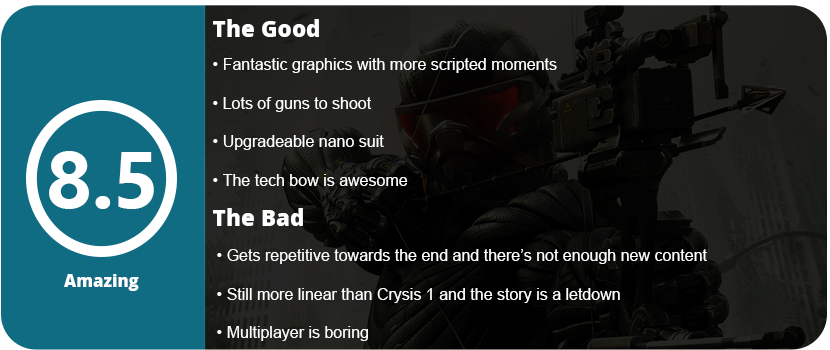
Have you upgraded your graphics card? Need a new CPU? How about some more RAM? You’re going to need it with the revolutionary CryEngine 3 that powers Crysis 3. Graphics are the first thing that people think of when a new Crysis game comes out, and will their rig run it? Note to console gamers: The PS3 and 360 versions don’t even come close to the maxed-out DirectX 11 version on PC. It looks great on consoles, pushes them to the max, but looks like crap compared.
You are Prophet, or Lawrence Barnes. The story picks up right after Crysis 2, where the Alpha Ceph is trying to harvest and annihilate all of mankind. It’s up to your and the ex-nano suit-wearing Psycho to stop them. You have the help of the rag-tag rebel resistance, which is all but helpless without you. The first thing that Crysis 3 fixes is the linearity and confinement of the city. It’s a mix of both here. It’s not as open as Crysis 1, but you have large open areas where you can decide if you want to go stealth or shoot everyone up. You can use your visor to tag enemies, which is one of the best tactical elements you have in the game. This time around, you can upgrade your nanosuit by giving yourself longer cloaking time, dampening bullets, increasing stealth kill damage, and various other things. You can still customize your weapons, and there are quite a few of them.
The best addition to Crysis 3 is the tech bow. This thing is just awesome and lets you kill people without reducing your energy for cloaking. You can choose your draw strength and ammo type. Each arrow is an instant kill and feels satisfying. You can also hack this time around, so an enemy turret can wipe out a small force for you while you hide. These small things make Crysis much more enjoyable than the near bore-fest of Crysis 2. The game was solid but lacking in gameplay elements. The hacking, tech bow, and upgraded tactical visor really make the game more intense and fun. The AI is also improved, and the game is much harder. Towards the end of the game, I was dying left and right. The new Ceph enemies are tough as nails, but by the end, you get to feel the ultimate power of the nano suit. By the end of the game, you can supercharge your nanosuit and become invincible for short periods of time. Don’t think this is cheating, it feels great after sneaking around and feeling vulnerable all the time.
When it comes to the story, you will be completely lost if you haven’t been following along; even people who have will be a bit lost. The story doesn’t really add anything or make it more interesting. Honestly, I had no idea what was happening half the time, and I played all the games. The story has a lot of potential but just isn’t fleshed out like it could have been. At least there are some more scripted cinematic events that are part of why Crysis 2 was boring. There still isn’t enough, though. After a while, you feel like you are just trudging through wave after wave of Ceph and Cell troops.
The multiplayer is a little more fun, but not something you will come back to a year from now. Multiplayer is solid, but it isn’t much different from the second game. Honestly, after Crytek pretty much abandoned Crysis 2 shortly after its release, I really don’t want to devote much time to multiplayer. At least the game only had a few bugs and has more graphics settings, unlike the second game. The graphics are freaking amazing, with water tessellation, ambient occlusion, SSAA, and various other DX11 effects. Even with everything set to low, it still looks pretty damn good. There is no DX9 mode, though; it is strictly DX11 on PC, so make sure you have a GPU that supports it.
Overall, Crysis 3 adds just enough to make it feel really solid and go out with a bang. There are a few fun scripted moments, the tech bow is awesome, and the graphics will blow you away, but in the end, it doesn’t do a whole lot different from Crysis 2.
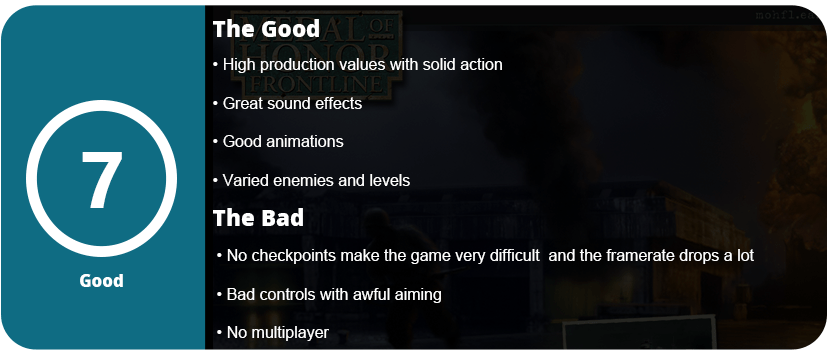
This was one of the first games that blew me away when I was a kid and made me proud to own a PS2. The opening D-Day scene took my breath away—all the explosions, the scripted scenes, the death animations, the sound—it was all here, and the production values were through the roof. Looking back at it 11 years later makes throwing an egg on the floor more exciting than watching this game. While I can’t compare it to games that came after it, even back then there were issues with the game, and they just really stick out now.
Frontline’s realism dropped off after the opening level. After D-Day, you get recruited to do special missions across Europe and are a one-man army. It’s very unrealistic when you’re running around by yourself, killing squads that an entire army takes to take down. You’re blowing up fuel depots, sabotaging equipment, assassinating important Nazi figureheads, and various other things. The game is solid, and the scripting is still nice today, but the shooting mechanics and controls stink. There’s no aiming down the sights; instead, you just zoom in. Shooting from the hip has no reticle, so this is useless. My biggest issue with the game, and even back then, was that it was insanely difficult and there were no checkpoints. If you die, you restart the entire level, which can be infuriating.
You have to be careful and run around finding health packs and ammo. You can pick up enemies’ weapons and instead are stuck with what you are given at the start unless you find a placed weapon. I did like the variety of enemies, such as fat chefs throwing knives at you, engineers, cooks, butlers, and even enemies in robes. The death animations are still nice, but where’s the damn blood?! The game almost comes off as campy because it is so far from capturing the tragedy of WWII. Even back in the day, I felt this way. The pacing of the levels is also off because some levels will be really long and tough while others are super short.
I did find that the game had some fun cheat codes, but there’s no replay value. Multiplayer wasn’t put into the PS2 version, and even the graphics are lacking. There’s a lot of aliasing, and the framerate drops tremendously during explosions. Everything does look clean, and you can tell a lot of time and care was put into the game. I just can’t get over how bad the aiming is; it’s so squirrely and hard to get a bead on enemies. The game has a pretty decent length campaign and is worth the cheap price if you have never played this game. Frontline was one of the best WWII games for a reason because it was one of the first to really have high production values.
In the end, Frontline feels very dated, but you can see why the game was praised so much back in the day. The production values still show, but the PS2 can’t keep up with the action. The aiming is terrible and the controls are all wrong, but what can you expect from an 11-year-old game?
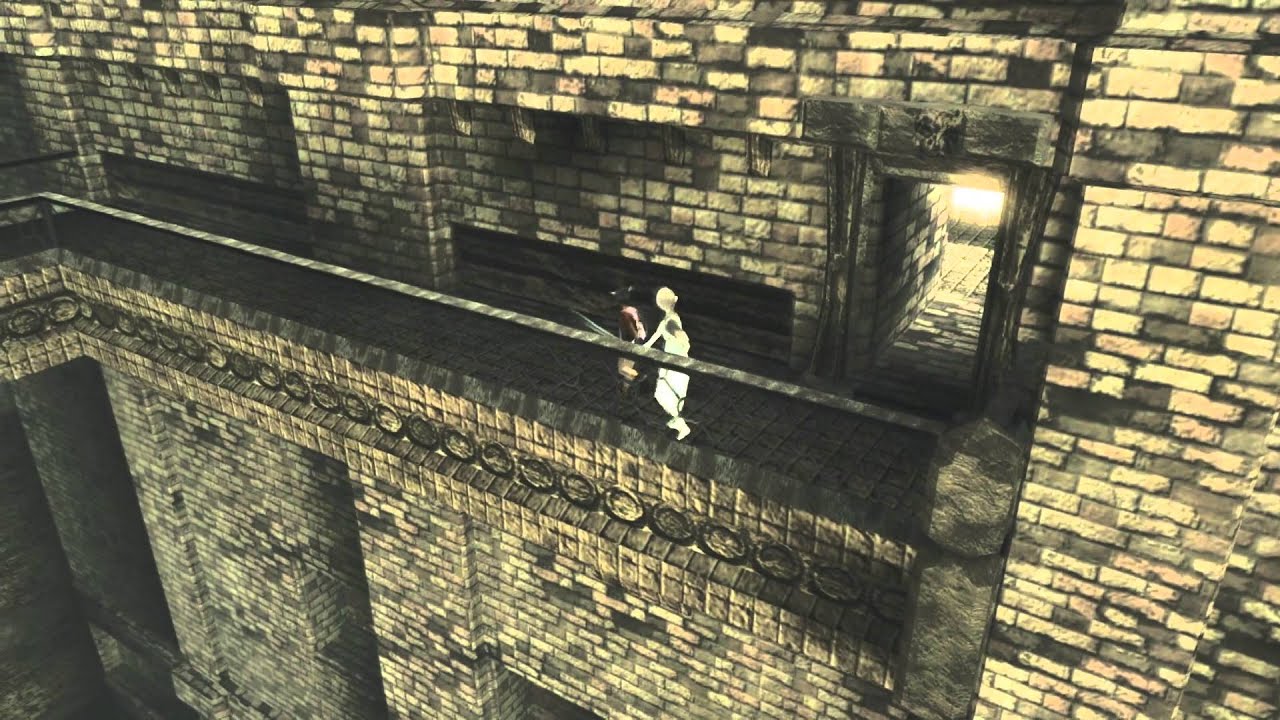
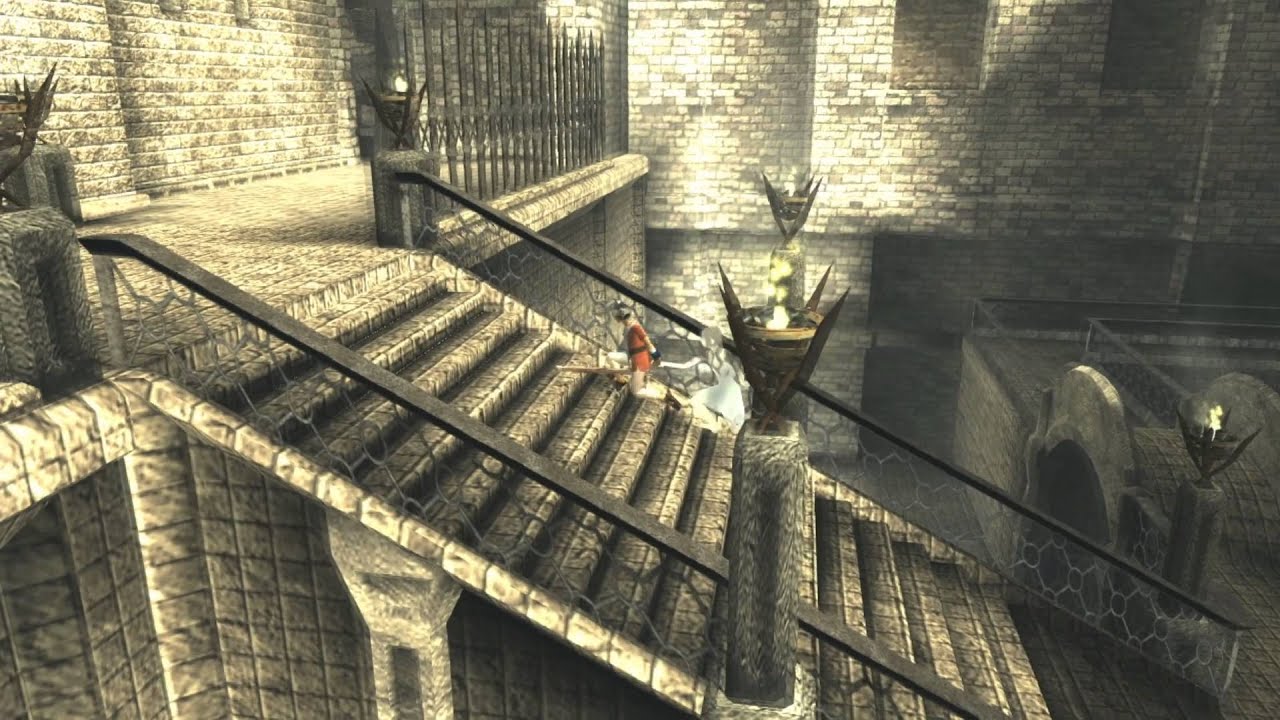
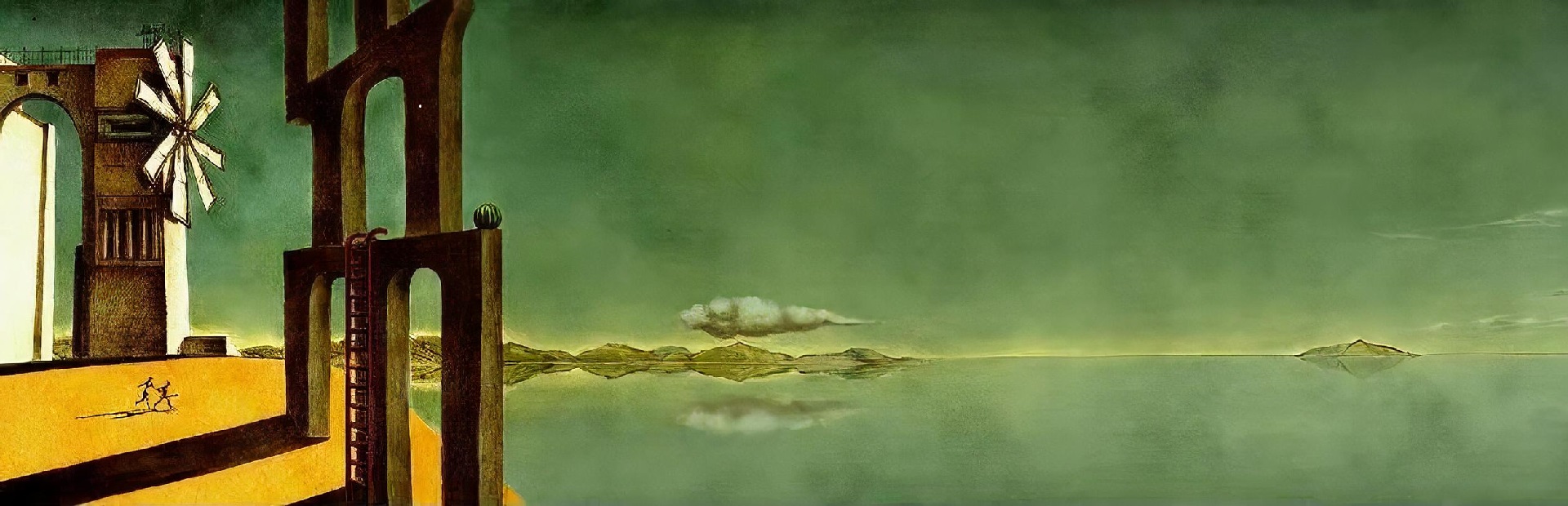
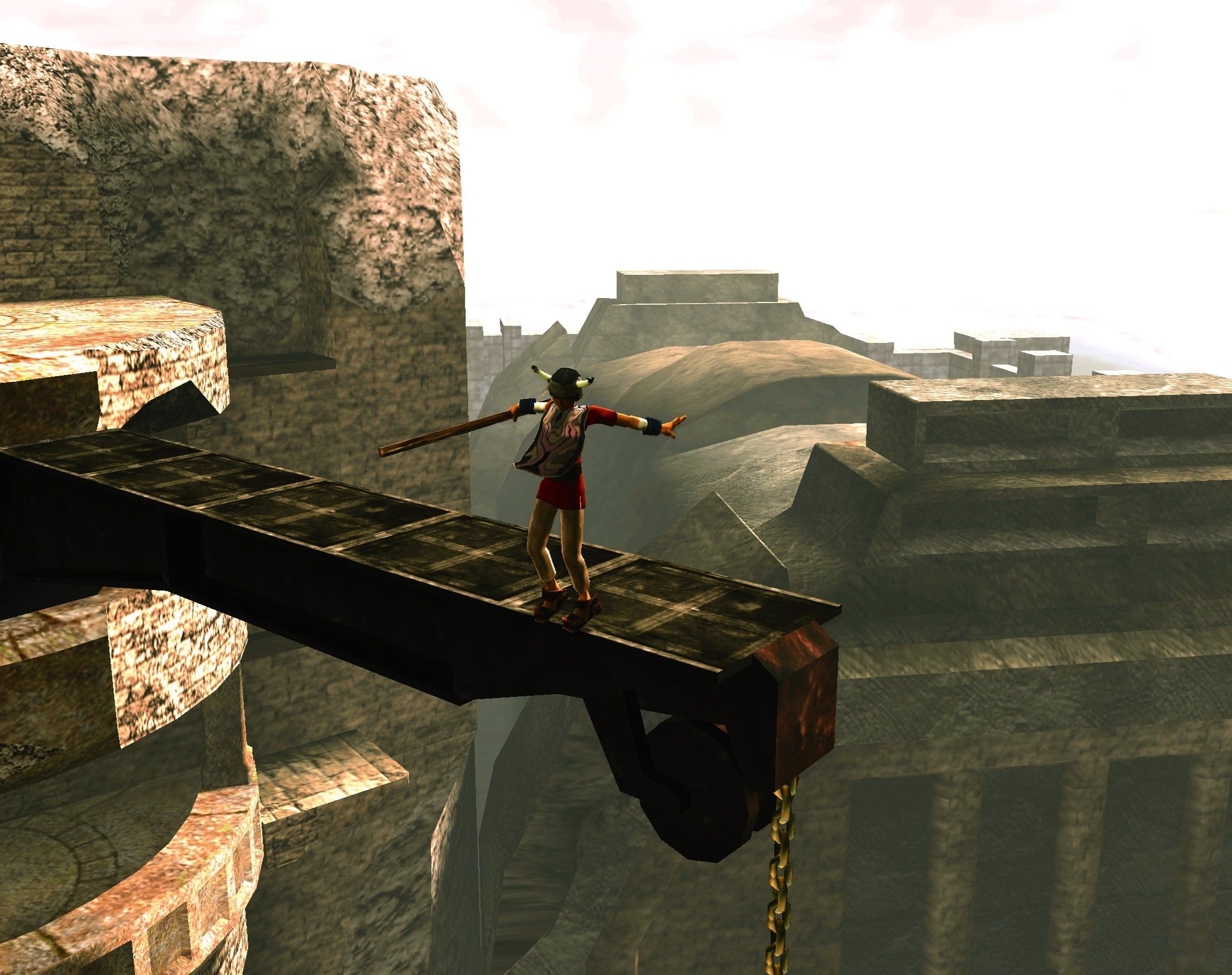
Ico is probably one of the most forgotten games in history. Being one of the first graphical powerhouses for the PS2, it proved that you don’t need a complex story and characters to have a good game. All you know is that you are a boy named Ico who is trying to save a girl named Yorda from her evil mother and escape from the castle. You enter as a captured prisoner because you have horns. You then escape and find Yorda along the way. What made Ico such a big deal was that you led her around manually by holding R1. This forced you to become attached to her, and they rarely spoke.
This game was way ahead of its time. That’s probably why people passed it by for Jak & Daxter and other PS2 games at the time. The game consists of some pretty cleverly designed puzzles that involve pulling switches, climbing, cutting ropes, and swinging on chains. You also push and pull on the occasional block. The level design is really well done, but there were a few obscure puzzles, like jumping off of a chain to knock a bridge down. This is completely against the game’s mechanics, so you would never know to do this. Leading Yorda around sounds annoying, but it prevents you from having to rely on the already shoddy AI. The game mechanics work well enough in design, but they are sloppy and frustrating to deal with.
When you jump, Ico tends to clip into ledges and ladders, making you have to slightly adjust him until he latches on. If you press the analog stick just slightly and jump, he will jump 20 feet, causing you to jump off ledges or fall to your death. There’s just so much bad collision detection, and the animations are janky and not well done. When you drag Yorda around, her arm looks like a flopping noodle that can go through her body. I know this was originally designed for PS1 before the game jumped ship to PS2, but still. There are other mechanics, like setting your sword down to pick up a giant stick, lighting it on fire, and then setting off a bomb. Sometimes you have to toss these before they blow you up. Fun game mechanics and all, but they repeated through the entire game, making you grateful for the short length (just about 4 hours).
A lot of times I didn’t know where to go because the middle of the game has two areas that are identical but just slightly different. The constant backtracking can confuse you, requiring a walkthrough. There are no boss battles to speak of except the final boss, but the combat is so frustrating and annoying. Ico swings his sword around aimlessly, and you can’t move while doing so. The AI jumps away as soon as you run after it, so if you get stuck in a three-hit combo, you get knocked down, and Yorda gets dragged away. You can’t die in this game during combat, but if Yorda gets dragged underground, you’re done. You can pull her out of the hole, but sometimes a shadow creature will hit you and knock you back, and then you have to suffer the long animation of getting up. A lot of games had these animations (The Mark of Kri), and I don’t know why. It breaks the fluidity of everything. Once you get the hidden mace in the game, combat is really easy, but you still get annoyed by the creatures constantly backing up when you approach.
The graphics look great with the new HD upgrade, but even back then, they were amazing. A lot of textures have been slightly upscaled, and some bloom and HDR have been added for better lighting. You can still notice the game’s age during up-close shots of areas. Textures are muddy and so blurry that they don’t even look like what they are representing. The main thing is that you can pan the camera around more now that the resolution has been bumped up, making navigation easier. This is how you do HD upgrades, right?
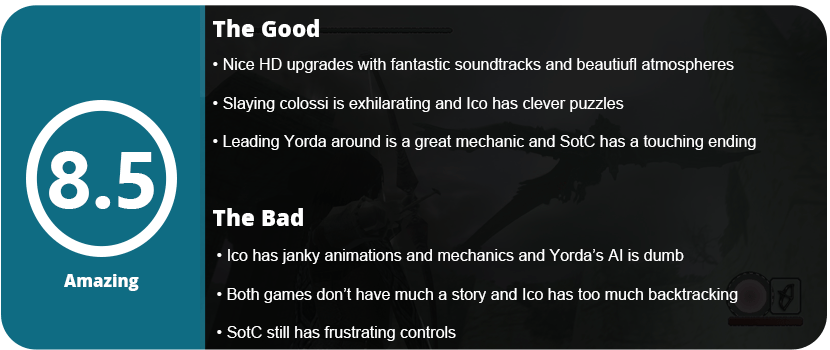
Overall, Ico is a great game, but the dated mechanics really show their age. If you can look past all this, you are in for a great, albeit short, game, but don’t expect engaging characters or a complex story. There are four cutscenes in the whole game, but this is about the journey and not the story.
Shadow of the Colossus
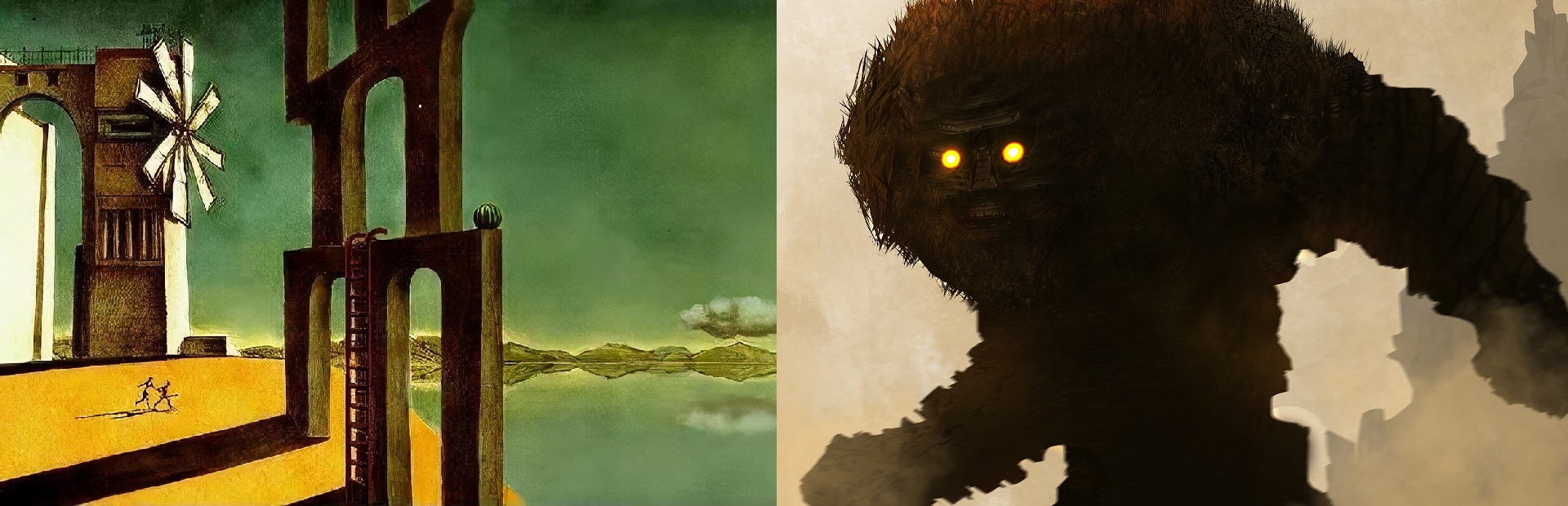
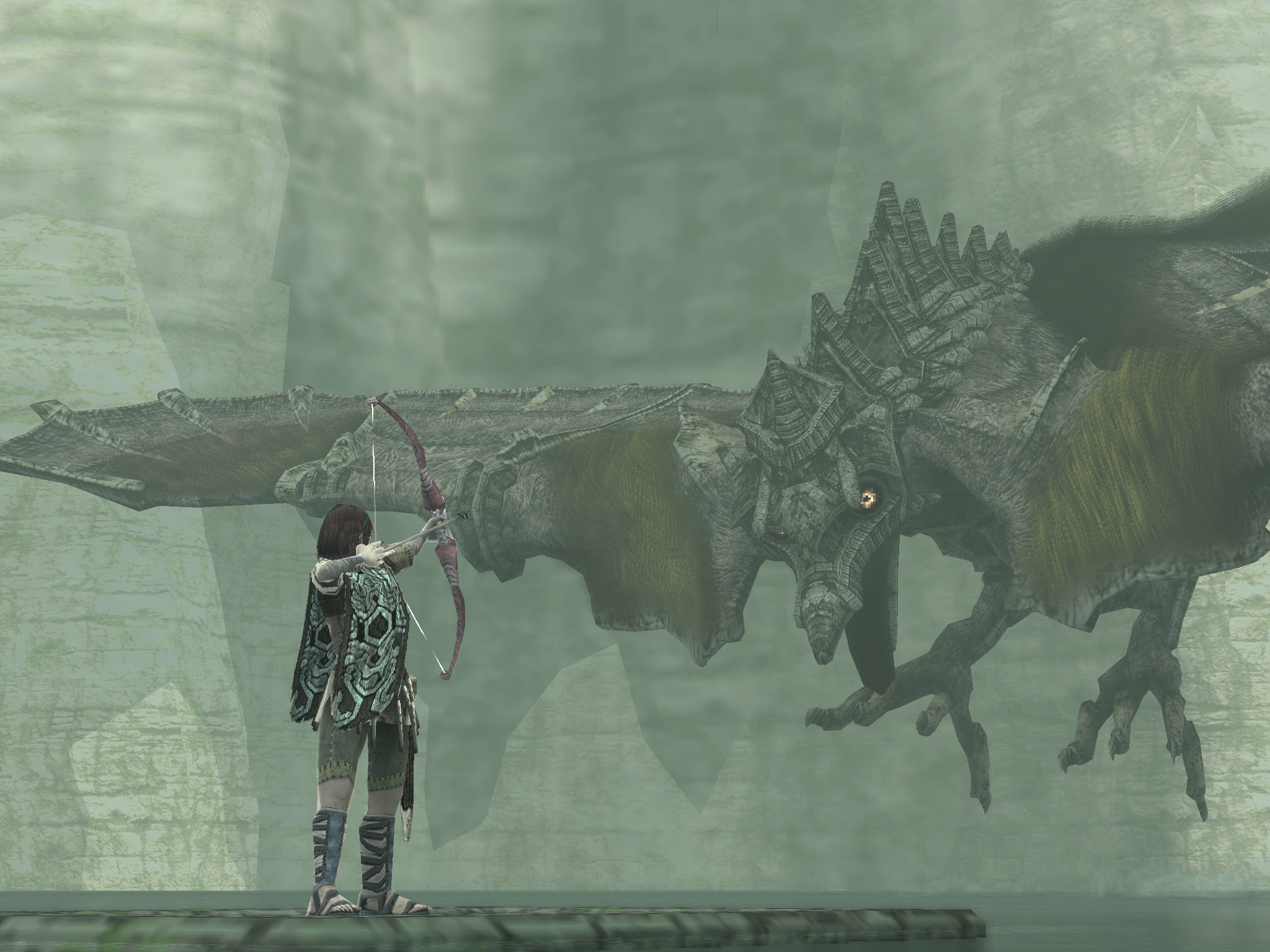
I have been wanting to review this game forever, and now I have the chance. I played this back in 2005 when it first came out, and it was just unreal. SotC still has some of the best graphics to grace the PS2, and it almost looked next-gen at the time. Of course, it suffered from the massive slowdown, but now we can play it with some extra graphical effects and at 60FPS. There’s not much of a story here; there never is with Famito Ueda’s games. You are a boy named Wander who brings a girl to a temple in a cursed land and vows to destroy all 16 colossi in order to bring her back to life. The game has one of the most touching endings I can remember.
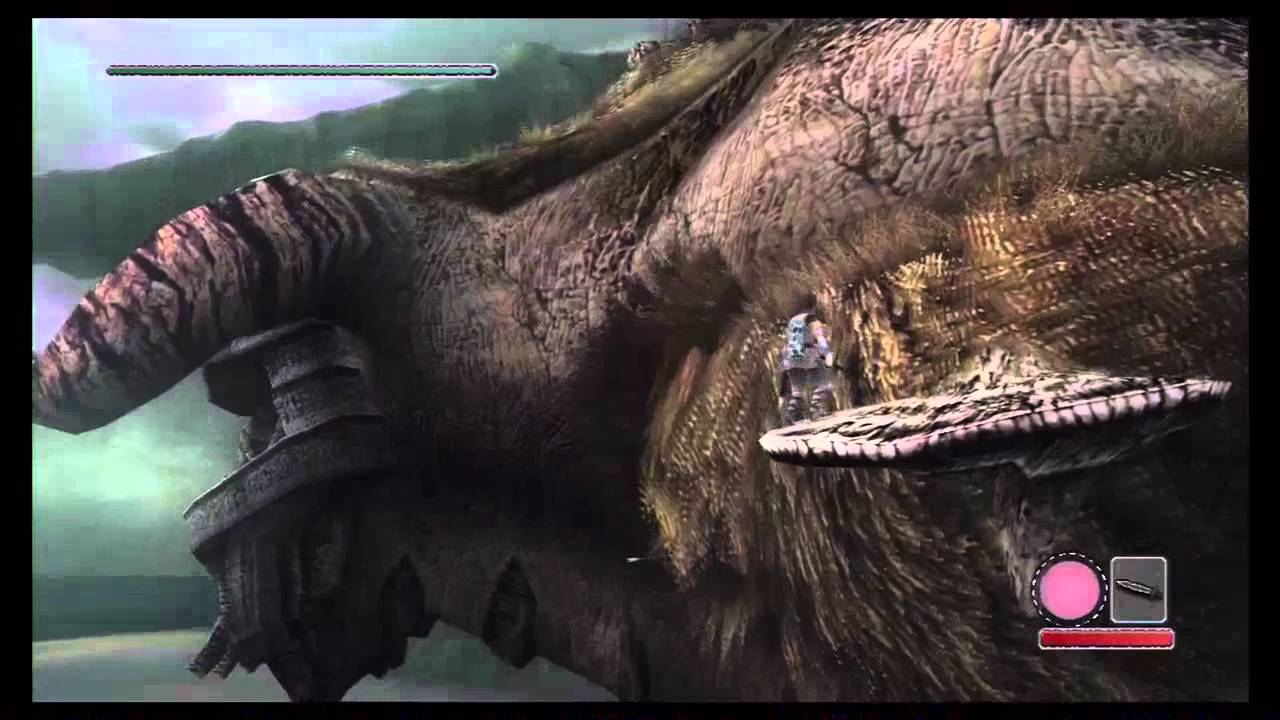
The game is very basic; you just head to each colossus and slay it. There is a huge open world, but it is very barren and void of life, but that’s the way it is supposed to be. You feel very alone and helpless in this land of brown and gray. You have two weapons: a sword and a bow. You can hold the sword up to the light to guide you to the next colossus, which really isn’t that hard. Once you find it, you have to figure out how to get on top of it, and that’s the tricky part. Each colossus is completely different. Some are tall, some are fat, and some are the size of a lion. These lumbering beasts will attack, but you need to find their weak spots. One colossus has weak spots on the bottom of its feet. When it walks, you need to use your bow and shoot it. It then falls over, and you can jump up, grab its fur, and start climbing. Some aren’t so easy; in fact, there are no hints on how to get on top of these beasts. One tricky water serpent requires you to swim over him, and then his tail will come out of the water so you can grab it.
The best part is when you get on these things. Each colossus is like a level in itself. You can climb around and hold the R1 button to stay on. They will try to shake you and your window to actually stab the glowing, weak spots that are really small. You have a stamina meter, and when it depletes, you let go and fall back down. This can be really frustrating if getting on top of the Colossus is already frustrating or a long fiasco. As you slay these monsters, your stamina and health increase, but you still need to watch out. The worst part about the game is the god-awful controls. They just stink, and the game mechanics are sluggish and unresponsive. If it weren’t for this, the game would be perfect. Wander’s animations are a bit jerky, and when the colossi shakes you and your stamina is dropping, you just want to charge your stab and kill it, but sure enough, you get shaken again right as you start to charge. Wander flops around, and it just feels sluggish. When you try walking on the colossus, Wander will fall and tumble, sometimes right down to the ground. I almost threw my controller several times because of this. You will mainly die because of the mechanics, not your skills.
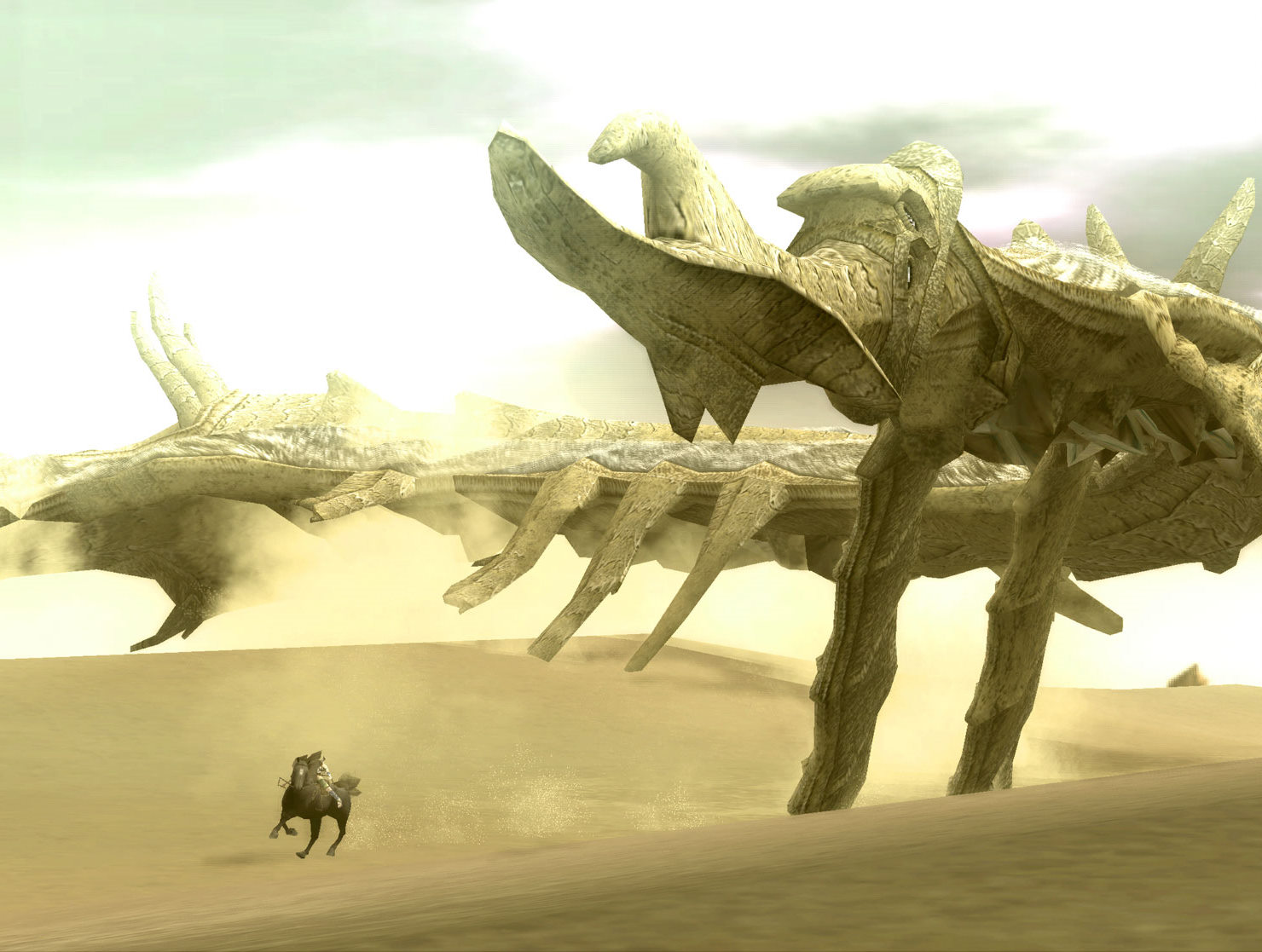
Let’s talk about your horse. Aggro is the main character, but I felt like I was driving a Mac truck. He won’t move if you push the stick forward; instead, you have to mash X, and it takes forever for his momentum to get going. You can only tap the stick left and right to steer him, but he moves too quickly and runs right into walls, which he then stops on a dime and turns completely around. Maneuvering through tight areas is a serious pain. The horse controls are just terrible. This is probably the only bad part of the game; there is nothing else like this game out there. The colossi themselves look fantastic and are just gigantic. You really feel helpless and wonder how you are going to take this thing down. It all adds to the foreboding atmosphere of the game and the loneliness and helplessness that you feel throughout.
I have been wanting to review this game forever, and now I have the chance. I played this back in 2005 when it first came out, and it was just unreal. SotC still has some of the best graphics to grace the PS2, and it almost looked next-gen at the time. Of course, it suffered from the massive slowdown, but now we can play it with some extra graphical effects and at 60FPS. There’s not much of a story here; there never is with Famito Ueda’s games. You are a boy named Wander who brings a girl to a temple in a cursed land and vows to destroy all 16 colossi in order to bring her back to life. The game has one of the most touching endings I can remember.
The game is very basic; you just head to each colossus and slay it. There is a huge open world, but it is very barren and void of life, but that’s the way it is supposed to be. You feel very alone and helpless in this land of brown and gray. You have two weapons: a sword and a bow. You can hold the sword up to the light to guide you to the next colossus, which really isn’t that hard. Once you find it, you have to figure out how to get on top of it, and that’s the tricky part. Each colossus is completely different. Some are tall, some are fat, and some are the size of a lion. These lumbering beasts will attack, but you need to find their weak spots. One colossus has weak spots on the bottom of its feet. When it walks, you need to use your bow and shoot it. It then falls over, and you can jump up, grab its fur, and start climbing. Some aren’t so easy; in fact, there are no hints on how to get on top of these beasts. One tricky water serpent requires you to swim over him, and then his tail will come out of the water so you can grab it.
The best part is when you get on these things. Each colossus is like a level in itself. You can climb around and hold the R1 button to stay on. They will try to shake you and your window to actually stab the glowing, weak spots, which are really small. You have a stamina meter, and when it depletes, you let go and fall back down. This can be really frustrating if getting on top of the Colossus is already frustrating or a long fiasco. As you slay these monsters, your stamina and health increase, but you still need to watch out. The worst part about the game is the god-awful controls. They just stink, and the game mechanics are sluggish and unresponsive. If it weren’t for this, the game would be perfect. Wander’s animations are a bit jerky, and when the colossi shakes you and your stamina is dropping, you just want to charge your stab and kill it, but sure enough, you get shaken again right as you start to charge. Wander flops around, and it just feels sluggish. When you try walking on the colossus, Wander will fall and tumble, sometimes right down to the ground. I almost threw my controller several times because of this. You will mainly die because of the mechanics, not your skills.
Let’s talk about your horse. Aggro is the main character, but I felt like I was driving a Mac truck. He won’t move if you push the stick forward; instead, you have to mash X, and it takes forever for his momentum to get going. You can only tap the stick left and right to steer him, but he moves too quickly and runs right into walls, which he then stops on a dime and turns completely around. Maneuvering through tight areas is a serious pain. The horse controls are just terrible. This is probably the only bad part of the game; there is nothing else like this game out there. The colossi themselves look fantastic and are just gigantic. You really feel helpless and wonder how you are going to take this thing down. It all adds to the foreboding atmosphere of the game and the loneliness and helplessness that you feel throughout.
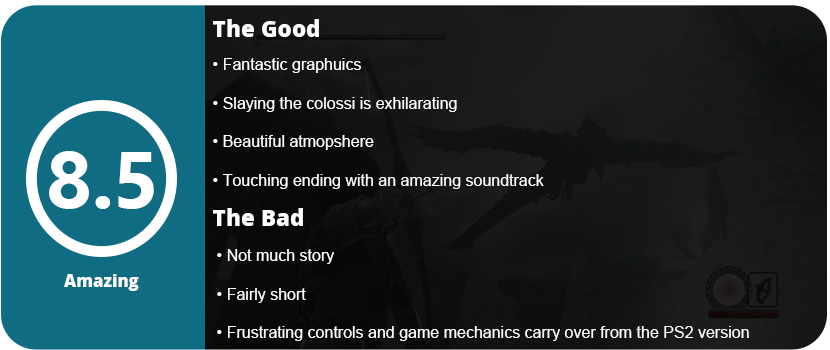
The graphics are superb, even to this day. The PS3 version adds some texture filtering and anti-aliasing, and of course, the frame rate is now 60. There’s also some extra bloom added, so the lighting looks great. However, despite all this greatness, the game is pretty short, and you can beat it in about 5–6 hours. All you do is slay all 16 colossi, and you’re done. However, it was a very memorable experience.
Overall, Shadow of the Colossus was a milestone for the PS2 and is still one of the best games ever made. The frustrating controls and game mechanics keep this game from being as perfect as all the rest. Have patience and just deal with it. Every PlayStation fan should play this game.
Ico is probably one of the most forgotten games in history. Being one of the first graphical powerhouses for the PS2, it proved that you don’t need a complex story and characters to have a good game. All you know is that you are a boy named Ico who is trying to save a girl named Yorda from her evil mother and escape from the castle. You enter as a captured prisoner because you have horns. You then escape and find Yorda along the way. What made Ico such a big deal was that you led her around manually by holding R1. This forced you to become attached to her, and they rarely spoke.
This game was way ahead of its time. That’s probably why people passed it by for Jak & Daxter and other PS2 games at the time. The game consists of some pretty cleverly designed puzzles that involve pulling switches, climbing, cutting ropes, and swinging on chains. You also push and pull on the occasional block. The level design is really well done, but there were a few obscure puzzles, like jumping off of a chain to knock a bridge down. This is completely against the game’s mechanics, so you would never know to do this. Leading Yorda around sounds annoying, but it prevents you from having to rely on the already shoddy AI. The game mechanics work well enough in design, but they are sloppy and frustrating to deal with.
When you jump, Ico tends to clip into ledges and ladders, making you have to slightly adjust him until he latches on. If you press the analog stick just slightly and jump, he will jump 20 feet, causing you to jump off ledges or fall to your death. There’s just so much bad collision detection, and the animations are janky and not well done. When you drag Yorda around, her arm looks like a flopping noodle that can go through her body. I know this was originally designed for PS1 before the game jumped ship to PS2, but still. There are other mechanics, like setting your sword down to pick up a giant stick, lighting it on fire, then setting off a bomb. Sometimes you have to toss these before they blow you up. Fun game mechanics and all, but they repeated through the entire game, making you grateful for the short length (just about 4 hours).
A lot of times I didn’t know where to go because the middle of the game has two areas that are identical but just slightly different. The constant backtracking can confuse you, requiring a walkthrough. There are no boss battles to speak of except the final boss, but the combat is so frustrating and annoying. Ico swings his sword around aimlessly, and you can’t move while doing so. The AI jumps away as soon as you run after it, so if you get stuck in a three-hit combo, you get knocked down, and Yorda gets dragged away. You can’t die in this game during combat, but if Yorda gets dragged underground, you’re done. You can pull her out of the hole, but sometimes a shadow creature will hit you and knock you back, and then you have to suffer the long animation of getting up. A lot of games had these animations (The Mark of Kri), and I don’t know why. It breaks the fluidity of everything. Once you get the hidden mace in the game, combat is really easy, but you still get annoyed by the creatures constantly backing up when you approach.
The graphics look great with the new HD upgrade, but even back then, they were amazing. A lot of textures have been slightly upscaled, and some bloom and HDR have been added for better lighting. You can still notice the game’s age during up-close shots of areas. Textures are muddy and so blurry that they don’t even look like what they are representing. The main thing is that you can pan the camera around more now that the resolution has been bumped up, making navigation easier. This is how you do HD upgrades, right?
Overall, Ico is a great game, but the dated mechanics really show their age. If you can look past all this, you are in for a great, albeit short, game, but don’t expect engaging characters or a complex story. There are four cutscenes in the whole game, but this is about the journey and not the story.


















































 thebinarymessiah.com
Try multiplayer. A lot of fun !