Microsoft isn’t someone to mess with when it comes to controllers. Sure, the original Duke is lauded as one of the worst controllers ever made, and it has its fans, but the Xbox S controller really changed things up. Not to mention their analog stick orientation which is copied to this day by even Nintendo. The Xbox controller made built-in headset plugs a thing too. The Xbox 360 controller was considered the best controller ever made at the time. The ergonomics were fantastic and the later improved rotating D-Pad was a huge plus. The Xbox One controller only made things better with bumper button rumble, and just overall improved ergonomics and build quality. Microsoft messes the least amount with their controllers. They just like making it feel good and work. They also have a battery fetish that a lot of people don’t care for.
Fast forward to today and we have Microsoft’s next-generation controller. It’s probably the least changed compared to other companies, but it continues its design DNA. The ergonomics are slightly tweaked still, the built quality feels even better, and they took the idea of the rotating D-pad and the D-pad from their Elite controllers and made it standard. Xbox has the best D-pad out of all three companies. The bowl-shaped D-pad works so well with fighting games as it feels almost like an arcade stick. It’s very clicky and detents in the right spots. You can roll your thumb around for those quarter-circle moves with ease.
The trigger texture is also improved and feels very bumpy and gritty. The haptic feedback hasn’t changed either, but I guess that’s okay. It’s a stark contrast to Sony’s fantastic DuelSense controller. There isn’t much tech packed into this controller either. It’s probably the most basic controller available right now, but many gamers prefer that. You still get a headset input at the bottom and that’s about it. This feels like the Xbox One 1.5 update rather than a next-gen controller. There is an added share button in the center with Microsoft taking notes from Sony from the DualShock 4 controller. This makes sense with streaming and social media has blown up since the Xbox One debuted. The controller does have a USB-C port just like the DualSense so I applaud Microsoft for not making me get out the USB micro.
You still get your Bluetooth functionality, and they are still using AA batteries. Some praise this as that means this controller will always work and you won’t need to get a battery in a few years and tear it apart. Some hate it saying it’s not very modern of them to do. You can get rechargeable AA which I have been doing since the Xbox 360 era so there’s no need to whine.
Overall, the Xbox Series X|S controller is the least changed, but it still works. Microsoft is the poster child for “if it ain’t broke don’t fix it.” USB-C is nice with the added texture to the bumpers and triggers, but the biggest change is the D-pad. It just feels great. If you liked the Xbox controller up until now then you won’t be disappointed.
Many people use video game reviews to determine how to spend their hard-earned dollars. While as an adult I don’t take this as seriously and I now make my own money I am more forgiving of games that aren’t perfect. As kids or teens, we have limited money and are usually picked through gaming magazines to determine if that one game was worth the money because we only got a few a year. For me, it was only during Christmas time that my parents bought games. I mostly rented mine throughout my childhood and teen years. Even for rentals, I was picky as I didn’t want to be stuck on my weekend with a dud of a game. Even a 7/10 or 3.5/5 would be considered a waste of time. This was the last generation in which AAA title after AAA title would be considered fantastic and with so many exclusives it was hard to keep up with. The HD era of gaming would see budgets balloon to insane heights and game releases slowed down as a result.
In my eyes, 7/10 or 3.5/5 games are mostly ignored. These aren’t always considered hidden gems either. Some are, but some are just considered forgettable. Not awful or good, but just passes under everyone’s radar. These aren’t the “so bad it’s good” games either. A few of these games have cult followings; a few I had only heard of while compiling this list and some I played myself growing up. I compiled this list from Metacritic with games between 74-70. I feel that’s the true blue 7 range. 79 and 78-rated games usually only have about 25% of the critics giving it a 7 to bring an otherwise 8 score down some. These games are at least rated by half the critics as 7/10. While I know many people don’t listen to critics and some might feel this game should be rated higher or lower is subjective. Like it or not, critic reviews drive sales and it may be the reason why you might find a few games on this list you’ve never heard of, thought was talked about worse than you remember, or something along those lines
Dead Rising 2: Case West – 2010
An exclusive standalone title bringing back Frank West. It was too little too late as the second game wasn’t a big enough improvement for most people. I personally don’t care for this series but die-hard fans at this one up.
Most Recent Entry: Dead Rising 4 – 2016 (PC, XONE)
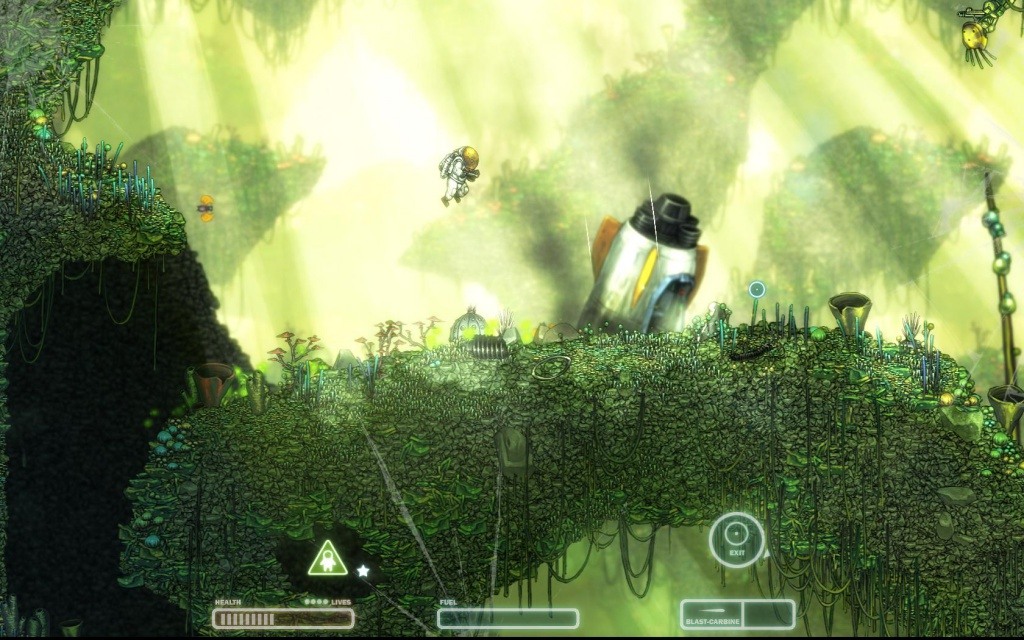
Capsized – 2013
This indie title was well-liked for its visuals and atmosphere as well as old-school challenge, but its combat and exploration were a bit one-note and didn’t hold most people’s attention for long
Ridge Racer 6 – 2005
A console launch title that was met with a lot of hype. It was just average. There were better arcade racers at the time and it didn’t advance the series enough to be groundbreaking. For a console launch title, it also didn’t show off the power of the 360 at the time like it did with the PSP.
Most Recent Entry: Ridge Racer: Draw and Drift – 2016 (iOS, AND)
Kinectimals – 2010
One of the most hyped Xbox 360 games to date. This was shown off during the Kinect unveil at E3 and people went nuts. It’s probably the best Kinect game out there and while it was praised for its imagination and whimsy it didn’t have much gameplay or content to keep you coming back.
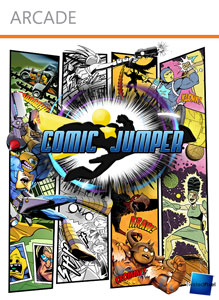
Comic Jumper: The Adventures of Captain Smiley – 2010
Comic Jumper was praised for innovative gameplay and fun characters, but lacked depth and became very repetitive. It felt like an older Xbox game at best.
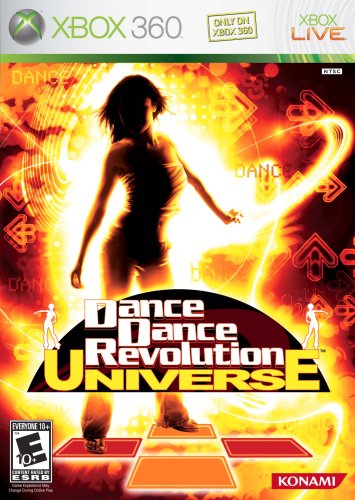
Dance Dance Revolution Universe – 2007
A competent yet underwhelming debut on next-gen consoles. The graphics were sub-par and there was no addition of custom soundtracks which many stated was a missed opportunity. It was just more DDR on Xbox 360.
Most Recent Entry: Dance Dance Revolution II – 2011 (WII)
Your Shape: Fitness Evolved – 2010
The short-lived series made its mark at the launch of the Kinect and many praised it for using the device well, but underneath was simply a workout simulator and nothing more.
Most Recent Entry: Your Shape: Fitness Evolved 2013 – 2012 (WIIU)
Jetpac Refueled – 2006
A cheap reimagining of the classic Atari game. It worked well enough, but if you aren’t a fan of high-score games then this wasn’t for you. It didn’t do anything to evolve the series enough.
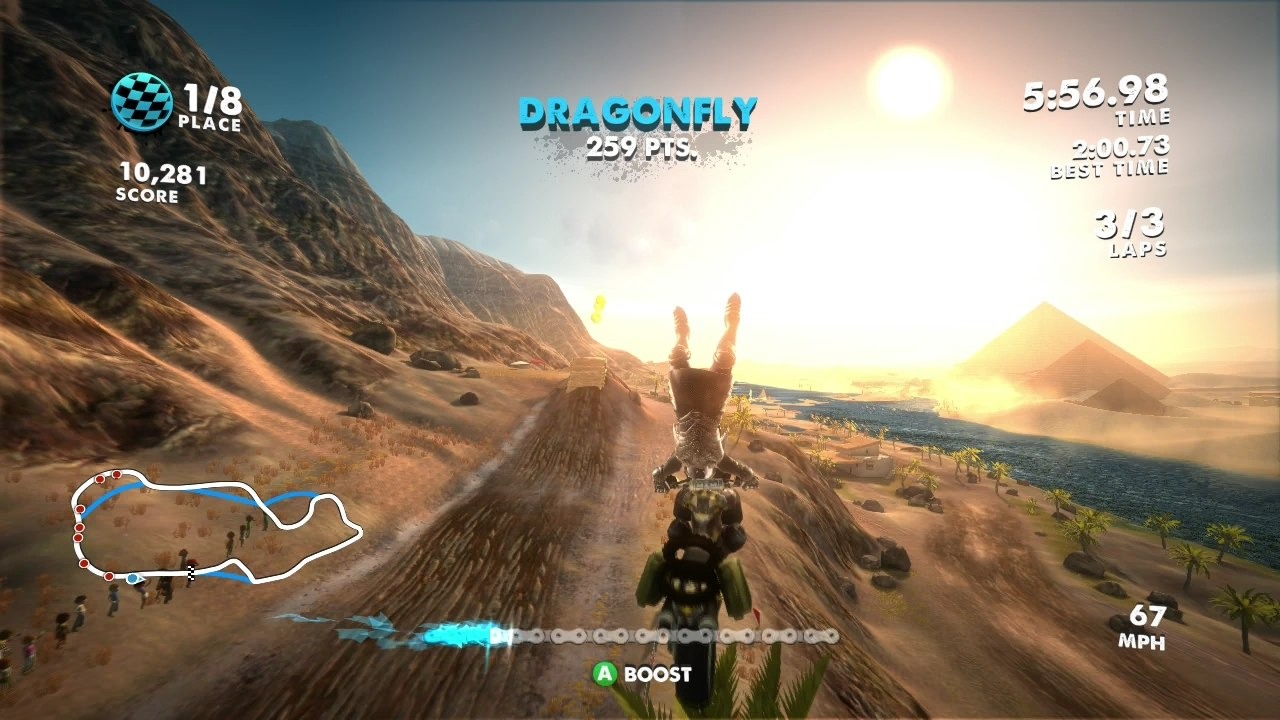
Motocross Madness – 2013
The final game in the long-running series. Its console debut, and reboot, featured cute avatar characters, and looked good, but had very little content outside of multiplayer.
NBA Baller Beats – 2012
Not to be confused with Midway’s NBA Baller series. It was an ambitious title and probably one of the most unique for the Kinect. You used a real-life basketball and dribbled to a rhythm game. It was great for practicing and a good workout, but hindered the visuals and content department. People also complained of needing said basketball and a hard surface. Anyone living with downstairs neighbors was also left out.
Most Recent Entry: NBA 2K23 – 2022 (PC, XONE, PS4, PS5, XSX, NS)
Hybrid – 2012
Even if you wanted to play this game you can’t. It was online only with no bots and isn’t for purchase any longer. Now it’s just a relic and time capsule. The game was praised for doing interesting things, but was priced too high, had no offline play, and had weird controls.
Small Arms – 2006
An early title that launched with Xbox LIVE Arcade. This four player brawler had a charming roster and fun combat but didn’t offer much in terms of longevity or depth. It’s still available today to play on Xbox One.
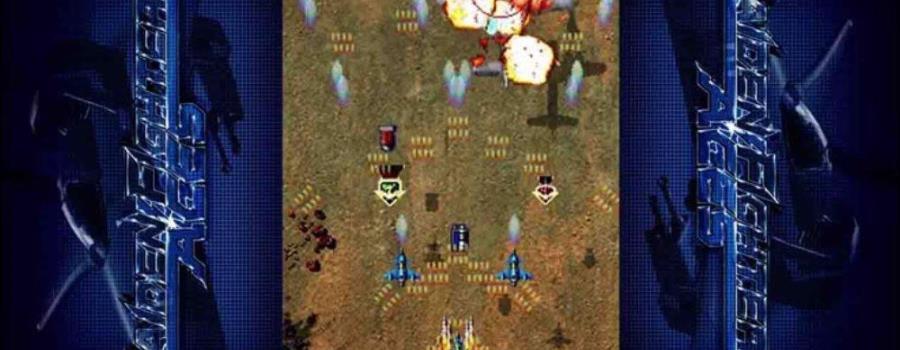
Raiden Fighters Aces – 2009
For a budget retail title, it offered three Raiden games that hardcore fans would love. Other than that the game was questioned for being double the price of most LIVE Arcade games and only including three.
Most Recent Entry: Raiden IV x MIKADO remix – 2021 (NS)
Zumba Fitness Rush – 2012
Fitness games were everywhere for the Kinect and motion devices. It was an unstoppable plague. Zumba Fitness was considered one of the better ones, but each version lacked a variety of content.
Most Recent Entry: Zumba: Burn It Up! – 2019 (NS)
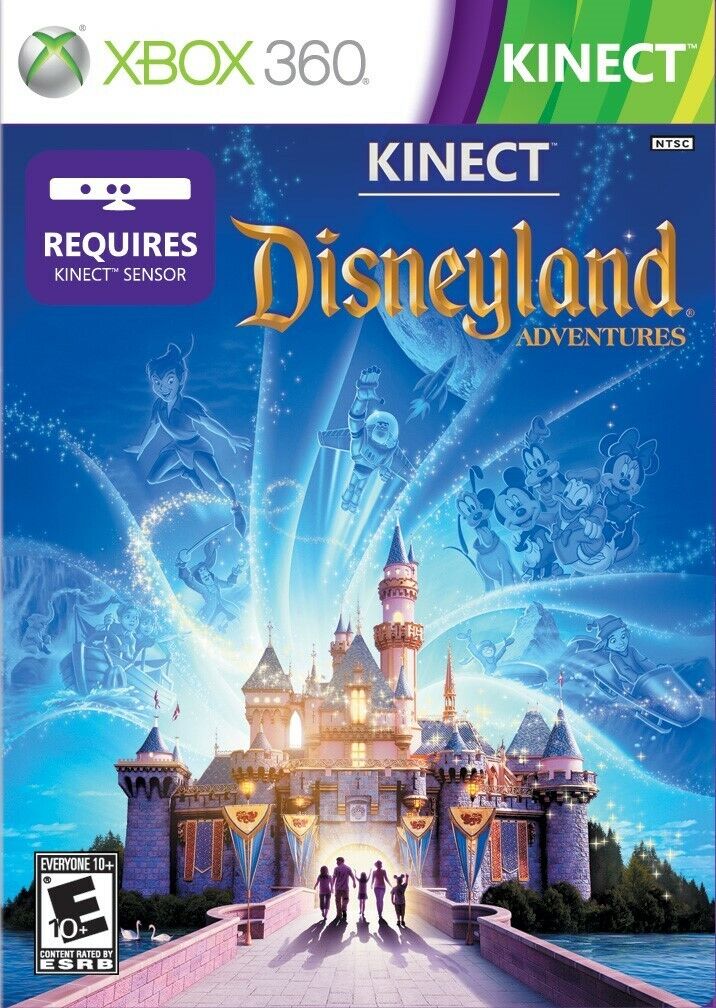
Kinect: Disneyland Adventures – 2011
Of course, this was going to happen. Riding the apex of the Kinect’s popularity you can take a trip down a virtual Disneyland. The game was praised for capturing the magic of the theme park but lacked content or challenge.
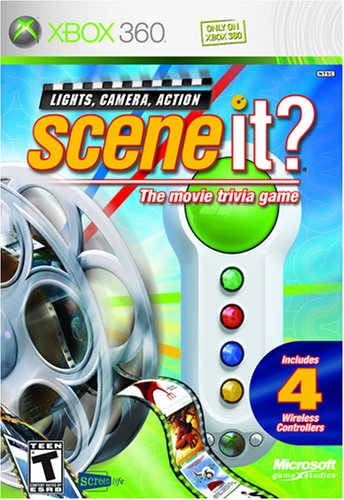
Scene It? Lights, Camera, Action – 2007
Trivia games have always had their audience and Scene It?burned up and fizzled out fast. This one was exclusive on Xbox 360 for some reason and was critiqued for having trivia that only 20 something’s (who are in their 30s now) would get and understand. It wasn’t great for family night.
Most Recent Entry: Scene It?: Movie Night – 2011 (X360, PS3)
Kinect Sports – 2010
The most popular Kinect game, it launched with the device, and it was a direct rival to Wii Sports. It didn’t have the same charm sadly. While the games were fun the motion controls didn’t register accurately and it lacked overall content. The series would try one last time on the Xbox One before fading out of existence.
Most Recent Entry: Kinect Sports: Rivals – 2014 (XONE)
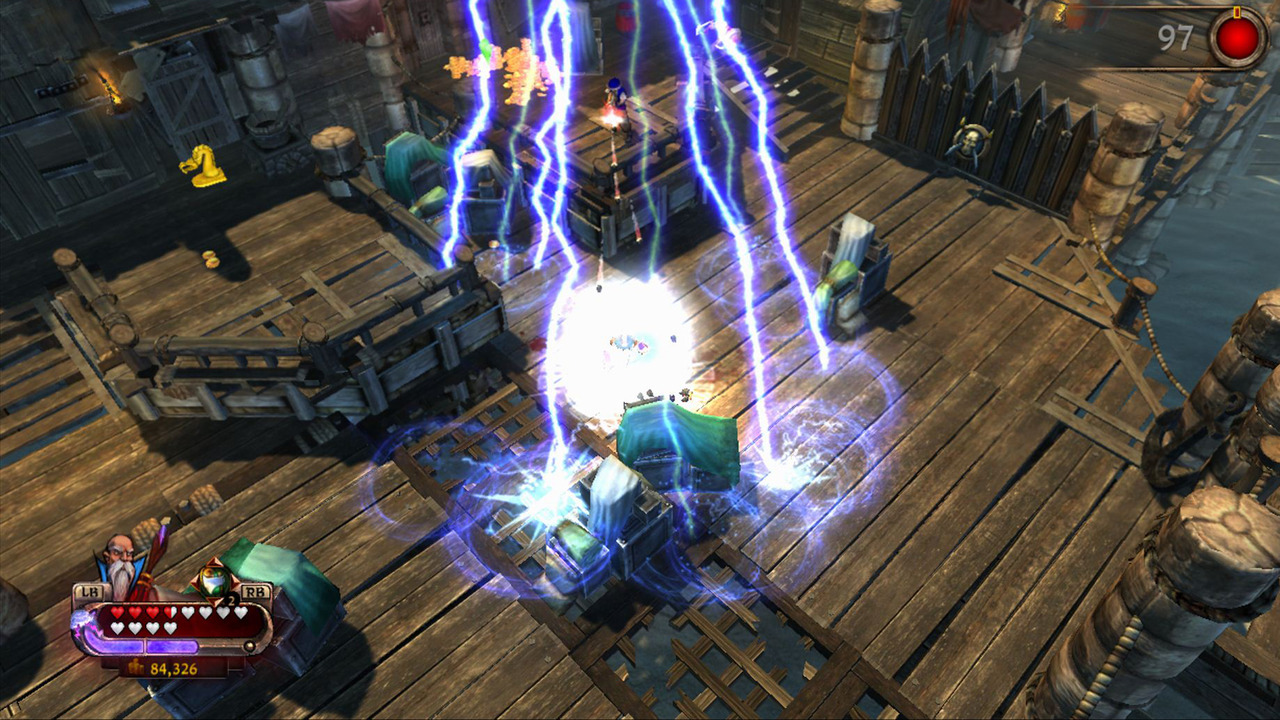
Crimson Alliance – 2011
Praised for its bright visuals and fun take on the Diablo formula, but was really short and didn’t offer much in terms of content. It was also best played with other people as the AI wasn’t very good.
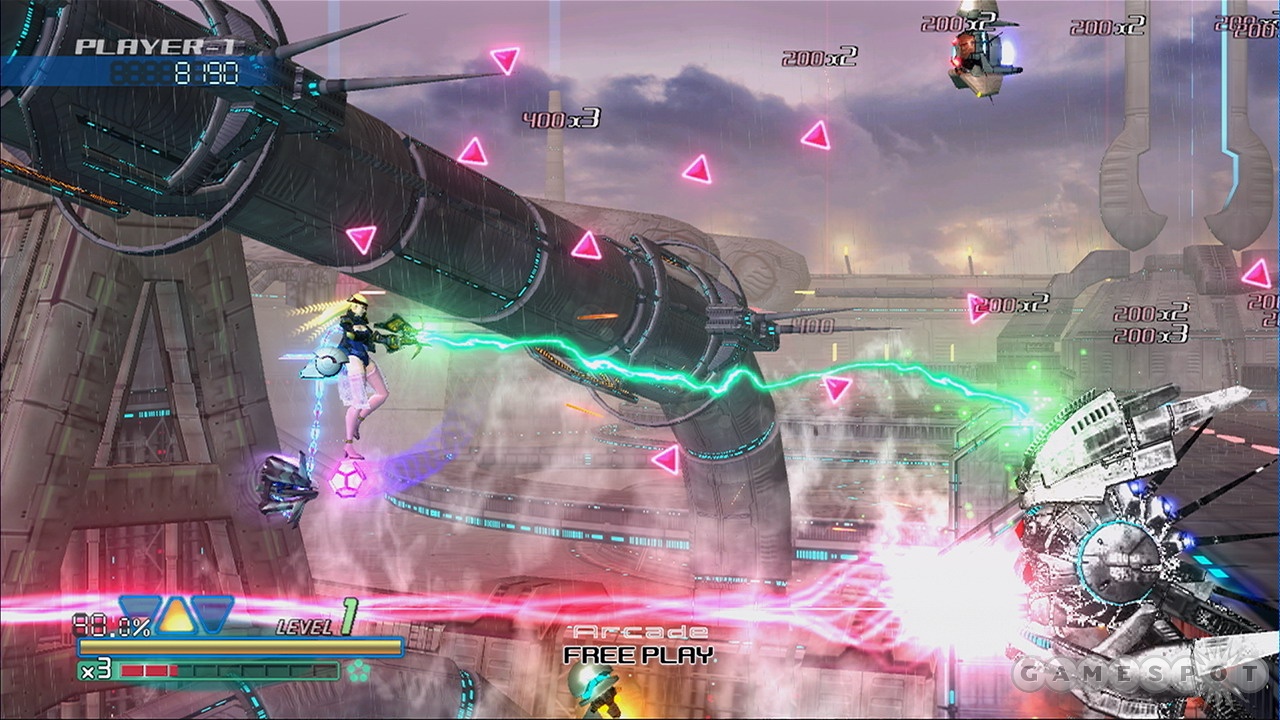
Omega Five – 2008
A fun yet shallow side scrolling shooter. It looked really good as well with lots of nice effects, but it didn’t have a unique hook or visual style and in the end, many people lost interest.
Race Pro – 2009
A racing sim that was praised for its realism but lacked content and felt too similar to the PC racing sims. It just couldn’t compete with the likes of Forzaand Project Gotham Racing.
Amped 3 – 2005
A system launch title and originally Microsoft’s answer to SSX Amped had its following and crowd. Amped 3 was well…amped up to launch and was one of the better-selling games. Despite this, the game lacked content despite looking next-gen, but it looked bland and didn’t have much flair or style to it. It played like a generic snowboarding game. The series would end here.
Gel: Set & Match – 2009
An original puzzle game indeed, but it just felt like it wasn’t enough or didn’t reach its full potential. It wasn’t super accessible and also not challenging enough at the same time.
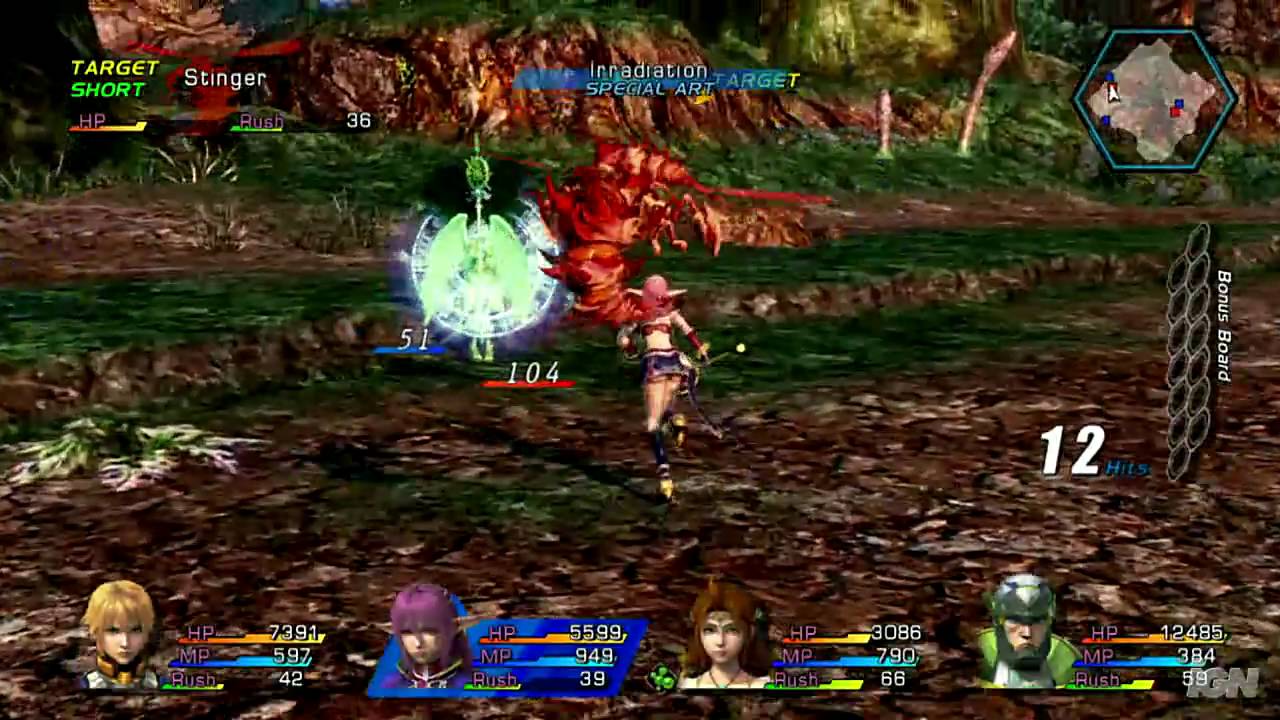
Star Ocean: The Last Hope – 2009
Xbox 360 exclusive JRPGs weren’t plentiful and none of them were stellar. Many kept playing them until FFXIII would surface, but Star Ocean hasn’t been a good franchise in over a decade. The Last Hope was full of long drawn out cut scenes, an uninteresting story, and gameplay that was boring and average. However, regular JRPG lovers will find enough to like here. It would later released on PS3 with little fanfare.
Most Recent Entry: Star Ocean: The Divine Force – 2022 (PC, PS4, XONE, XSX, PS5)
Phantom Breaker: Battlegrounds – 2013
This is a hardcore beat ’em up similar to Castle Crashers, however, it’s not as accessible. Some claimed it was too complicated, and some said it had gameplay mechanics that weren’t the best. Overall, if you like this genre there’s something here for you. It’s also getting a new game this year.
Most Recent Entry: Phantom Breaker: Omnia – 2022 (PC, NS, XONE, PS4)
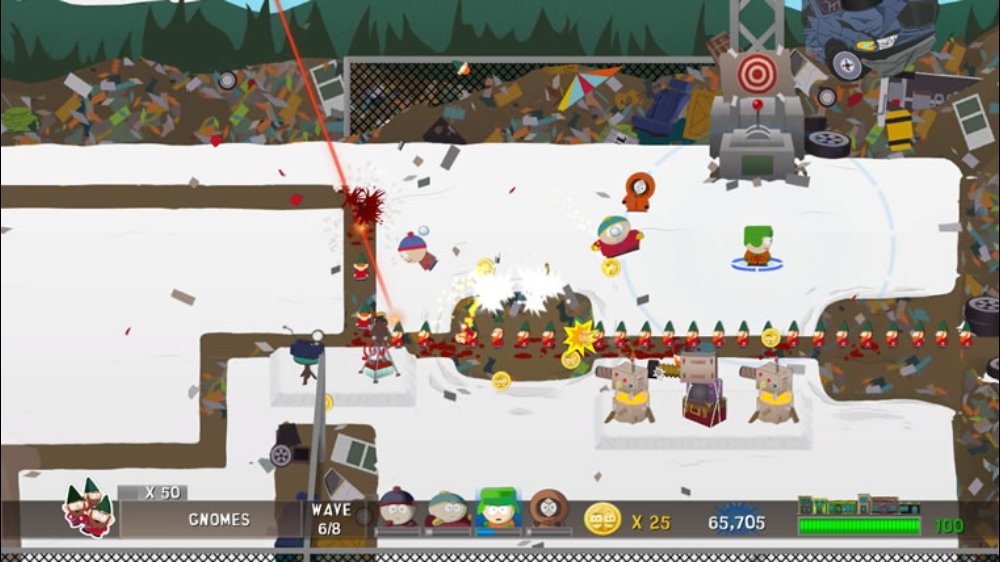
South Park: Let’s Go Tower Defense Play! – 2009
Considered the best South Park game at the time, but that’s not a big shoe to fill. You either needed to be a South Park fan or love tower defense to enjoy this. It offered very little variety and not much outside of multiplayer.
Most Recent Entry: South Park: The Fractured But Whole – 2017 (PC, PS4, XONE, NS)
Axel & Pixel – 2009
A great looking original point-and-click adventure that was praised for being brave enough to bring this genre back, but the story wasn’t interesting enough to garnish sales for a sequel. If you love the genre and haven’t played this then you’re in for a visual treat.
Hexic 2 – 2007
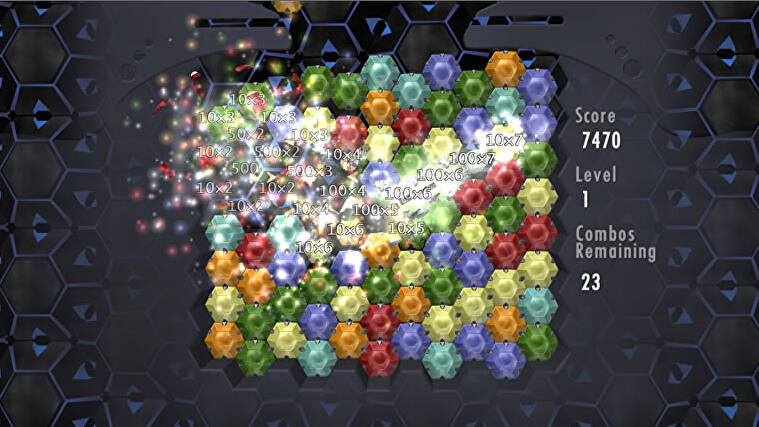
A new game by Tetris creator Alex Pajitnov is exciting. Hexic 2‘s Xbox 360 exclusivity wasn’t a surprise, but it wasn’t much more than the original. The first Hexic game was the first ever LIVE Arcade game I played as it came with my system bundled in. I never bothered with the sequel, but my sister was obsessed with this game. Many complained the game cost too much for how little it offered.
The Splatters – 2012
A unique and fun physics based puzzle game, but players felt the game was too hard, unfair, and overall rough around the edges. It’s still fun for puzzle fans as there’s nothing else like it.
Nike+ Kinect Training – 2012
Nike threw their hat into the Kinect ring a little too late and what we got was a pure training simulator with almost no game. It wasn’t fun, it was very serious and didn’t have the best motion detection setup. If you had one training sim for your Kinect you had them all.
Meteos Wars – 2008
The DS phenomenon came to Xbox 360 but was hampered by an overly aggressive AI and no online play. Despite the name, you’d mistake this for an online only game. While the core gameplay was intact, it didn’t have a lot to offer. This would be the final nail in the series’ coffin.
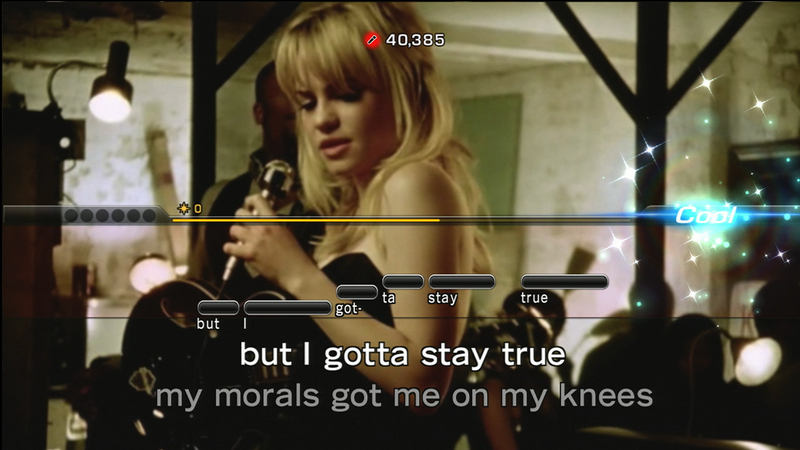
Lips – 2008 Lips: Number One Hits – 2009
If the name wasn’t dumb enough the karaoke genre was overflowing with shovelware at this point. Despite this one-off game for the 360 being decent as a simulator. It wasn’t really a game. You just sing to the words like any other game with no modes or actual fun.
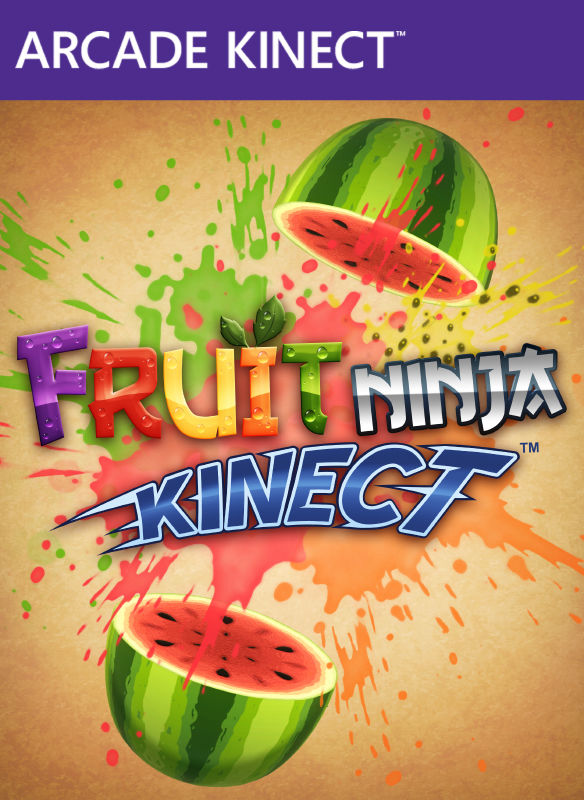
Fruit Ninja Kinect – 2011
Does anyone remember Fruit Ninja? It was a smartphone phenomenon. It also got a giant arcade version which I actually got to play. While this is one of the better Kinect games it was way overpriced and this hurt sales and reviews. It had about the same content as the smartphone versions at nearly full retail price. It’s a great title to own if you have one collecting dust somewhere.
Most Recent Entry: Fruit Ninja 2 – 2020 (AND, iOS)
Easy Golf: Course Architect – 2008
This was a more high-profile indie game that was made by the community. It looked simple, but played well enough and had a robust course editor. It was best played online. However, the rather ugly visuals and UI hampered the experience a bit.
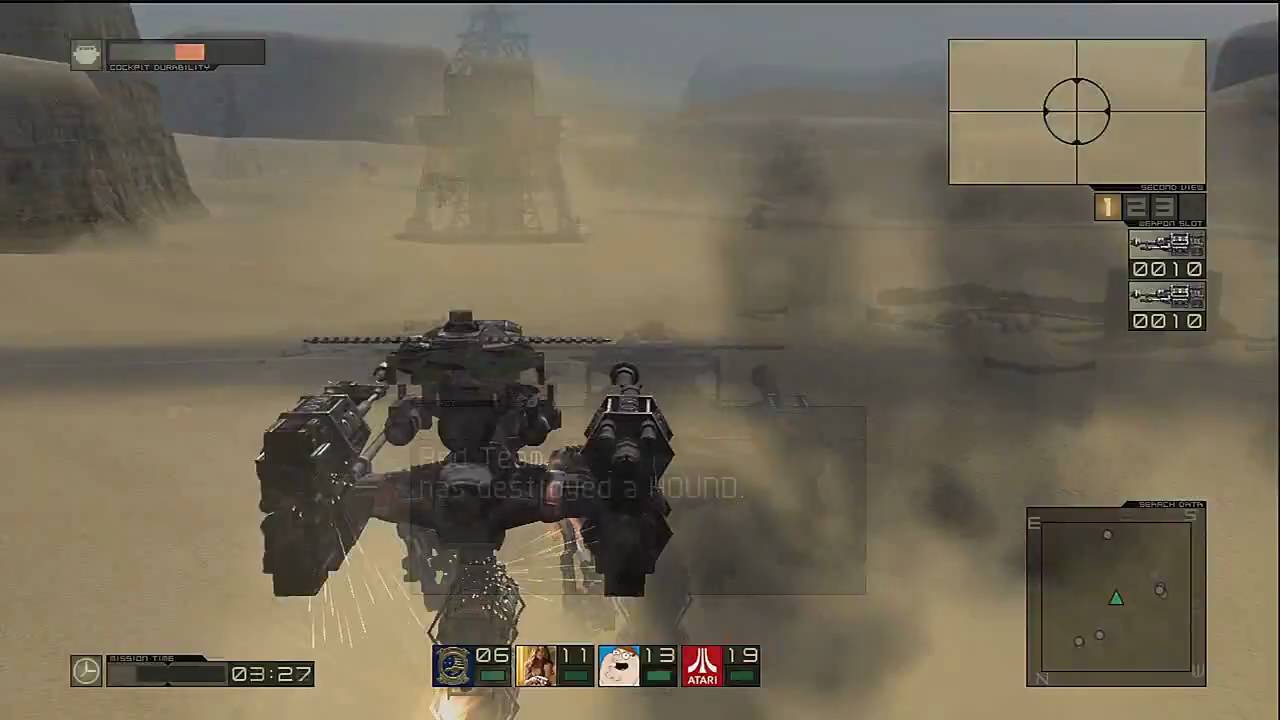
Chromehounds – 2006
If the cover isn’t the most generic thing you’ve ever seen it doesn’t end there. The game didn’t look up to snuff for the era, but offered a robust customization suite with great online play, but lacked everywhere else. It’s a decent mech game that was exclusive to the system but quickly forgotten about.
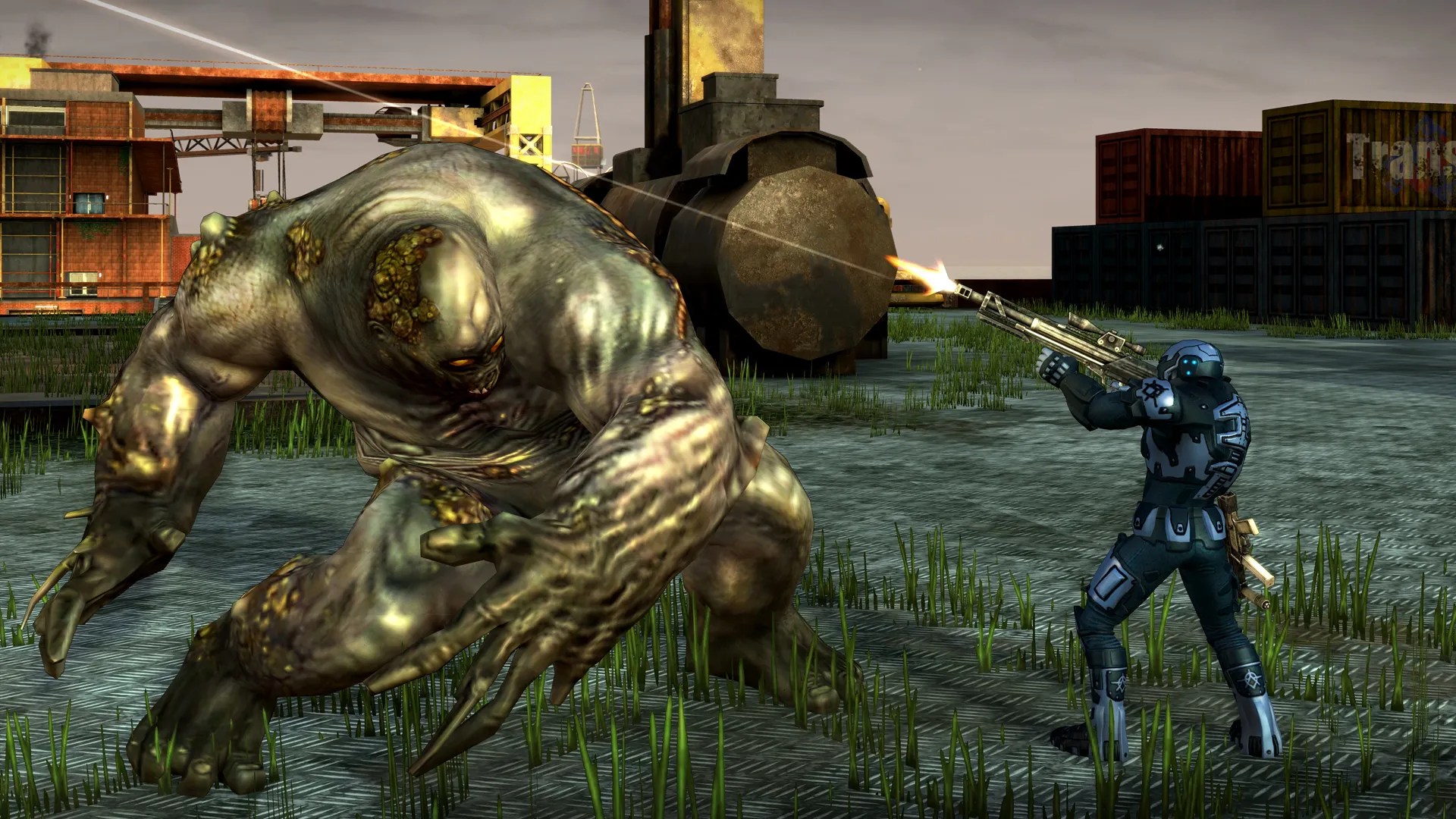
Crackdown 2 – 2010
The first Crackdown was loads of fun and felt original. Sadly, due to the surprising popularity, the sequel was greenlit too fast and we got more of the same which wasn’t really a good thing for an open world game. It felt like an expansion if you can say that. The series never reached the heights of the original.
Most Recent Entry: Crackdown 3 – 2019 (PC, XONE)
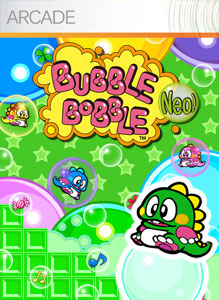
Bubble Bobble Neo! – 2009
Another arcade version of Bubble Bobble. Nothing new or innovative and incredibly hard, but if you love arcade games then this is for you. At this point in time, any form of Bubble Bobble was heeded with groans as it was a series Taito had beaten into the ground at this point.
A hyped up exclusive that got attention everywhere. It was first looked down upon due to its dated visuals which didn’t look next-gen. It was also a slower paced strategy title that would automatically neuter sales. In the end, the game had fun multiplayer, but was really repetitive. It would have done better as a PC title.
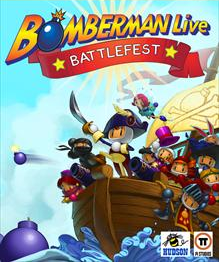
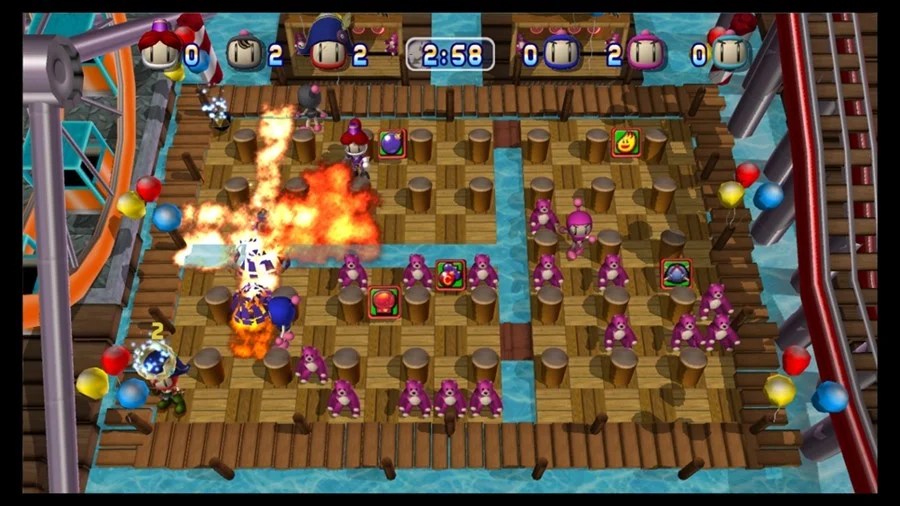
Bomberman Live: Battlefest – 2010
Better than the abysmal 360 exclusive, but plays it too safe to set itself apart from other games. The online play was a good addition, and the visuals are charming, but that’s about it.
Most Recent Entry: Amazing Bomberman – 2022 (MAC, iOS)
Full Auto – 2006
A very short lived series and a not-so-surprising Sega exclusive on Xbox. This was a generic feeling car battler at its core despite the high octane thrills and average track design.
Most Recent Entry: Full Auto 2: Battlelines – 2007 (PSP, PS3)
Haunt – 2012
This Kinect title was late to the game, but provided a charming haunted house to travel through. Ultimately it was over in a few hours and didn’t have much gameplay or depth to keep you coming back.
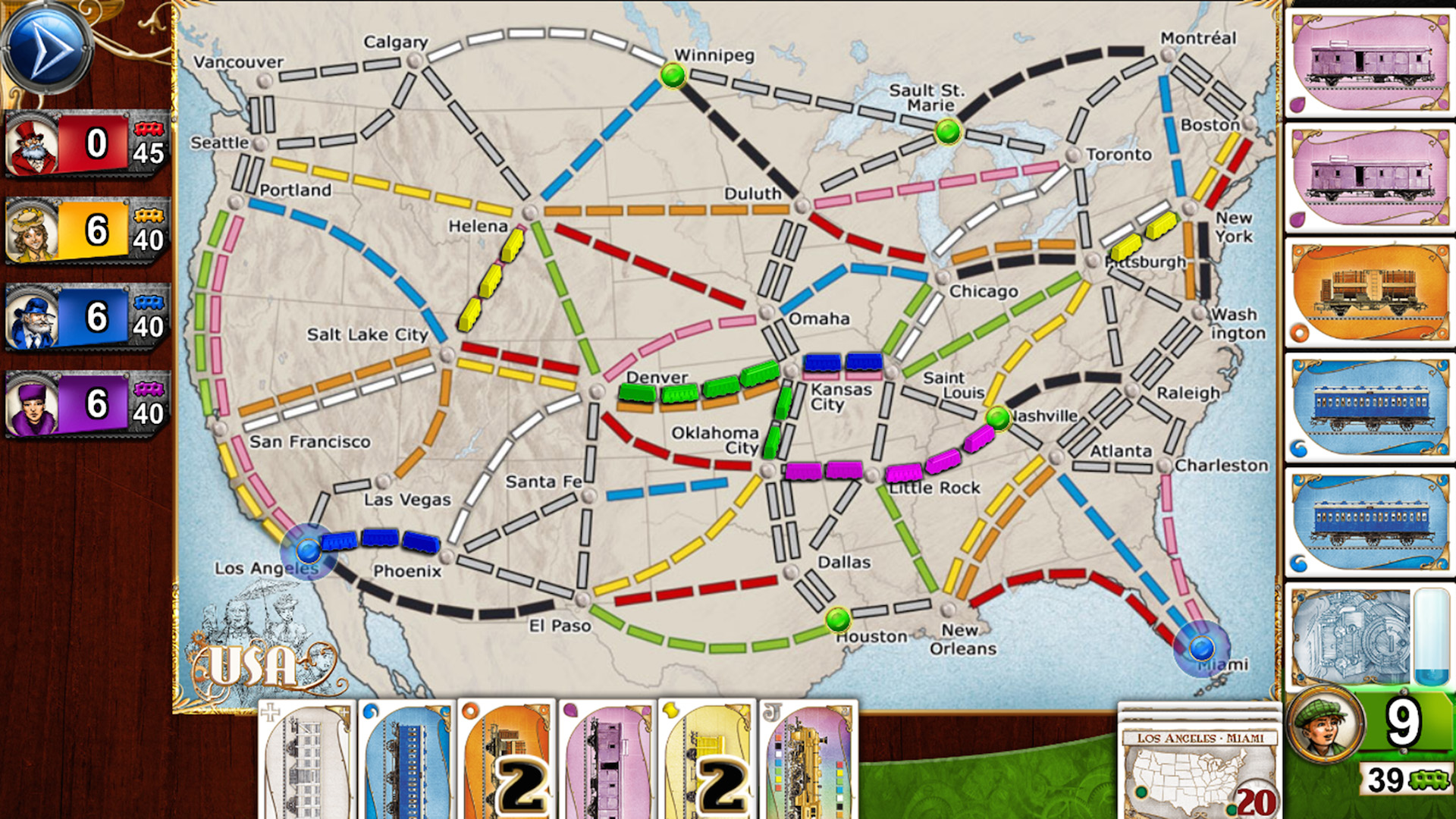
Ticket to Ride – 2008
There wasn’t anything inherently wrong with the game. It was for hardcore boardgame players really. It had a dry presentation and was simple to learn but hard to master. I feel if it had flashier visuals it would have appealed to more people.
The 8-bit era of Atari was before my time. I started the next generation with the Sega Genesis and Super Nintendo as a young toddler. I still respect and have enjoyed iterations and ports of Atari 8-bit games over the years. What hasn’t been done well is anything outside of bundles of seemingly random collections. They’re nearly countless at this point and have spanned nearly every console imaginable. Atari anniversary collections, various Atari-themed packs, and various retro packages with fancy UIs or presentations However, no single retro package has been as cohesive or beautifully created as the Atari 50. Even Sega’s recent Genesis Collection, with its retro 90s bedroom and bookshelf display, can’t beat this.
The entire game is presented like an interactive history lesson. You go through four timelines. Atari’s origin story and their arcade routes You get to see photos, printouts, commercials, and interviews with various Atari developers and industry veterans such as Tim Schafer (Psychonauts) and Cliff Bleszinski (Gears of War). These are presented in chronological order. A game is presented when its release comes up in the timeline. Some games have cover art, photos, and even comics underneath them to view. As you advance in the timeline, you get the feeling that you’re playing an interactive museum tour. There are no fancy 3D menus or anything, but the clean and simple UI works well. There are a few surprises peppered in, like unreleased prototypes and Digital Eclipse’s own recreations of iconic games like Yar’s Revenge and Haunted House.
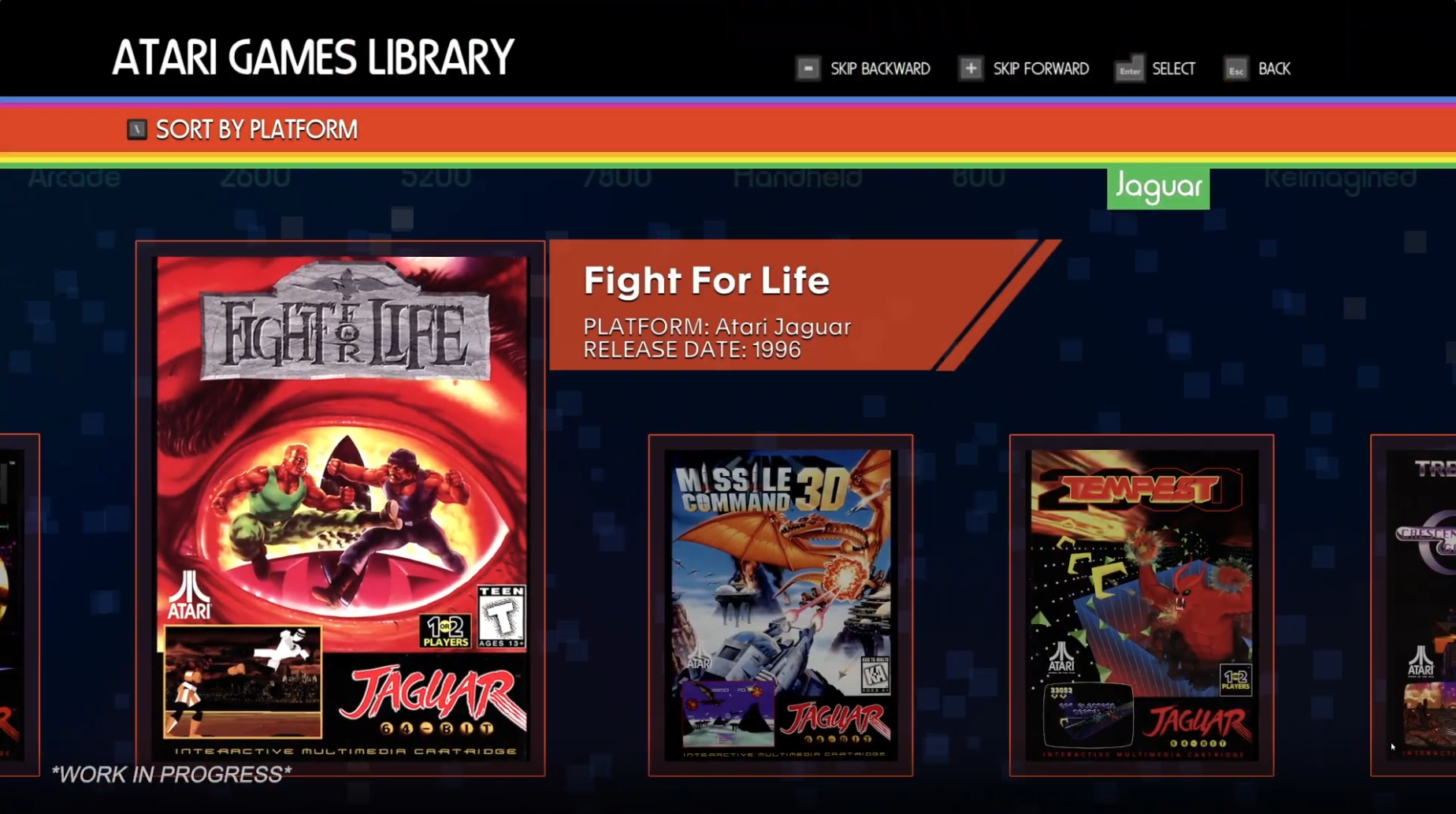
As you advance to the home console and PC timelines, things get more interesting. You will eventually get to the Atari 5200 and 7800 games, which are a bit more advanced. You will also get to play a few PC games for the Atari home computers. Then you will finish up in the 1990s with the Atari Lynx and Jaguar. Sadly, there aren’t many games in this timeline, and the biggest issue with this entire game is the lack of third-party titles. You only get to play Atari-published and owned games. That’s very limiting, and while I understand this is Atari’s own history, there are many games that helped make their systems great outside of internal developers. The few Jaguar games range from Cybermorph to Tempest 2000 and Missle Command 3D. They aren’t great, but they are interesting to dive into. That’s another thing about this whole collection. Very few games are fun to play for longer than five minutes. Some are pretty clunky and bad. This isn’t a “greatest of” collection, which I really appreciate. You will most likely go back to the more fun games like Missle Command, Centipede, Millepede, Tempest, or their latest versions in this game. You get special bezels, backgrounds, overlays, and control options for every game as well. You can also select various modes, and some games support save states, which is cool. You also get a digital view of every manual for the game, including the arcade operator’s manuals. They didn’t leave anything out.
By the time I spent around 5 hours in the game, I got to the end of the timelines. You can go back and play any game in the library view and pick your favorites. These games run really well and look great, but many gamers who didn’t grow up in the 80s will probably find this nothing more than a history lesson. Even more, will find pretty much every game boring or uninteresting. However, that’s not a knock to the games, but just a warning to younger audiences. Anyone younger than 30-35 will most likely not find this game interesting or fun. If you have a curiosity about Atari’s history or games then this is the best place to get that. If you have an itch for trying out 8-bit games or want to go back without emulating anything then this will give you nearly 100 games. I also appreciate how few ports and copies of the same game are in here. Each game was hand-picked and placed with relevancy.
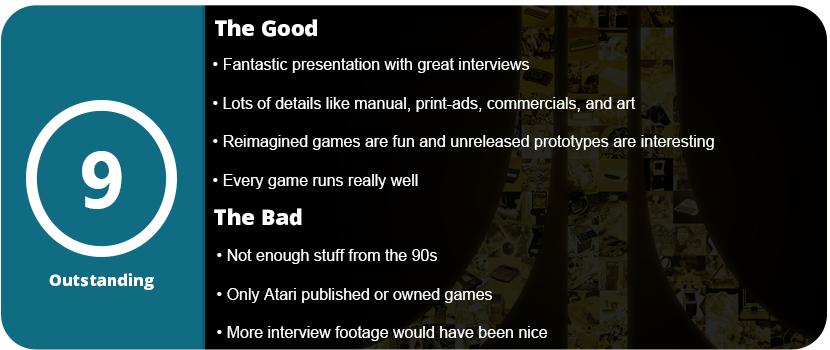
Overall, the Atari 50 is one of the best retro packages you can ever play. Telling an entire developer’s history with games placed in their correct time slots and even including unreleased games and reimaginings of some is just fantastic. The videos are entertaining and interesting, and you will learn a lot. There are so many details added from commercials, print ads, posters, manuals, customizable controls, save states, and more. It’s a complete and cohesive package for Atari lovers out there. Just be warned that there are no third-party games and less of the 90s stuff.
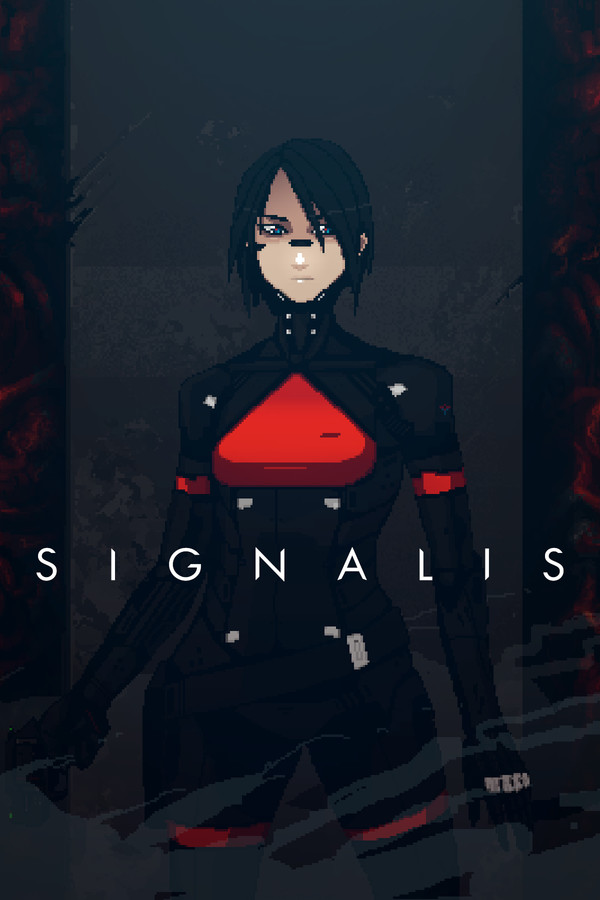
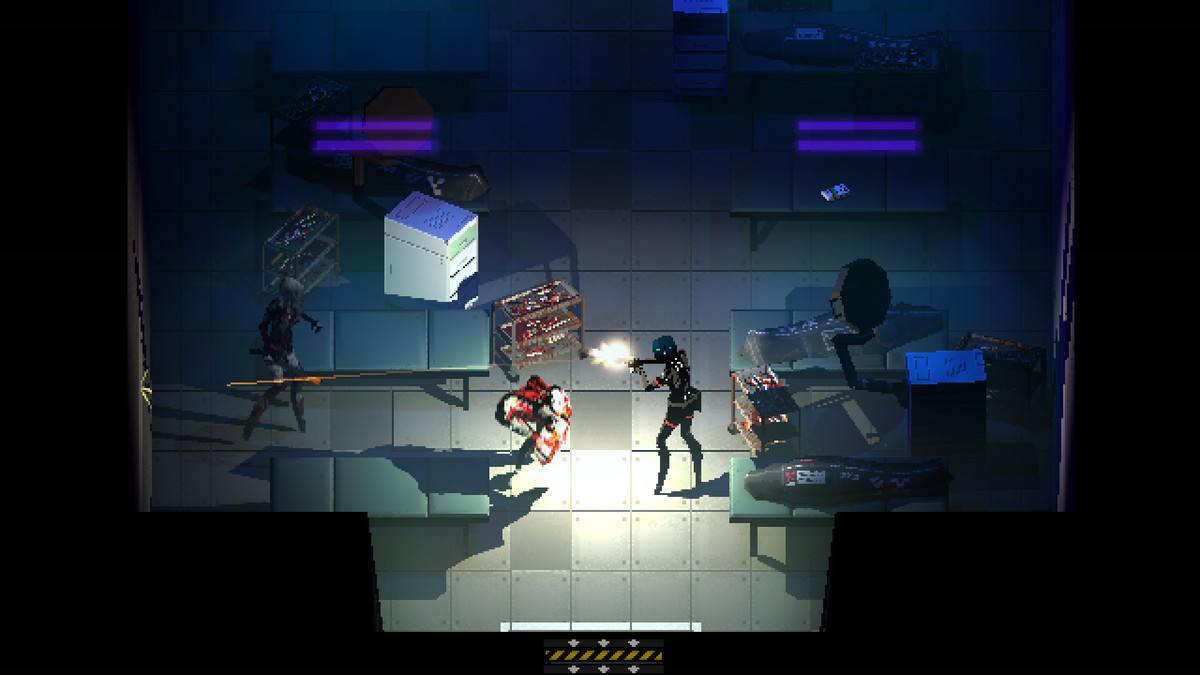
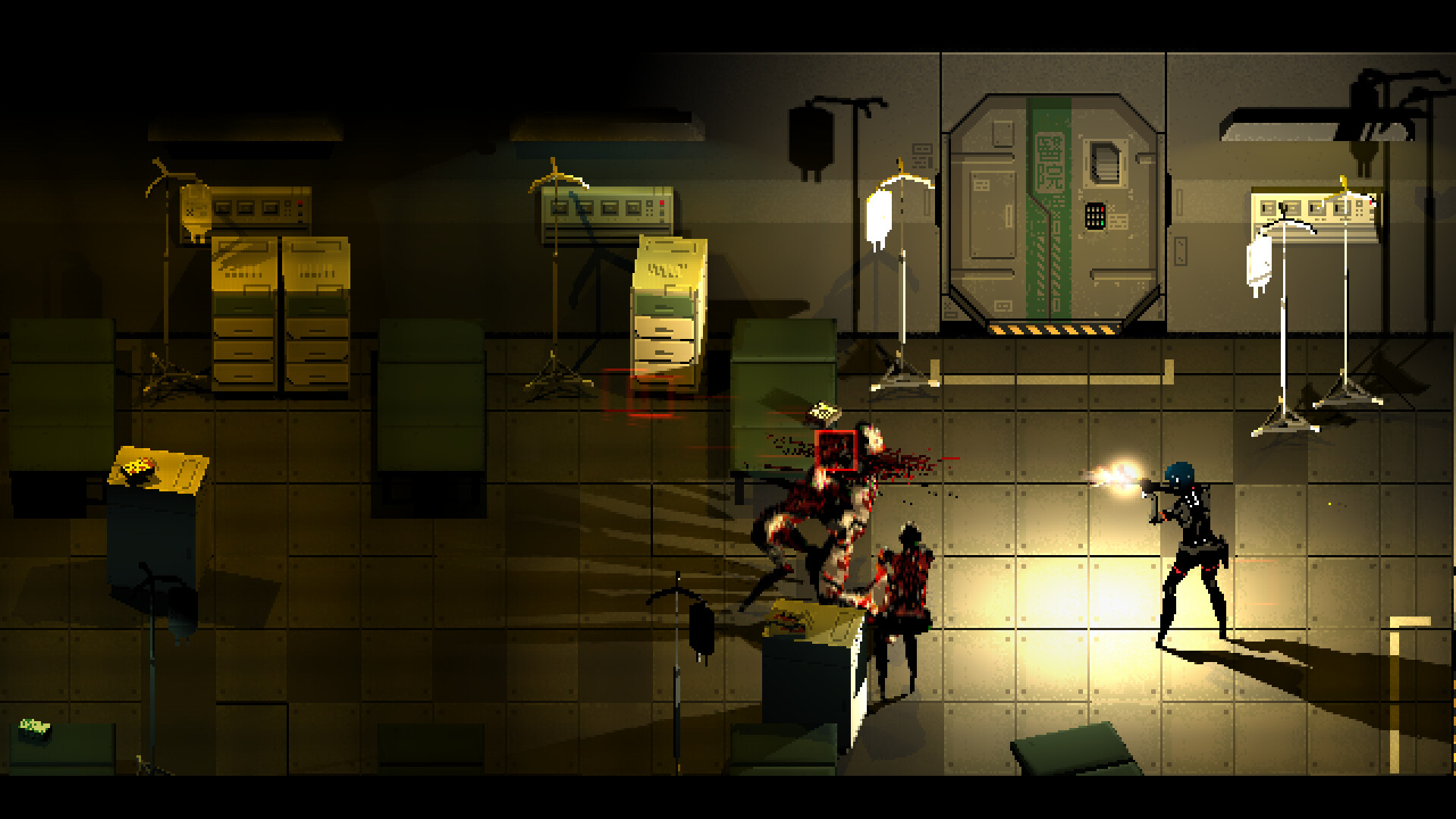
What would happen if you combined Resident Evil with Silent Hill? Probably a game with crazy enemies, creepy music, inventory management, and tank controls. Well, that’s exactly what Signalis is. It combines the best of PS1 horror and shoves it into a nice retro package with great controls and animations. Developer Rose Engine might be a bit on the nose with its inspirations, but it does a good job of making it feel more modern with a retro flair.
The weakest part of the game is its story. I will get that right out of the gate. While most PS1-era horror titles had convoluted and messy stories that usually made no sense or were open for player interpretation, Signalis is very cryptic, but the overall journey has a twist ending that is pretty eyebrow-raising. It will leave you stunned a bit and is a great payoff outside of the fact that there is almost no world-building or lore to get into. You get the occasional note, similar to Resident Evil, that tells a little snippet of what happened just before the current event. See, you’re some sort of AI controller robot in some dystopian German world. That’s all I really got out of the story and the few cut-scenes peppered throughout the game.
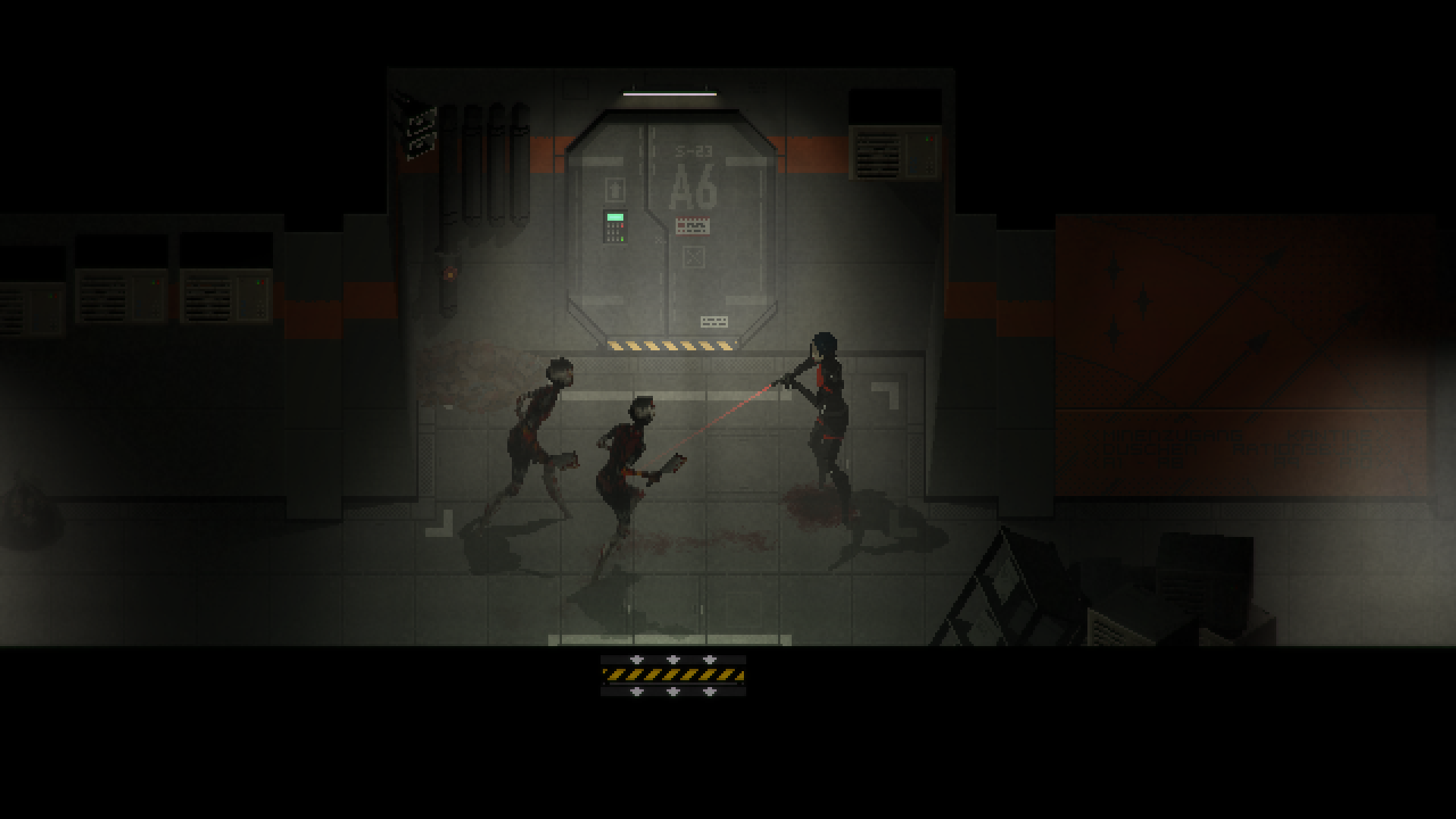
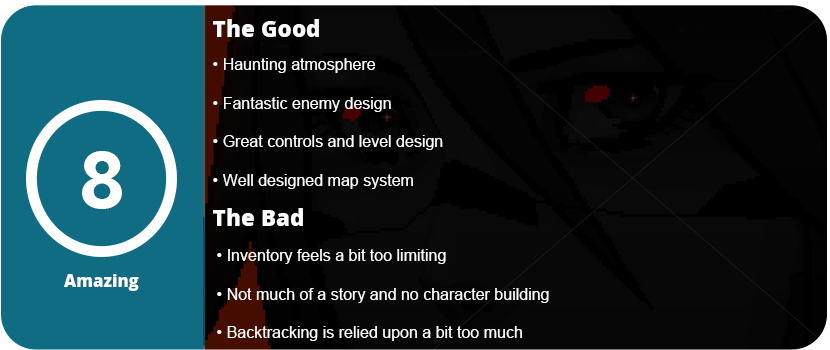
Just like the horror games that inspired Signalis you have limited inventory space, very little ammo for your weapons, fewer healing items, and lots of backtracking. I will praise Rose Engine for making backtracking in Signalisless painful than games of the PS1 era. There is a good map system that even marks puzzles that require items. The final area of the game has no map, but you will learn to remember landmarks. The level design in Signalis is fantastic. A game with a lot of backtracking needs good landmarks so you remember where every room is. If you are familiar with the 32-bit era of horror games this style of progression won’t bother you. There were some puzzles that had me write stuff down (math puzzles) or take photos of diagrams. You get a radio about halfway through the game and you can use the frequencies to help solve puzzles. I will admit that inventory management is a little too tight here. You only get 6 inventory slots and there are no upgrades in this game. I wish I had at least eight. I constantly had to leave healing items and ammo behind to dump puzzle items and backtrack a couple of times. At least in my first playthrough, I was able to preserve quite a bit of ammo. I didn’t even end up using two of the weapons. You can easily run from most enemies which I recommend later on when you enter rooms with four or more enemies.
You can only shoot enemies while standing still. There is an aim button that auto-locks, and you can fire. Enemies will fall down, and you have to stomp on them to temporarily kill them. Yes, after the first area, you get thermite, which will permanently burn enemies and keep them from rising. This is why I recommend only killing enemies in main corridors that require you to frequent them often. Most rooms have a one-time entrance. You run in, grab everything, and leave. Rooms with puzzles and save rooms don’t have enemies, so this helps. Just like games of this genre, you will eventually unlock shortcut doors to get back to the main puzzle areas or save rooms, which help cut down on a little bit of the backtracking.
The enemies themselves are very Silent Hill-like. Almost exact copies. There are EULR enemies that look exactly like the Bubble Head Nurses from Silent Hill 2. The STCR enemies look like the Closer enemies from Silent Hill 3 or the Siam from Homecoming. Everything aesthetic and atmosphere-wise is very close to Silent Hill. Even the music is similar. The entire game looks similar to the Otherworld from Silent Hill as well. I have to say I like it a lot. We need more Silent Hill, and this is the closest you will get. There’s a little cyberpunk infusion with the AI robots and dystopian world. It’s a great fusion, and I couldn’t get enough of it.
I didn’t find much of the game frustrating. Puzzles are fairly straightforward. You may have to look up one or two, but the solutions were mostly right in front of me, and I just didn’t see them. There are only two boss fights in the game, and they are pretty fun but not very challenging. The challenge in the game’s combat arises from getting swarmed. As long as you run, you will always be safe. Enemies usually have to stop to swing, and unless you’re backed into a corner, you won’t get hit. The variety of weapons helps, and you can store everything in your save room chests and go back to get what you need. I did finish the game with plenty of healing items and ammo. I can’t express enough how much running helps in this game. There were occasional rooms that needed my flashlight too.
Overall, Signalis nails the feeling and atmosphere of Resident Evil and Silent Hill. The monster designs are great, the music is haunting, and the level design is done in such a way that memorizing the layout of an area isn’t that hard, which is key for games that need a lot of backtracking. Puzzles aren’t insanely vague or obtuse, and it’s obvious what items go where once you find both. I just wish there were more than six inventory slots. It just adds artificial fluff to the playtime by constantly having to go back to your storage chest and dump off items. I also wish the overall story and world-building were better. The game is only about 6 hours long, so there isn’t much time or room for character or world-building anyway. Thankfully, the atmosphere, enemy design, tight controls, and well-designed areas are all tight. This is easily the best retro horror game to be released in the last couple of decades.
Once again Microsoft has pretty much merged Xbox and PC together into one seamless ecosystem. The Xbox Series X is a mid-range PC with every game having been ported to PC by now. This year was probably the strongest for Microsoft in a long time. While Xbox exclusives are absolutely zero for just that platform the ecosystem as a whole was very strong.
While this is not on Xbox, the PC is the only way to play here and you need a mouse and keyboard to play this game. It’s wholly unique to that control scheme. Not only that, but this is one of the best FMV video games ever made and one of the funniest. With multiple playthroughs you’re bound to find something new that you missed.
Here we are again. At least Activision let three go between releases this time, and it’s been paying off. I had high expectations for Modern Warfare II‘s campaign, as 2019’s was pretty damn good. A lot of elements carry over, such as the fantastic acting, fun on-screen characters, and bombastic mission design, but there are a couple of new things thrown in borrowed from Black Ops: Cold War and tweaked slightly. You play as various well-known Modern Warfare characters such as Soap McTavish and Ghost, with Captain Price returning as well as some characters from 2009’s Modern Warfare 2. If you hadn’t guessed, this is a prequel to that game and a direct sequel to Call of Duty 4. Starting to see a pattern here? 2019’s Modern Warfare was a prequel to Call of Duty 4. My guess is that Modern Warfare III will be a prequel to Modern Warfare 3. Why are we doing this? Why is there a Call of Duty multiverse?
Sadly, the campaign isn’t as good as 2019’s and still doesn’t teach any lessons. It’s a fast-paced, rapid-fire campaign that doesn’t focus on its strongest points. The story is interesting enough thanks to the fantastic acting, and the on-screen characters are interesting and fun to watch, and I wanted more of them. Instead, we’re rushed through a bare-bones campaign full of the same stuff we’ve seen before. On-rails vehicle missions, stealth missions that don’t require you to really use stealth, some weird puzzle with a missile laptop that isn’t really a puzzle because Infinity Ward thinks every player is dumb Yeah, the game treats you like you’re stupid and does everything for you. I really wish this would stop. Stop being scared of challenging us. Sure, the gunplay is, bar none, some of the best out there. The weapons feel great, and the animations and various minute things like ADS time, scope switching, and all that jazz feel tweaked and more responsive than ever. It’s a blast to shoot things and use various weapons.
The only new thing here is screwed up, which is the worst part of the game. The final act has you crafting items and sneaking through a city to escape the enemy. Yeah, crafting in Call of Duty I never thought I’d see the day. It’s poorly implemented because the level design is terrible. I constantly got turned around and went in circles, causing me to restart numerous times. You have no way to deal with enemies until you find a sharp object, which is towards the end of the first objective. You can craft smoke bombs, pry tools (which are essential to finding a gun and better weapons), and various small traps, but finding these items is a chore. I had to go into every single house and search everywhere just to get enough parts to make a single item.
Getting caught required numerous restarts, which seriously halted the game. It’s later introduced in an even worse situation in which you are in a single office with no weapons and have to scrounge for a sharp object and make items while also being on a timer to disarm a bomb with that same laptop puzzle thing. It’s stupid and not fun. The thing is, there are only two enemies in the room. Why would I need to craft all of these objects? Find two glass shards under the tables and duct tape them out. In fact, you can just stay under here and disarm the bomb without being seen. What were they thinking?
The campaign is about 5–6 hours long, and it ended on a cliffhanger leading to 2009’s Modern Warfare 2. So after this, go play the remastered campaign of that, I guess. I was left wanting more of what there was less of and wanting less of what I got. The beat of the game is well done. I felt entertained enough by the story and characters to keep going, but those horrible stealth sections really slowed the game up, and it makes me not want to play the campaign again. 2019’s campaign is worth replaying. It’s fun and varied.
The visuals are fantastic. While only a small step up from 2019’s engine, it looks amazing and is a well-optimized engine that can run on lower-end hardware. While there’s no ray tracing right now, I can’t wait to try it out. It’s one of the best-looking games out there and is a treat to look at.
The Multiplayer
This is where I was most excited. I actually really like Call of Duty‘s multiplayer suite. After 2019, the game just perfected it. It’s addictive and fun, and the customization options are pretty large. However, this year’s game is a grind. I didn’t think 2019 was really bad, but I feel like without a Battle Pass, you will be grinding a lot here. The biggest complaint is the new UI. It sucks. There are no more notifications (the green dots) on what you have unlocked. I have to quit a match search so I have time to go in and figure out what I unlocked. The armory itself is a bit confusing. I wish they would have just ported the 2019 UI over. It was perfectly fine.
Even the menu where you pick the match type is confusing. It feels like a mobile UI shoved onto a console. With that out of the way, the game plays pretty much the same. Movement is a bit more refined, guns feel even better than before, and there are more of them and a larger variety. You still get your five main classes and can customize your own, which, by the way, is a confusing mess thanks to that terrible new UI. New perks like strong arm, which lets you see the trajectory of a thrown item. There are now perk packages that let you select two base perks and a bonus perk. I found this really felt better than picking separate perks, as it forced you to mix things up.
The maps themselves are the star of the show, and there are some good ones here. I feel like these are way better than the Cold War‘s maps, but not quite as good as 2019’s. Still, there were only one or two maps I didn’t care for, but they weren’t terrible. The same modes and playlists return, but my favorite is always team deathmatch. I do play a few other modes occasionally, but TDM never gets old. I didn’t really get into Warzone 2.0 or any of the 32v32 maps, as I prefer smaller battles in this game.
With that said, Modern Warfare II doesn’t take the series in new directions but provides more of what made 2019 work, and that’s fine. The campaign isn’t as good, but the new characters bring a lot of life to the series, and they are fun to watch on screen. Sadly, the stealth missions bring the entire campaign down and hurt the replay value. After the short campaign is over, it’s on to the multiplayer that we’ve grown to love, and if you liked 2019’s, you will like what’s here. A new perk and field upgrade system tweaked controls and animations, and all new maps are pretty good. I just wish the UI wasn’t so awful.
Supermassive Games once again excels in its strengths and doesn’t learn from its weaknesses or mistakes. Man of Medan was a great start to a horror series, and Little Hopecould have learned a lot from the fumblings of the past game but didn’t learn a single thing. You play as a crew of five this time who end up in a bus crash on their way to a school field trip to the Northeast town of Little Hope. A ghost town.
The game starts out very strong. You are in the 70s stuck in the middle of a dysfunctional family. The prologue quickly introduces what the series is good at. Death. You then end up in a bus crash and are stuck in a rural town in the Northeast in the middle of nowhere. I was excited about this one. It has a great Silent Hill feel to it. Endless fog, creatures creeping around in the distance, and a ghost mystery. Sadly, the game quickly devolves into walking around what seems like random houses, forest paths, and buildings. The same issues plague this game such as the lives of the characters dwindling down to succeeding in QTE events. The traits between characters that are strengthened or weakened through dialogue choices will determine how hard these QTEs will be. You can also explore and find secrets and a few hidden weapons to make these scenes easier as well.
The game feels less cohesive than Man of Medan. The story itself doesn’t feel as exciting or interesting as the previous game either. The story just never seems to go anywhere and doesn’t make any sense until the very end which is really annoying. I kept hoping that there would be a twist or something, but the story just drags out as it has nothing to really tell. The characters themselves are more compelling than in the previous game and I felt a little more attached to them, but they are still walking stereotypes and cliches. The facial animations are slightly improved, but the voice acting can still be spotty.
There is still no gameplay here. Outside of the walking scenes and looking for secrets and QTEs this is just an interactive four-hour movie. We still get cuts to The Curator who can give you occasional hints and I’m sad that his backstory isn’t told and we still no nothing about this character. That seems to just be a running theme with this series. We just get characters thrown into some B-grade horror mystery for four hours with nothing else to show for it. There’s nothing memorable about this series or insanely interesting. The monster designs are still well down. Supermassive still does a great job slowly revealing these monsters as there are only a few of them. However, it’s not enough to make up for the lack of everything else.
The game is visually impressive. It looks fantastic on PS5 and PC, but is also poorly optimized on PC with insane slowdown and requires way too high of a setup for what it is. The textures, models, and lighting are top-notch, but the janky animations just bring it down some. The game still suffers from mannequin-like facial animations sometimes. Overall, it’s a very impressive game visually.
In the end, Little Hopedoes little to advance the series and instead sets it back a bit further. With a less than compelling story, stereotypical characters with no depth, wonky facial animations, and spotty voice acting, plus the lack of gameplay makes this a four-hour B-grade horror movie that’s interactive. You won’t miss much by skipping this one as there is no overarching story over the entire Dark Pictures Anthology.
Until Dawn was a visually impressive game. It was also very atmospheric and had some memorable scenes. Supermassive Games has a talent for world-building and giving you the fine details. The downside is that Until Dawndidn’t have any memorable characters. They were B-grade actors with stereotypical college student personalities and they never stood out. The same is present for Man of Medan. This is an ongoing horror series full of short stories with the overarching narrative being kept together by The Narrator. He gives you hints and a couple of tips to help keep everyone alive in the game.
Man of Medan is also visually impressive. Great textures, detailed character models, impressive lighting effects, and great camera work. The game suffers from Supermassive’s previous weaknesses. Forgettable stereotypical characters that you see in B-grade horror movies. The acting is spotty and all over the place and includes facial animations. Sometimes it looks great and other times they look like stiff mannequins. You play as four college-age people who take a boat trip to go scuba diving to find an unmarked airplane that was downed during World War II. Things take a turn for the worse when they get kidnapped and brought onto a World War II ship to look for Manchurian Gold. They meet supernatural beings and must escape. Your job is to keep them alive.
While the overall tale is interesting and I really wanted to know what happened to this ship and the things going on, the game is so short that the characters get zero back stories and it’s just jump scare after chase scene after QTE event. You keep the characters alive by mainly being successful with QTE events. These are when the characters’ lives are in danger. If you played any cinematic adventure game in the last 20 years you know what to expect. There are various ways you can make the game easier or more difficult by walking around and searching for objects. This is the only gameplay here. Walking around small hallways and looking at objects. If you see a sparkle it means you can interact with it. Picking up objects and turning them overlooks cool and the objects are insanely detailed, but it doesn’t add anything to the experience. You can easily just go straight to the end of every scene.
That’s another problem with this game and these types of games as a whole. There’s almost no gameplay. Most gameplay is just an excuse to keep the player engaged. Thankfully Man of Medan never gets dull and is always moving at a good pace. When creepy stuff happens it’s done very well. I was wigged out by some of the creatures on screen. Supermassive’s camera work is superb here. I felt like I was playing a movie which is more than I can say for most games. The only excitement in the game is the quick decisions needed before timers run out. You can get premonitions from finding pictures hidden around that show 3-second clips of what might happen in the future. Sometimes these helped and sometimes I realized what was happening too late. I managed to only lose one character and it was at the very end of the game. I have to say that the whole bearing and trait system makes no sense to me. During conversations, you can pick one of two answers and this will unlock traits or increase others. It’s never explained well. Finding certain objects and adding to bearings, but I have no idea what this does. Again, there’s no explanation.
Overall, Man of Medan is an interesting first outing into this new series and I look forward to seeing more. While I don’t doubt Supermassive can supply an entertaining ride, the characters need to be more interesting, the facial animations need more work, and the bearing and trait system needs more explanation. The 4-5 hour runtime is over before you know it
A Plague Tale: Innocence was a massive surprise hit for me. I didn’t expect much from it coming from an unknown indie studio. It seemed pretty, and that’s about it. I was shocked at the fantastic acting, gripping story, well-designed enemy encounters, and unique combat system. Requiem does what sequels normally do. Improve in some areas and step backward in others. While it’s not as shockingly impressive as the first game, it does deliver an even better story with insanely good acting and a couple of new characters. Amelia, Hugo, Beatrice, and Lucas are still trying to cure Hugo’s macula and stop the plague from spreading further. A lot more details arise, and we learn the true origin of Macula and Hugo’s fate.
The first third of the game takes place in the new town that Amelia and co. have settled down in. One thing I love about this series is that there’s one thing that always lingers in your mind when playing. Lose all hope. Hope is something that doesn’t exist in this world. Amelia and Hugo are constantly betrayed in this game, and it isn’t always apparent. You might think they finally settled down in a nice town or met nice people who would keep them safe and love them, but nope. Not in the world of A Plague Tale. There’s constant dread, pain, and death, and it’s wonderfully portrayed thanks to the amazing acting on screen. I do want to mention that while the acting is amazing, the facial animations are really lacking, including lip-syncing being stiff. That’s a minor complaint, but overall the story is awesome and it has a satisfying ending.
That’s the game’s strongest point outside of its amazing visual presentation. The first game was well-loved for its well-crafted enemy encounters. Each area felt like a puzzle, and it was the perfect difficulty. Not too hard, but not so easy that you would just run straight through. I always felt like I could figure out where to go and how to get around each enemy. It was so good that I played that game twice. Requiem adds a lot of new layers to the slingshot and alchemy, which makes it a bit overcomplicated. There are more elements added in, such as being able to hold pots and a crossbow. The crossbow is obtained shortly after the halfway point, but you can add four different alchemic elements. Tar, fire, and rat-attracting crystals This can make fumbling around to change your weapon and add the right alchemical property cumbersome on the fly. The tar can be used in pots to slow down enemies, but it can also be set on fire with the slingshot fire. So this requires switching to the pot, and then tar, and then switching to the slingshot and equipping fire. I died a lot trying to fumble around and figure out what to do on the fly. This becomes infuriating during open combat events in which I had to restart one section nearly two dozen times because I ran out of materials and had to figure out how to preserve everything in the right order.
Guards come in more variety this time. There are helmeted guards who can’t be killed with the slingshot. These need to be avoided or taken out from behind, which causes a lot of noise, and the animation is very long. You will, more than likely, always be seen. You get to hold disposable knives that are used to get you out in a pinch. There are guards with shields now that require being blinded with powder, which is another element to flip through. Fire is still a big gameplay element here, and you have rat sections that are also mixed with guards. I found these sections with rats more fun in this game because I could be more creative. You can put the guard’s flames out with the powder and watch the rats. Then there are puzzle sections with just the rats, and these were the most fun. I really enjoyed these sections, but there aren’t enough of them. Thankfully, combat in the game is spread pretty far apart, with entire chapters of just storytelling thrown in between to give you a break.
It’s a shame the combat went from perfectly balanced to overly difficult and cumbersome. The puzzle sections use the new elements as well. There are now different types of fire, from haystacks that only last a few seconds to fire bolts that stick to wood objects. You have unique partner abilities, such as Arnaud’s shield that bolts can stick to and Sophia’s crystal that can refract light. These are new changes I really liked and fit in. You can throw tar on flames to increase their brightness for a bit and spread light out more to solve puzzles and reach extra chests. This was the stuff I really enjoyed. Flipping through all these items and alchemy stuff during combat was just too much and hurt the already perfect flow from the previous game.
The last thing I want to touch on is the upgrade system. It’s been simplified and almost seems pointless now. You need tools and parts to upgrade, but they’re so rare and hard to come by that I barely upgraded a single skill to the max by the end of the game, and this is a 15-hour game. It takes a new game plus to continue maxing out your skills, which can really help if you can get to them, but it takes so long that I never relied on these. Even if you found every hidden chest, you wouldn’t be able to upgrade much.
With that said, the pacing of the game is all over the place. Going from entire chapters of combat to entire chapters of walking around and letting the story play out. An hour or two would go by with no combat or puzzles, or you would get an entire hour of puzzle-solving with 10 minutes of combat. I also didn’t care for the open combat sections. This combat system isn’t designed for running around and taking enemies out in droves. The first game did this well by just letting you slingshot enemies. You now have to run around and fumble with the weapons and elements to decide which enemy needs what thing to take it down. It’s incredibly frustrating.
The game looks fantastic, at least. This is the first “next-gen” game, I think, that’s been released so far. It’s not on previous-generation consoles, and sure as hell, it wouldn’t run on them. My 3080ti struggled at 1440p with maxed-out settings with DLSS turned on. It did dip down into the 40s at times. While it’s not perfectly optimized, anyone outside of an RTX GPU won’t have a great time running this game. It really is a next-generation-looking game. I can’t stress enough how amazing the game looks. Beautiful vistas, lots of color, and tons of dark visuals as well. It’s a sight to behold.
With all that said, Requiem does a lot of good in the story and visuals department but falters when it comes to combat and pacing. I enjoyed the puzzles and sections where you had to get through rats, but the open combat is infuriating, and fumbling through all the elements
The Yakuza series had massive success with its spinoff, Like a Dragon. While it had flaws, it was entertaining and had great characters and a detailed story. The entire Yakuza franchise excels in the storytelling and character development departments. Judgment is no different. You play as the lawyer turned detective Tavo Kagami, trying to rid himself of his demons and upturn a bunch of corrupt politicians. An Alzheimer’s cure and a murder mystery are at the center of this. The story is well constructed and kept me on the edge of my seat at every turn. The entire story has chapters ending on cliffhangers like addictive binge-worthy TV shows. I always wanted to know what was going to come next. At many points, it felt like Yagami and co. were backed into a corner, and I didn’t see any way out, only for the story to twist and turn in crazy ways.
I don’t want to say too much about the story, as any small detail can spoil it. Just know that this is the strongest point of the game and what makes it worth sticking through the 30-plus-hour game. The second reason is the characters. There are many, and they are well-acted and have great backstories. They are slowly introduced throughout the game, and by the end, I either loved them or hated them. Tavo himself is a well-rounded character who’s stubborn and unwilling to back down from anything. I really liked the personalities of each character. They were unique and interesting, and they all stood out in their own way. For such a large cast, this is usually hard to pull off or not done well enough.
Judgment_20190619220949
As for the gameplay, this is where Judgment falters, and the entire Yakuza series lacks here in every entry in some way. You get to run around in this open map called Kamarucho. I don’t want to say open world because it’s just a small city that can be run across in about 2–3 minutes. It’s a city full of crime and underground misdeeds. What’s the point of the open city? I don’t really know. Mostly for side quests, but I always found these to be underwhelming and repetitive in the Yakuza series. There are a few types. First off, there are actual side cases that net you more SP and cash. That’s about it. They are mostly uninteresting and don’t advance the story or characters at all. There are friend events spread throughout that net you skills that can be unlocked, SP, and cash. These are the two main types of side quests you can partake in, and I did finish most side cases just for the SP and cash. You really need cash to buy healing items and stay stocked up.
There are taxis spread throughout to help with fast travel. With such a small area, you would think it’s pointless, but it’s great to avoid fights on the streets. These are randomly occurring, and you can usually run from them. I felt it hindered progress, and after the third chapter, it didn’t net enough SP to be worth bothering with. Eventually, you will be wanted by street gangs, and your threat level will increase unless you stop a boss-type enemy. This never goes away and will always go back to 100%, so I just ignored them. There are also side activities that are mostly used for dating. That’s another side quest that I didn’t find interesting. You can meet girls through friend events or side cases and later date them by presenting presents. Side mini-games like batting, darts, and gambling can be fun to an extent, but when are mini-games like this ever fun to go back to? It’s just filler content, and for achievement hunters, really. It doesn’t advance the story or add to it in any way; I just felt like all of these side activities and missions were chores to complete.
Let’s get into combat. It’s flawed, for sure. While it looks cool and is easy to understand, it suffers from unresponsive controls and animations that don’t interrupt when you input a command. I always felt like my button presses were delayed. There are two fighting stances. Tiger for one-to-one fights and Crane for multiple enemies. You can pick up objects and hit people with them, and there’s a special EX finishing move that you can perform, which is key to winning tougher fights. You also have an EX boost, which unlocks more powerful combos and increases your defense. Again, a key thing to use to win fights I just felt like no matter what I did, I couldn’t master the system. There is a block and dodge button, but it seems that the enemies are magnetized to you because no matter how much I dodge or run away, they always follow me and connect their attacks. It makes boss fights especially infuriating. While I had plenty of items I could use at my disposal to help, I wish I could rely more on my skills, but the fighting system just doesn’t allow it.
There are other small annoyances, such as mortal wounds. These lockout parts of your health bar, and the only thing in the game that can fix this are med-kits, which are rare and cost a lot of money. There’s only one person that can heal you, and they’re sold underground in a sewer. Of course, you have to go through the animation of opening the sewer, sliding down a ladder, running down the sewer, and then the same thing going back up. Just cut all of this out! I also found the game way too long. It’s padded with a ton of fights throughout the main story, and I wish a lot of this was cut out. There are easily 10 hours of fights just in the main story. Nothing breaks this up, however. There are repetitive detective events like searching for objects in first-person, chase scenes, and tailing people. My god, do these get old quickly? Tailing missions are never fun in games, and these are dragged out for sometimes over five minutes. You can hide behind objects, and that’s about it. Just don’t fill out the suspicion meter. All of these mini-games are just incredibly repetitive and could have been cut out.
The game at least looks decent. It’s a PS4 port, so some parts look rough. There are some textures that look like PS3-era stuff, but at least the facial animations and character models are really good. There’s lots of detail everywhere, but don’t expect this to push your hardware to its limits. It mostly looks very realistic and sterile, with not much in the way of artistic flair. It looks like a modern-day Japanese city.
Overall, Judgment excels in storytelling and character development but falters in gameplay. The fighting is stiff and unresponsive, the mini-games are repetitive and pad out the hours, and I felt the detective work in the courtroom was a missed opportunity. The open city is an excuse to throw side cases and missions at you that are meaningless and just pad gameplay. Random city fights are annoying and get in the way of progress, and the visuals aren’t much of an upgrade. What’
Yeah, it's pretty damn awful. Notoriously one of the worst games on the PSP. A 4 was actually being generous.…