DLC has only become important in this new generation and can really extend the longevity of game months beyond its release date. Good DLC consists of keeping true to the original game, adding solid content, and making the player feel satisfied with the money they spent.
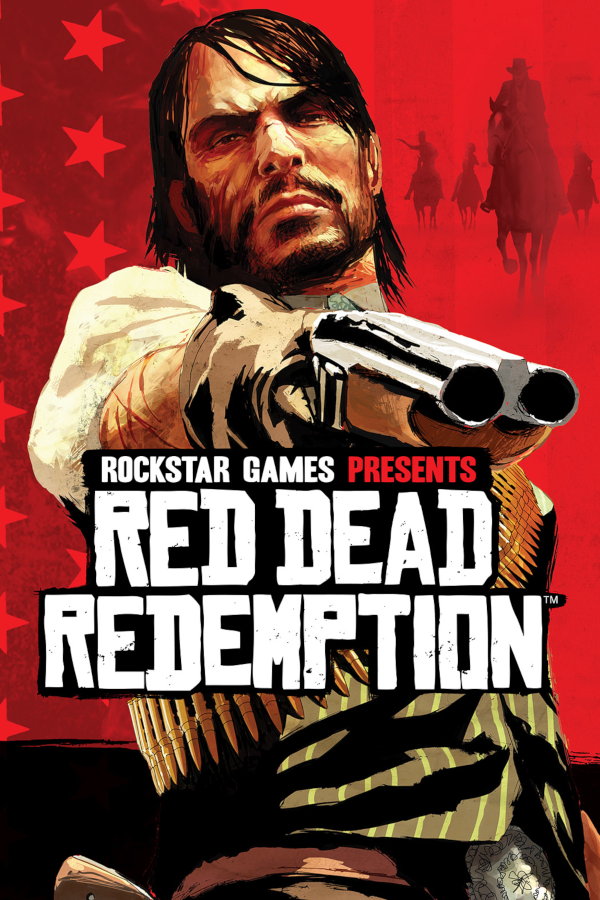
Undead Nightmare (Red Dead Redemption)
Yeah, yeah it’s zombies, but in Red Dead? It’s perfect! The DLC even packs in a great story and is tons of fun to run around on horseback shooting zombies. The co-op multiplasdfasdfayer is also a hoot, but it’s the fluidity of the DLC and the perfect match that pits it over the others that just feels like chapters or extra missions.
Characters are just as essential as stories and they go hand in hand. Characters are what define video game series, and really make gamers separate from each other, and can decide how much a game sells. Developers really strive to make memorable characters, and most of the time it’s a huge factor in sales.
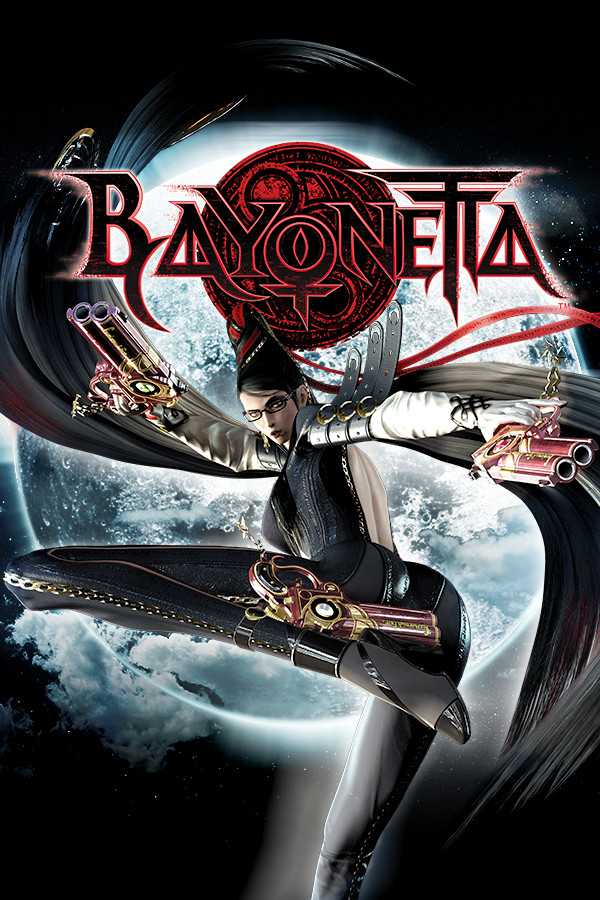
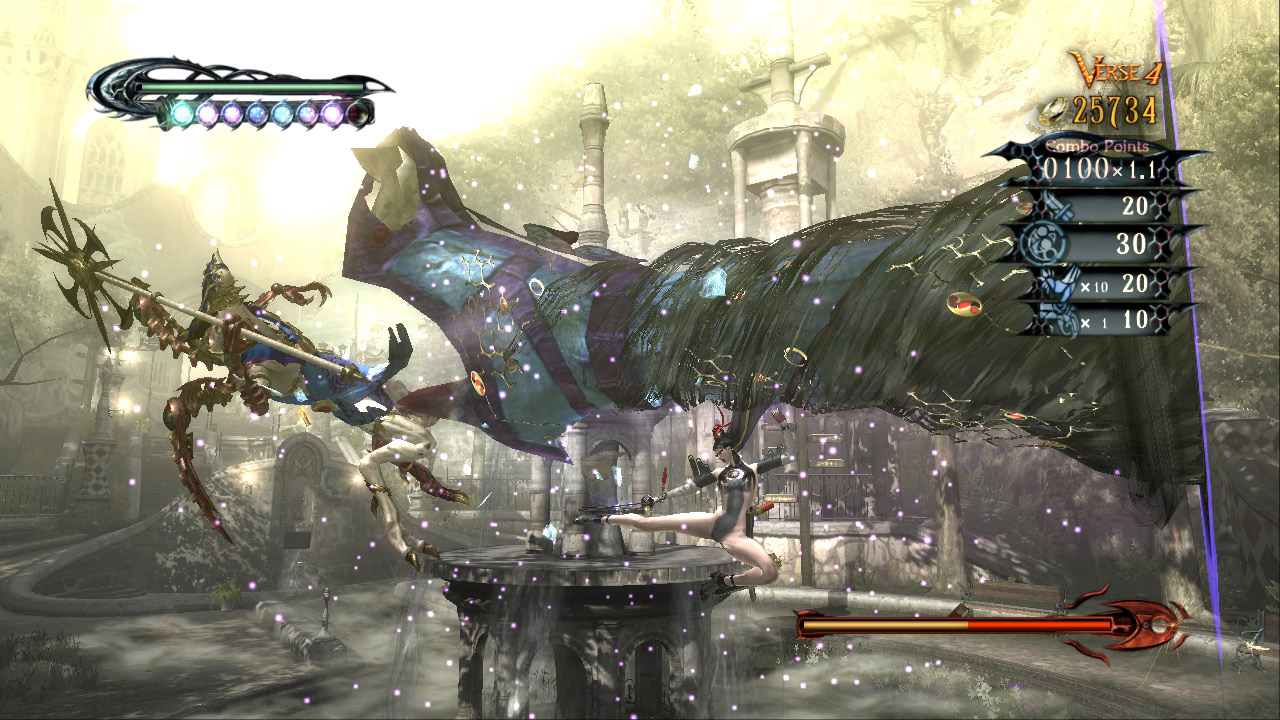
It’s not just Bayonetta’s sex appeal that makes her Messiah’s top pick of the year, but a sexy character in a game that’s actually good? With a good story? Great gameplay? And the best thing since Devil May Cry! It’s a miracle! Bayonetta also has some serious attitude and shows it is not just a trashy trampy way, but with a style that makes you drool with a sexy coolness that would make glaciers melt in sub-zero temperatures. She’s is sassy, smart, sexy, and just overall out for the greater good as well. Her soft side for little girls and her great sense of humor helps her along as well.
While graphics may not be essential, the artistic side can set them apart and make them individual and unique. The artistry of graphics is very important in defining a series or making it instantly recognizable.
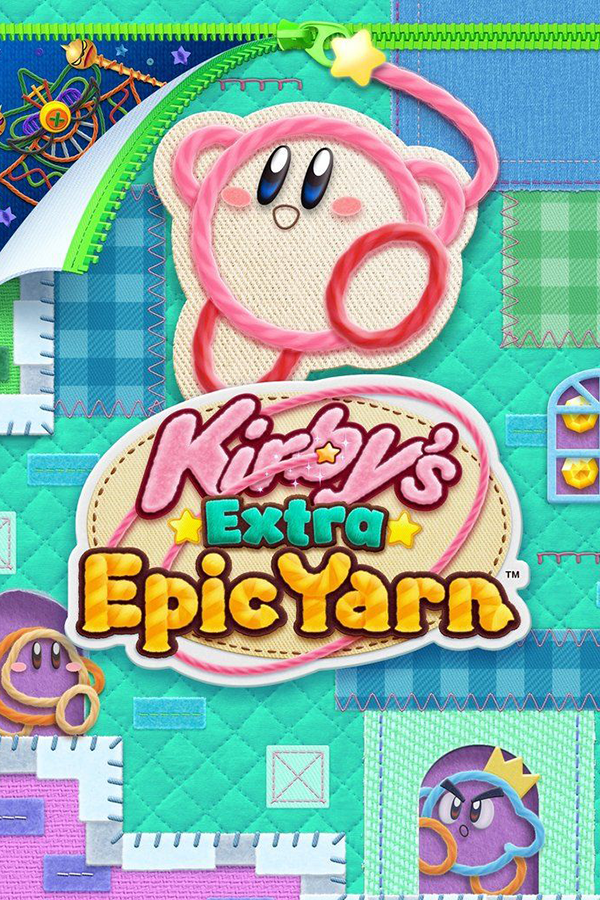
Kirby’s Epic Yarn
Yarn. Who would have thunk? Using yarn to create the world is probably one of the most original art designs I have ever seen. Why does such a cutesy art design beat out other games that have tons of research behind them? Because it’s original. That’s the keyword. The game makes you feel just as fuzzy inside as the characters look.
Stories are probably the most important part of a game, and a good story tends to be original, full of plot twists, good characters, and great dialog to go with it. Video games have set the standard for fantasy stories and are probably video gaming’s greatest achievement.
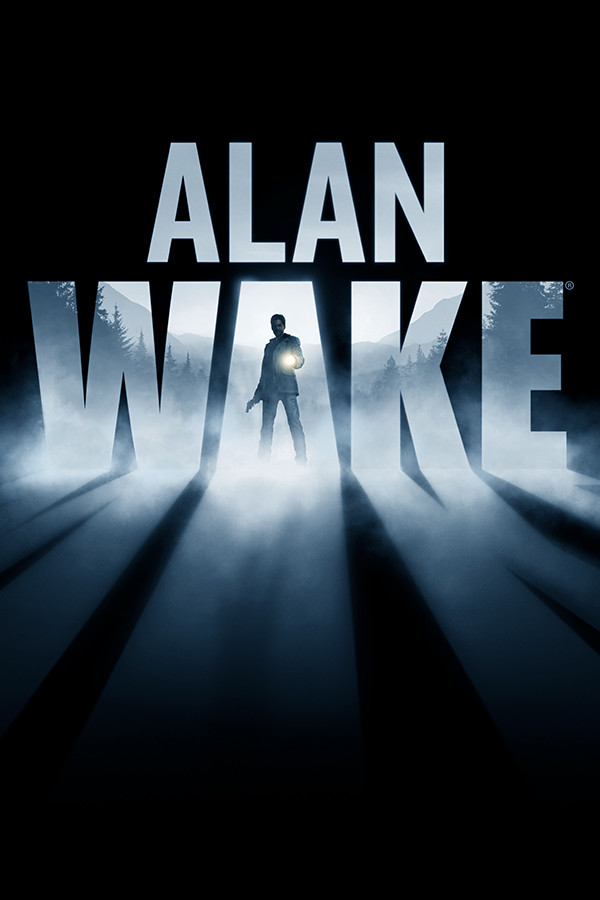
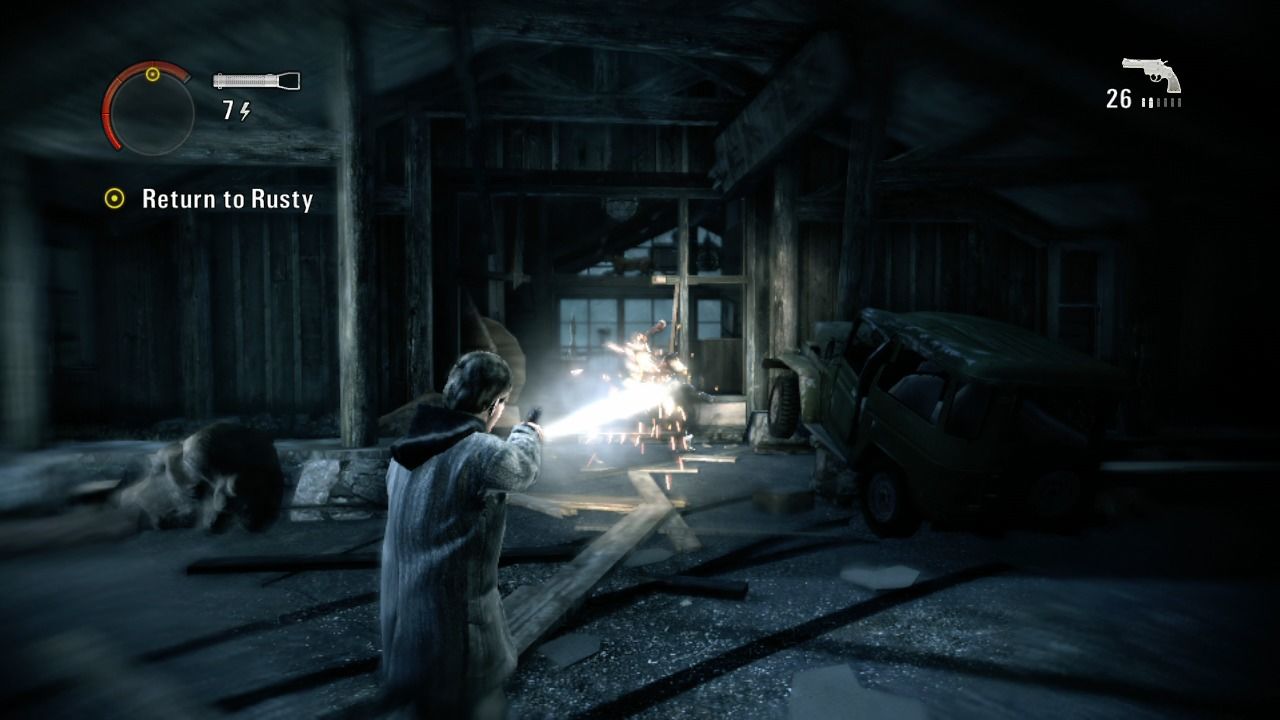
Alan Wake has a story like no other with a rich, deep, and complex (yet easy to follow) story that is ripped straight out of the best horror novels. The way Alan Wake unfolds, and the story is told with plot twists, and loops that keep on coming you just keep on playing just to find out what happens with Alan! This is exactly how a game story should roll out, and other games have big shoes to fill.
Voice acting is essential in a game to make characters sound believable and give them character. Good voice acting is just like a good movie, so it shouldn’t sound scripted or just plain terrible.
Red Dead may not have strange alien characters, but the voice acting is so authentic that you really get attached to these characters without awkward moments, or sometimes scripted sounded segments. The voice actors Rockstar chose really sound like these characters and put so much passion and effort into them that the whole game really just sounds like a movie.
Sound design is probably the most important thing next to the gameplay. Without some sound, there’s not really a game, and the best sound design makes things sound authentic for the universe it’s in and makes the sound convincing, and usually, it’ll pack a good punch, sound epic, or just subtle details in sound helps.
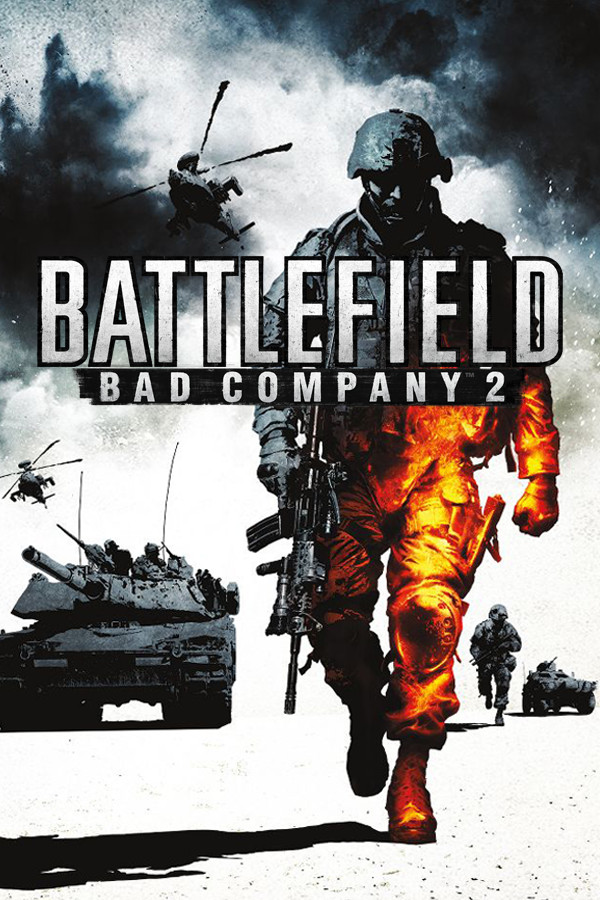
How can a war game have the best sound design? The first Bad Company truly made a game sound amazing with realistic weapon sounds, epic explosions, and differential sounds such as shooting in a building sounds different than outside and the echo traveled when walking through a door. That is the kind of detail that most games don’t make. The sequel follows suit with more detail in this department, and there’s nothing that can trump the epic explosions and sounds of gunfire.
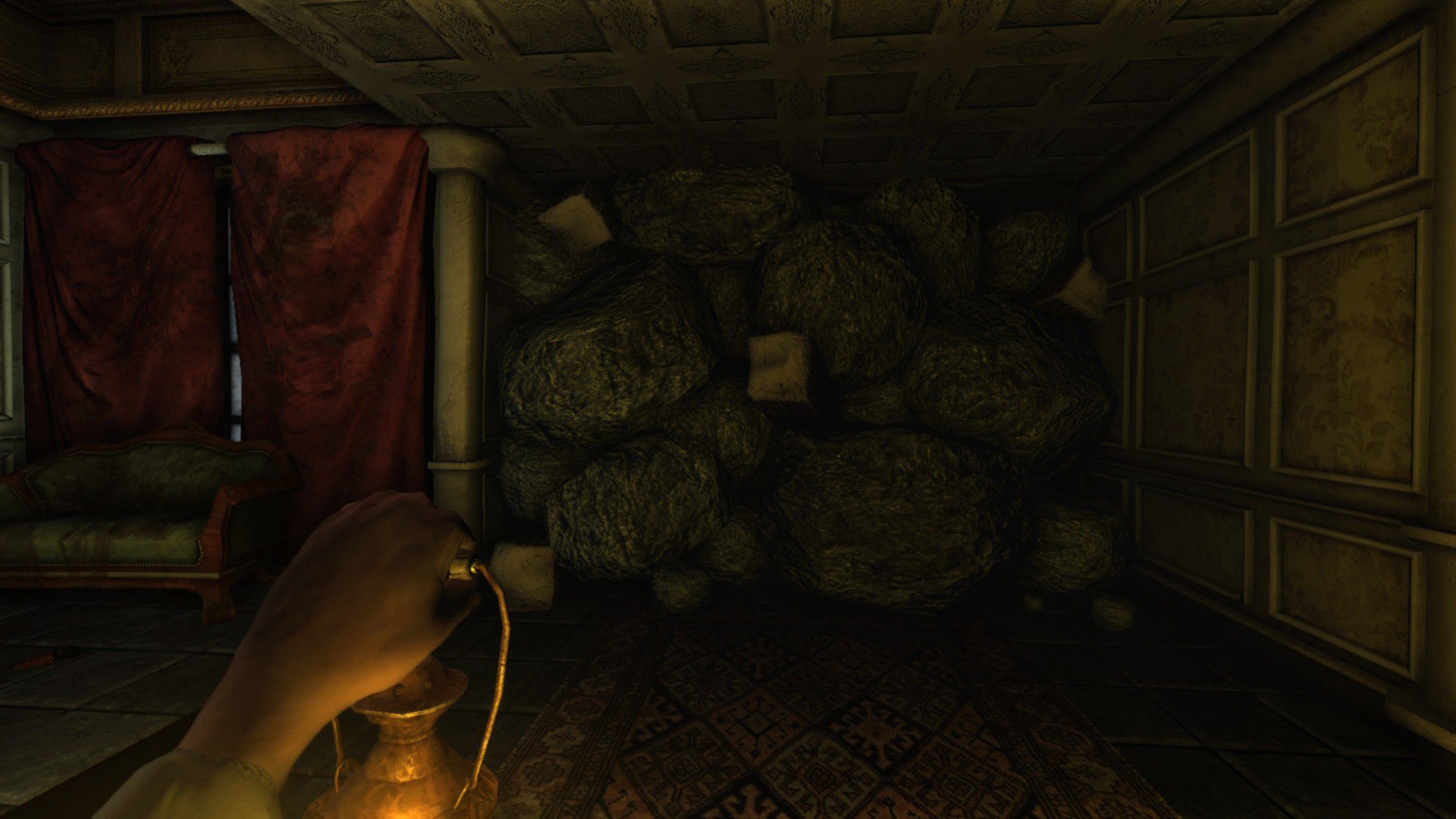
What defines an atmosphere? It’s the portrayal of a setting and world that feels authentic in the sense that it can make you feel you’re in it. It can scare you, make you feel like a superhero, or make you feel full of magic. The atmosphere in a game is extremely important and with the latest technology developers can bring us more authentic settings.
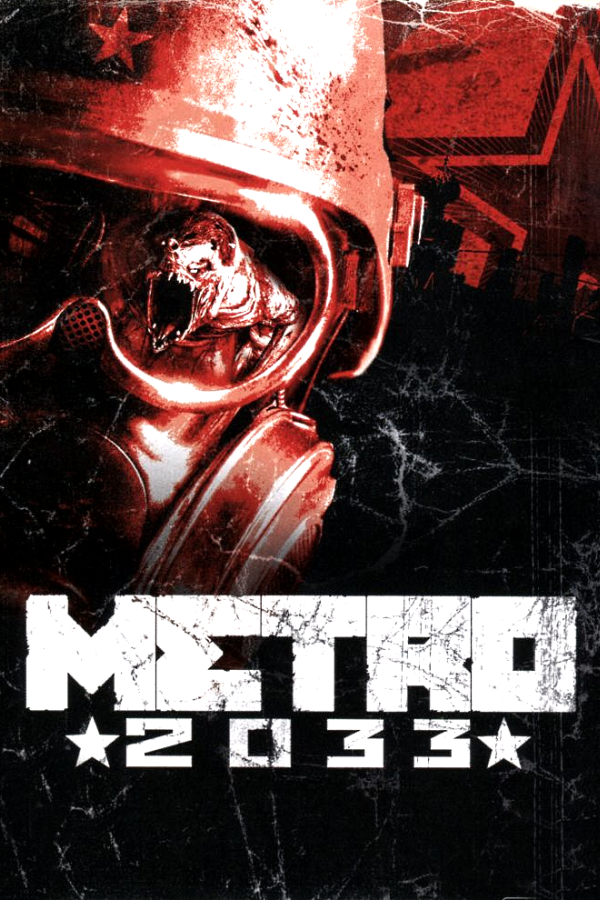
While Metro 2033 didn’t see much light from retail it has one of the most amazing and scary atmospheres ever created. Feeling all alone in a subway in Russia with just a lighter, gas mask, shoddy handmade weapons, and the sounds of creepy dogs howling down the tunnel? Only one clip left and there could be ten or more? That is one scary situation, and even the outside environments are incredibly hostile feelings. The mix of enemy camps with stealth missions makes you feel desperate, and if you get caught the whole world will come down on you.
What makes music in a game good? Something that fits the style of game, setting, and something that isn’t repetitive, annoying, or something we’ve heard in a million other games. Music is probably one of the most important parts of the game but easily overlooked by most gamers.
Bayonetta’s music isn’t only angelic and beautiful, but it’s so catchy that you just want to hear it again and again, and it really fits Bayonetta and her style. You just get goosebumps when seeing Bayonetta fight with style on the screen along with this angelic music. While there isn’t a huge variety what does play is amazing and is memorable.
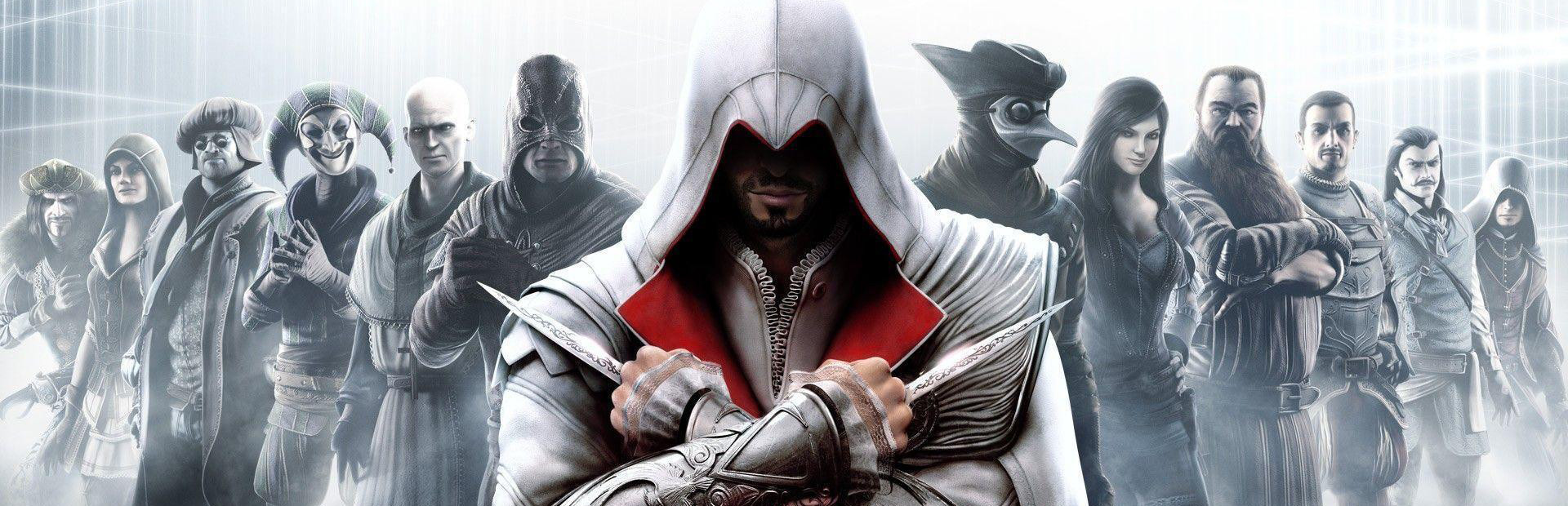
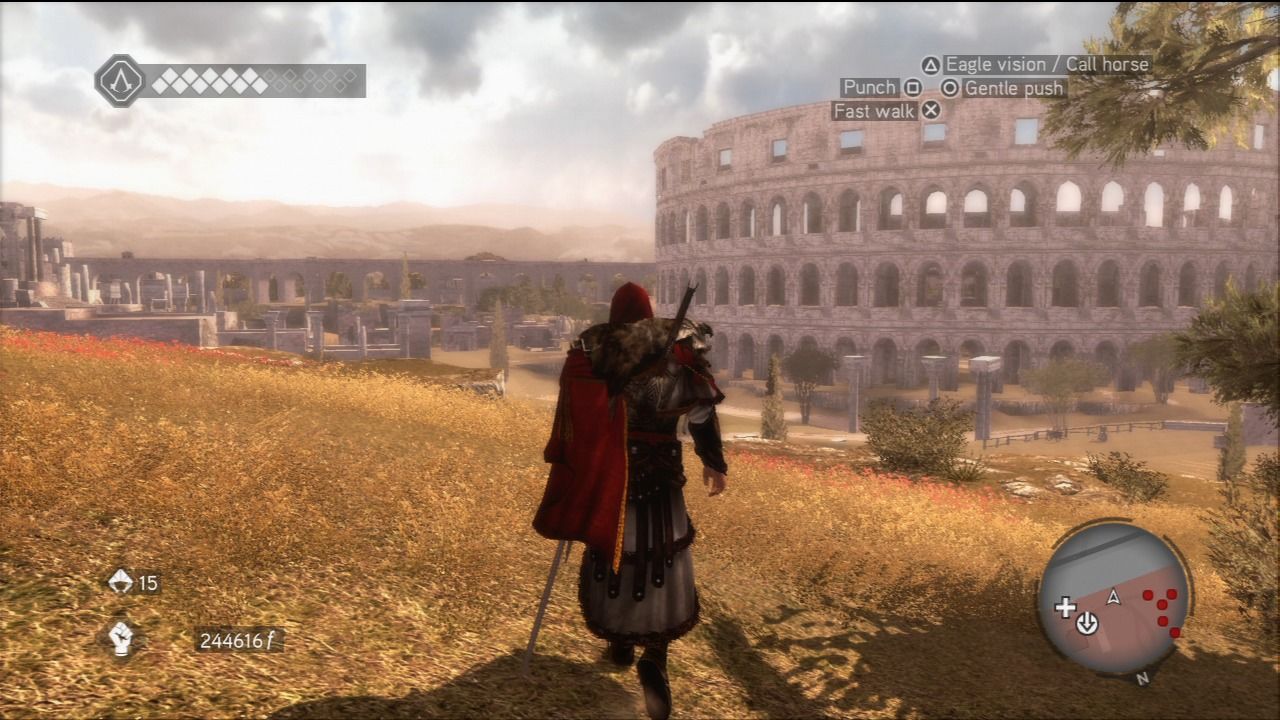
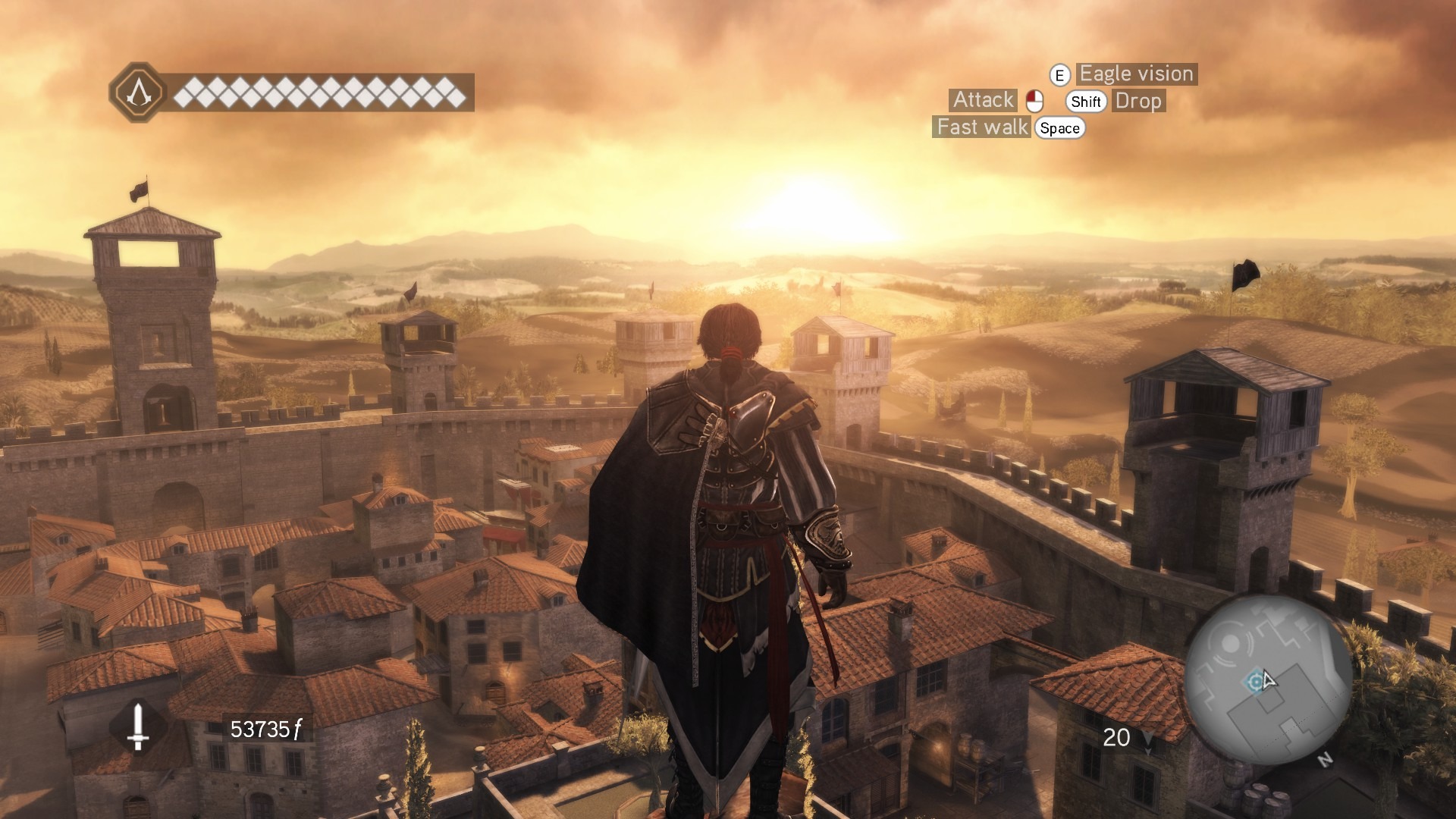
Brotherhood is one of those sequels that was thought to be just a cash cow tie-in for II, and everyone forgets about it. In fact, it was supposed to be a multiplayer-only add-on, but a few months before release, we realized it had a huge single-player experience that was bigger and better than II. This is what sequels should be like, especially if they borrow everything from their predecessors. Brotherhood isn’t a true Assassin’s Creed sequel like II was to the first one, but a new chapter in the amazing universe of 1500s Renaissance Italy. This time the game is set in Roma (Rome), and it’s huge, and there’s a lot more to this game than one skeptical fan might suspect.
The story is just as engaging, if not more complex, than II. Ezio is now older and the leader of the assassins, and he must stop the Borgia reign in Roma (since he failed to kill Rodrigo Borgia in the second game), but Rodrigo himself is only seen twice in the game and briefly. It’s all his minions and the fight against Cesare that are the main focus here. The game still has a deep political plot that ties in with real-life situations and people at the time.
Along with that, you can also play as Desmond Miles outside the Animus, and he has a bigger gameplay part with a whole section dedicated to restoring power to today’s Auditore Villa for the team’s new hideout to find the Apple of Eden and stop Abstergo and the Templars. While you only see these guys at the beginning and end of the game, you get another cliffhanger ending that will lead to the third game, as well as a great conclusion to Ezio’s story.
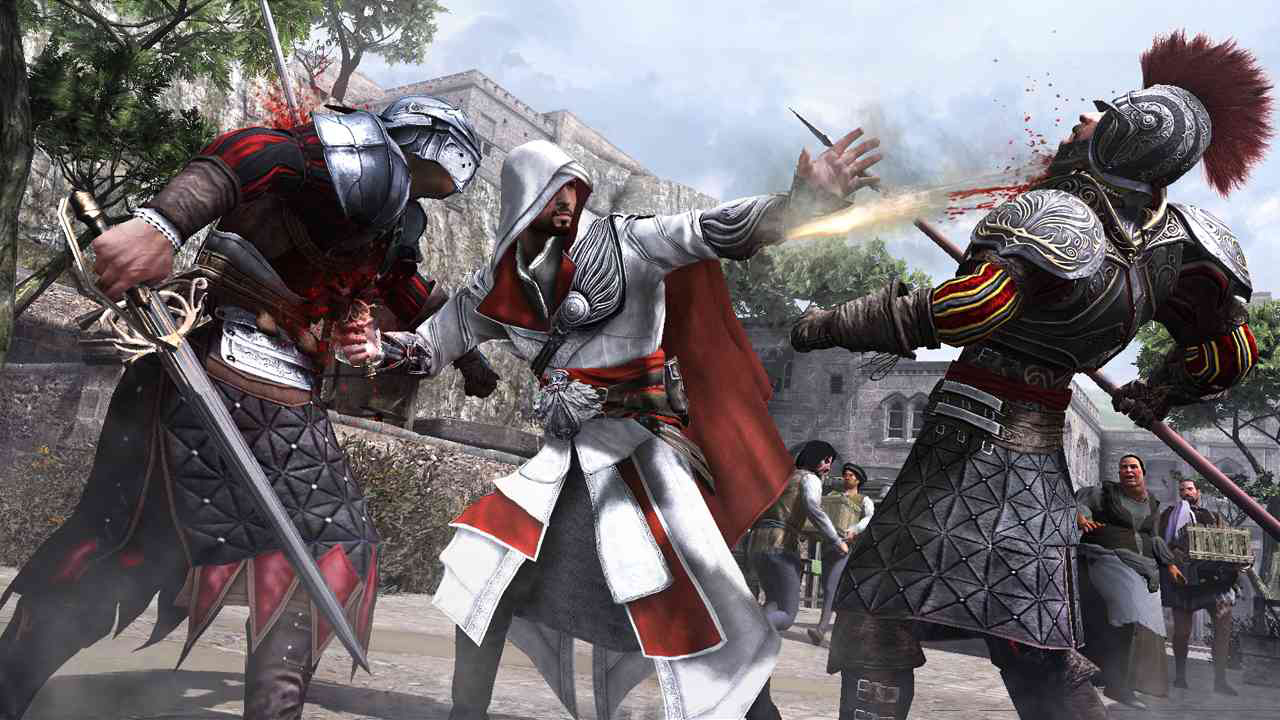
The game plays exactly like II, with no changes to gameplay except for some added stuff like a new crossbow, which is a godsend for killing stealthily from far away. It’s great to do a mission and wipe guys out with a crossbow and not get detected by those hard-to-reach guys. There aren’t any newly added weapons besides that, but combat is enhanced slightly, so it’s not such a counterfest. You can kick enemies, combo Arkham Asylum style, and even do some nice executions with the pistol. This is a nice change to combat and makes it a little more fun. You can also call in assassin recruits to help you, and this is extremely helpful, but more on that later.
Despite the main chapters, there are more side missions than you can shake a stick at. The side missions will take a good 20+ hours to complete and are tons of fun. You have the Borgia towers that have to be burned. These have to be burned down to buy closed-down stores and restore areas and landmarks. You have to enter a restricted area, kill the Borgia captain, then climb the tower and burn it down. There are quite a few, so these will keep you busy, and finding and killing each captain is different and challenging. On top of this, you can buy stables, blacksmiths, doctors, art stores, tailors, faction buildings, banks, and landmarks to restore Roma 100%. You will increase the city’s income, which will be deposited in a bank every 20 real-world minutes.
There are other side missions for each faction (thieves, courtesans, and mercenaries), as well as assassination contracts, Christina missions, finding more The Truth files (10 this time), and now Lair of Romulus missions, which have six in all and are much like Templar Lairs. After you find all six keys, you can unlock the Romulus armor, which is like Altair’s armor in the last game. You can also go to pigeon coops and play a mini-RPG that lets you send your assassin recruits out on missions based on their experience. Missions are based on difficulty, and you will see a percentage bar on how successful they will be. Send more than one to fill it higher, but if they come back, you can upgrade their armor or weapons, and when they reach level 10, you can make them full assassins. These are also helpful during missions since you can call up to three, or call them all for an arrow storm, and kill all enemies on-screen. It’s great to call an assassin on someone you can’t reach and then go in further without getting detected.
On top of all this, these missions can only be synched 100% if you complete the challenge, such as using your hidden blade and completing it in this amount of time. Don’t kill this person; only kill this person. It adds a surprisingly huge amount of depth to the game and makes playing missions (both side and main) more interesting and challenging.
Now the multiplayer is a really fun and surprising addition to the series. There is only one mode, and it’s all about a free-for-all cat and mouse hunt. You are given a target (another player out of 7), and you must use your abilities and skills to kill them while you may also be pursued. So you have to find your target and keep from getting killed yourself. The game has a Call of Duty-style perk and ability system that lets you customize load-outs as well. The game is very addictive and keeps you on your toes. You must blend and try to just act natural since NPCs also have the same looks as other players. There are many characters to play as, and each has its own unique abilities. The multiplayer will keep you hooked and make you come back to the game long after the single-player is exhausted.
With tons of new content, great new characters and a story, and an awesome multiplayer suite, Brotherhood is an example of what sequels should be like. I highly recommend this to fans of the last game and anyone who loves the variety in their games.
Collector’s Edition: For an extra $40, you get a Jack-in-the-Box with either the Plague Doctor or Harlequin (depending on what store you get it from), as well as a bonus DVD, extra maps (one exclusive to the PS3), a playable multiplayer character, an art book, and the soundtrack. This is a huge value for $40 and is a must-have for fans. The Jack-in-the-Box is made a tad cheaply with weak springs, and getting the things to close is annoying, but the figure itself is high quality.
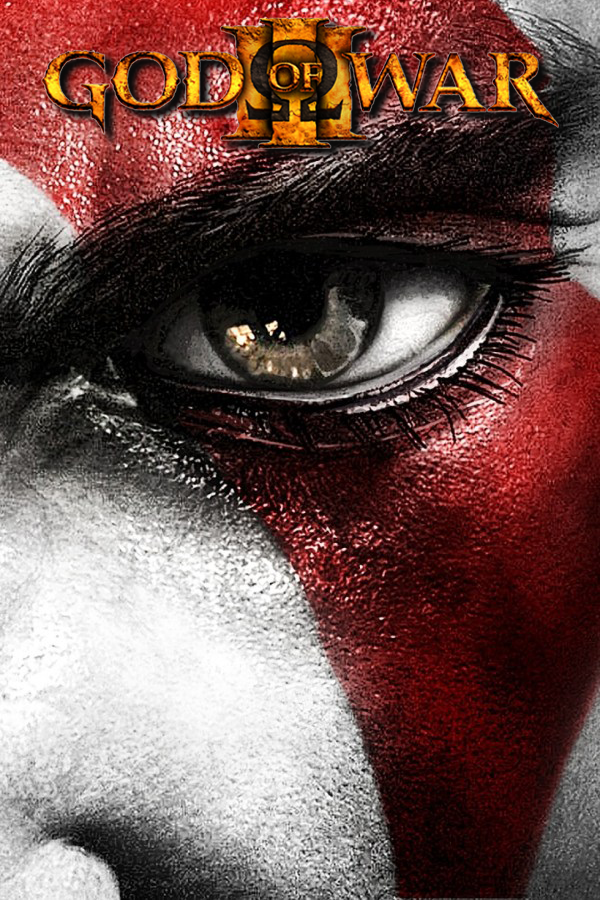
God of War is just one of those games no one gets tired of, and each game brings new and excellent ideas to the table, and this has to do with the fact that each game has a new director. Ghost of Sparta borrows a lot of what God of War III did, tweaks it, and adds things to it as well. I honestly think Sparta is the best example of how to do a portable game well and bring a console experience in without cramping the game’s style. Sparta is probably the most complete console copy on a portable to date, and there is nothing like it out there.
The game is set between the first two and is a side story about Kratos following a haunting vision. The vision of finding his long-lost brother, Deimos, and trying to cleanse yet another horrible memory. Along the way, you battle through Atlantis and other new locales for the game, but the style isn’t anything new. The locales in the game are pretty dark this time around, and they really focus on the whole dark aspect of the game.
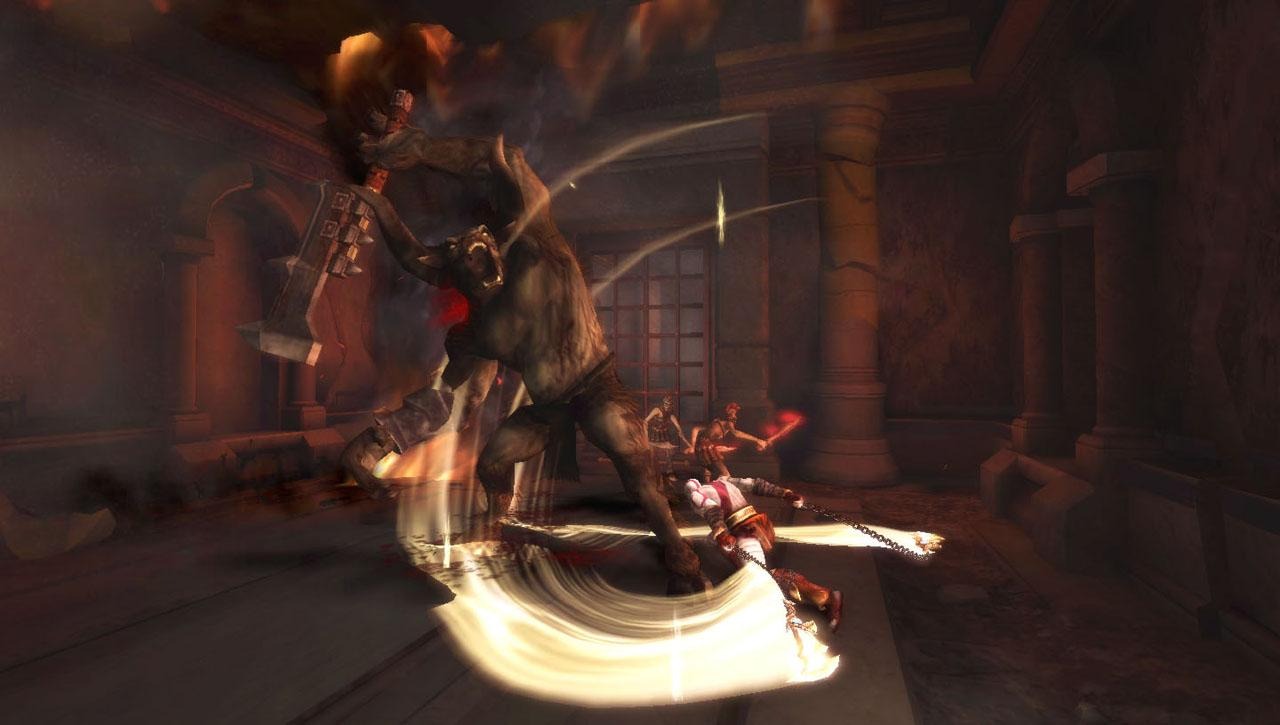
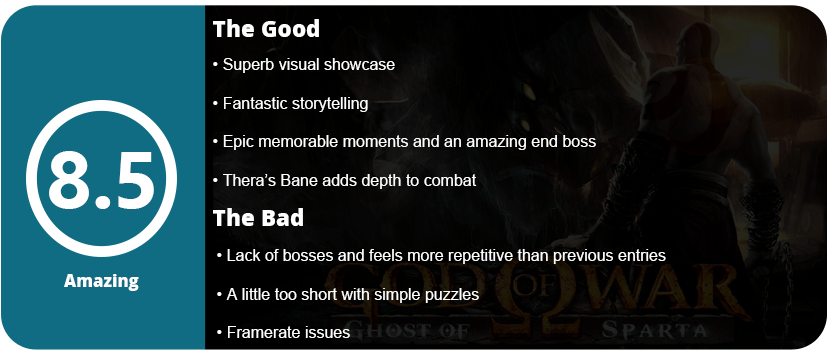
The core of God of War is combat, and the Ghost of Sparta trumps the Chains of Olympus by a mile. Borrowing the recharging meter from III, you get to infuse your blades with Thera’s Bane, and this adds a whole new layer to the combat. Holding down R allows you to set your blades on fire and make them more powerful, but you have to time it and use it wisely. This is also used for breaking down armor on foes that can’t be hit normally, environmental puzzles, etc. Thera’s Bane is really fun to use, and there’s a lot of complexity that goes along with it that adds another layer of depth to the standard combat in the series.
There are new magical items, but they’re not as exciting as one might expect. I never really used them as often as I’d liked to, but they come in handy in the later levels. The game also borrows the Hyperion Charge, which rams enemies to the ground and lets you wail on them. I also never really found much use for it and never used it through the entire game except when introduced, so it feels like there’s some filler in here, but it’s great for people who have a different play style. A whole new weapon is introduced, and this is the Arms of Sparta. These are Kratos’ spear and shield, and it’s good for close-up combat and using the spear for far-off enemies, but it’s not a favorite, is no good, mid- to long-range, and doesn’t have the reach of the Blades. I never really used this except for when it was required during puzzles or exploration.
Sparta has a really good story behind it, and it doesn’t disappoint with its epic interactive story elements, such as one scene where he fights his own past in a brutal way you would expect in a God of War game. The game also opens up with a classic gigantic boss battle with a Scylla, but it’s not as memorable as the console games or even Chains of Olympus. Speaking of bosses, that game lacks hardly any, with only maybe four in this six-hour adventure. The ending boss is probably one of the best in the series, with an awesome co-op battle that has never been down before. The game’s ending is well worth it, and you’ll be pleased with how the whole story rolls out.
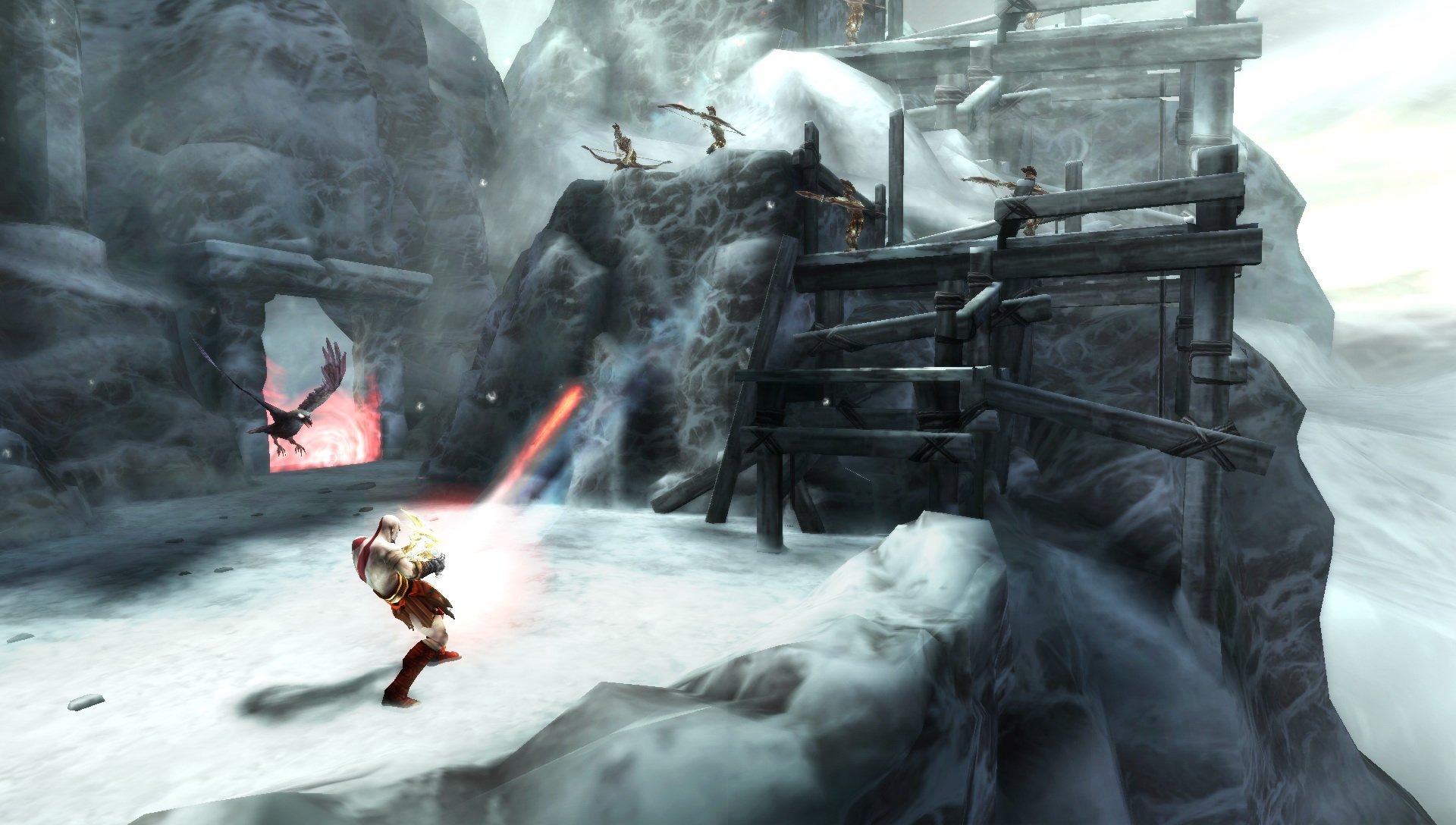
In technical terms, this is the best-looking PSP or handheld game ever made hands-down. I don’t think any other developer can make a PSP game look better than one of the best-looking PS2 games ever made. Yes, it looks better than God of War II, and it’s just full of lush detail and is bursting at the seams with effects. If you thought Chains of Olympus looked amazing, this trumps it by a long shot. Water drips off every ledge, the backgrounds are fully animated, and the game has a high poly count and highly detailed textures with even bump mapping! It’s just something to truly behold, and I doubt we’ll see another PSP game look this good. Of course, the game also comes with frame rate issues and never really goes above 30 FPS and sometimes drops down below 15, but that could just be my old PSP hardware.
The game also has its usual treasures, but adds the Temple of Zeus and lets you unlock videos, costumes, art, etc. by spending orbs you earn during the Challenge of the Gods. You can also create your own challenges, and this lets you keep playing this epic game without having to tread through the story again (which I know I will be doing again).
Other than that, though, the game is lacking something. It’s not as well-paced as other games in the series, and the lack of bosses hampers the experience a bit. The game mainly focuses on balanced combat, in which you get a variety of foes and must take each battle in a different way since some foes are weak to something and some aren’t. As well as focusing on exploration, and there really aren’t any puzzles to think of except very simple ones we’ve seen a dozen times in the series. The game is also just too straightforward and feels more repetitive than the other games, and that’s a bit disappointing considering the reputation of the series. However, the game is amazing, and I am not quite sick of seeing what Kratos has in store for us. Is this the last God of War game since III marked the end of the trilogy? Probably not, since this is Sony’s major staple for its consoles. Ghost of Sparta achieves many things and will become an all-time classic.












































 thebinarymessiah.com
Super, thank you