Sound design is probably the most important thing next to the gameplay. Without some sound, there’s not really a game, and the best sound design makes things sound authentic for the universe it’s in and makes the sound convincing, and usually, it’ll pack a good punch, sound epic, or just subtle details in sound helps.
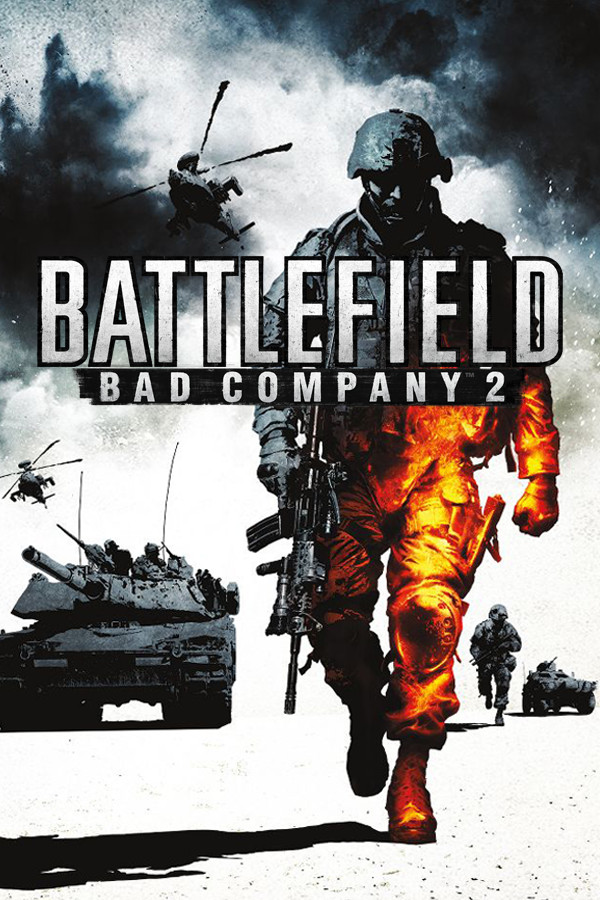
How can a war game have the best sound design? The first Bad Company truly made a game sound amazing with realistic weapon sounds, epic explosions, and differential sounds such as shooting in a building sounds different than outside and the echo traveled when walking through a door. That is the kind of detail that most games don’t make. The sequel follows suit with more detail in this department, and there’s nothing that can trump the epic explosions and sounds of gunfire.
What defines an atmosphere? It’s the portrayal of a setting and world that feels authentic in the sense that it can make you feel you’re in it. It can scare you, make you feel like a superhero, or make you feel full of magic. The atmosphere in a game is extremely important and with the latest technology developers can bring us more authentic settings.
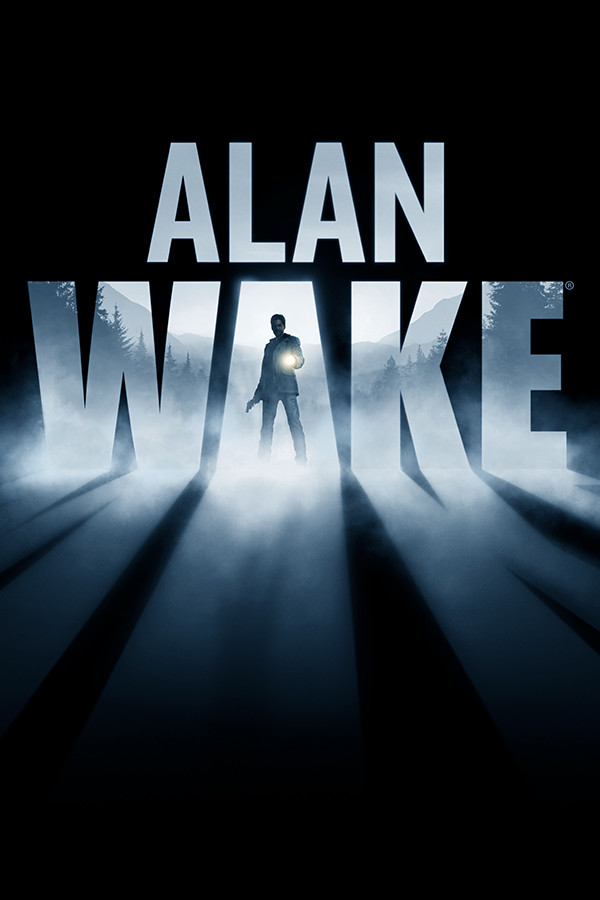
While Metro 2033 didn’t see much light from retail it has one of the most amazing and scary atmospheres ever created. Feeling all alone in a subway in Russia with just a lighter, gas mask, shoddy handmade weapons, and the sounds of creepy dogs howling down the tunnel? Only one clip left and there could be ten or more? That is one scary situation, and even the outside environments are incredibly hostile feelings. The mix of enemy camps with stealth missions makes you feel desperate, and if you get caught the whole world will come down on you.
What makes music in a game good? Something that fits the style of game, setting, and something that isn’t repetitive, annoying, or something we’ve heard in a million other games. Music is probably one of the most important parts of the game but easily overlooked by most gamers.
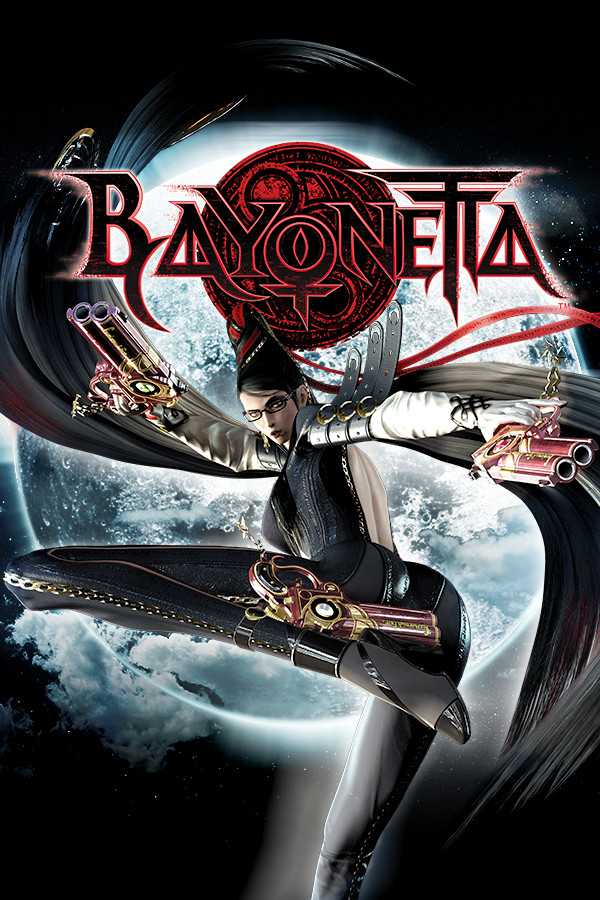
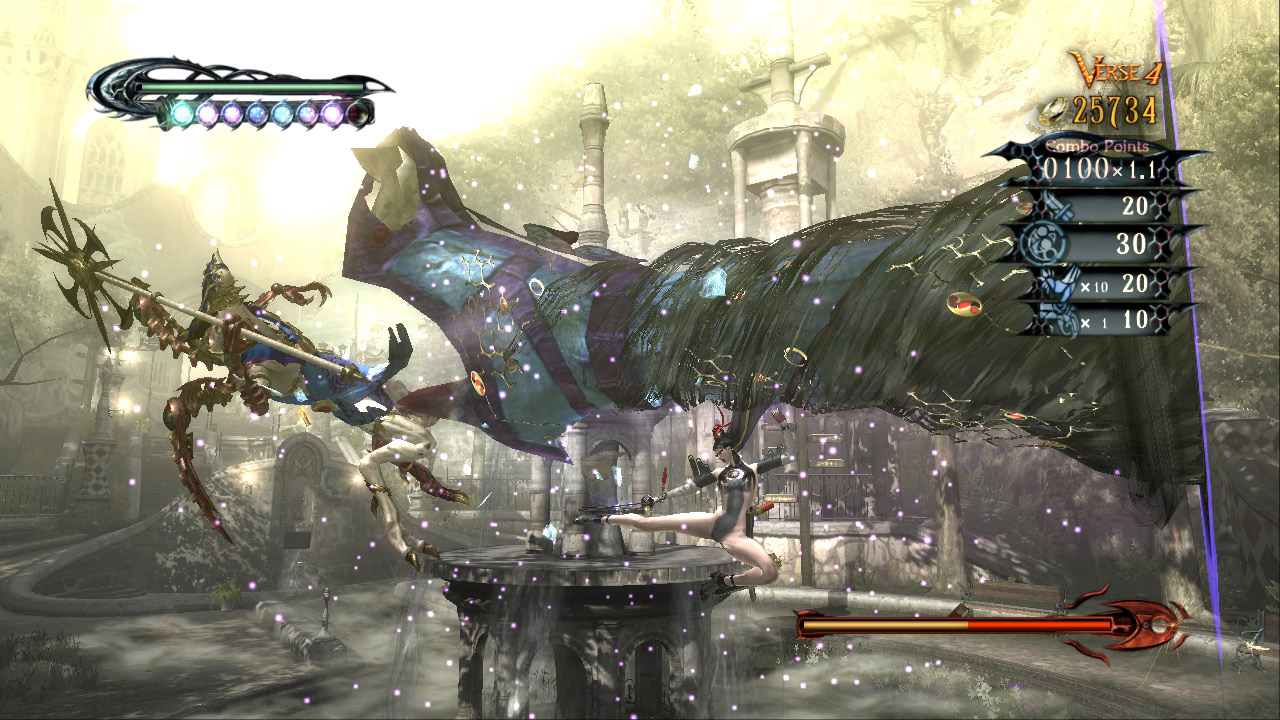
Bayonetta’s music isn’t only angelic and beautiful, but it’s so catchy that you just want to hear it again and again, and it really fits Bayonetta and her style. You just get goosebumps when seeing Bayonetta fight with style on the screen along with this angelic music. While there isn’t a huge variety what does play is amazing and is memorable.
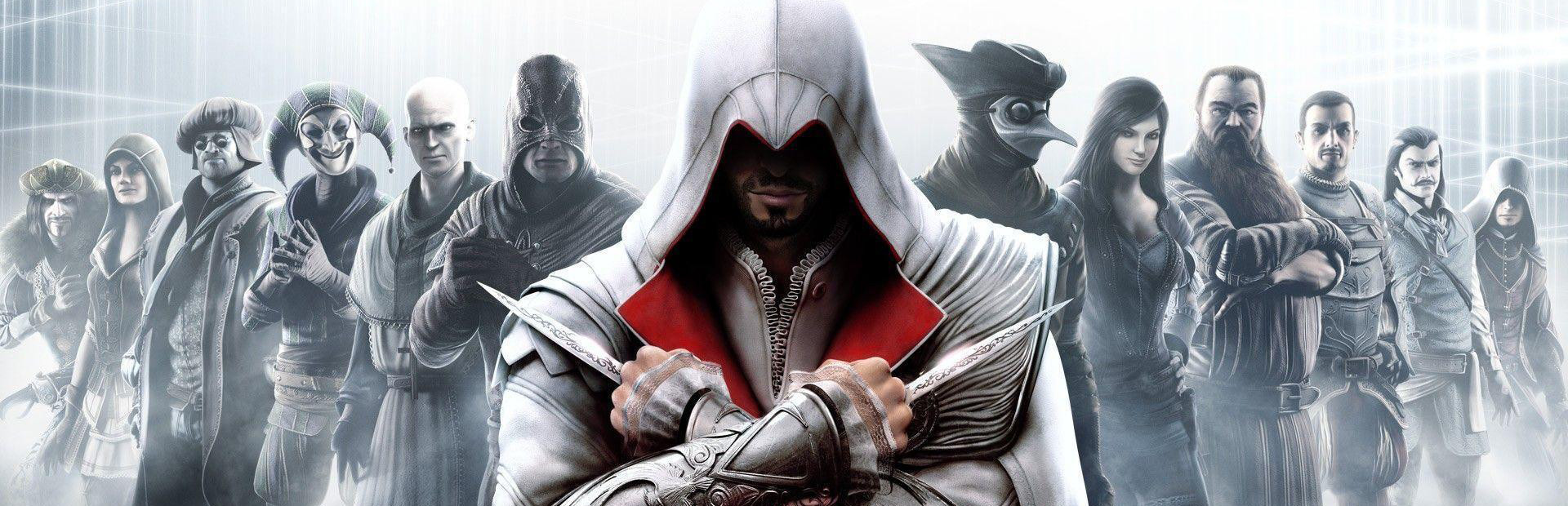
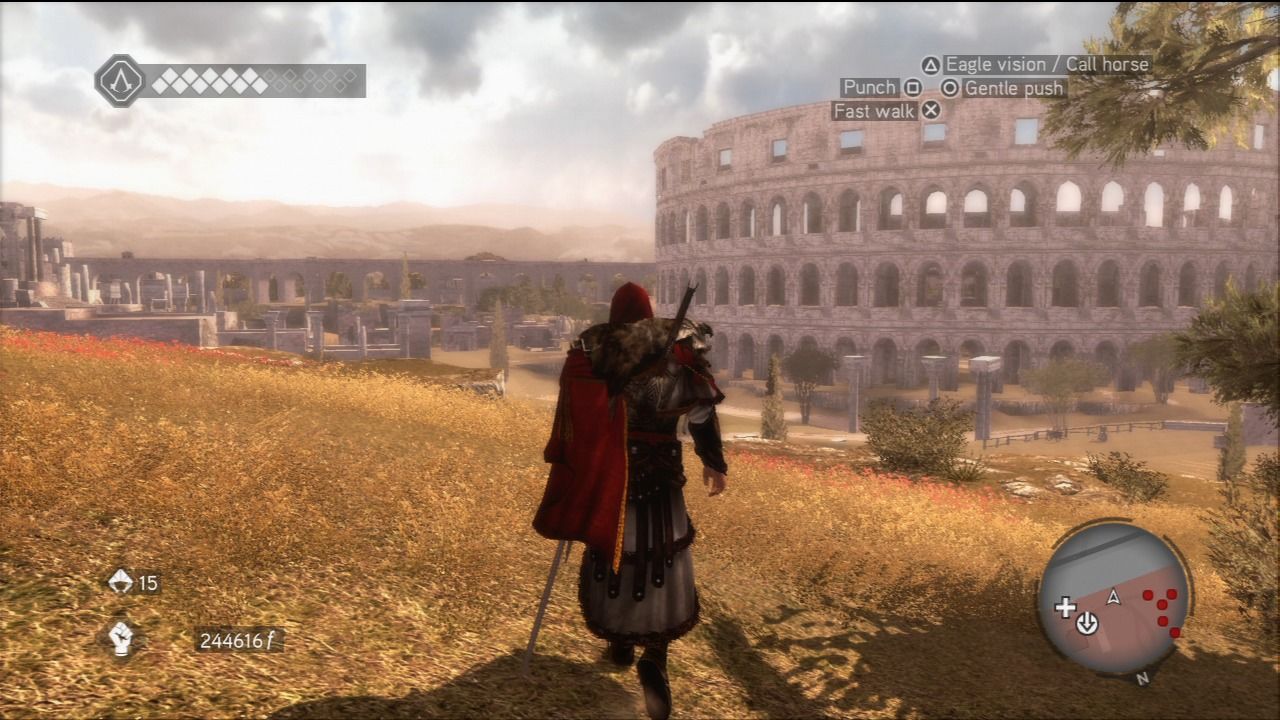
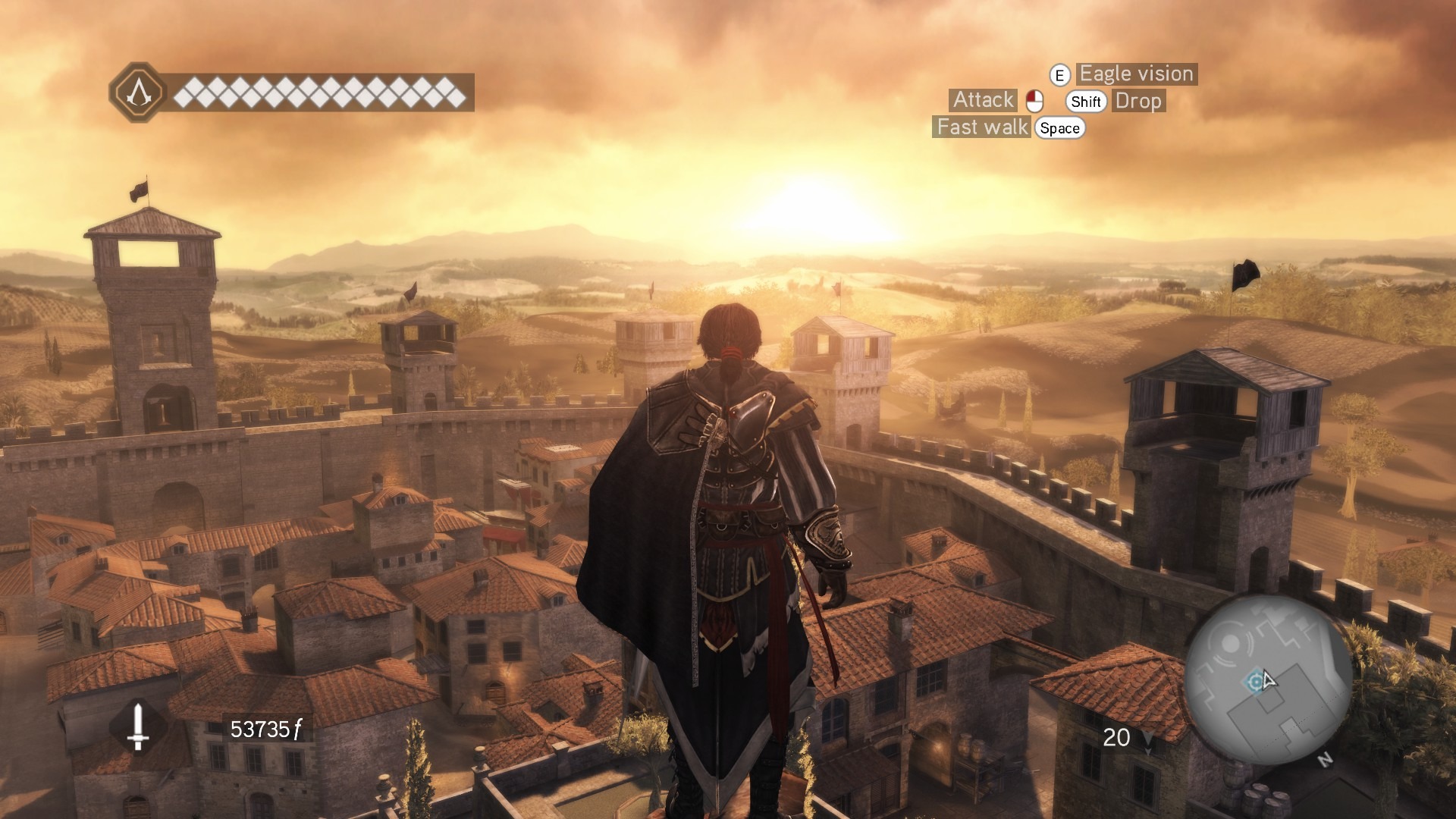
Brotherhood is one of those sequels that was thought to be just a cash cow tie-in for II, and everyone forgets about it. In fact, it was supposed to be a multiplayer-only add-on, but a few months before release, we realized it had a huge single-player experience that was bigger and better than II. This is what sequels should be like, especially if they borrow everything from their predecessors. Brotherhood isn’t a true Assassin’s Creed sequel like II was to the first one, but a new chapter in the amazing universe of 1500s Renaissance Italy. This time the game is set in Roma (Rome), and it’s huge, and there’s a lot more to this game than one skeptical fan might suspect.
The story is just as engaging, if not more complex, than II. Ezio is now older and the leader of the assassins, and he must stop the Borgia reign in Roma (since he failed to kill Rodrigo Borgia in the second game), but Rodrigo himself is only seen twice in the game and briefly. It’s all his minions and the fight against Cesare that are the main focus here. The game still has a deep political plot that ties in with real-life situations and people at the time.
Along with that, you can also play as Desmond Miles outside the Animus, and he has a bigger gameplay part with a whole section dedicated to restoring power to today’s Auditore Villa for the team’s new hideout to find the Apple of Eden and stop Abstergo and the Templars. While you only see these guys at the beginning and end of the game, you get another cliffhanger ending that will lead to the third game, as well as a great conclusion to Ezio’s story.
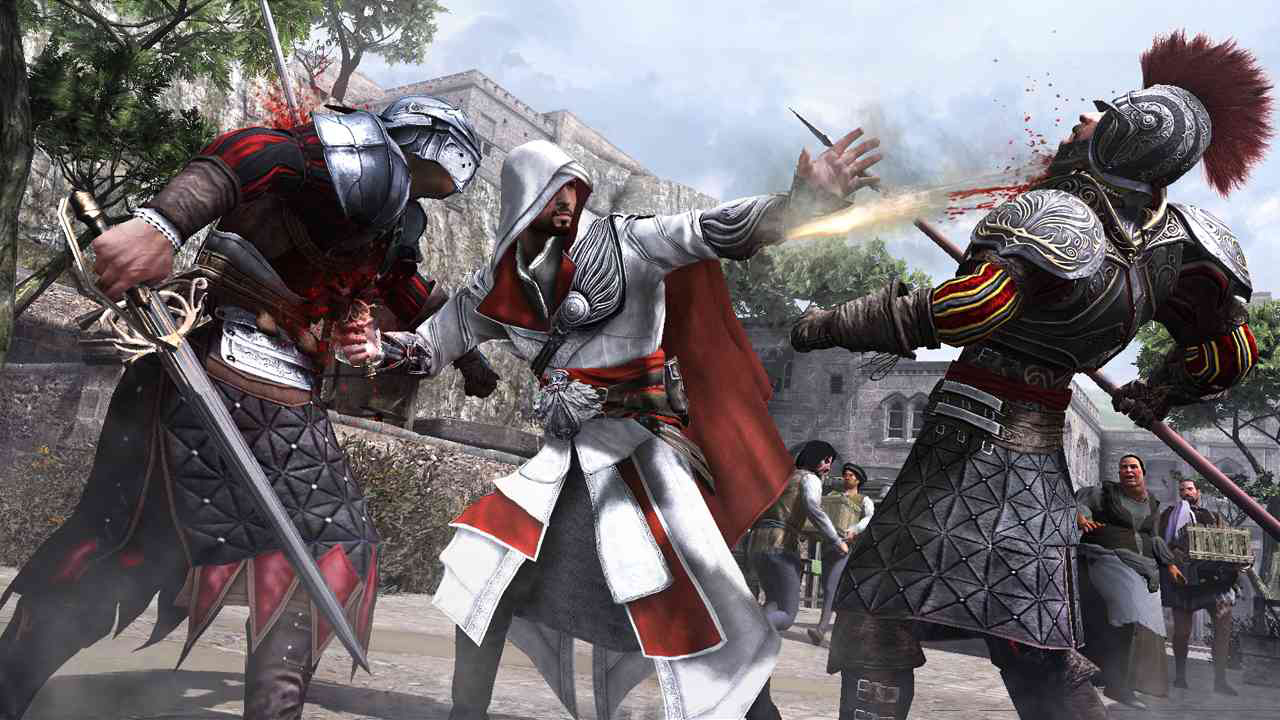
The game plays exactly like II, with no changes to gameplay except for some added stuff like a new crossbow, which is a godsend for killing stealthily from far away. It’s great to do a mission and wipe guys out with a crossbow and not get detected by those hard-to-reach guys. There aren’t any newly added weapons besides that, but combat is enhanced slightly, so it’s not such a counterfest. You can kick enemies, combo Arkham Asylum style, and even do some nice executions with the pistol. This is a nice change to combat and makes it a little more fun. You can also call in assassin recruits to help you, and this is extremely helpful, but more on that later.
Despite the main chapters, there are more side missions than you can shake a stick at. The side missions will take a good 20+ hours to complete and are tons of fun. You have the Borgia towers that have to be burned. These have to be burned down to buy closed-down stores and restore areas and landmarks. You have to enter a restricted area, kill the Borgia captain, then climb the tower and burn it down. There are quite a few, so these will keep you busy, and finding and killing each captain is different and challenging. On top of this, you can buy stables, blacksmiths, doctors, art stores, tailors, faction buildings, banks, and landmarks to restore Roma 100%. You will increase the city’s income, which will be deposited in a bank every 20 real-world minutes.
There are other side missions for each faction (thieves, courtesans, and mercenaries), as well as assassination contracts, Christina missions, finding more The Truth files (10 this time), and now Lair of Romulus missions, which have six in all and are much like Templar Lairs. After you find all six keys, you can unlock the Romulus armor, which is like Altair’s armor in the last game. You can also go to pigeon coops and play a mini-RPG that lets you send your assassin recruits out on missions based on their experience. Missions are based on difficulty, and you will see a percentage bar on how successful they will be. Send more than one to fill it higher, but if they come back, you can upgrade their armor or weapons, and when they reach level 10, you can make them full assassins. These are also helpful during missions since you can call up to three, or call them all for an arrow storm, and kill all enemies on-screen. It’s great to call an assassin on someone you can’t reach and then go in further without getting detected.
On top of all this, these missions can only be synched 100% if you complete the challenge, such as using your hidden blade and completing it in this amount of time. Don’t kill this person; only kill this person. It adds a surprisingly huge amount of depth to the game and makes playing missions (both side and main) more interesting and challenging.
Now the multiplayer is a really fun and surprising addition to the series. There is only one mode, and it’s all about a free-for-all cat and mouse hunt. You are given a target (another player out of 7), and you must use your abilities and skills to kill them while you may also be pursued. So you have to find your target and keep from getting killed yourself. The game has a Call of Duty-style perk and ability system that lets you customize load-outs as well. The game is very addictive and keeps you on your toes. You must blend and try to just act natural since NPCs also have the same looks as other players. There are many characters to play as, and each has its own unique abilities. The multiplayer will keep you hooked and make you come back to the game long after the single-player is exhausted.
With tons of new content, great new characters and a story, and an awesome multiplayer suite, Brotherhood is an example of what sequels should be like. I highly recommend this to fans of the last game and anyone who loves the variety in their games.
Collector’s Edition: For an extra $40, you get a Jack-in-the-Box with either the Plague Doctor or Harlequin (depending on what store you get it from), as well as a bonus DVD, extra maps (one exclusive to the PS3), a playable multiplayer character, an art book, and the soundtrack. This is a huge value for $40 and is a must-have for fans. The Jack-in-the-Box is made a tad cheaply with weak springs, and getting the things to close is annoying, but the figure itself is high quality.
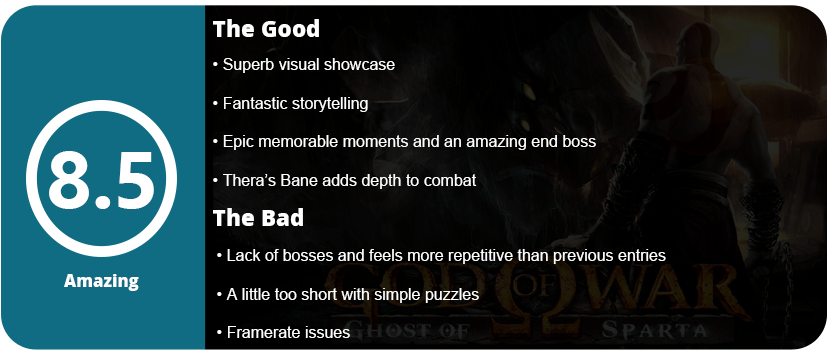
God of War is just one of those games no one gets tired of, and each game brings new and excellent ideas to the table, and this has to do with the fact that each game has a new director. Ghost of Sparta borrows a lot of what God of War III did, tweaks it, and adds things to it as well. I honestly think Sparta is the best example of how to do a portable game well and bring a console experience in without cramping the game’s style. Sparta is probably the most complete console copy on a portable to date, and there is nothing like it out there.
The game is set between the first two and is a side story about Kratos following a haunting vision. The vision of finding his long-lost brother, Deimos, and trying to cleanse yet another horrible memory. Along the way, you battle through Atlantis and other new locales for the game, but the style isn’t anything new. The locales in the game are pretty dark this time around, and they really focus on the whole dark aspect of the game.
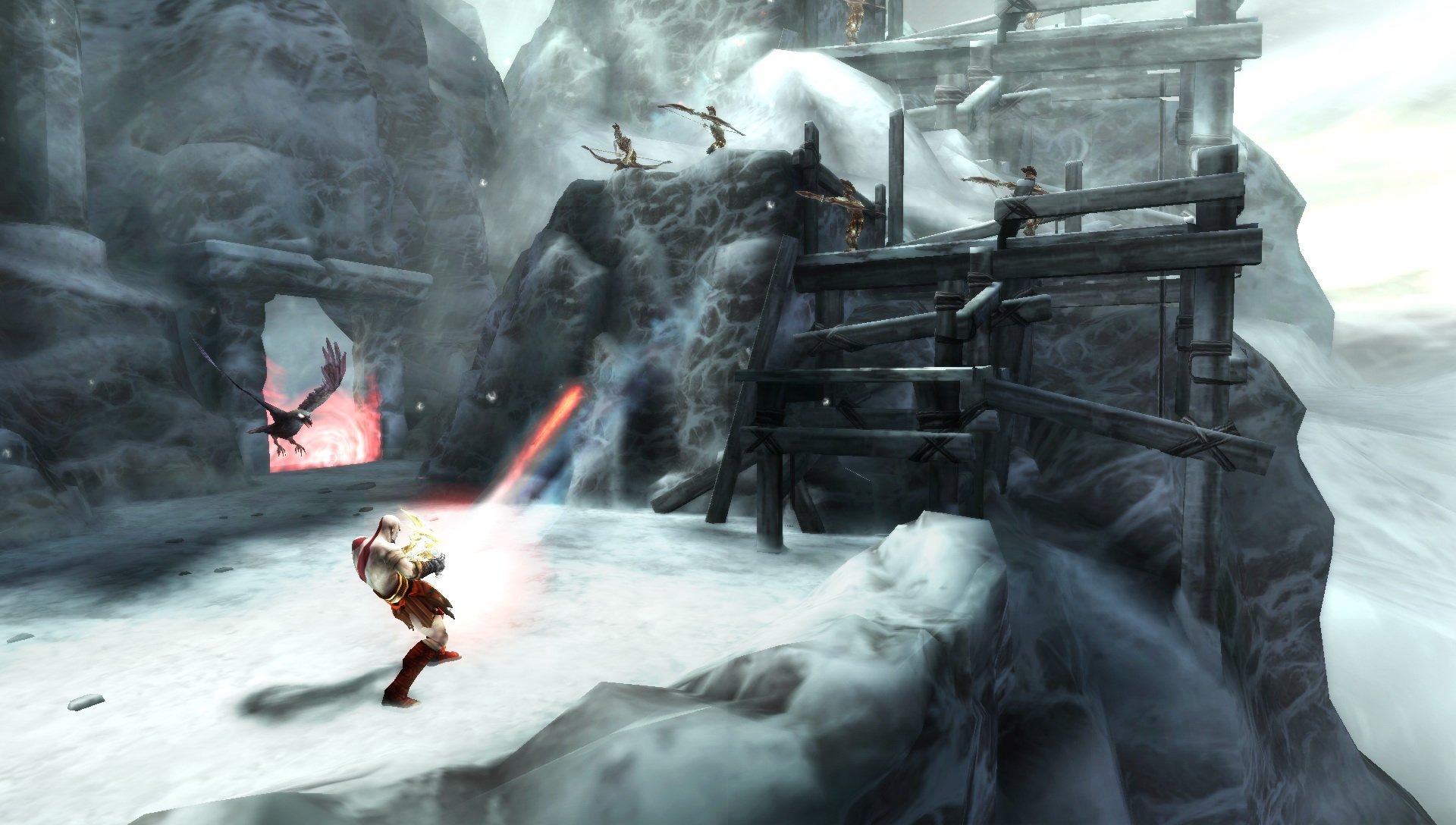
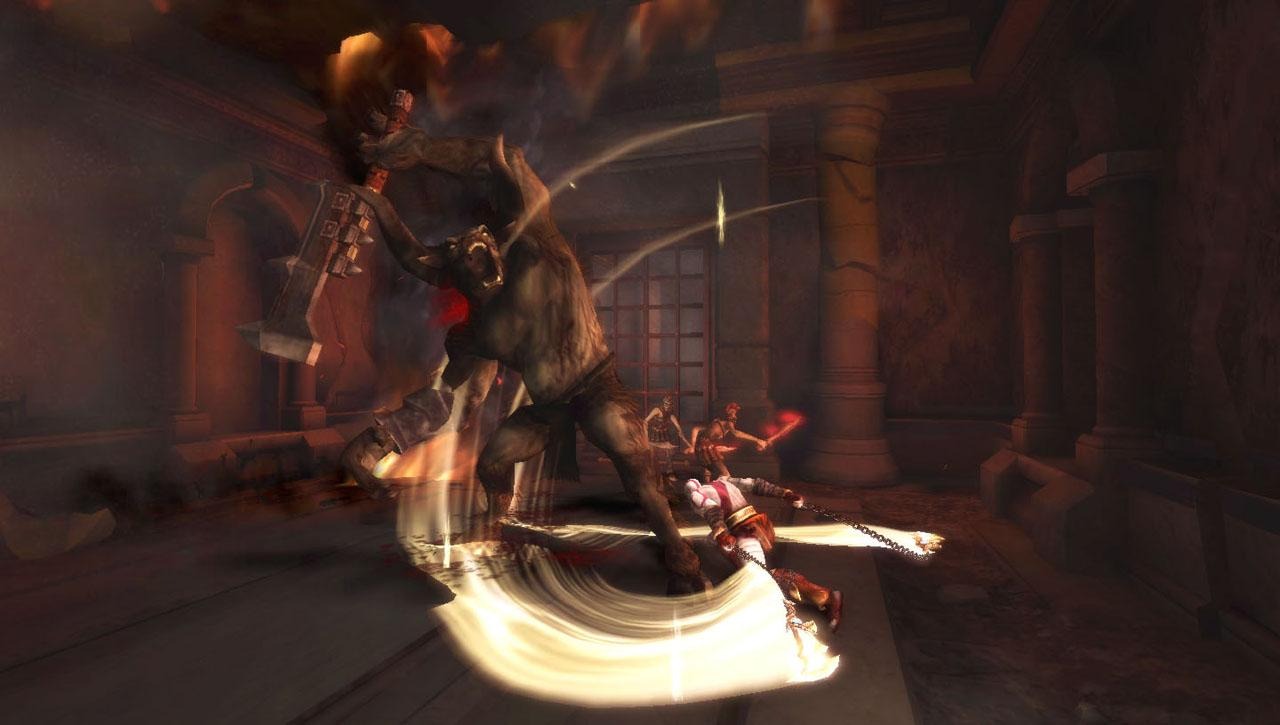
The core of God of War is combat, and the Ghost of Sparta trumps the Chains of Olympus by a mile. Borrowing the recharging meter from III, you get to infuse your blades with Thera’s Bane, and this adds a whole new layer to the combat. Holding down R allows you to set your blades on fire and make them more powerful, but you have to time it and use it wisely. This is also used for breaking down armor on foes that can’t be hit normally, environmental puzzles, etc. Thera’s Bane is really fun to use, and there’s a lot of complexity that goes along with it that adds another layer of depth to the standard combat in the series.
There are new magical items, but they’re not as exciting as one might expect. I never really used them as often as I’d liked to, but they come in handy in the later levels. The game also borrows the Hyperion Charge, which rams enemies to the ground and lets you wail on them. I also never really found much use for it and never used it through the entire game except when introduced, so it feels like there’s some filler in here, but it’s great for people who have a different play style. A whole new weapon is introduced, and this is the Arms of Sparta. These are Kratos’ spear and shield, and it’s good for close-up combat and using the spear for far-off enemies, but it’s not a favorite, is no good, mid- to long-range, and doesn’t have the reach of the Blades. I never really used this except for when it was required during puzzles or exploration.
Sparta has a really good story behind it, and it doesn’t disappoint with its epic interactive story elements, such as one scene where he fights his own past in a brutal way you would expect in a God of War game. The game also opens up with a classic gigantic boss battle with a Scylla, but it’s not as memorable as the console games or even Chains of Olympus. Speaking of bosses, that game lacks hardly any, with only maybe four in this six-hour adventure. The ending boss is probably one of the best in the series, with an awesome co-op battle that has never been down before. The game’s ending is well worth it, and you’ll be pleased with how the whole story rolls out.
In technical terms, this is the best-looking PSP or handheld game ever made hands-down. I don’t think any other developer can make a PSP game look better than one of the best-looking PS2 games ever made. Yes, it looks better than God of War II, and it’s just full of lush detail and is bursting at the seams with effects. If you thought Chains of Olympus looked amazing, this trumps it by a long shot. Water drips off every ledge, the backgrounds are fully animated, and the game has a high poly count and highly detailed textures with even bump mapping! It’s just something to truly behold, and I doubt we’ll see another PSP game look this good. Of course, the game also comes with frame rate issues and never really goes above 30 FPS and sometimes drops down below 15, but that could just be my old PSP hardware.
The game also has its usual treasures, but adds the Temple of Zeus and lets you unlock videos, costumes, art, etc. by spending orbs you earn during the Challenge of the Gods. You can also create your own challenges, and this lets you keep playing this epic game without having to tread through the story again (which I know I will be doing again).
Other than that, though, the game is lacking something. It’s not as well-paced as other games in the series, and the lack of bosses hampers the experience a bit. The game mainly focuses on balanced combat, in which you get a variety of foes and must take each battle in a different way since some foes are weak to something and some aren’t. As well as focusing on exploration, and there really aren’t any puzzles to think of except very simple ones we’ve seen a dozen times in the series. The game is also just too straightforward and feels more repetitive than the other games, and that’s a bit disappointing considering the reputation of the series. However, the game is amazing, and I am not quite sick of seeing what Kratos has in store for us. Is this the last God of War game since III marked the end of the trilogy? Probably not, since this is Sony’s major staple for its consoles. Ghost of Sparta achieves many things and will become an all-time classic.
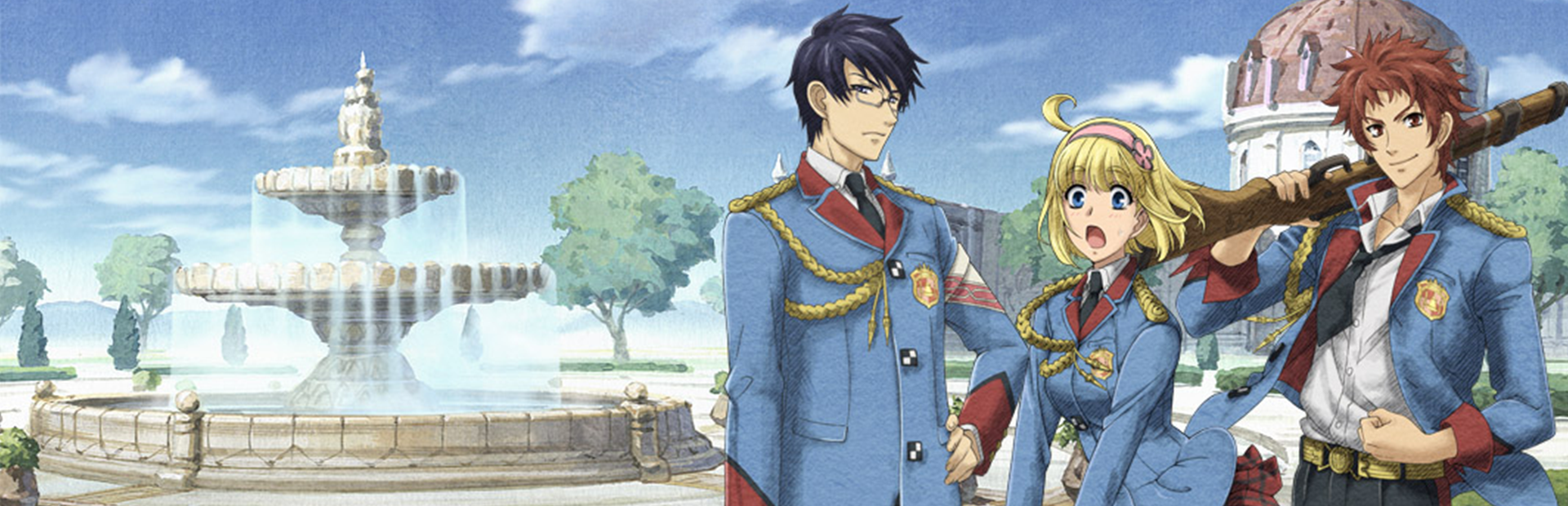
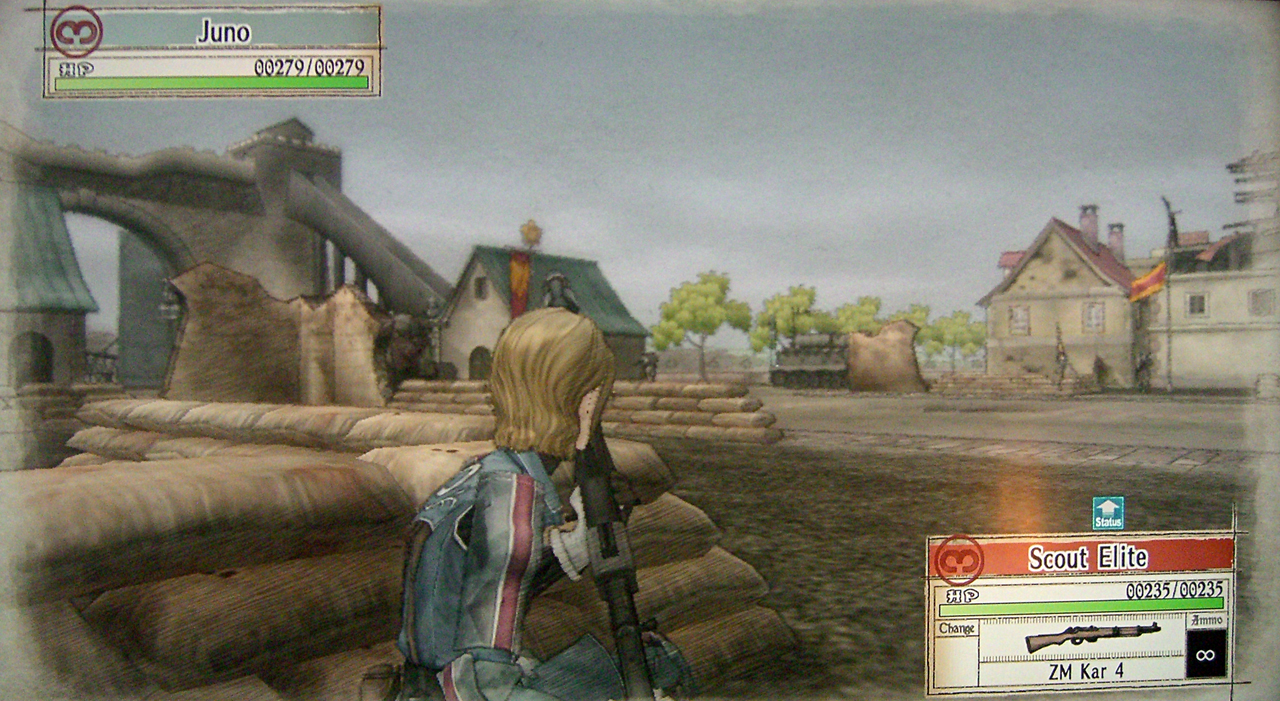
Valkyria Chronicles II sets you right in the middle of a war between a government and the rebels of Gallia, but what you really get into are the characters themselves and how they cope with each other. The game is set in a fictional WWII-type setting and is completely original. This turn-based strategy game can get pretty complex and is a lot to swallow at first, but after a while, you’ll get the hang of it.
The game is pretty menu-heavy, especially before deploying into missions. You can level up your classes (instead of individual characters) as well as produce weapons for each class and your tank. These are simple enough, but you have to unlock new weapons by leveling up. What disappointed me about this is that the weapon upgrades are very minimal, and it’s not until later levels that the stat boosts are large.
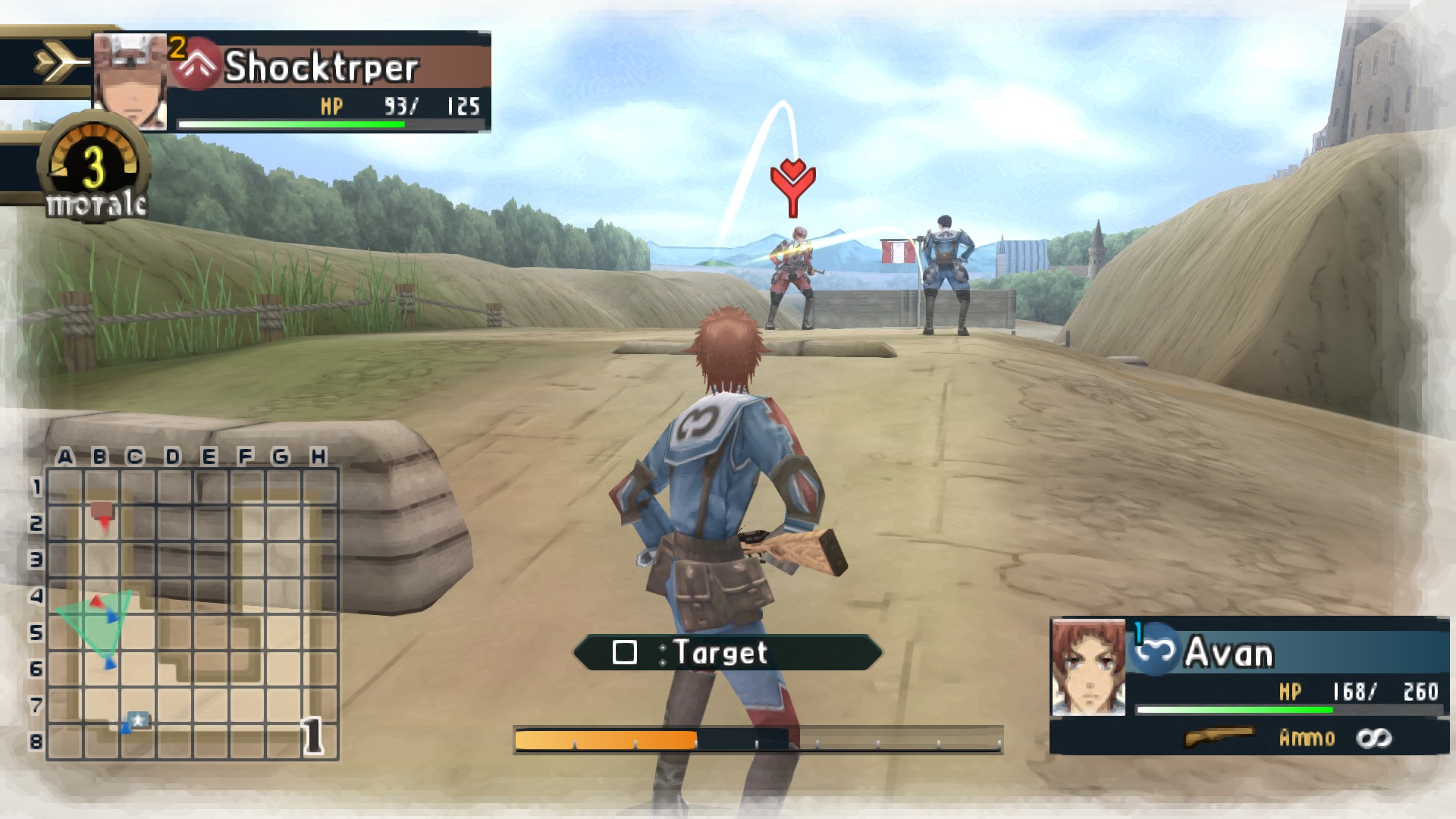
Once you do all this, you can rearrange your groups because each mission requires the right kind of people. There are different classes like Lancers (anti-tank), Scouts, Shocktroopers (heavy machine gunners), Engineers (medics), Armored Techs (melee), etc. You can only have six people deployed, and only five for each area. While this may be a pain since you’ll have 5 guys in one area and 1 in another, there are strategic workarounds for this. Once you start missions, you get an overhead map that shows your guys and your enemies. Killing enemies is as simple as moving them around in real-time, but each character has a different stamina meter, so watch out.
Each character uses one CP (turns), and tanks use two, so you really have to choose your moves wisely. While you’re moving around to position, enemies can shoot at you, but you can take cover behind sandbags. Killing enemies consists of getting the right amount of shots in before you reach your limit. Instead of relying on just draining HP, you have a shot limit, and when you aim at an enemy (depending on their type as well), another number will show how many shots it will take to kill that enemy. Headshots are always your best bet, but getting in close works too.
You can also find shortcuts throughout the map since most require you to move to different areas. Using a tank, you can build bridges to flank the enemy or build ladders. Once you capture an enemy camp, you can put your troops on standby and deploy them to captured camps in other areas. Be aware, though, of enemies and recapture those, which renders you unable to deploy in the new area unless you have at least one person there.
The battles can be pretty intense, but they also require perfect strategy, and it seems that most of the time only one will work. Certain missions have special requirements, like escorting, or certain players must be deployed. If you find that you need other abilities, you can retrain troops to different classes (if you’re short on one class) or change their abilities, like making a scout a sniper or a lancer a mortar. Sometimes perks will be activated on the field that do good or bad, depending on the character. If a character doesn’t like one that’s near, it’ll have a negative effect. Details like this can really help you pin down a strategy, but most others can ignore them.
Outside the battlefield, you move around campus and talk to people to progress the story, but that’s pretty much all there is to it. The game looks really good with a nice anime art style, and the voice acting is decent but not amazing. The small map size will make fans of the PS3 original angry, but it’s perfect for a portable system. The game is pretty stat-heavy and menu-heavy, and the difficulty spikes may make you actually give up altogether. I couldn’t get past the second story-based escort missions due to the insanely powerful enemies, and you have to get the strategy down perfectly or it just won’t work out. Other than this, the game is superbly fun, and with about 40 hours of gameplay, you should be kept busy.
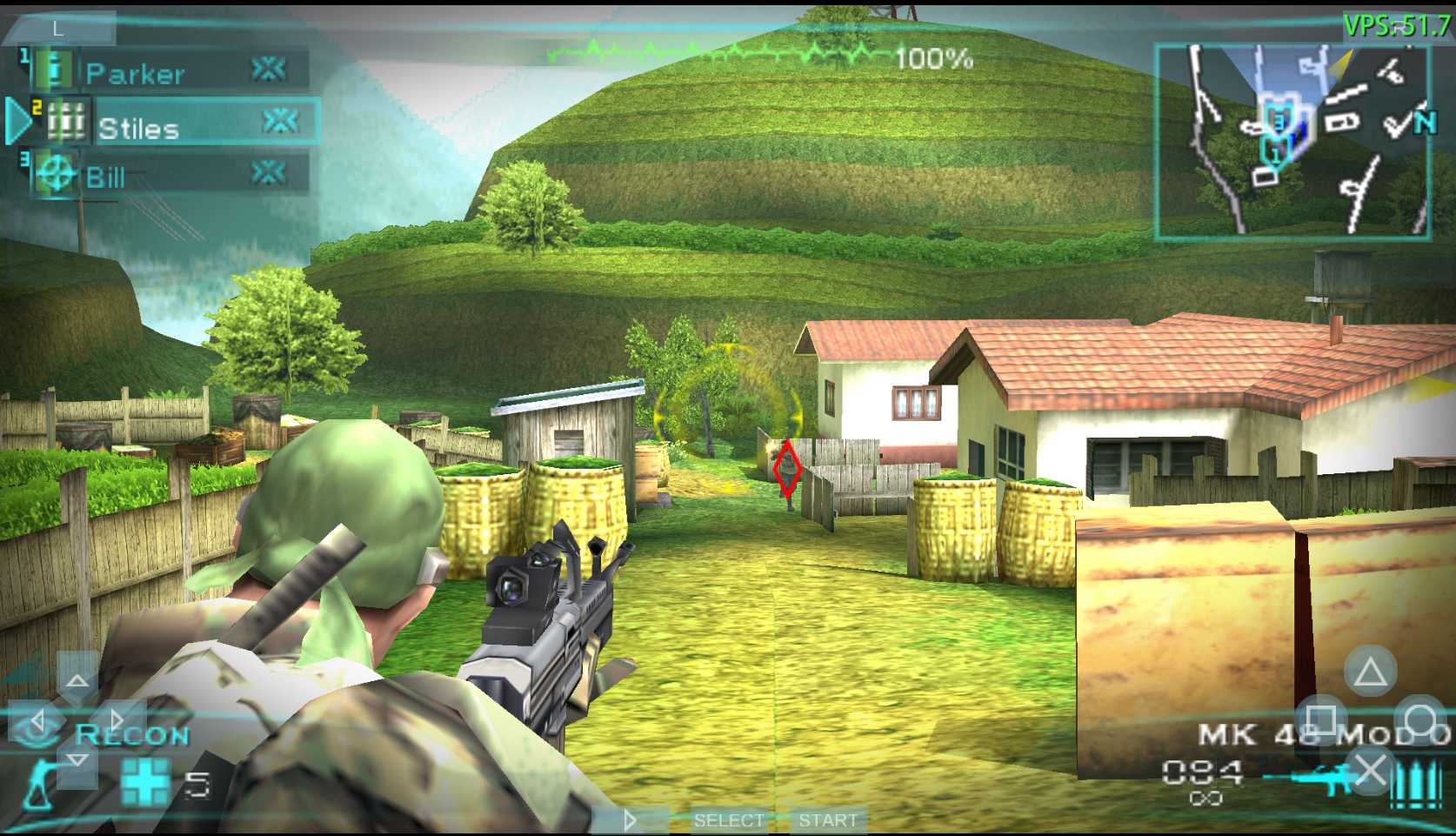
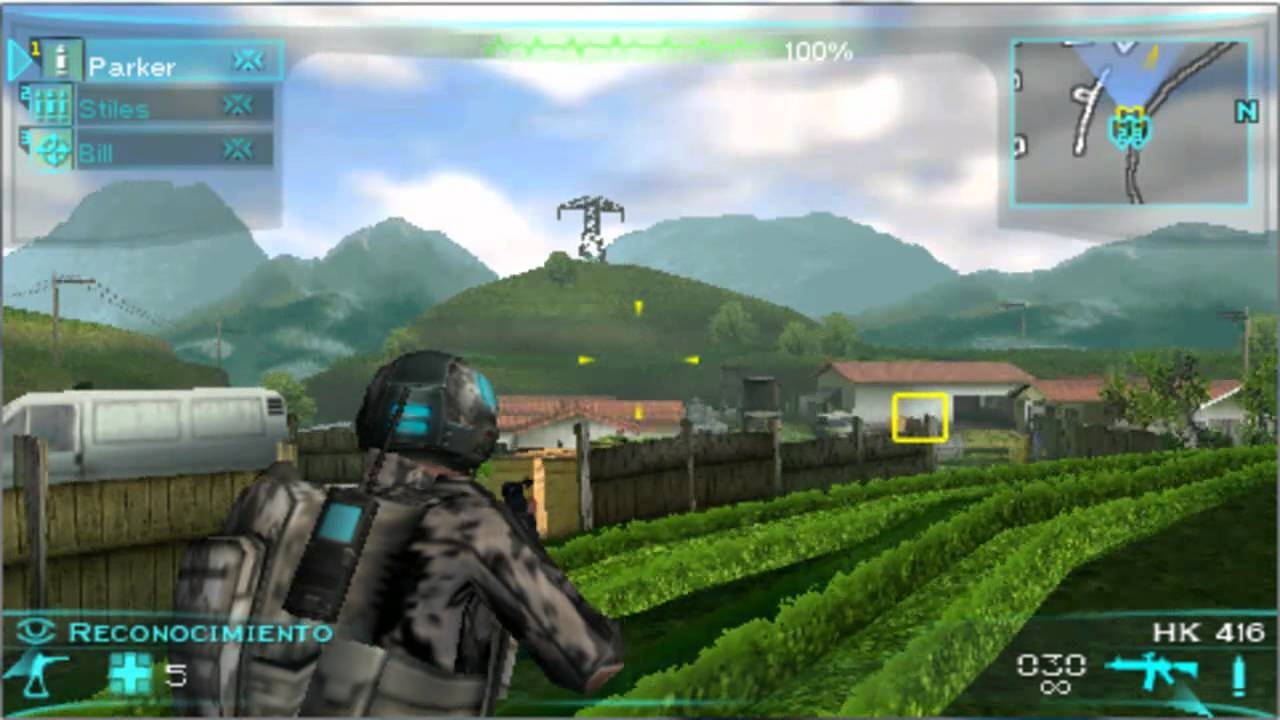
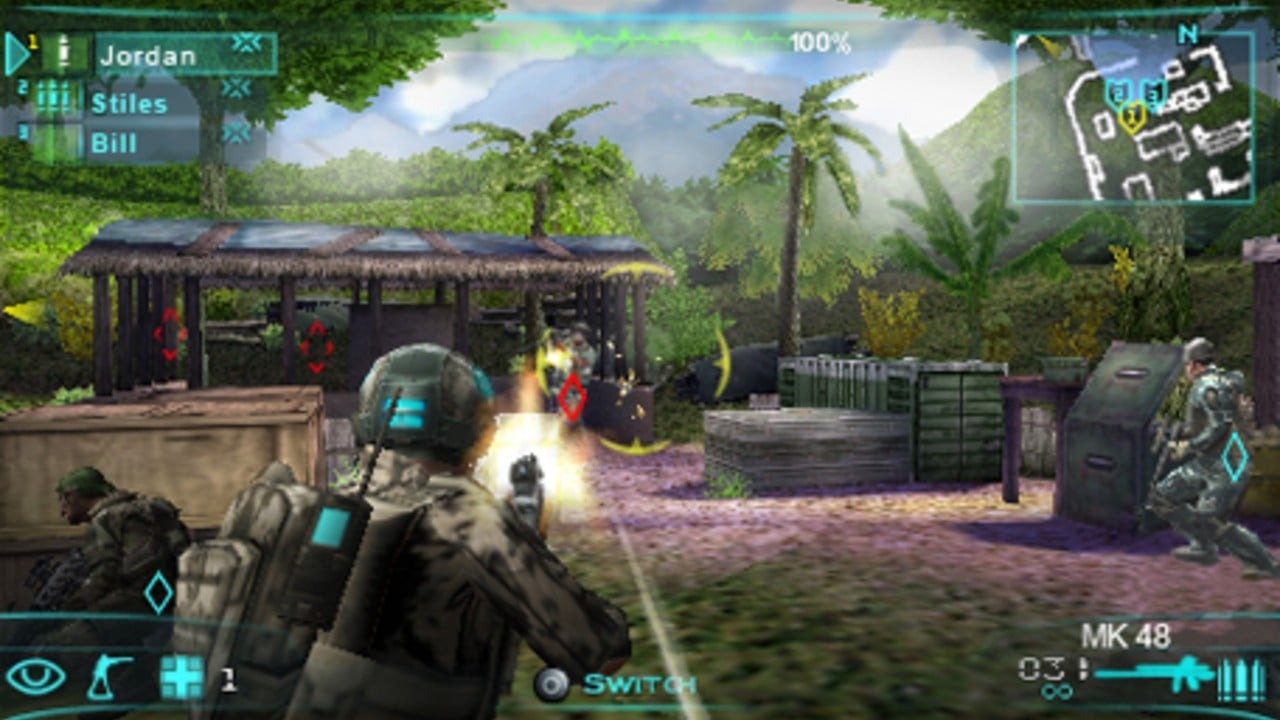
Ghost Recon has always been a great game, and Advanced Warfighter 2 was pretty decent on the PSP, but Predator is a complete disaster. To start, the controls are simply horrendous. Games like Syphon Filter and other third-person shooters have perfected controls on the PSP, so why not just borrow from them? The thing that breaks the game is the fact that you have to press X to go into aiming mode and then press X again to walk. So this makes the game a run-and-gun shooter since it gets so frustrating that you just hold L down to strafe and shoot your way through. Even using the cover system stinks, and it just feels like a crappy hack job by Advanced Warfighter.
The enemies are as dumb as dirt, and the mission layout, along with the levels, just plain stink. The problem mainly lies in the fact that the game is like a cardboard cutout of other Recon games, even visually. Buildings, fences, and bushes all look like they were copied and pasted right into the game. The characters’s mouths don’t move when they talk, the animations only consist of a few frames, and it just feels like a low-budget first-generation PSP game.
All the Warfighter elements are here, like the diamond HUD thing, the blurring of the screen when someone’s shooting, and customizing load-outs, but it just all feels half-baked, and this just doesn’t do Ghost Recon justice. Yes, there’s a co-op, but who would you drag into this horrendous game? The game isn’t worth a playthrough unless you really need to play every Ghost game ever made, but there are better ones out there.
The mash-up of Disney and Final Fantasy set fanboys squealing and shook the gaming world. It was like a huge tsunami of awesomeness that no one could have predicted. Thus, the first Kingdom Hearts was born with lots of charm and character but had a lot of problems with combat and one confusing story. The second game came out and really added depth to the game and was fan-freaking-tastic. Birth by Sleep is a prequel to the first game, and you really get a lot of stuff that was answerless in the last two games. You play as Terra, Ventus, and Aqua, who are three key blade wielders trying to stop the darkness from spreading through the world and within themselves. While the story works and is a lot simpler than in past games, it never feels like it really goes anywhere and isn’t as emotional as in other games.
With that aside, the next biggest thing is combat. While it’s a lot deeper, it’s also a lot more confusing and can be daunting to understand, especially for newcomers and younger players. You have a command deck that allows you to swap out abilities, and there are a lot of them. You can eventually equip up to nine commands, but flipping through them is tedious and not so combat-friendly. Using the D-pad to flip through commands can really kill you, especially during tough boss fights. Having to move from the analog nub to the D-pad means you stand still while switching. This leaves you vulnerable and can mean life or death if you have one hit left.
You can use the shot lock command, which is like a special attack that requires focus. You go into first-person mode and lock on the target for a few seconds, and it unleashes a pretty devastating attack. Summons are no longer available; instead, they are replaced with the less spectacular D-links. As you beat worlds, Disney characters can be selected, and basically, you just have a different set of commands to choose from. Your health replenishes, but this doesn’t seem as exciting as seeing the character fight with you.
You can meld commands together and add boosts to create new commands. This can be really interesting, and you can make commands you can’t normally buy or find. Other than this, the menus are usual with character bios, documents, and whatnot, but once you get used to the menu, you will have no problems. The biggest issue with combat is the stupid camera. Relying on a camera is critical with PSP games due to the lack of a second analog nub, but this camera is stupid. Locking on seems like a good idea until the lock-on breaks for some unknown reason and you lose sight of the enemy. This is really irritating during highly intense boss fights because you lose sight of them and can walk right into their traps. The camera likes to flip-flop around constantly, and fighting enemies above you is like going down into a swirling toilet with needles stabbing your eyes. It jitters and jitters and spasms, and it feels like the game is having an epileptic fit.
Despite this, it’s manageable, and you get so used to it that you just deal with it. Exploration is still the same yawn fest, but even more so since most of the environments aren’t as active or lush as KH2. The worlds are super short, and you can get to each boss without even fighting a single enemy, but if you return, they respawn, and this is only because of the irritating amount of level grinding. No matter what you do or what level you are at, bosses can kill you in just a few hits. At level 25, I was still getting my butt kicked by a boss late into the game. This leads to each character’s story completion time of about 10 hours. The words just don’t feel as alive and exciting as in KH2, and they just seem like bite-sized samples of what they should be. There are a few original worlds that are a nice touch, but they could have made the game so much better.
There is a command-board game that is so complicated and boring that you may not even care about it. You move around a board trying to collect new commands, and it’s overly complicated, as all Square mini-games are. This is more like a mini-mind meltdown than anything else, and co-op doesn’t make it any more fun. The game’s best feature is its technical achievement, being one of the very few games that pushes the PSP to the max. You could easily mistake this game for a PS2 game, but there are some frame rate issues, and if you don’t install your data on your memory stick, you are most likely going to experience horrendous load times. The voice acting is a bit iffy, but the game looks amazing. The enemies are pretty boring and generic, and they could have been a lot better.
Overall, Birth by Sleep is a great start, and I hope this isn’t the last KH on the PSP. If they improve the game’s many flaws, we are looking at the best portable game ever made. What the game really needs is a reboot because this formula is tasting a bit stale in 2010.
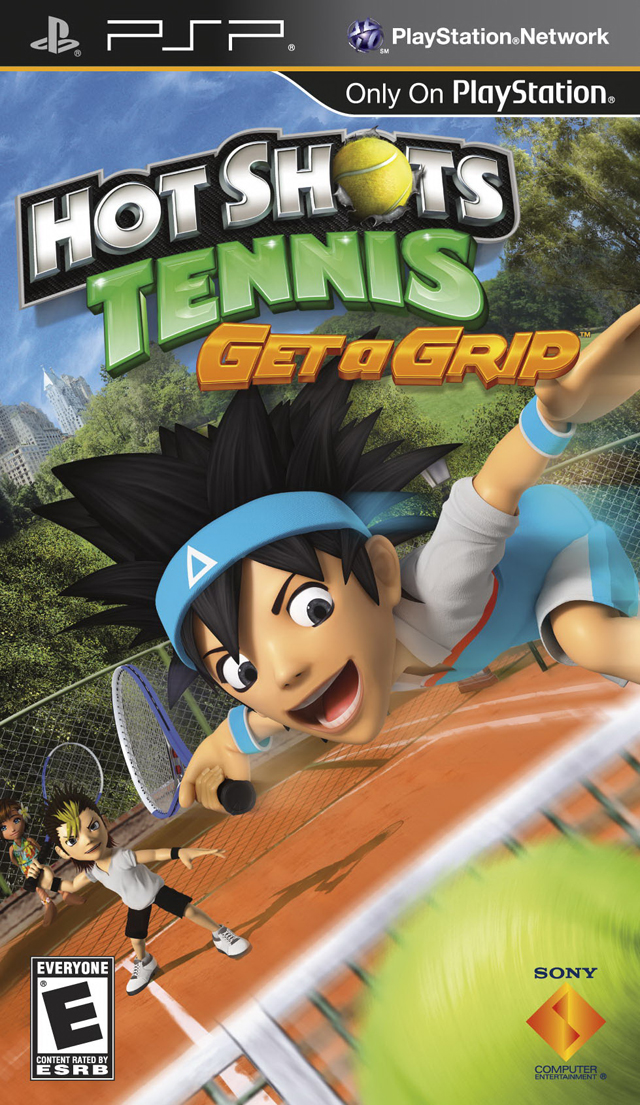
I always hate to talk about casual gamers since they almost ruin everything for hardcore gamers (Kinect and Wii), and everybody always forgets about us, hardcore guys, but Sony always knows how to balance it just right (the Move is a perfect example) to please both sides (this is kind of like politics). The Hot Shots series has always been a great game for both sides because you can completely ignore stats and have fun, but also delve into them and fine-tune your game. Tennis is no exception, with a good amount of stat tracking but also just quick and fun tennis for casual gamers.
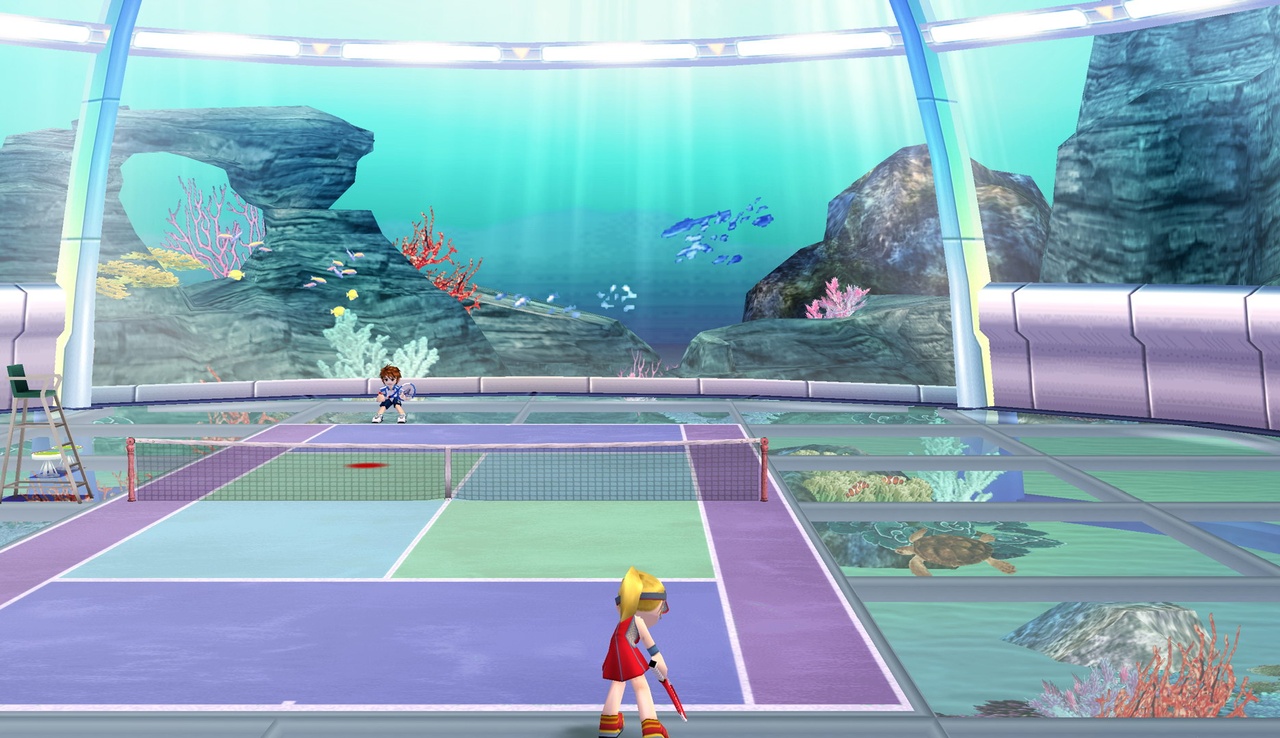
On the court, the game is fairly simple yet surprisingly deep. You can perform three different swings: slice, lob, and stroke. Using the nub or D-pad allows you to decide where the ball goes, but it’s a nice grid-type structure, so if you’re running right, the ball will go right, etc. The longer you wait to hit the ball, the more accurate your shot will be on that dot, so timing is key. Or if you just like swinging away, you can still have a good challenge. You can outsmart the players by looking at what their play style is, and you can even trick them during serves, which is always fun. Lobbing the ball will show a yellow dot, and if your opponent lobs, you have to run to that spot and hit X at just the right time, and you could get a Smash Ace.
While the game is super fun on the court, you can change attributes by selecting courts with bounce and hardness, but you can also totally ignore that and still have fun. You can collect clothes for your character, but each piece has a stat boost. If you just want to deck out your character, you can still win. Before each match, you can choose No-Ad for a quicker game, change rackets, and if you play characters long enough, they will level up and play better on the court.
What’s so great about this game is that if you just want to jump into a couple quick games, you can do so without concentrating on stats, and the game will almost play the same. Unfortunately, it doesn’t reward hardcore stat trackers too much since it does lean a little more toward the casual side. Despite all this, you are on a world tour to make everyone happy by using tennis. Not the best story, but it’s nice to see the cute characters talk it out in an open adventure format, and you can click around and find hidden items, but it’s more of a distraction than anything really.
With another person, you can really have a lot of fun, but the best part about Tennis is that it’s addictive, and you always want to keep coming back thanks to the good AI. You want to keep finding new items for your characters; you want to boost your characters as much as possible and make them the ultimate tennis swatting machine. If only the game had some sort of special power ability to make narrow wins turntables, but other than that, the game is super fun.
Hot Tunes does for Korea what Fever did for the US: deliver the popular Korean rhythm game as a “best of,” but adds nothing new to the table that Fever didn’t already provide. The only thing you will notice right off the bat is the new “Lite” 4-button mode.
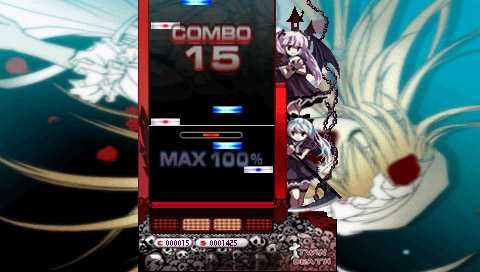
DJ Max is a huge rhythm game hit in Korea that uses a DDR-type gameplay style. There is obviously no dance mat, so you have to use the face buttons, and this works out just fine. There are 4-button, 5, 6, and 8-button modes. While 4 is the easiest, 8 can be damn near impossible. You select a song for each of the four stages, and each stage has harder and harder songs.
The game has some RPG elements, such as leveling up to unlock more gear, images, songs, etc. Notes, gear (the whole box in which the notes fall), and your character can have certain attributes that earn you more exp, gold, etc. There is even a speed modifier for people who want more of a challenge or if the game is going too fast for them. This can be changed during the song or before it.
After you get a certain score on a song, you can play a harder version of that song on the same stage by pressing left or right. During play, you must hit each note when it hits the bottom. Depending on your accuracy, a percentage will appear. If you miss a note, you will break your combo, but if you fill your fever bar and use it, your combo will double for a short amount of time. You don’t just hit single notes, however; there are held notes and even “scratched notes” that require you to spin the analog stick.
Once you finish a song, you are scored on how well you performed and given a grade, some experience, and gold. Gold is used to buy more gear. There are 50 songs, and each one has a wonderfully illustrated music video that streams in the background. If you get bored with the main mode, you can complete challenges that have set goals. Reach this score, don’t break more than this many times, etc. If you really love the music in here, you can even listen to the OST or watch the videos. There are dozens of images to unlock and lots of goodies for fans to keep playing.
The game may sound perfect, but it has flaws. There are already five other DJ Max games (including Clazziqai and Black Square Edition), and this is exactly the same as those. Hot Tunes takes some of the more popular songs from those games, but it is still missing some key gems. Playing with more than four buttons will frustrate most players; there’s no way to transfer the OST to your memory stick, and you can’t transfer songs from the other versions like you can within those. If you already own Fever or have even played the other entries, you’re not missing anything with Hot Tunes, but if you’re brand new to the series, this is a great entry.




































 thebinarymessiah.com
Try multiplayer. A lot of fun !