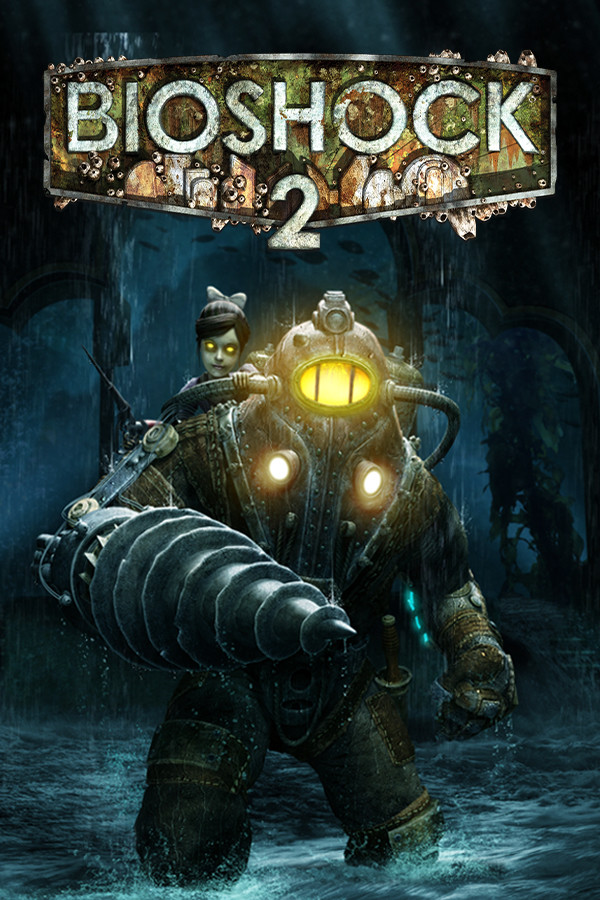
BioShock 2 was a great successor to the original but didn’t live up to the hype or the cinematic quality of its predecessor. It suffered from repetition (loot, go through the section, save Little Sister, gather ADAM, rinse, and repeat), and it didn’t have the scripted events that made BioShock so epic. This, in turn, made you want the game to just end after a while, and the developers played it very safe by making the entire game almost exactly the same. It did have an excellent story, though, and this is what made the game great.
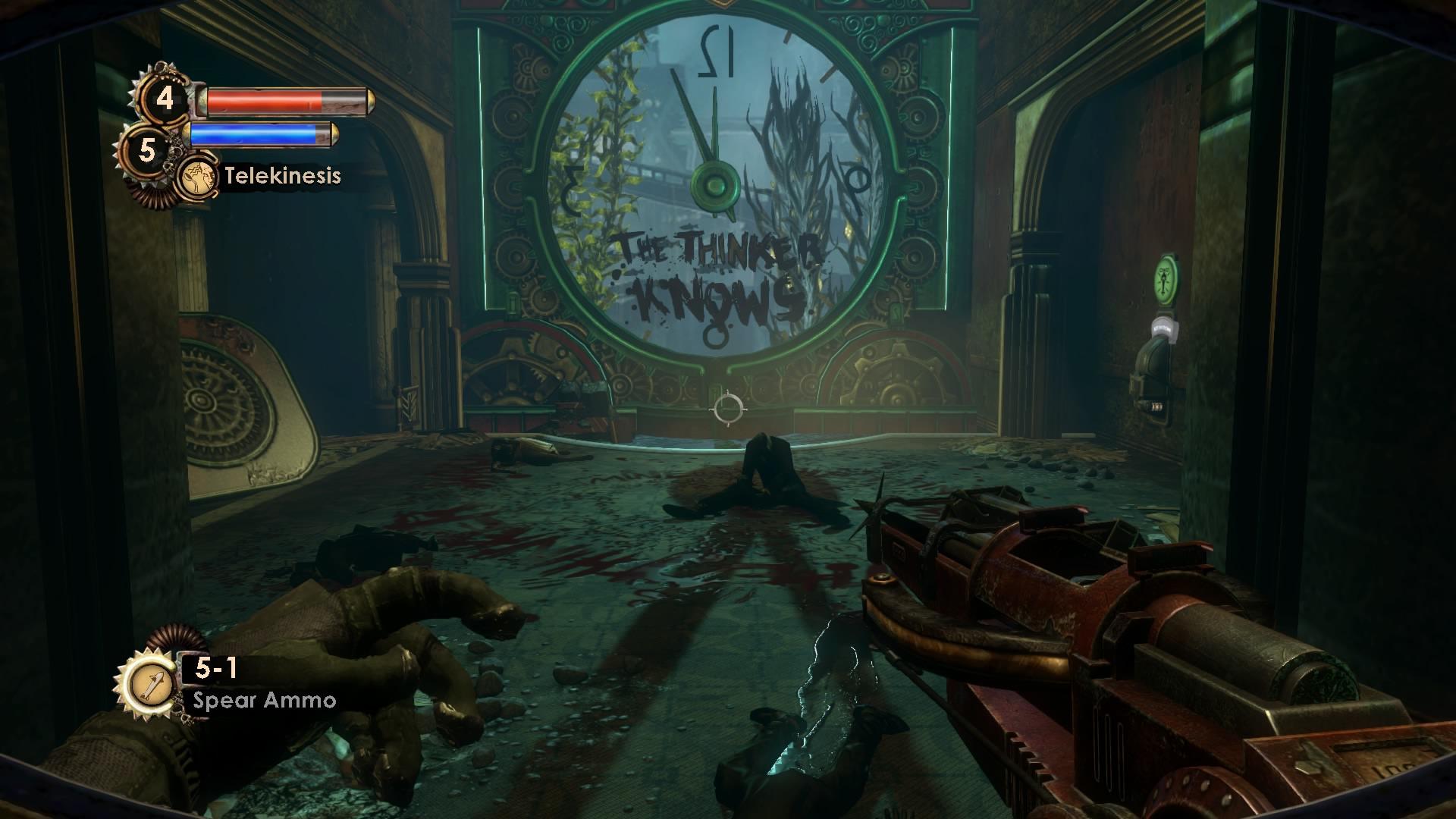
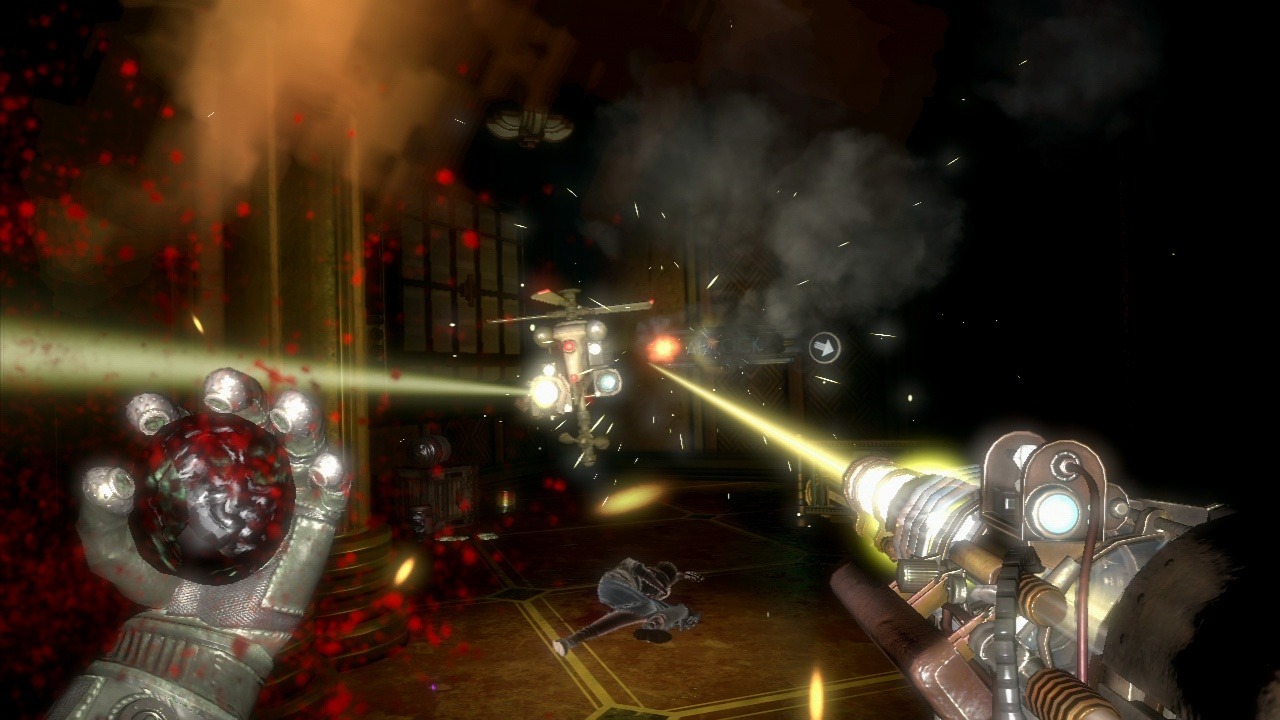
Minerva’s Den has you playing as Sigma, who is a Big Daddy sent by Milton Porter to destroy The Thinker. The Thinker is a computer that runs Rapture, but you are also being told by Reed Wahl not to destroy the computer. Along the way, you are able to meet six little sisters and a couple of big sisters, loot to your heart’s content, and experience the excellent dialog, story, and pacing that should have been in the second game. There are two huge levels in Den, with little things hidden everywhere, as well as a new plasmid, Gravity. Well, new splicers and upgrades are found by finding them on dead bodies instead of Power to the People stations.
The story is really excellent, with you being completely clueless and just following Porter and Tenenbaum’s voice to do as they bid. You discover most of the things going on down here through audio diaries, and some can be pretty haunting. There are a few scripted elements, but the level design is also well done, and there is enough to do here to keep you busy for a good 4-5 hours. You will really want to savor every moment by looking in every nook and cranny as well as completing all of the great achievements.
What BioShock 2 was lacking is made up somewhat in this little DLC that could. While the art style and objects are recycled, there are a lot of new ones that haven’t been seen anywhere in the world of BioShock, such as computer-related objects. It’s a good change and really helps mix up the visuals. With a surprise twist ending that makes you slap your forehead, Minerva’s Den is well worth the money, and I hope it isn’t the last BioShock 2 DLC.
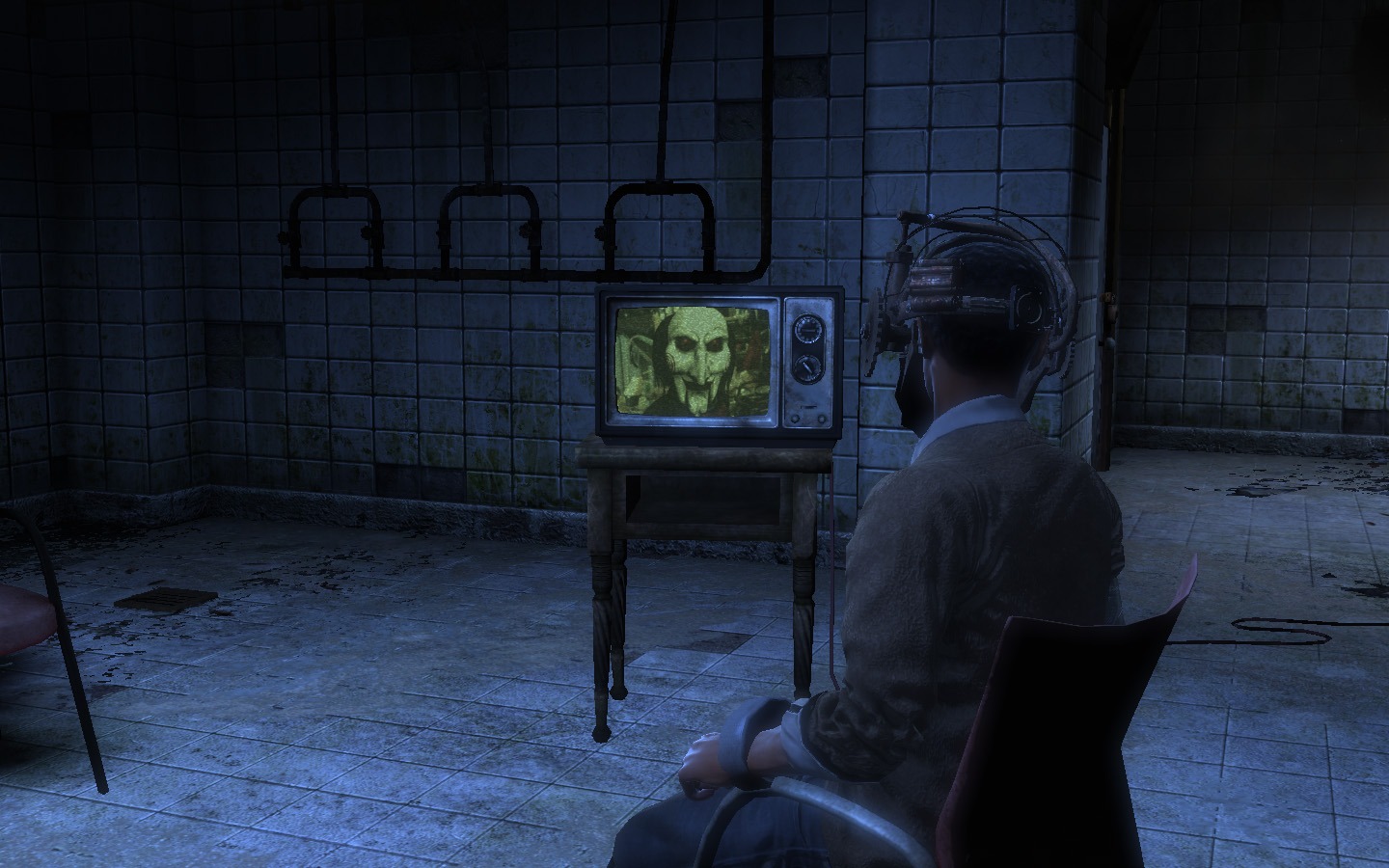
A lot of movie-based games have a lot of potential but fall flat due to shortcuts, bad production values, or just rushed and unfinished work. Saw is one of these games that suffers from this disease, but it’s not a terrible game. You play Detective Tapp, who must find and help various people seen in the movies through traps, but there are small traps you must get through to advance through areas and find items to also advance through areas. This is where Saw should be great: gore. It falls flat; there is a sense that everything feels stale and nothing has any weight or impact on it. When a head pops, it’s no more exciting than a bubble. There’s not much gore other than a red blob on someone’s head and no cringe factor. The movies made me even feel sick and queasy, but the game does nothing for me.
Controlling the character feels floaty and weightless, kind of like those first-generation PS2 games. Combat involves a simple lock-on button and attacking, and it works except that it’s as simple as A-B-C. You can pick up various weapons, such as crutches, lead pipes, scalpels, etc., but they have a damage meter, so after a few hits, they break apart. Enemies are as dumb as they come, and blocking their path by shutting doors can help, but they really can’t kill you since they even struggle to target you.
When it comes to exploring, the game is linear to a fault, with literally narrow corridors everywhere. Sometimes you’ll come to a candle with a tape from Jigsaw or some type of document you can read, but the clues in the game are very vague or too obvious. Most of the traps that you must get through to advance through the levels are pretty mundane and not very interesting. These range from finding a code on the wall to a lock, reaching inside some nasty thing to grab a key, or timed lock mini-games. I want to see gruesome stuff, not silly interpretations of things we’ve seen before. Saw is a game that could really innovate mature audience-inspired games with some pretty brutal stuff.
After you slog through this, you can finally get to the finals, which are a bigger main trap, but not all of these are interesting and are pretty much more glorified versions of the advancement puzzles. Neither are very gory, look brutal, or are as convincing as the movies, and it’s the graphics that really transpire this. They look very dated, and the technology doesn’t allow a lot of detail. If these guys could get a sophisticated engine, they could make this game look fantastic, but they opted for the cheap engine instead. They did capture the Saw atmosphere really well, but the shock value is pretty much nonexistent.
Overall, Saw is a decent rental, but it’s not one that you’re going to walk away feeling great about, but instead depressed at how lame the game is instead of how great it could be. The game does support an Xbox 360 controller, but people who prefer the keyboard and mouse will be clueless as to what controls what because numbers don’t really help and there are no tutorials. The puzzles, however, are varied enough to keep you interested, and there are some fun doozies in there, but other than that, this is a huge disappointment.
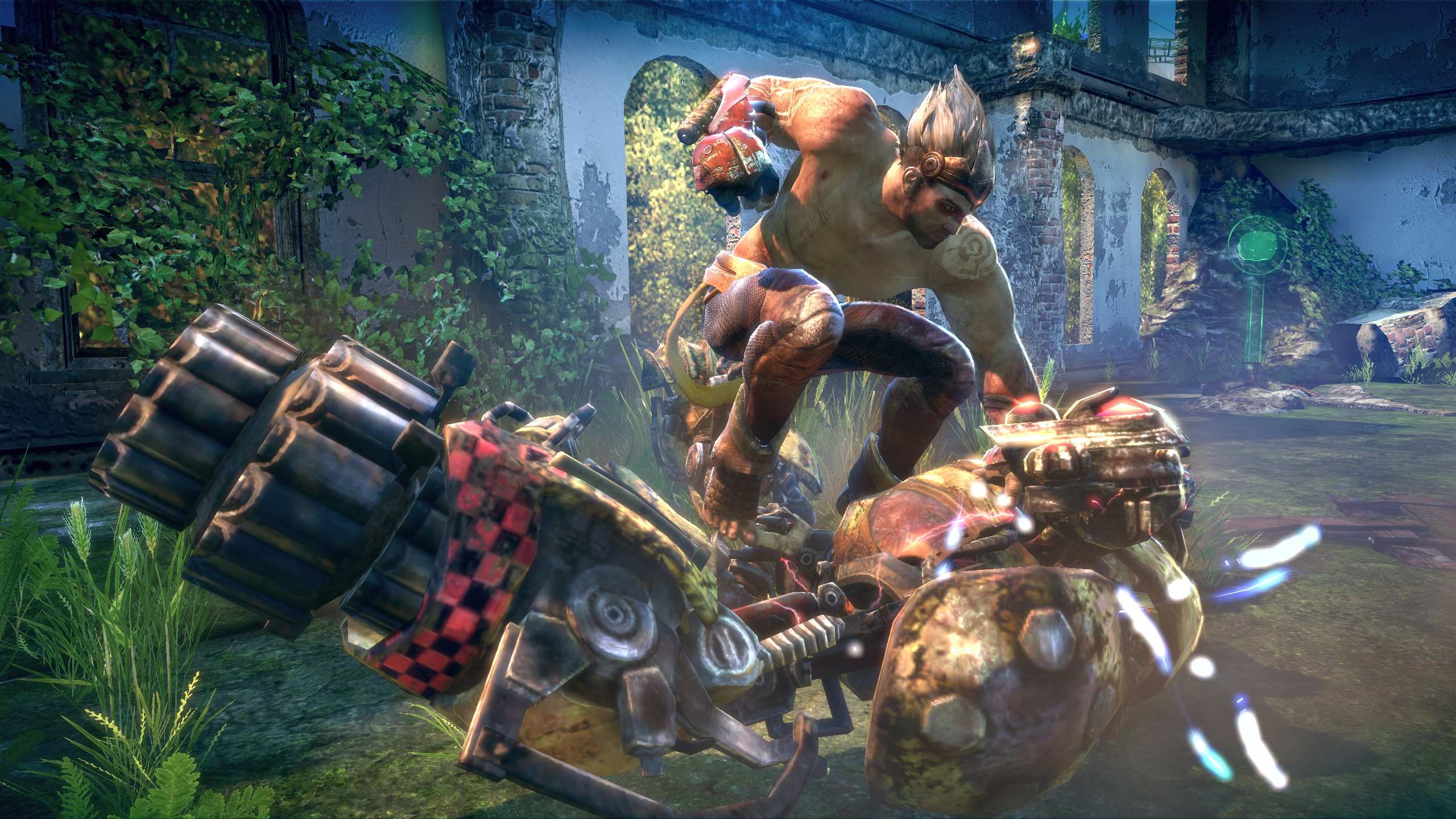
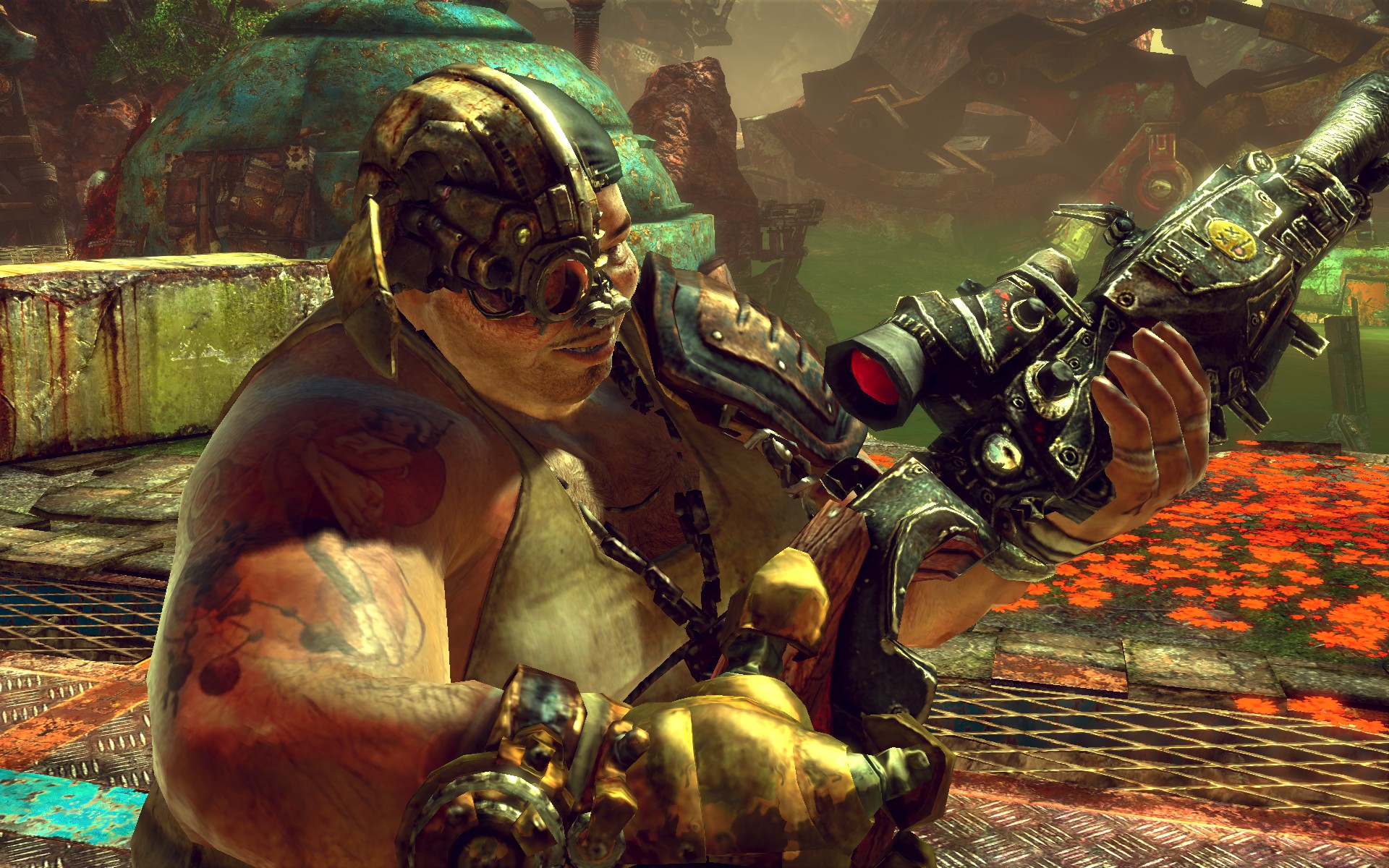
Ninja Theory has had a hard time establishing itself as a talented developer. With the major hype of Heavenly Sword, Lukewarm sales of the crappy Kinect Joy Ride, and the controversy of DMC, it’s struggling. Enslaved is probably NT’s most successful game, mainly commercially, due to its better marketing. The story is probably the game’s strongest point, as character development and combat take a back seat.
You play Monkey, a guy who escapes a slave ship that’s crash-landed in post-apocalyptic New York. Along the way to escape, he finds himself stuck and enslaved, but a young woman named Trip needs his muscle to get her back home further west. The relationship between Trip and Monkey is what makes you keep playing, and their constant fight for freedom is heartwarming.
The combat had a lot of potential, but after the first chapter, you’ll get tired of it. It’s the same two combos over and over again, with a crappy camera that can’t stay put. Sure, the angles are cinematic, but if you get backed into a corner, it’s nauseating. The camera can’t stay put at all, and it leads to cheap deaths and frustration when mech after mech is beating you down. You can charge an EMP burst to disable shields and make the mechs temporarily stunned, and this is essential to defeating them due to their constant blocking and shielding. You can command Trip to use a decoy so long-range mechs shoot at that instead of you so you can climb around and get to them. Some mechs have weak points that allow faster kills, and you can use your staff as a projectile weapon equipped with plasma rounds and EMP rounds. This staff is also used for puzzles and exploring as well.
So combat is pretty finicky, but exploring can be a blast thanks to huge sprawling vistas, easy-to-see glowing handholds, and whatnot. Occasionally the camera gets in the way here or the controls can be a bit touchy, but it’s not nearly as frustrating as the combat. You’ll notice orange orbs floating around everywhere, and these are used for upgrades, but you can only upgrade if Trip is in the vicinity. There are some points where you can use Monkey’s Cloud hoverboard, and there are a few exciting moments like chasing a giant mech, but this feels a bit tacked on.
The game also has pacing issues since the first chapter is epic, and the next six or seven are the same repetitive area-to-area beating mechs up and jumping around the affair. It’s a shame that Enslaved feels like it’s only 80% complete because it needed a lot more polish. Even though the game looks good technically, it’s pretty bland, with just lots of green everywhere. There’s no unique art style or anything, and this is a shame. The mechs all look the same, and the enemy variety is less than half a dozen. Boss fights sometimes feel epic, but they repeat often, so Enslaved is iffy on every subject. I do recommend this as a great weekend rental or bargain purchase.
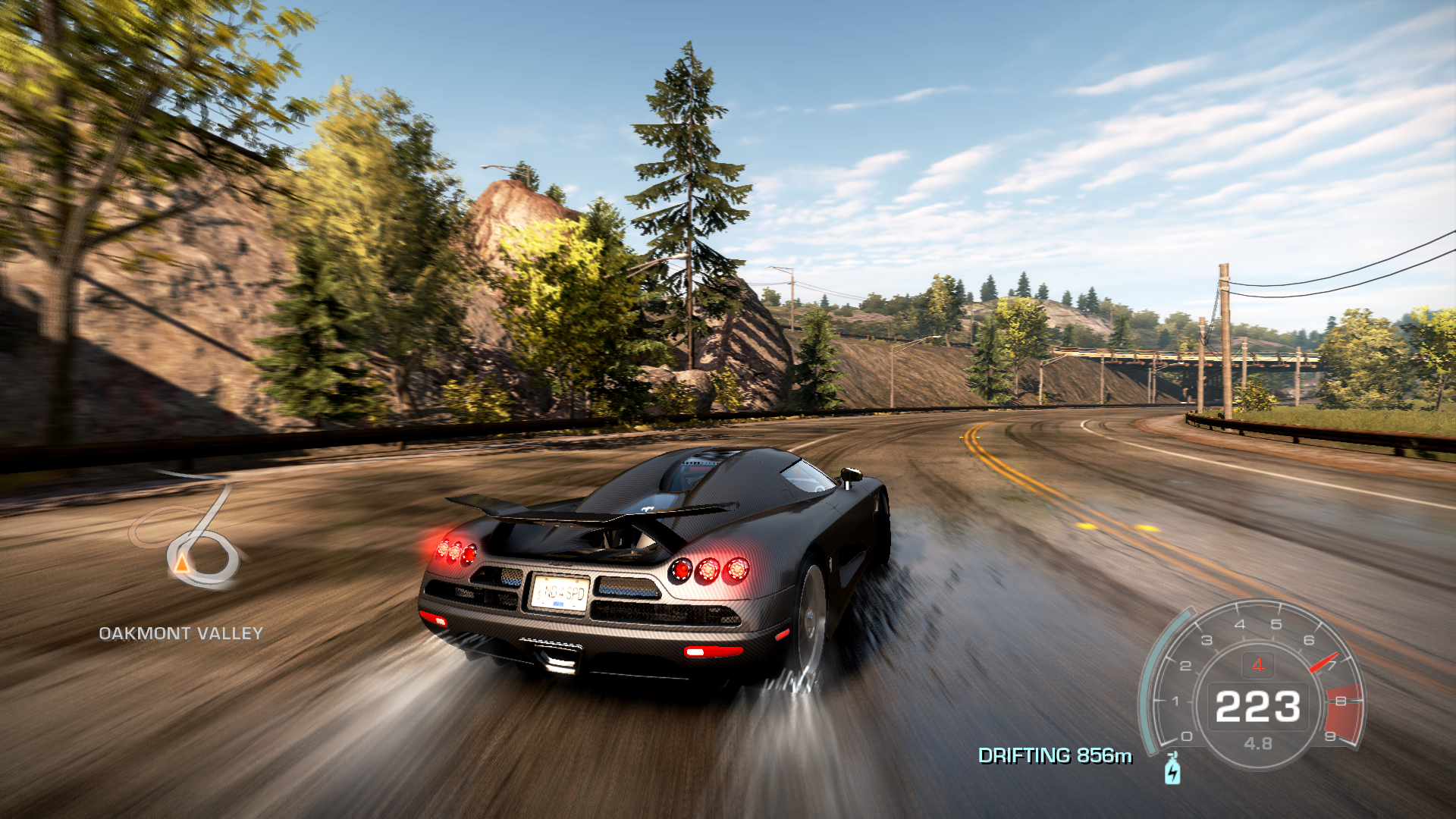
The Need for Speed series has been seriously confused and hurtful since Most Wanted. While Shift was a simulator, the other ones in between have been either subpar or bad. Hot Pursuit revives the classic entry with the Burnout team behind the wheels, and this feels more like Burnout than Need for Speed, however. Using the Paradise engine, Criterion did a good job making the game both look pretty and giving us a Burnout feel with real-world cars. These are slick cars, ranging from Mustangs to Maseratis.
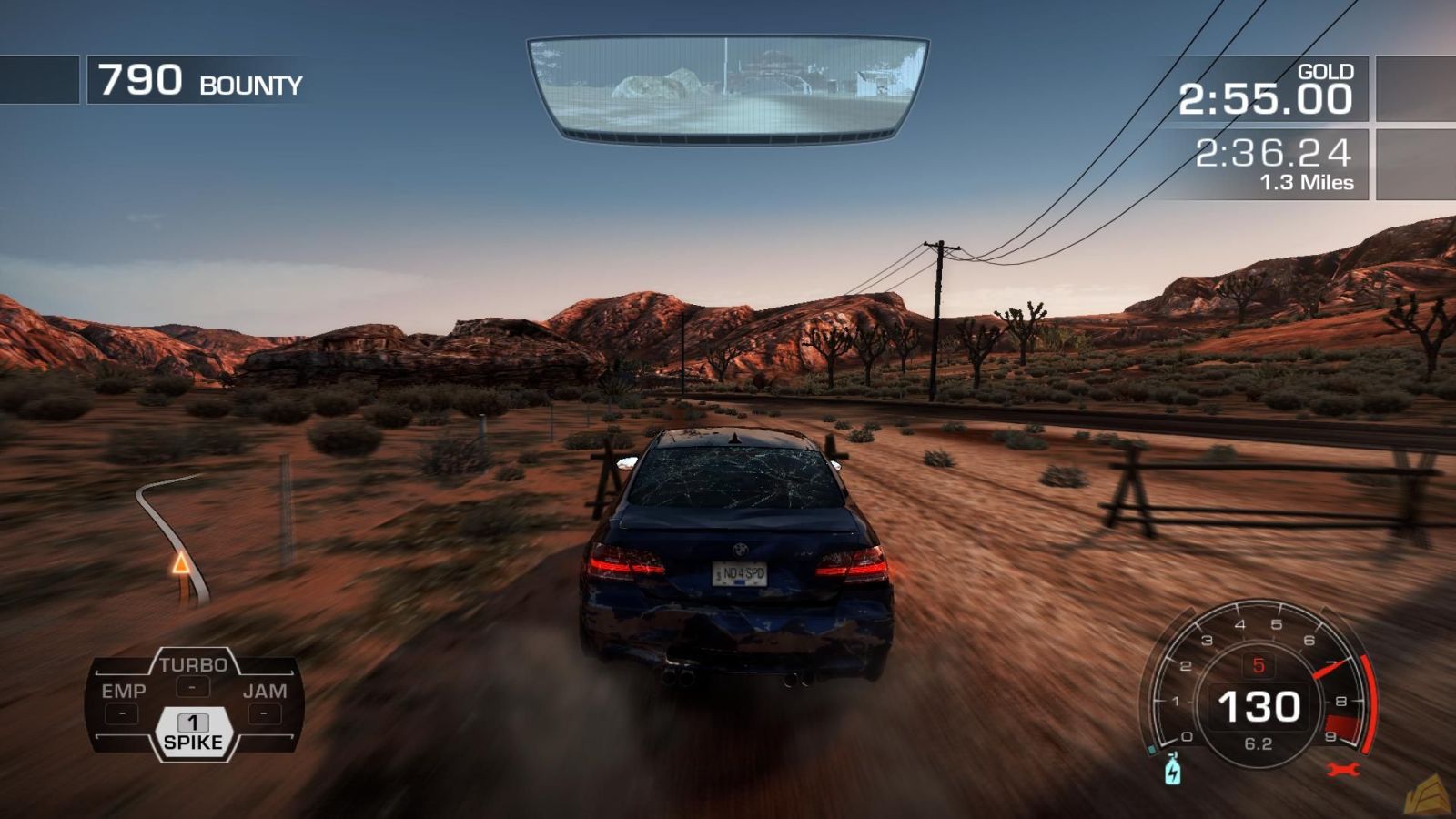
As the name would suggest, it’s about cops versus racers, and each opponent gets a set of four weapons. Cops get an EMP, helicopter, spike strip, and road block. Each is pretty self-explanatory, but this feels like a glorified version of Burnout’s Road Rage mode. Racers get the same, but instead of a helicopter and roadblock, they get a jammer and turbo, which is an extra boost for NOS. Now you can earn turbo by doing crazy stuff as well.
The world map is also classic Burnout style, with each icon labeled for a racer or cop, and there are previews, time trials, and special events for each side. There is also Autolog, which is a social networking type of setup. Your friend’s best scores will be posted, and you can post screenshots and videos of your races. If a friend beats your score, you can jump right into that race and try to beat it. While the single-player is fun, it’s the online stuff that makes the game shine with all the weapons. The single-player feels predictable and stale compared to multiplayer because it feels like this game was made with multiplayer in mind. You earn a bounty and have to hit certain goals in single-player, but it’s nothing we haven’t seen in racing games already.
Once you race, everything feels fine, but the steering tends to suffer drastically depending on the road conditions and the car. Despite awesome damage modeling, the cars all feel pretty much the same, and the sense of speed is so fast that you don’t notice speed differences. This also concludes the repetition because once you unlock all weapons, it’s just the same events over and over again, and some people may never even finish the single-player due to this. The game can also look pretty good at times, but in other ways, it doesn’t.
The chaos comes from the fact that in multiplayer, you never know what anyone is going to do. You can see a roadblock ahead and get your shot lined up to dodge it, but just then someone deploys a spike strip right in your face and you hit both, losing a crap ton of health. You can take off again and try to shake off a helicopter, but then get hit by an EMP. It’s the same with racers, but this can also feel a bit unbalanced since racers’ biggest weapon is the jammer, so cops can’t use their weapons for a few seconds. It all depends on the players’ skills and how they race.
Despite the repetition and lack of weapons, the game works, but also notice all the Burnout references. There’s hardly any need for speed in this game, despite the real-world cards and the Hot Pursuit title. This is just a weird mix-up of game identities, but it’s probably better to have a burnout feeling than an old, crappy NFS game rehashed. Criterion already had the engine built for something like this, so I expect to see a sequel in the near future. I do recommend this to Burnout fans more than NFS, however, but old-school Hot Pursuit fans will dig this completely.
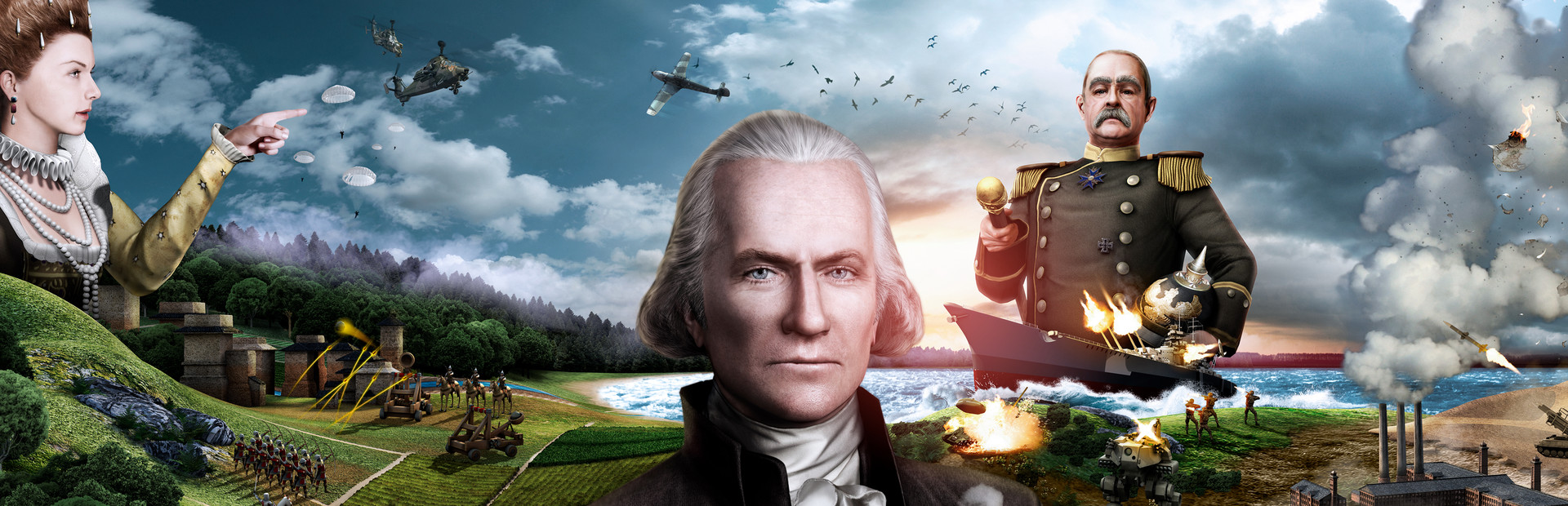
After playing my first game of Civ 5, I realized how much of a greedy jerk George Washington was. 500 gold, all my resources, one city, and open borders for just one silk resource?! He’s just begging to get wiped out, but I keep my cool and press on as the most advanced civilization for the next 150 turns. I built many great wonders, such as the Great Wall, the Great Lighthouse, the Colosseum, the Taj Mahal, and even the Hanging Gardens. Of course, it takes about 100 turns to create most of these, but it keeps my people happy and sets us into a golden age.
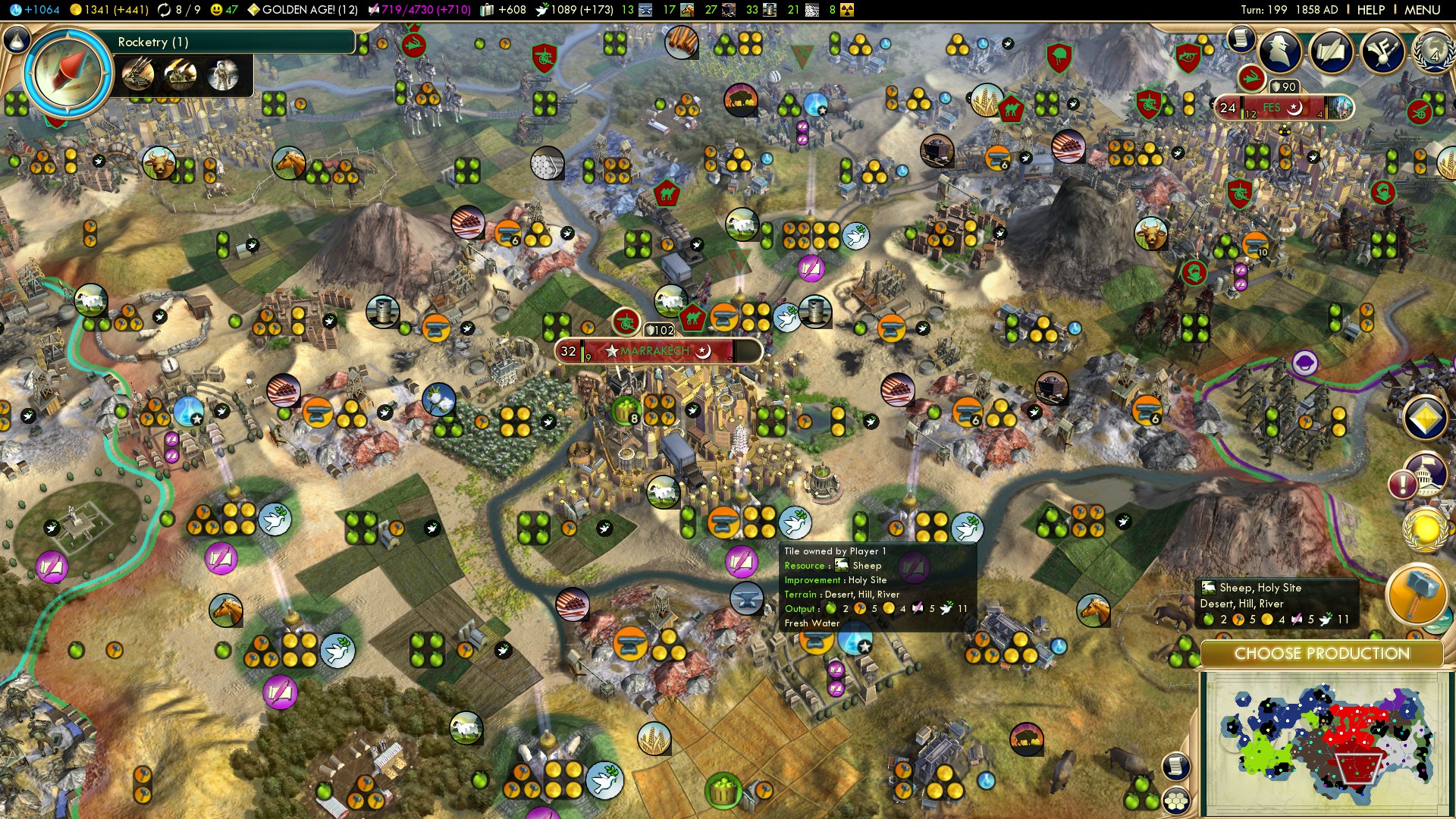
This is just the beginning of Civ 5 and its deep turn-based strategy gameplay, yet it’s so simple to grasp, and that’s the beauty of it. Civ 5 may seem like an overwhelming beast when you first play it (mainly for newcomers), but you learn as you play. After my 50th turn, I already had the hang of 90% of the game and just learned little things from there on out. You start out by picking the leader of a country, but each one has special attributes like a better economy, military, or even science. You establish your main capital city, and from there you learn new sciences, produce buildings, great wonders, workers, or different military units. Different tiles on the map may have icons for mining, farming, etc., and you can deploy workers here. Connect these to your capital, and your income will increase.
Of course, after a while, you must expand your empire, or people will get unhappy and may even rebel in the city due to overpopulation or not having enough entertainment, food, or other resources. Keeping your people happy is just part of the struggle to create a great civilization. Other cities may want to ally with you by having you gift units, give them gold, or vow to protect them. Connect your cities with roads, and voila, you have more income. Or you can just wipe them out and either annex the city (which requires building a courthouse before you can use it) or use it as a puppet city and just collect the income, but don’t control what they do. There’s also the option to just raze cities and let everything burn!
Yes, Civ 5 lets you play as you please; sadism or masochism is all up to you. You can be friends with all your neighbors and just run out to 2050 and be the first and most advanced civilization. Or you can do what I did and get tired of the other leaders and build an army to take over. After having a rapidly advancing civilization over Washington, I decided to open my borders to him, but he was still guarded because he didn’t like my huge army. Sure, I made my people suffer a tad from the high upkeep of this vast army, but it was well worth it. I started attacking his capital, and this declared war. After a few turns, he offered a peace treaty for 10 turns, so I accepted, and during this break, I got every unit I had and surrounded his capital. After the treaty was over, I attacked and quickly took over his entire empire. It was easy thanks to my advancement in military technology, so I was way ahead of him. Musketmen versus spearmen doesn’t exactly equal fairness. He offered peace treaties, but I swiftly turned them down, and he eventually declared defeat.
But…just…one…more…turn! Even though I technically beat the map, I kept on conquering and even stole over his allied city before defeat. I bought tiles with lots of resources to quickly build up my empire and expand my borders. Turn after turn, I swept up all resources, hoarded my gold, and built massive structures to be the greatest of all time.
That’s how every game plays out, and with the great AI, stunning visuals, and excellent little tidbits like social policies, which act like perks, and the fact that not every map will play the same way twice, While you can’t stack units anymore, it really makes for a better strategy and makes things a bit simpler, so you’re not just concentrating completely on your army. There are so many little things to this game; you just have to play it to realize what’s here. With a great in-game user-made map, scenario, and other item download section, excellent multiplayer, and countless hours of endless ways to play maps, you will never get bored. Tactics must be changed for each leader, each map, and each opponent. The only real issues I had were the fact that not every leader is balanced and that a game can take days to finish, plus some changes may turn hardcore fans off. So, the question begs the answer: Can your civilization stand the test of time?
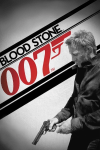
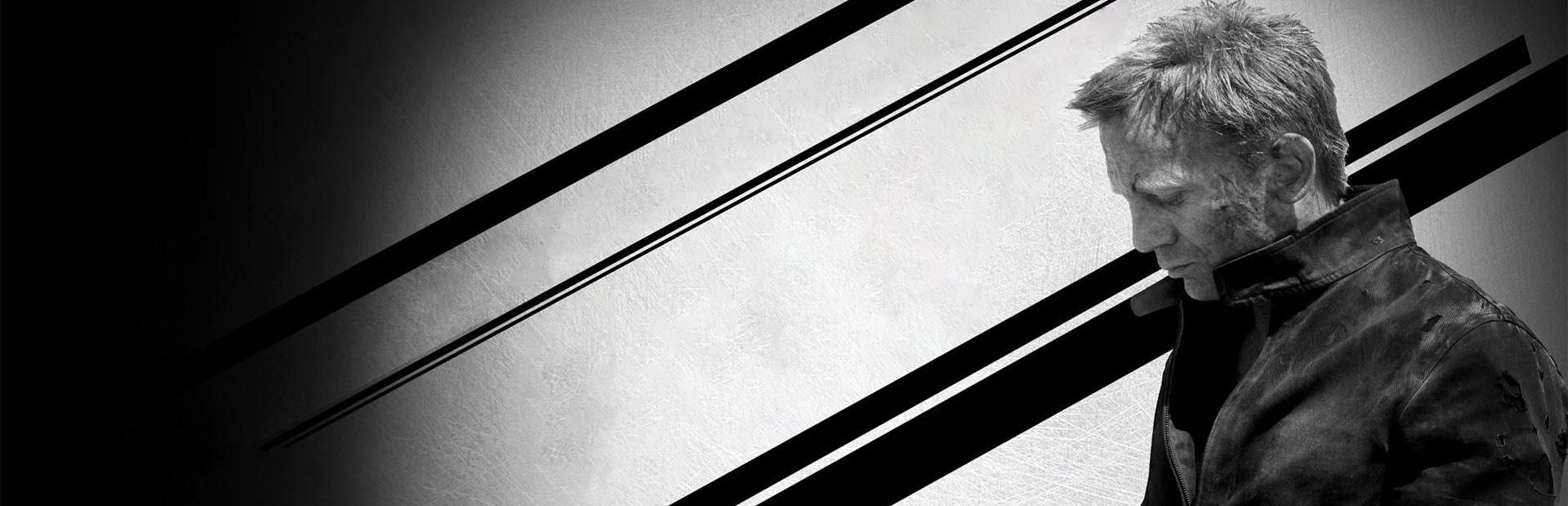
Most movie-based games are disasters, but when you take a movie license and do something original with it, it can turn out for the better. Bizarre Creations (Blur, Project Gotham Racing) has taken the helm of the Bond license to create the third entry into the series, but this is completely original with no movie tied to it. You play Daniel Craig’s Bond, and you’re, once again, trying to stop some evil thugs from doing evil things. While the story borders on paper-thin, it’s the action that we want.
Since Craig took the spotlight as Bond, his style is more brutal, raw, and realistic instead of the campy, funny, and smooth-talking past Bonds. He’s all about melee, guns, and less gadgets, and whether you like this better is up to you. While Everything or Nothing is the best Bond game in recent memory, Blood Stone is pretty decent. There are car chases, gun battles, and stealth sections that balance out nicely.
The stealth areas consist of sneaking around cover and meleeing guys and shooting them in the head without getting caught, or it’s going to be a firefight. This can be very satisfying when you learn the patrols and execute them accordingly. You can earn Focus Aim by doing a takedown, and this is just a one-shot kill, but you only get three. This comes in handy during stealth sections when you have multiple guys to take down in one area or are in a bind with your health.
Shooting is solid enough with blind fire from cover, and the timing is solid, but all the guns don’t really pack a punch. They feel light and sissy-like and completely not Bondlike at all. There’s a good variety of them, but you won’t care because you can’t tell the difference between any of them! There are some fun set pieces, such as slo-mo sections, some cinematic camera angles when jumping around, and a lot of explosions, so it’s packed full of action.
The racing sequences are something to be desired because it’s just driven from A to B and chasing this guy. There are no attached weapons or anything, and the cars drive like crap half the time. The cars either have severe understeer, oversteer, or feel really floaty. Coming from a developer who specializes in racing games, this is a huge surprise.
The game looks decent, but not up to par with current games. The racing sections look nice, but the characters feel last-gen, and everything just looks meh and sterile. The sound is pretty generic, with pew-pew gunfire, and the voice acting feels stiff despite being from real actors. Blood Stone is a great weekend rental, and don’t even expect multiplayer to keep you interested for much longer.
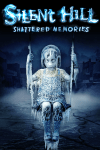
Survival horror is a slowly dying genre, and the king of the genre, Silent Hill, is barely keeping it alive. Shattered Memories is the first American-made Silent Hill, and the whole formula has pretty much changed. Hardcore fans will probably not like this, but the elements that make SH scary are still intact. The game is more about enjoying the experience and less about winning. Puzzles are very simple; there’s no combat, so it’s all about exploration and atmosphere.
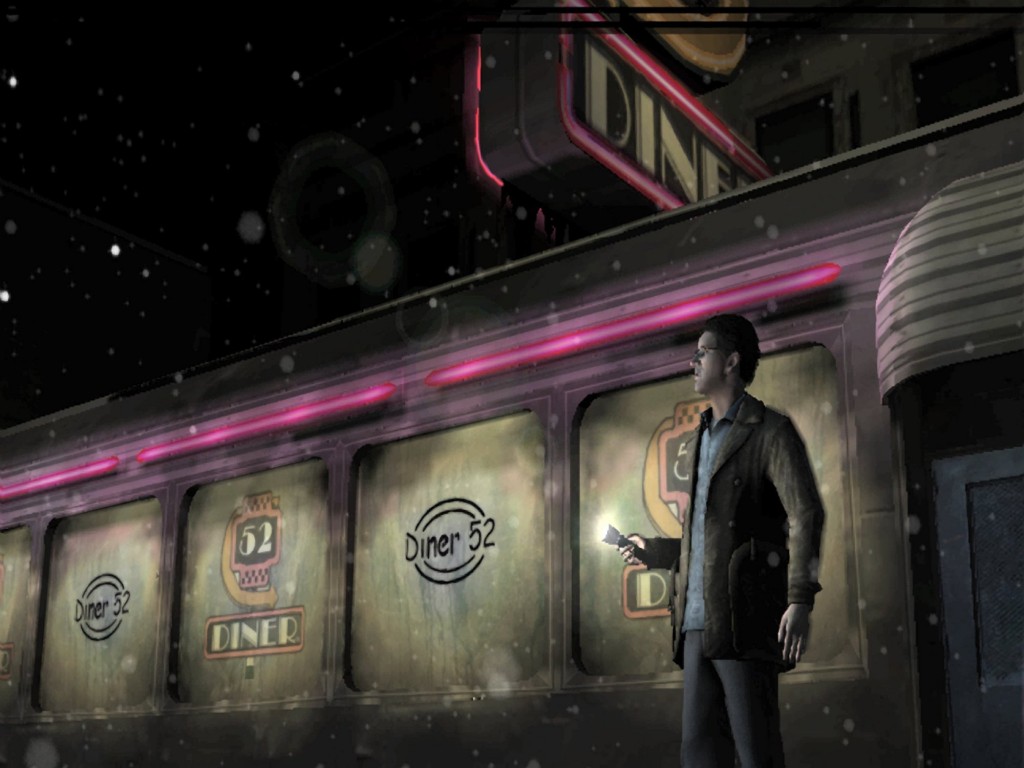
You play Harry Mason, who wakes up from a car crash to look for his daughter Cheryl. He runs into different characters (including a MILF’d-up Cibil), and you run around the town of Toluca to find her. In between sequences, you are in therapy sessions, which consist of mini-games and are pretty neat because they change the outcome of the story and the ending. This is a new element for the SH series, and I hope it comes back in some form.
Once you step into the dark, you run around with your flashlight and are basically trying to find mementos and trigger sequences, such as when the screen gets staticky. This means that there is something nearby that will send you some sort of message on your phone. While these are creepy, you can also snap pictures with your phone camera, and this is usually also worked into puzzles.
When you see a white triangle above something, that means you can interact with it. These can be little micro-puzzles because you use a hand to push and pull things. While this was obviously created for the Wii version, it works great here on the PSP. Most puzzles aren’t nearly as mind-bending as past SH games because most of the time the key is in the same room as the locked door, and clues usually don’t need more decrypting. What may get you there is navigating the nightmare sequences.
Now, these are different from the air raid siren bringing rust that consumers SH in past games. Usually, a scene will trigger something, and ice will start covering the room. As you run around, you must find the X that’s on your map, because it’s usually a puzzle you have to solve to continue. While you run around, scary creatures chase you, and you must knock down objects to block their path and let them know you’ve been there before. Some sequences have you running around hallways and bringing you in circles until you go into the right sequence of doors. These sections can be quite hair-raising because of the music and sounds of the creatures, and if they catch you, you have to shake them off via on-screen prompts.
There are some unique parts of the game that make it cinematic, such as riding in cars in the first person, figuring out how to get out of them, and the first-person swimming sequence at the end of the game. Silent Hill has never been quite so cinematic before, and it’s a great addition. Despite all this, the game has a great twist ending and enough uniquity to keep you busy to the end. However, the departure from traditional Silent Hill elements may make some people hate this game. The game looks amazing on the PSP and really feels like it was built from the ground up for the device. This is a top-notch title for the handheld, and we need more of them.
Handhelds these days have the remake curse, with Nintendo being the worst. Really three different GBA’s? Four (and soon to be five) DS models? Once the latest and last iteration comes out, you tend to think that model should have been the first. The same goes with the PSP, since the 3000 is amazing and should have been the 1000 model. The first thing you’ll notice when you take it out of the box is the weight. This thing feels light as a feather, and I almost thought it was a fake piece of plastic. This is also a benefit when playing games and reduces hand cramps.
Another thing you’ll notice is that it’s slimmer, and all the fat has been trimmed off. The D-pad is built better and is concaved on the inside instead of just flat like the original model. The speakers are located at the top front instead of the bottom; thus, they are also more clear and less tinny. The addition of a built-in mic is great too for online play. The memory stick slot also has a major change, with it up near the top left side instead of the bottom. The slot is also a piece of plastic that comes out instead of the black corner piece. The slot is well hidden and blends in nicely with the unit.
Finally, the UMD slot has been replaced with a pull-out slot instead of a switch that makes it pop out. You just lay the UMD in instead of sliding it in like a cassette tape. It’s quieter, seems to be slightly faster as well, and uses less battery power. Another good change is that the WLAN switch is on top of the unit next to the USB port, which keeps you from accidentally switching it on. The console feels better when held due to its glossy back, and there are no contours for your hands, but this makes holding the unit better for some odd reason.
Other than that, everything is the same. The screen is crisper and brighter, and the new PlayStation home button looks great too. The Wi-Fi is slightly faster and supports newer security, and this unit is just solid and brilliantly designed. I really went back to my old UMD collection just to play the unit more, because games look nicer, and they just feel great being played on a solid piece of hardware.
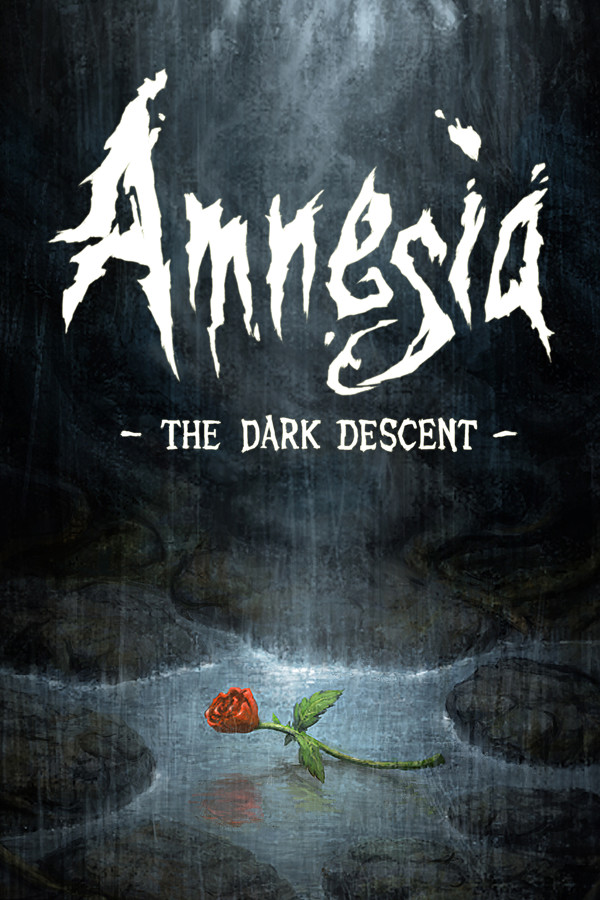
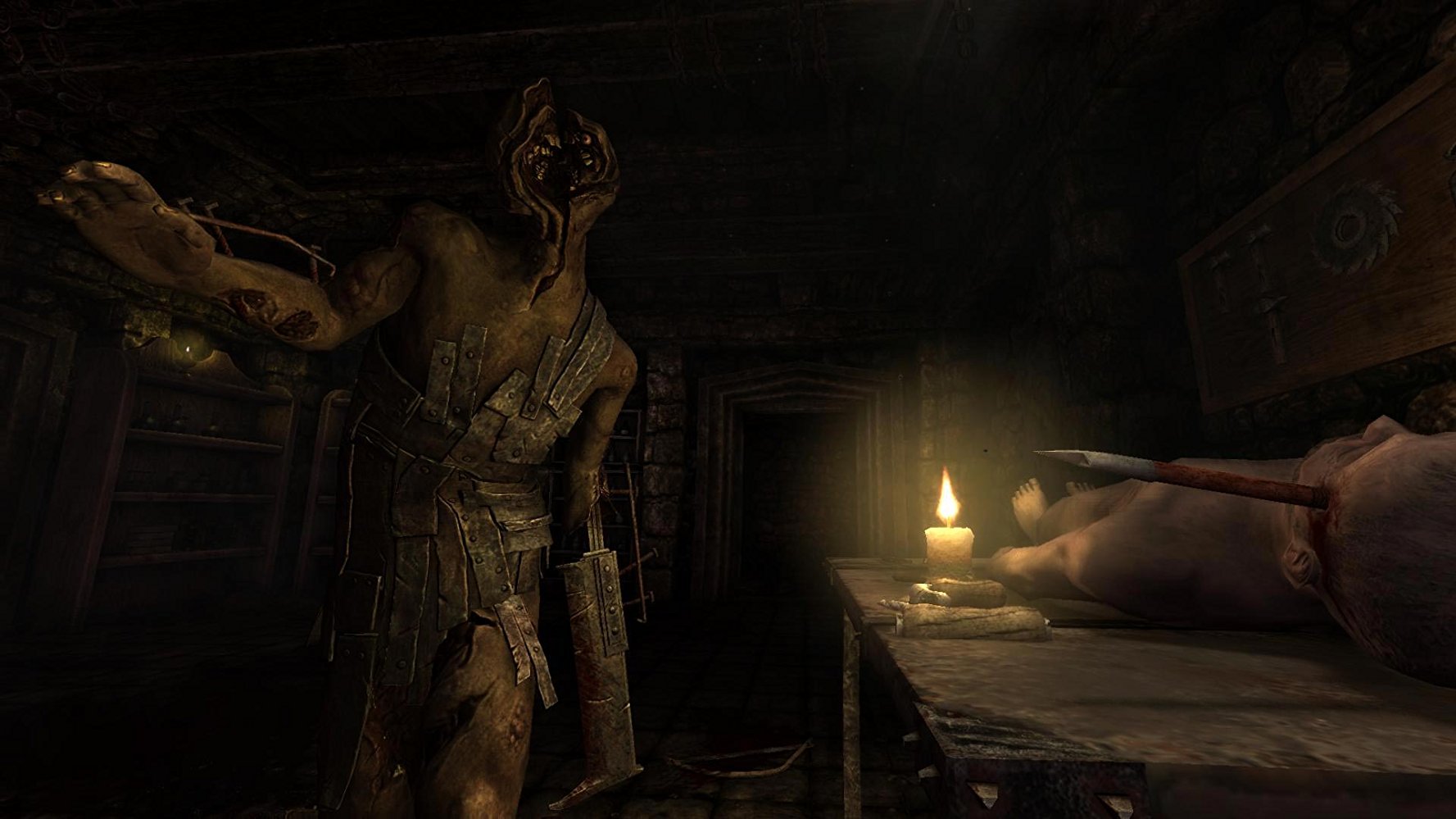
The survival horror genre is probably the fastest-dying of them all, but it’s games like Amnesia that really get the spotlight when they hit it home on the scare factor. Amnesia stays true to the genre, and this is due to the fact that there’s no combat whatsoever. Zero, zilch, nada, you can’t fight. If you see a creature, you have to hide or run, and this is what adds to the tension. If you can fight, you can just kill it, but if you can’t, then you have to really think about what to do, which can make you not want to continue.
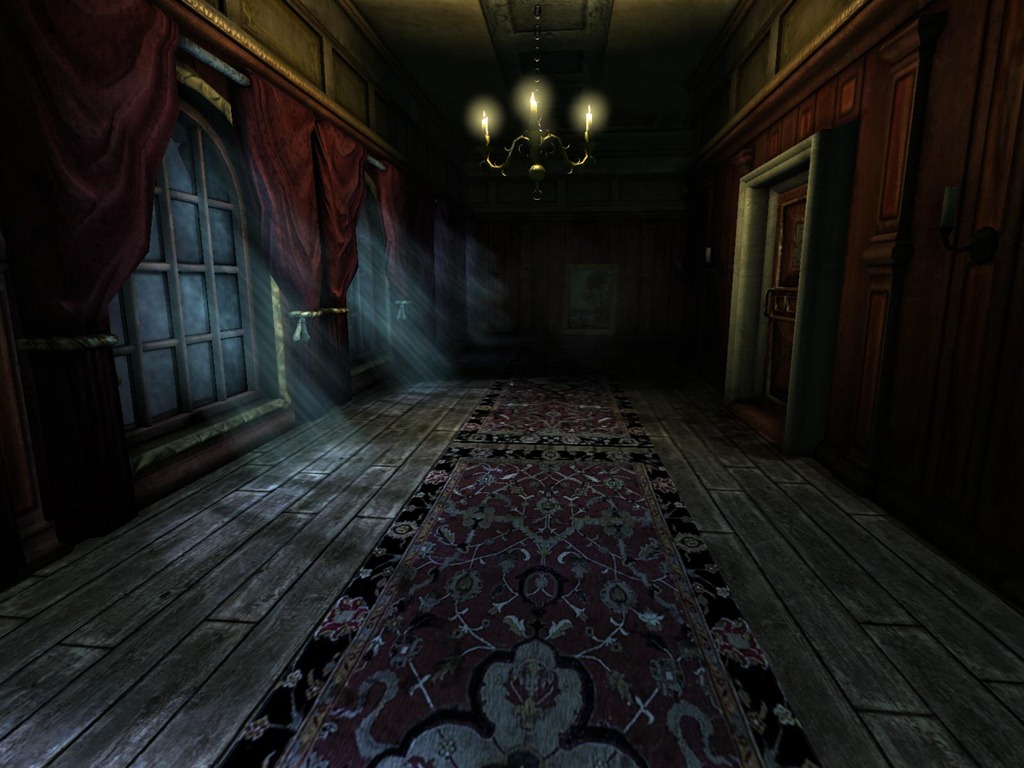
Amnesia may be a first-person adventure game, but your only weapon is light and against your own insanity, not creatures. Staying in the light is key, and oil for your lantern is as precious as 9mm ammo in Silent Hill. It’s scarce, and you try to savor every drop or just use tinderboxes as an alternative. You can light candles, lamps, or any source of light to guide your way to preserve oil or if you run out. Daniel can see in the dark somewhat, but it’s hard to solve puzzles like this.
As your sanity slowly drains, you will hallucinate, walk slower, the screen will distort, and creatures will hear you. Seeing traumatic scenes can do this too, as can looking at creatures for too long. You will also lose sanity if you don’t progress or solve puzzles, so it keeps you on your toes, but don’t worry, I only encountered a couple of times where Daniel went totally insane and lost it. You’ll more likely go insane from fright before he ever does.
And that’s the thing about amnesia: it frightens you with atmosphere, pacing, and tension from the environment instead of zombies popping out. The music and ambiance are haunting, and they make you paranoid throughout the whole game. One scene had me in a room where I was picking up a letter, and suddenly something started bashing down the door. I literally jumped and tried to find a place to hide. A wardrobe! I grabbed each door and swung them open and hid, and as I peeked through the crack, Daniel started freaking out, so I had to not look. I heard the creature breathing, moaning, and moving around, and I was afraid it would start bashing down the wardrobe! It soon turned away, and I could continue hunting for puzzle solutions, but was I ever so scared?
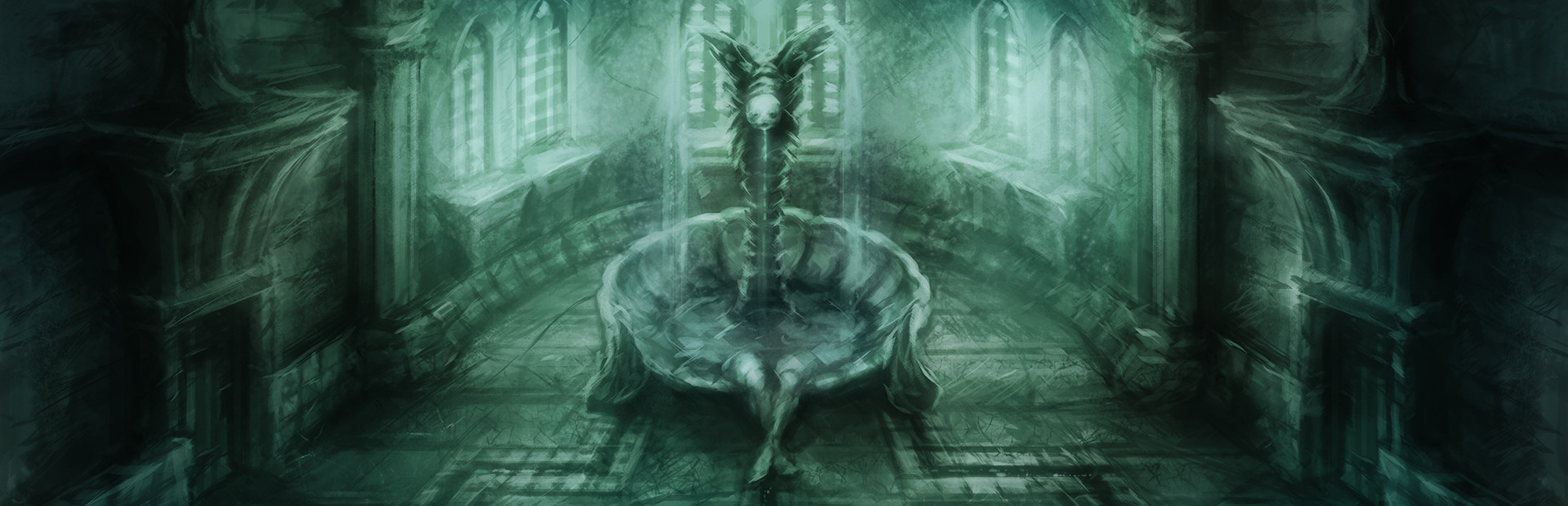
The haunting story doesn’t help either, with you just waking up in a castle and not knowing who you are. You read letters along the way, trying to discover some orb and stop the shadow from consuming you. I can’t go into more detail because it will spoil the story, but it’s very creepy and disturbing and was well put together.
The second part of the game is the puzzles. These vary from object hunting to physics and pathfinding. I have to admit that Frictional has always been known for obscure puzzles, and some of the time I didn’t know what to do and was completely clueless. You rarely get hints, and this can lead to frustrating backtracking and pixel hunting, so an FAQ needs to be handy. Other than that, the puzzles were clever and really stuck to the story, and they all felt necessary.
Amnesia is a horror classic and is even better than Frictional’s Penumbra series. This game will scare the pants off of you; it even clocks in at a nice 6–8 hours and has three different endings to see. I really hope for a sequel or another game similar because Frictional found the survival horror sweet spot.










































































 thebinarymessiah.com
ORC is probably the worst game in the entire series. It's objectively awful. Being bad isn't different. Different is Outbreak…