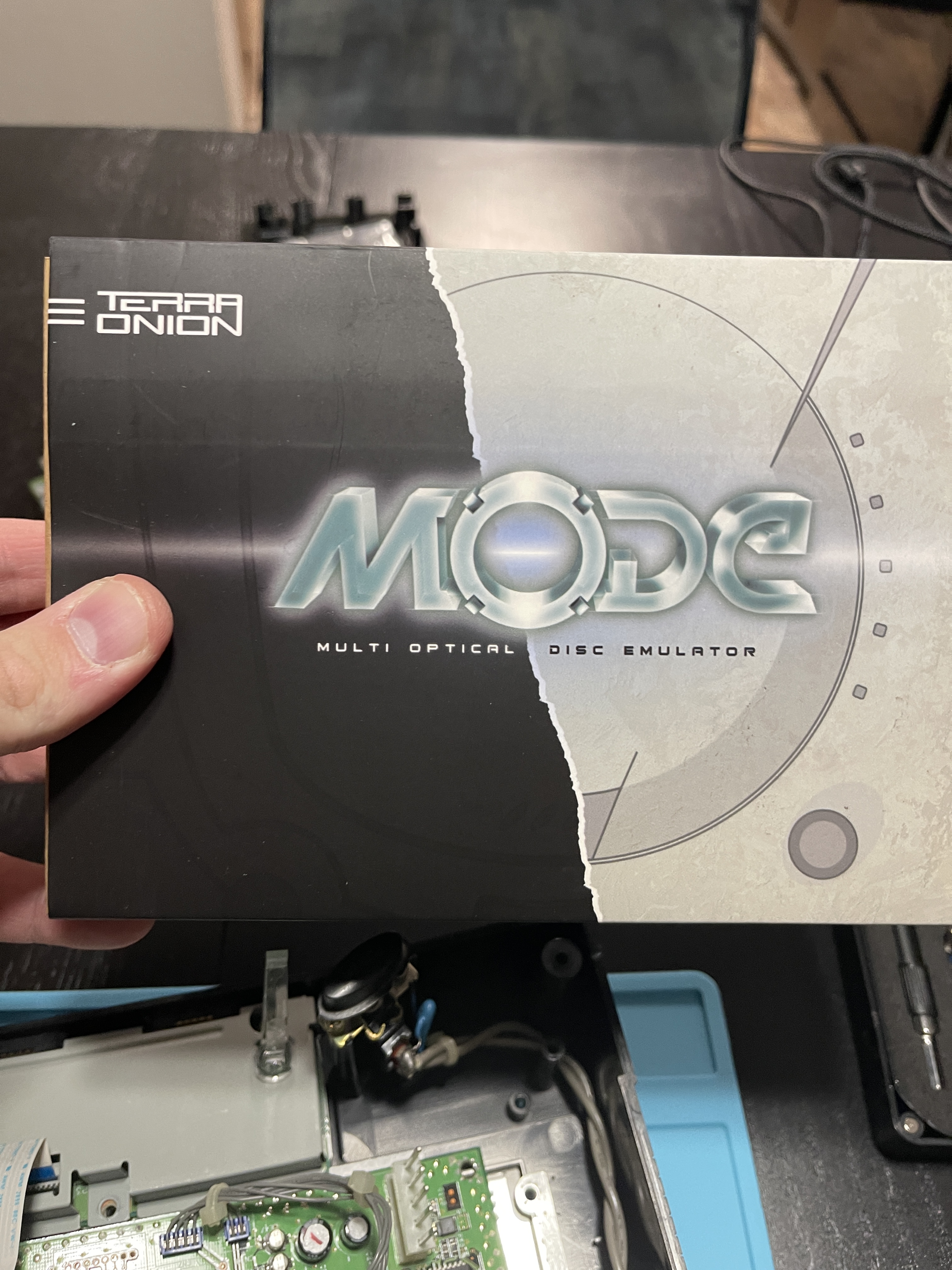
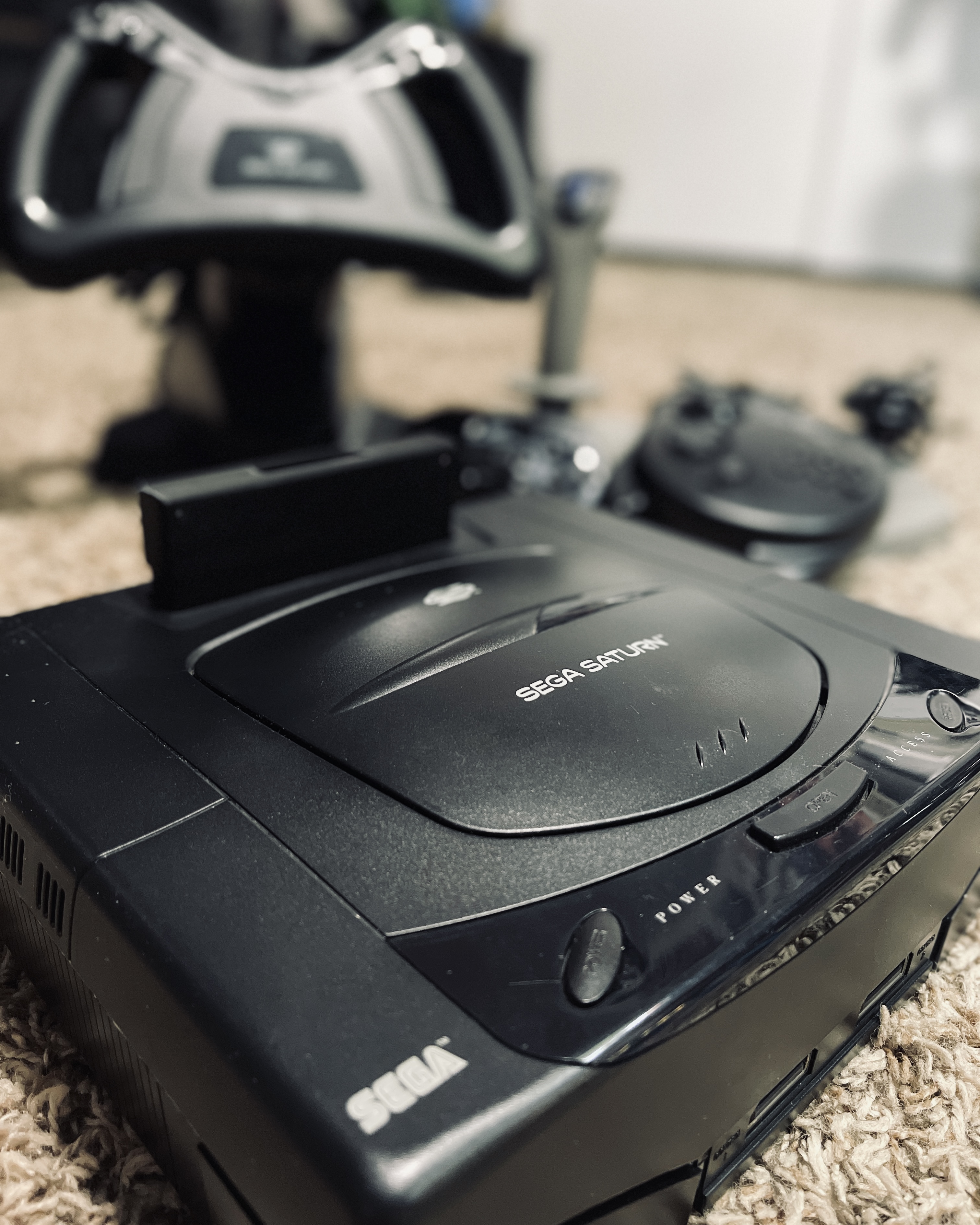
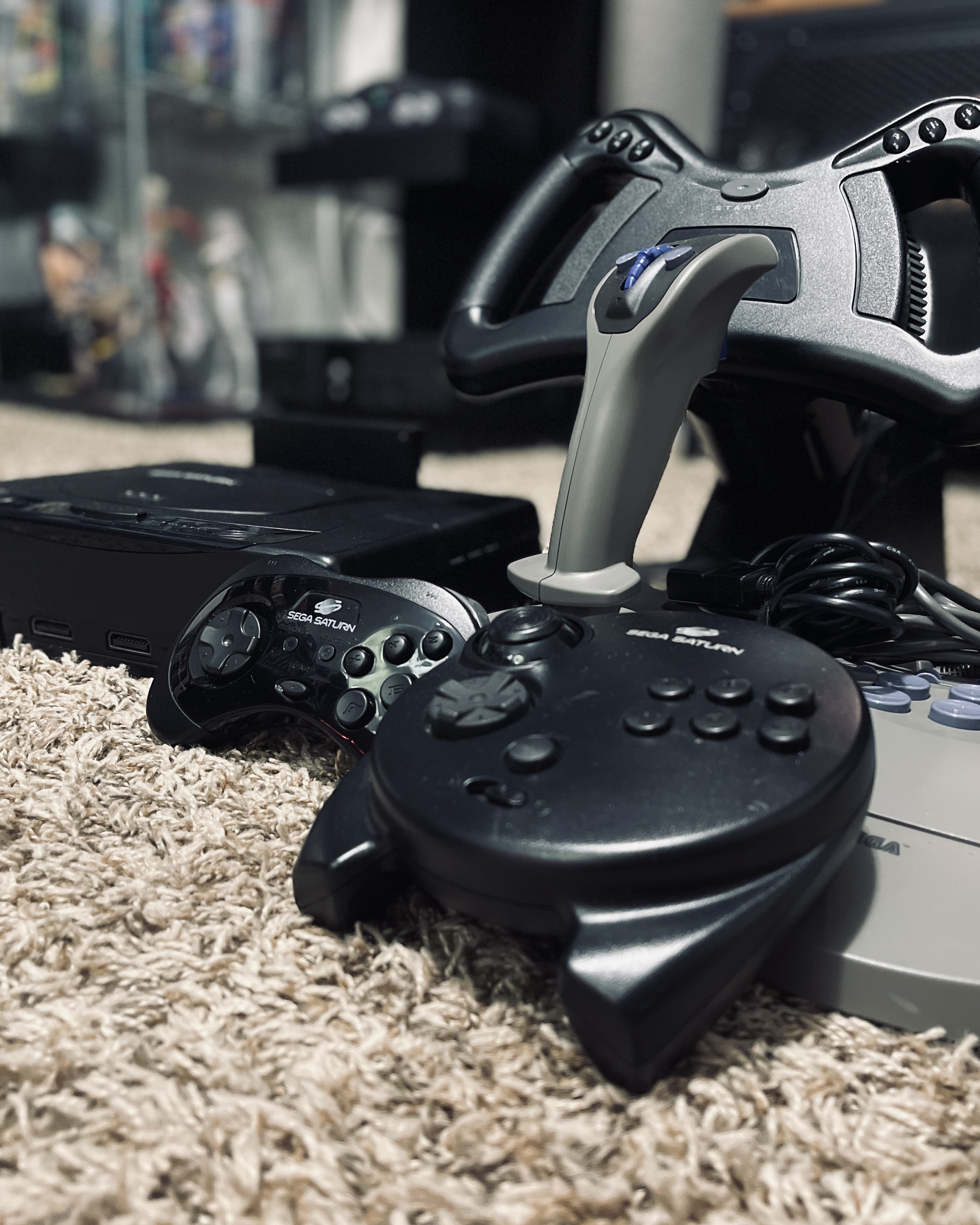
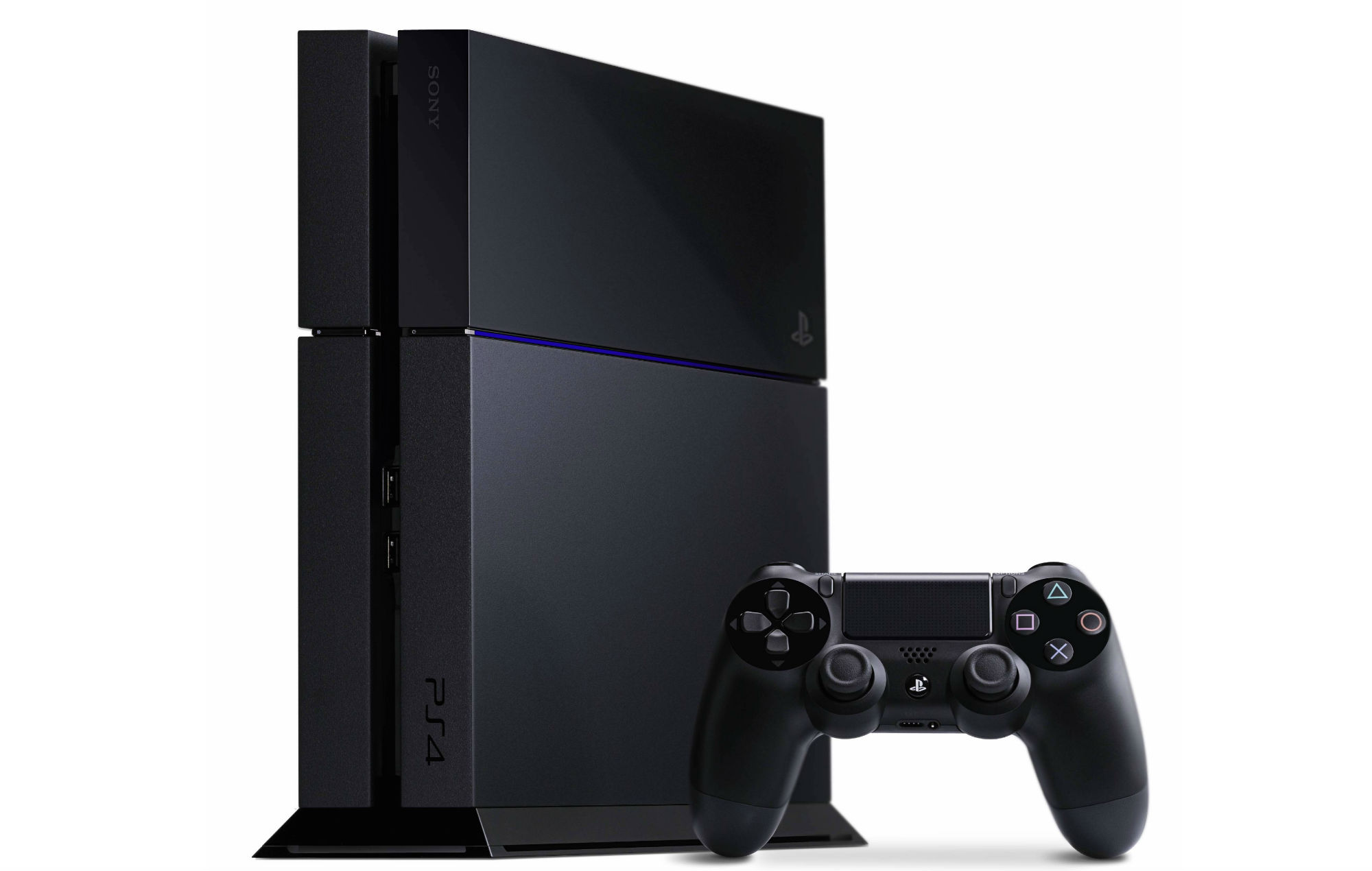
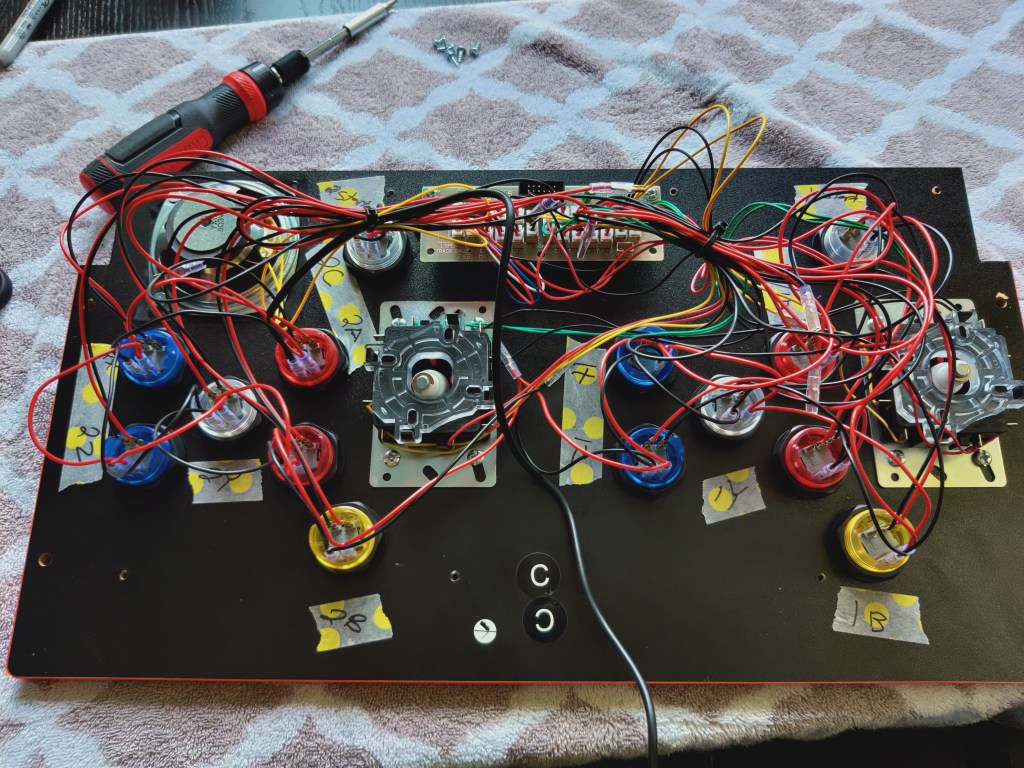
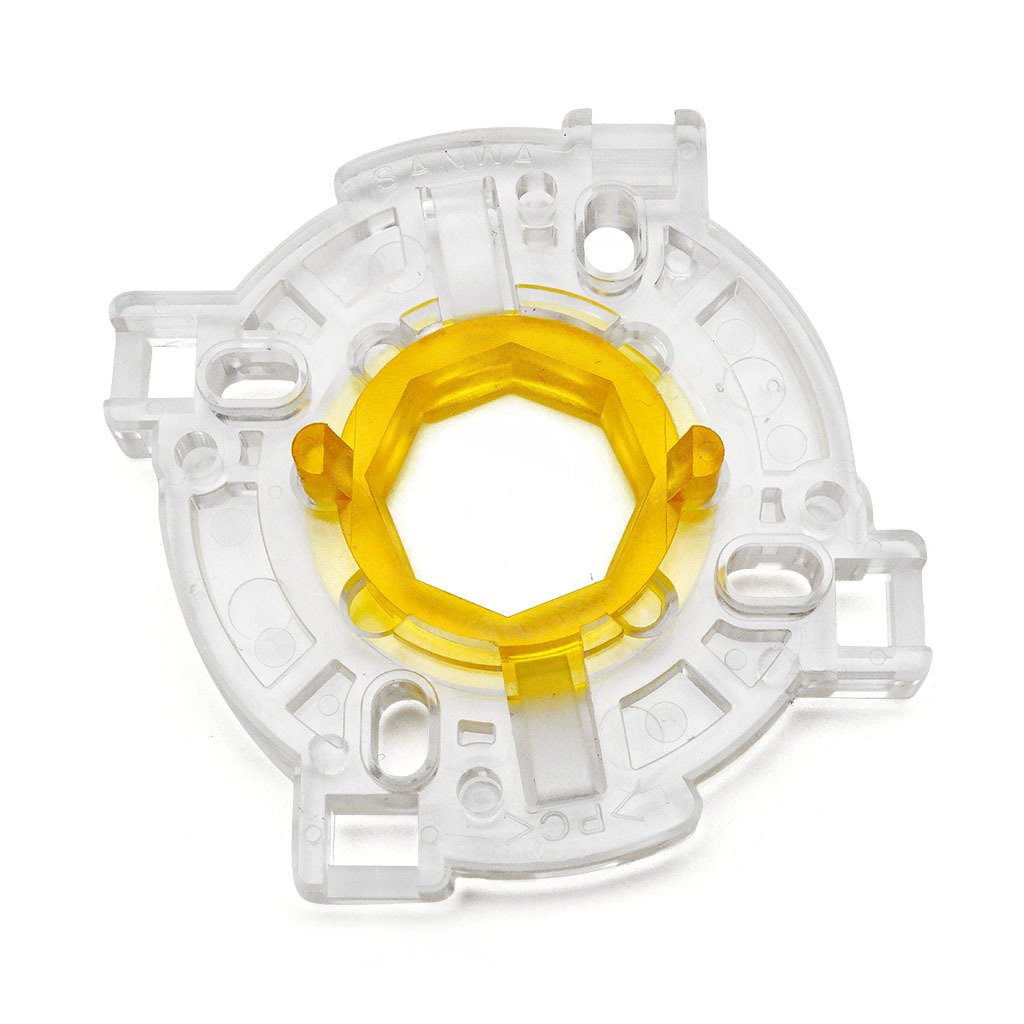
The Sega Saturn has always been a system that felt like unobtanium to me. It’s expensive, fiddly, has a very obscure and small library, most of the good games are Japanese imports, there are very few accessories, and they are big and expensive, and on top of all that, the games are insanely priced. Saturn games are some of the highest-priced games on any system. These days, there are things like optical disc emulators, RAM cart hacks, and things like the Satiator that allow you to run games through the video CD port. A lot of people are defensive and go to bat for their favorite way to emulate games on native hardware. I get it. There is no correct way to do it, with each having strengths and weaknesses. I went with the TerraOnion MODE due to its high build quality and support, as well as its multiple storage options.
I will run through an install of TerraOnion MODE, but unlike most install videos or articles, I want to talk about snags and problems I ran into that other people might discover. I want this to be a comprehensive resource for beginners to just buy a Saturn second-hand and know what to get and how to set things up correctly. I will also talk about proper video setup, and again, like various disc emulators, there are numerous ways to get good-quality video out of the Saturn.
“When you have Sega Saturn, nothing else matters”
Do I want a Japanese, European, or US console? For disc-based gaming, this matters as the Saturn is region-locked. There are also Saturns with a power supply mounted to the lid (VA0 model), but they are not that common. Most disc emulators work on any console since they unlock region locking, but thankfully most hacks for the Saturn have every version in mind. Usually, you can rest easy without seeking out a specific model, unlike the Dreamcast.
Japanese Saturn
So, even if your Saturn doesn’t read discs, this is a great option for you. There are also other mods, like ReSaturn, that replace the power supply completely if yours is failing. It’s a good idea to open up your Saturn and check the capacitors on the PSU for leakage.
There are also new shell mods you can swap your guts into if your Saturn is in bad shape cosmetically. Overall, these are some mods to consider and systems to look out for when shopping for a Saturn.
It Needs to Look Good
The first thing you probably want to invest in after getting a Saturn system is the video output. There are two main things you need to consider. Good S-Video or component cables and a good upscaler I went with the Retrotink 2X Pro and HD Retrovision component cables. Yes, these are expensive but worth their weight in gold. I have never seen a retro console look so crisp and nice as this setup. While that’s the high end of things, there are also cheaper ways to hook up your Saturn, and that also includes the TV you’re playing on.
Of course, this is mostly true if you’re gaming on a newer HD TV. Buying cheap composite or S-video upscalers on eBay isn’t going to get you good results. Even plugging the console into the back of your TV would be better than those awful upscalers. However, there are cheaper routes, and that might be to just buy a CRT TV. They are going up in price due to retro collectors, but you can get many locally for free. While the tube itself might be old, it’s the most authentic experience.
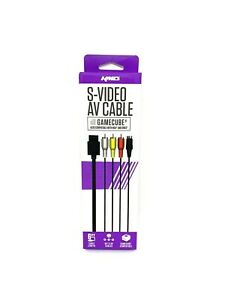
With that said, there are other upscalers that do a good job, like an OSSC, but these can be a little much for just casual players who want a good picture. Cables are a huge thing as well. Don’t get cheap S-video cables off of eBay. Most S-video cables actually don’t have the chroma or luma in the actual S-video part and are empty. Most are fakes that just feed in composite. If you have a Retrotink, you can find fake cables by plugging them into the S-video, and they will be in black and white or won’t display correctly under the S-video input. A correctly wired cable won’t do this. There are some better-known brands out there, like KMD. I own one for my N64, and it displays S-video correctly. If you can find them, proper S-video cables won’t have a yellow plug.
Good KMD S-video cables
Optical Disc Emulators – Pros and Woes
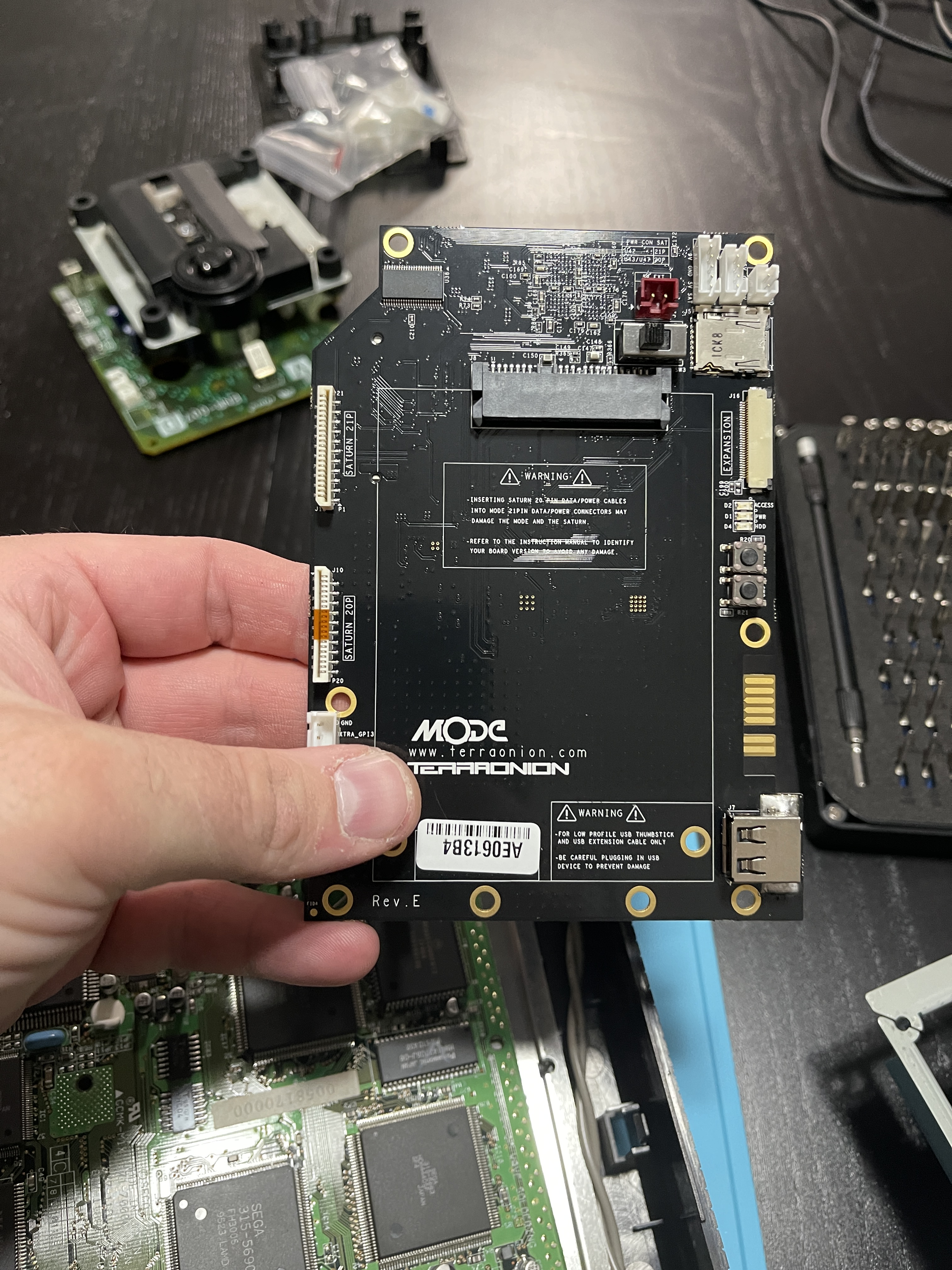
These range from carts to full-on boards, and while there are plenty of good choices, I’m going to cover the TerraOnion Mode. It’s a very well-made board with both positives and negatives to it, but overall, I am very pleased with it. I’ve had it for two weeks now and figured out some kinks and bugs using various hardware and software that I thought people might run into. A lot of these issues I had to figure out myself, as there just isn’t enough information out there.
Installing the MODE is pretty straightforward, but new casual users may be a bit scared to dive into this. If you already did some other mods listed before, like the ReSaturn, or checked the PSU for leaking caps, then you clearly shouldn’t have had an issue up until this point. The Saturn is a very single device in the end. just a disc drive, motherboard, and power supply. There are literally only three components in this thing. One thing I do recommend when installing the MODE is StoneAge Gamer’s 3D-printed bracket mount. I personally also don’t see the need to use an actual hard drive in this thing, and I will get to that later, but they also make an adapter to allow easy access to the drive.
The Optional Power Cable
Now one snag I ran into when installing was for the “optional” power cable. It’s needed for running mechanical drives as the Saturn doesn’t have enough juice to power them, but I recommend installing the cable regardless just to relieve strain on it. The installation shows pushing the leads into the power supply clip but doesn’t explain how. I watched a few videos, and no one has covered this. When you push the power supply down into the motherboard, the pins will push a metal “pincher” to the left of the pins. If you press the PSU down slowly, you will see this in action. The leads need to get “pinched” by this. I tried sticking them in while the PSU was installed, and it just wouldn’t work. You need to fully lift the front side of the PSU and stick the leads into the correct spots. Hold them firmly down and then press the PSU down onto the pins, and the “pincher” will firmly hold those wires in place. The other alternative is to just solder the wires directly to the pincher area.
Firmware Updates and Freezing on Boot
Other than that snag, the installation went smoothly, and I had no issues. Now comes the majority of issues with the software. When I opened up the MODE, there wasn’t any explanation of how it actually works. My Saturn booted straight into CD player mode, and I didn’t understand why. Without changing settings, you need to put the lid on! I then got into the mode, and it froze up and wouldn’t do anything. After several reboots, the mode would just read games and freeze. I then updated the firmware, and this worked. Remember, the MODE will only auto-detect firmware on SD cards and USB drives. I couldn’t get into the menu to access the update on my 2.5″ laptop drive, so that was a major issue. I don’t know what caused the freezing, but this fixed it.
Action Replay Flash Carts Not Working
This was one of the biggest headaches I had. The Action Replay 4M carts you can get everywhere are supposed to work with the MODE, but mine didn’t. I didn’t have one with the physical switch, but with the auto-switching one. When you plug one of these into their menu, it takes priority over an ODE because it’s technically just a disc. While this is fine and it works, it’s irritating to have to quit the menu of the flash cart to get into the ODE menu. You have to erase the boot menu from the flash cart and make it a standard “dummy” cart. With MODE, this is fine, as there are manual backups. You can now easily just fill up your saved RAM and then back it all up on the MODE for more games. I will walk you through the process of making an Action Replay an annoying free dummy cart.
The first thing you need to do is download a boot loader called Pseudo Saturn Kai. This is a “game” you can put on an SD card and launch from the main menu of the MODE. It’s important to download and install the tools cue/iso so you can actually erase the entire menu. This is found in the full version of the download. The lite version for “other” ODEs just erases the firmware but still boots to PSK every time. We also don’t want to boot into another menu. Remember, you can always restore the flash cart back to the way it was through this utility as well. Just remember what firmware version your flash cart had.
Load up the utilities, go to the save manager, press the R button, and go to the erase boot menu. This will now turn your cart into a standard RAM cart. Mine works flawlessly for 1MB and 4MB games. I tested nearly every game that uses one and didn’t have any issues.
My Flash Cart Isn’t Being Recognized
This is common, and it probably isn’t the cart itself. When you insert the cart to erase the menu, you might notice that the detection of the cart in yellow text flashes, or it seems the cart is wiggly. This is usually a dirty RAM slot or one that’s too loose or too tight. There are two screws in the RAM slot, and you can try tightening them first to see if that works, but if not, you need to loosen them. Sega didn’t solder the RAM slot to the board, so 6 to 7 turns with a screwdriver on each screw should help until they’re really loose. Mine had this issue, as I would load up games and it would only see the cart sometimes, despite the cart working fine. Loosening the screws fixed this, and I no longer had to set the cart in softly, head-on, and not at an angle, or pull it out a couple of millimeters. It’s not the best fix, but it’s better than sticking paper between the cart and the slot.
***My guide made it to the sidebar of r/PSP subreddit. Check it out!***
“Come Out And Play”
March 24, 2005, was a very important day to me. It was one of the most memorable as well. In 2004, when I saw an article for the reveal of the PSP, I lost my mind. It looked so futuristic. Sony created a handheld? No! It was mind-blowing and shook the entire game industry to its core. Sony is daring to challenge the almighty GameBoy and DS lines? Nintendo is no longer the dominant handheld maker.
I saved up my allowance for 6 months to get the Value Pack launch unit, which I still have to this day. I remember waiting in line at Game Crazy for 30 minutes before they opened, along with a few other excited people. I remember the employees playing their system inside (I remember talks of Lumines), and I also remember putting down my final deposit and coming up a single cent short. I didn’t want to lose my place in line, so I had my youngest sister run out to my mom for a penny when the guy behind me gave me one. I remember the joy and sheer excitement I felt when I saw my box get scanned and handed to me. Thankfully, we lived a few blocks away, so when I got home, I tore the box open (not literally), and I had Ridge Racer to play. I remember the sheer beauty of the LCD display and the widescreen picture blowing me away.
My Monster Hunter Portable 3rd PSP-3000 and launch unit 1000
The look of the system is striking still to this day, but in retrospect, the PSP had a rough life, and there were a few issues for each iteration, as not a single one was perfect. This is a guide to information on each iteration, their strengths and weaknesses, custom firmware, hacking, settings, and various other things regarding the system in 2022. The PSP has a vast library of games, and I honestly prefer it over the Vita. It held strong from 2005–2009 before sales and releases declined greatly. During those four years, the system saw some amazing things happen to it.
PSP-1000
The PSP-1000 was the launch unit. This is my favorite unit out of any iteration. Not just because of my nostalgia for it, but because it’s the only one that feels truly solid and well built. It has more aluminum parts, a stronger UMD door, and a bigger battery. Overall, the 1000 units will feel the most solid in your hand. The biggest weakness is the ghosting on the original LCD. These screens were pretty new back in the day, so no one really noticed the ghosting. What was there to compare it to? LCD TVs were insanely expensive, as were monitors for PCs. This stemmed from the panels having a low refresh rate. There were also issues with dead pixels. Sony had to send reps out to nearly every game store to explain to them that they wouldn’t warranty out screens with dead pixels, as this was expected with the technology at the time. My launch unit had a few, but some people had full lines out of the box.
If you find a launch unit, they usually come with a value pack box. While this is meaningless today, it was a great deal back in the day. Most units are loose, however, and they used to have the most hackable motherboards, but that’s irrelevant today.
Strengths
Best build quality of any unit
Best UMD door
Biggest battery
Most compatible with every custom firmware
Shell swaps
Weaknesses
Terrible screen with ghosting, dead pixels, and dull colors
Lacks the larger RAM that newer systems have
No USB charging
No Bluetooth
No TV Out
How do I make it a better experience?
IPS Panel Mod
You can easily make this PSP the best of any unit by just modding the IPS screen. Sadly, this isn’t exactly a drop-in mod. You need to solder a bridge between two points on the motherboard; otherwise, the screen will be shifted to the left and off-center. They are at least cheap, being less than $25, and are a breeze to install. It takes all the ghosting and “screen door” effects away and makes it the best panel out of any unit. The below shot is my board variation, but there are two others I will also list.
My own work is shown here. You need a magnifier to really do this mod
The History of PSP Hacking
“Hello World”
Out of respect for the community, I wanted to put a little history behind the PSP hacking scene. I was there from day one. I remember that the Japanese 1.0 firmware PSPs had already been easily hacked, and Sony had fixed this between the US launch and the 1.50 firmware that the launch units shipped with. There was the MagicGate swap, in which you had to swap your sticks in the middle of loading a specific file to exploit a loophole. Dark Alex was the father of PSP hacking, and without him, we wouldn’t be here today.
ISO Compressor
He created the first ISO compressor called DAX ZISO due to the very small storage sizes for Memory Stick PRO DUOs back in the day. Remember, readily available MicroSD card converters from China weren’t a thing yet. You had to get either a genuine Sony card or a cheaper SanDisk or Lexar card. When the PSP launched, it only had a 32MB card for saves. That was it. Eventually, 64/128/256MB cards became available, and then after the first year, 1GB cards were around $70-$80. 2GB cards and even 4GB were available, but they were $200+. It’s stupidly absurd to think about 2022, but that was the state of removable storage media in the early 2000s. For a teenager with broke parents, I had to save all of my allowances to finally get a yellow 1GB SanDisk card, and I remember ordering it from Newegg, where it came in a giant box. I was stoked. I could finally put a single compressed PSP game on my memory stick. Yeah, laugh it up, but without insane compression methods, we couldn’t even play a single full-size game.
Pandora/JigKick
The Pandora battery was something I never explored, as I didn’t have the knowledge or know-how and was too scared to destroy my precious PSP that I had saved up for 6 months to attempt. This allowed you to restore a hard brick no matter what firmware you had used on the battery’s PCB. Dark Alex teamed up with the incredible Prometheus Team to create this magic.
From the PSPDev Wiki about JigKick batteries:
JigKick (also widely named Pandora) Battery is a PSP battery with its serial number changed to 0xFFFFFFFF.
You can either Hardmod a battery or Softmod it.
Hardmod is when you make a JigKick Battery by opening it up and removing a pin, this can be done to ANY battery.
Softmod is when you make a JigKick Battery by using a program. But it has to be suitable. New Batteries cannot be softmodded.
Hacking Tools
He also created the PSAR dumper used to unpack and decrypt Sony’s firmware. The creation of the TA-082 motherboard was a headache for the scene and was used in PSP-2000 models for 2.71. The great HEN CFW was created for these boards. The owners of this board could breathe a sigh of relief. He also created an update flasher that users could easily jump between 1.50 and 3.11 firmwares.
Dark Alex was involved in legal issues with Sony, and he left the scene right around its peak but emerged with team M33 to create the M33 firmwares most of us all remember and use the most.
Ark-4 Custom Firmware (Frequently Updated)
Essential Custom Firmware Plugins
Once you install the custom firmware above, you will want some plugins to help with the quality of life for everyday PSP use. This won’t cover niche things like RemoteJoy or oddball hacks. These plugins are quick and easy, and they just make using the PSP a nicer experience.
Here is a link to a Google Drive folder with all the below plugins. For a great source of almost every CTF theme available, you can visit PSPunk
CXMB
This is essentially the biggest and most popular plugin for the PSP. CXMB allows you to use custom themes and is a good way to figure out how to install every other plugin. I will post the Tech James video below, as it’s a great tutorial.
Game Categories Lite
This is one of the most useful plugins ever made, and it only became useful after removable storage expanded and got larger. I don’t recommend an SD card over 64GB, as the read speed of the PSP is very slow.
CW Cheat
CW Cheat is basically a Game Shark or Game Genie for hacked PSPs. It also works on PS1 games. Here is a link to a video tutorial (embedding is disabled on this video) for a more in-depth guide. CW Cheat has always been troublesome to work with as it’s different for each firmware.
PRXShot
Want to take screenshots of your games? Well, look no further.
Brightness Control
Always wanted more than just the three standard (or four on hacked PSPs) brightness options? This gives you fine-tuning from 0-100 and allows you to set stages and even a default brightness upon boot in a config file.
POPs Loader
This allows you to use Sony’s built-in software emulator to play PSX games. It’s an incredibly finicky plugin and needs exact versions for each firmware. When you load your game, you will be presented with pretty much every version of POPs from the previous firmware. There’s no reason to select anything but 6.61 unless there’s a compatibility issue.
Dayviewer
This simple plugin expands the clock on the XMB to show the day of the week, extended time, and various other clock-related things via a text edit.
PSP CustomHome + PSPStates
This mod is simply a combo mod. One allows you to change various things when you press the home button, and the other allows you to save states when pressing the home button. The two work in tandem and can be incredibly useful.
MicroSD to Memory Stick Pro DUO Adapter
One of the first things you need to do is get a MicroSD adapter. They’re cheap on eBay or Amazon for less than $10, and they allow higher capacities than the MSPD. These aren’t made anymore and can be quite expensive due to camera collectors’ prices, so the adapter is needed. A 64GB one should be sufficient and allow you to put 50–60 games on it. more than enough. Higher capacities aren’t recommended as it slows down the XMB UI by having to read all the games when you open the games folder. It can sometimes take a couple of minutes, if you have any more than this, to open the folder. Also, avoid dual-slot adapters, as they are awful and of low quality. It also doesn’t matter what speed the SD card has. Even the slowest SD card is 10x faster than the read/write speed of the PSP these days. What will matter is using a USB 3.0 or lightning adapter to transfer stuff to the SD card, so you want a fast card for that purpose.
Battery
Update: 04/2025
It seems Ostent has created the best battery on the market with a new Ostent OS battery. Here’s a video guide on every battery currently on the market and how they perform.
There’s an issue with PSPs having swelling batteries that started a couple of years ago. If you have an original battery do not throw it away! You can mod the battery using the good Sony board inside and swap out the cell. Aftermarket batteries today are pretty terrible and barely work, but if you have an original it’s like finding gold. Here’s a guide on how to do the cell swap yourself.
If you don’t have an original battery there are a few Chinese brands floating around such as Ostent, Cameron Sino, Tomee, and Insten are the big names you will see. The best one to get is the Cameron Sino battery for any unit with my own testing and some other research by the community, however, there isn’t enough info to designate a definitive battery brand. Mileage has varied wildly and this is still a weird and challenging issue the community is tackling. There’s a PSP battery guide on the subreddit with people actively doing testing. The general consensus is that they are all pretty much garbage with charges lasting less than an hour, to dead on arrival, to leaking, to just not charging at all, and reporting stupidly inaccurate battery life. But, some people claim great results.
Accessories
There were a ton of accessories for the PSP. The most noteworthy ones are listed below, but you also had the same stuff that the Gameboys had. Magnifying lenses, various cases, both hard and soft, rubber grips, screen protectors, various charging cables, AV out cables (2000 and up), grips, stands, cleaning cloths, car adapters, UMD holders—you name it. The list goes on, and most of these are still easy to find today thanks to Chinese sellers.
Cases
Official Sony Soft Case
The case that came with the 1000 Value Pack is the one I use on my unit. These held up well over time due to not using cheap vinyl or plastic. It won’t survive a big fall, but it helps keep dust and scratches off the unit.
Wrist Strap
The official white wrist strap came with the launch Value Pack, and many people said it made the PSP look like a “woman’s purse.” While their insecurities within themselves clearly reflect the look of their handheld console, it’s a striking accessory with well-made leather. These also held up well over the years.
Logitech PlayGear Pocket Case
I had this case for quite a while, and it was popular because you could print out inserts for the inside of the case. I printed up tons of these and made my parents mad because I used up the ink a lot. Fun Times.
Camera Go!/Chotto Shot
The PSP was the first handheld system to do AR with the Chotto Shot from Japan. Only a few games support this, but it was cool to take photos on your PSP back in the day. It turned it into a cheap point-and-shoot.
There were two camera models released. The better camera was released in Japan as the Chotto Shot and was 1.3 megapixels, while later on, the Camera Go! was released in Europe and the US with a meager 0.3 megapixels for Invizimals. The Japanese camera is more sought-after and can fetch higher prices.
Chotto Shot 1.3MP
Camera Go! 0.3MP
My personal Chotto Shot. Bought this on PlayAsia back in 2009 for $60
GPS
One of the strangest accessories for the PSP was an unofficial GPS receiver. I believe it came with a UMD for the software and required a subscription, but this was the kind of potential the PSP had, and no one really carried it. It was truly a Swiss army knife of potential thanks to the accessory port, disc drive, expandable storage, wifi, and power. It’s a shame no one took advantage of this.
External Battery Chargers
External battery chargers were big back in the day, as people would buy multiple batteries. After a while, third-party batteries started cropping up. They were bigger and offered “battery cover extensions” as well as various snap-in grips or backpack packs, so you would game for 10 hours, I guess. I never understood the extended battery thing. It’s not meant to be played for hours on end, by design. The PSP got four hours of life on the most demanding games (I remember getting four hours playing God of War: Chains of Olympus and nearly beating the game before my battery died), but they were there if you needed them. I personally just swapped out a second third-party battery at my job and got 6–8 hours on two standard-size batteries.
In 2022, your best bet would be to buy a regular battery bank with some sort of barrel jack or USB mini-B adapter, as all the accessories back in the day have long gone bad. I also wouldn’t use the official Sony wall charger unless you’ve re-charged an official Sony battery.
Sound Systems
Yep, these were things, and they were everywhere. There were so many different types, and I’m not sure if Sony even released an official sound system. I personally had the Logitech one, as it was the sturdiest and had pass-through charging. These were made because of the PSP’s UMD video and MP3 player capabilities, but most of us at that point had an iPod or another MP3 player. The PSP was a pretty basic and crude MP3 player even after all of its updates. The UMD video format quickly died, and I never could understand this even back in the day. I watched two DVD rips on this thing and gave up. The visible screen matrix made watching movies at sub-480p really annoying, and it was eye-straining. However, you now see more UMD videos on retro game stores than games. In 2022, these are nothing more than cool, weird thrones to sit your PSP atop.
Variant: A PSP console that has a different shell color or a unique design Bundle: Standard color PSP systems with pack-in games and content Note: Every video game-specific system usually came in a bundle with the game. These bundles won’t be listed to reduce redundancy
Photos for variants are thanks to consolevariations.com
Official Variants
Ceramic White – EU/JP
Ice Silver – EU/JP
Piano Black – All Regions
Champagne Gold – Japan
Rose Pink – Europe
Blue – EU/JP
Red Bull – Europe
Coca Cola – Japan
Metal Gear Solid: Portable Ops – Japan
Signature Tsukimi – Japan
Signature Kachofugetsu – Japan
Official Bundles
Loco Roco – Europe
Grand Theft Auto: Vice City Stories – Europe
Daxter – Europe
Pursuit Force – Europe
Rain Wonder Trip – Japan
PSP-2000
“Dude Get Your Own”
This did not go down well. What was Sony thinking?
This unit was the first iteration of the system. It was also dubbed the Slim & Lite as it was 30% smaller and fixed the screen ghosting issue, as well as having a brighter screen and video output. There were more colors and pack-in bundles with this version, probably more than any other. This was the peak of the PSP life cycle, so Sony really pushed it hard. There were over a dozen colors combined from all regions, as well as super rare and more interesting special versions in Japan. If you don’t want to mod your 1000 screen, then this is the next best option, as it doesn’t feel as cheap as the 3000. It’s a good middle ground if you really want a large variety of colors.
Strengths
Smaller and lighter
Brighter screen with no ghosting
Video output
USB charging
Extra RAM for faster load times from UMDs
Larger variety of versions and colors
Shell swaps
Weaknesses
Build isn’t as high quality as the 1000 model
Smaller battery
No Bluetooth
Official Variants
Ice Silver – All Regions
Piano Black – All Regions
Ceramic White – Japan
Rose Pink – All Regions
Mint – Japan
Lavender Purple – All Regions
Felicia Blue – All Regions
The Simpsons – All Regions
Blue – Japan/US
Deep Red – Japan
Spider-Man – All Regions
God of War: Chains of Olympus – US
Bronze – Japan
Monster Hunter 2 – Japan
Star Wars – US/Canada
Crisis Core: Final Fantasy VII – Europe/Japan
Star Ocean – Japan
Official Bundles
Assassin’s Creed: Bloodlines – US
Buzz: Brain Twister – Europe
1Seg – Japan
Madden NFL 09 – US/Canada
Crisis Core: Final Fantasy VII – Europe
LocoRoco + The Sime 2 – Europe
Daxter – US
PSP-3000
“Everywhere Just Got Better”
I wound up skipping the 2000 when they came out and got a 3000 unit shortly after release. The 3000 unit was the last regular PSP to be released and had a lot of cost-cutting measures. It was an extremely cheap feeling, but it had the best screen and offered USB charging. The 3000 is the most readily available unit on the second-hand market and the one you will find more frequently on eBay from Japanese sellers. However, there were still awesome special editions, mostly released in Japan, that were available. Like my Monster Hunter Portable 3rd one.
Strengths
Even smaller and lighter
Best and brightest screen of the three and better contrast
USB charging
Shell swaps
Special editions
Weaknesses
Incredibly cheap and light feeling
Terribly flimsy UMD door
Some can see scan lines on the screen
No Bluetooth
Smaller battery than the 1000 unit
How do I make it a better experience?
Same as above, minus the screen mod. The 3000 unit is pretty much ready to go without any issues. Horray!
Most of the same accessories worked from the 1000 unit, minus some batteries and very specific grips and battery pack snap-ons.
Official Variants
Pearl White – All Regions
Piano Black – All Regions
Mystic Silver – US
Winning Eleven 2010 – EU/JP/US
Blossom Pink – Japan
Carnival Vibrant Blue – Japan
Camouflage – Japan
Hanna Montana – Russia
Dissidia: Final Fantasy – Japan
White and Blue – Japan
Kingdom Hearts: Birth by Sleep – Japan
Carnival Radiant Red – Japan
One Piece – Japan
Uta no Prince – Japan
Red and Black – Japan
Carnival Bright Yellow – Japan
Carnival Spirited Green – Japan
Turquoise Green – US/Canada
Gundam vs Gundam – Japan
Hatsune Miku – Japan
Metal Gear Solid: Peace Walker – US/Canada
Marine Blue – Japan
Black and Red – Japan
AKB48 – Japan
Dissidia 012: Duodecim Final Fantasy Chaos & Cosmos – Japan
Green Lantern – US
Official Bundles
Dissidia: Final Fantasy – US
Monster Hunter Portable 3rd – Japan
Poka Poka Airou Village Monster Hunter Diary – Japan
Jill Stuart – Japan
Hanna Montana – US/Europe
Rock Band Unplugged – US/Canada
BlueInvizimals – US/Canada
Silver Ratchet & Clank: Size Matters – US/Canada
Killzone + Tekken: Dark Resurrection – Europe
LittleBigPlanet – Europe
Black Ratchet & Clank: Size Matters – US/Canada
Cars 2 + FIFA 12 – US
Monster Hunter Portable 2G – Japan
Black Invizimals – Europe
Buzz – Europe
PES 2010 – Europe
Mod Nation Racers – Europe
Tomb Raider: Legend – Europe
My Monster Hunter Portable 3rd New Hunter’s Pack is straight from Japan. You can still get like new complete systems there on eBay.
PSP-E1000
Also known as the PSP Street, the E1000 unit was released in PAL regions only and is the least liked system of them all. Sony stripped a lot of features, including wifi, which isn’t a big deal today, but back then you couldn’t play multiplayer games at all with this thing, among other cut features. These are mostly sought-after by collectors. It’s also the most expensive to buy because of the limited quantities that were produced. Unless you collect, don’t bother with this unit.
Strengths
Same screen as the 2000
Smaller and slimmer than the 1000 unit
Weaknesses
Cheap build quality
No wifi
Mono speaker
Lacks color variants
No USB charging
No Bluetooth
No brightness setting
Non-removeable battery
No shell swaps
How do I make it a better experience?
Same as the above minus the screen mod. The E1000 is pretty much ready to go without any issues. Horray!
Official Variants
Ceramic White – All Regions
Piano Black – All Regions
Official Bundles
God of War: Chains of Olympus + Grand Theft Auto: Liberty City Stories – Europe
Gran Turismo + Grand Theft Auto: Liberty City Stories – Europe
Cars 2 + Geronimo Stilton Return to the Kingdom of Fantasy – Europe
Gran Turismo + LittleBigPlanet – Europe
Cars 2 + Phineas and Ferb: Across the 2nd Dimension – Europe
FIFA 2010 – Europe
LEGO Harry Potter – Europe
Jak & Daxter: The Lost Frontier + Cars 2 – Europe
Cars 2 – Europe
PSP GO
Also known as the N100 model, the PSP GO cut a lot of features in favor of a sleeker and more radical form factor, but it was too little, too late. Sony claimed there would be some sort of program for UMD owners to get a digital version of their games, but they couldn’t figure it out, and it failed. The GO is incredibly expensive these days due to its unique form factor and is usually mostly in pretty rough condition. It also requires different settings when hacking with custom firmware due to the internal storage. There was also the change in removable media format to the Memory Stick Micro, which is pretty much insanely priced these days. Sadly, there’s no alternative to the external storage option, and no adapters have ever been made. You’re stuck with just 16 GB.
To help stave off angry fans, Sony launched the PSP Mini program, which included small download-only games. A couple of months later, support was added for the PS3 and, at launch, for the Vita. There were quite a few mini games released, but most were pretty terrible.
Strengths
Solid build quality
Extremely fun and unique form factor
Bluetooth
Video output
Docking station available
16GB internal storage
Double internal RAM for faster UMD load times
Weaknesses
Smaller screen size
No UMD drive
Uses a new proprietary charging port
New external removable storage format is incredibly expensive and only went up to 32GB
No current simple way to adapt external storage
Only two colors
No shell swaps
Non-removeable battery
How do I make it a better experience?
Replace Scratched Up Lens
These units usually come with really scratched-up lenses, but the problem is that they are glued to the LCD underneath. Thankfully, LCD replacements are cheap on AliExpress and cost around $15. You can also easily get the backside of the shell replaced as well, but currently, there are no front faceplate replacements.
Everything else is the same as above, minus most of the accessories. The PSP had an official cradle/base (which I have myself) to turn the system into a desk clock and grips, but that was about it. The cradle goes for a ton of money these days and is probably the most expensive and sought-after accessory for the PSP. There are two variants floating around. A seemingly genuine one with a barrel jack plug and TV-out and a possible Chinese knock-off that feels light and plasticky with a USB mini-B port
Official Variants
Black – All Regions
White – All Regions
Official Bundles
Gran Turismo – US/Canada
SOCOM: U.S. Navy SEALs – Fireteam Bravo 3 + LittleBigPlanet + Ratchet & Clank: Size Matters – US/Canada
The Games
If you didn’t already guess, the PSP launched with proprietary optical disc media. This was a flaw in the PSP design as it used up more battery life and more moving parts, which meant more failures, and it also created longer load times, but there was no other cheap way to gain gigabytes of storage. The Nintendo DS cards maxed out at 512 MB, and this wouldn’t do for Sony. They needed something that prevented them from charging $50+ for games and made manufacturing an expensive nightmare for publishers. To also prevent pirating, Sony was future-proofing their system in that regard as well, along with the proprietary removable storage. The PSP UMD, or Universal Media Discs (they were not universal), were small GameCube-size CDs inside a plastic housing. Sony claimed this helped protect the disc from scratches, but others were saying this was to prevent disc copying as they couldn’t be inserted in any disc drive. And it worked. There were no issues with pirating PSP games—physically anyway.
Not long after custom firmware came around, people started ripping discs straight to their hard drives via USB. In the pirate community, there’s no if, but when, and it didn’t take long. Within months, ISO files of PSP games were floating around the internet forums and various torrent sites. Was this an oversight on Sony’s part? Probably.
No, this doesn’t exist, but I thought it was funny. There was a rumored external UMD drive being worked on by Logitech that never came to be, probably due to copyright and patent issues, and mostly a lack of interest.
Unless you want to physically collect PSP games, there’s no reason to even bother using your UMD drive. In fact, not using it will protect the drive from wear, but if you have a UMD, it’s good to pop one in here and there to make sure it still works and to prevent parts from sticking. Some UMD drives are starting to have horrible grinding or scraping noises due to the lubricant drying up. A simple application of lithium grease on the worm drive usually helps with this. The drives got cheaper as you moved up the line. The 1000 unit has the most solid drive with a full metal slot, while the 3000 is just a door you smash onto the UMD and is mostly plastic.
Solid 1000 UMD drive
Cheap smashy 3000 UMD drive
The Best Mainstream Games
So, let’s open up with the games most people will recommend first, or what most mainstream gaming sites like IGN’s top 25 or something will always recommend. When you Google “best PSP games,” these are the ones that will most commonly pop up. Think of this as your starting list to get your appetite wet before diving into the “hidden gems.”
#
The 3rd Birthday (All Regions) – It’s okay. A spiritual successor to the Parasite Eve series on PS1. It’s a confusing and convoluted story with somewhat overcomplicated gameplay, but it was one of the last AAA budget PSP games and one of the last releases in general. It also looks damn good. Overall, it’s worth playing for its weirdness.
A
Ace Combat: Joint Assault
Ace Combat Series (All Regions) – A definitive mix of arcade and sim dogfighting. These were spin-offs from the PS2 series. Both look great and play exceptionally well.
After Burner: Black Falcon (All Regions) – I don’t care for this game, but it was really popular when it was released due to the many arcade game fans.
Ape Escape: On the Loose
Ape Escape/Academy Series (All Regions) – Ape Escape: On the Loose was a launch title for the PSP and sold very well. The typical mini-games and charm are here that you loved from the PS1 games.
Assassin’s Creed: Bloodlines (All Regions) – A very faithful spin-off of the first game. It really feels like a full-fledged mini Assassin’s Creed game with an entire small open area to explore and the same great gameplay we loved from the first game. It looks great too and is considered to have one of the better stories of the AC series.
B
BlazBlue: Continuum Shift II
BlazBlue Series (All Regions)– Some of the best-looking fighters on the PSP. These were faithful ports from the PS3 versions. They were packed with content and looked amazing and ran very well.
Burnout Legends
Burnout Series (All Regions) – Easily regarded as one of the best racing games on PSP due to the blistering framerate. Legends was a technical marvel back in the day and were one of the most anticipated post-launch titles for the system. Both games look great and feel like faithful ports of their console counterparts.
C
Call of Duty: Roads to Victory (All Regions) – While a very rudimentary WWII shooter in the same style as Finest Hour or Frontline, Roads to Victory isn’t a terrible shooter, but it’s incredibly basic. A quick play-through is satisfying as there aren’t many shooters on the PSP due to that pesky single analog nub.
Castlevania: The Dracula X Chronicles (All Regions) – A highly regarded remake of Rondo of Blood, this is some of the best 2D platforming you will get on PSP.
Coded Arms
Coded Arms Series (All Regions) – This isn’t the most exciting series, but it’s heavily talked about as it was the first-ever first-person shooter on PSP, and I pre-ordered it. Despite how generic it is, and the procedurally generated levels, it plays well and has solid controls and visuals, it’s just basic.
Crisis Core: Final Fantasy VII (All Regions) – Oh man, Final Fantasy was at its peak hype was back in the mid-2000s. The Final Fantasy VII saga (that feels like it’s still going on today) was all about a Japanese mobile game, the movie, and this game. There’s a large divide with some people flat-out hating the game, but it’s worth a try even if you aren’t a Final Fantasy VII nut. It has some of the best visuals the system has to offer as well.
Crush (All Regions)- A puzzle game being talked about a lot? This is by far one of the most unique puzzle games released on PSP or ever to be quite honest. Use both 2D and 3D planes to solve puzzles by “crushing” the plane you are on to reach new platforms and pathways. It’s a must-play for any puzzle fan.
D
Darkstalkers Chronicle: The Chaos Tower (All Regions) – This is one of the best fighting games on the system and was a fantastic and surprise launch title. It’s a port of the Dreamcast game and does an amazing job as well. A must-have for any fighting fan.
Daxter (All Regions) – It’s no surprise that a new Jak and Daxter game popped up on the PSP as the series was still going strong around this time. In fitting irony, tiny Daxter has his own adventure on PSP. It’s a solid and charming platformer and will make any Jak and Daxter fan happy.
Dead Head Fred (All Regions)- A weird and bizarre platformer that fits the PSP ecology. While the camera is a bit of an issue, the game oozes charm, character, and fantastic voice acting. It’s a fun romp that looks great too.
Death Jr. II: Root of Evil
Death Jr. Series (All Regions) – An incredibly unique platformer series that had charm and fun characters, but had camera issues that knocked it down a few pegs. It still has that “PSP DNA” that many games helped form in the early years of the system’s life and is worth a play.
Disgaea 2: Dark Hero Days
Disgaea Series (All Regions)- There were two PS2 ports to the PSP and all to critical acclaim plus an original title. If you love Final Fantasy Tactics or turn-based strategy games then these are for you. Disgaea is well known for its humor, eccentric characters, and crazy story.
Dissidia: Final Fantasy
Dissidia: Final Fantasy Series (All Regions) – Of course, pretty much anything Final Fantasy is going to be talked about and recommended quite a bit. The Dissidia series is strange as it was almost a Super Smash Bros. clone but with Final Fantasy characters, and of course, it was over-complicated. It’s a weird game, and with this one, unless you like Final Fantasy, you probably won’t get into this. Tons of fan service.
DJ Max Portable
DJ Max Series (All Regions) – Originally released in Korea and Japan this was a fantastic rhythm game with addicting gameplay and music videos playing in the background. It replicates the Japanese rhythm arcade experience in handheld form. It blew up with many people importing the games and it finally came to the US with DJ Max Portable 3 and Fever. There are many versions and collector’s editions released in Asia territories.
Dragon Ball Z: Shin Budokai – Another Road
Dragon Ball Z Series (All Regions) – Yep, Dragon Ball Z fighting games were a huge hit on the PSP and most were damn good and looked great too. I remember my cousin being obsessed with these games on his PSP back in the day.
E
Echochrome (All Regions) – This debut made everyone go nuts at E3 2006. Essentially this is MC Escher: The Game. A very clever and unique puzzle game based on perspective kind of like Crush. The strikingly simple visual style helped push sales and is considered one of the best puzzle games ever made.
F
FIFA 09
FIFA Series (All Regions) – This series is generally considered strong the PSP. The last few entries were mediocre, but 09 and 10 were the best.
Final Fantasy
Final Fantasy Series (All Regions) – I’m talking about the core Final Fantasy RPGs here and not the spin-offs. Some people regard the ports of Final Fantasy 1, 2, and 4 to be the best out there in terms of content and sprite work. These ports were fantastic and a lot of people’s first time experiences with these games. There was also an ambitious 3D game called Type-0 that was only released in Japan until it was upgraded to HD for home consoles. It looked stunning. There was even an amazing port of Tactics as well. The PSP was a fantastic home for Final Fantasy.
G
God Eater: Burst
God(s) Eater Series (All Regions) – This Monster Hunter clone based on the anime was wildly popular on PSP. I couldn’t really get into it, but there is a solid game here, and the series went on the other consoles thanks to its popularity. One trivia fact is that the title was changed to Gods (plural) for the West as to not offend religious folks.
God of War: Ghost of Sparta
God of War Series (All Regions) – Well, you can’t have a Sony console without a God of War game showing you what it can do and then no one ever topping it and making you upset. Chains of Olympus was probably the single most anticipated PSP game ever next to Gran Turismo. I pre-ordered it the day it was announced and played through the entire game at work on launch day. It was gorgeous, it felt like the PS2 games, and it was the first game to overclock the PSP to 333MHz achieve what it did. Ghost of Sparta somehow topped all of this and is considered one of the best games in the series.
Gran Turismo (All Regions) – As stated above, Gran Turismo was a myth, a legend. The one PSP game to come out and somehow unlock hidden power no one would ever be able to achieve. To have the ultimate racing sim in the handheld form to never be topped again. While it took the entire life of the PSP for the game to come out, what we got was a solid racing sim that felt like the PS2 games we grew to love. The game upset people due to a lack of a career mode. It felt like Sony said, “Meh, just release it anyways the PSP is nearly dead”.
Grand Theft Auto: Vice City Stories
Grand Theft Auto Series (All Regions) – This is probably the most played PSP series by far. When Rockstar announced a “port” of GTA3 for PSP it drove sales up and people lost their minds, but how would it work with only one analog nub? Well, it kind of didn’t, but it was still faithful to the PS2 game. The later side story was well received and the DS port of Chinatown Wars was fantastic. There was a long rumor of a San Andreas Stories that never saw the light of day.
H
Hatsune Miku: Project Diva Extend
Hatsune Miku: Project Diva Series (Japan) – The popular rhythm game saw the same treatment as DJ Max. Lots of people importing. The series has grown to become a fantastic and addictive game and has spread to many other consoles. The PSP versions had great visuals, catchy Japanese pop tunes, and overall addictive rhythm gameplay that only seemed possible o the PSP.
Hot Shots Golf: Open Tee 2
Hot Shots Golf/Everybody’s Golf Series (All Regions) – The Hot Shots series saw a lot of love on the PSP. Both entries are solid entries and tons of arcade golfing fun.
J
Jak & Daxter: The Lost Frontier (All Regions) – The last entry to the beloved Jak & Daxter series was on PSP and PS2 despite the PS3 being out for some time at this point. It wasn’t anywhere near as memorable as the original trilogy, but it was a fun game and well worth a playthrough.
Jeanne d’Arc (All Regions) – Considered by many to be the best turn-based strategy game on the PSP and one of the best ever made. This original game had a great story, deep strategy, and just overall tons of content.
K
Killzone: Liberation (All Regions) – While many expected a first-person shooter killer app we got a top-down shooter instead, but a damn fine one at that. The game feels like Killzone and looks great too. There is some strategy to the game, and while the story is lame, it’s all about the fun gameplay.
Kingdom Hearts: Birth by Sleep (All Regions) – Yeah, this was to be expected. The mid-2000s was the peak of Kingdom Hearts and this was easily one of the most anticipated games for the system. It look fantastic and was actually a lot of fun and felt like its PS2 counterparts.
L
The Legend of Heroes: Trails in the Sky
The Legend of Heroes: Trails in the Sky Series (All Regions) – A much-beloved port of the two chapters and they are great on PSP. This is by far one of the best JRPGs on the system due to its wonderful story and great characters.
LEGO Star Wars II: The Original Trilogy
LEGO Series (All Regions) – The LEGO series was a huge hit on the PSP thanks to its portability. Harry Potter, Indiana Jones, Pirates of the Caribbean, and Star Wars all made it to the system and they looked nearly as good as the PS2 games. These are some of the finest platformers on the system even if you don’t care about the IPs.
LittleBigPlanet (All Regions)- One of the only PS3 series to make it onto PSP, this game had it all. Downloadable levels, a level editor, and a vast campaign and it looked fantastic. It’s one of the best 3D platformers on the system.
LocoRoco 2
LocoRoco Series (All Regions) – The tiny yellow singing balls were a huge hit for the early days of the system. The quirky Japanese gameplay was bright and fun and the game looked great too. While the physics got a little weird, the series is part of what makes up the “PSP DNA”.
Lumines II
Lumines Series (All Regions) – The launch title that really helped set the standard for the “PSP DNA”. It was a much talked about game with its unique rhythm and puzzle gameplay mash and was also an instant hit. The series later went on to continue on other systems.
M
Madden NFL 06
Madden NFL Series (All Regions) – Of course one of the most popular sports franchises of all time wouldn’t miss the opportunity to cash in on the PSP. This is one hit-or-miss series on this system. The quality is all over the place so the best thing to do is try them all.
Manhunt 2 (All Regions) – One of the most controversial games on the system due to Jack Thomspon’s violent video game crusade of the mid-2000s. The game was censored blurring out kill scenes that were later patched out for those with hacked PSPs. It’s a solid stealth horror game and one of the most violent on the system.
Marvel: Ultimate Alliance
Marvel: Ultimate Alliance Series (All Regions) – Top-down dungeon-crawling superhero games were all the rage in the mid-2000s and Marvel was doing them the best.
Me & My Katamari (All Regions) – Riding off the success of the first two games on PS2 this was a solid entry to the franchise and worked surprisingly well despite the lack of a second analog stick. It’s one of the best “PSP DNA” games out there.
Medal of Honor: Heroes 2
Medal of Honor: Heroes Series (All Regions) – The other WWII shooter. Surprisingly this series had the more solid foothold on PSP and the most solid entries. Quick and fun objective-based first-person shooting action. Both games back to back are a ton of fun.
Mega Man Series (All Regions) – Capcom hit the ball home twice in a row with two solid platformer entries. Both are considered some of the best entries in the franchise.
Metal Gear Ac!d Series (All Regions) – Hideo’s card-based strategy spin-off was received with mixed reception, but strategy fans loved it. The first game is really rough but improves with the second. The series shipped with weird 3D glasses too.
Metal Gear Solid Series (All Regions) – Probably one of the most popular games on the system and a huge seller. Peace Walker was an official entry while Portable Ops was more of a handheld tailored affair with a follow-up re-release. This is seriously one of the best series of games on the system and helped define the PSP for what it is today. Not to mention the stunning visuals.
MLB 10: The Show
MLB: The Show Series (All Regions) – Probably some of the best sports games on the system and the most consistent with quality. Sony’s exclusive licensed baseball game was a huge hit on the PSP and looked good doing it.
Monster Hunter: Freedom 2
Monster Hunter Series (All Regions) – The Monster Hunter series blew up in the mid-2000s thanks to strong entries on the Wii. Portable 3rd is considered one of the best games in the series, but sadly never made it the West. These games are best played in Ad-Hoc co-op. I had many fun nights with a co-worker playing Portable 3rd.
Mortal Kombat: Unchained (All Regions) – Being a massive Mortal Kombat fan I was stoked to hear the announcement of Unchained. A port of Deception with all content intact? Sadly, there were to main factors that kept this game from achieving the greatness of Deception. No online play and horribly compressed sound. It is still one of the best fighters on the system.
MotorStorm: Arctic Edge (All Regions) – Considered by many to be one of the best-looking PSP games and one of the best racers on the system. The fast-paced arcade action was a ton of fun and sadly was the final entry in the franchise.
N
NBA 2K10
NBA Series (All Regons) – Now there’s a lot of different developers under the NBA license. There was EA’s NBA Live and Street, 2K’s NBA 2K series, Midway’s Ballers and Sony’s own series. The entire license was all over the court in terms of quality. I actually enjoyed Street quite a bit as I loved the console series, but there’s qualities to them all and you should give them all a shot.
Need for Speed: Most Wanted 5-1-0
Need for Speed Series (All Regions) – These were probably the most popular racing games on the system and sold a butt-ton because Need for Speed was the Call of Duty of racing back in the day. Neither entry is amazing, but they all have their qualities and are all worth checking out
P
Patapon 2
Patapon Series (All Regions) – The Patapon series was part of the PSP’s DNA and was incredibly unique and there wasn’t anything else like it on other systems. A turn-based strategy game fused with rhythm-based gameplay was addictive and fun and was a huge hit. I personally got frustrated with the first game and never continued, but I do want to go back and try again. It has striking visuals and cute characters.
Phantasy Star Portable 2
Phantasy Star Portable Series (All Regions) – Phantasy Star was a huge hit on the GameCube and continued on the PSP. While most popular in Japan, the series had an online co-op, but the single-player campaign was also there. It’s a fun pseudo-MMO and the closest we ever got to one on the PSP.
Prince of Persia Series (All Regions) – The Prince of Persia franchise was at its peak in the mid-2000s with The Two Thrones having just been released and the trilogy concluding. The PSP received a fantastic port of that game as Rival Swords, and a decent albeit buggy port of Warrior Within. There was also a port of Forgotten Sands that was completely unique for the PSP.
Pro Evolution Soccer 2013
Pro Evolution Soccer Series (All Regions) – There were many entries on the PSP, and like all the other yearly sports titles, the quality varied. It’s best to play them all and find out which one suits your taste the best.
Pursuit Force
Pursuit Force Series (All Regions) – A surprisingly short-lived series, it was so popular the game got a fun sequel. Tons of popcorn Hollywood action scenes and great visuals. Nothing to really complain about.
Puzzle Quest: Challenge of the Warlords (All Regions) – One of the few mainstream puzzle games. Puzzle Quest kickstarted the match 3 RPG mash-up genre we know today on mobile phones. It was incredibly addictive as I remember clocking in 30 hours on the campaign before completion and I couldn’t put it down.
R
Ratchet & Clank: Size Matters (All Regions) – One of the biggest profile games for the system, Size Matters smashed down on the Earth with a bang. It was everything we loved in the series and somehow managed to make playing with one analog nub fine. It looked great and captured all the fun from the PS2 games.
Resistance: Retribution (All Regions) – Another high-profile Sony exclusive. With PS3 games doing well, the PSP version was a third-person shooter and controlled well and looked amazing. While the story was nothing special it was the great gameplay that made this stand out from the crowd and show the PSP could do shooters.
Ridge Racer
Ridge Racer Series (All Regions) – One of the most high-profile racing games of all time just due to the fact that it was one of the biggest launch titles for the system and a return to a dormant franchise. The game looked stunning, probably the best-looking game at launch, and I remember picking up my pre-order two days before the PSP launch and reading the entire manual over several times. It was exciting and played so well. Perfect controls and tons of content. A sequel was released everywhere but in the US and was mostly just an upgraded version of the first game with new content.
Rock Band Unplugged (All Regions) – This was one of the oddest games to release on the system. A game that is normally totally reliant on external peripherals, but somehow made the game work by switching instrument tracks and using the same button timing system as other rhythm games on the PSP. It was tons of fun and was a full Rock Band experience with DLC songs and all.
S
Secret Agent Clank (All Regions) – Two Ratchet features on a portable?! It was crazy talk. Like Daxter, Clank got a pint-sized adventure all on his own and actually was overall better than Size Matters. The charm was there, the more interesting gameplay, and it just felt tailor-made for the PSP.
Shin Megami Tensei: Persona 3 – Portable
Shin Megami Tensei Series (All Regions) – These were probably some of the biggest RPGs on the system. Person 3 Portable FES was a direct port of the PS2 game with added features and content. It was, and still is, the definitive Persona 3 experience. There were both PS1 ports and a Devil Summoner game exclusive to Japan.
Silent Hill: Origins
Silent Hill Series (All Regions) – It was a huge surprise that the PSP would get two Silent Hill spin-offs. Shattered Memories was a reimagining of the first game with more action and less horror, and Origins was a traditional game and was fantastic and looked stunning. I enjoyed the crap out of Origins and plan to back to it again.
SOCOM: US Navy SEALs: Fireteam Bravo 2
SOCOM: U.S. Navy SEALs Series (All Regions) – SOCOM making a showing on the PSP was brave. No one thought it could work, but it was one of the most popular franchises on the system. With four entries, more than even the home consoles, the series was rock solid. Playing through all Fireteam Bravo games will give you a fantastic tactical shooter experience.
SoulCalibur: Broken Destiny (All Regions) – Nearly every high-profile fighting franchise made it onto the PSP. Broken Destiny was a full-fledged original entry and featured Kratos as a guest fighter. It looked great and played well, but sadly there was no online play.
Star Wars Battlefront: Elite Squadron
Star Wars Series (All Regions) – There were quite a few Star Wars games on the system from LEGO to three whole Battlefront games!. There were also mediocre ports of The Force Unleashed and a Clone Wars game. Overall, the quality was all over the place, but you should check them all out.
Street Fighter Alpha 3 MAX (All Regions) – Considered by many as the definitive version of the game, the PS1 port is a fantastic entry and looks great to boot. It was the only Street Fighter game we got and thankfully it was a good one. Japan got Zero 3 which was a favorite for importers.
Syphon Filter: Dark Mirror
Syphon Filter Series (All Regions) – Syphon Filter is one of my favorite video game series of all time. I played the hell out of the first two games as a kid. My dad and I would rent it every weekend until we eventually just bought them and memorized every enemy placement, weapon, and could eventually get through each game without ever getting hit. The level design was just so fantastic, and when the series got revived for PSP I was so stocked. It was a pre-order for me and I even wrote my own walkthrough guide for them both. That’s how much I love this series. It showed how to do shooters right on the PSP despite its limitations. These are considered the best shooters on the system bar none.
T
Tactics Ogre: Lets Us Cling Together (All Regions) – Despite the strange name, Tactics Ogre is considered by many to be superior to Final Fantasy Tactics in both story and gameplay. While this game didn’t sell very well it is one of the most beloved PSP exclusives mainly because it’s a remake of the SNES game. If you want to sink into a deep game with a lot of story this is one of the best on the system to do it.
Tekken: Dark Resurrection
Tekken Series (All Regions) – Tekken 6 and Dark Resurrection are one of the best fighters on the PSP. The visuals are stunning, the controls are great, and it’s just an overall solid 3D fighter which there weren’t many good ones on the system.
Tiger Woods PGA Tour
Tiger Woods PGA Tour Series (All Regions) – Just like any sports franchise on the PSP the quality was all over the place. While Tiger Woods 07 would be considered the best overall, you need to try them all to really find out what you like. They’re still solid titles on the system with some great graphics and packed campaigns.
Tomb Raider: Anniversary
Tomb Raider Series (All Regions) – Both Tomb Raider ports are some of the best on the system. These are nearly identical to their PS2 counterparts with fantastic controls and excellent visuals.
Tony Hawk’s Underground 2 Remix
Tony Hawk Series (All Regions) – Underground 2 Remix was an amazing game on the system. It ran well, looked good, controlled perfectly, and was packed full of content. I played this game religiously when I was able to pick it up for cheap. It’s just one of the best games on the system. Period. Project 8 was decent, but not the kind of quality that Remix was.
Twisted Metal: Head-On (All Regions) – An ambitious launch title for the PSP. Just one more franchise to come out of the woodwork for the little system that took the world by storm. It was one of the only online infrastructure games back in the day as well.
V
Valkyria Chronicles II (All Regions) – Sadly, the sequel to the popular strategy game was a PSP exclusive and has remained so. An odd choice for sure, but it’s one of the best strategy games on the system and is rock solid all the way around.
Valkyrie Profile: Lenneth (All Regions) – A port of the PS1 game, Lenneth is one of the best RPGs on the system. It has beautiful art, fun characters, and stellar gameplay. The PSP was truly an RPG lover’s dream machine and has some of the highest quality ports of any system to date.
W
Wipeout Pure
Wipeout Series (All Regions) – Wipeout Pure was one of the best launch titles for the PSP and featured a hidden web browser for DLC. I remember leeching off of a neighbor’s Wifi (we didn’t have any wifi devices in 2005 yet) and just thought it was so school despite how terrible the experience was. The series was colorful, had a great framerate, and just looked good.
WWE Smackdown vs RAW 2007
WWE Smackdown vs RAW Series (All Regions) – I’m not a wrestling fan by any stretch of the measure, but this was a very popular series on PSP. 2006 suffered from insanely long load times on the UMD and every entry has varying levels of quality in different areas like any other sports series. Play them all to find your favorite.
X
X-Men Legends II: Rise of Apocalypse (All Regions) – Seriously, this is one of the best dungeon crawlers on PSP and there aren’t many. Tons of characters, content, and the graphics were great.
Y
Ys VI: The Ark of Napishtim
Ys Series (All Regions) – 2D 16-bit RPGs were a staple for the PSP thanks to many ports from the SNES. Ys had a few solid entries on the system.
The Best “Hidden Gems” or Underrated Games
I want the term “hidden gems” to go away. This term just isn’t relevant anymore as every single retro game from niche and obscure to the mainstream has been documented and probably reviewed numerous times on YouTube. Even the Phillips CD-i and Nokia N-Gage aren’t obscure or hidden anymore. If they were then they wouldn’t be $400 on eBay because they would be “hidden”. This term was more relevant 15 years ago when you walked into a retro game store and someone suggested said game to you. You then took it home and realized how fun it was and why you overlooked it. That’s a hidden gem.
Thanks to the internet that term lost all meaning and the same goes for “underrated”. I prefer the term underappreciated. Underrated in terms of critical reception maybe, but most gamers cherish the underdog so nothing is really underrated anymore, but can still be underappreciated because a casual onlooker may not like the screenshots or understand it from a first glance. Games like Gunpey or Beaterator for PSP may be new to you but just Google those games. Tons of YouTube videos, and top-something lists with them in it. Because of the internet, nothing can truly be hidden anymore. Once something is dug up everyone rushes to go buy it to stick it in their collection.
The following games are underappreciated due to one factor or another. Not enough marketing, low budget, low print run, bad release timing, too hard to understand at first glance, not a big hit with critics, a niche genre, or many other reasons.
#
7th Dragon 2020-II
7th Dragon Series (Japan) – A fun Japanese-only RPG with great graphics and fun gameplay. There is a fan translation patch available.
A
Activision Hits Remixed (All Regions) – Fans of 8-bit consoles will have a blast here. Well emulated classics for Atari 2600. Includes 44 games.
Adventures to Go! (All Regions) – A really good dungeon crawler that wasn’t American made.
ATV Offroad Fury Pro (All Regions) – Probably the best in the MX/ATV lineup on PSP in terms of visuals, physics, and content. It was a rock-solid well-balanced racing game, but other entries are worth taking a look at too.
B
Beatorator (Europe) – A well-made music creator from Rockstar Games and producer Timbaland
The Bigs
The Bigs Series (US) – Usually left in the dust by EA’s MLB series, The Bigs was a better baseball game on PSP, but sadly just couldn’t find the sales to keep it up.
Bleach: Heat the Soul 5
Bleach: Heat the Soul Series (Japan) – While incredibly redundant this was a smash hit on PSP in Japan and attracted many importers. There are subtle differences between all seven games so playing them all is the only way to find out what you prefer.
Bomberman (EU/JP) – While it didn’t have any online replay it was the most faithful in the series for consoles up to that point and was a solid entry.
Brandish: The Dark Revenant (US) – Released very late and long after the death of the PSP (2015!) Brandish gave us one last dungeon crawler that was surprisingly fun and well made.
Brave Story: New Traveler (All Regions) – This was actually quite a high-profile RPG since it was released early in the PSP’s life, but no one paid attention. It had great visuals, fun combat, and an entertaining story.
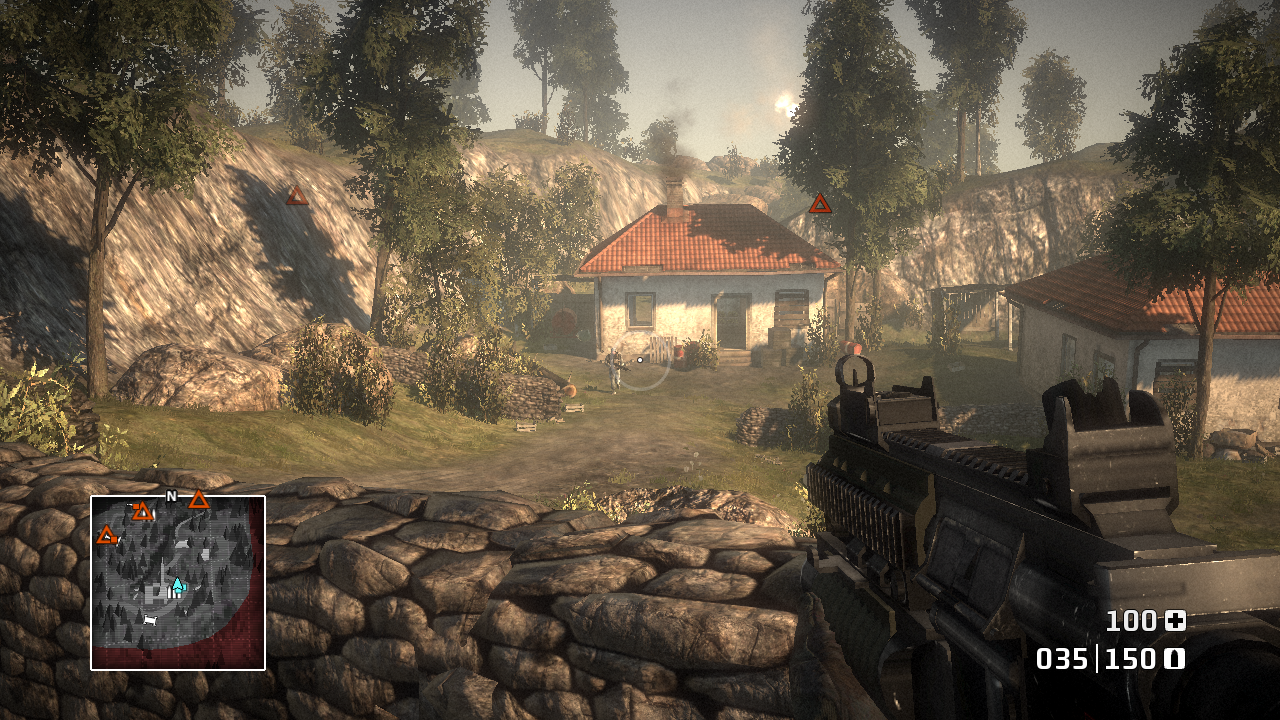
Brothers in Arms: D-Day (All Regions) – While the game was a big clunky it had fantastic visuals and played quite well. All three major WWII shooter players made it onto the PSP, which is quite a surprise in hindsight.
Bust-A-Move Deluxe (All Regions) – This is one of the coziest puzzle games on PSP. While it doesn’t do anything new or exciting it delivers the same great Bust-A-Move gameplay we all love with bright colorful visuals.
Buzz!: Master Quiz
Buzz! Series (Europe) – No, it’s not a game about Kevin McAlister’s brother. A Europe exclusive franchise, Buzz! is a fun trivia game series for people who love that kind of thing. No crazy button peripherals here, but multiplayer is a blast.
C
Cake Mania: Baker’s Challenge (US) – If you love time management games like Diner Dash then this game is up your alley. It was released as part of the “PSP Minis” library.
Capcom Classics Collection Reloaded
Capcom Classics Collection Series (All Regions) – A good amount of classic Capcom games were released on two different UMDs. Games like 19xx, Street Fighter II, Ghosts and Goblins, Mercs, Exed Exes, and many others were well put together and run great here.
Cars
Disney/Pixar Cars Series (All Regions) – Yep, I’m dead serious. The Cars series was pretty solid on PSP and offered a fun arcade racing experience. It looked good and played surprisingly well. Because of the kids-only relationship with Cars, no one really gave it the time of day.
Chili Con Carnage (All Regions) – A crazy over-the-top third-person shooter with lots of humor injected in. It had an unfair checkpoint system, but other than that, it was a solid action title.
Class of Heroes 2
Class of Heroes Series (All Regions) – A “labyrinth crawler” with surprising depth and a fun cast of characters. You’ll definitely sink dozens of hours into the entire series.
Crash of the Titans
Crash Series (All Regions) – Crash Bandicoot didn’t do too well after his PS1 outings. The Crash games that came after were mediocre to just okay at best. The PSP Crash games are decent fun, but nothing amazing. They scratch that itch for a platformer and a kart racing game on the PSP, but nothing more.
Crazy Taxi: Fare Wars (All Regions) – A fun and faithful port of both Dreamcast games. While the graphics haven’t improved much it will satisfy the arcade racing craving you might have. There was even online multiplayer at the time.
Crimson Gem Saga (All Regions) – A sequel to Astonisha Story, and a much better game overall, and it offers some wonderful characters and turn-based strategy gameplay. If you finished up Tactics Ogre and Final Fantasy Tactics then this could be your next time sink.
D
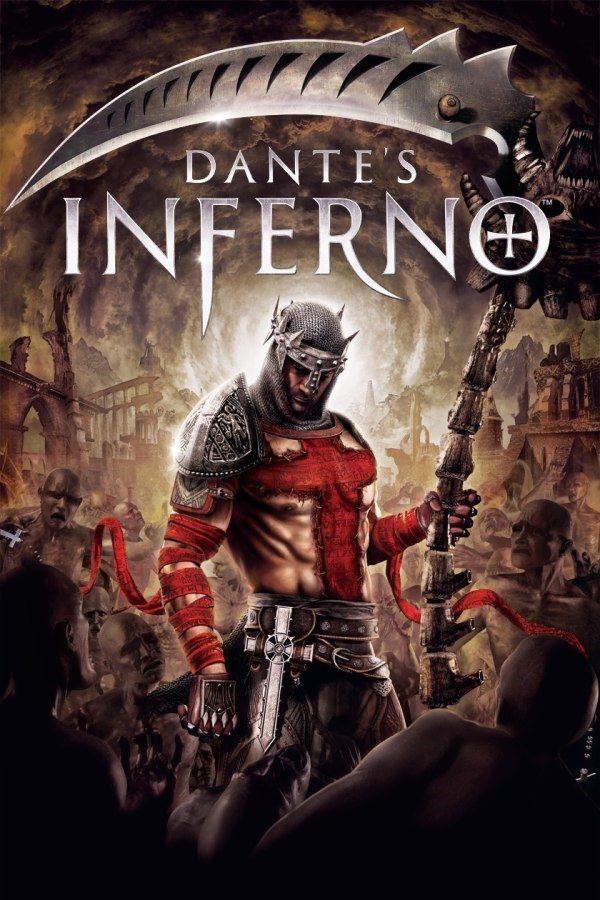
Dante’s Inferno (All Regions) – A cut-down version of the console game content-wise, but the gameplay is rock solid and feels similar to God of War. The console version was short enough as it was, but some boss fights are stripped down to cut-scenes instead. Despite that, the gameplay itself holds up for a few hours of fun.
Dead to Rights: Reckoning (All Regions) – Released alongside the console game Dead to Rights II, the series had one last go before finally disappearing into the ether. It’s a decent third-person shooter all around.
Def Jam: Fight for NY – The Takeover (All Regions) – Def Jam: Fight for NY is one of the best fighting games ever made. Hate the hip hop part of it all you want, all though it features tons of “golden era” hip hop artists from the 90s-mid 2000s, The Takeover was released a year after the console versions with great visuals, solid controls, and tons of content. Easily one of the best fighters on PSP.
Diner Dash: Sizzle & Serve (All Regions) – A port of the DS version, this is Diner Dash greatness through and through. While the DS version is superior thanks to its touch screen controls, it works fine here.
Downstream Panic! (All Regions) – A mix between LocoRoco and Worms. This is truly one of the most unique puzzle games on the system and was criminally overlooked.
Driver ’76 (All Regions) – A prequel to Driver: Parallel Lines for PS2, this is a fun and action-packed driving game. Lots to really like here.
Dungeon Siege: Throne of Agony (All Regions) – a big boy dungeon crawler on a handheld? Many were skeptical, but it really shined and is one of the better dungeon crawlers on the system albeit very rudimentary and basic.
E
Every Extend Extra (All Regions) – Tetsuya Mitzuguchi was at his peak in the mid-2000s. Riding off the success of Lumines his next music-based game didn’t make as large of a splash but was still excellent. This is a bigger version of a freeware game he released for PC back in 2004. He also went on to create the excellent Meteos for DS.
Exit
Exit Series (All Regions) – A very unique puzzle-platformer that had that “PSP DNA”. The game was colorful and tons of fun and had downloadable levels. One of the better puzzle games for the system for sure.
F
Fat Princess: Fistful of Cake (All Regions) – While this was better played with other people, Fat Princess is a cartoony and whimsical tower defense-like game that fits well on the PSP.
FlatOut: Head On (All Regions) – This is what all FlatOut fans wanted. A good portable experience. Spectacular crashes, a great sense of speed, and awesome graphics. It’s one of the better racing games and was sadly completely overlooked by most.
Football Manager Handheld Series (Europe) – If you love spreadsheets you will love this game. Jokes aside, there are many fans of the Football Manager series and it’s pretty decent on the PSP despite the control limitations. If you want some deep strategy involving your favorite sport there’s nothing quite like it on the system.
G
G-Force (All Regions) – A surprisingly good movie tie-in. No joke. While the game is easy it has charm and will keep you interested until the end.
Ghost in the Shell: Stand Alone Complex (All Regions) – Like the anime or not, this was only the second FPS game to be released on PSP right after Coded Arms and before Metroid Prime: Hunters on DS came out. This one kind of did it better. It had a less generic feel to it and did well for the hardware’s limitations.
Gitaroo Man Lives! (All Regions) – A faithful port of the PS2 game. This quirky Japanese rhythm game is in the same lane as Parappa the Rapper. Great tunes and a fun game all around.
Gladiator Begins (All Regions) – A sequel to the PS2 game Colosseum: Road to Freedom this really took me by surprise. I didn’t even see this one come out until years after. It’s a solid Gladiator sim and has solid controls and great visuals.
Gradius Collection (All Regions) – There weren’t many shmups for the PSP, but Gradius Collection is probably the best. Five Gradius games on one UMD and all run great. What more could you want?
Grand Knights History (Japan) – Sadly, this never saw a western release just like Princess Crown, but there is a complete fan translation. Vanillaware has a unique art style and fantastic 2D gameplay. This turn-based strategy game oozes color and personality and is one of the best on the system.
GripShift (All Regions) – One of the best arcade racers on the PSP. Fast-paced action, crazy tracks, and the level editor was a huge hit.
Guilty Gear Judgement
Guilty Gear Series (All Regions) – Three solid fighters on PSP and were all upgrades to previous entries in the series, but that’s okay. Great visuals, excellent controls, and overall just added on to the solid lineup of great 2D fighters.
Gun: Showdown (All Regions) – A stripped-down version of the console games, but not in a negative way. They took the best parts of the console games and stuck them on the PSP. There isn’t an open-world here, but it’s best you will get to Red Dead Redemption in portable form.
Gunpey (All Regions) – Another of Tetsuya’s weirdness, but more on the Rez end of bizarre. It doesn’t meld the magic of music and puzzles like Lumines did, but you should play this more for its oddball magic than the gameplay.
Gurumin: A Monsterous Adventure (All Regions) – This is seriously one of the best action games on the PSP hands down. It received raving reviews, but no one paid attention because of its quirky Japanese exterior and cutesy visuals. I think we’ve all learned that cute visuals don’t make a bad or easy game. Incredibly charming and addictive throughout.
H
Half-Minute Hero (All Regions) – Probably the most unique and original JRPG on the system. You literally have to beat the game in 30 seconds. Level-up, battle, buy equipment, and more all within a 30 second time limit. It’s hard to explain, but it’s something that must be experienced. It’s also pretty funny.
Hammerin’ Hero (All Regions) – It may be simple, but its charm is what will get you. This is one solid platformer with that fun Japanese flair from the early 2000s.
Harvest Moon: Hero of Leaf Valley
Harvest Moon Series (All Regions) – Three games came to the PSP, and while not critical successes they are decent sim life fun. A PS1 port also made it over. If you already love the series or want something similar to Animal Crossing this is the closest you will get.
Harvey Birdman: Attorney at Law (All Regions) – A hilarious FMV game based on the Adult Swim show. There’s tons of humor and video game cameos thrown in. It’s really short but super entertaining.
Hexyz Force (All Regions) – The story won’t blow you away or have you weeping tears, but the gameplay and item management here is stupendous. A really fun tactical RPG that was sadly missed by most.
Hot Pixel (All Regions) – Yep, you guessed it. This is the PSP’s answer to WarioWare. Lots of fun and silly microgames and just as much of a blast as the WarioWare series. It’s too bad no one bought it.
I
The Idolm@ster Shiny Festa: Funky Note
The Idolmaster Series (Japan) – These were huge hits in Japan ending up in the second spot in the sales charts upon release. There are three different versions with different lead idols, but what’s inside are super addictive and charming rhythm games in the same spirit as the Hatsune Miku series. Thankfully there are fan translations now.
Indiana Jones and the Staff of Kings (All Regions) – This original Indiana Jones title is a stripped-down version of the PS2 game, but it’s rock-solid action with great visuals.
Infected (All Regions) – This was one of the first post-launch releases and was highly anticipated. This third-person shooter had a unique gameplay loop and online feature. Shooting a hole in a zombie would allow you to use your blood and infect others and start a chain reaction to rack up points.
J
Jackass: The Game (All Regions) – This was based on the movie at the time and featured acting from the original cast. The mini-games are fun, the action is dumb, and it’s pretty hilarious and was done surprisingly well.
James Bond 007: From Russia with Love (All Regions) – The only James Bond game that made it to PSP. Various developers have been able to perform amazing feats of programming for handheld Bond games and the PSP looks fantastic and plays well.
Juiced 2: Hot Import Nights
Juiced Series (All Regions) – Another really fun arcade racing series. Looks good too.
Justice League Heroes (All Regions) – One of the few good dungeon crawlers on PSP. Marvel had one of the best and DC’s take isn’t too bad. Great graphics help too.
K
Kenka Bancho: Badass Rumble (All Regions) – A Japanese game that made a surprising debut in the West. Kenka Bancho is a fantastic beat ’em up with lots of boss fights and plenty of action.
The King of Fighters Collection: The Orochi Saga (All Regions) – For a system that didn’t have the best D-pad for fighters it sure did get a lot of them. This is a fantastic collection of Kind of Fighters games from the past and they run well and look great. It had a bunch of extra content to unlock too.
Kingdom of Paradise (All Regions) – This game is reminiscent of PS2 action games of yesteryear such as Genji, Onimusha, and others of its ilk. It’s a bit clunky, but still fun and captures that moment of nostalgia.
Knights in the Nightmare (All Regions) – A really high-profile SRPG on DS ported to PSP and was well done. Be warned that the game has a steep learning curve and can be hard as balls. There are multiple endings and should be great for people wanting a deep strategy game to sink into.
L
Lemmings (All Regions) – A fantastic port of the original game with 36 new levels and the ability to download user-made levels. While that isn’t possible anymore what’s here is awesome. If you love deep puzzles this is a game for you.
The Lord of the Rings: Tactics (All Regions) – Another good strategy game on PSP. It’s crazy how many good strategy games this system got. The game looks good and is a strange one-off game for the system that you can’t get anywhere else.
Lunar: Silver Star Harmony
Lunar Series (US/JP) – The Lunar series was ported with care and quality. The first game was released only in the US while the second game was Japan exclusive. It’s a real shame there was no Western release, but they are both excellent games still.
M
M.A.C.H.: Modified Air Combat (Europe) – This air combat sim was exclusive to Europe and played well and looked great. There were a surprising number of combat sim games on PSP and this was among the best.
MediEvil: Resurrection (All Regions) – A remake of the original game. This was very well done minus the camera issues, but it looked good and is one of the “PlayStation DNA” games that got ported to the system.
Mercury Meltdown
Mercury Series (All Regions) – This is one of the best puzzle games on PSP. The physics are awesome and the clever puzzle designs are addictive. Color coding to open gates and switches, tilting the world to move the mercury and split it apart. It’s a unique game that really needs another entry.
Metal Slug XX
Metal Slug Series (All Regions) – While XX was its own game, the Anthology has all six games and are fantastic ports and play well. The D-pad isn’t the most ideal, but the fact that all six games exist on one UMD is unreal.
Miami Vice: The Game (All Regions) – What. A good movie tie-in game?! Yeah, it’s a surprisingly solid third-person shooter that was heavily overlooked due to the terrible movie and the whole tie-in stereotype. It’s not a super interesting game, but there are very few shooters on PSP to begin with.
Michael Jackson: The Experience (All Regions) – This is an interesting take on the game. While the console versions were motion-based, the PSP one had chibi Michael and button presses similar to Hatsune Miku. It’s not the best version, but it has all the same tracks and is a lot of fun if you are a Michael Jackson fan.
Midnight Club: L.A. Remix
Midnight Club Series (All Regions) – Two console racing games ported with grace on the PSP. While LA Remix has some slowdown unless you overclock your system they both play well. The PSP had tons of great arcade racers and these are no exception.
ModNation Racers (All Regions) – An ambitious if generic kart racer that has a good amount of content and colorful visuals. It’s safe and fun.
MX vs ATV Untamed
MX vs ATV Series (All Regions) – The PSP was not short of racing games and the long-running motocross series made it over in two releases. Both are good for a different reason so I suggest trying them all out.
Myst (EU/JP) – Never released in the US. Myst is one of the few adventure games on the system and this is a fine port of the PC classic.
N
N+ (All Regions) – If you like Super Meat Boy you will love N+. A sadistic platformer with over 200 levels mixed from other versions as well as a level editor with sharable maps.
Namco Battle Anthology
Namco Museum Series (All Regions) – This was a popular series that came back from PS1. Five volumes and a Battle Anthology. A lot of classic Namco titles if that’s your thing.
NCAA Football 09
NCAA Football Series (US) – Probably the best football series on PSP. Even though it’s college football, the NCAA series has long been regarded as superior to Madden.
NFL Street 3
NFL Street Series (US) – Ports of the arcade NFL games. This whole Street series has been highly regarded among fans and should really come back. EA’s strongest time in sports was with their EA BIG lineups such as SSX, NBA Street, FIFA Street, Freekstyle, and Def Jam.
NHL 07 (All Regions) – Easily the best hockey game on the system, and sadly there weren’t many options. EA didn’t release another version despite their other sports titles getting yearly releases.
O
Obscure: The Aftermath (All Regions) – This horror title doesn’t do anything new. Solve puzzles and kill monsters with multiple characters while you unravel a story. Fairly dated gameplay-wise, but it fits right in on the PSP.
Outrun 2006: Coast 2 Coast (All Regions) – Probably one of the very top arcade racers on PSP. It looks amazing and clearly given time and care to feel right on the system.
P
Pac-Man World 3 (All Regions) – The Pac-Man World series has always been fairly decent, and World 3 on PSP is just as strong as the console versions. What sets World 3 apart from the first two games is its hilariously serious tone in its story.
Pangya: Fantasy Golf (All Regions) – A spin-off of the Korean MMO game, this right here is the single best golf game on PSP. Colorful visuals, a quirky story, lots of content, and great ball physics. It feels like a complete package and less like a port.
Parappa the Rapper (All Regions) – This is probably one of the highest regarded PSP games, but despite raving reviews it just didn’t sell. It’s a fantastic port of the PS1 classic and looks great too.
Pinball Hall of Fame: The Williams Collection
Pinball Hall of Fame Series (All Regions) – The best pinball games on PSP. Two collections allow you to play them in Tate mode. What more could you ask for?
Pipe Mania (Europe) – This puzzle game is really colorful and addictive. Its simple approach is what makes it so accessible and fun.
Power Stone Collection (All Regions) – Ports of the Dreamcast games and well done too. Power Stone is a great fighting game, but better over multiplayer Ad-Hoc.
PQ: Practical Intelligence Quotient
PQ: Practical Intelligence Quotient Series (All Regions) – A really fun and weird puzzle game similar to Brain Age, but more 3D and interactive. It really has that weird “PlayStation DNA” attached to it.
Prinny: Can I Really Be the Hero?
Prinny Series (All Regions) – A spin-off of the Disgaea series, and surprisingly a platformer. This is highly considered one of the best platform games on the system, but it’s really hard and has terrible voice acting.
Puyo Pop Fever
Puyo Pop Series (Japan) – You can’t go wrong with portable Puyo Pop. The Fever series was a fantastic way to play this one the go.
R
R-Type Command (All Regions) – Another weird IP to go tactical. One of the best tactical games on PSP, and it’s surprising as R-Type is not a slow methodical game.
Race Driver 2006 (All Regions) – An absolute blast of a racing sim. One of the best on the system, and one of the best looking games on the system period.
S
Shrek Smash N’ Crash Racing (All Regions) – Yep. It’s a Shrek game. Yes, it’s actually decent. While no Mario Kart competitor it looks decent and has some fun tracks and fun Shrek characters. You could do a lot worse with the license…and boy did they.
The Sims Series (All Regions) – Fantastic spin-offs of the main PC version. These games hold up surprisingly well and are hand-tailored for mobile play. If you already love The Sims or want some sort of relaxing game on PSP these are it.
Smash Court Tennis 3 (All Regions) – Probably the single best tennis game on PSP and there were a few. Great visuals, controls, and overall content.
Sonic Rivals Series (All Regions) – The only Sonic games to come to PSP. These are considered some of the better games in the series according to Sonic fans. While not perfect they are miles better than most of the 3D turds Sega was pumping out in the mid-2000s.
Space Invaders Extreme (All Regions) – A freaking amazing remix of the Space Invaders game. Like Pac-Man Championship Edition it keeps the addictive formula but turns the volume up to 11.
Split/Second (All Regions) – While it tries hard to capture the magic of the console games, the PSP does a decent job. Not the best racer on the system, but it’s still fun and looks great.
SSX On Tour (All Regions) – A rock-solid entry in the SSX series and looks and feels great on PSP. It’s also the only snowboarding game on the system. Thankfully it’s good.
Star Ocean: First Departure
Star Ocean Series (All Regions) – Great ports of the PS1 games. Safe ports though without many new enhancements, but they’re solid 2D RPGs.
Star Trek: Tactical Assault (All Regions) – Another odd strategy license. While not the best tactical game on the system it does a decent job. I just wish it used the license more.
T
Tales of Series (All Regions) – While the West only got Radiant Mythology there were a bunch of ports in Japan. A solid RPG and the sequel is great too.
Test Drive Unlimited (All Regions) – Quite a risk of a release due to Unlimited’s reliance on constant internet connection. The game is still a solid single-player experience and looks awesome.
Thrillville Series (All Regions) – The only amusement park sim on PSP and both games are great. They look good and have a smattering of content to keep you coming back.
TOCA Race Driver 2
TOCA Race Driver Series (Europe) – One of the best racing sims on PSP and was only released in Europe. They look amazing and have great physics.
Tokobot (All Regions) – A criminally underlooked game and one of the best looking too. Lots of fun puzzles here and hours of fun.
Tom Clancy’s EndWar (All Regions) – A genic but fun hex tactical game. The series isn’t the real-time strategy graphical powerhouse that the consoles got. This is more about the strategy than the visuals.
Toy Story 3 (All Regions) – The console version was a surprisingly solid platformer with charm and great visuals. The PSP version is no different. Don’t let the Pixar name fool you either. This is a solid movie tie-in game.
U
UFC Undisputed 2010 (All Regions) – A surprisingly solid entry for PSP. Great visuals, controls, animations, and content. Sadly it was the one and only.
Ultimate Ghosts’N Goblins (All Regions) – One of the best platformers on PSP, but also the hardest. The difficulty that the series is well known for is here too.
Untold Legends: The Warrior’s Code
Untold Legends Series (All Regions) – Originally a launch title for the PSP it’s a decent dungeon crawler albeit generic. Nothing amazing but it will scratch that dungeon crawler itch.
V
Valhalla Knights
Valhalla Knights Series (All Regions) – An interesting and unique RPG, but has some flaws and issues. If you can look past all of that you will enjoy the series quite a bit.
Virtua Tennis 3
Virtua Tennis Series (All Regions) – A great tennis series all around and there really isn’t a bad one. It’s just a matter of what your preferences and tastes are. You know you have a good library when you get a choice between good tennis games.
W
Warhammer 40,000: Squad Command
Warhammer Series (All Regions) – Both games are surprisingly good. Just another great tactics game to add to the PSP’s lineup. If you love the Warhammer license you will really love these games.
The Warriors (All Regions) – A fantastic port of the Rockstar action game. Even if you don’t know anything about the movie its based on you will really enjoy this game.
What Did I Do to Deserve This, My Lord?!
What Did I Do to Deserve This, My Lord?! Series (All Regions) – A humorous and unique game where you play the bad guy and have to create dungeons to stop the hero. It looks simple but has a lot of spirit.
Wild Arms XF (All Regions) – A fun hex-based SRPG with a lot of dialogue, cut scenes, and story.
World Championship Poker 2 Featuring Howard Lederer (All Regions) – Not sure who Howard is, but this is probably the only good poker game on PSP. The graphics are rough, but it has fun poker gameplay.
Worms: Open Warfare Series (All Regions) – Worms was just another awesome strategy game on PSP. It’s insane how many awesome ones there were. Both games are worth playing and have fun levels and great humor.
X
Xyanide: Resurrection (EU/JP) – A direct sequel to the Xbox shmup. It has great visuals and just overall plays well. There weren’t many shmups on the PSP.
Y
Yggdra Union: We’ll Never Fight Alone (All Regions) – Overall a solid port of the GBA game with upgrades. This is just another solid SRPG with great visuals.
Z
Z.H.P. Unlosing Ranger VS Darkdeath Evilman (All Regions) – A fun roguelike SRPG with great humor and colorful visuals. Heavily overlooked.
The seventh generation of consoles was really rough. While we did get some awesome games, there were a ton of experiments as developers struggled with rising development costs and complicated hardware technology. With the rise of HD gaming, which is games rendered in 720p or higher, there was also a struggle to evolve genres with this newfound hardware. First-person or third-person shooters struggled probably the most in this era as open-world games were evolved and, mostly, well done with games like Grand Theft Auto IV, The Elder Scrolls: Oblivion, Skyrim, and Saints Row. Shooters were stuck in the past, gameplay-wise and design-wise. Corridor shooters with no story or interesting characters, not to mention lacking an identity, helped make up for the lack of the latter. Your favorite shooters like Doom and Quake didn’t really have a good story or characters, but they had an identity that helped them stand apart from other shooters. The look, feel, weapons, and overall design were unique to that game. This just didn’t happen with the PlayStation 3 and Xbox 360 shooters, and if it did, it was rare. We’re going to take a look at the worst and best shooters in this generation of consoles and why the genre stalled and didn’t really evolve much until the next generation cycle.
This will be a multi-part series due to the number of games. The next feature will talk about the worst third-person games of this generation.
Ghost Recon Advanced Warfighter Series
Ghost Recon was one of the best FPS games for the longest time. It was one of the few good military shooters in the sixth generation of consoles and dominated the Xbox space. Advanced Warfighter was one of the few real next-gen games upon release and was one of the reasons I bought an Xbox 360. It helped introduce me to a real next-gen experience, along with Gears of War and Condemned. The Advanced Warfighter was nearly perfect. Fantastic level design, perfect gunplay, amazing visuals and animations, and somewhat interesting soldier banter. It still holds up to this day and looks great on the Xbox One X. The series went to sh*t with Future Soldier and completely changed everything.
Gears of War is probably one of the best third-person shooters of all time and by far the single best series for the seventh generation of consoles. It’s the main reason I got an Xbox 360, and I have replayed these games numerous times over the years. They are just perfect. excellent weapon design, great cover system, well-balanced difficulty, a wonderful cast of characters with depth and backstories, as well as a fascinating world to just be in. The games were also leaders in visual and graphical design at the time. Each game pushed the Xbox 360 to new limits that I didn’t think it was capable of. The first three games are gems, but Judgement lost me. Developed by the Bulletstorm guys, it just felt like an arcade shooter and pretty much ruined the flow of the original games. You aren’t missing anything by bypassing that one.
Lost Planet Series
Lost Planet was an interesting attempt at a third-person sci-fi game from Japanese developers. It felt dated and clunky, but overall, it was a fun game. It looked pretty good too, and the PC version was even better. Fighting aliens with orange-explosive blood is a blast, and the game could get downright hard. The second game was fairly decent, mostly focusing on online multiplayer, and was incredibly difficult. The third game was more story-focused but didn’t really explore its story to its full potential or gameplay mechanics. The last two games are worth playing through the campaigns, but don’t expect anything amazing.
Stranglehold
This was a game that stood out from the crowd. Directed by John Woo and starring Chow Yun Fat, the Hardboiled team took a crack at a video game, and it mostly succeeded. The game had great cinematic flair, fast-paced arcade-style gunplay, and great visuals. Sadly, it wasn’t enough to push sales, as the game mostly flopped and Midway canceled a sequel. It’s a lot of fun, if not repetitive, even today, and still looks decent. Think of this as an Eastern Max Payne.
Kane & Lynch was a promising series. The first game had a lot of ambition, and the first part of the game was mostly decent in scope, but the gunplay felt really bad, and it was just a mess. The second game was much better and was an enjoyable cinematic corridor shooter with interesting characters and much tighter gunplay. The game was graphic and a roller coaster ride of bombastic gameplay, and it was quite a fun evening despite how short it was. Sadly, these improvements weren’t enough to keep the game alive, and Square Enix quickly shuddered the series, and we haven’t seen anything since.
Does this series need explaining? It’s one of the best third-person shooter franchises of all time and one of the most consistent in terms of quality. Every single game is solid, and you can easily spend a weekend going through all three games and having a blast. While the first game feels more dated than the others, they are gorgeous games pushing the PS3 to its absolute limits and featuring memorable characters and fun adventures. The gunplay never quite felt right to me, but it’s still solid. The puzzles were fun, and the best parts are the huge vistas you get to explore. Each game feels like a new adventure, and Nathan Drake is a very lovable character.
Despite the fact that Mass Effectis an RPG, it’s mostly a third-person shooter with RPG elements. This was a juggernaut for nearly a decade when all three games were released. The first game, while clunky and having poorly implemented RPG elements and loot systems, felt vast and large in scope, with great characters and a huge system of lore and a space-fairing universe to dive into. The races, planets, and overall mythology of everything surrounding the story were fascinating and memorable. The series tightened up with Mass Effect 2and fixed a lot that was wrong with the first game, and ME3 was probably the most refined. great gunplay, tighter explorations, amazing visuals, and a great conclusion to one of the biggest franchises of all time.
The Ratchet & Clank reboot series for PS3 was just as good as the PS2 series. The games pushed the PS3 to its limits and featured the same tight gunplay, unique and zany weapons, and fantastic voice acting with a colorful and well-written cast of characters. The locales were varied, with lots of secrets to find, and the entire game was just so well balanced and well done. While there is a lot of platforming involved, there are also a lot of mini-games and various other things to do in this series. You can spend a week playing this trilogy and have a blast doing so.
Surprisingly not based on the movies, The Bourne Conspiracy was a sleeper hit low-budget title that was really good. I rented this and was surprised at just how solid it was despite its very short length. There were great animations, visuals, voice-acting, and tight controls. The story was pretty forgettable, but it was just so varied and well done that I’m surprised it never got a sequel despite the low sales. There were a lot of games like this in the HD era that were pretty good, but no one knew about them and they sold poorly. It’s such a weird license to choose and never capitalize one, as the Matt Damon films were still coming out at this time.
Another series that doesn’t need an introduction This was one of the few good horror games of the HD era and a surprising new IP from EA. I remember the first game very clearly, as it was so unique and new at the time and was a visual treat. The limb system and using power tools instead of traditional guns helped carve Dead Space into its own thing, which separated it far from other shooters and horror titles. It was tense, eerie, and had some good scares. I picked this up on day one with the strategy guide, played it straight through, and went through it again. The entire series has great replay value, but the third game is a lot to be desired. It strayed too far from the traditional ways of the series and implemented microtransactions and a weird loot system. Still decent to play, but nothing like the first two.
We’re specifically talking about RE5 and RE6 here. These were the two mainline games released during this generation. RE5 was a hotly anticipated sequel and follow-up to RE4. How can you fill those massive shoes? RE5 was pretty much the same as RE4, but a little blander and less interesting. It incorporated co-op and online play, which I wasn’t interested in. I was so excited for this game that I stood in line at midnight and picked up the collector’s edition. It was a solid game and still is, but it doesn’t hold a flame for RE4. RE6 was something that grew on me. I feel like if the game only focused on two campaigns instead of four, it would have been more focused. I hated this game at first, and it still has balance issues. It can’t decide if it wants to be a survival horror or an action game. It looked dated at launch, and the PC version is the best way to go, as the console versions just look like total crap. Still, the series introduced great new characters that are well-loved today. Revelations was ported from DS and is also a fantastic shooter, despite being more simple and linear than the mainline games. It had solid mechanics and some creepy monsters and felt more like RE4 at heart to me.
Hear me out here. This is actually a decent, if forgettable, shooter. While the first game was a huge deal because 50 Cent was one of the biggest names in the world at the time, this game fell under most people’s radar. The shooting is tight, the graphics are decent if bland, and Mr. Jackson’s terrible voice-acting is hilarious. The story is also really stupid, but you get good music, lots of explosions, and shooting action, and after a few hours, you finish the game and put it aside. It’s still a fun romp, and being endorsed by a celebrity makes it strange that it turned out halfway decent.
Despite this being an open-world game, it doesn’t quite break the rules to be on this list, as it’s very underrated and not as well known. While there is an open world, it’s still rather small, and there are a lot of linear missions in the game. While pretty clunky in most departments, Pandemic was one of the best studios when it came to open-world games, and this was one of their last games. The story was forgettable as well as the characters, but the art style was fantastic, and an open-world setting in WWII? I can’t beat that. The stealth gameplay was a lot of fun, and the missions were quite varied. There’s a good weekend here waiting for you.
While the first two games were linear FPS games, the reboot sequels were “open-world” destruction simulators that were quite entertaining if forgettable. The story and characters were pretty dumb, but Guerillafeatured a fantastic destruction system in which you can destroy every building from the outside in or reverse even. I remember playing the PC version, and the DirectX 10 version made my PC chug. It looked good, but the open-world part was barely that. It was just an excuse to extend the time between missions. Driving around on the boring Mars sand just to get to another mission was an excuse, but the gameplay was still fun. Armageddonwas better, in my opinion, as it focused more on the story, was still forgettable, and introduced new weapons and less on the open-world stuff. It’s a very interesting franchise, and sadly, we haven’t seen anything in a decade.
A lot of people consider this game to be the third Ghostbusters entry. There was a lot of skepticism around this game, and rightfully so. The franchise has always been in turmoil due to creators arguing and rights being discussed, but the game turned out great, if not forgettable. The story was pretty basic and paper-thin, but we got all the original voice actors, and they sounded good except for Bill Murray, who mostly phoned his lines in. The gameplay was fun, and you actually felt like a ghostbuster. The locales varied from the hotel to a library to a graveyard, and while it was short, it was sweet.
WET was one of the few new IPs during the HD era that never got a sequel due to poor sales. The game was a boatload of fun with varied gameplay, exciting visuals, an awesome protagonist, and a style similar to Quentin Tarintino’s films. It was brutal, looked good, and had tight controls. Sadly, the story was nonsensical, and there wasn’t anything to remember about the game after its short length. It’s still an awesome experience to this day and should be played by anyone who missed it. Sadly, it never got a PC release.
Alan Wake is one of my favorite games of all time. I picked this up on launch day and just remembered all the hype leading up to the release. It was supposed to be an open world, but then not; the story changed numerous times, and we never quite got an idea of what it was until just up until release. I have played through this game many times on both Xbox 360 and PC, and thankfully, the new remaster can be played by all. I eventually moved into the area where the film was researched. The PNW, and I’m not far from Snoqualmie, WA, where the setting was inspired. Whenever I drive around in more remote areas of where I live, I think of Alan Wake every time. It has the same atmosphere and feels like the game does, or the game captured the atmosphere here. The gameplay of Light vs. Dark is awesome and unlike any other game at the time. It has a confusing story, but after a couple of play-throughs, you catch what you missed.
I have to be very specific here. There were a lot of Transformers games released during the HD era on both consoles and handhelds, and most were trash. What I’m talking about is probably the best Transformers games ever made, and these are both developed by High Moon Studios. War for Cybertron and Fall of Cybertron not only looked good, but you felt like a Transformer. The controls were tight; each character was detailed and had the same weapons and abilities as in the show. The story was a bit mundane, but it kept you going. Despite how good all of this was, the game was still repetitive and got tiresome towards the end, but thankfully that’s around when the game ended. Even if you aren’t a Transformers fan, these are great mech shooters in their own right.
An open-world game, you say? You could barely call this game that. It’s an excuse to extend the game time and have driving missions. Outside of missions and going in between missions, there’s no reason to be out in the open world. It looks good, feels authentic to the time period, but is mostly pointless. The game has an entertaining story and characters, but they aren’t memorable or anything. The gunplay is tight, and the missions are varied. Overall, it’s a great Mafia crime thriller that you can kill a weekend with. The series has always been rough around the edges, but Mafia II is probably the best in the series.
Vanquish kind of came out of nowhere. Like Wet, Binary Domain, Shadows of the Damned, and many other original IPs, it just didn’t sell very well. This was an era dominated mostly by sequels. Statistically, these mostly sold the most for any publisher or franchise, and with rising development costs and an economic recession, that’s what publishers stuck to. Vanquish was a gamble, and while it has its issues like severe repetition, a short length, bad voice-acting, and a stupid story, the gameplay itself is fast-paced, frantic, and tight, and it looked decent doing it too. Sure, it looks like any other Japanese futuristic military shooter, but the sliding gameplay worked here. Platinum Games was on a roll around this time, and every game they played paid off.
Around the time this game came out, I was living on my own and moving away from my parents. Money was tight, and I could only afford to rent games for a good couple of years. Shadows of the Damned is a perfect example of a rental you play for an afternoon or evening and send back. There’s nothing memorable about it; the story was dumb, the characters were lame, but man, was the game crazy! There were a lot of good ideas here, with interesting weapons and some crazy gameplay ideas and monster designs, but the game also looked ugly and dated. Grasshopper Manufacture’s Suda51 was pumping these oddball Japanese games, and some were hit-and-miss. This is still worth a bargain bin purchase for a fun evening.
This was another original IP in which the publisher gambled it would make big bucks, but this one did not. It just didn’t look appealing, but it played very well and was highly entertaining. It looked like another generic Japanese military shooter of the time, and most people passed it up. What was here were entertaining characters, bombastic gunplay, and just an overall really fun time. This is a great evening and shouldn’t be missed.
This was a hotly anticipated sequel. The original two were from the previous generation of consoles, so what would Rockstar do to bring it up to speed? Well, not much. The game is mostly the same overall but has a much longer length. While Max himself is a treat to see and hear on screen, everyone else makes this feel like a generic drug cartel B-grade story. The gameplay is pretty thin, too. You just shoot everyone in sight, activate bullet-time, and heal. That’s all you do in this game. The weapons feel great, the cover system works well, and the production values are top-notch, but the game also looked dated on consoles and only looked really good on PC. I remember this game struggling in DirectX 11 on my gaming laptop and wouldn’t run very well. It was state-of-the-art tech-wise.
This was probably one of the biggest and bravest franchise reboots of all time, but let’s not talk about those yet. The Tomb Raider series had two reboots in the same generation cycle. Legend came out right at the tail end of the sixth-generation consoles, was later released on Xbox 360, and looked amazing. Legend had tight controls, fun puzzles, and classic Tomb Raider gameplay. Later, a remake of the first game was released as Anniversary, which played well across all platforms. The Wii had its own unique version, and the game somehow even looked good on PS2! Even the PSP version was rock-solid. Lastly, Underworld was released with larger levels, a bigger story, and improved visuals. This trilogy was awesome, but it wasn’t enough! Tomb Raider then rebooted to some chagrin. Lara Croft was a sex symbol, and when Crystal Dynamics took that away, fans revolted. They wanted Lara to be more human, more believable—a Lara that wasn’t a superhero. The reboot is one of the best games in the entire HD era of consoles. It had cinematic, bombastic gameplay, tight controls, and an awesome, semi-open-world experience.
Despite coming out at the tail end of the seventh generation cycle, the game still looked decent on PS3 and Xbox 360. I played this on PS4, but it was probably one of the few good horror titles to release on the HD consoles. While the game had awesome monster designs and was quite scary in some areas, it was poorly balanced, and I couldn’t decide if it was a survival horror game or an action game. The game felt like a chore to get through, but playing on easier difficulties would probably remedy this. It’s a memorable experience due to the awesome art design and monsters, but the story itself is a convoluted mess.
Metal Gear Solid didn’t see many releases during this time because Hideo Kojima took his time with them. MGS4 was probably one of the most anticipated games of all time and a huge PS3 seller. I remember when I picked up a slim PS3 in 2009, MGS4 was one of the games that came with me. It was absolutely fantastic in terms of visuals and production values. While the cutscenes could sometimes drag on for as long as 45 minutes, they were entertaining all the way through. The multiplayer component was hugely popular but wasn’t enough to keep the game afloat. Later on, MGS5 would also release on Xbox 360 and PS3, but it wasn’t the ideal way to play. It was pretty ugly and dated, and clearly it wasn’t meant to run on this ancient hardware. There was a fantastic HD remaster of MGS2 and MGS3 that was a blast to play through. Overall, it was a good era for the franchise, and probably the best overall.
The Splinter Cell series was a massive hit on the sixth generation of consoles, mostly a huge seller for Xbox consoles. The series debuted on Xbox 360 with Double Agent, but it didn’t sell super well. Conviction was a kind of reboot for the franchise, making it more streamlined and a little less clunky. While the story was forgettable, seeing Sam Fisher on screen is great, as he’s a powerful character. Michael Ironside does a fantastic job with him. The game was a lot of fun and paved the way for Blacklist later on, which was also solid but not as good.
The Hitman series had a reboot of sorts with Absolution, but Blood Money was an HD port of the sixth-generation game on Xbox 360 and was a pretty awesome game. I remember playing it and finishing it on PS2, and I had a blast with it. Absolution looked pretty good for the dating hardware, but I played it on PC, and I remember the DirectX 11 mode pushed my gaming laptop beyond its limits and chugged a lot. Absolution had more memorable assassinations and some awesome levels. Later on, the series would reboot again, but these were the only two Hitman games released on the HD consoles. There was an HD remaster of the first three games released, which were also quite entertaining. Overall, you got the entire Hitman package on these systems.
This was a huge surprise and a sleeper hit. The Dead to Rights series isn’t well-known for being all that great. I remember playing the original as a kid for the PS2, and only the stripper scene stood out for me. As a hormone-enraged pre-teen, I would constantly replay that level to see that scene when my parents weren’t looking. However, I totally skipped the second game, and the PSP game wasn’t all that great, but Retribution was a huge surprise. I rented it from BlockBuster, and it was super entertaining. Using your dog as a companion was awesome, and the game also looked good. While the story was pretty dumb, the game overall was super entertaining.
Another awesome sleeper hit. This was a rental for me, and I highly enjoyed it. The Glaive system in the game really stands out, and the graphics were pretty good as well. It had a nice art style and atmosphere and really sucked you in despite the forgettable story (what story wasn’t back then?) The gunplay was tight, and there were some fun environmental puzzles you had to solve with the glaive as well. This is a must-play if you missed it, and it’s just too bad the game didn’t sell well enough for a sequel. Another great shooter lost time due to poor marketing.
Game collecting is intimidating, and you have to usually wade through a sea of crap before you get what you want. Sure, you’ve got that shiny new game, but wait, what’s that? It’s the wrong kind; it’s missing something; it’s full of stickers; and the case is smashed up. Don’t fret! Not only will I help you find the exact variant or kind of game you want, but I will also give you tips on how to restore a game to look new, where to find this stuff, and even how to get pesky stickers off of plastic and cardboard.
Most guides talk about how to get the rarest games, how to do garage sales, and all that stuff that most people either don’t care about or don’t need guides for. There are some things to look out for, like reproduction carts, reproduction artwork, and reproduction manuals, but online, you really don’t have to worry about that. As long as you aren’t paying $5 for the Pokemon Green Version, you should be fine. Just be smart about all of this. Another tip is to not buy any games from China, as most of them are reproductions or fakes. If you’re buying Japanese games, the Japanese sellers are usually fairly honest, and I have never had issues outside of blurry and awful photos. I’ve bought near mint consoles from Japan, and the sellers are friendly and more than happy to offer more photos and information, again, based on my own experience.
Where do I shop and how?
Well, outside of local retro game shops, my go-to places are eBay, Mercari, and OfferUp. I avoid Craigslist and Facebook Marketplace because, for one, they usually don’t have obscure or rare titles, most people on there don’t know what they have, they charge way too much, they’re usually in awful condition, or most of the games are bundled with consoles and accessories, and they won’t let just the games go.
My only big tip when buying anywhere online is to never buy from listings with stock or generic images! These are usually disc-only copies, or something is missing. Try to find listings for the actual game you are buying, preferably showing the disc, manual, any other items it includes, and even the underside of the disc or label side of the cart. Unless the item is marked sealed and brand new, don’t look at stock images.
eBay
Filtering is key to getting the games you want for specific platforms. Let’s start with eBay.
First, make sure you are in the video games category or you will get everything from Sonic mugs to Final Fantasy knock off posters.
I always filter to Buy It Now. Why? Bidding stinks, and you usually won’t get a game cheaper than Buy It Now anyways, and it just ends up wasting time. You can try it, though, but in my experience, I’ve wound up paying more in the end. The filtering works the same on both apps, so this applies to both.
Next I will filter by Lowest Price+Shipping. Yes, you usually see the crap at the top first, however, this allows you to spot the first complete game on the list with the cheapest asking price.
I then filter by console. With these three filters I’ve usually found exactly what I want in just a couple of minutes. If a game doesn’t exist, let’s say it’s particularly rare, just save the search and eBay will also save the filters you set.
Mercari
For Mercari there are more steps that are required to filter down to exactly what you want.
The first thing, like eBay, is sort by lowest price first
Next you want to select the video games category
Then make sure to select items for sale otherwise you will see more things that are sold
After this select the platform and not the brand. This is important as most items are sorted by brand correctly and you will miss a lot.
One extra thing you can do on Mercari that you really can’t on eBay is haggle. Always try to get the lowest price you can. Usually, this only works for items over $20. Ask for the 20% off and see what the seller comes back with. Mercari is more of a garage sale site, and they’re usually more desperate to let things go than on eBay. Seven times out of ten, the sellers accept the offer or come back just a bit higher. Just be aware that once the seller accepts the offer, your card will be charged right away. So don’t go around asking for five different offers because you may wind up with multiple copies, and backing out of a sale is much tougher than on eBay, in my experience.
OfferUp
You’re probably going to have less luck here as it’s more like Craigslist with local pickups preferred. I have found some great stuff on here, but it requires more scrolling and specific searches. For one, you can’t filter down by platform like on the other two sites.
First, you need to select the category. OfferUp isn’t as smart as the other two sites and will usually search exactly what you typed in.
Then you need to sort by price.
This is where things get janky and weird. Depending on the title of the game, you may need to search by platform as well. For example, “motogp 1 playstation,” otherwise you will get every single MotoGP game for every system. The more generic the title, the more specific you need to be in your search.
Things don’t move as fast on OfferUp, so always click the Ask button and ask if the item is still available. I’ve had a few items never ship because the item has been on the site for over a year and the seller probably forgot about it. Also, make sure you look at the posting date. The older it is, the less likely the seller will respond.
Why do variants and versions of games matter?
For most of the popular consoles from Nintendo, Sony, and Microsoft, there are usually two separate versions of games, and one is worth more than the other. Let’s start with the PlayStation, as this is where it basically started. This will also mostly apply to NTSC or North American releases. I’m pretty sure these all applied to all regions, but I’m not 100% certain.
PlayStation games also had longbox versions during the first 18 months or so of the system’s life. These are usually worth more as they were a shorter print run or were later released in regular jewel cases. Not all long-box PS1 games are expensive, but most are. The majority of these games are made of cardboard, kind of like a gift box. There are some that are like Saturn games with the plastic jewel case, and then there are the really crappy ones with the long jewel case style but made of cardboard where there is a bit of plastic where the case can close. The top labels are usually peeling off, as these are just glued to the plastic doors and look terrible.
PlayStation had a “Greatest Hits” line with a bright green label on the manual. These games are always worth less than the “black label” variant. These Greatest Hits versions sometimes have benefits like fixed bugs, but it’s hard to tell which have these fixed and which don’t unless it was stated by the developer. The black-label versions are worth more as these are lower print runs as the game hadn’t garnered the sales it did to become a Greatest Hits title. Here’s the great thing about this: If you don’t care about having a rarer version of a game, then the Greatest Hits versions are the way to go. You can usually save a lot of money. Usually, these versions were always released at $20, and that still continues today.
Later the next generation had it on all three consoles. GameCube had “Player’s Choice” Xbox had “Platinum Hits” and PlayStation 2 had “Greatest Hits” but in red this time.
The GBA also had “Player’s Choice” but it seemed to only be on first party titles.
The DS completely skipped this and didn’t appear again until the 3DS released with “Nintendo Selects” on later print runs for first party titles only, and the PSP had the same red “Greatest Hits” banner like the PS2 games. The Vita skipped this as well due to the system’s lesser sales.
The next generation of consoles retained this as well. The Wii and Wii U had the same “Nintendo Selects” as the 3DS and was only on first party titles as well. These were also on later print runs that were sold in batches. These are still recent and can be bought new if you can find them.
The Xbox 360 kept the “Platinum Hits” line and the PS3 also had “Greatest Hits”. This was the last time Microsoft would do this. The Platinum Hits banner changes over time as Microsoft was always tweaking the Xbox 360 cover art template, but the PS3 mostly remained the same.
Sony remains the last company to still do these budget title boxes. With physical game sales dwindling there’s no need to lure shoppers to shelves of budget titles anymore. Sony changed there’s to “PlayStation Hits” with the same red banner.
The stickers…my God the stickers
These tend to be collectors’ worst nightmares. With jewel case CDs, you can just buy new jewel cases in bulk on Amazon. I buy packs of 50 for about $30. But for other cases, you can sometimes buy new PS2 or GameCube cases, but these can be expensive as they aren’t manufactured anymore. Some people will buy cheap sports games, reuse the cases, and toss the discs. Personally, there’s a special solvent you can use that I have never in my life seen a collector talk about on YouTube or otherwise, and that’s Bestine. This is a solvent that stamp collectors use to remove stamps from paper. This stuff dries incredibly fast, but it doesn’t stain, have oil, or soak through or take off paint or ink. You can buy it on Amazon, Blick, or most art stores, and it works wonders.
A lot of people suggest alcohol, WD4D, Goo Gone, and various other things, but it’s always oily, nasty, and requires further cleaning. Bestine doesn’t need any further cleaning after use, and best of all, it doesn’t need hot air on cardboard or anything like that.
Just pour some on a napkin or paper towel and get the sticker nice and saturated, and it will start to come away. For thicker stickers or even metal ones, you can wait for the soaking process to last longer. I even took rental labels off the tops of discs with this stuff. It’s a miracle in a bottle. For plastic stickers, you can get an edge up, and with a cotton swab, just rub along the edge while you pull up to dissolve the adhesive. I trust this stuff on my copy of Clock Tower II, which’s worth $450. I took the rental label off the disc and a sticker on the manual, even the front cover, and it looks like nothing happened.
For long-box games for Sega CD, Saturn, PlayStation, and 3DO, you can buy newly printed cases off Amazon for $60 for about ten. These are really expensive, and your best bet is to buy old sports games and reuse the cases. Sadly, these types of cases just aren’t really made anymore and can command a high price.
For jewel cases, you can rebuy them. Most of the early CD games came in these cases, such as Philips CD-i, Dreamcast, PlayStation, Japanese Saturn games, PC Engine, and almost every other system until the PlayStation 2. But what about the black quad-disc PlayStation games or games with two CDs inside? Thankfully, you can make a Frankenstein quad-disc CD with regular jewel cases and the black quad-CD cases you can find on eBay and Amazon. These cases don’t have a clear inside area for the art and are usually just opaque black. What a lot of people don’t know is that the outside parts of these cases are just the same jewel case bodies, minus the door. You can pop the doors off of two jewel cases and sandwich the black piece in between. Two CD jewel cases are still made these days and are easy to buy. Either with the fold-out center piece or a hinged center to get to the second CD
The seventh generation of consoles was really rough. While we did get some awesome games, there were a ton of experiments as developers struggled with rising development costs and complicated hardware technology. With the rise of HD gaming, which is games rendered in 720p or higher, there was also a struggle to evolve genres with this newfound hardware. First-person or third-person shooters struggled probably the most in this era as open-world games were evolved and, mostly, well done with games like Grand Theft Auto IV, The Elder Scrolls: Oblivion, Skyrim, and Saints Row. Shooters were stuck in the past, gameplay-wise and design-wise. Corridor shooters with no story or interesting characters, not to mention lacking an identity, helped make up for the lack of the latter. Your favorite shooters like Doom and Quake didn’t really have a good story or characters, but they had an identity that helped them stand apart from other shooters. The look, feel, weapons, and overall design were unique to that game. This just didn’t happen with the PlayStation 3 and Xbox 360 shooters, and if it did, it was rare. We’re going to take a look at the worst and best shooters in this generation of consoles and why the genre stalled and didn’t really evolve much until the next generation cycle.
This will be a multi-part series due to the number of games. The next feature will talk about the worst FPS games of this generation.
Call of Duty was at its peak when it was released as a launch title for the Xbox 360. This was a huge console seller, and despite the “2” in its name, this wasn’t the second game. A few console-exclusive releases came before this one, but this was a true follow-up to the original PC game. While not quite as good, it was still cinematic, and it felt like there was some thought and love put into it, unlike future sequels. Call of Duty 2 looked amazing on Xbox 360 and was one of the best online shooters for a good year or so.
Prey
The development hell this game went through has been well documented and is one of the most tragic video game franchises of all time. Prey was a fantastic shooter that had its own identity among so many clones and boring games stuck in the past. The interesting use of portals, fun weapons, and a creepy alien atmosphere and setting were a lot of fun. Prey is so good; it has a high replay value, and I replay this game every few years; it’s so enjoyable. It was one of the first games to introduce me to the HD era of gaming on Xbox 360, and I have fond memories of this one.
The Call of Juarez series is forgettable yet enjoyable. It’s a fine shooter series, minus The Cartel, with varied themes and overall solid gunplay. The story and characters are absolute trash, but this has fun gameplay that makes up for that. Bound in Blood is set during the American Civil War, where you play two brothers on a mission for something. Gunslinger is based on the Wild West era in the late 1800s. Both can be bought for cheap, and Gunslinger even found its way over to the Switch. They are fun enough to even be worth playing through again every once in a while.
Tom Clancy’s Rainbow Six Vegas Series
I remember this being the first reboot of the Rainbow Six franchise for quite some time. I rented both games when they came out, and I quite enjoyed the campaigns. They looked fantastic and had some great, bombastic set pieces. The multiplayer wasn’t half bad either, and I really wish the series would go back to this style of tactical gameplay. The games are worth playing today for a fun weekend shooter, and I don’t have much to complain about other than weird difficulty spikes.
Battlefield 2142
Battlefield was already a huge franchise before debuting on consoles with Modern Combat. 2142 was a long-awaited sequel to 1942 that was set with a realistic military theme rather than WWII. The same gameplay proceeded, but with the power of PCs at the time, we got massive maps, more modes, vehicles, and just classic Battlefield gameplay. While it did have a rough launch, the game was eventually smoothed out, and there are still people playing today.
While the third sequel was released after everyone was sick of WWII shooters and during a console transition, it was still a solid, if forgettable, experience. At this point, these games were being phoned in but still had an AAA quality to them that made them worth playing. Call of Duty 3 feels very dated compared to today’s shooters, and it was the last WWII shooter the series would dip its toes in for many years. The online multiplayer was fun for a while, but the game suffered from needing to be ported to last-gen consoles. Your typical WWII shooter stuff is here, like planting charges, moving up waves of enemies, grenades that bounce around like rubber, and incredibly linear levels.
by far some of the finest shooting you’ll play during the HD era of gaming. The Resistance series was helmed by Spyro the Dragon and Ratchet & Clank creators, Insomniac Games. Originally teased as I8 during E3 2006, the series had tons of hype. It looked next-gen and felt like it upon release with Fall of Man. The series has a decent story, but the classic Insomniac weapons are what make the game so fun. Each weapon has a unique alt-fire, and each weapon is carefully crafted to be needed for certain situations, so you’re always switching up your weapons, which is one of the most important things for shooters that almost no one seems to understand. The games look absolutely fantastic, even by today’s standards. This is a trilogy that every shooter fan must play.
S.T.A.L.K.E.R. Series
The S.T.A.L.K.E.R. series was never released on consoles, but it has a huge following on PC. The sequels, Call of Pripyat and Clear Skies, just improved the game more. The series is a hard-core survival shooter where you must preserve every bullet and item for healing. Running and gunning will get you killed, and it can be very daunting and intimidating to play. It’s for the hardcore only. The game released a buggy mess, but over time players have modded the game to near perfection, and it is one of the best post-apocalyptic open-world games to date. Some of the developers later went on to form 4A Games and create the Metro series.
The Darkness is based on the comic of the same name. The original game is one of my favorite shooters of all time. The atmosphere, story, characters, graphics, and the ability to use your demons on your shoulders to command minions and mutilate people were so much fun. The sequel was good but felt more arcade-like, had less of a slower-paced haunting atmosphere, and didn’t feel as bleak. The sequel is still tons of fun and retains the same great voice acting, but has a less memorable story.
Metroid Prime 3: Corruption
Metroid Prime 3 was a huge juggernaut for the Wii upon release and was one of the few really good shooters that the system got that wasn’t a port of some sort. Improved graphics, great use of the motion controls, and overall just classic Metroid gameplay are clearly the best in the series. Corruption was a big system seller and is easily one of the best shooters of the HD era of gaming. Even though the Wii lacked the horsepower of the PS3 and Xbox 360, Corruption still looked fantastic on the aging hardware.
The Halo series peaked with the Xbox 360. Halo 3, Halo 4, Reach, ODST, and Combat Evolved: Anniversary were great games. While I don’t really care for ODST or Halo 4, the series reached its best with Halo 3 and remains one of the best shooters of that era. The games still pushed the 360 to its limits graphically and remained the top multiplayer game through its entire life cycle. The series hasn’t seen this many releases since, but you can now play these games remastered on PC and Xbox One, which is awesome. It is still fun to play on the original hardware just to see what it was like back in the day. When a Halo game launched, it sold out on consoles big time, and everyone played Halo at least once during this time.
Team Fortress 2 was a huge deal on consoles. Despite never receiving updates and being shut down and abandoned, the game had lots of players. I played this game for many hours on the Xbox 360. I would come home on my lunch breaks from work just to get a few rounds in. The game looked good and ran very smoothly on consoles, but I just wish it had the features or some maps that the PC version had for at least a couple of years. While I wouldn’t bother playing on consoles these days, the PC version is still alive and well and is one of the most played multiplayer games to date.
While originally only released for PC, The Orange Box was a huge hit, giving console gamers Valve’s best work for one cheap price. The games ran and looked great on the dating hardware, and I was a huge fan of The Orange Box. Upon release, I didn’t have a PC that could play these games, and I was so excited when this was finally released. I did play Half-Life 2 on an older computer as well as Episode One and loved them to death, but they didn’t look great. With achievements, there was a ton of replay value here, and it’s still worth a pick-up if you don’t play PC games.
Crysis is famous for being a go-to benchmark game for PC hardware. I remember seeing this game for the first time at E3 2006, and it blew me away. The textures, lighting, physics, and everything else that went into this game were truly ahead of their time. So much so that Crytek had to demo the game running in SLI mode with two graphics cards to get it running. There wasn’t a single GPU that could run the game at 60FPS maxed out at the time. I remember when I got my first real gaming computer in 2010, I was blown away. I could finally run Crysis. Even then, it pushed my laptop to its limits, and I still couldn’t run it at maxed-out settings. The second game was highly anticipated, and my laptop couldn’t run it above 30FPS maxed out. Crysis 3? Forget it, but I did end up playing the game at 20FPS. These games didn’t have a great story or characters but instead had incredibly tight gunplay, fantastic visuals, and decent weapons.
Unreal Tournament 3
There’s no coincidence that UT3 looks exactly like Gears of War. It has the same color palette and even a similar character design. UT3 wasn’t nearly as popular as UT2004. I remember I just couldn’t get into it as much as I did in UT2004. Something felt off about the way the game felt. I didn’t have a PC that could run this game at the time, so I picked it up for PS3 years after its release, and it was mostly dead then. The game just felt so far away from Unreal Tournament that I couldn’t play it, but it was still a solid multiplayer shooter for PS3 and PC at the time and was solid despite feeling different.
The series is by far one of the best that graced the HD era of consoles. Quality shooters at this level were rare, and I remember just how hyped I was for the game upon release. I remember getting so excited and counting down the minutes for the demo to drop on Xbox LIVE. I bought this on launch day, and it was one of the most memorable gaming experiences I ever had. I was also hyped for BioShock 2, but it wasn’t as memorable. It was a good game, but it was too safe. Infinite got me as hyped as the first game, if not more, and I even went to the midnight launch at GameStop for it. This is an incredible series, and thankfully, they have all been re-released on newer consoles.
Frontlines: Fuel of War
I remember seeing this one at BlockBuster along with other generic-looking military shooters at the time. I passed it up numerous times, despite the decent reviews. At first glance, it looks dull and boring, but it has great gunplay and fun multiplayer. While the former no longer exists, there’s still a fun weekend campaign here, and you can pick up the game at bargain bin prices these days. There’s no reason not to pick this one up. Just don’t expect a deep story or any type of character development.
Bad Company was a smart departure from the series and helped reboot the series for consoles. The two games actually featured fun and interesting characters with witty dialog, and of course, the gameplay was tight and tons of fun. Both games also featured impeccable sound design, with the sound of bullets changing inside buildings and somewhat destructible environments. The multiplayer portion was insanely popular and a lot of fun. especially the Conquest mode. Servers are gone now, but you have two entertaining campaigns here worth playing over the weekend.
The third and final installment in this highly anticipated series Brothers in Arms was considered the “grown-up” WWII franchise as it wasn’t as arcade-like as the other games. It required strategy and a bit of thinking, and you could command your squad. It was also the only WWII shooter that had gore in it. Hell’s Highway had a mostly forgettable experience, but it sure was fun and a blast to play through. It really stands out from the crowd at a time when WWII shooters were waning and becoming a flea on the industry’s hide. Well worth a weekend playthrough despite the servers being shut down.
Specifically, Far Cry 2, 3, and Blood Dragon were released during the seventh generation of consoles. I didn’t care for Far Cry 2. I bought a bargain bin as BlockBuster was shutting down and found it dull and boring. However, in hindsight, it’s not quite that bad. Far Cry 3 is by far the best game in the series, as Vaas is a strong antagonist and remains so to this day. Blood Dragon is one of the most fun and unique spin-offs ever. Being a love letter to 80’s sci-fi action movies like Terminator, Robocop, and Blade Runner, you can shoot T-Rex’s, and everything has a Tron/Cyberpunk feel to it. It’s very short, but it has witty dialogue and is just so unique. Some consider it the best game in the franchise. These Far Cry games were the peak of the series, and it has been falling fast ever since.
Every once in a while, we get a decent Bond game. Quantum of Solace, based off of the same movie, was a sleeper hit and was surprisingly entertaining despite how forgettable it was. It felt like a bonding game. It was fast-paced, had great-feeling weapons, and didn’t overstay its welcome. This is probably the best Bond game of the HD era, as Blood Stone was a borefest. Well worth a bargain bin purchase for a fun evening.
Cryostasis isn’t an action-packed shooter. It’s more of an adventure game where you unravel a mystery on a derelict ship. The game has a haunting atmosphere, and you must really use your bullets wisely here. It was a graphical powerhouse when it was released and pushed PCs to their limits. I remember that my gaming laptop at the time struggled to run this game. It used, at the time, brand new DirectX 11 visuals, which made it look “next-gen” and beyond anything the PS3 or Xbox 360 could muster up. Sadly, it’s been pulled from Steam for some time now, but keys do exist online at various retailers. It’s worth a playthrough for something more unique and interesting.
While the first game was released during the sixth generation of consoles on PC (PS2/Xbox), it did get an “HD” release on PS3 and Xbox 360 but wasn’t nearly as good as the PC version due to lowered graphics and framerate issues. However, F.E.A.R. 2 and 3 were made with these consoles in mind. While the story of the series is convoluted and pointless, the second game had quite a few excellent cinematic moments and some creepy segments. While mostly forgettable, it was fun. The third game had solid gunplay but pretty much took out the creep factor entirely. The first game remains the best in the series and is a classic. It pushed PC hardware to its limits and made me want a gaming PC at the time.
Killzone is a strange beast. It’s not exactly the most polished shooter out there. The first game on PS2 was an absolute technical mess, despite trying new things like long, realistic reload times and pushing that poor system beyond what it could do. Killzone 2 was pretty much the biggest hype around the PS3, with the questionable pre-rendered demo shown at E3 2006 and being pretty impressive upon release. I remember it was a reason I wanted and bought a PS3 in 2009. The game looks great even today and has fantastic gunplay, despite a forgettable and pointless story. The third game was more polished but felt more forgettable due to bland-level design and a continued pointless story with lame characters (I really can’t stand Rico), and it had a great multiplayer suite. The first game got an HD release in the Killzone Trilogy. Some of the best shooting you’ll play during this console cycle
While Dark Athena isn’t quite as memorable or impactful as Escape from Butcher Bay, the former game was included as an HD version with this game. Dark Athena was mostly more of the same, but with less memorable locales, and it didn’t do enough that was new to make it stand out more. Still, the Riddick games remain some of the most interesting shooters of that generation and are worth a playthrough, whether you like the movies or not. They have a great atmosphere, fun gunplay, and stealth mechanics.
The Conduit Series
A very hyped FPS series on the Wii, The Conduit was a fun sci-fi shooter with interesting guns, but it was pretty run-of-the-mill as shooters go. We didn’t get many non-on-rails shooters on the Wii, so when they came along, they were a big deal. The Conduit was fun to play as it used the Wii hardware well and looked good too. It was nice to not get another military shooter, and that’s probably why the game stood out from the crowd.
Originally released for Wii and then later on PS3 using the Move controller, Extraction was a sleeper hit and considered one of the best games in the series. Sure, it was another Wii on-rails shooter, but it had atmosphere, had some great scenes (cutting off your hand in space, for example), and just felt tight and fast-paced. I picked this up when it came out and replayed it a few times. It has a high replay value thanks to its short length and entertaining shooting and scenes.
ARMA Series
The ARMA series is a PC-exclusive military simulator and probably one of the most realistic out there. There is a huge mod community behind all three games, and they look fantastic. When I talk about simulators, I mean it. A single bullet could kill you, and the maps are large and expansive; there’s no handholding here. You must cooperate with your squad, and everything from physics to not knowing where the hell enemy fire is coming from exists here. It’s some of the most rewarding cooperative squad-based gameplay in existence, and it can only be experienced on PC.
Operation Flashpoint: Dragon Rising
similar to ARMA, but with a little more user-friendly and arcade-like gameplay thrown in. It’s a long-running franchise, and it still requires tight cooperation with squadmates. I picked this up at a bargain bin for PC, but I didn’t realize how much was involved and never got past the first mission. I appreciated the visuals and the realism, but none of my friends are gamers, so I was stuck playing solo, and it wasn’t very fun.
Borderlands was a game no one saw coming. It pretty much created the “looter-shooter” genre that is so popular today. I picked up the first game when it was released and played it solo. It was a lot of fun and had a lot of character, but later games were pretty much the exact same. If you played one Borderlands, you played them all. These games are best played with a friend, but the interesting NPCs and weapons keep you coming back, despite the dull environments and visuals. The pre-sequel is one I couldn’t get through, but it’s not bad. There is also the Telltale Games adventure Tales from theBorderlands, which is fantastic and worth a playthrough.
Who would have thought this would be one of the best-selling shooters of all time and continue on for over a decade? Who thought that it would be the most-played multiplayer game for that long as well? The first two games in the series were fantastic. bombastic and well-designed campaigns and revolutionary multiplayer for the time. Both games had impeccably designed maps, and the ranking and unlocking systems became addictive. Tight gunplay, clans, and state-of-the-art visuals helped sell these games. Modern Warfare 3 was just more of the same, and people were starting to tire of the series by this point. Surprisingly, the Wii and DS had decent ports as well that were tailored for the hardware.
The first Black Ops game is still the best. The different setting of the Cold War was a nice change of pace, and the multiplayer and zombies introductions made it stand out from the crowd. The second game was decent but had the best zombie mode. Black Ops is an interesting experimental side series of the main Modern Warfare series. It was darker, grittier, and had more of a government conspiracy theme to it. There are also great ports for Wii and DS as well. The series has been all over the place since, and to be honest, it feels redundant at this point.
I remember picking this up shortly after its release. Despite being a co-op shooter, you really don’t need to communicate with people to enjoy it. I didn’t have a PC that could run either game at the time, so Xbox 360 it was. It played and looked great on the system and had some of the most realistic-looking zombies at the time. Each character felt unique, and you really had to pick a way to play, and that included the weapons. The maps were well laid out, and the fast-paced horde shooter stood out from games like Dead Rising and Resident Evil.
MAG
The now-defunct Zipper Interactive developers of the mega-blockbuster SOCOM series decided to take advantage of the PS3 hardware and pit 256 players against each other in a realistic military shooter. The idea was sound on paper, but what we got was a buggy mess. This is about as generic as shooters get. Despite the occasional fun moment running into dozens of enemies in a game that was mostly unheard of outside of PC space, the game just flopped. The level-up system was clever, but the game didn’t sell enough to iron out all the bugs, glitches, and sloppy animations. If the game had more time in the oven, it could have been bigger than Call of Duty.
I remember being so hyped for this game. While it wasn’t as good as AVP2, it looked amazing—in fact, one of the best-looking games at the time, taking full advantage of DirectX 10 on PC—and had a pretty sweet triple campaign all around. The multiplayer was pretty boring, but you felt like the Predator and Alien, but sadly, the Marine campaign was the worst of the three. It’s worth a play-through today.
Fallout 3 was one of the most played games of all time for me. I spent nearly 100 hours between the main game and all four DLCs. The best character in the game was the world. Everything told a story. A skeleton in a washer, text on a computer, a note left on a desk in an empty vault There was so much detail crammed into this game that you could get lost exploring for dozens of hours without completing a single mission. The guns felt good, and the game looked mostly decent at the time, but it was a super buggy mess in general. New Vegas was even better with a crafting and ammo system, and it had a better story and characters to boot. New Vegas looked incredibly dated when it launched and was also a buggy disaster, but eventually got patched, and the modding community is insane. It’s one of the most modded games of all time and is a must for anyone playing on a PC. Both of these games are full of life and character, and if you like RPGs or just great storytelling, you must play them.
Bulletstorm was made by the guys behind the excellent cult classic Painkiller series and some developers from Gears of War. What we got was a bombastic and crazy shooter that wanted combos of carnage to rack up a score and kill streak. It was so fun using your lasso, tossing people up in the air, shooting them down, and even kicking them into environmental death traps. The story and characters were stupid, but it didn’t matter. The game looked fantastic using an advanced version of Unreal Engine 3 and tapped both consoles max power. This is a must-play, and the newly remastered version is the best way to go.
Homefront isn’t just another Call of Duty clone. This one tried to create a story with characters and mostly succeeded. Set in an alternate timeline where North Korea basically takes over the world, you are a rebel group trying to stop them. The beginning scene is one of the most memorable in gaming history. Seeing soldiers execute people and having your bus crash The cinematic gameplay is tons of fun while it lasts. There’s a lot of humanity pumped into the game, so it’s not just another game of Whack-a-Mole. The multiplayer wasn’t good enough to keep the game alive, but the campaign is one entertaining evening.
This was probably one of the most anticipated games of the HD generation. Warren Specter’s return to one of the most popular PC games of all time was a huge welcome. Despite major technical issues, this was one of the first games to use DirectX 11 on PCs, and I remember that my poor gaming laptop just couldn’t do it. The game looked dated and pretty awful on consoles, but it gave us tons of choices to approach various situations. Stealth, non-lethal, guns blazing, hacking to get more info to make conversations go your way. It was all up to you. Despite a bland story and uninteresting characters, there was enough here to keep you moving along.
This was kind of a sleeper hit. Despite having an awful story that was almost non-existent and stupid characters, the crafting system and overall open world of killing zombies were a blast. It looked great too at the time and had decent gunplay. Despite the game being a lot of fun while playing it, you won’t remember any of it after a while. It’s a very forgettable experience, but it’s not a bad game. There is a clunkiness to the game and lots of bugs and glitches even after a few patches, but it’s one of the only good open-world zombie games out there. Totally skip the “sequel.”
Hard Reset didn’t make it to consoles, but it is a sleeper hit hardcore FPS on PC. The story is lame and pointless, but the cyberpunk graphics, weapons, enemies, and overall atmosphere were fantastic. The ads on the streets trying to sell you products, the weird, nearly broken server bots, and the overall color palette of the game are amazing. Sadly, it’s still a linear corridor shooter and can be downright brutal difficulty-wise, even on normal. It’s not for the faint of heart.
Red Orchestra Series
Red Orchestra is a multiplayer-only WWII simulator that a lot of people don’t know about because it was never released on consoles. In 2006, Ostfront 41–45 was a major hit on PC with fantastic visuals and realistic gameplay. Get into a tank with several other players and coordinate each part of the tank, just like in real life. Weapons fire so accurately that you even have bullet drops, and weapons would jam. It was an amazing experience, and it only got better with Red Orchestra 2, released in 2011. RO2 had a single-player campaign, but it was plagued with crashes and bugs, and sadly, the series has never been as big as Call of Duty despite the care and effort that went into it.
Payday Series
The Payday series is fairly popular as a fun co-op heist game. It’s addictive and can get quite involved, and there’s plenty of DLC. The first game wasn’t as good as the second and felt a lot more low-budget and amateurish compared to how great Payday 2 is. The game won’t blow you away visually, but there’s a lot of fun here with tightly made maps, well-balanced classes, and tons of maps to play. If you want a co-op shooter to play with friends, it doesn’t get much better than this.
Serious Sam 3 was a long-awaited and highly anticipated game. While it’s mostly well known in the PC and Xbox space, this was the first game to grace Nintendo and Sony consoles. The game had state-of-the-art tech for PCs and pushed my poor gaming laptop beyond its limits upon release. It looked great and was a lot of fun during the first play-through. Sadly, Serious Sam games are incredibly repetitive wave shooters, and they get old fast. There’s a lot of humor, though, and it still looks great today.
Syndicate
Barely related to the series before, Syndicate went from a tactical strategy game to a fast-paced first-person shooter by EA. The game had a lame story and wasn’t very memorable, but it was a lot of fun to play. It had quick gunplay, tight controls, and looked pretty damn good to boot. Sadly, it drowned in the plethora of shooters in the early ’10s, was quickly forgotten, and never sold well. Thus, knowing EA and IPs, I chucked it in the bin to be forgotten forever. It was also one of the last games developed by Starbreeze Studios.
Counter-Strike: Global Offensive
One of the few times Counter-Strike has been released on consoles, Global Offensive, is still played to this day and is the latest version of Counter-Strike. There are still worldwide championships and eSports tournaments, and overall toxicity in the community is high. Despite lawsuits, arrests, and SWATTING, Global Offensive is still one of Valve’s juggernaut franchises going strong. There’s a reason for this. It has impeccable map design, solid gunplay that’s well balanced, and the newer loot box system is addictive to those who can’t keep their wallets closed. There are constant updates made to the game, and if you haven’t jumped in yet, don’t worry; the servers are alive and active with hundreds of thousands of players daily.
Stealth-action games aren’t released very often, and Dishonored was a fantastic mix of stealth and FPS gunplay. The fantastical abilities of Blink and the use of various pistols and knives made the game a ton of fun. The interesting story and characters also helped, but the freedom was awesome too. You could stealth your way through everything or blast your way. The choice was yours. You can also choose to knock out or kill your enemies. There’s also a loot system, so you can buy upgrades, ammo, and various healing items. The game was dated visually when it was released, but it still had a wonderful art style.
Metro is one of my favorite game series of all time. It was developed by ex-S.T.A.L.K.E.R. creators, and they built an amazing atmosphere and weapons system. While the first game’s stealth was flawed and frustrating, it still told a chilling tale and had a haunting atmosphere and creepy monster designs. The weapons felt clunky, unreliable, and home-built like they might in a post-apocalyptic setting. The game looked and ran best on PC, but the Xbox 360 version was adequate and was the first I played upon release. Later, Last Light pushed my gaming laptop to its limits and didn’t run very well, but it looked absolutely stunning. It looked really dated on the PS3 and Xbox 360, but at least it was running well. These are some of the most original shooters for this generation, as they weren’t straight-up Call of Duty clones and had no multiplayer!
The seventh generation of consoles was really rough. While we did get some awesome games there were a ton of experiments as developers struggled with rising development costs and complicated hardware tech. With the rise of HD gaming, being games rendered in 720p or higher, there was also the struggle to evolve genres with this newfound hardware. First-person or third-person shooters struggled probably the most in this era as open-world games were evolved and, mostly, well done with games like Grand Theft Auto IV, The Elder Scrolls Oblivion, Skyrim, and Saints Row. Shooters were stuck in the past gameplay and design-wise. Corridor shooters with no story or interesting characters, and not to mention lacking an identity which helped make up for the lack of the latter. Your favorite shooters like Doom and Quake didn’t really have a good story or characters, but they had an identity that helped them stand apart from other shooters. The look, feel, weapons, and overall design were unique to that game. This just didn’t happen with the PlayStation 3 and Xbox 360 shooters, and if it did, it was rare. We’re going to take a look at the worst and best shooters in this generation of consoles and why the genre stalled and didn’t really evolve much until the next generation cycle.
This will be a multi-part series due to the number of games. The next feature will talk about the best FPS games of this generation.
TimeShift had a lot of hype leading up to its release. It looked great and seemed to have this cool sci-fi setting with some unique and cool-looking weapons. It had a suit that could shift time and allow you to solve puzzles and work your way through enemies. In the end, the game was a bore-fest corridor shooter with a few open areas. It had some cool effects like the rain and good-looking textures, but it felt like a shooter from the early-2000s. The time-shifting abilities felt like filler and the puzzles were nothing but a joke. The game enemies repeated throughout the game and the weapons, while looking cool, felt like pop-guns with no real feel or impact. I remember renting this from BlockBuster when it was released for Xbox 360 and was just utterly bored. It was so forgettable that when I replayed it last week I didn’t remember a single thing except for the rain effects.
Turning Point: Fall of Liberty
My god was this game just terrible. I rented this from BlockBuster upon release for Xbox 360 and it was supposed to be a cool World War II shooter with some sci-fi and history changes. With Nazi Germany winning the war you are a soldier stuck in the middle. Instead of having a great story and characters, the game just felt as generic as can be. The guns felt weak, the environments were ugly and boring, and the game had so many glitches and an insane amount of slowdown that it made it nearly unplayable. With the steep fall of WWII-based shooters that the industry was sick of, Turning Point needed something different and cool to make it as people were turning to realistic military shooters. The game was just so gray and ugly and didn’t have its own identity. It didn’t sell well and was panned by critics for good reason.
Another shooter with a lot of potentials. This game brought you giant mythological creatures that were taking over a city! Yes! No more boring soldiers, but they just had to screw it up. Developed by the not-so-talented Spark Unlimited, Legendary had decent graphics and cool boss designs, but the shooting itself was awful. There was no feel to them or an identity to the game. Even the story was just barely passable and entertaining enough to push you through the game. This was by far one of the worst games of this generation period. It had a horrible slowdown, glitches, and just didn’t feel good to play at all. I rented this from BlockBuster for Xbox 360 upon release as well and I don’t even think I finished it. That’s how bad it was.
Shadowrun
Shadowrun was a highly anticipated FPS online-only multiplayer game set in the Shadowrun universe. Upon release, however, it was pretty much dead on arrival. The lack of content for the full-price tag pretty much killed the game and it felt like a generic last-generation shooter. There was nothing unique about this game nor did it feel like it was in the Shadowrun universe at all. It felt like a cheap cash grab as were the majority of multiplayer-only games that kicked off in this generation cycle. The servers have long since shut down, but if you really are curious you could play with bots or someone next to you.
This was actually quite an impressive game before release. I remember being super excited about the demo. The game looked fantastic and actually next-gen. There were great lighting effects, good textures, and the guns felt okay…at first. Upon release, the game was literally just a single map with objectives thrown in it. It felt like a multiplayer setup and just didn’t belong as a single-player experience. The gimmick was that you could drop down anywhere in the map on a parachute, and it looked good doing it. Lots of gunfire below you, explosions, and the sound design were pretty good too. The weapons just didn’t feel right, they were poorly balanced, the difficulty was all over the place, and it didn’t run very well. This “open-ended level design” that EA toted was a joke. It was a lazy excuse to shoehorn multiplayer maps into a single-player experience.
Jericho had so much potential and it’s one of those games I’m really mad that never turned out well. Clive Barker only did one other game and it was fantastic. Undying is a classic. Jericho was just so good leading up to release. The atmosphere, Clive’s classic monster style, and graphics looked great, and upon release, it was an utter disaster. Switching between numerous squad members was just too clunky and you want to talk about corridor shooters? This is more like a hallway shooter. The levels were too small to move around in for the number of enemies thrown at you and the number of squad members you had to manage and switch between. The game’s difficulty was all over the place, but it was nice to look at. The game bombed hard and didn’t sell really at all and Clive Barker has yet to embark on another video game adventure again.
Hellgate: London
Hellgate was a long-anticipated MMO for PC but was surrounded by controversy. You could play the game offline, but to access new content you had to pay a monthly fee. The game was just ugly, clunky, claustrophobic, and the RPG elements just weren’t implemented well. It felt low budget despite the coverage it got and just didn’t feel finished upon release. You can still play the game today as Hellgate Global is owned by a Korean-based publisher now. It was released on Steam in 2018, but almost no one plays.
BlackSite was a game I was personally excited for as I thought it would be an awesome reboot of the 2005 Area 51 game which was fantastic. This game turned out to be just like the other games mentioned. Dull, boring, cookie-cutter, and with no identity. It looked ugly, had lots of glitches, and slow down, and there wasn’t a single redeeming quality to the game. The guns were dumb, the story and characters were pointless, and even the aliens were boring. How could you mess up an IP like this? I remember playing the demo on Xbox 360 before release and it was a decent demo as it showed the only interesting part of the entire game.
Soldier of Fortune: Payback
While not inherently awful, Payback brushes the line between mediocrity and bad, however. The game did have decent graphics and good gore effects. So good in fact that Australia banned the game. Besides all of that, the game was generic, boring, and the weapons felt like pop-guns. There was no character to the shooting, no feeling, no weight, no nothing. The game’s trial-and-error difficulty balancing was terrible as well and not even multiplayer could save this one. The series hasn’t had the best history and mostly lives in “bad game” territory.
Turok
Turok is another game that borderlines bad and awful. Being the second reboot of the franchise, this version barely resembles the amazing Nintendo 64 games. Instead, we get a boring and generic shooter through equally dull jungles and concrete buildings and even messes up dinosaur encounters. The story is bad, the characters and voice acting are bad, and there’s not much worth playing here unless you’re a die-hard Turok fan and want to see what the hoopla was all about. Don’t get me wrong, this was a highly anticipated game because of its positive history, but this wasn’t it man.
This was a game I skipped upon release due to the terrible reviews it got. I later played in 2020 and was highly disappointed. It had a lot of potentials. The few morsels of the decent story were when the game explored the effect of the Haze serum on soldiers and how they would hallucinate in battle. The use of the serum to overload you during gameplay was a neat idea, but the game looked dated even upon release and felt dated. The weapons were boring, the enemies repeated forever, and there were a lot of game-breaking glitches and slowdown. This game wasn’t even decent or barely passable, it was downright terrible and not worth your 6 hours.
Secret Service
Oh man, this game is laughable. I doubt it sold barely anything. Not only was it a budget shooter, but it felt like something from the early 2000s. It was ugly, boring, generic as can be (white dudes in suits and sunglasses generic) and there are zero reasons to even sniff in this game’s general direction. The idea of being a secret service agent was unique at the time as there aren’t any games that did that, but instead of an interesting story with well-written characters and maybe some unique gameplay with scripted events you just get a corridor shooter mowing down bland enemies with weightless guns.
I had the honorable displeasure of finishing this game on PC years after release. While it did have a few good scenes that depicted PTSD from ‘Nam soldiers, it was just such a terrible game. All the classic signs are here: awful story and characters, stereotypes, boring and generic gunplay, guns that have no weight, ugly visuals, slowdown and glitches, and too linear. Rebellion isn’t that great of developers anyways given their pretty bad track record, but you think after how bad the first was they would tighten it up a bit. There are zero reasons to ever give this series a minute of your time other than sheer curiosity. There are much better military shooters in this era out there.
Can you tell the difference between these two? I sure can’t. Only release 2 years apart this is one of the most generic shooters ever made for the Xbox 360 and PC. It’s so boring and generic I can barely remember the game I played years ago on PC without looking it up. Everything is gray, ugly, and the weapons feel weightless and boring to use. I do remember the game has awful difficulty spikes and was a chore to play through. The multiplayer didn’t redeem the series either and the PS3 version of the first game wound up being canceled due to poor sales. The studio had such faith in the sequel that it wound up being a digital-only release.
Painkiller: Resurrection
Yes, this was a PC-only release, as the series home is on PC, but how can you screw up such a high-profile classic? Painkiller may not have been very innovative, but it had a rocking soundtrack, really fun weapons, level, and enemy variety, and just felt good to play. It was a “wave shooter” like Serious Sam and less like Doom and Quake. This sequel just didn’t work and was completely broken gameplay-wise. The levels were awful, the guns weren’t fun to use, and the graphics were incredibly dated. Just how do you mess something like this up? Sadly, the series is dead and the low sales of this game are probably why.
Rogue Warrior
Rogue Warrior wasn’t just a low-budget FPS that littered the scene in the day. This was a somewhat high-profile shooter with a retired Navy Seal helping design the game and Mickey Rourke cussing his way through the game. What we got was just a broken mess that wasn’t finished. The story and characters were lame stereotypes and used cussing as a way to make the story feel mature. The guns felt bad, the controls didn’t work right, animations were broken, there was lots of slowdown and glitches and crashes. It was just a hot mess and it was a tale as old as time back in the late ’00s.
What could probably be known as one of the most anticipated games of the seventh generation of consoles, Perfect Dark Zero had a lot of hype behind it. It was a beloved Nintendo 64 franchise debuting on a next-gen console. It looked next-gen leading up to release, but once we finally got a hold of it the game felt like it was stuck in the ’90s. Dated gameplay, boring missions, pointless story, and the stealth gameplay were pretty much ruined. I don’t understand the high scores this game got outside of people just being excited about the game or possibly being paid by Microsoft. Even the multiplayer couldn’t save this one. There’s no redeeming value in this game other than it existed on the N64 at one point.
Call of Juarez: The Cartel
The Call of Juarez series is a causality of the HD era. It came and went in that single generation and this game is what killed it off. The previous games were forgettable but enjoyable experiences. Quick weekend rentals and nothing more or bargain bin purchases. The Cartel was an absolute disaster and it’s sad as it had a lot of hype around it. The game was pretty much unfinished with game-breaking bugs, glitches, and slowdown. This was a by-product and a common scenario of the struggle to bring games to the HD gaming era. This game just didn’t work out and was quickly forgotten about.
The Walking Dead: Survival Instinct
This game was heavily hyped as was the whole The Walking Dead franchise. It was at its peak in the late ’00s with The Walking Dead adventure game by Telltale Games launching the franchise into the stratosphere in the video game world. With the success of that series, everyone wanted their hands in the franchise’s honey pot, but there wasn’t a single good game that came from it. Survival Instinct was dreadful. It was ugly, boring, and despite using Norman Reedus in the game his likeness wasn’t used very well. The game followed the TV series pretty closely, and instead of the tense atmosphere from that show, we got a boring arcade-like shooter.
I have never seen a game series so consistently terrible as the Sniper series. Both of the first two games were boring and generic as can be for military shooters. The game looked great on PC as it used the Crytek engine, but it ran poorly and looked pretty bad on consoles. There were some great sniper animations, but other than that the voice acting was bad, the levels were borderline free asset quality and there are zero reasons to bother playing this entire series. The series took a 4-year break before releasing Ghost Warrior 3 in 2017 and that one is barely passable.
Dead Island: Riptide
Riptide’s mistake was trying to be a sequel. It was pretty much the exact same game without any changes. This would have been better off as an expansion or DLC. The game also didn’t fix any issues from the decent first game. Lots of bugs, glitches, poor optimization on PC, and overall just not a fun experience. The open-world was void of any interesting characters and the story was just as lame. It did retain the eerie post-apocalyptic atmosphere and setting and was still enjoyable to smash zombies up and run away from them and craft weapons. If you never played the first one you can skip that and go straight for this one, but the entire Dead Island franchise has a sad history and just isn’t very good compared to similar games like Dying Light.
Alien Rage
Alien Rage is another byproduct of the era. Boring and sleep-inducing gameplay with generic aliens, weapons, and an overall feeling of low-budget cheapness. The graphics were awful and there was zero redeeming value to look in this game’s direction. Even by bad shooter standards this one fell into almost infamy of “why did they bother?” The problem is that no one wants to buy your game if it’s bad. The idea of quick cash grabs by releasing quick and dirty shooters just doesn’t work. You couldn’t even save this one with just good graphics or cool aliens. Everything about this game screams “I don’t care”.
Probably the most infamous shooter on this list Forever has a well-documented development cycle of hell that can be traced back in detail. What we got was a gross, dated, ugly, and messy game that barely felt like a Duke Nukem game. The jokes were dated, the gameplay, while varied, just wasn’t fun. The game was also poorly optimized, crashed, and glitched everywhere, and the slowdown was abundant. The hype wasn’t enough to make sales and it flopped with collector’s editions rotting on store shelves. Sadly, we haven’t seen hide nor hair of the franchise since outside of some cameos and releases. This game may have single-handedly killed the franchise forever.
Brink
Another well-documented example of the troubles HD gaming brought to the industry. What was here could have worked, but the lack of support, content, and overall polish killed what could have been one of the best multiplayer shooters of the era. The game also had average gunplay that felt generic and the overall aesthetic of the game was very bland and sterile feeling. It didn’t have an identity or rather one that was the culmination of broken or half-baked ideas. No clan support or single-player campaign didn’t help either. Poor sales led to this game’s quick demise and you can’t even play it anymore if you wanted to.
Bodycount
This is a perfect example of generic military shooters. This game tried to be arcade-like but also felt too realistic for its own good. It was boring, ugly, messy, and just wasn’t any fun to play. The first level showed you pretty much everything there was to offer. The guns had no weight, the enemies were copy/paste from other shooters, and the story and characters were pretty much in the background barely existing. Codemasters was trying to capitalize on games like Bulletstorm and Rage with fast-paced FPS action, but this just wasn’t it.
Aliens: Colonial Marines
Probably as infamous as Duke Nukem Forever, and sadly by the same publisher. Aliens was one of the worst games released of the HD era. Period. It was unfinished, rushed, lie and mess. It was so bad that there were glitches in the AI script for the aliens that users had to fix on the PC version. It was so different from what was shown in demos that Gearbox was sued. The game was boring, ugly, and didn’t feel like an Aliens game at all. Even the multiplayer couldn’t save this one. I played through the first level and never touched it again. This isn’t even a game that could have been patched up. It was rotten from its core and it shows.
Danger Close is talented in the sense they can screw up two games in a row this badly. The first game was an ugly dated mess using the Unreal Engine 3 and just felt like a game stuck in the past. Ditching WWII and trying to capitalize on the realistic military shooters and compete head-to-head with Battlefield, Medal of Honor was just a boring and generic feeling. The use of the Tier 1 operatives didn’t do anything, and the multiplayer had downgraded visuals and felt like a worse game in general. Warfighter looked much better but was a linear, scripted, and boring unoptimized mess that didn’t stand out from the crowd at all. You’re better off playing the older WWII shooters and leaving these to rot. There’s a reason why the series died after Warfighter.
007 Legends
Probably the single worst Bond game to date. Legends shoehorned memorable Bond moments with some of the worst Call of Duty clone shooting you can imagine. This is a perfect example of the HD-era shooters that shouldn’t have existed. This was a plague in the industry to create quick cash grabs from the Call of Duty fanbase. GoldenEye this was not.
Well, I guess someone had to do it right? There isn’t a single Retropie setup for Raspberry Pis on the internet that I could find. After setting up my Picade I spent three weeks tweaking, adjusting, fiddling, troubleshooting, and overall just learning the ins and outs of Retropie and Retroarch. It’s a fantastic and powerful emulator software but needs to be fiddled with so much that most casual users will give up. You finally have a Pi and an enclosure or some sort of cabinet for it and no idea on how to make it look nice or even get games to work.
Getting Retropie Up and Running
Let’s start with something simple and that’s just getting the thing up and running. You will need to burn an image to an SD card to get started and I highly recommend just using a Pi 4 as this guide will cover that Pi, but older ones are fine too.
Choose the version of Retropie that matches the Pi you’re using and then select your storage and click write. That’s it! You now have the basic Retropie install ready to go. Slot it into your Pi and start it up.
When you startup Retropie you will need to set your controls. If you have a cabinet built around the Pi set your controls as you want and hold down any button you want to skip. If you’re using a controller I suggest picking the main controller and sticking with that one as Retroarch will map EVERY emulator to these controls.
After this, you will need to have the correct keyboard layout for your country. To do this go into RetroPie>Raspi-Config.
For the US layouts change the keyboard to “Generic 105 key” layout and the rest their default options when prompted.
Setup Wifi and SSH
The best and fastest way to get ROMs and files onto your Pi is to set up the Wifi and SSH into it. We can’t do anything without these two things set up first. You can also alternatively use an ethernet cable, which is recommended, but if you have an arcade enclosure or are far away from your router then this may not be an option. Once you have set up your control go into Retropie>Wifi. I highly recommend getting a wireless USB keyboard for this stuff as the “DOS” menus of Retropie are easier to navigate with a keyboard. I use this one as I can leave the dongle inside my Picade and the keyboard has very long battery life. It also has a great layout and nice buttons. You also won’t be typing more than a few buttons prompts or short commands so you don’t need anything full size for typing novels. Rii Mini Wireless Keyboard
Once you’re in you can scan for an SSID and type in your password. And yes, I looked it up, there’s no way to see the characters in your password which is super annoying if you have a complicated password. You should see SSIDs, this one is blank for privacy reasons. Once you’re connected write down your IP address as you will need it next.
Setting up SSH on your Windows 10 PC (I’m not sure how to do it for Mac) is fairly easy. I highly recommend using WinSCP as it’s just easier and more reliable and has Windows built-in FTP stuff. Once you have it installed you need to enter your IP address from the previous screen and the username and password is always pi and raspberry by default. You can change these if you want, but…who wants to hack into your Pi? Yeah, no one.
You should now see a screen like this. Always remember that in the <root> menu that <home> is your main folder if you get lost. Inside go to RetroPie and the <roms> and <bios> folders are what you’re going to use the most.
You also need to enable hidden files by going to Options>Preferences>Panels>show hidden files
Update RetroPie and Firmware
You should upgrade your firmware if you haven’t already. If you installed a Picade you have probably already done this step, but you need to step down into a command line by pressing F4 on your keyboard and type in:
sudo apt-get update
sudo apt-get upgrade
you can then type
reboot
At this point, I recommend updating Retropie by going into the Retropie>Retropie Setup in EmulationStation. Then select Update RetroPie Script and once that’s done you can select Update.
Now we’re ready to add BIOS files and ROMs
Getting ROMs Working
Before we make Retropie look fancy we want to get games working first. I can’t link where to download them, but for Arcade MAME ROMs you can go to archive.org and get romsets. Now, I need to take some time and explain MAME and how it works as it’s very confusing and most people have trouble getting MAME up and running.
MAME is not like other video game consoles in which you can download any ROM and stick it in the folder and it plays. MAME requires the correct romset version/year for the MAME emulator you’re using. For Retropie you will mostly use mame2003plus, mame2010, and FinalBurnNeo. You must only use the romset that matches the emulator version. This is such a hard thing to find online as there are a million answers. If you go to archive.org and search for “mame2003plus romset” you should find an entire archive of them. This is also important because some ROMs only work with certain emulators and you need to have the right romset. You can’t just download an entire 120GB file and drag them all in your ROMs folder and hope they work. Now the confusing part is getting distracted by the three main emulators. Don’t worry about this. I will link a Google spreadsheet of every MAME game (or most of them) that works and for what emulator to use them with. I highly recommend searching inside the document under each emulator tab at the bottom for the game you want. Search within mame2003plus first as you want this to be your default core. Any other games needing specific emulator changes can be changed individually.
This is also mainly for a Pi3b+, so anything that says it lags will most likely run on a Pi 4 just fine. Remember, there are some popular games that just do not run on a Pi 4 and that includes Killer Instinct and some Cave 1K games. Modern fighters like Tekken 3-6will not run. This also includes certain Sega games that use the Naomi or Atomiswave boards for Dead or Alive and Crazy Taxi for example. The Pi 4 just isn’t powerful enough for these so don’t even bother.
There are also some games that require CHD files which are hard disk images that are needed to run alongside the ROM itself. You will probably not find any games that require these as most are too advanced to run on a Pi 4 anyways, so you can mostly ignore this.
For games like Metal Slug, you need the neogeo.zip BIOS file in the ROMs and BIOS folder. For games like Demon Front, you need the pgm.zip BIOS in both folders as well. I can’t link BIOS files, but Google search “neogeo.zip for mame” and something will come up.
For other consoles, I highly recommend reading the official Retropie help docs and under each emulator, it will tell you if a BIOS is needed, what format each emulator can read files in, and other settings. I also recommend compressing your CD images into CHD files as most disc-based emulators can read these and it saves space. The official docs have links to CHDMan and how to use it. There are places to download already made CHD files for systems like PlayStation. r/roms on Reddit is a good place to start.
Whenever you SSH ROMs over to your Pi you need to restart EmulationStation which is your GUI for Retropie. You can press Start>Quit>Restart ES and your ROMs should appear under the correct consoles if you put them into the correct folders.
Scraping
This is a weird term that most people don’t know, but it means downloading all the images and metadata you need for each game to make your Pi experience look presentable. A blank screen with game names just isn’t very appealing. You also want a nice ES theme to complement these scrapes, but we’ll get into that later. Don’t ever use the built-in scraper inside ES as it’s crap. You want video snapshots, wheels, and even marquees, but it’s a bit complicated and you will need your trusty keyboard for this one.
We are going to press F4 on the keyboard and type in the following:
sudo ~/RetroPie-Setup/retropie_setup.sh
Quick tip. If you press the up arrow in the command line screen the Pi remembers all the commands you type in. This is a quick shortcut when needing to get the scraping section faster or any other command you’ve used.
Navigate to Manage Packages>Manage optional packages>scroll down to the bottom and install the skyscraper package.
For this scraper to work correctly you will need to go to screenscaper.fr and create an account. You then need to enter the credentials in the skyscraper .ini file using WinSCP. Optionally you can edit the .ini file on your Pi by going into “Advanced options” in the skyscraper menu and editing the config file there. Pressing Ctrl+X will allow you to save the changes.
Navigate to the following location in WinSCP
/home/USER/.skyscraper/config.ini
Then enter the following at the bottom
[screenscraper] userCreds="USER:PASSWORD"
Replacing USER:PASSWORD with your credentials.
Once this is done, navigate back to the skyscraper menu. Under option 5 “generate options” make sure ROM Names is Source Name, Remove Bracket info is enabled and the last option is disabled. Make sure “Download videos” is enabled.
Under option 3 “Cache options” make sure screenshots, cover, wheels, scrape only missing are enabled. The rest should be disabled.
Once this is done you need to go under option 1 “Gather resources” and press space to select the systems you want. After this is done let the scraper do its thing. Depending on how many ROMs you have this could take a while.
After this is down you need to generate the lists! They won’t show up in ES otherwise. Go down to option 4 “generate game lists” and select the systems you just scraped and continue.
You’re done scraping! After this backup, until you see the reboot option.
Customization EmulationStation
Themes
This is an important one and probably one of the most important visual changes you can make to make your Pi look unique. I suggest looking at a list of the official ES themes here or a video preview of them all here. Navigate to the ES Themes under the Retropie menu and select “View or update theme gallery” and then “Update theme gallery”.
Once you have the theme you want installed press the select button on your controller and go to UI Settings>Theme Set. It should change instantly. This is when you should check your scrapes. If you have a theme that plays videos you should see them playing when you highlight them. Some videos may not play and you may need to change to the OMX Player by going into the settings again and “Other Settings” and turning it on. If this still doesn’t work some videos may need to be re-encoded. Don’t bother doing this until you have all the games you want on your Pi and are happy as every time you scrape you will need to replace/re-encode all of the videos again.
Splash Videos
Splash videos are videos that play while Retropie is booting up. You will want to disable startup text and the length of the video will depend on how many games you have installed. Videos can range from around 12 seconds to a minute. These videos cover up anything on the screen so it looks cleaner when starting up.
To disable on-screen text that you see during the start-up phase you can do so by dropping down into the command prompt with F4
sudo nano /boot/config.txt
go to the very end and add this line
disable_splash=1
These videos are usually in .mp4 format and can be ripped from YouTube videos and dropped into
Here’s a link to an entire playlist of professionally made splash screen videos
Properly Encoding Troublesome Videos
If you have scraped videos for your theme and some aren’t playing at all or have no sound or video then you might need to re-encode them. SSH into your Pi and navigate to
There should be video folders within each system folder. Download and install Handbrake. Under preferences change the output file name format to just “{source}” as you want the file names to stay the same. You don’t want to go renaming possibly dozens, or even hundreds, of videos by hand. You can also batch convert these files, but make sure they convert into .mp4 files. Once this is done you can just overwrite the files in each system folder.
There are a lot of quality channels on YouTube for every category imaginable. While there is quite a bit of junk on there, there are a lot of hidden gems and large channels that are incredibly informative and entertaining. Other the last decade I have been subscribing to channels little by little and I think as of now I have a fairly large subscription base to share. Some of these channels I’ve just found, and many I have been following for years. You have may heard of some of these and maybe you’ll discover something new and original.
Caddicarus (Gaming)
Caddicarus is a channel I have been following for around 5 years now. He’s a British gamer and lover of the PlayStation which is hard to come by on YouTube. His British humor hit all the right spots and I feel he’s very original compared to many other gaming channels out there. His format has changed over the years, but my favorite videos are reviews of older PlayStation games. He does talk about new PlayStation titles, but these aren’t my thing.
Channel Awesome (Gaming…kinda)
Specifically The Nostalgia Critic. While it’s mostly regular movies or TV shows, video game related movies or TV shows do pop-up every so often. He may seem cringy to some, but his format has been the same for almost ten years and it’s highly entertaining. He’s very knowledgable in movies and TV shows across most decades. He usually reviews awful or lesser known movies, but sometimes he will review gems or classic well known films. Occasionally he will feature guests, but the other Channel Awesome staff will reguarly engage in skits themed around the reviewed film.
Cinemassacre (Gaming – Pre Screen Wave Buy-Out)
Yes, The Angry Video Game nerd is actually one of the first YouTubers I regularly watched. This was around 11 years ago. I also mention the pre-Screen Wave buy-out as his quality has dropped over the years. While a lot of popular shows have stopped such as Board James, The Angry Video Game Nerd is his bread and butter. Cussing and trash talking, mostly, NES games is his claim to fame and it holds up very well to this day, but the issue over the last few years has been his lack of enthusiasm on screen. He no longer writes most of his episodes anymore and they come off dry and disconnected sometimes. Other famous shows like Cinemassacre’s Monster Madness during October is also gone, but his other movie reviews are enjoyable. I suggest watching his backlog of episodes pre-2017 or so and you will enjoy it quite a bit.
DidYouKnowGaming? (Gaming)
Most people will probably have heard of this channel, but these guys are fantastic. The UK team of researchers have given us years of entertaining gaming trivia, that I myself would never have found out otherwise. The formatting has mostly stayed the same over the years but with added episodes like Did You Know Gaming – Extra, and episodes focusing on lost games by Unseen64 and various other trivia. One of the popular things DYKG does are their guest narrators. These are mostly YouTube gaming channels from well-known to rising stars. It’s fun to see who is featured next and sometimes your favorite YouTuber might pop-up.
Game Sack (Gaming)
An upcoming YouTube who mostly talks about retro gaming. This ranges from perusing old catalogs to taking apart arcade machines and systems. He’s incredibly informative and if you are a retro gamer might enjoy the knowledge he brings to the scene.
GVMERS (Gaming)
GVMERS is in my top five favorite channels. This incredibly informative long form documentary style channel is one-of-a-kind. While DidYouKnowGaming? does short rapid fire clips, GVMERS focuses on a single series or game giving you full insight into the development, personal issues, and overall story of a game or series. The formatting hasn’t changed, but the narrator has an incredible voice and this is a fantastic channel to binge watch.
JayzTwoCents (Tech)
Jayz is a fantastic channel for exclusive PC gaming knowledge, mostly on the hardware side. He dives deep into overclocks, benchmarking, PC building, and is overall a charming personality on screen. Some say he’s cringy and egotistical, but I believe in the toxic world of PC gaming we live in these days you need to stand your ground and stick to facts which he does. I think his goofiness brings a “dad” feeling to the younger PC gaming YouTube crowd.
JonTronShow (Gaming)
JonTron is one of my favorite YouTubers of all time, but his schedule is rather inconsistent. Sometimes going on hiatus for an entire year, he at least brings quality content and has a striking personality that no one else on YouTube has. His videos have veered away from gaming these days, but his back catalog is quite entertaining to binge watch. It’s not so much the knowledge he brings to his show, but his explosive personality.
LGR – Lazy Game Reviews (Tech/Gaming)
LGR is in my top five favorite YouTube channels for sure. His content has been phenomenal over the years and his charm, voice, and demeanor over the camera is just so enjoyable. You could easily binge his whole channel in a week and be left wanting more. He mostly focuses on retro PC gaming, but he does have various shows like LGR Oddware that looks at old hardware, mostly from the 90’s and early 2000’s, that is one of my favorite shows on YouTube period. It’s such a niche and fascinating channel yet can attract even the most curious observer. Clint is someone I hope stays on YouTube for years to come, and the only bad thing I have to say about the channel is there aren’t enough uploads per week, but what we get is pure quality.
Linus Tech Tips (Tech/Gaming)…kinda
Well everyone and their mom has heard of Linus. The Canadian super star who flaunts the ability to live on the bleeding edge of technology mostly from just sponsorships. The millionaire YouTube star has a fully staffed studio and warehouse, and you can tell he isn’t afraid to show off the cash. Videos ranging from $50k+ orders for machining equipment,and some of the most expensive PC builds no one will ever be able to obtain. He also lets you tour his mansion where he frequently installs insanely expensive systems of various kinds. He clearly has a successful business and his videos are still only for a certain audience. He focuses mostly on mainstream consumer electronics and PC building, benchmarking, and testing. Some of his videos are very informative, but he’s not a source for deep knowledge of anything really. He has reviews for all the latest tech, albeit short and not in depth, but still entertaining.
Linus is also just a personality and is fun to watch on screen. His staff have grown to become popular people on his channel and are beloved sometimes more than Linus himself. He clearly has a staff of varying expertise, but you tell the channel overwhelms him and he’s pulled in too many directions. Some claim his audience is mostly 12 year-olds, and it might be, but his convention LTX is also very popular and attended in the tens of thousands. Some of their tactics have been questioned and scrutinized like the click-baity thumbnails and short video lengths that bow down to the almighty YouTube algorithms for pure profit have been considered shady and cheap. Take the channel with a grain of salt and enjoy just seeing the latest tech being used.
Matt McMuscles (Gaming)
A YouTuber in my area (Seattle), Matt’s series “Wha Happun?” is similar to GVMERS’ documentary episodes, but in shorter episodes and posted more frequently and also covers more obscure games. He regularly plays niche and hidden gems, but it’s this series that makes his channel a true gem. The series is so entertaining you can binge watch them all and want more.
RMC – The Cave (Gaming/Tech)
RMC is a very relaxing channel. The host, Niel, has a calming British accent and takes us into his world of 8-bit computing and gaming by restoring pieces of hardware, showing off forgotten tech, and overall just having a good time. His channel is very binge worthy and if you love 8-bit computers, or just old tech in general, this is a wonderful channel to get into.
His series “Trash to Treasure” is by far one of the favorites. From retro-briting systems to resoldering chips and resistors, the list goes on. It’s very cathartic and relaxing.
Scott the Woz (Gaming)
Scott is easily in my top five favorite YouTubers. His personality is just smooth, smart, clever, and witty. He’s what Cinemassacre used to be in their hayday, but without all the cursing. His love for Nintendo games from his childhood is what drives the channel. He frequently will go in depth on various Nintendo franchises from the past and even talk about shovelware for various systems. He’s a joy to watch on screen and frequently gets laughs out of me.
Shesez (Gaming)
Shesez’ main show Boundary Break is a wonderful education show like DidYouKnowGaming? but with breaking the game’s camera and pulling off the curtain of illusion that games give us. He will go around game levels showing hidden Easter eggs, curious anomalies, and various things that a niche group of gamers like myself enjoy watching. He has a wonderfully charming personality and has been steadily growing over the last couple of years. It’s a very unique channel and there is nothing like it out there that’s dedicated to this type of thing.
Stop Skeletons From Fighting (Gaming)
From my own neck of the woods, the Seattle based gaming couple is just chock full of trivia when it comes to retro gaming. From covering obscure hidden gems, weird hardware, and overall coverage. He has a bubbly and explosive personality and the various shows on the channel are quite entertaining with my favorite being Punching Weight.
Techmoan (Tech)
Techmoan is one of my top five favorite YouTubers. He mostly focuses on retro audio equipment and is your go-to source for knowledge in retro 80’s and 90’s hi-fi equipment, stereos, tape recorders, and boom boxes. His channel is so vast it took me over a month to binge watch all his shows. They are so entertaining and his British voice is so soothing and just captures you attention and keeps you focused. It’s a channel unlike any other on YouTube and he’s peaked at over 1 million subscribers.
Technology Connections (Tech)
Alec is a wonderful person to watch on screen. He talks about technology in regards to mostly what we live and deal with daily. From air conditioners to dish washers to how reflectors in signs work. His channel may be a bit dry to some as he goes deep into the technology and science of things, but overall I have come to binge his channel and find everything he posts fascinating. There’s no other channel that dives into the science of everyday things we take for granted.
The 8-Bit Guy (Gaming/Tech)
The 8-Bit Guy is both a game developer and lover of 8-bit computers. His vast knowledge is something you won’t get on any other channel as he also programs frequently and delves into the technical aspect of all 8-bit computers. He videos are made at a steady pace and are easy to keep up with. He frequently restores computers on his channel and it’s niche, but very interesting nonetheless. One of my favorite shows he did was traveling around Texas visiting retro tech and gaming companies’ buildings and sites. It’s something I’ve always wanted to do, but sadly due to lack of popularity, he couldn’t finish the show. It’s things like this that make me love YouTube and you would never see on TV.
Adrian’s Digital Basement (Tech/Gaming)
Similar to RMC, LGR, and The 8-Bit Guy. Adrian talks about retro gaming both the tech and the games. He’s very informative, a joy on camera, and it just feels like your hanging with the guy in his gaming den talking about retro tech and there’s a clear passion for it here. His channel is steadily rising and is a blast to binge watch.
Everyone has their first memory with a video game. They also have memories of their first games with each console, usually, and the whole experience of a new console and game is usually quite magical. Discovering a whole new world on new technology isn’t something you forget. In my 27 years of video game experience I had quite a few of these memories and hopefully they won’t slow down any time soon. I’m going to take you on a trip down memory lane from my first experience all the way to my last memorable magical memory and hopefully it will get your traveling down your own memories and nostalgia train,
1993
Sega Genesis – My very first video game memory was Mortal Kombat for the Sega Genesis. I was around three, maybe four years old, and I remember watching my cousin pull off Scorpion’s fatality. I remember the whole thing from the screen going dark to Scorpion pulling off his mask and seeing that bare skull. It was what got me into video games and I realized it was something different over TV as I could do these things in game. Mortal Kombat quickly became my favorite video game of all time and still is to this day.
After I got my own Genesis for Christmas that year I received Sonic the Hedgehog 2 with the system. I also remember my Genesis was problematic and kept freezing during gameplay no matter what my mom did. The old ISA and Q-Tip trick in both the cartridge and slot didn’t work. Different power source, etc. I remember taking it back to Circuit City with her and exchanging it for a new one and that worked perfectly. My Genesis time was limited, as were all my early consoles, as I didn’t get any games hardly ever after the initial console purchase as most were just rentals. Some other game memories were Ecco the Dolphin, Sword of Sodan, Sonic the Hedgehog 3, Sonic & Knuckles, Gynoug, Vectroman, Aladdin, The Lion King, and there were more I just don’t remember them as much.
I also remember getting The Sega Channel. My mom surprised me with it one day and I remember thanking her for all the new games, but she explained to me that it was from the cable company and they updated weekly. I remember when the games would refresh I would keep thanking her for the games. It was short lived as my parents couldn’t afford it for very long.
1995
Super Nintendo – The first game I remember playing was Mortal Kombat as I didn’t have my Genesis anymore. It most likely got pawned to pay bills or broke, I honestly can’t remember. I also had Math Blaster and Stunt Race FX with the system, it was used unlike my new Genesis two years prior, and I remember how disappointing Mortal Kombat was. I realized the game was censored, there was no blood code, no fatalities, but I played it to death anyways. That Christmas was magical for me and Math Blaster was also a lot of fun, and I remember Stunt Race FX being incredibly difficult.
Some other memories on the system were Mortal Kombat II, Mortal Kombat 3, Ultimate Mortal Kombat 3, Gargoyles, Boogerman, Spider-Manand Venom: Maximum Carnage, Super Mario World. I had this SNES until I traded it with a neighbor for a few PS1 games. Big mistake.
1997
PlayStation – This was the first time I got so excited I couldn’t contain it. My parents bought one used from a pawn shop and it came with a Crash Bandicoot demo disc. They also picked up Mortal Kombat 3. This was one of the best times I had with a system, but sadly I didn’t get to play it more than year before my youngest sister ruined it by putting food inside of it. This was my first 3D game console and I was blown away by the visuals and what the system could do. I even remember trying to burn game rentals and not knowing why it didn’t work.
Some of my fondest memories are Syphon Filter. This was one of the first game I bonded over with my dad. We memorized every level, weapon and enemy placement, and learned to finish the entire game without getting caught in the stealth levels. Same went for Syphon Filter 2. I also had fond memories of Silent Hill. I remember I was trying to rent Syphon Filter a second time and forgot the name and picked up Silent Hill on accident. When my sister and I got to the alley with the skinless dogs we screamed and my mom sent the game back. Spyro 1 and 2 were also huge frequent repeats in the family as well as Crash 1 and 2. I also remember my only brand new PS1 gaming being Mortal Kombat 4 that was picked up at Wal-Mart one day. My first Final Fantasy experience was FF8 and I could never get past the second disc. Gran Turismo also got me into racing simulators and was another game I bonded over with my dad frequently.
Some other game memories were Fear Effect, Kingsley’s Adventure, Syphon Filter 3, Spider-Man, Martian Gothic: Unification, Mortal Kombat Trilogy.
1999
Nintendo 64 – I got my first Watermelon Nintendo 64 used from a pawn shop in Christmas of ’99. This was the only system I played the very little games on due to the sheer expense of them even used. My parents picked up Goldeneye: 007 and Top Gear Rally with the system. This was something I wasn’t too excited over. I didn’t have an expansion pack, no memory card, and no second controller. I had never played a first-person shooter before so I was confused on how the game was actually played. Top Gear was fun for awhile, but I picked up Mortal Kombat Trilogy used for $20 somewhere and played the hell out of this game. I also remember Conker’s Bad Fur Day that was quickly returned back to Blockbuster. I also played Glover and Paper Mario quite a bit on here. The only other three games I owned were thanks to a $45 gift card to Funcoland form my grandma the following Christmas. I picked up Quake II, 1080 Snowboarding, and Pokemon Stadium. Stadium was played and rented a lot before and so was Winback.
I didn’t spend too much time with my N64. I had it until the mid-2000’s, but never used it after I got my PS2 in the fall of 2002. It was a great system and for some reason I completely missed most of the popular Mario games and never played a single Zelda game on it.
2002
PlayStation 2 – I had seen the system in action at a friend’s house before, but before that was another younger neighbor. I still had my old N64 and I remember he had Silent Hill 2 and Grand Theft Auto III. I was so jealous and mad. The games looked unreal, incredible, and life-like. I had to have one. I did eventually get to play Tony Hawk’s Pro Skater 3 at a friend’s house frequently. I got my PS2 for babysitting my sisters for a whole summer. Fall of 2002 and the system just dropped down to $200. I remember fighting with my dad as he wanted to get one used, but they were only $179 and it wasn’t worth it. He insisted and also wouldn’t let me get a PS2 game. We walked out with a used PS2 $20 cheaper than a new one and Syphon Filter 3 – a PS1 game. I was so mad when I got home, but a neighbor let me borrow Tony Hawk’s Pro Skater 3.
This is the system I played for the next four years until I got an Xbox 360. I played so many games on this system. My fondest memories were Shadow of the Colossus, Grand Theft Auto: San Andreas, Mortal Kombat: Deadly Alliance, Call of Duty: Finest Hour, Killzone, Jak II, Ratchet & Clank, Bully, Kingdom Hearts, Okami, and many more. I also pre-ordered my first game, Mortal Kombat: Deception, in 2004. I had never been that excited for a game in ages. I also remember playing my first online game. I picked up a PS2 keyboard and network adapter at Best Buy on sale. SOCOM was incredibly addictive and I put dozens of hours into that game. I remember buying it from a school mate for $10.
I did eventually get the fatal disc read error and wound up getting a Slim PS2 a couple years later. I remember being devastated when the system wouldn’t read blue discs and then wouldn’t read anything after that. I didn’t know what to do. We then went to Comp USA and picked up a Slim PS2 for $100 just a few months after it was released. This was also around the time I was heavily reading video game magazines and wanted to play Final Fantasy XI really badly, but the HDD add-on was expensive, and my parents wouldn’t pay the $15 a month for the subscription, and the
2003
GameBoy Advance -I got my first SP during Christmas 2003, the 26th to be precise. My dad gave us $100 each for shopping money and I went to a local KB Toys (RIP) and inside a display case with tons of crap at the bottom was the last SP. A silver one. I slapped down the money and went over to GameStop and picked up the cheapest GBA game I could as I already spent my money: Dungeons & Dragons: Eye of the Beholder. Holy crap was that a mistake. I was stuck with this game for some time until I bought Sword of Mana brand new as well as Spyro: Season of Flame and Final Fantasy Tactics Advance. I didn’t like these games all that much, Spyro and Sword of Mana were okay, but my GBA experience was very much mixed. I couldn’t rent GBA games so I was stuck buying them and they were always very expensive. I then sold it to a school mate for $200 and then turned around and bought the Flame Red one that I actually wanted a couple of months later.
2005
PSP – Man was this the most exciting thing ever. This is the first and only video game system I ever pre-ordered. I saved up my allowance for 6 months to pick this baby up. I remember making wallpapers, watching videos, and inhaling every morsel of information leading up to release. I remember not being able to sleep the previous night before the launch day. I also remember being short one whole cent after taxes and instead of running out to my mom (I was 15 at the time) a nice person in line tossed me the penny. I remember picking up that black and white box and just being in pure awe at how futuristic the system looked. Ridge Racer was the game I picked up with the system and it looked so much like the future. That much power in the palm of your hands was fascinating and amazing. I also hacked the thing that week and kept up on the hacking scene ever since.
I don’t have that PSP anymore though. Sadly, the morning I went to my first driving school lesson later that year I put the thing in my front pocket and the jeans stretched too tight and cracked the screen. I was devastated. I did eventually get a new one a few months later, but I also don’t have that system either. I currently have a PSP-3000 which I received from my fiance for Christmas of 2009 and I also have a white PSP-GO. It’s still my favorite handheld system to this date.
Some notable game memories was God of War: Chains of Olympus. A full console God of War experience on the go was just mind-blowing. It was also the only other PSP game I pre-ordered outside of Ridge Racer. Crisis Core: Final Fantasy VII really showed how much power the system had as well and was an amazing experience. Mortal Kombat Unchained was also great, albeit a flawed and rushed port, Burnout Legends showed just how beautiful the LCD screen looked with high framerate games. Coded Arms was also a lot of fun despite how basic the game is. Playing a first-person shooter on a handheld was both fun and challenging due to the controls. But the best thing I remember is Syphon Filter: Dark Mirror. If you remember I played the crap out of that game on PS1 and I loved this game so much I even wrote my own walkthrough for it and its sequel. It was the first game to show that a shooter can work with the limited controls. I also remember being blown away by Grand Theft Auto: Liberty City Stories despite the game’s many flaws.
Other games of note: Jeanne D’Arc, Puzzle Quest: Challenge of the Warlords, Final Fantasy Tactics: War of the Lions, MotorStorm: Arctic Edge, Metal Gear Solid Portable Ops, Gran Turismo, Kingdom Hearts: Birth By Sleep.
2006
Nintendo DS – A year later I picked up a used red DS on eBay and bought Metroid Prime Hunters. I was a little underwhelmed with this system and later gave up on it until the DSi XL came a couple of years later. I didn’t really get into the DS until much later after I started collecting for the system full-time. The library is vast and underrated and I love it. I got into the DS library after the 3DS was released, but to date I only have a white DSi. I didn’t have too many memories with this system as I rented and bought very few games for it.
Xbox 360 – This was probably the most exciting system I had ever received as a gift, and it was also the last from my parents. I was 16 at the time and I remember knowing I had the system by weighing and measuring the box. I then took my birthday money and bought Gears of War and Ghost Recon: Advanced Warfighter. I remember being so excited and losing sleep leading up to Christmas morning. I received Prey with the system and I also had GameFly send me Condemned: Criminal Origins before hand. I was prepared. It was the first introduction to true next-generation gaming as I didn’t have a gaming PC yet. Gears of War remains one of my favorite and most memorable moments in my whole life. I have played that game over half a dozen times since. It was so polished, and was nearly revolutionary for the third-person shooter genre. I had a lot of fun with the Xbox 360 up until I got a PS3 four years later.
Some other memorable gaming moments was Condemned. I remember watching the reveal gameplay at E3 the previous year and was just taken aback. It was scary, dark, and well polished and looked next-gen. Ghost Recon was also a fantastic reboots and remains my favorite game in the series. I also did my first midnight launch for a game which was for Gears of War 2.
Oblivion was also the first action-RPG I ever played at that scale and sucked me into the series. It was also the first time I did a 12 hour gaming marathon. Guitar Hero II was also at the top of my list for memorable moments as well as Halo 3, Red Dead Redemption, and Call of Duty 4: Modern Warfare and Modern Warfare 2. Those games were fantastic and helped get me further into online multiplayer games. Assassin’s Creed and Borderlands were memorable moments for me, especially Assassin’s Creed II. Fallout 3 was one of the few games I spent almost 100 ours on with an Xbox 360 as well. Batman: Arkham Asylum was also very notable. BioShock would be in my top 5 most memorable gaming moments of all time. That intro is still one of the best in any game period.
2007
Nintendo Wii – This was a magical moment for sure. I was super skeptical with this system and it took me almost a year before buying one. I remember having fun with the system at first and quickly lost interest and got rid of it a year or two later. The most fun I had was Twilight Princess, Resident Evil 4, and Link’s Crossbow Training. I remember WarioWare: Smooth Moves really showed off what the motion controls could do and I had a blast with a few WiiWare games like World of Goo. The light gun games were a hit with me such as Medal of Honor Heroes 2, Ghost Squad, and Resident Evil: The Umbrella Chronicles. By far the most memorable game for me was No More Heroes. It was one of the few ultra-violent games on the Wii and was a blast to play througho More Heroes. It was one of the few ultra-violent games on the Wii and was a blast to play through.
I remember eventually buying rechargeable battery packs and thinking the online component was sub-part to the Xbox 360. The Wii was never my main system, and after about 6 months I lost faith due the sheer amount of shovelware on the system.
2010
First Gaming Laptop – This was one of the major exciting turning points in my gaming life. For the longest time my family only had a PC purchased in 1998. It was a business/graphical artist PC that was a little underwhelming even for its time. It was used all the way until 2005 when it died for good. It could only play DOS games and when PC gaming really took off into 3D in the early 2000’s my PC was left in the dust. I had to play Unreal Tournament in a 320×240 window to get 60FPS.
I finally purchased an Alienware M17x-R2 with a second generation dual-core Intel i5 CPU and an ATI Radeon HD 5870 and 4GB of RAM. This was also underwhelming, even for its time, and I mostly screwed myself by not getting a quad-core CPU. The dual-core bottlenecked my GPU like crazy and was already obsolete at the time of purchase. It was a fine laptop; it never had any hardware issues for the 8 years I did use it, but it wasn’t upgradeable, and it struggled to play DirectX 11 games such as The Witcher 2, Batman: Arkham City, Tomb Raider, and various other games just a couple short years after I got it. It was still exciting, though, and it allowed me to enjoy the massive backlog I otherwise was unable to play.
PS3 – I received this as a Christmas gift from my fiance, and it wound up becoming my main system. By this time, the PS3 was knocking it out of the park with exclusives, and the Xbox 360 was winding down in that department. I remember picking up Killzone 2, Heavenly Sword, and receiving Metal Gear Solid 4 from my parents that year. While these games were older, they still blew me away and looked miles better than any Xbox 360 launch title. Uncharted was also fun, and while not the best in the series, it helped me admire the series as a whole.
I mostly played games on that system from then on. Other great moments were Gran Turismo 5, Killzone 3, Uncharted 2 and 3, Journey, and Mortal Kombat. Oh man, I hadn’t been that excited for an MK game since Deception six years prior. I pre-ordered the collector’s edition and played the hell out of the demo. God of War III was also a game that blew my mind. 60 FPS, and it just looked so amazing. That was another midnight launch I attended.
2012
PS Vita – This wasn’t a pre-order, as I wasn’t sure how the system was going to be received. After a lot of positive reception and a decent launch line-up, I picked one up two days after launch with a 4GB memory card and Rayman Origins. The system was very familiar thanks to the PSP, but not as magical or exciting. The rear touchpad was a hindrance for the system, and despite a huge power increase, the system was rarely taken advantage of in this department outside of PS3 ports.
The system’s library waned and only had a strong two years and minimal first-party releases. I remember playing Uncharted and Killzone Mercenary and being blown away by the system’s ability to bring console games into handheld form. There weren’t too many games that amazed me, but I still had a lot of fun with them. The many HD ports on the PS3 were a welcome addition, despite some framerate issues. Tearaway was one of the only games that made the Vita feel magical, and the Mortal Kombat port was solid despite being an ugly downgrade visually. It was the only Vita game I actually pre-ordered.
Some memorable moments were Final Fantasy X HD Remaster, Dead or Alive 5 Plus, Dragon’s Crown, Muramasa Rebirth, Ultimate Marvel vs. Capcom 3, Metal Gear Solid HD Collection, and the Hatsune Miku series.
Nintendo 3DS – I was super skeptical about the 3DS, but after tons of amazing games and the quality surpassing the Vita, my fiance got me one during Christmas of that year. The Zelda: Ocarina of Time system, to be exact. I remember the 3D effects were actually quite good, and they didn’t make me sick, but in the end, most games didn’t use this very well. I had Dead or Alive Dimensions, Super StreetFighter IV 3D Edition, Tom Clancy’s Ghost Recon: Shadow Wars, and Zelda: Ocarina of Time. These games were a lot of fun, and I had a blast with the system early on.
I didn’t spend a whole lot of time with the 3DS until I got the 3DS XL a few years later, and then the 2DS XL. There were so many fun games, such as Monster Hunter, Super Mario 3D Land, Mario Golf, Zelda: Majora’s Mask, Super Smash Bros., and Xenoblade Chronicles 3D.
2013
Nintendo Wii U – This was actually only purchased because of a shopping spree I did at Fry’s Electronics. I was never interested in the Wii U and would never have purchased one otherwise. I picked up the 32GB model with Call of Duty: Black Ops II, Injustice, LEGO City: Undercover, Mario Party 9, and New Super Mario Bros. U. I had a blast with the system at first. Call of Duty felt good and looked great. Injustice was fine, and I remember Mario Bros. U being a pain in the butt and difficult to play. The gamepad is something I never quite cared for. It was big and bulky, and my hands were constantly cramped when using it as a standard controller.
Surprisingly, the most enjoyable game was LEGO City. I should have bought a Wii U Pro Controller and never did, but I did have some fun in Nintendo Land with my fiance and sister. After the first couple of weeks with the system, I was over it. My fiance picked up Mario Kart 8 at one point, and that was about it. I sold it off to pay some debt, and this was before Bayonetta 2, The Wonderful 101, and many other end-of-life Wii U favorites hit the system. I hated the small hard drive space, and the price was absurd. I was also sick of all the crappy ports the system had. I used it for more Wii games, I think, than Wii U. It’s actually the only system I have no desire to repurchase since all games have been ported to the Switch.
2015
PS4 – This was something my fiancé surprised me with. I was just about to leave for work in the summer of 2015, and she came over one day with the system in hand. It was such a huge surprise, and my fondest memory is coming home from a 14-hour shift at work, where I was sent afar to help a team in the same company with an event. It was incredibly hot that day, and I ordered a pizza as we could get two meals comped from the company (refunded) by keeping the receipts. I sat back and played Killzone: Shadow Fall that day, and it was peaceful and relaxing. I was exhausted, but it was my first weekend with the system.
I later got a PS4 Pro shortly after God of War was released and continue to play the PS4 actively to this day. Many other fond memories are Uncharted 4 and Lost Legacy, The Last Guardian, Shadow of the Colossus, and Mortal Kombat X.
2016
Xbox One – Again, my fiancé surprised me with this one as well. I was still on the fence about an Xbox One. It was sitting on the coffee table when I got home from work one night, and it came with the Master Chief Collection. I remember spending many weekends on that system, but the PS4 was still my main console until I required a One X, so now the One X is my main system for multi-platform games that don’t end up on PC, and these days, there aren’t many anymore. I love the One X and the original system as well. I also had a One S for a brief period of time. I remember playing Gears of War 4, Halo 5, and one of the most memorable games on that system: Forza Motorsport 5 and 6.
2017
Nintendo Switch – The Switch was a system I was sure was going to fail. I remember the system launching at the beginning of the year, which was odd, and completely missing the 2016 holiday lineup. When I did pick one up during Christmas of that year, several months allowed for a large amount of games to show up, but my fondest memory of the system is Super Mario Odyssey. It made me feel like a kid again, experiencing a revolutionary Mario game. The game was perfect in every way and reminded me of how I felt when I first played Mario Galaxy. While I still actively play the Switch today, I collect for it quite a bit as it’s become a very collectable console. With publishers like Limited Run Games and ones like it, as well as many third-party publishers backing the system, this may be Nintendo’s most successful console yet.
Those are just some memories I have had during my first console experiences. With the PS5 and Xbox Series X out now and impossible to obtain, I’m sure my memories with my PS5 will be quite enjoyable and memorable. I will most likely skip Series X, as I know most games are played on PC these days. It’s sad that dedicated handhelds are gone, but who knows what video games will bring in the next 5 to 10 years?
It might be common knowledge of even the most casual fan of Arcade 1Up’s cabinets that mods are needed for quality of life improvements and to make it that much closer to the original that 1UP either had oversight on or just plain refused to include. Thankfully, these cabinets are fully moddable with real arcade parts and require little knowledge or know-how. I’ve included the mods I’ve done to my cabinet to make things better, improve the quality of life, make it more unique, and stand out from the crowd. There are plenty of other more involved mods, like running a RetroPie, which essentially makes the cabinet an arcade emulator (which I feel is pointless when buying a specific machine), LED coin slots (which require a lot of wire splicing and even a brand new control board), and various sound mods like adding a subwoofer, new speakers, and an amp. But these are more involved, and some aren’t worth it in the end as they won’t greatly improve the playing experience.
Cosmetic Improvements
While the artwork on these cabinets is gorgeous, high quality, and true to the originals, there are a few things that have been overlooked. Mainly, the screws and screwholes are eyesores. Seeing bare wood and silver screws is just plain ugly. This goes for the cabinets and risers on every single unit. Thankfully, for a few dollars, or even free, you can change this with some time and attention to detail.
Screw holes
The first thing you want to do is get rid of those unsightly, bare screw holes. These can easily be covered up with a black sharpie or a matching color of your panel art. Mine was easy as the MK cabinet is mostly black where the screw holes are.
Screws
The silver screws are unsightly silver and stand out against darker artwork. You can either paint your screws to match the artwork around them or buy kits online for a few dollars that include painted screws. If you hurt the tops of yours, they must also be treated with an anti-corrosive spray so they don’t wear off over time.
Controls
Buttons
The buttons are the only major things that need to be swapped and can be the best upgrade and improvement you can do. Casual gamers might not mind them, but anyone familiar with real arcade hardware or fighting games in general might know the difference. This goes for any arcade game. The best option is to buy already-made kits available on diyretroarcade.com for around $50. This also includes awesome LED buttons, but you can also forgo that if you really want to. These are Happ buttons, as regular Sanwas won’t snap into the wood deck as it’s too thick. The guys at DIY Retro Arcade have already wired everything up for most 1UP cabinets, including power splitters. The kit only requires you to plug stuff in, and no changes to the design are required. These new buttons are like night and day, and the LED looks awesome.
If you want to turn the LEDs off without unplugging the machine, you need to buy the optional switch, and this requires drilling a 1/4″ (6.5mm) hole in the slanted panel under the control deck. If you are too scared to drill, it’s not a big deal, and you can practice on small wood squares from a local craft store.
Joysticks
The ones included in the Costco edition of the MK cabinet are actually great clones, and most people won’t notice a difference between these and real Sanwas; however, some cabinets have terrible joysticks. Sadly, the joysticks used are proprietary, have a smaller hole layout over the Sanwas, and require drilling new holes in the deck, which also isn’t that scary. DIY Retro Arcade also sells kits with pre-wired harnesses that allow you to plug these up without needing to solder.
Restrictor Gates
Depending on the game you are playing, you need specific restrictor gates. These are plastic plates that go under the joystick to give it a movement pattern. Fighting games should be octagonal, and games like Pac-Man should be square or diamond. Sadly, 1UP didn’t have the foresight to include these for each machine, and the MK one comes with a diamond gate, which feels off. These are extremely cheap mods to make and super easy to install. They just pop off and on with no extra tools, and they can make a huge difference.
Retention Springs
This is a super cheap mod that makes the joystick stiffer depending on the game you are playing. Fighting games should have stiff joy sticks for more accurate combo execution, but of course it’s down to preference. There are 2 lb. and 4 lb. springs, as the ones that come with the 1Up arcades are under one pound and allow that floppy joystick feeling.
Yep! The fact that I forgot about this game until you made a comment proves that.