This was a decent year for the PS4. With many older exclusive franchises being remastered for the system, plus some great new exclusives, the PS4 stood out from the rest. I would feel comfortable saying this is by far the best year for the system.
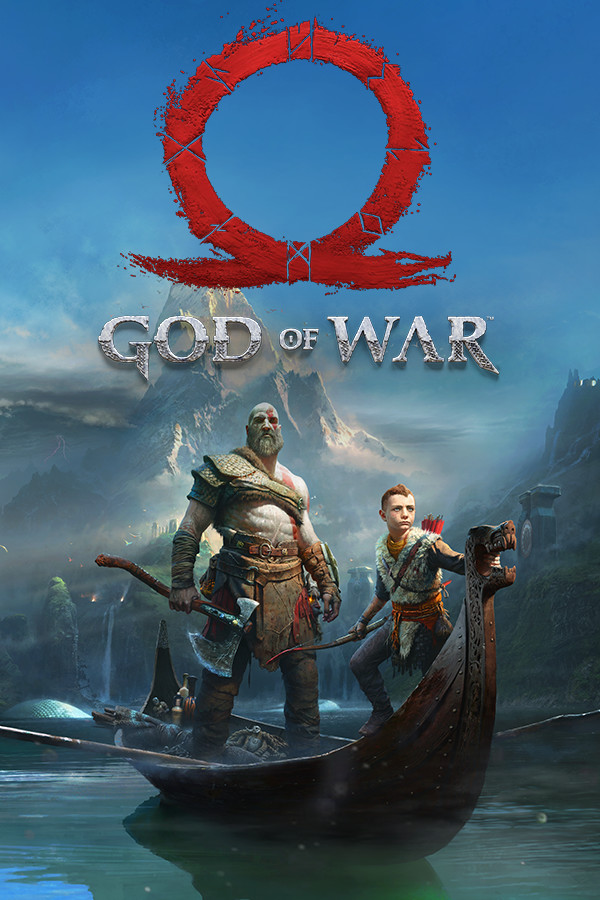
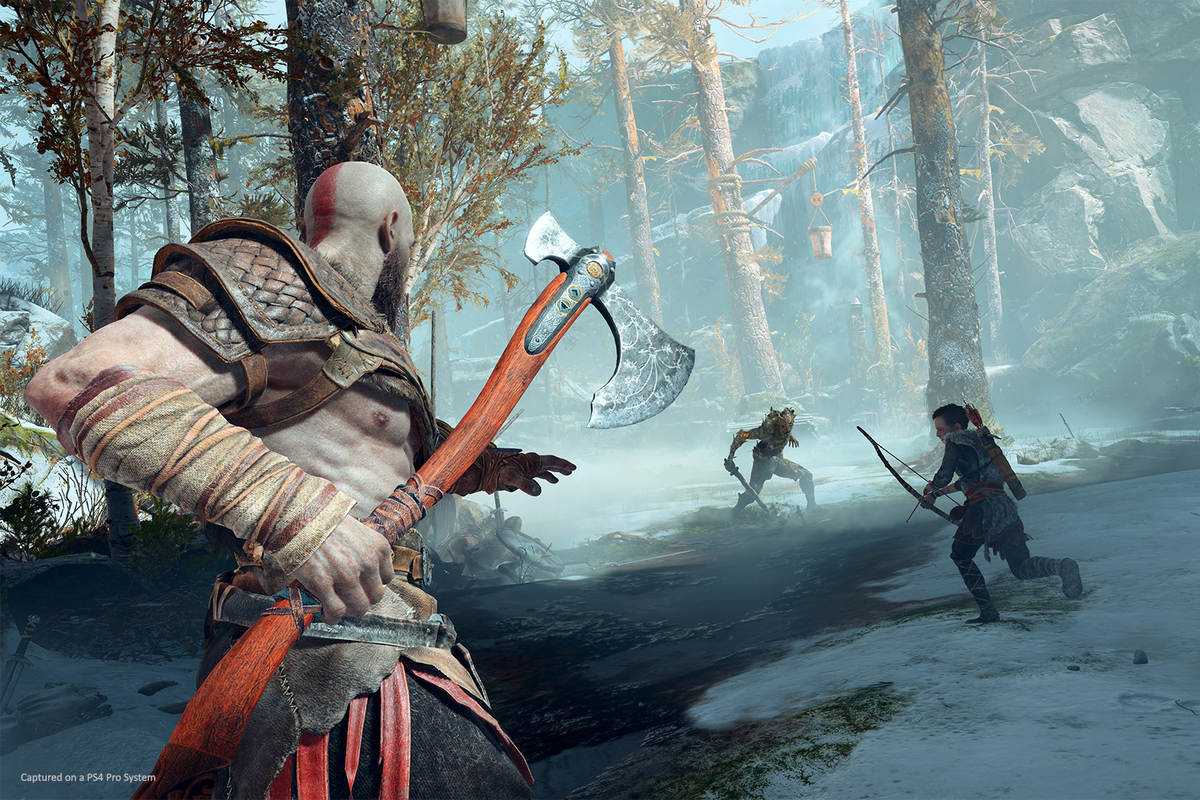
Sony ruled this generation, once again, due to the fact that they still know what gamers want and that’s beautiful well-told single-player games. God of War isn’t just the best game of the year on PS4, but the best game that’s come out this entire generation cycle. The acting, visuals, art style, combat, and characters are phenomenal and the bar has been reset for what video games should be.
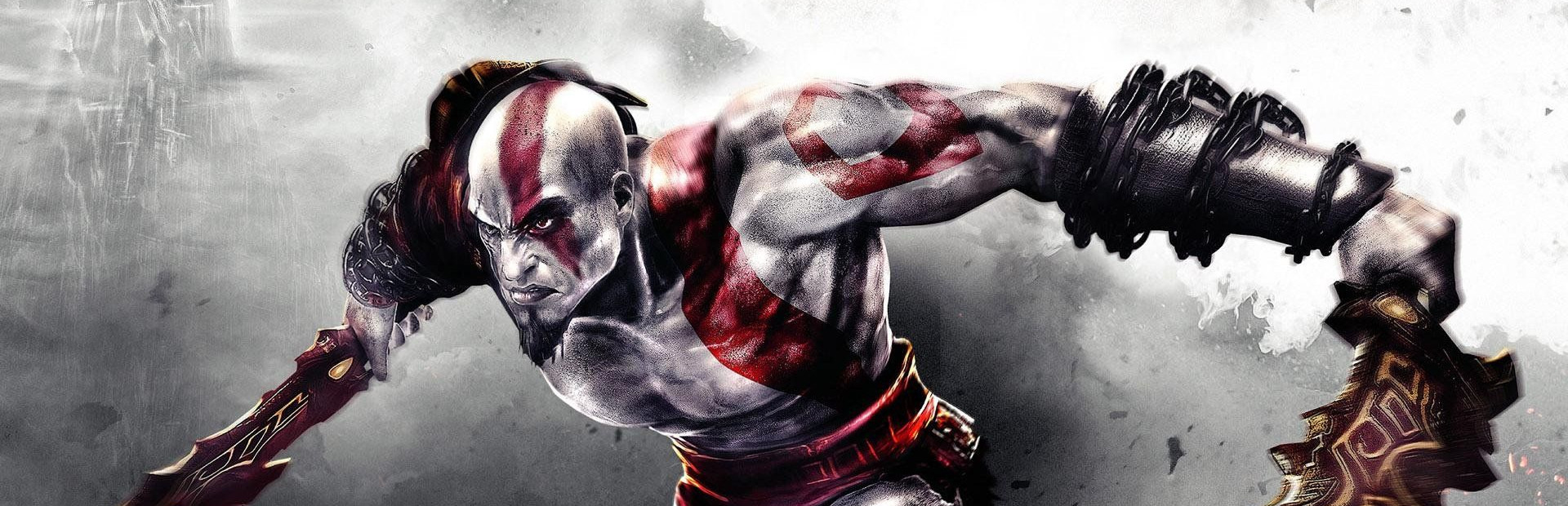
When you think PlayStation, you usually think God of War or Kratos. God of War was a game-changer back in 2005 with cinematic fluid combat, memorable characters, and intricate level design, as well as the birth of quick-time events. 13 years later, the entire game is reinvented, not just to change the way we play as Kratos but to reinvent the action-adventure genre itself.
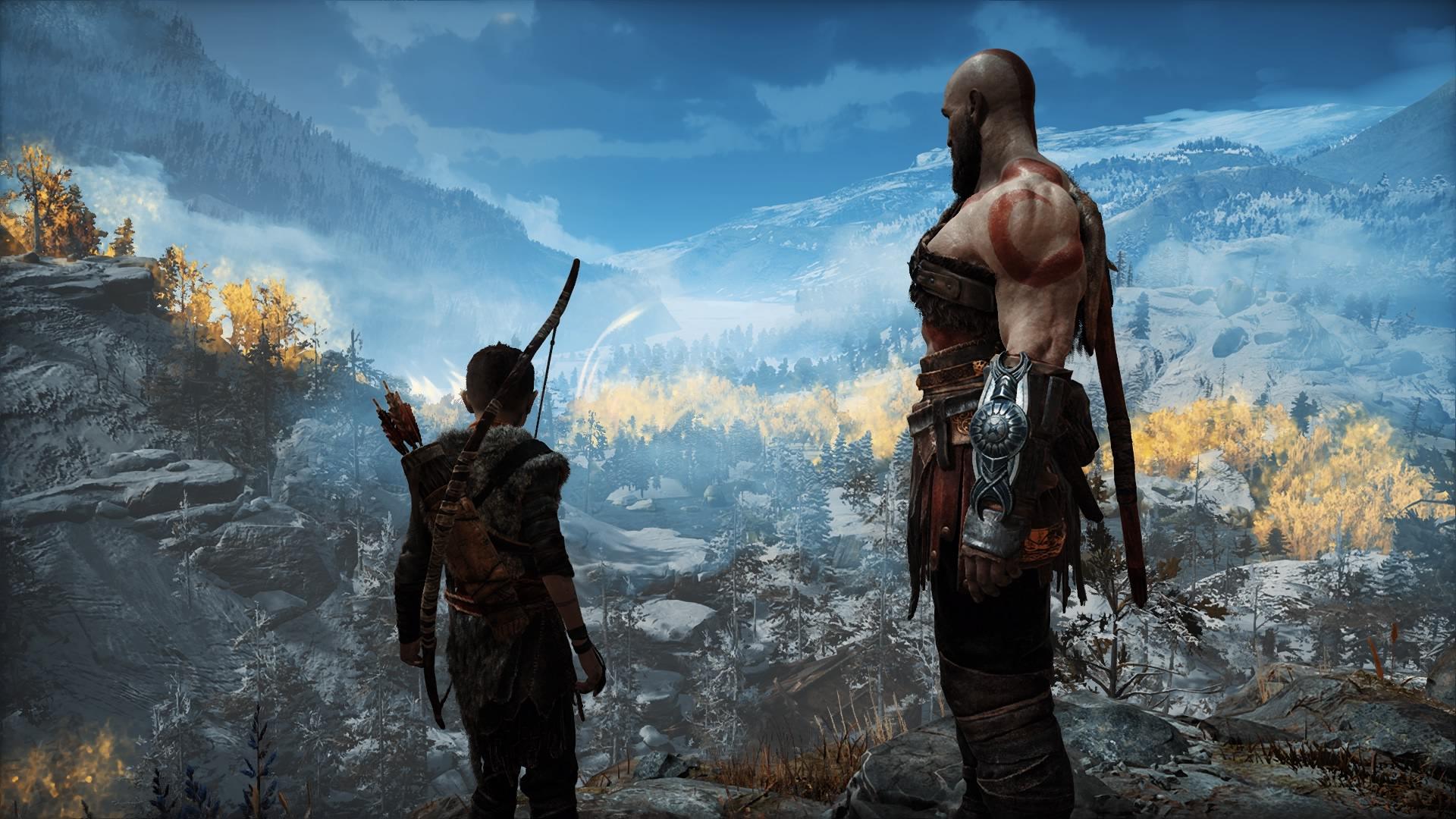
I really want to go into detail about the story, but it would contain so many spoilers that I have to refrain. For starters, you do play as Kratos, but as an aged man, a father, now living in an entirely new world set in Norse mythology. Yes, the Greek myth of God of War is now done, and we get a whole new set of gods and enemies and a beautiful new world. Kratos is living humbly as a woodsman with his family until his wife dies, and he and his son, Atreus, must venture to the highest mountain of Midgard to spread her ashes. It feels like the most humble story and a stark contrast from past games, with Kratos’ rage and anger tearing down gods and endless Olympians.
I can’t stress enough just how well developed his character and personality are. Being revoiced by Christopher Judge, who is best known as Teal’c (Tee-ULK) from the Stargate SG-1 TV series, he has a more calming, aged, and tired look to him. He is extremely wise, quiet, reserved, and has learned all these years to control himself; however, he still struggles. Santa Monica Studios did an astounding job of developing his character and Atreus’. I was fully immersed throughout the entire game and loved hearing Judge’s voice on screen, soaking in every cutscene and spoken line of dialog. It’s one of the most well-written characters and scripts in gaming history and goes from a simple story to blowing up into the expected epic mess that Kratos usually gets into. The story does end on a cliffhanger, and there are a lot of unanswered questions, but fans will know that means more is coming, and more is better.
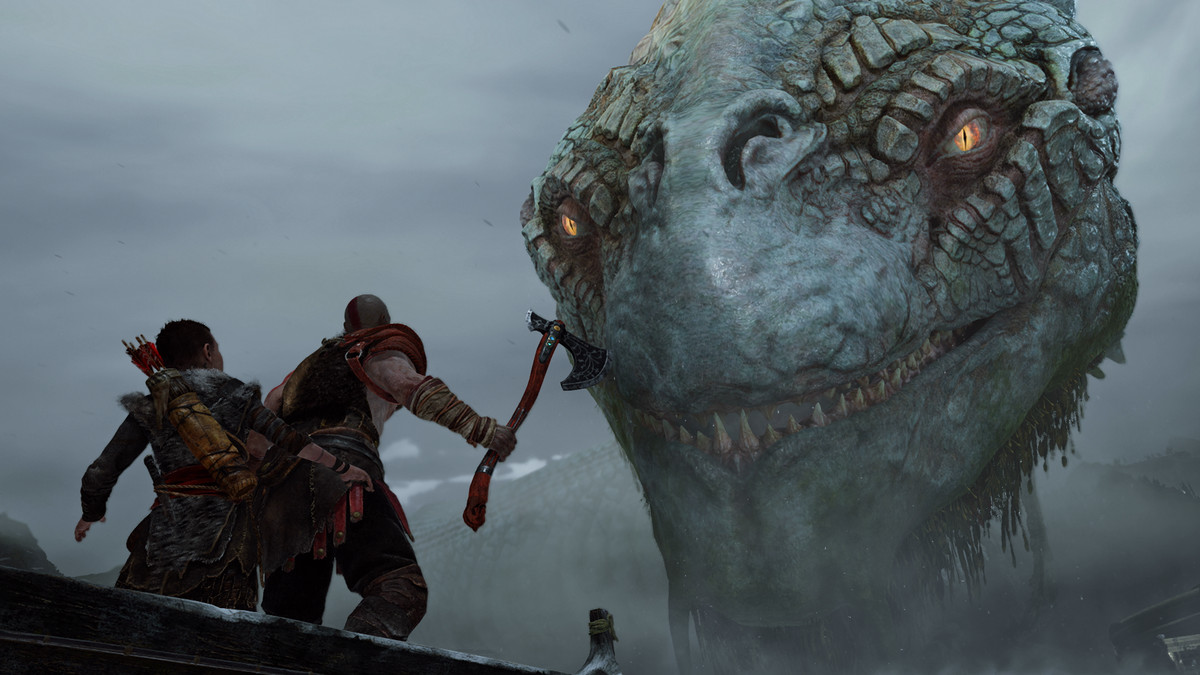
The next thing you think of when you hear God of War is the amazing and well-made combat. It is one of the top five best action-adventure combat systems ever created and has just improved over time. Santa Monica Studio not only reinvented God of War’s combat but also action-adventure combat itself. Instead of using a cut camera like in previous games, we are now behind Kratos from an over-the-shoulder perspective with similar combat mechanics to past games. Some would say this seems impossible, but they pulled it off. Light and heavy attacks are now mapped to the R1 and R2 buttons, with your Leviathan Axe being used to solve puzzles as well. This is another amazing twist to the weapons in God of War; they aren’t just for chopping off heads. The Leviathan Axe is an amazing tool that is powerful, used as a ranged weapon, and for various other reasons. The main attraction of the axe is that it can be thrown and returned to the player anywhere in the world. The Triangle button is permanently mapped to just returning the axe, which is an interesting game mechanic never seen before.
I can’t go into further detail about weapons as it’s actually a huge story spoiler, but the combat feels very familiar to past games while also feeling fresh and new. I can’t think of the combat being done any other way. On top of chopping off heads, the magic system was reinvented with new enchantments and rune stones that you can collect around the world. These can be socketed to armor and weapons and add various moves to certain button combinations for each weapon. These are keys to surviving in battle, and without them, you just wouldn’t be able to finish the game. I always changed them up and upgraded them, as there’s a huge variety of magic moves in this game.
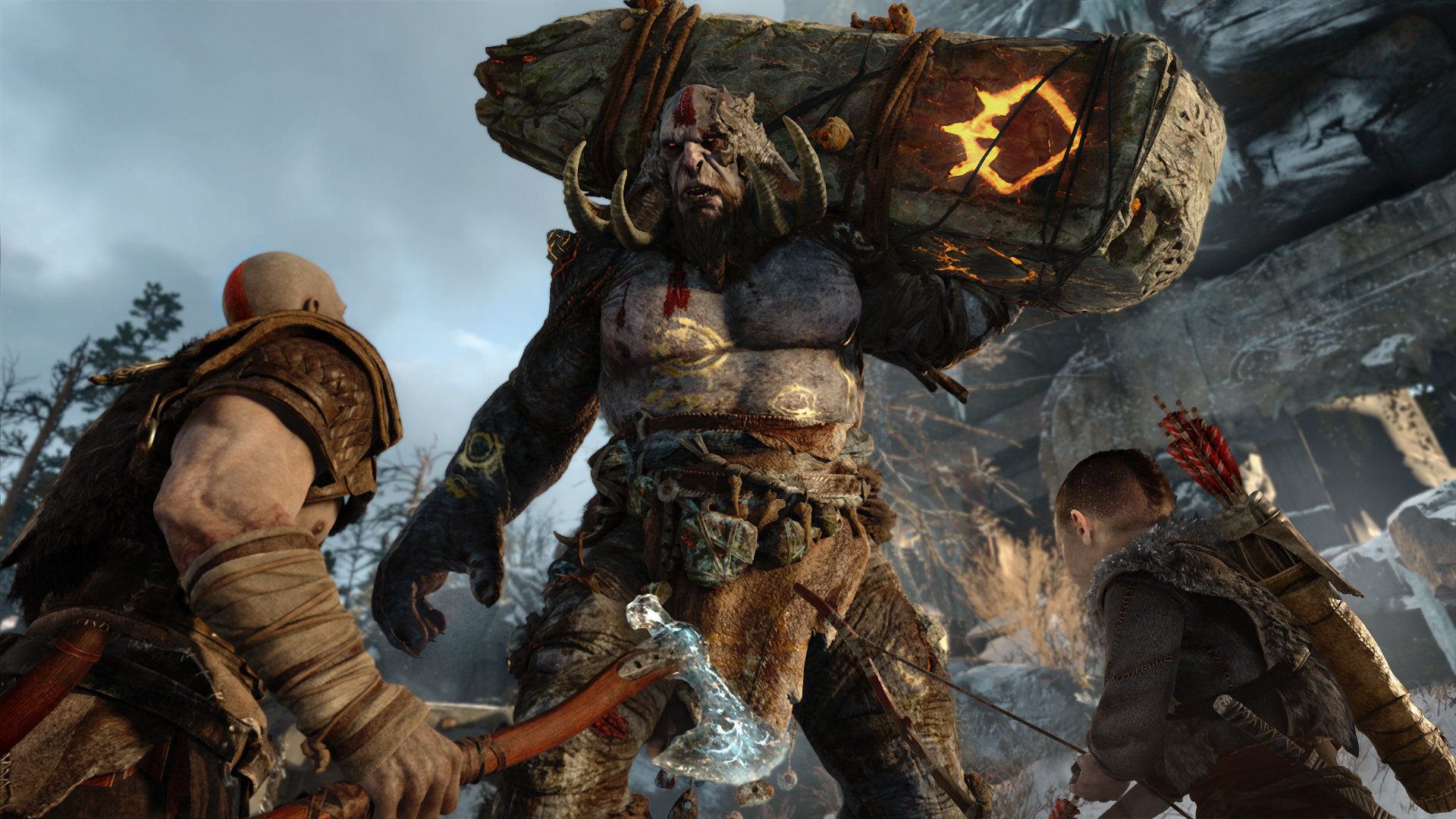
Epic cinematic kills are also back, but less quick-time event-heavy. While I did miss them, I understand why they were excluded. It does get repetitive, and you constantly relied on seeing that circle button pop up to gain health, magic, or experience orbs, but the animations went from awe-inspiring to shrug-inducing very quickly. The game does harken back to the first God of War in the sense that the game isn’t heavy on epic giant bosses. There are a few, and they are scripted, beautifully animated, and jaw-droppingly epic to see. You still feel like you are taking down these giant creatures, but in a different way. There are larger, smaller enemies like trolls and elemental golems that can be defeated similarly to past games, but it’s changed just enough to feel new and different. The combat is still cinematic, epic, and enjoyable, with awesome slow-down and gore everywhere.
Atreus himself is also a great combat tool, as he’s a companion that actually works and never gets in the way. He’s mapped to the square button, and you can use him no matter what Kratos is doing, and that includes death kills, being knocked down, etc. He shoots various types of arrows that can stun enemies and bring their stun meter up. Unlike past games, you can’t just deal so much damage, and then the kill button appears exactly the same for every enemy. You need to use various attacks to bring that meter up, and it’s difficult on tougher bosses. It keeps you from relying on quick-time events, like in past games. The well-invented and amazing enemies also help, as each one stands out and is unique, and you will learn what moves work with what enemy.
If the combat wasn’t enough to hook you, then the world will. The third major part of God of War is exploration and puzzle-solving, which make up over half of the gameplay. They took the secret chests of past games and blew them up tenfold with various types of chests, from simple small treasure chests full of Hacksilver (currency) to actual puzzle boxes where you have to hit various bells with runes to match the box. These can get tricky and require using all of your skills to solve them. God of War is also an open world. Yes, an open world. Midgard contains several realms you can explore, two of which are only for trials and challenges, but Midgard itself is a giant lake with various islands full of puzzle goodness and amazing challenges that will keep you hooked for dozens of hours. There are so many tasks in God of War that it really feels like an awesome open-world RPG, thanks to a leveling system and a brand new upgrade and crafting system.
The last part of God of War goes from using red orbs to upgrade things to finding various items in the game like any RPG and using them to craft and upgrade armor, weapons, enchantments, and even Atreus bow and his armor. There are certain armor sets that require various items from certain realms, and this can be a challenge, but it’s possible I actually finished the story before reaching the max level and acquiring the best armor. That’s all reserved for the bigger challenges seen elsewhere in Midgard.
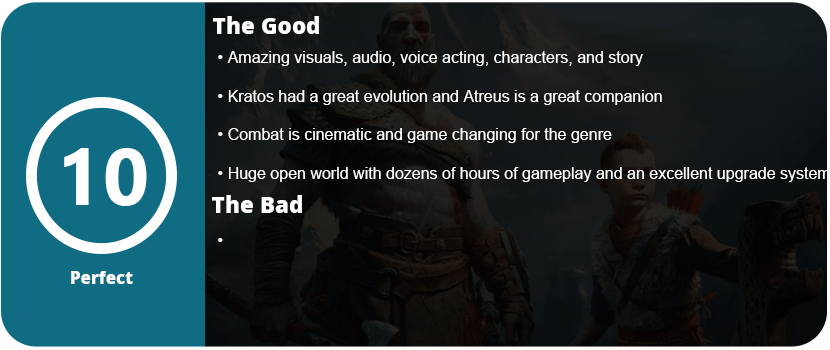
Overall, God of War is the single best game to be released this entire console generation cycle. This is what we needed more of from every console maker. It took Sony too long as it was, but here we have it. The game is literally perfect, and I can’t think of any flaws in God of War that are detrimental to the overall game. I could say the game is too hard in spots, but that’s because I ventured too far too early and needed to come back later. I could say there are a lot of hidden items and they are hard to find, but I need to explore more and look more carefully. I could say that the story is too short and the lower amount of epic bosses is what made God of Warand hurts the game, but it just doesn’t. God of War is the best game I have played in the past 10 years, and many other developers need to take note.
Note: The game plays best on the PS4 Pro. It looks really awful on the standard PS4, but the Pro is running in 4K checkerboard, and the textures and added effects are well worth a purchase just for this game.
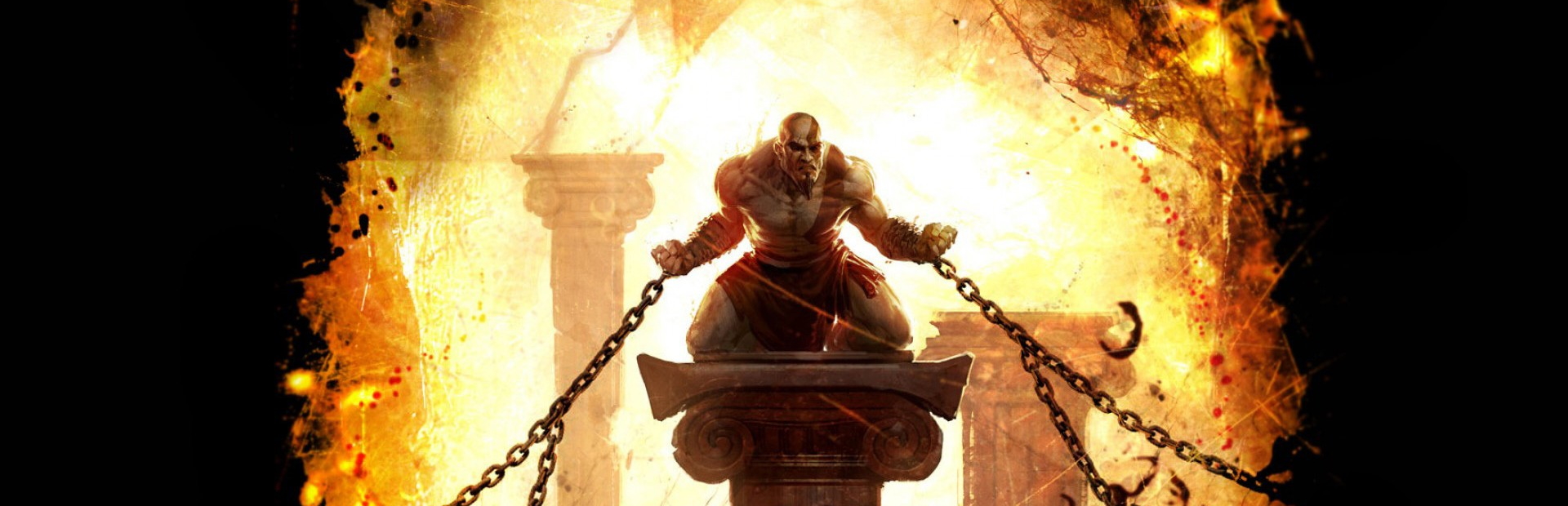
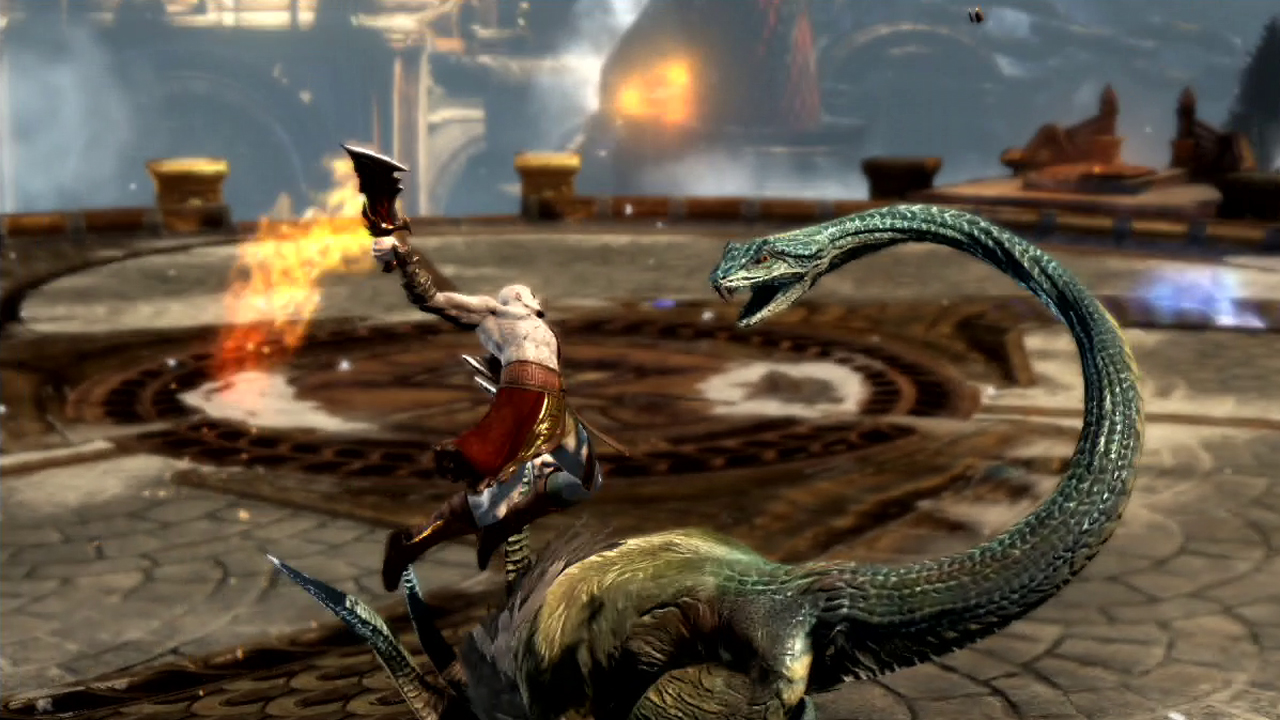
God of War was once Sony’s unstoppable powerhouse that helped sell consoles and push them to their limits. While God of War was revolutionary at the time, it’s starting to show its teeth, and it’s never more apparent than in Ascension. While the game shines in production values, the quality and content are seriously lacking compared to past games, even the smaller PSP ones.
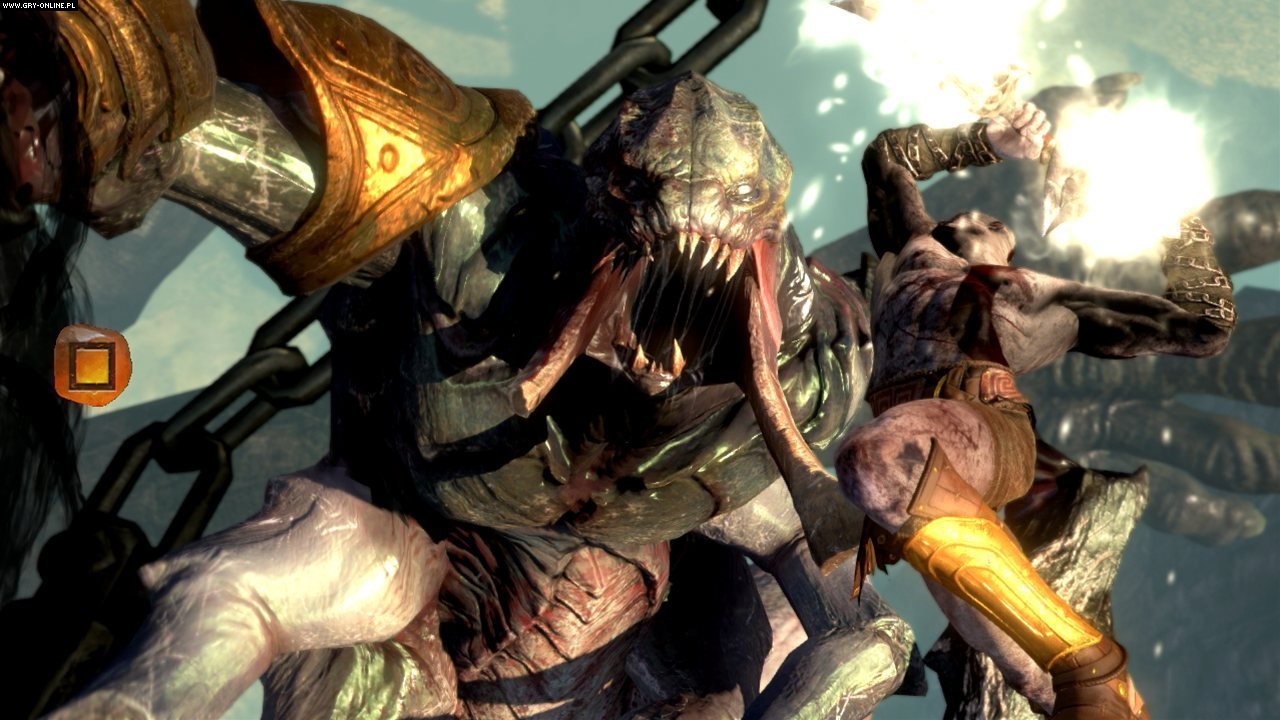
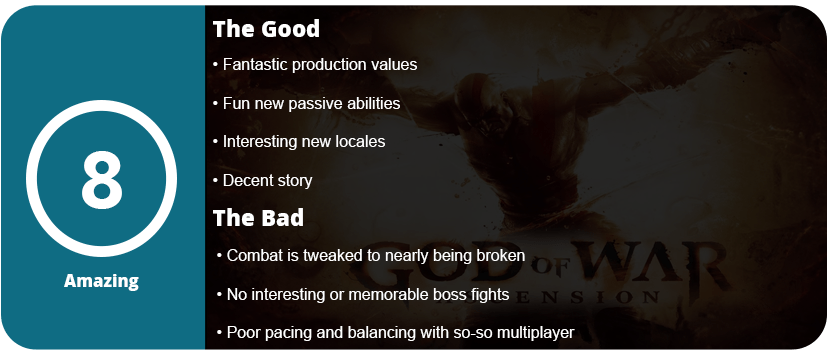
You play the angry Spartan demi-god, Kratos, once again. This time you are playing through a prequel to the first game. Kratos is trying to free his bonds from Ares after swearing and giving up his life to defeat his enemy. He has to defeat the Furies along with his living prison, the Hechatonchires. The game starts out with an epic giant boss fight, as usual, and even a cinematic torture scene where you get to start beating down one of the Furies right off the bat. It starts out with a bang and quickly fizzles out once the combat system is introduced to you. Honestly, it’s nearly ruined. The combat engine has been tweaked so much that it just doesn’t flow like it used to. It’s now based on a momentum system where the more you hit without getting hit, the more damage you do. I honestly hate this, as it sets you back in difficult areas. What’s more, the magic system has been screwed with too much, and the same goes for the upgrade system.
I like the idea of having four different blades with elemental abilities, but they don’t mean anything. Should my fire blades be strong against an ice enemy? It doesn’t seem so. Each sword is supposed to have one magic attack because they are acquired at certain upgrade levels, which I really hate. The rage meter has been turned into a bar that slowly fills as you hit enemies. If you get hit, it rapidly drops, and your damage dealt is reduced along with your more powerful moves. The game is hard enough as it is with enemies wailing on you, so your best moves are locked away until you can get enough hits in to “acquire them” temporarily. A horrible system that needs to go away in the next game.
With that said, Ascension has the most cerebral puzzles in any God of War game, which is a nice change. I had to actually think about nearly every puzzle, and some were completely stumped. Some new passive abilities are ones where you can decay and heal objects. Another ability allows you to duplicate yourself to solve puzzles and do extra damage in combat. These are probably the only things in the game that show an overall evolution.
With that aside, let’s talk about bosses. God of War is famous for its epic and memorable bosses that are larger than life. Ascension has the weakest bosses in the entire series. First off, there’s a lack of them. Most are small, about the size of regular enemies. The only exceptions are the beginning boss and the end boss. That’s nearly 7 hours in between weak fights. The overall flow of the game just feels messed up and broken. I kept looking forward to amazing boss fights that blew me away, but I just kept getting regular fight after fight. This really brings the God of War experience down quite a bit. Ascension just feels like a basic, bare-bones God of War without all the memorable moments.
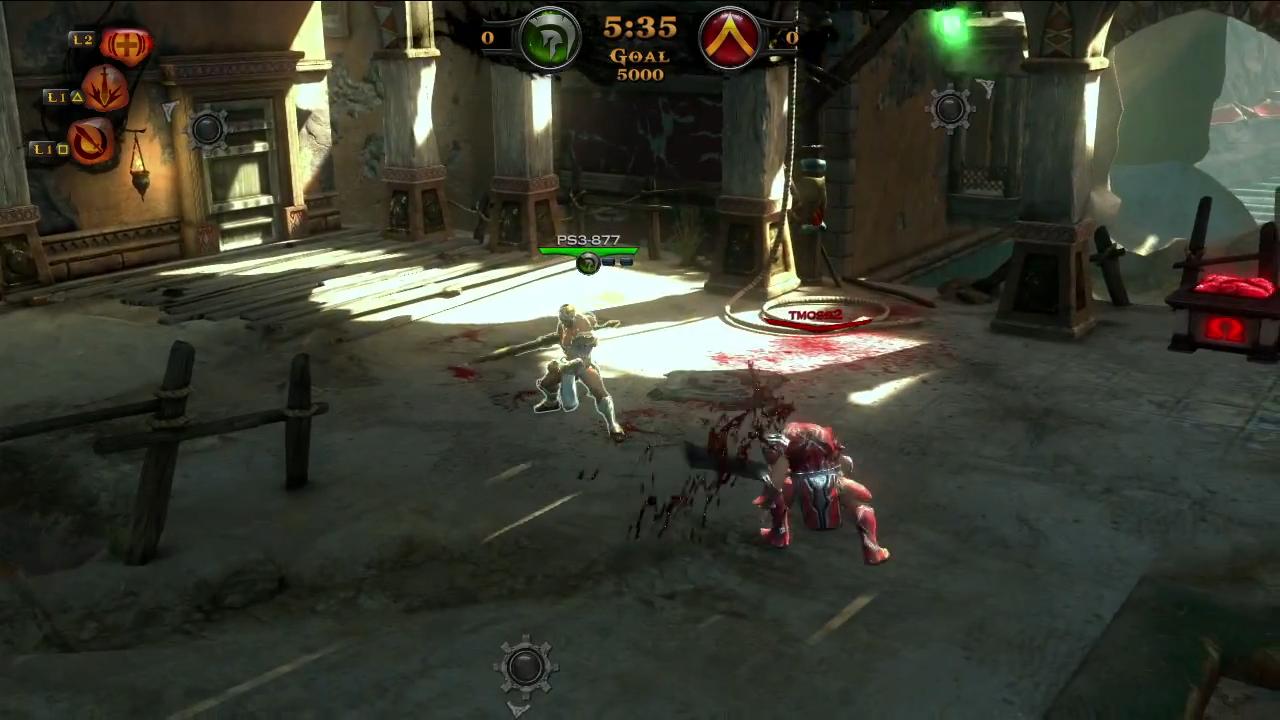
Like I mentioned before, the production values are at least here. Ascension is probably one of the top five best-looking PS3 games or even games of this generation of consoles. The game just looks freaking fantastic and will blow you away. However, you start to not care if there aren’t those amazing boss fights and fast, fluid combat. Ascension is a step in the wrong direction for the series, showing that tweaking something to the point of nearly breaking it isn’t the answer to innovation. Should ascension have never been made at all? We certainly wouldn’t miss it if it completely disappeared, but what’s here is a decent game with some experimental multiplayer that will last for a few weeks, and you will move on to the next game.
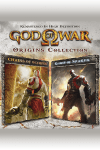
God of War is one of the best action-adventure games ever made. It pioneered everything we see in the genre today, and there are dozens of copycats. God of War helped pave the way for cinematic gameplay and pretty much made quick-time events an everyday thing in games. God of War also has one of the best combat systems ever created, as well as memorable mythology and one of the most recognized characters to date. Origins Collection puts two of the PSP’s best titles on one Blu-ray disc. These are remastered in 1080p HD and look great. While each has its own issues, this is well worth a purchase for any God of War fan.
This was the first-ever portable God of War game, and it blew everyone’s expectations out of the water. Not only for the game itself but also for the PSP. No one knew the system could pull off this great technical feat. You can read my review on Olympus for the PSP itself and a more in-depth look, but after playing it again on the PS3, I noticed that, compared to Ghost of Sparta, it doesn’t stack up. Even after playing God of War III, I notice a lot of things that annoy me in Olympus.
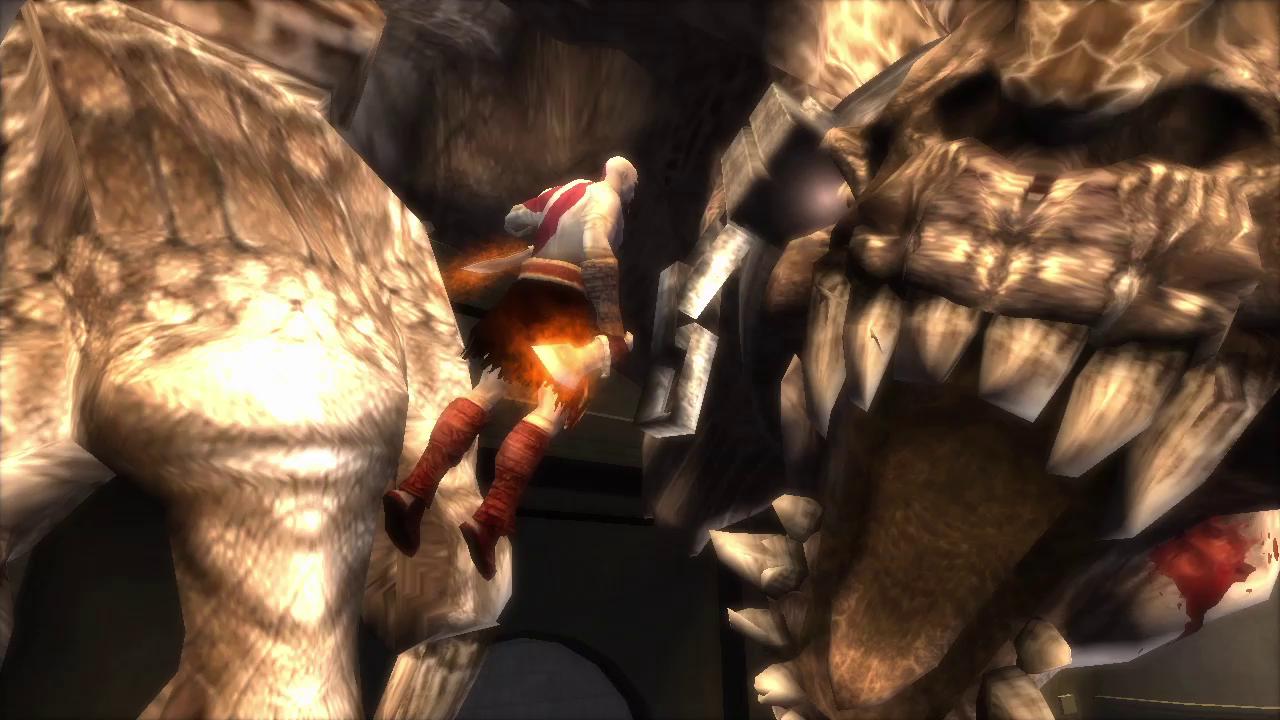
Firstly, the game lacks the huge epic set pieces of the console games, as well as a lack of bosses. Sure, there are a few memorable moments in Olympus, but there are only three boss fights, and they aren’t that amazing. The first boss feels pretty boring compared to other first bosses in the series, and the locales are pretty generic for a God of War game. Olympus stuck to the basics of God of War and kind of played it safe. There are some interesting magic items, like being able to reflect projectiles and Efreet. The combat system is almost exactly like the first game, which isn’t a bad thing, but longtime fans will be disappointed about this.
Secondly, the game is super short. You can beat it in about 4 hours, which is two long sit-downs. The story isn’t as detailed or in-depth as other games in the series. Kratos is just trying to find his daughter Calliope while still seeking revenge on the gods. Overall, Chains of Olympus is a warm-up for the more epic Ghost of Sparta.
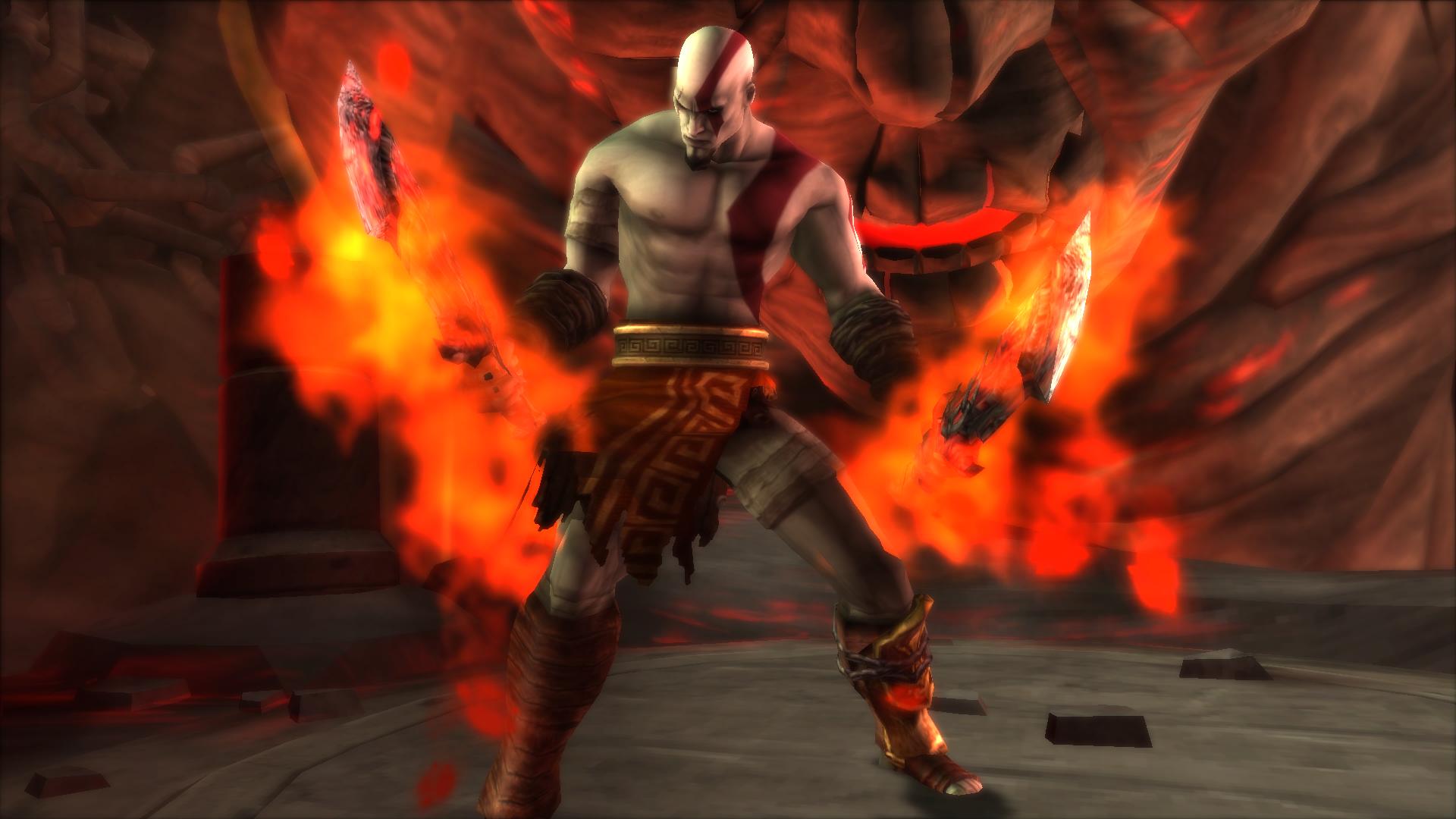
This is more like it. More bosses, more memorable moments, and completely different locales. There’s even a whole new gameplay element here, which is Thera’s Bane. Like in God of War III, you have a red meter that sets your blades on fire for extra damage and makes you invincible to some attacks. Right from the start, the game feels like a better, heavier God of War game than Olympus. Olympus started off kind of weak, but Sparta throws you right into the water (literally) with a pretty epic boss fight against a Scylla. The game has more puzzles, and the boss fights are pretty epic. The final boss against the God of Death, Thanatos, is pretty epic because you fight with a certain someone.
The story is even more memorable because you are searching for your brother Deimos while still seeking revenge on the gods. There are some memorable moments here that top even some of the console games in the series, like giving King Midas a beatdown. The new magic items, however, aren’t as interesting as I had hoped this time around. Boreas’ Wind freezes enemies, but I rarely use it. The Eye of Atlantis felt kind of weak and didn’t do as much damage as hoped, even when fully leveled up.
Overall, Ghost of Sparta is much better, with memorable moments involving more enemies, longer gameplay (about 6 hours), and more bosses. The fight system is tweaked to feel different from Olympus. The game even looks better because Sony finally unlocked the full 333 MHz of the PSP processor, so Ready at Dawn was able to push the system to its full limits. Ghost of Sparta is a memorable God of War game and will probably become a fan favorite.
Overall, the entire collection is excellent and well put together. I was disappointed in not seeing any extra features exclusive to this collection, but each game has a Challenge of the Gods that will keep fans busy for a while. With full trophy support for each game, you are bound to have a couple dozen hours of fun here.
“Fatality!” “Finish Him!” “Flawless Victory!” “Get Over Here!”. These are just some famous quotes from the infamous Mortal Kombat that everyone knows and remembers. What everyone mainly remembers is the fast-paced fighting that has been missed since 1995’s Ultimate Mortal Kombat 3. It’s been over 15 years since we got a really good and classic-feeling MK game, but it’s finally here and back with all its bloody gore. Yes, the game is still in 3D, but it’s what fighting fans like to call “2.5D.”. The game plays with a 2D feel, and as soon as you start hammering away on those classic moves and combos, you feel the nostalgia seeping into your blood.
The most surprising part of the game isn’t the new level of gore, but the amazing story mode. Yes, Mortal Kombatactually has an awesome story mode that plays out far better than last generation’s story modes. Instead of some ridiculous adventure mode or scrolling text, we get a fully acted, scripted, and voiced story about the actual Mortal Kombat tournament and a backstory on almost every classic character. The voice acting is actually good, and Netherealm Studios actually took the time to bring out each character’s personality, such as Johnny Cage’s smart lack of Hollywood attitude. Liu Kang’s eagerness, Kung Lao’s jealousy, and Sonya’s hotheadedness. The story is done beautifully, despite picking up where Armageddon left off. Raiden travels in time to his past self to stop the destruction of Armageddon. There are plot twists and even some seriously tense moments in the story that are quite gripping. I can actually say it’s the best story mode in any fighting game ever made.
However, fans came for the fight, and this seriously delivers. Not only are the animations smooth and great to look at, but the controls are as tight as ever. The game responds without any delay, and that’s what a fighter is all about. Not only is the usual gore back, but the game just packs a serious punch and feels punchy. The hits transfer amazingly well into feelings, and that’s never been done in an MK game before. The newest things brought to the series are X-ray moves. Fill your supermeter up all the way, and you can execute an extremely brutal move that shows your opponent in X-ray vision, and you can see bones crunch, snap, and organs burst. The anatomy is done superbly well, with muscles, organs, and everything else in the right place. Each character has its own special skeletal structure, so it stays true to the anatomy. I say bravo on Netherealm’s part instead of doing it cheaply.
This supermeter actually does one other thing that I love, and these are enhanced moves. Forget the crap from the DC Universe completely. When you fill one section of the meter up (it fills up faster when you are getting your butt whooped), you can do the special move while holding down the “Attack Modifier,” and it’ll change the super move up a little bit and make it more powerful. For example, doing Jax’s Gotcha Grab will only do two hits, but if you enhance it, he’ll punch them five or six times and do more damage. Do Scorpion’s Spear Throw, and he’ll throw two out for extra damage. These are great, and each special attack has its own unique enhancement. This is great for strategists who want to give their fight a little extra kick. The second thing you can do with the meter is the usual breakers, but this requires two pieces to be filled.
For the first time, tag teaming was put into the game, and it works just as great as you’d think. Each character has a special tag-out move, and it makes the game more intense and just that much more fun. Of course, the single-player story mode will have you fighting against two people for a challenge, but when you play online or with a friend, it’s an absolute blast. Of course, this could have gone all wrong, but the team learned from games like Marvel vs. Capcom to get it right. This is just one more feature the team got right but could have gone horribly wrong or made the game too unbalanced.
The Fatalities are gory, and each character has two plus a stage fatality combo. Each character’s fatality can be viewed in the move list in the pause menu, but you have to unlock the second one in the krypt (more on that later). One thing I have to mention is that Babalities were brought back, but only certain characters can do these. These haven’t been since UMK3! When it comes to fighters, there are no characters in here past UMK3. Classics are only here, and that’s for the better. You won’t see Kenshi, Kira, Drahmin, Hsu Hao, or any of those guys, but there will be DLC add-ins later on, so who knows? Each character is beautifully rendered, and they fight just like you remember, so fans can feel relieved about that. There is one new character, and that is Cyber Sub-Zero, to tie into the story mode, and he plays differently from the regular Sub-Zero and has some unique moves. Kratos is also an exclusive character for PS3 owners, and he plays just like he does in the games, complete with some quiet time buttons and moves from God of War III. He even has his own unique stage, with three different stage fatalities to choose from.
Mortal Kombat has always been known for adding a ton of content since Deadly Alliance, but this time you’re going to like the extras. The Krypt is back with just one type of currency this time around, and the Krypt has five different sections. Each one has uniquely animated item containers, and some are extremely gross, brutal, and gory. I won’t spoil it, but it’s very creative. My favorite extra is the Challenge Tower. There are hundreds of challenges that consist of fights that have different parameters, such as zombies coming toward you, and you have to use Johnny Cage’s special Energy Ball move to kill them before they get to you. There are so many that I would spend days explaining them, but they are great fun, and you earn currency doing them. One thing I wanted back so bad were the mini-games Test Your Might and Sight last seen in Deadly Alliance. They are back, just as great as before, but two new ones were added. Test Your Strike is just like Might, but you have to hold the meter inside a box for a few seconds before striking. Test Your Luck has you spinning a wheel and deciding the fighter and fighting conditions for you.
Lastly, Kombat Kodes was brought back last seen in UMK3. For people who don’t know, each character gets three boxes during the loading screen, and there are different codes such as headless combat, armless combat, dream combat, upside-down combat, X-rays disabled, blocking disabled, and it just goes on and on. These are used a lot in the challenge tower that I was talking about, but having them in VS is a blast. Lastly, the online modes are a must-have for any fighter these days, and MK was the very first one and seems to be one of the best. While Tag Team and regular 1vs1 are expected, a new King of the Hill mode lets you pick an avatar and puts everyone in a room that looks like a theater. The winner keeps fighting everyone in the room until he loses, but people can rate the fight based on a number score and can even cheer or boo the fight. This is a fun mode and is greatly welcomed.
My only big issue with the game is that the combos aren’t as crazy as in MK3, and you still have to memorize most of them, and a lot of people don’t like that. This still really isn’t a button masher, so strategic minds are still needed to fight well here. I really wanted to see more crazy combos that aren’t complicated to pull off, but if you are hardcore enough, you will find a way. Besides that, there really isn’t too much to complain about unless you want to gripe about characters from MK4 not being included.
Besides all this amazing content, the game looks superb using Unreal Engine 3, and every background is greatly animated, and they are all from classic MK games all the way back to the first one. The classic Stage Fatalities are also back, but they are upgraded to pack more punch and are gorier. Overall, the game looks and sounds amazing, with lots of content to unlock and many modes to play. This is probably one of the best fighting games of this decade so far, and it is definitely my pick for the best fighting game of the year.
Kollector’s Edition: For hardcore fans, an extra $40 gets you two beautifully crafted bookends of Scorpion and Sub-Zero in gory Kombat, Ermac’s classic outfit, a well-put-together art book, and PS3 themes and avatars. The big box is also nicely made if you want that too.
Tournament Edition: For an extra $90, you get a wonderfully created arcade stick, but it does not come with any of the other stuff besides the extra outfit. It’s up to you which one you get, but I preferred the Kollector’s Edition since the stick can be bought separately elsewhere.
God of War III defines the genre that tells us there are no limits or boundaries and it really shows here. With superb combat, epic boss fights, and gruesome gore that would make even the strongest squirm you have to love this game. It perfects the series and really shows what the next-generation is all about.
Graphics aren’t the most important part of a game, but they are essential in helping deliver every aspect. A lot of games try to push consoles to their limits with higher resolutions, more detailed textures, better lighting, physics, and even just about every other thing that games need to do to look pretty.
What sets God of War apart from other games besides its gruesome violence, and epic boss fights? Its graphics. It pushes shaders, memory, and makes processors sweat with its luscious huge vistas, multi-screened bosses, and stunning detail in every character. In 1080p on an HDTV, nothing can hold a candle to anything graphics wise.
While graphics may not be essential, the artistic side can set them apart and make them individual and unique. The artistry of graphics is very important in defining a series or making it instantly recognizable.
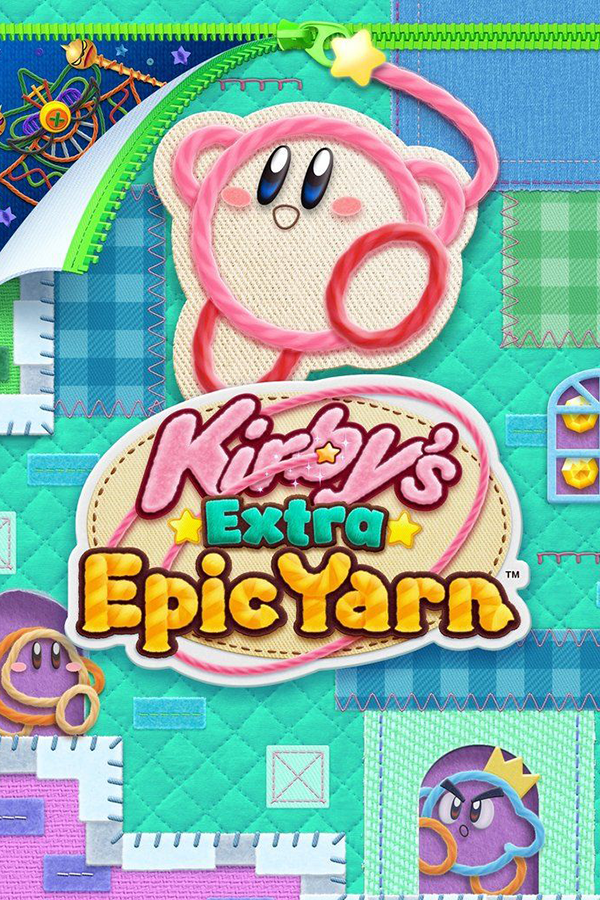
Kirby’s Epic Yarn
Yarn. Who would have thunk? Using yarn to create the world is probably one of the most original art designs I have ever seen. Why does such a cutesy art design beat out other games that have tons of research behind them? Because it’s original. That’s the keyword. The game makes you feel just as fuzzy inside as the characters look.
Voice acting is essential in a game to make characters sound believable and give them character. Good voice acting is just like a good movie, so it shouldn’t sound scripted or just plain terrible.
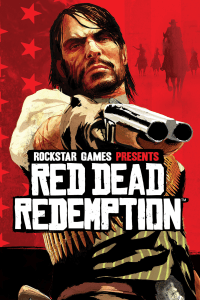
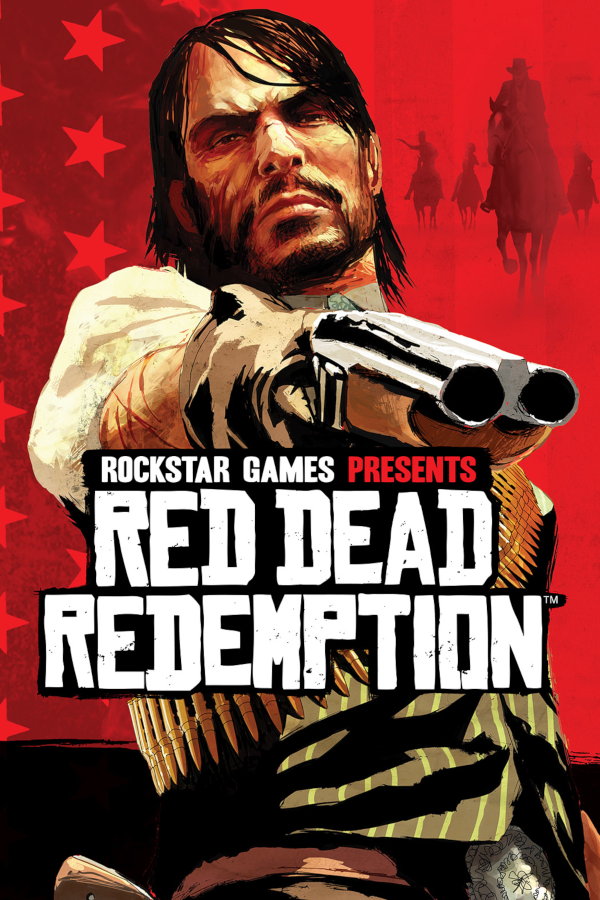
Red Dead may not have strange alien characters, but the voice acting is so authentic that you really get attached to these characters without awkward moments, or sometimes scripted sounded segments. The voice actors Rockstar chose really sound like these characters and put so much passion and effort into them that the whole game really just sounds like a movie.




















































 thebinarymessiah.com
Yeah, it's pretty damn awful. Notoriously one of the worst games on the PSP. A 4 was actually being generous.…